
FourStroke Engine Basics Next Orientation Throughout this lesson
Four-Stroke Engine Basics Next
Orientation Throughout this lesson on two and four-stroke engines, you will self-navigate through this Power. Point presentation n Be sure to click on every link n You will be quizzed at the end of the lesson n Click on Next to move on, or Back to go back. n Back Next
Orientation Continued n Material that will be covered: Four-stroke engine basics l Two-stroke engine basics l Other engine types l The four-stroke cycle l The two-stroke cycle l Compare the two types l Back Next
Back Next
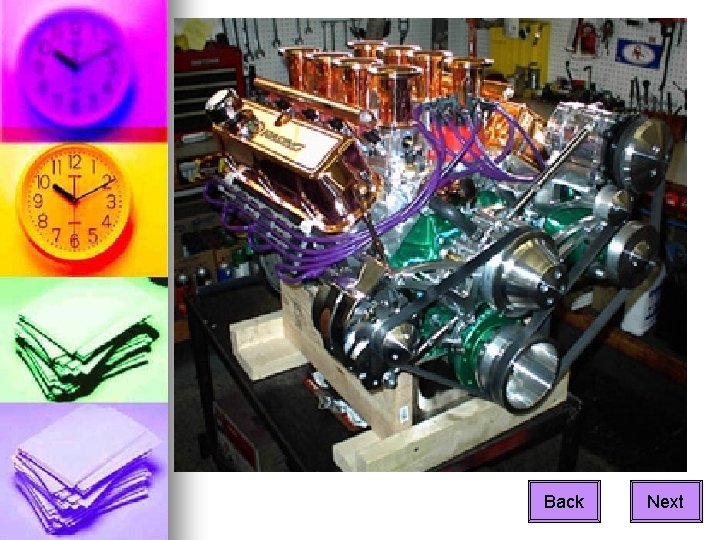
The Basics n A four-stroke engine: Is an internal combustion engine l Converts gasoline into motion l Is the most common car engine type l Is relatively efficient l Is relatively inexpensive l Back Next
Other Engine Types Two-stroke engines n Diesel engines n Rotary engines n Turbine engines n Steam engines n Back Next
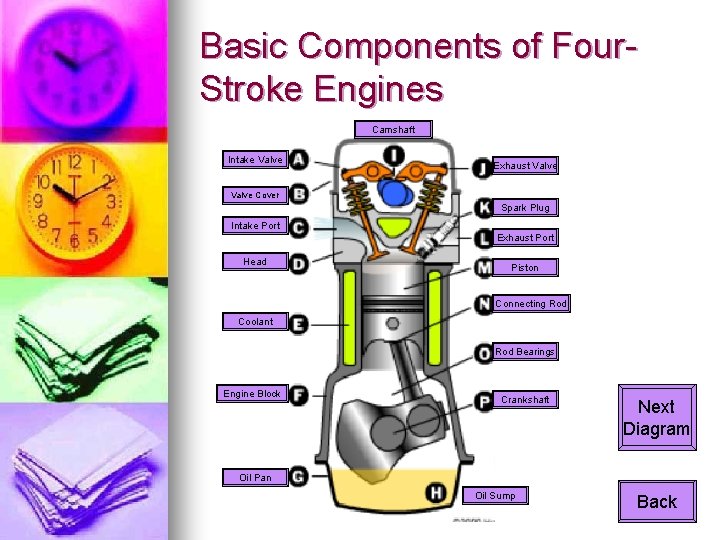
Basic Components of Four. Stroke Engines Camshaft Intake Valve Exhaust Valve Cover Spark Plug Intake Port Exhaust Port Head Piston Connecting Rod Coolant Rod Bearings Engine Block Crankshaft Next Diagram Oil Pan Oil Sump Back
n A. Intake Valve- opens at the proper time to let in air and fuel. Back
n B. Valve Cover- Protects the valves and the valve springs. Keeps dirt out and lubricating oil in. Back
n C. Intake Port- the passageway in a cylinder head for the fuel and air to pass through. Back
n D. Head- a platform containing most of the parts of the combustion chamber. Back
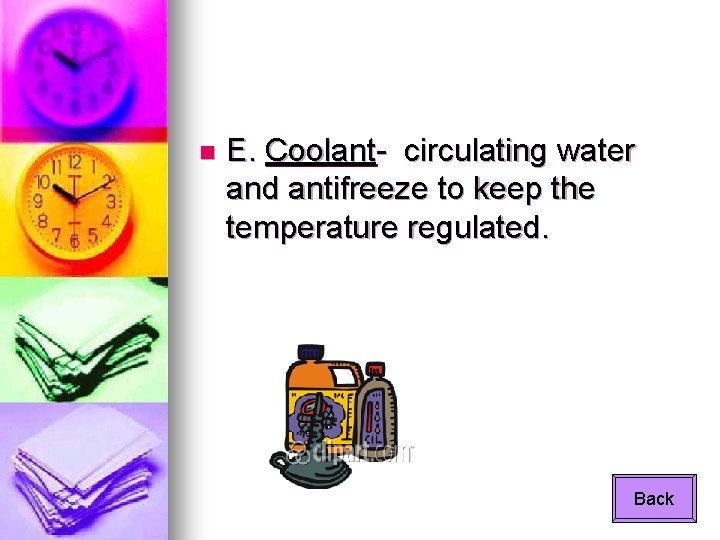
n E. Coolant- circulating water and antifreeze to keep the temperature regulated. Back
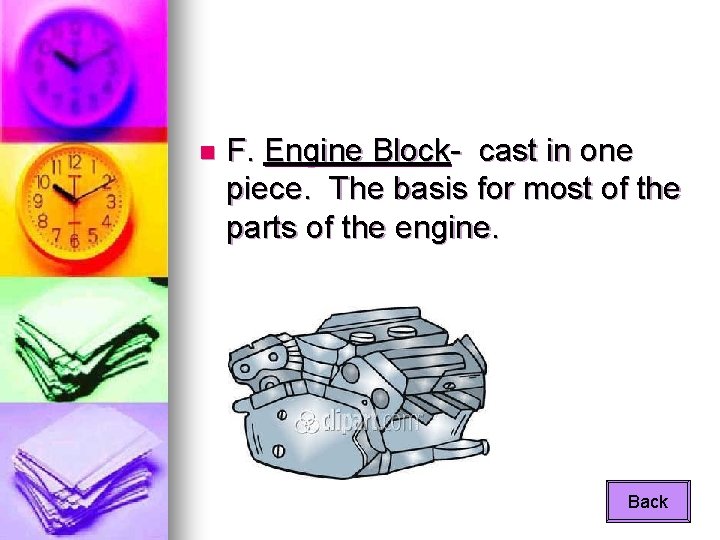
n F. Engine Block- cast in one piece. The basis for most of the parts of the engine. Back
n G. Oil Pan- where the oil is collected and recirculated. Back
n H. Oil Sump- the collected oil primarily for lubricating the crankshaft and rod bearing Back
n I. Camshaft- a round shaft with lobes, that rotates to open and close the fuel and exhaust valves. Back
n J. Exhaust Valve- open at the proper time to release the exhaust Back
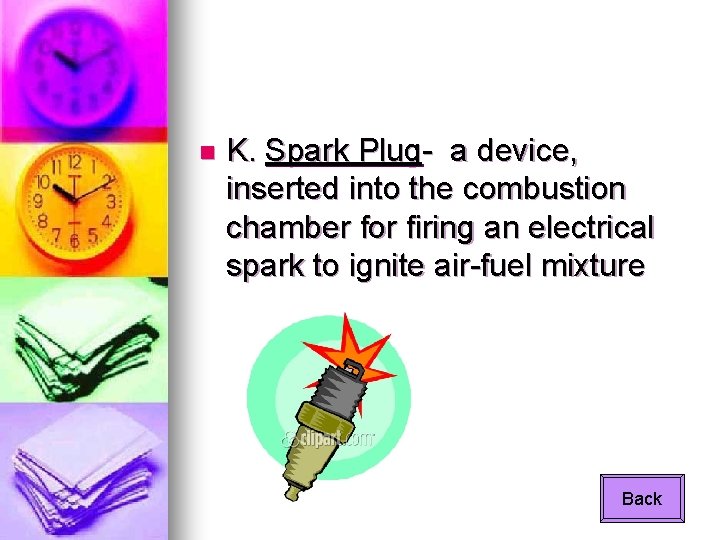
n K. Spark Plug- a device, inserted into the combustion chamber for firing an electrical spark to ignite air-fuel mixture Back
n L. Exhaust Port- the passageway in a cylinder head, for the exhaust to pass through Back
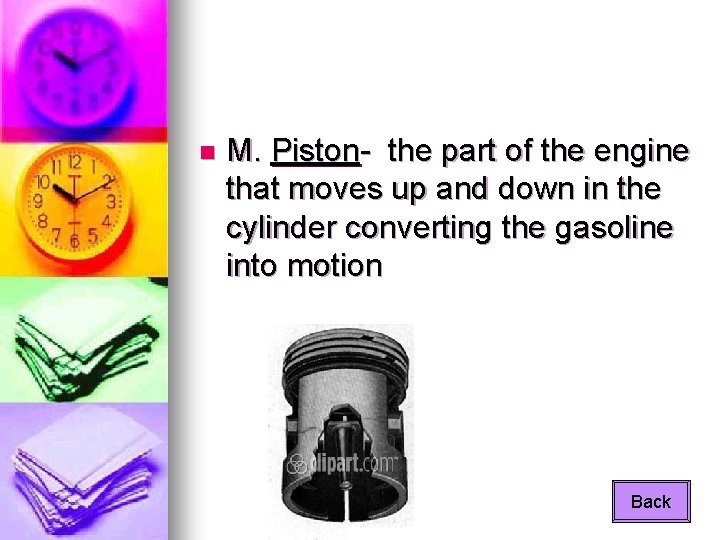
n M. Piston- the part of the engine that moves up and down in the cylinder converting the gasoline into motion Back
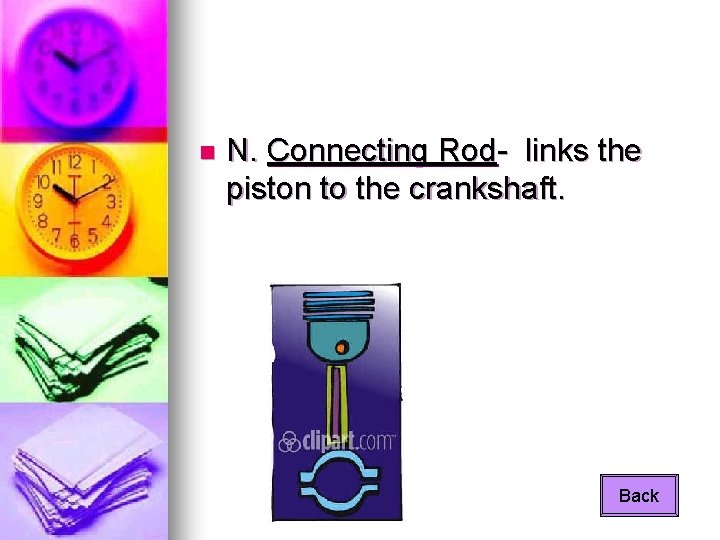
n N. Connecting Rod- links the piston to the crankshaft. Back
n O. Rod Bearing- used to reduce friction to the rod and crankshaft Back
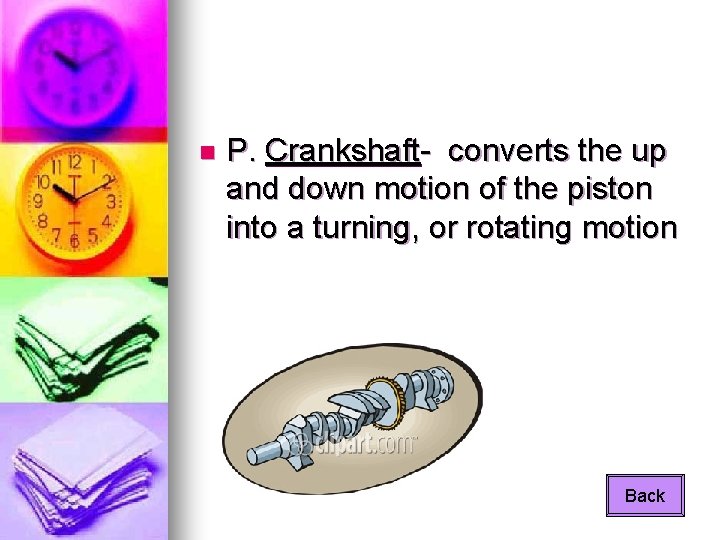
n P. Crankshaft- converts the up and down motion of the piston into a turning, or rotating motion Back
The 4 -Stroke Cycle 1. Intake n 2. Compression n 3. Combustion n 4. Exhaust n Back Next
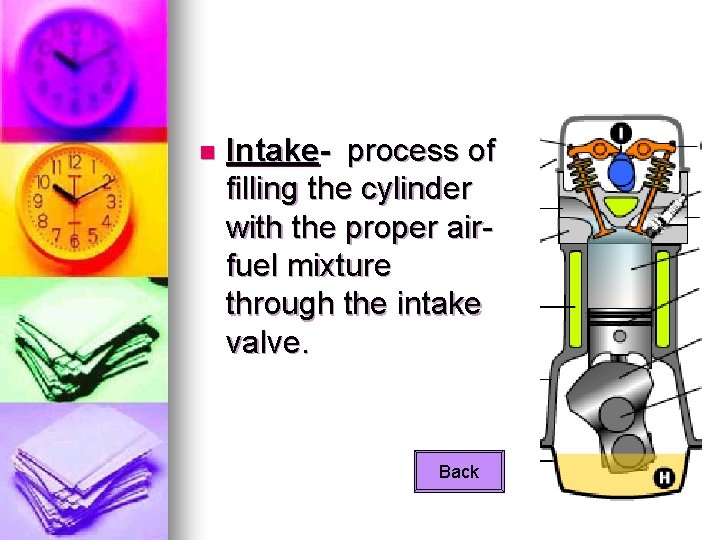
n Intake- process of filling the cylinder with the proper airfuel mixture through the intake valve. Back
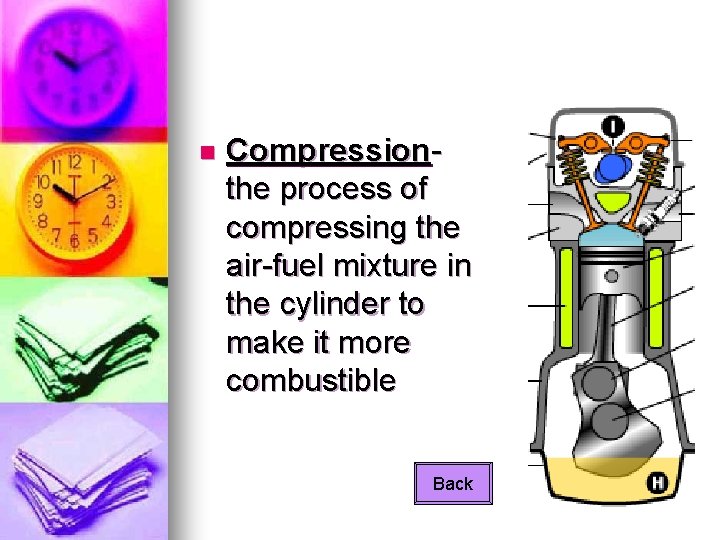
n Compressionthe process of compressing the air-fuel mixture in the cylinder to make it more combustible Back
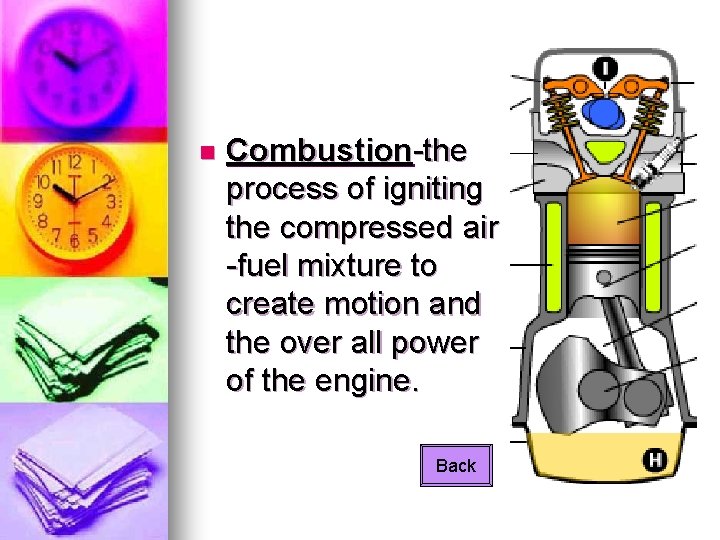
n Combustion-the process of igniting the compressed air -fuel mixture to create motion and the over all power of the engine. Back
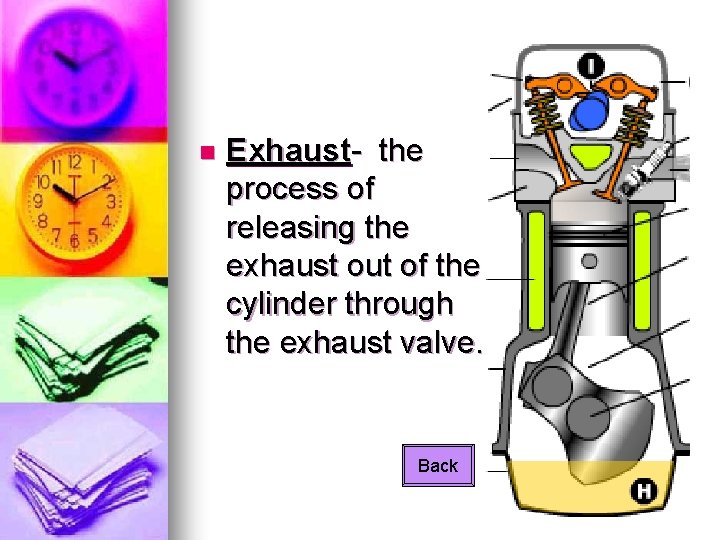
n Exhaust- the process of releasing the exhaust out of the cylinder through the exhaust valve. Back
Application n Now that you understand the basics of four-stroke engines, how can you use this information in the real world? Back Quiz
n Lets take a quiz to see what you have learned! Back Quiz
1. The ____ controls the amount of intake and the release of exhaust. a. head b. valves c. coolant d. connecting rod
2. The _____ Cycle is the ignition of the compressed fuel -air mixture. a. Exhaust b. Combustion c. Compression d. Intake
3. The most common type of engine? a. diesel engines b. 2 -stroke engines c. rotary engines d. 4 -stroke engines
4. What part of the engine converts up and down motion into a rotation motion? a. crankshaft b. piston c. valve cover d. camshaft
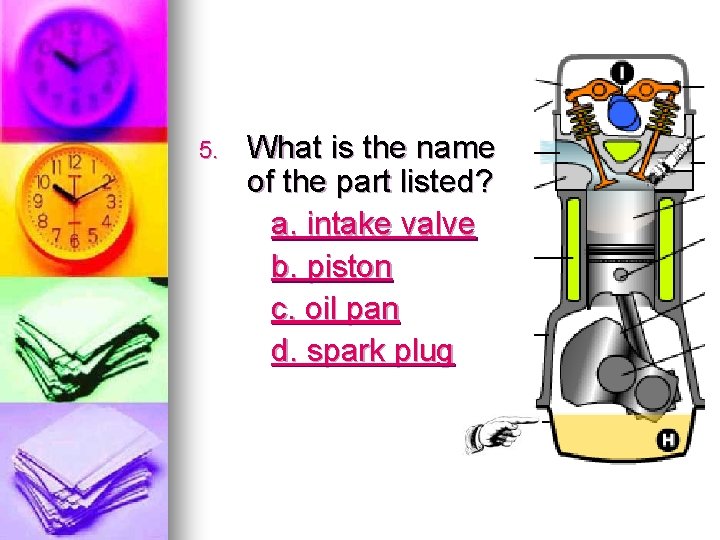
5. What is the name of the part listed? a. intake valve b. piston c. oil pan d. spark plug
n Sorry, that is the wrong answer. Try again. Back
n Sorry, that is the wrong answer. Try again. Back
n Sorry, that is the wrong answer. Try again. Back
n Sorry, that is the wrong answer. Try again. Back
n Sorry, that is the wrong answer. Try again. Back
n That is correct! Lets try the next one. Next
n That is correct! Lets try the next one. Next
n That is correct! Lets try the next one. Next
n That is correct! Lets try the next one. Next
n That is correct! Lets try the next one. Next
Congratulations! That is the end of your quiz, and the end of your lesson on four-stroke engines. n Now it is time to Review n Next
References www. howstuffworks. com/ n www. mda. org. uk/railway/railobjv. htm n To Beginning Last Slide

- Slides: 48