
Fourier transforms and rescaling Fourier transforms Image Fourier
![Gaussian pyramids [Burt and Adelson, 1983] • In computer graphics, a mip map [Williams,](https://slidetodoc.com/presentation_image_h2/bcd6b23fee9ab1bb292d8b62d67847cd/image-49.jpg "Gaussian pyramids [Burt and Adelson, 1983] • In computer graphics, a mip map [Williams,")
- Slides: 58
Fourier transforms and rescaling
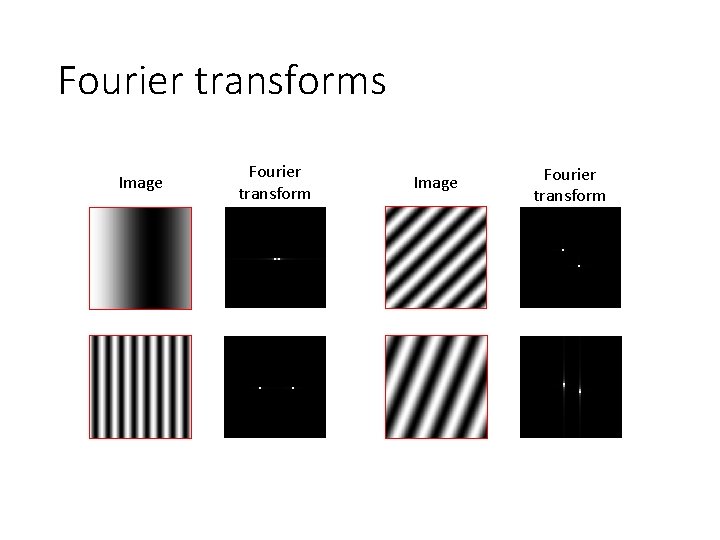
Fourier transforms Image Fourier transform
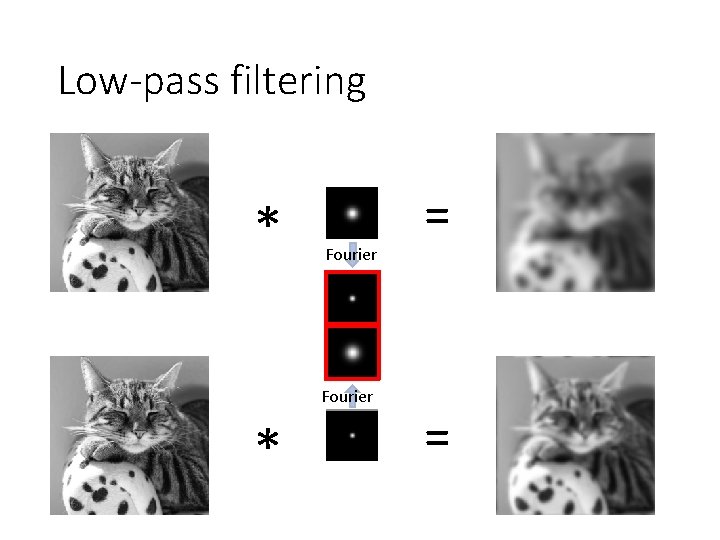
Low-pass filtering * Fourier * = =
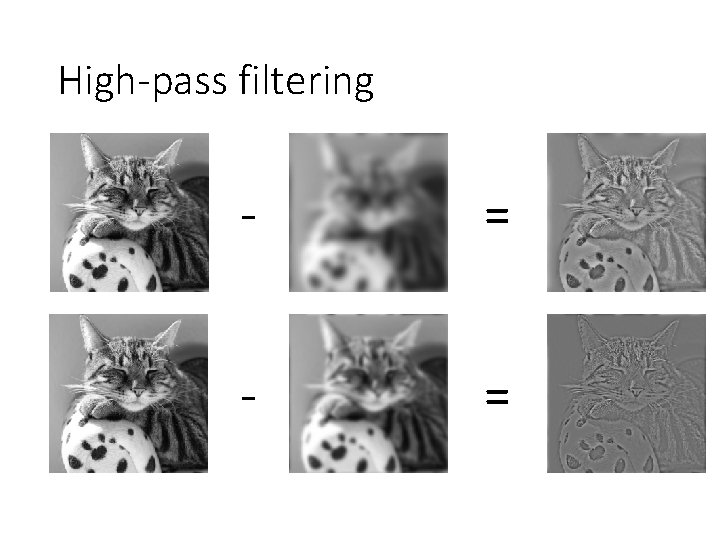
High-pass filtering - =
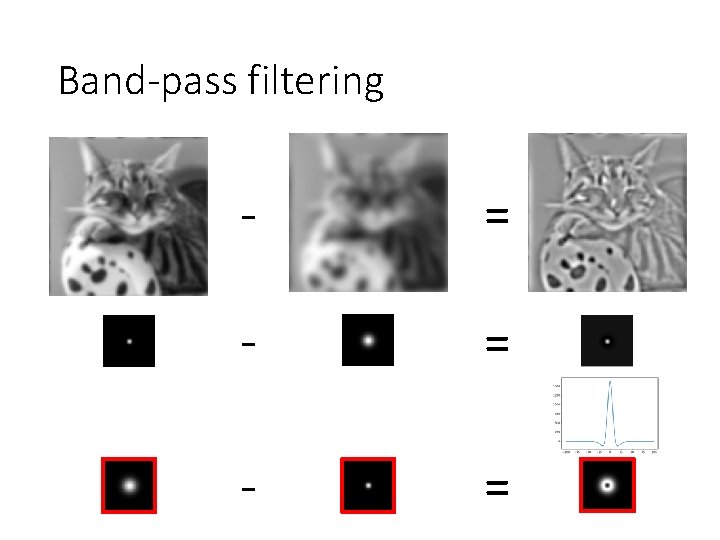
Band-pass filtering - = - =
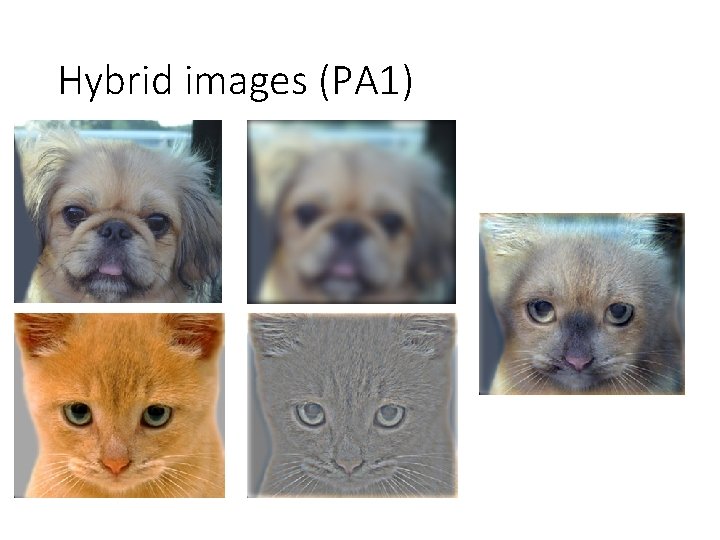
Hybrid images (PA 1)
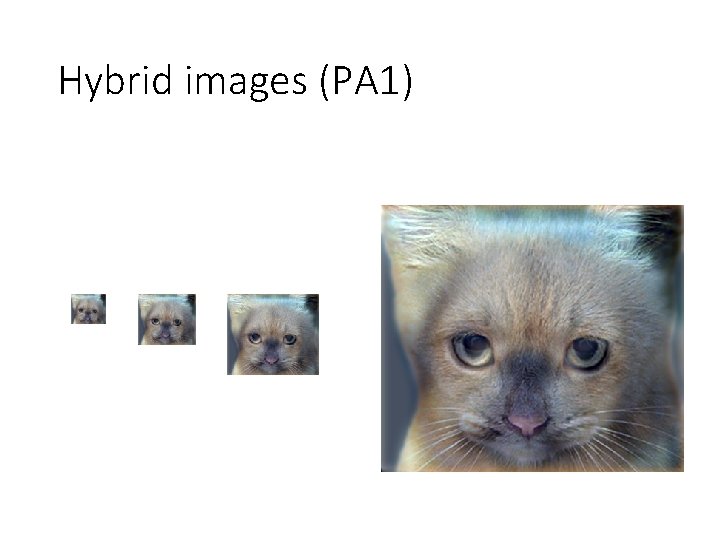
Hybrid images (PA 1)
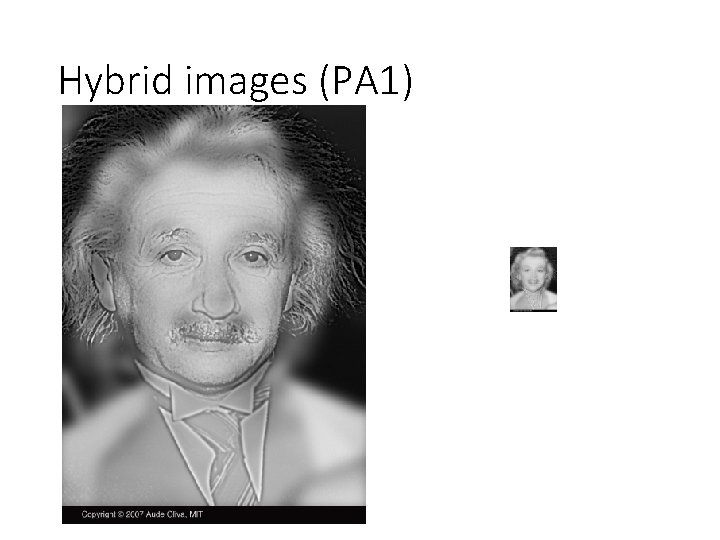
Hybrid images (PA 1)
Resizing and resampling
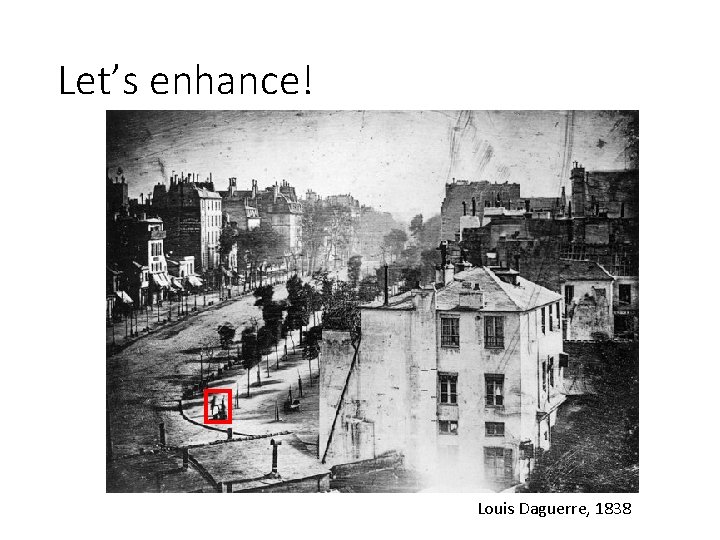
Let’s enhance! Louis Daguerre, 1838
Let’s enhance! • When is enhancement possible? • How can we model what happens when we upsample or downsample an image? • Resizing up or down very common operation • Searching across scales • applications have different memory/quality tradeoffs
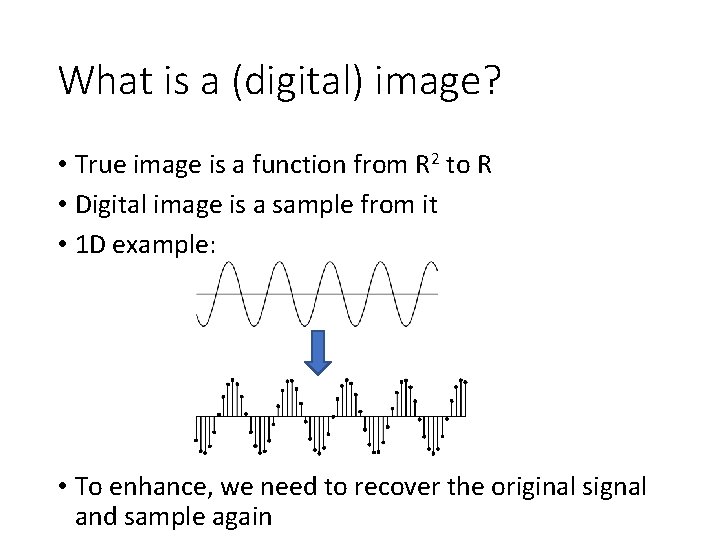
What is a (digital) image? • True image is a function from R 2 to R • Digital image is a sample from it • 1 D example: • To enhance, we need to recover the original signal and sample again
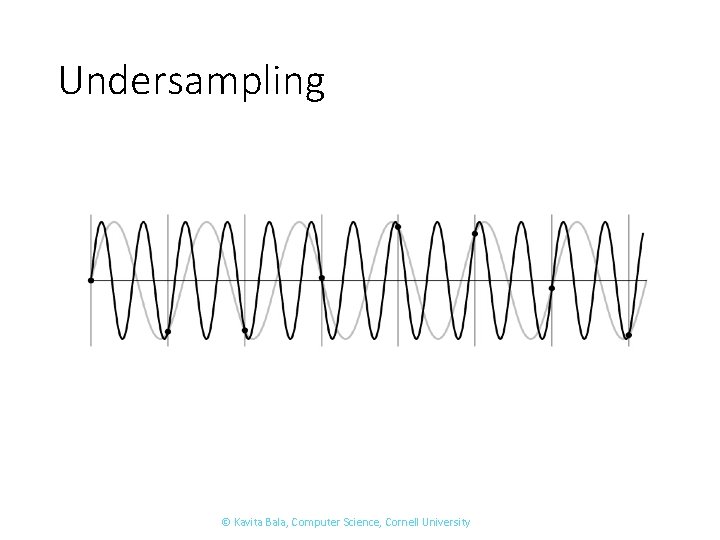
Undersampling © Kavita Bala, Computer Science, Cornell University
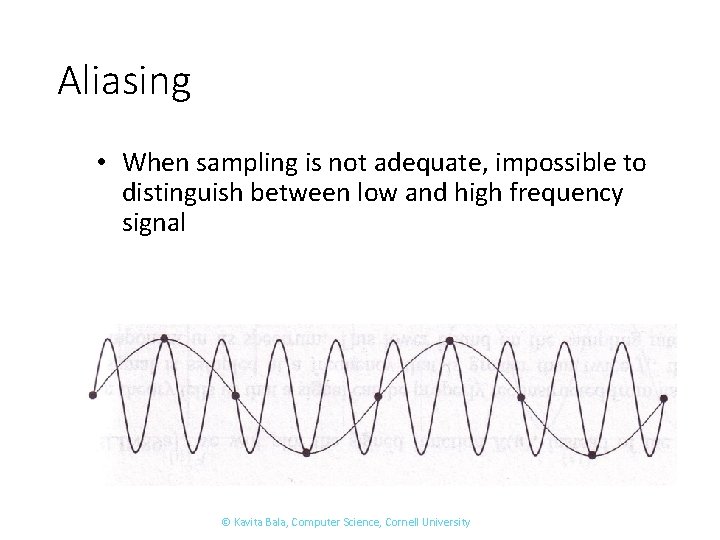
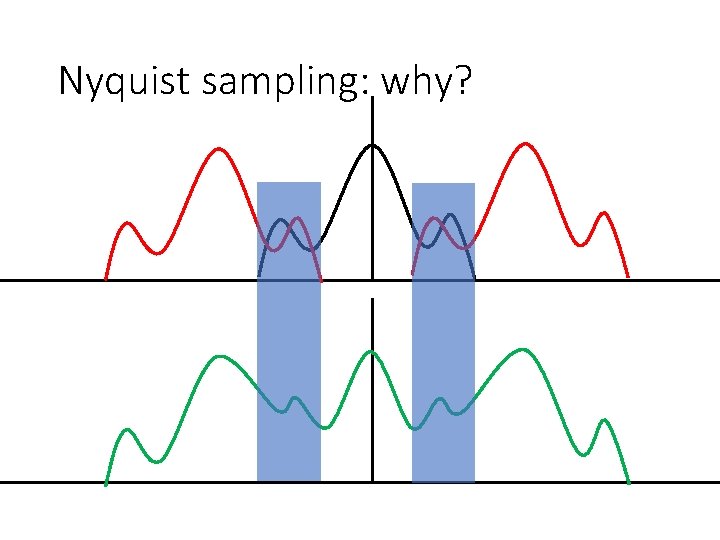
Undersampling • What if we “missed” things between the samples? • Simple example: undersampling a sine wave • • unsurprising result: information is lost surprising result: indistinguishable from lower frequency also was always indistinguishable from higher frequencies aliasing: signals “traveling in disguise” as other frequencies
Aliasing • When sampling is not adequate, impossible to distinguish between low and high frequency signal © Kavita Bala, Computer Science, Cornell University
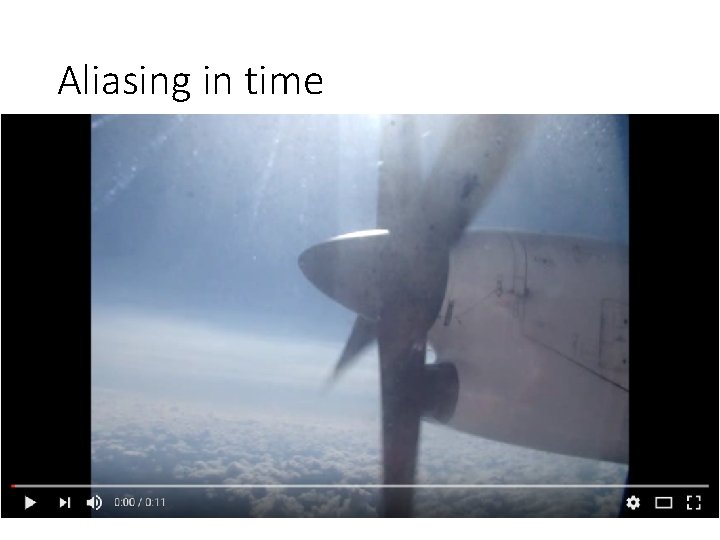
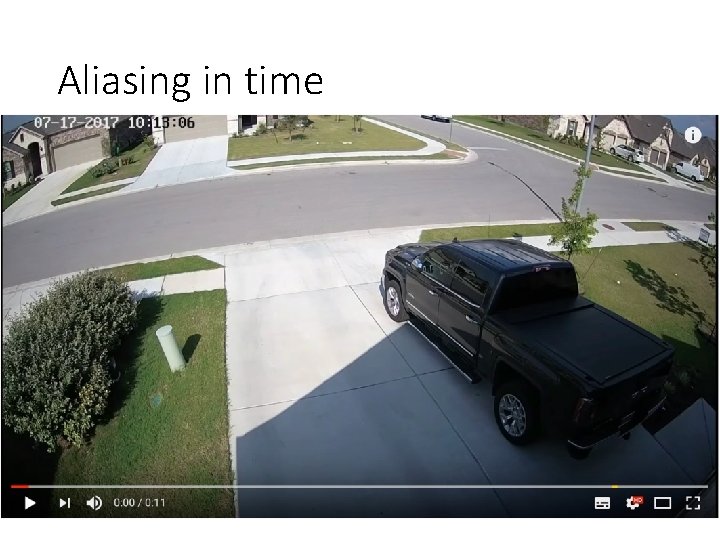
Aliasing in time
Aliasing in time
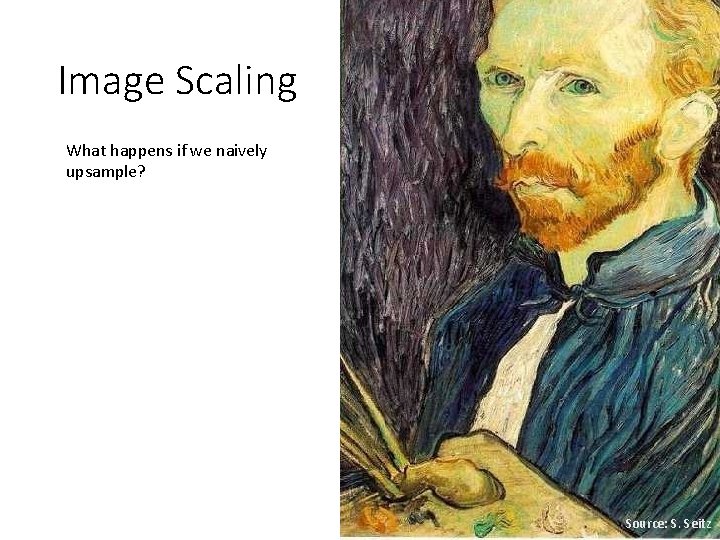
Image Scaling What happens if we naively upsample? Source: S. Seitz
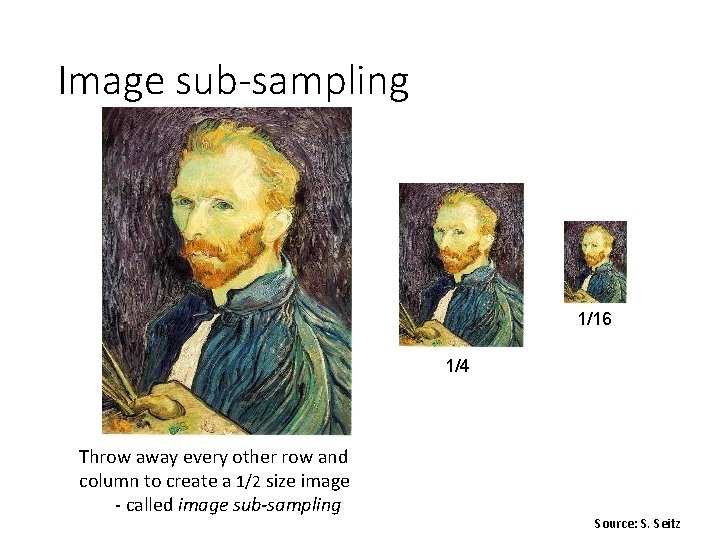
Image sub-sampling 1/16 1/4 Throw away every other row and column to create a 1/2 size image - called image sub-sampling Source: S. Seitz
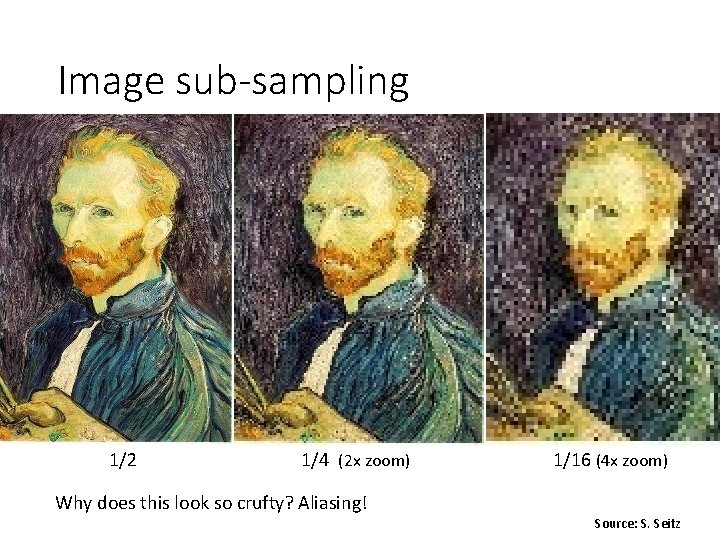
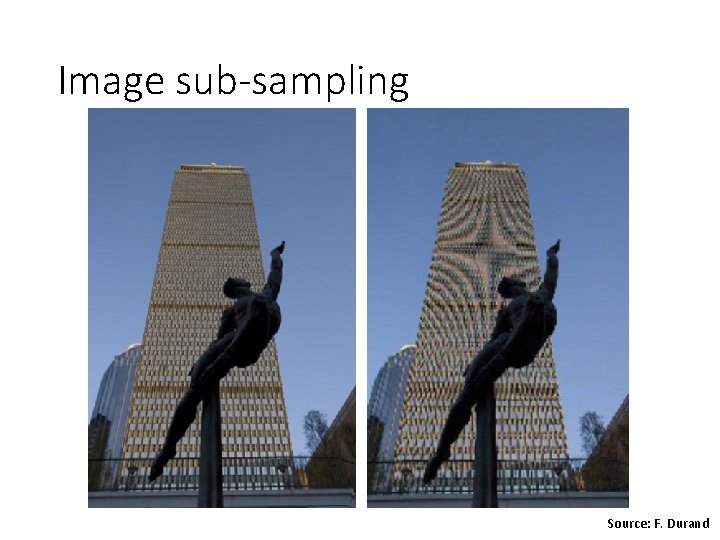
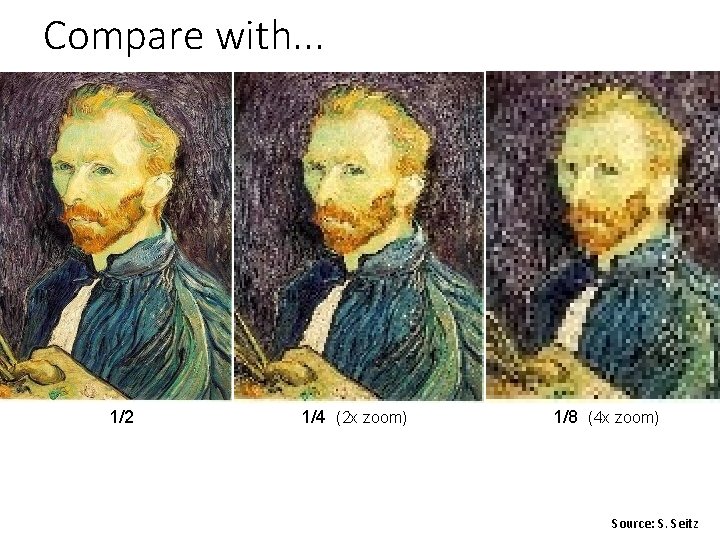
Image sub-sampling 1/2 1/4 (2 x zoom) 1/16 (4 x zoom) Why does this look so crufty? Aliasing! Source: S. Seitz
Image sub-sampling Source: F. Durand
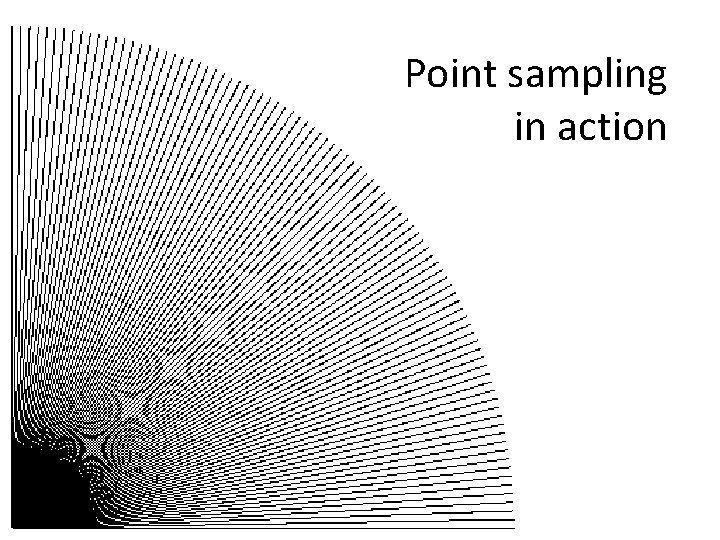
Point sampling in action Cornell CS 4620 Fall 2015 • Lecture
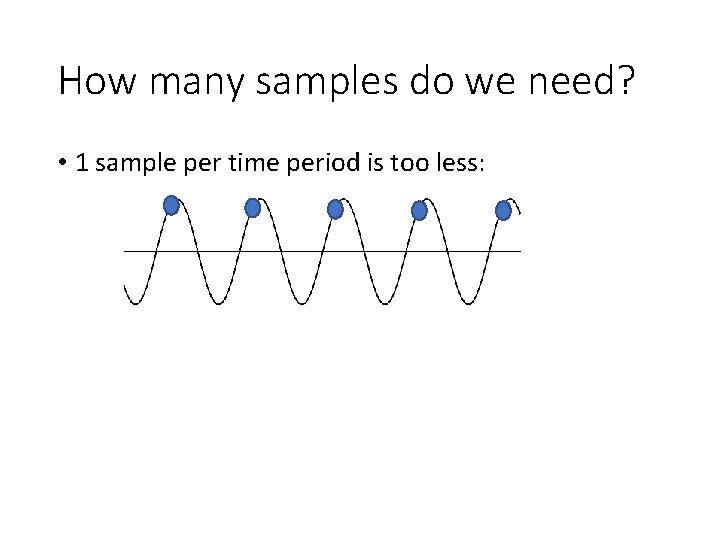
How many samples do we need? • 1 sample per time period is too less:
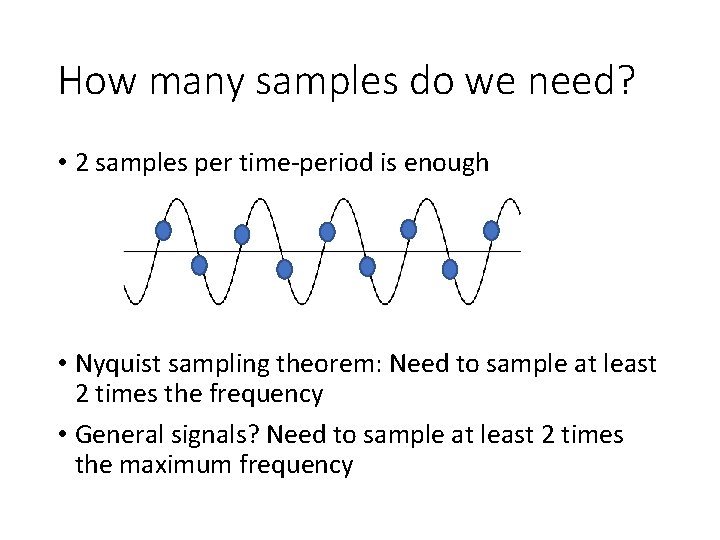
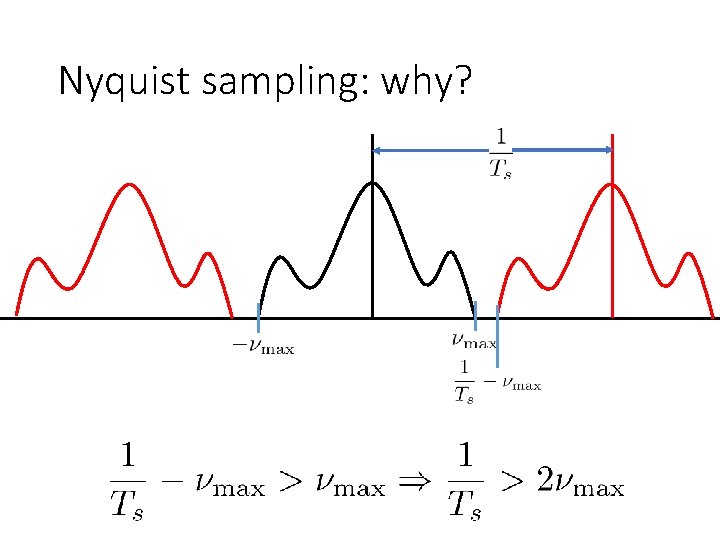
How many samples do we need? • 2 samples per time-period is enough • Nyquist sampling theorem: Need to sample at least 2 times the frequency • General signals? Need to sample at least 2 times the maximum frequency
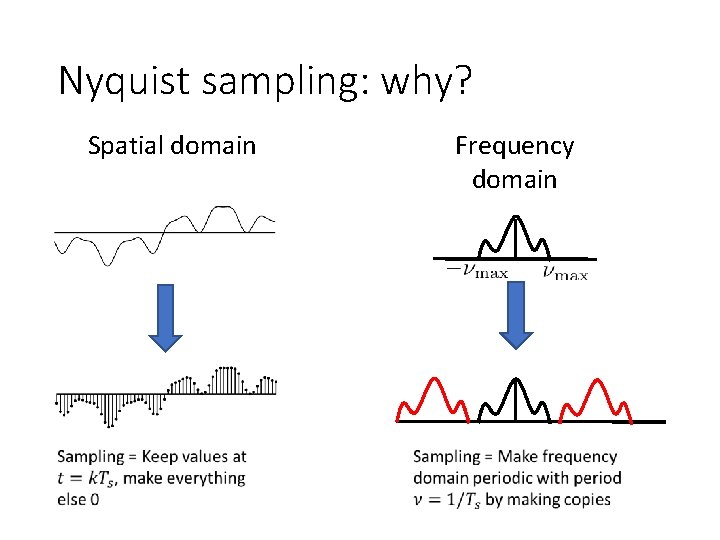
Nyquist sampling: why? Spatial domain Frequency domain
Nyquist sampling: why?
Nyquist sampling: why?
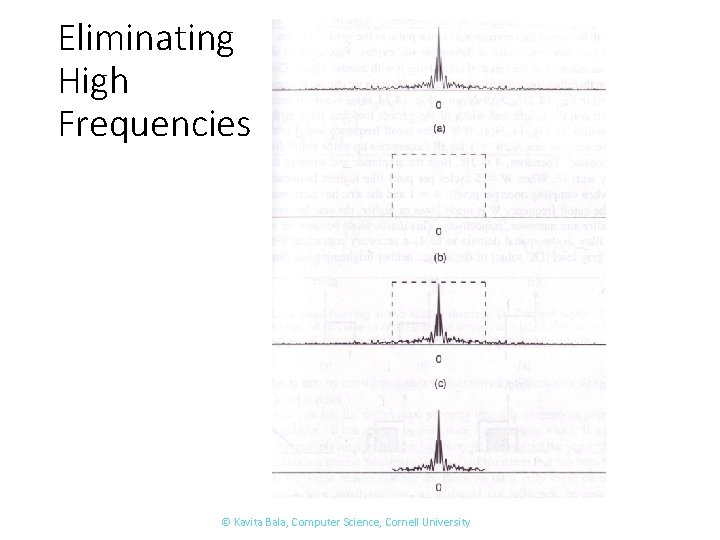
Aliasing and downsampling • Nyquist says must sample at at least twice maximum frequency • When downsampling by a factor of two • Original image has frequencies that are too high • How can we fix this? • Eliminate them before sampling! • Convert to frequency space • Multiply with low-pass filter
Eliminating High Frequencies © Kavita Bala, Computer Science, Cornell University
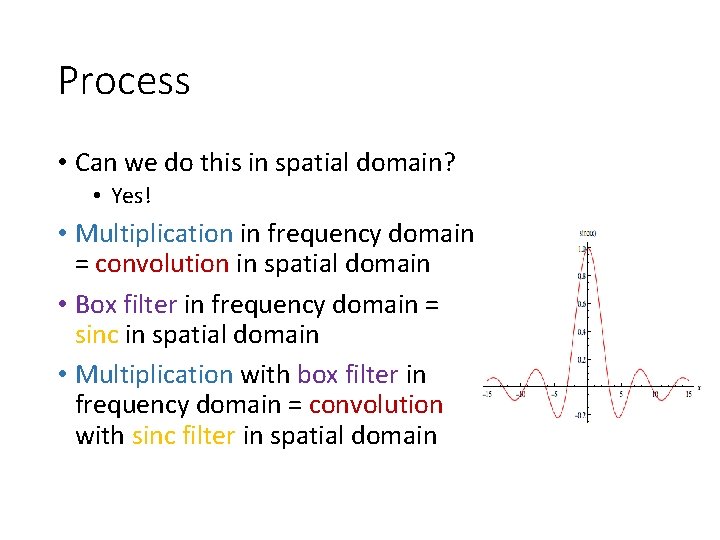
Process • Can we do this in spatial domain? • Yes! • Multiplication in frequency domain = convolution in spatial domain • Box filter in frequency domain = sinc in spatial domain • Multiplication with box filter in frequency domain = convolution with sinc filter in spatial domain
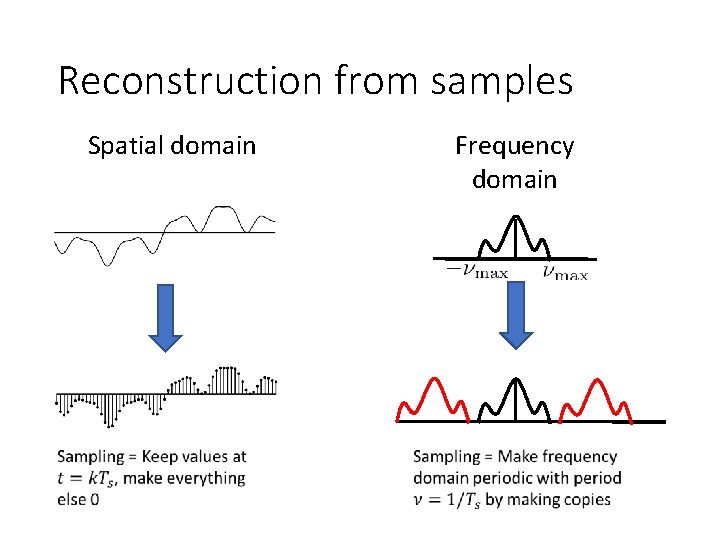
Reconstruction from samples Spatial domain Frequency domain
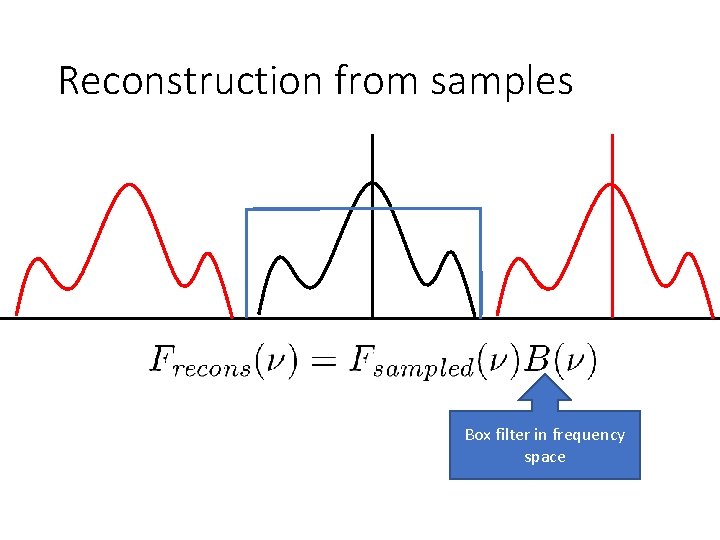
Reconstruction from samples Box filter in frequency space
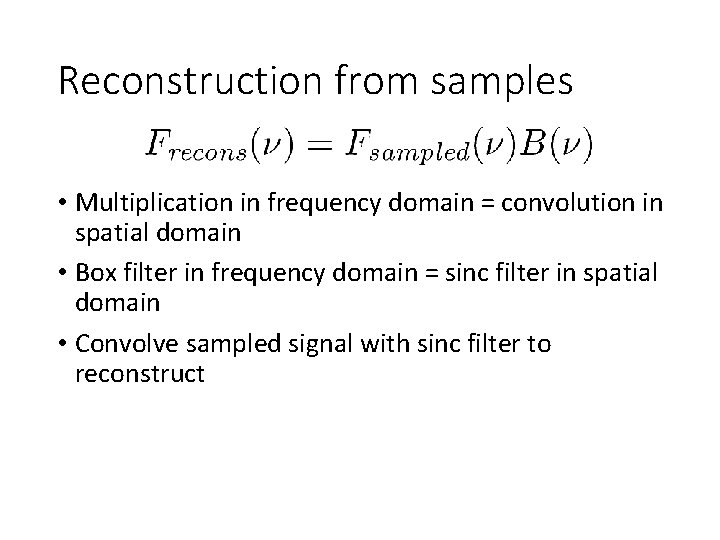
Reconstruction from samples • Multiplication in frequency domain = convolution in spatial domain • Box filter in frequency domain = sinc filter in spatial domain • Convolve sampled signal with sinc filter to reconstruct
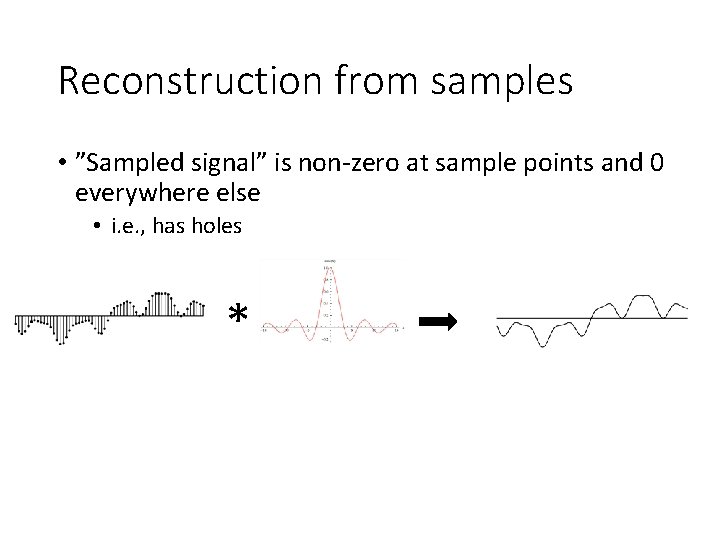
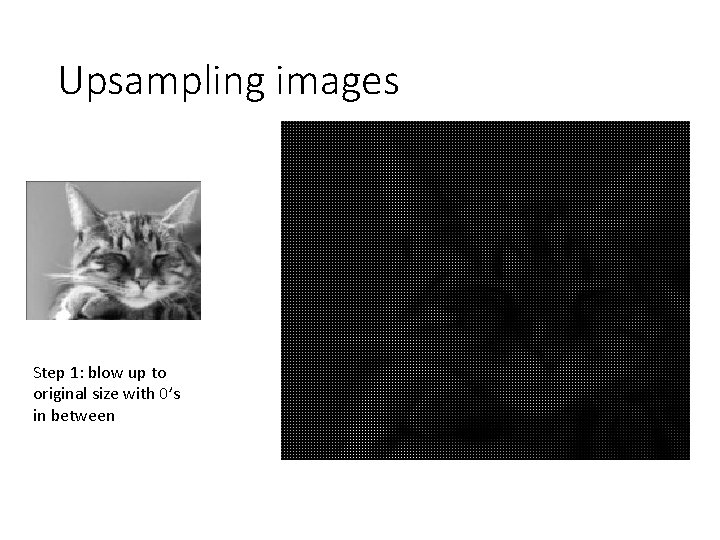
Reconstruction from samples • ”Sampled signal” is non-zero at sample points and 0 everywhere else • i. e. , has holes *
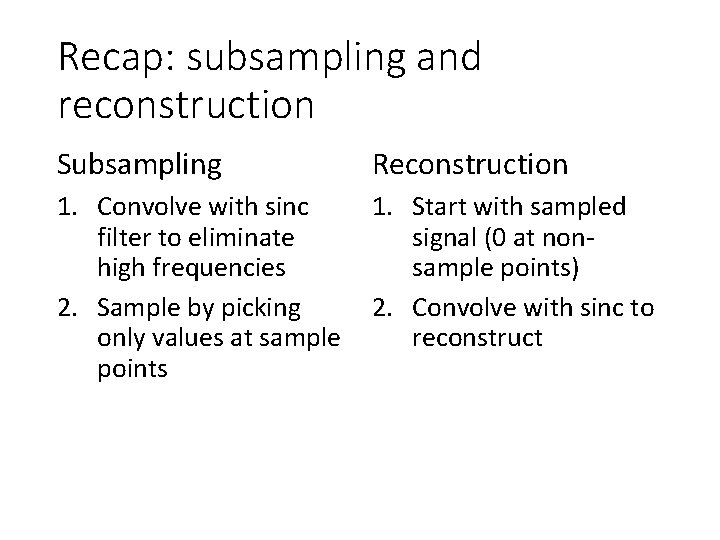
Recap: subsampling and reconstruction Subsampling Reconstruction 1. Convolve with sinc filter to eliminate high frequencies 2. Sample by picking only values at sample points 1. Start with sampled signal (0 at nonsample points) 2. Convolve with sinc to reconstruct
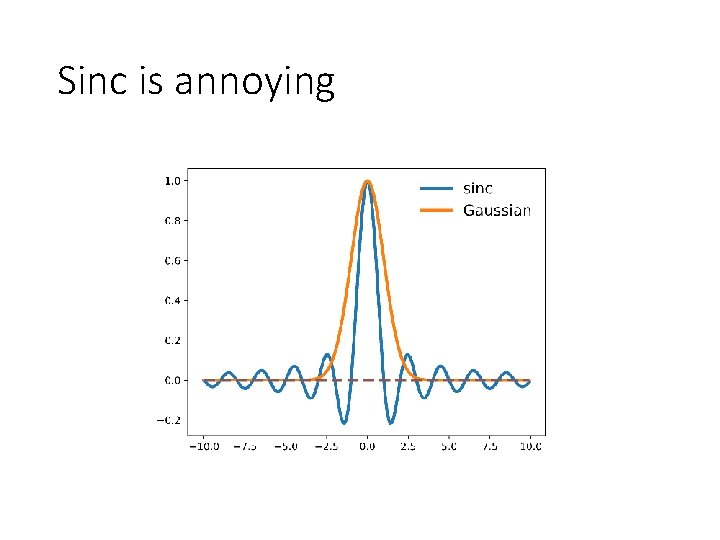
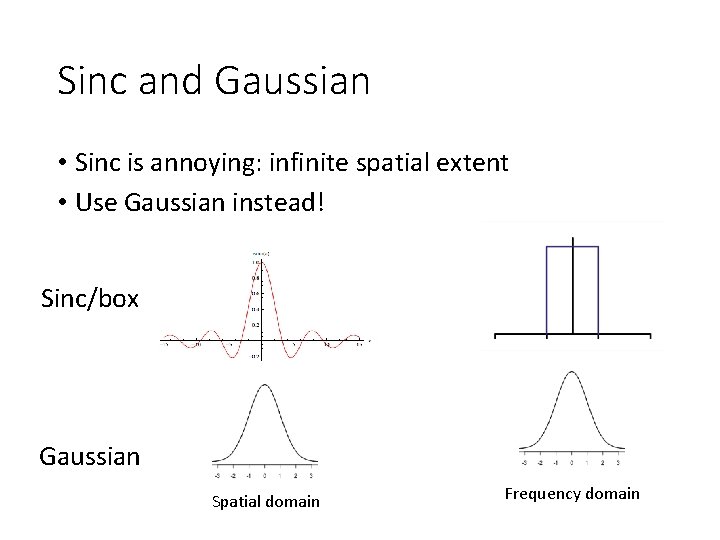
Sinc is annoying
Sinc and Gaussian • Sinc is annoying: infinite spatial extent • Use Gaussian instead! Sinc/box Gaussian Spatial domain Frequency domain
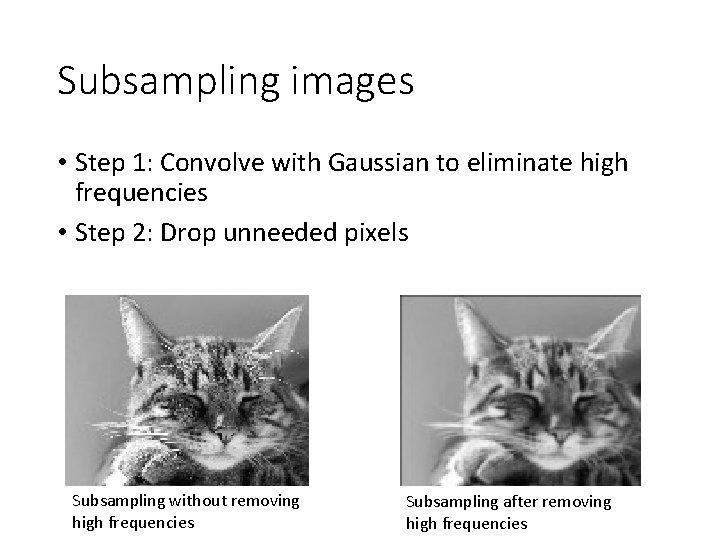
Subsampling images • Step 1: Convolve with Gaussian to eliminate high frequencies • Step 2: Drop unneeded pixels Subsampling without removing high frequencies Subsampling after removing high frequencies
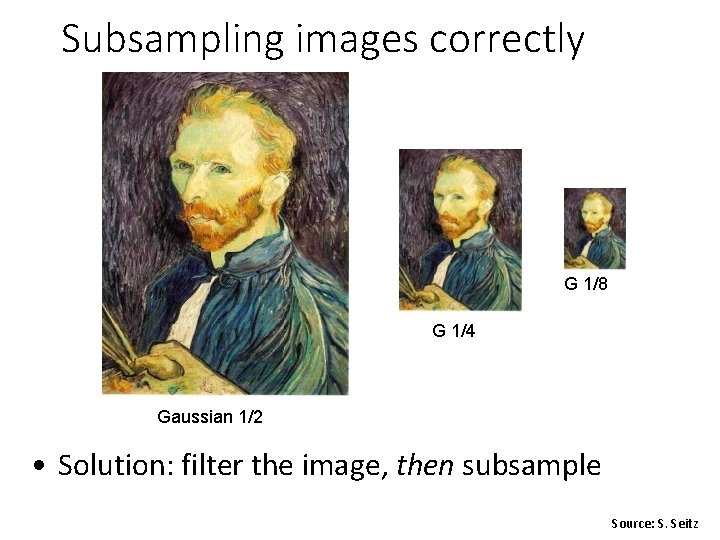
Subsampling images correctly G 1/8 G 1/4 Gaussian 1/2 • Solution: filter the image, then subsample Source: S. Seitz
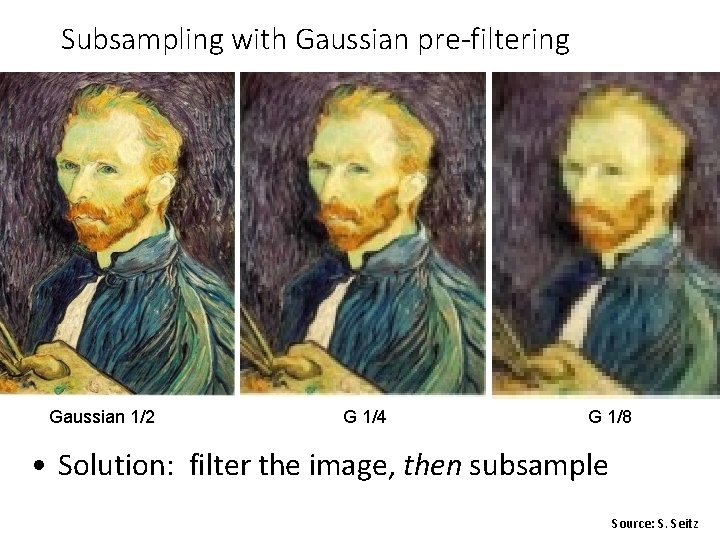
Subsampling with Gaussian pre-filtering Gaussian 1/2 G 1/4 G 1/8 • Solution: filter the image, then subsample Source: S. Seitz
Compare with. . . 1/2 1/4 (2 x zoom) 1/8 (4 x zoom) Source: S. Seitz
Upsampling images Step 1: blow up to original size with 0’s in between
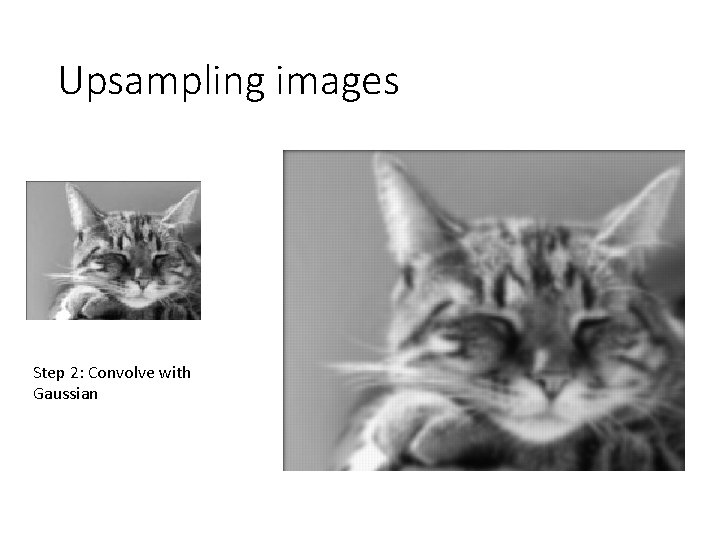
Upsampling images Step 2: Convolve with Gaussian
Take-away • Subsampling causes aliasing • High frequencies masquerading as low frequencies • Remove low frequencies by blurring! • Ideal: sinc • Common: Gaussian • When upsampling, reconstruct missing values by convolution • Ideal: sinc • Common: Gaussian
So… can we enhance? • Nyquist theorem limits frequencies we can reconstruct from subsampled image • Can only reconstruct max sampling frequency/2 • Sorry CSI!
Pyramids
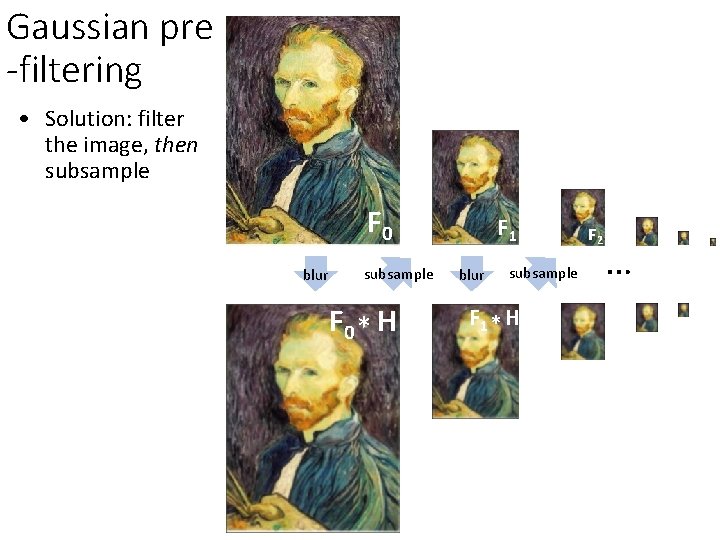
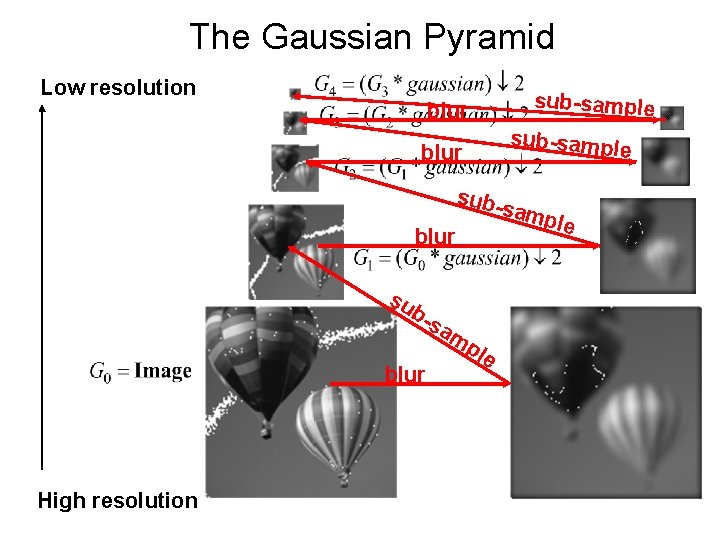
Gaussian pre -filtering • Solution: filter the image, then subsample F 0 blur subsample F 0 * H F 1 blur subsample F 1 * H F 2 …
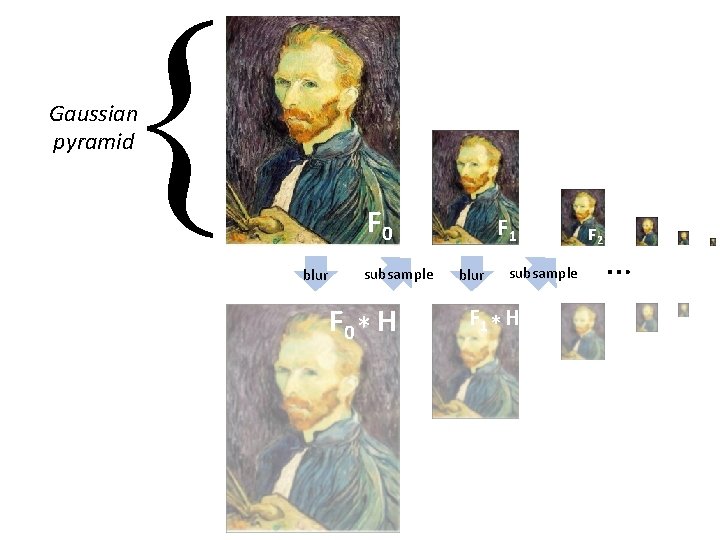
{ Gaussian pyramid F 0 blur subsample F 0 * H F 1 blur subsample F 1 * H F 2 …
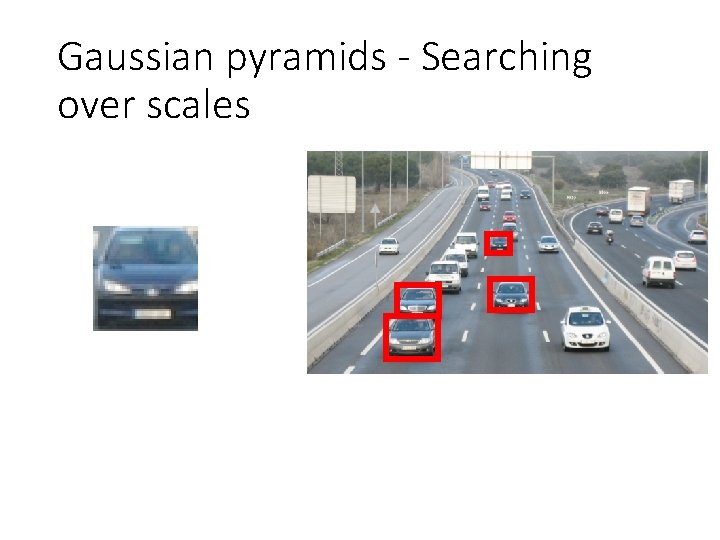
Gaussian pyramids [Burt and Adelson, 1983] • In computer graphics, a mip map [Williams, 1983] Gaussian Pyramids have all sorts of applications in computer vision Source: S. Seitz
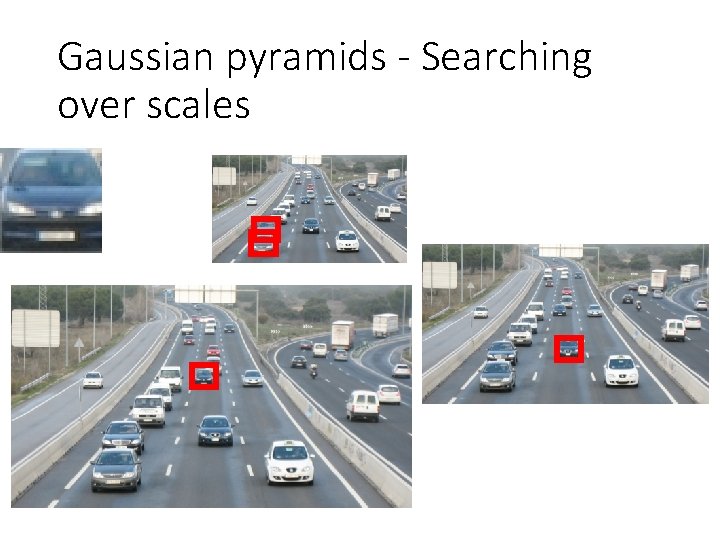
Gaussian pyramids - Searching over scales
Gaussian pyramids - Searching over scales
The Gaussian Pyramid Low resolution sub-sample blur sub-samp le blur su subsam b- blur High resolution sa mp le ple
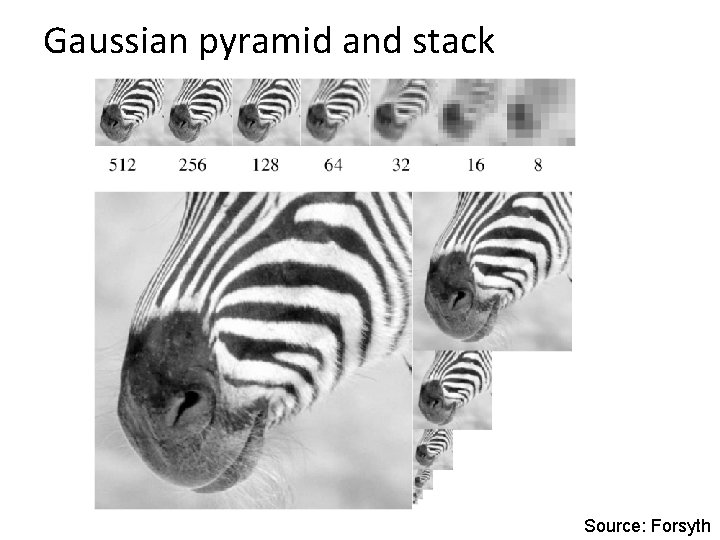
Gaussian pyramid and stack Source: Forsyth
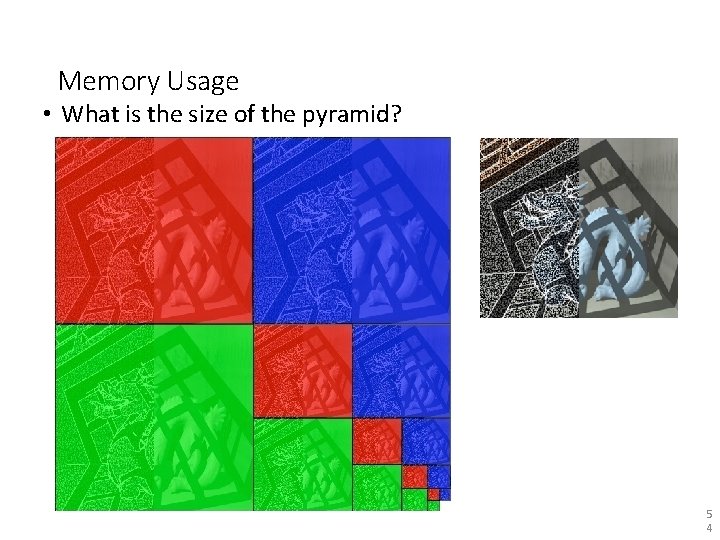
Memory Usage • What is the size of the pyramid? 5 4
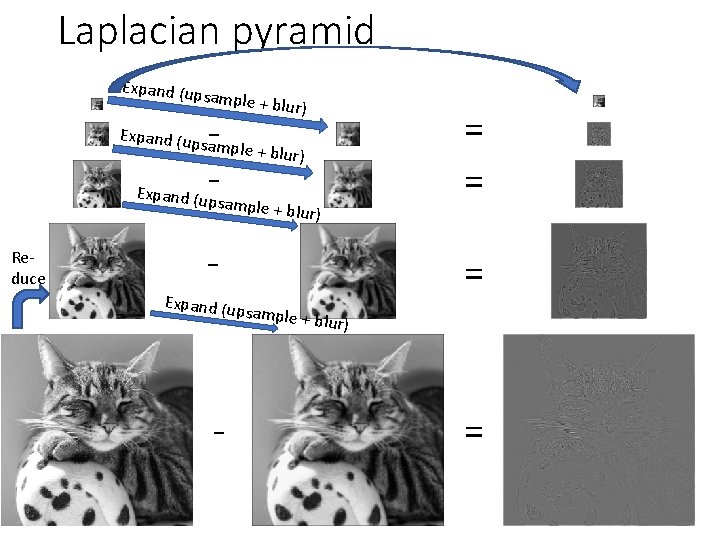
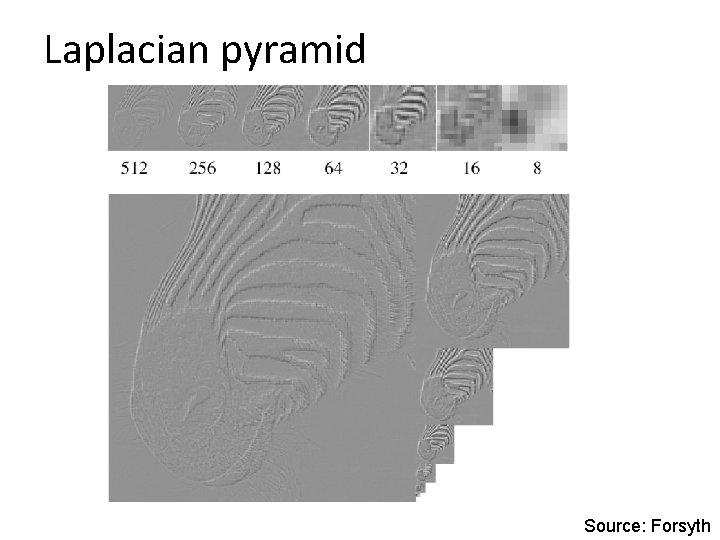
Laplacian pyramid Expand (up sample + b lur) -sam Expand (up sample + b l ur) ple + blur) Reduce Expand (up - = = = sample + b lur) =
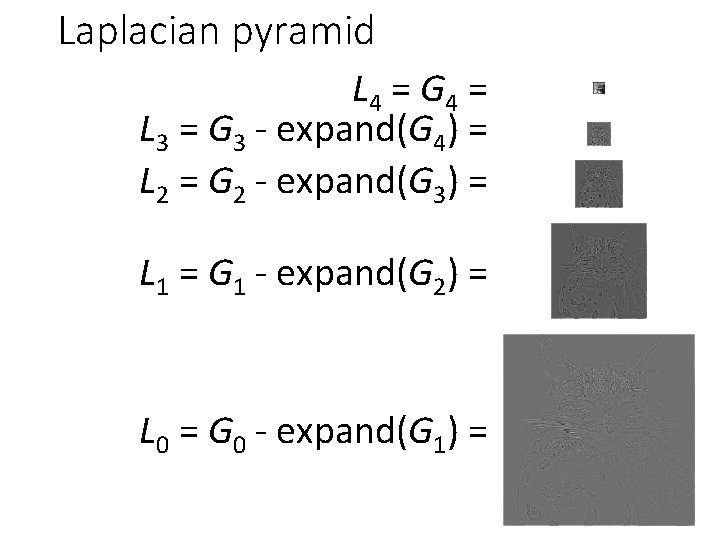
Laplacian pyramid L 4 = G 4 = L 3 = G 3 - expand(G 4) = L 2 = G 2 - expand(G 3) = L 1 = G 1 - expand(G 2) = L 0 = G 0 - expand(G 1) =
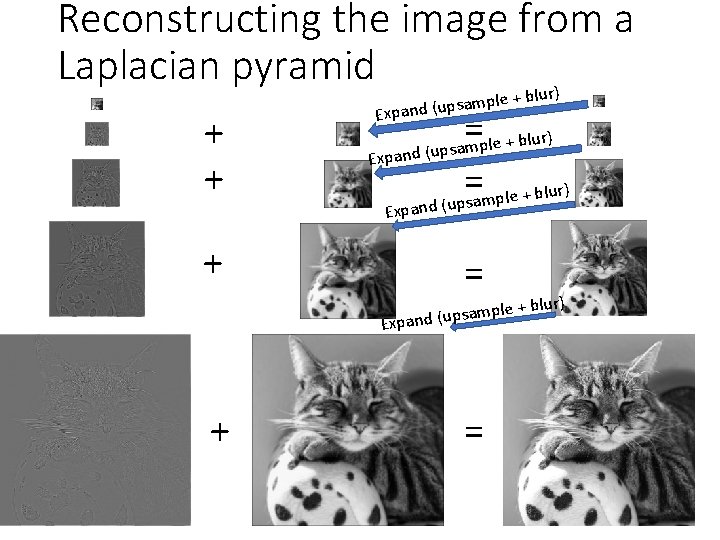
Reconstructing the image from a Laplacian pyramid lur) + + + le + b samp p u ( d n a p x E = = blur) + e l p m a s d (up + blur) e l p m a s p Expand (u Expan = lur) le + b p m a s p u ( Expand + =
Laplacian pyramid Source: Forsyth