
FOURIER TRANSFORM INFRARED SPECTROSCOPY Seda Yerli 20824388 Serap
- Slides: 35
FOURIER TRANSFORM INFRARED SPECTROSCOPY Seda Yerli 20824388 Serap Sunatepe 20824245 Gonca Çalışkan 20823894 Beytepe, Ankara 12. 04. 2012
OUTLINE §History of IR Radiation and FTIR §General Information about IR Spectroscopy §Types of IR Spectrometers §Sample Preparation §Instrumentation §Applications of FTIR
Goals of presentation; To give general information § about differences between IR spectrometers § about FTIR theory
History of IR and FTIR spectroscopy v Chemical IR spectroscopy was emerged as a science in 1800 by Sir William Herschel v Firstly most IR instrumentation was based on prism or grating monochromators v Michelson invented interferometer in 1881
v In 1949 Peter Fellgett obtained the first IR spectrum by using FTIR spectrometer v In 1960 s commercial FTIR spectrometers appeared v In 1966 Cooley-Tukey developed an algorithm, which quickly does a Fourier transform
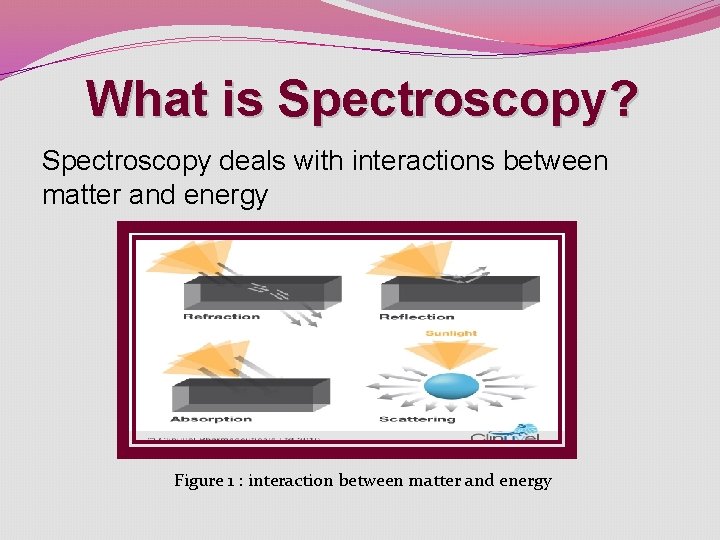
What is Spectroscopy? Spectroscopy deals with interactions between matter and energy Figure 1 : interaction between matter and energy
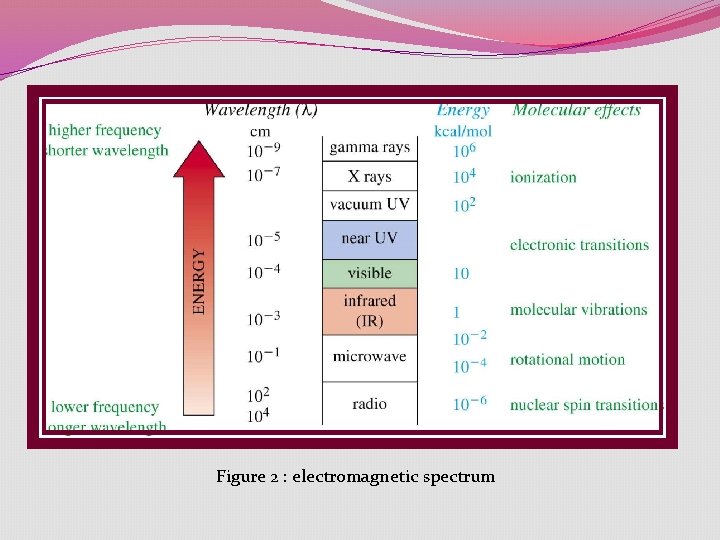
Figure 2 : electromagnetic spectrum
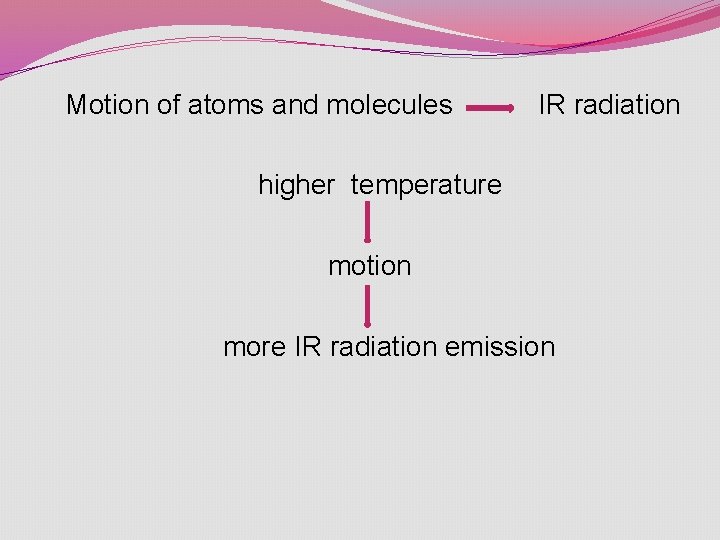
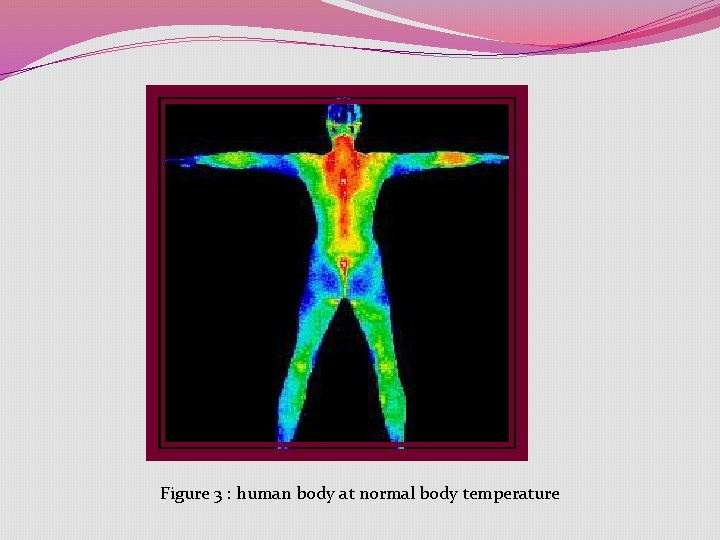
Motion of atoms and molecules IR radiation higher temperature motion more IR radiation emission
Figure 3 : human body at normal body temperature
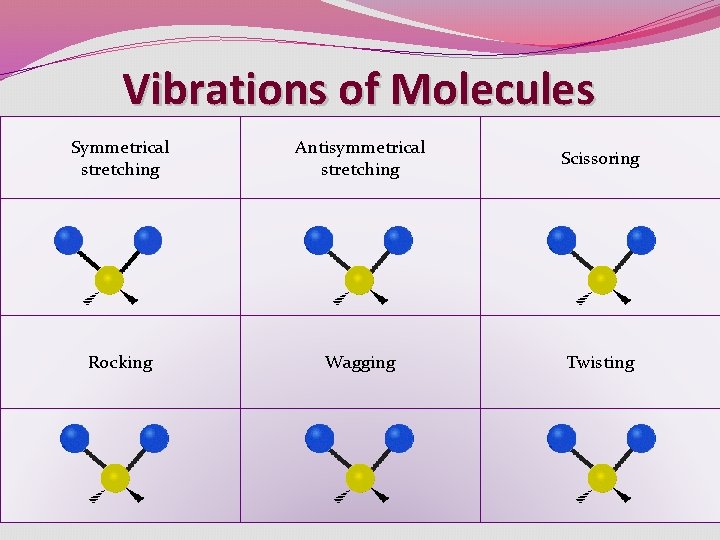
Vibrations of Molecules Symmetrical stretching Antisymmetrical stretching Scissoring Rocking Wagging Twisting
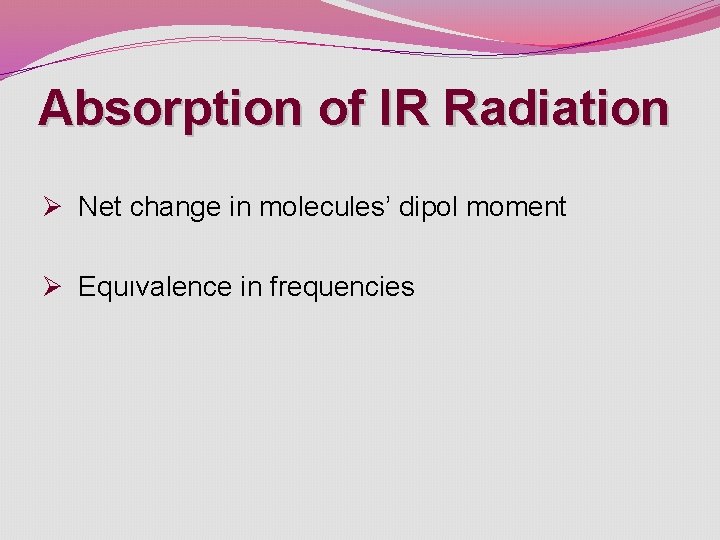
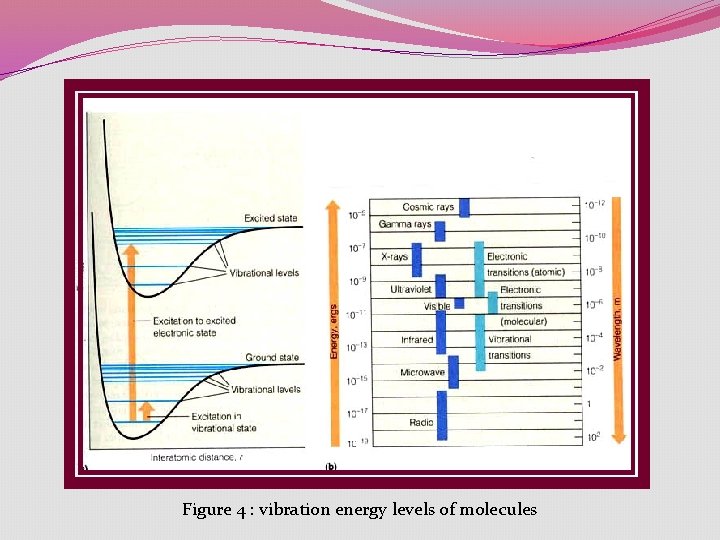
Absorption of IR Radiation Ø Net change in molecules’ dipol moment Ø Equıvalence in frequencies
Figure 4 : vibration energy levels of molecules
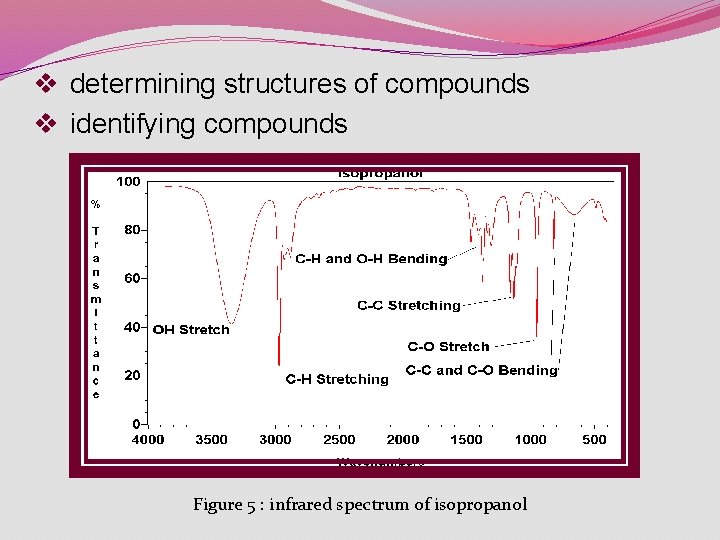
The spectrum tells us; The infrared spectrum for a molecule is a graphical display The spectrum has two regions: v The fingerprint region 600 -1200 cm-1 v Functional group region 1200 -3600 cm-1
v determining structures of compounds v identifying compounds Figure 5 : infrared spectrum of isopropanol
Two types of instrumentations are used to obtain IR spectrum; Ø Dispersive Type Ø Fourier Transform Infrared (FTIR)
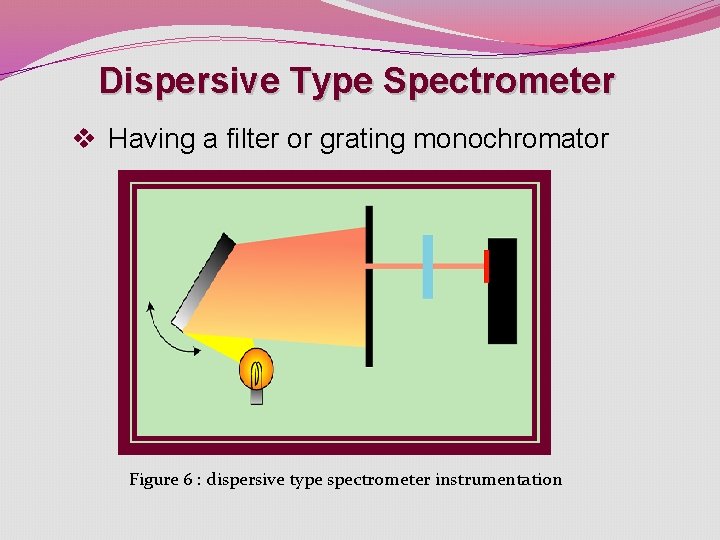
Dispersive Type Spectrometer v Having a filter or grating monochromator Figure 6 : dispersive type spectrometer instrumentation
Fourier Transform Infrared Spectrometer v v collecting an interferogram simultaneously measuring acquiring and digitizing the interferogram outputing the spectrum
Why FT-IR spectroscopy? v v v Non-destructive technique Good precision No external calibration High speed Signal-Noise ratio Mechanically simple
What information can FT-IR provide? v Identify unknown material v Determine quality or consistency of sample v Determine amount of components in mixture
Sample Preparation Ø Gaseous samples Long pathlength to compensate for the diluteness Ø Liquid samples Can be sandwiched between two plates of a salt • sodium chloride • potassium bromide • calcium fluoride
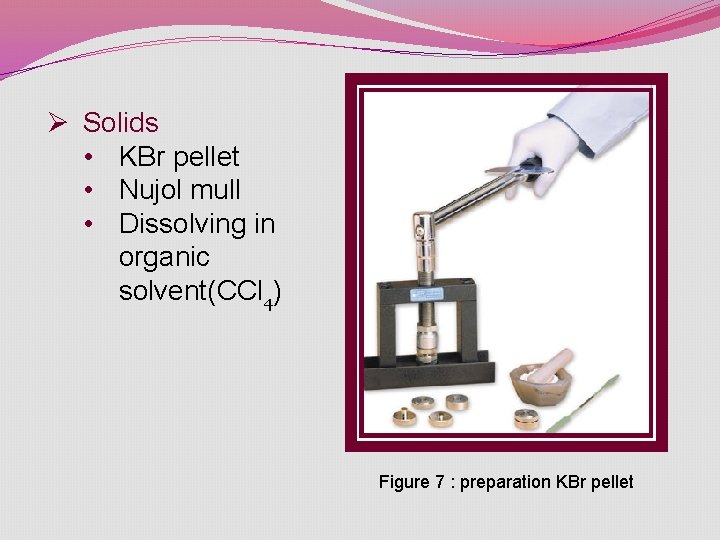
Ø Solids • KBr pellet • Nujol mull • Dissolving in organic solvent(CCl 4) Figure 7 : preparation KBr pellet
INSTRUMENTATION 1. Radiation Sources Black-body radiation v Nernst filament (Zr. O and some other rare earth oxides) v Globar (Si-C) v Ni-Cr wire v Heated ceramic v Mercury lamp
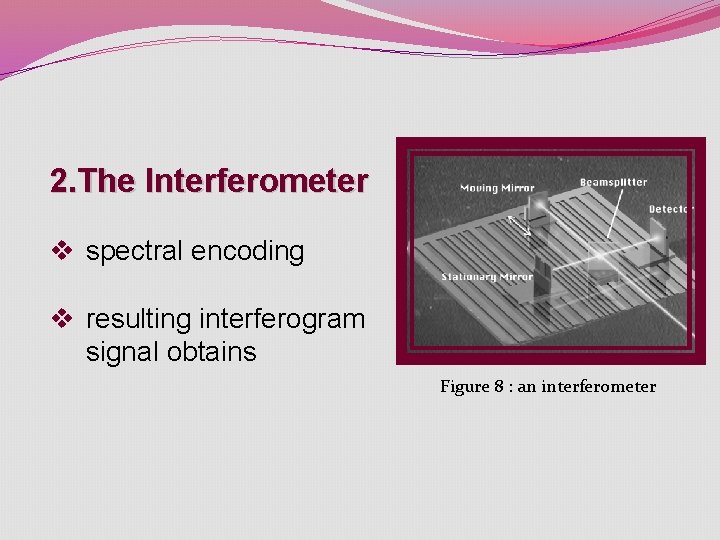
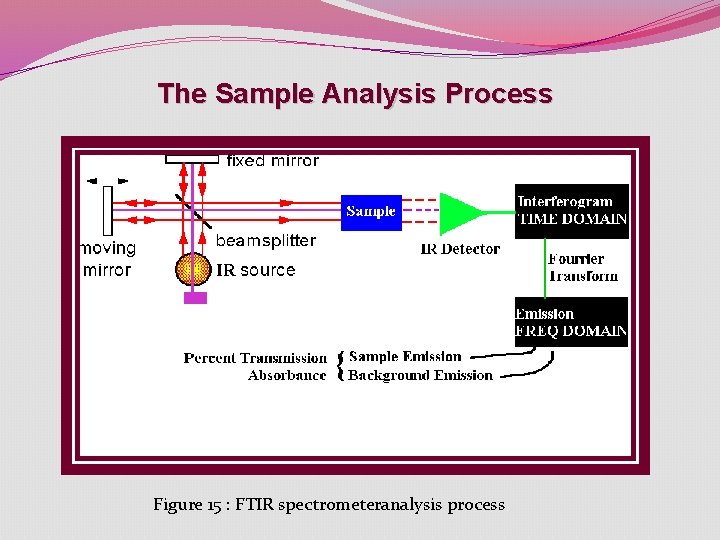
2. The Interferometer v spectral encoding v resulting interferogram signal obtains Figure 8 : an interferometer
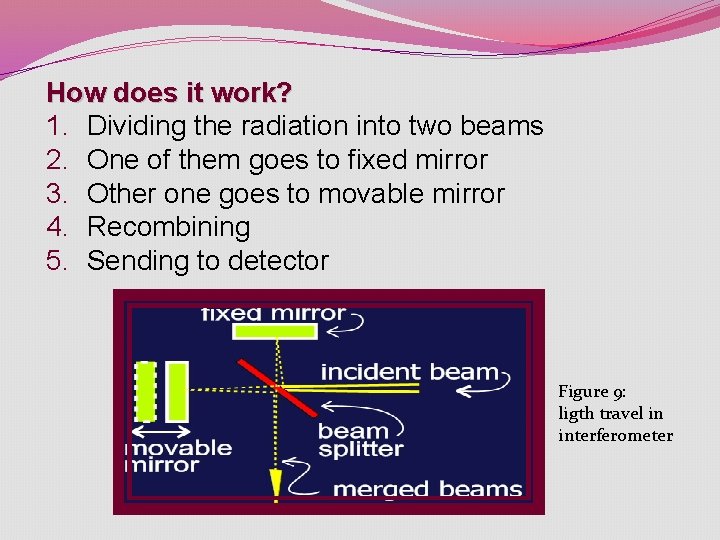
How does it work? 1. Dividing the radiation into two beams 2. One of them goes to fixed mirror 3. Other one goes to movable mirror 4. Recombining 5. Sending to detector Figure 9: ligth travel in interferometer
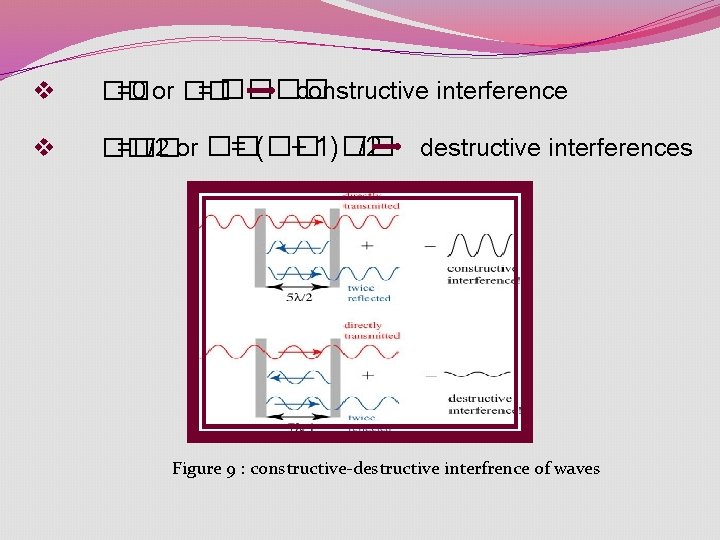
v �� =0 or �� = ���� constructive interference v �� =�� /2 or �� = (�� + 1)�� /2 destructive interferences Figure 9 : constructive-destructive interfrence of waves
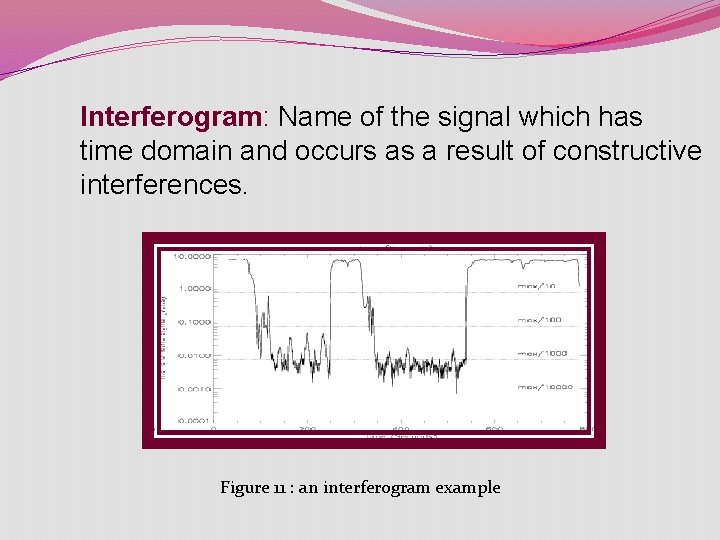
Interferogram: Name of the signal which has time domain and occurs as a result of constructive interferences. Figure 11 : an interferogram example
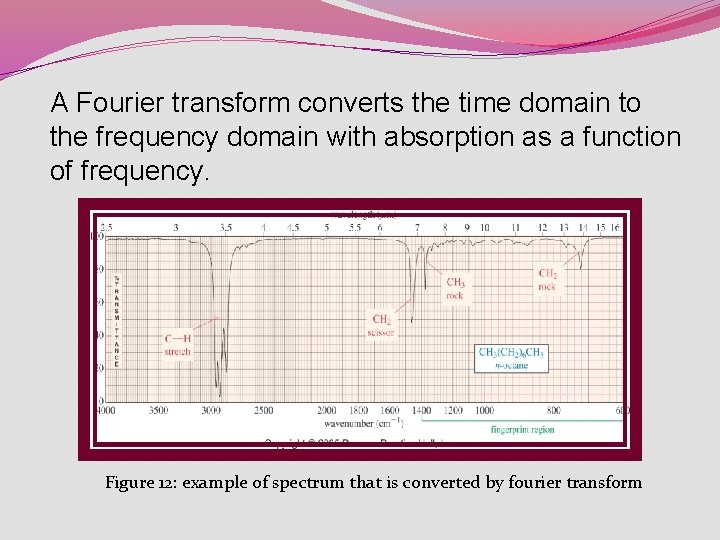
A Fourier transform converts the time domain to the frequency domain with absorption as a function of frequency. Figure 12: example of spectrum that is converted by fourier transform
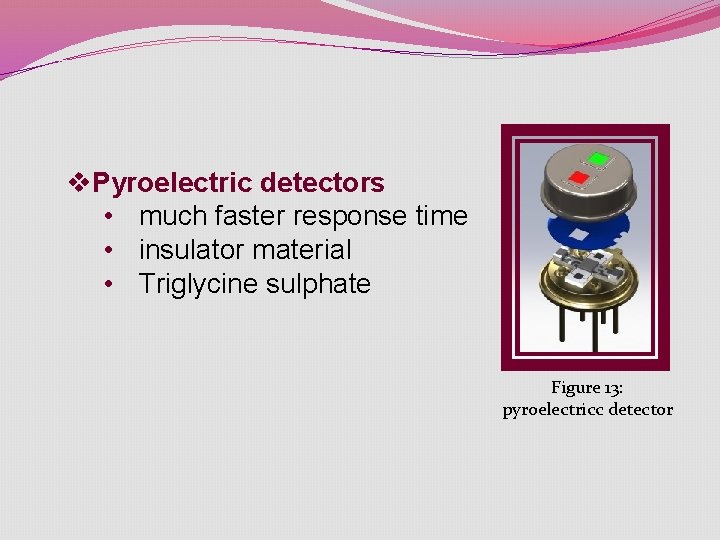
3. Detectors The beam finally passes to the detector v Thermal detectors • Thermocouples • Bolometer v. Photoconducting detectors • most sensitive detectors.
v. Pyroelectric detectors • much faster response time • insulator material • Triglycine sulphate Figure 13: pyroelectricc detector
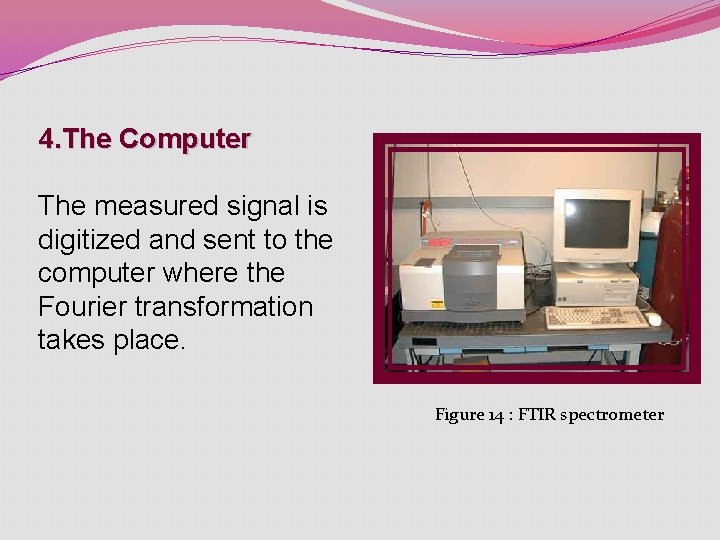
4. The Computer The measured signal is digitized and sent to the computer where the Fourier transformation takes place. Figure 14 : FTIR spectrometer
The Sample Analysis Process Figure 15 : FTIR spectrometeranalysis process
Applications of FT-IR Pharmaceutical research Forensic investigations Polymer analysis Lubricant formulation and fuel additives Foods research Quality assurance and control Environmental and water quality analysis methods v Biochemical and biomedical research coatings and surfactants v v v v
References § Introduction to Spectroscopy , Donald L. Pavia § Infrared Spectroscopy in Conservation Science, Michele R Derrick, Dusan Stulik, James M. Landry § http: //resources. yesicanscience. ca/trek/scisat/final/g rade 9/spectrometer 2. html § http: //roadtickle. com/10 -cool-facts-about-the-human -body
§ http: //www. health. clinuvel. com/en/uv-light-a-skin § http: //mmrc. caltech. edu/FTIRintro. pdf § Hacettepe Üniversitesi Fen Fakültesi Enstrümental Analiz Deneyleri Föyü
Thank You for Listening