
Fourier Transform Fourier Transform Any signal can be

Fourier Transform
Fourier Transform • Any signal can be expressed as a linear combination of a bunch of sine gratings of different frequency ●Amplitude ●Phase 2
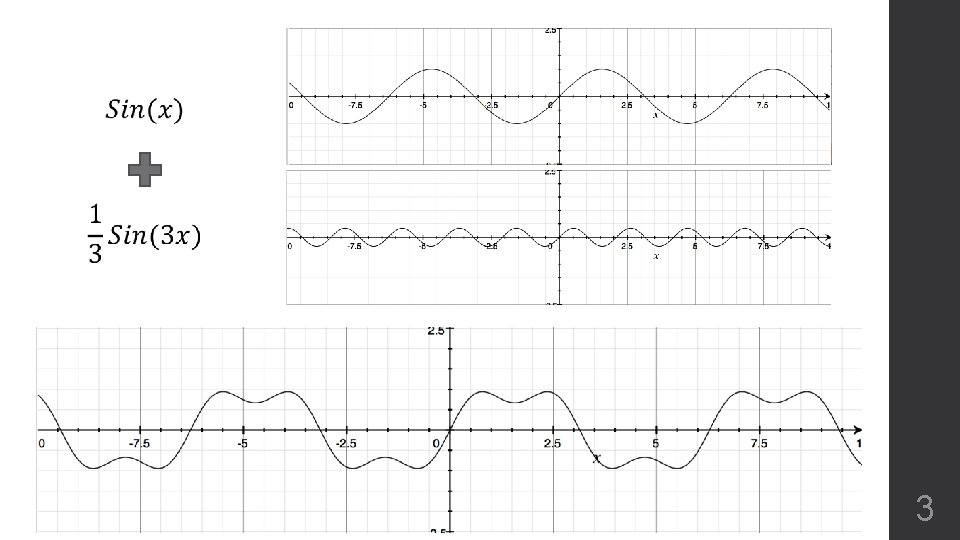
3
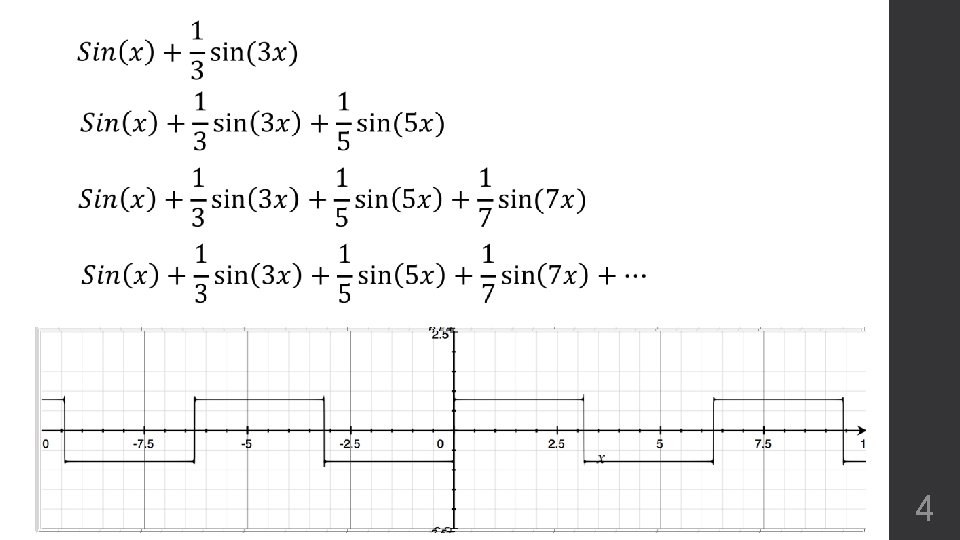
4
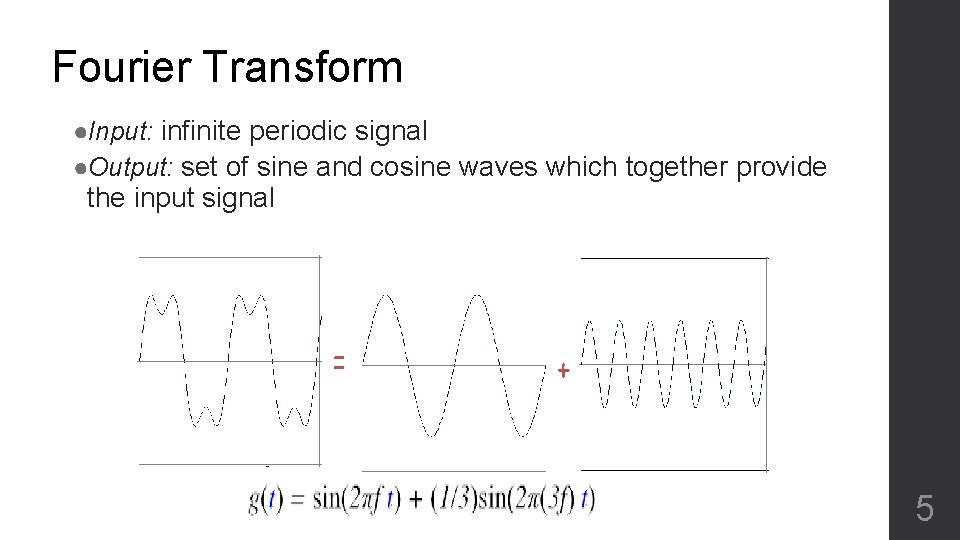
Fourier Transform ●Input: infinite periodic signal ●Output: set of sine and cosine waves which together provide the input signal 5

Fourier Transform • Digital Signals ●Hardly periodic ●Never infinite 6
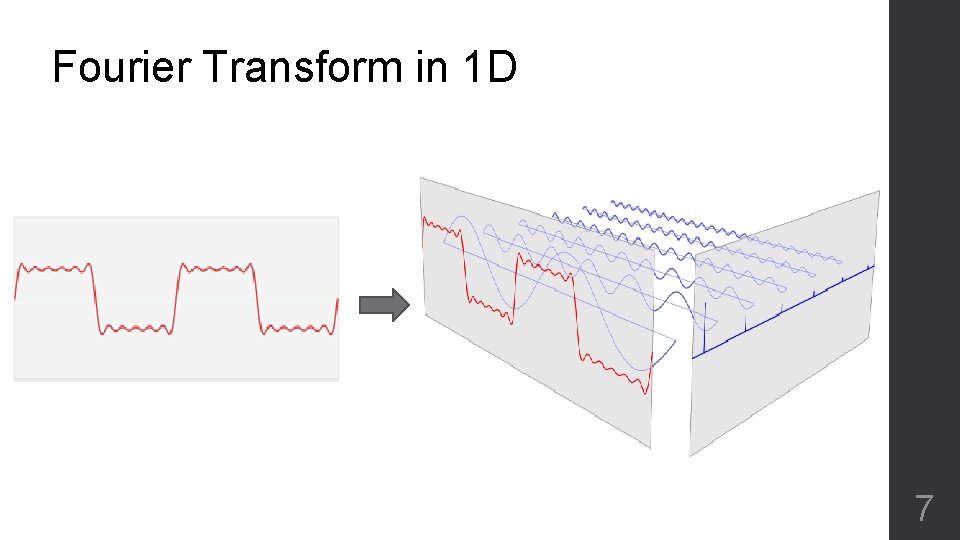
Fourier Transform in 1 D 7
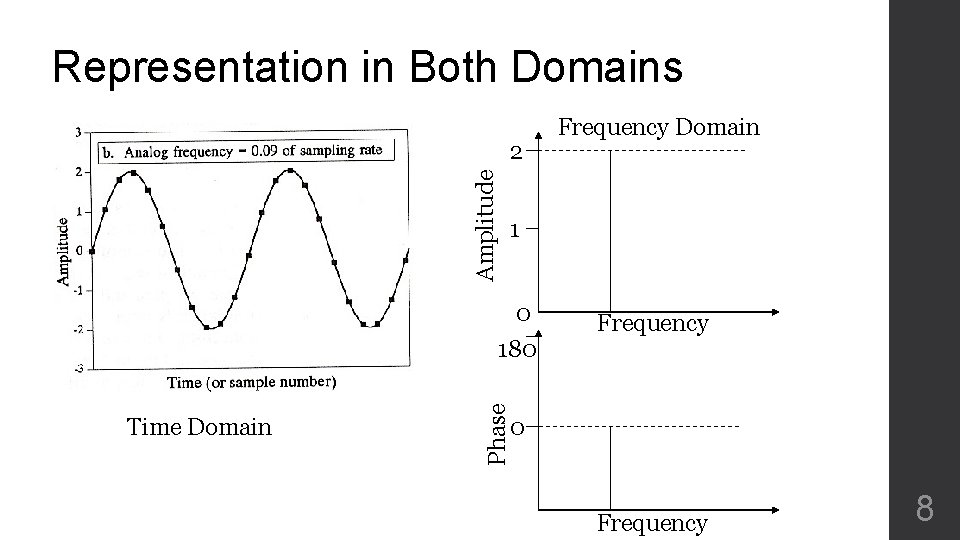
Representation in Both Domains Amplitude 2 1 Frequency Phase 0 180 Time Domain Frequency Domain 0 Frequency 8
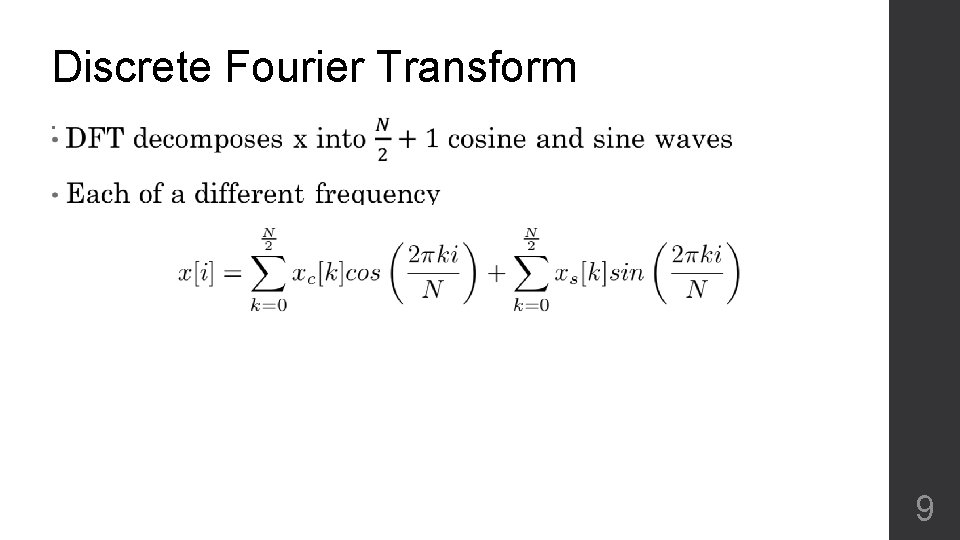
Discrete Fourier Transform • 9
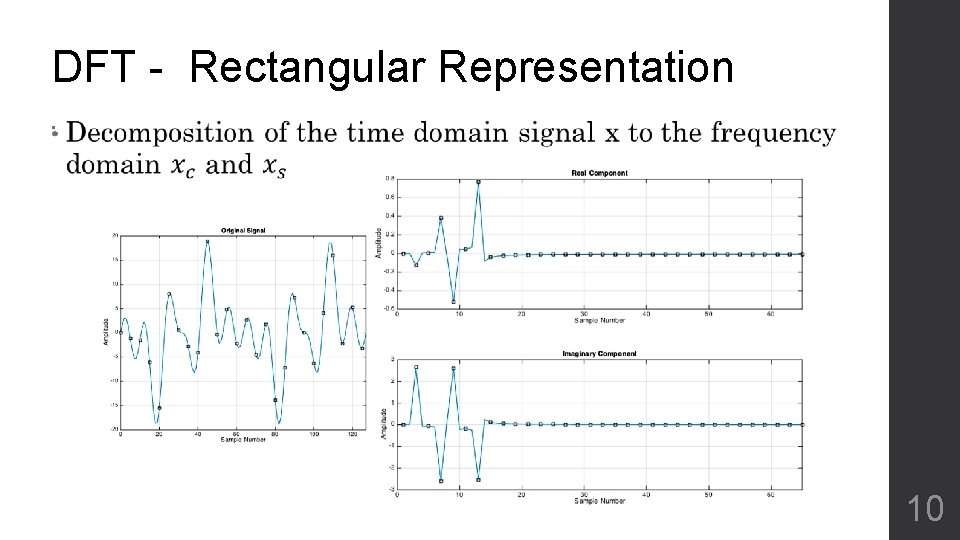
DFT - Rectangular Representation • 10
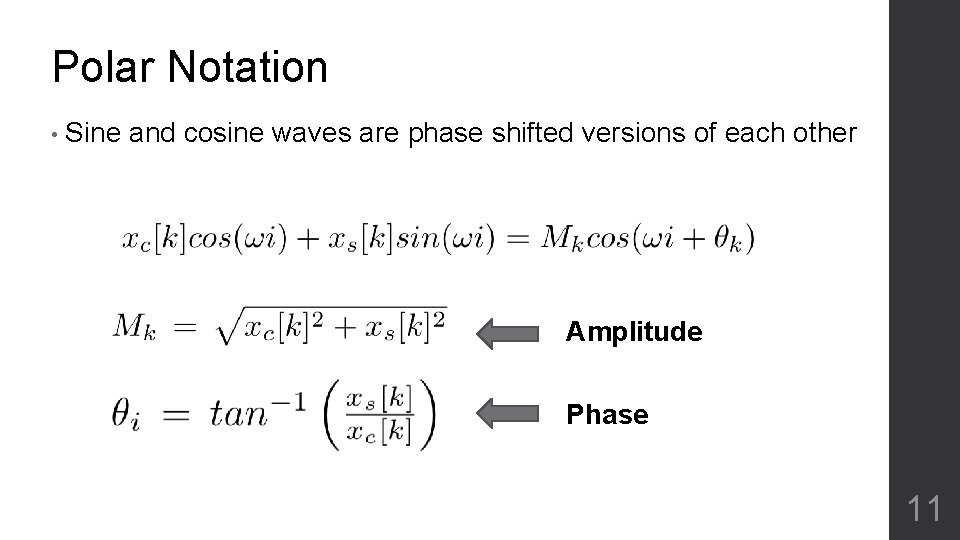
Polar Notation • Sine and cosine waves are phase shifted versions of each other Amplitude Phase 11
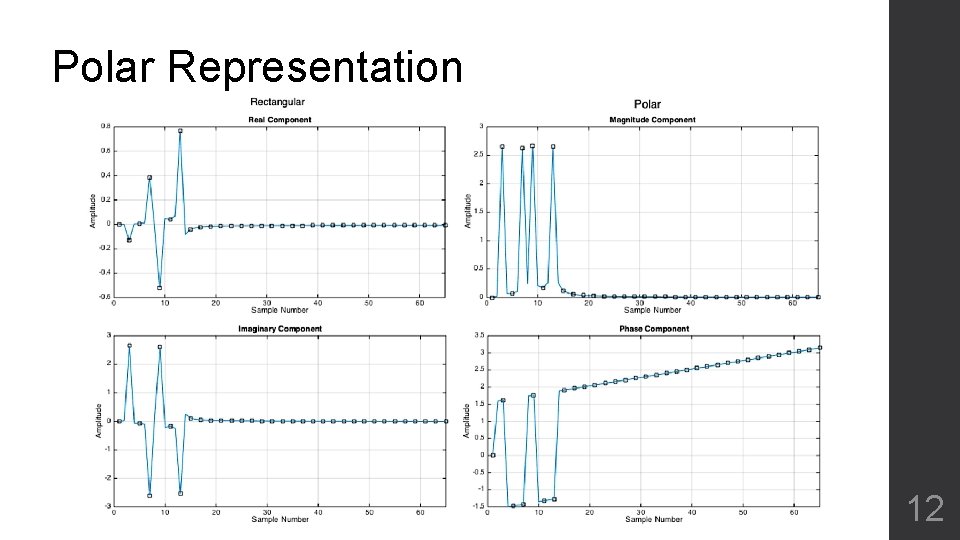
Polar Representation 12
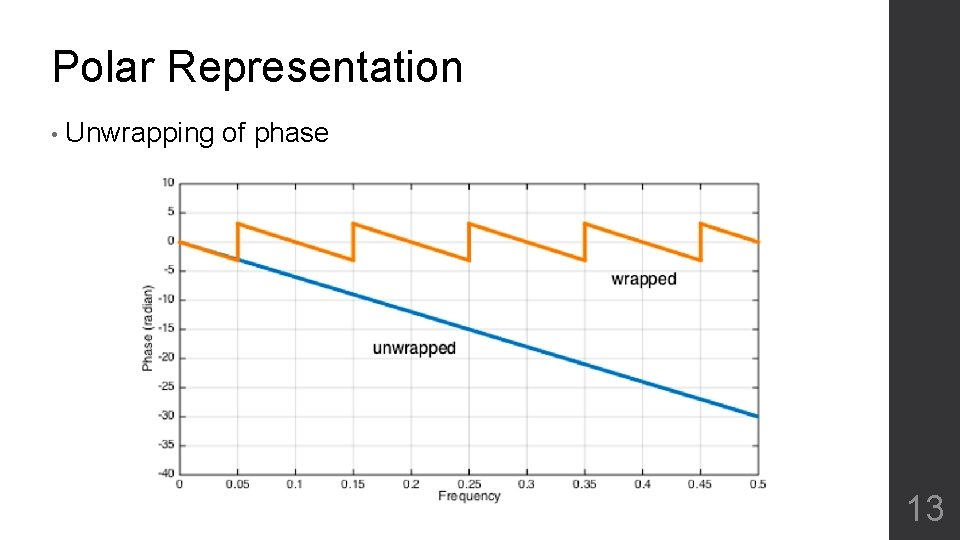
Polar Representation • Unwrapping of phase 13
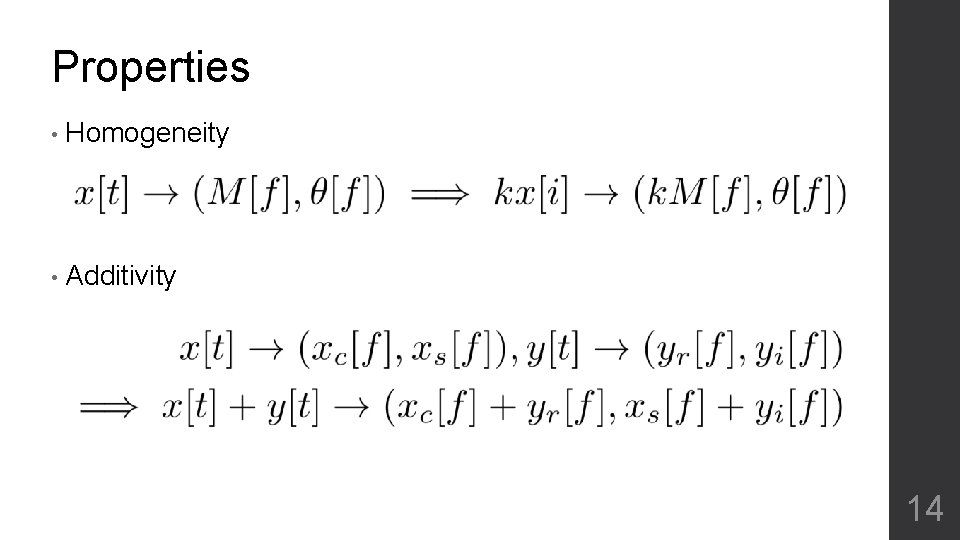
Properties • Homogeneity • Additivity 14
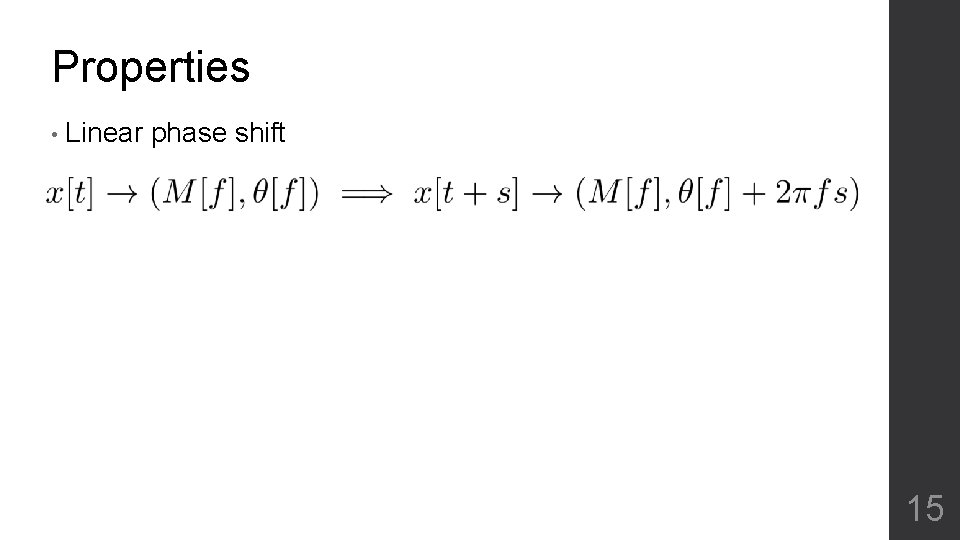
Properties • Linear phase shift 15
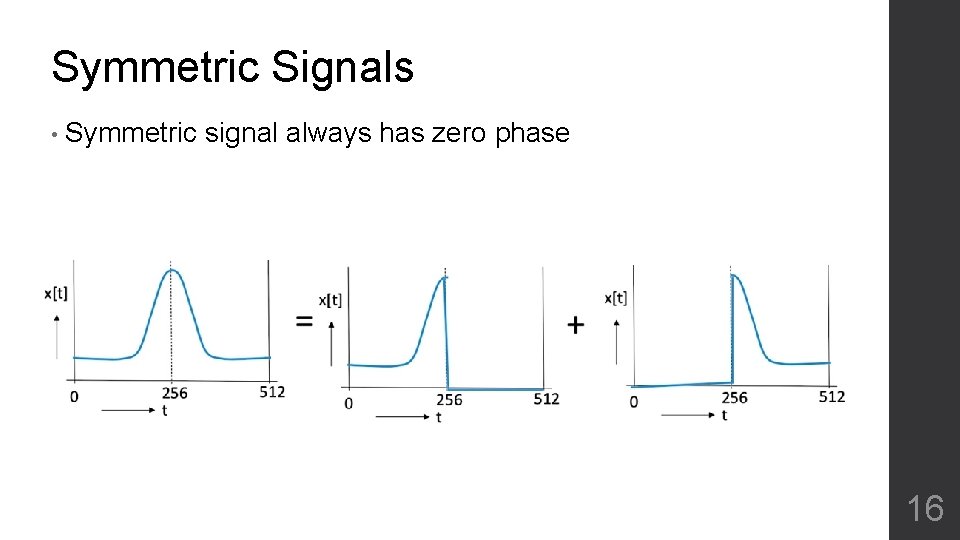
Symmetric Signals • Symmetric signal always has zero phase 16
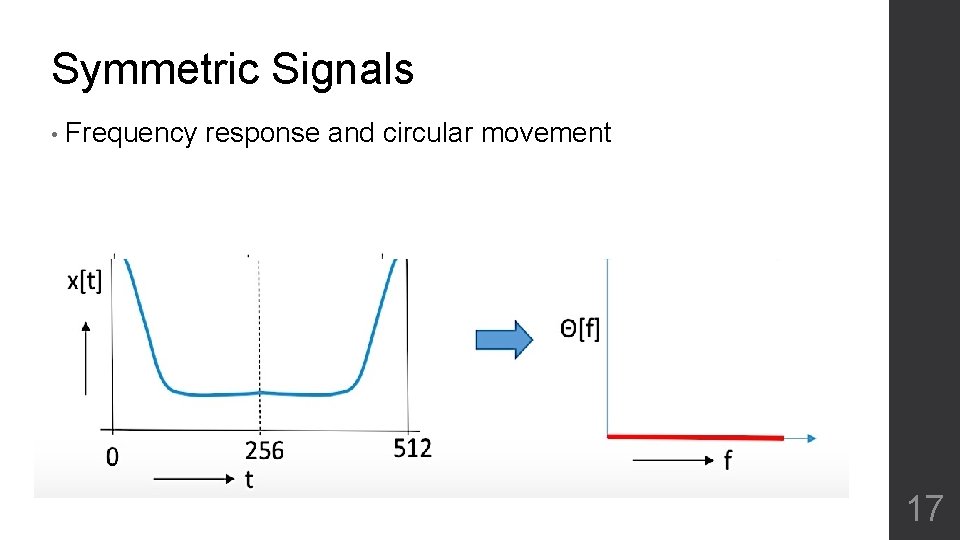
Symmetric Signals • Frequency response and circular movement 17
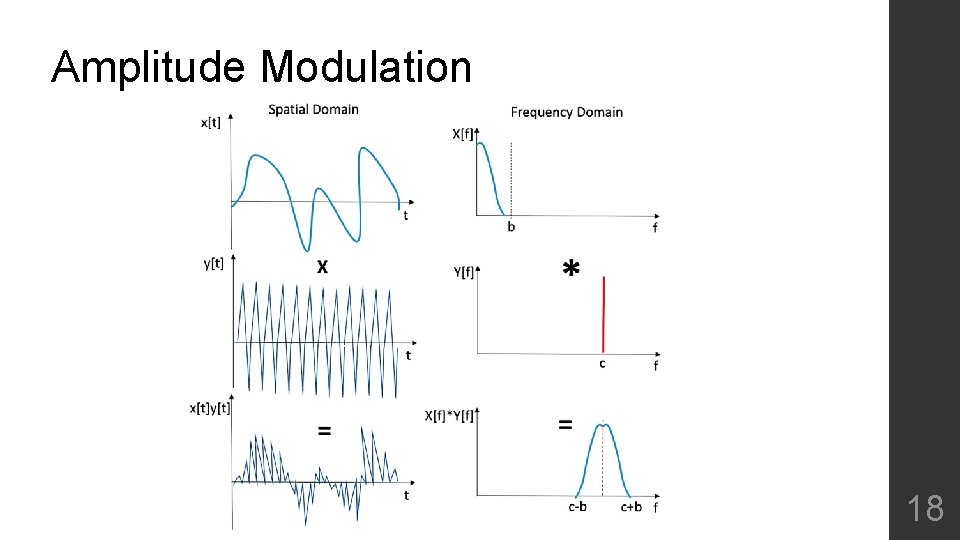
Amplitude Modulation 18
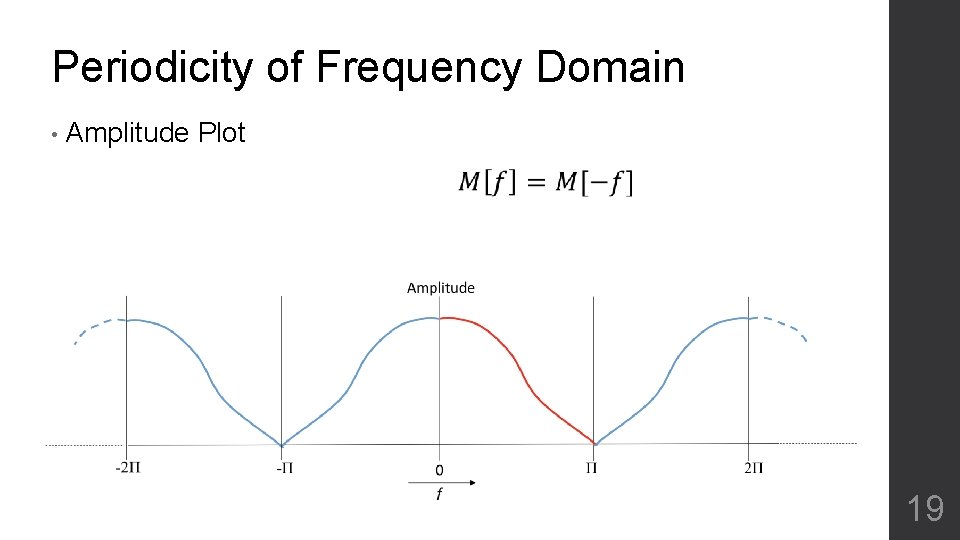
Periodicity of Frequency Domain • Amplitude Plot 19
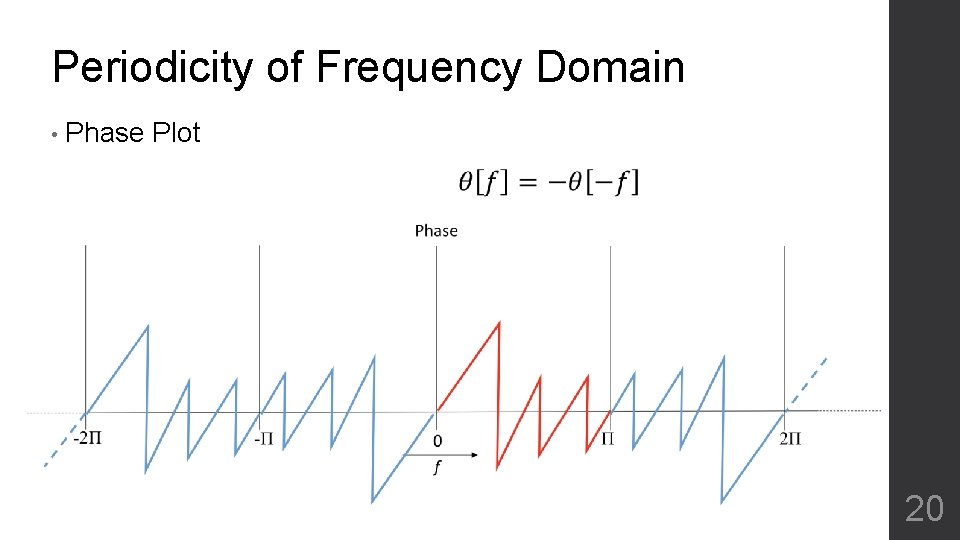
Periodicity of Frequency Domain • Phase Plot 20
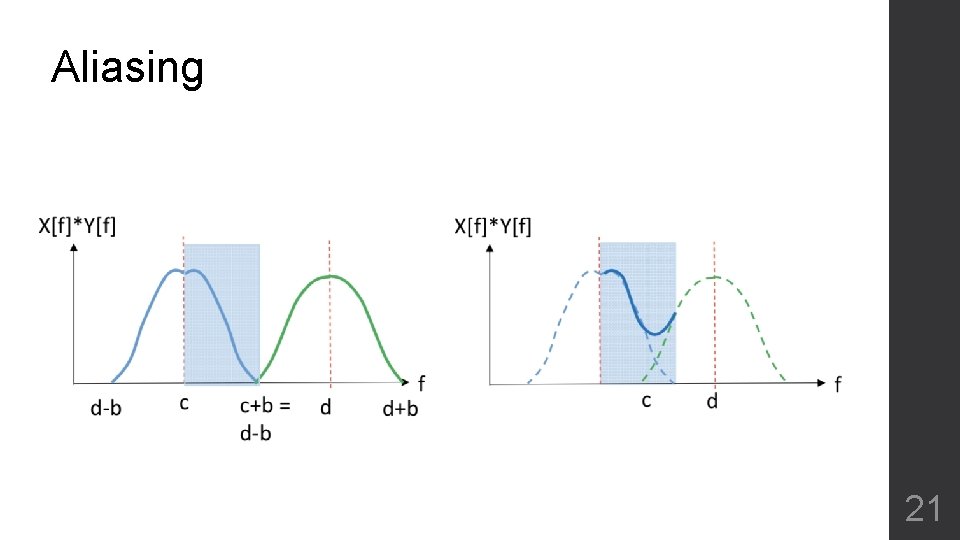
Aliasing 21
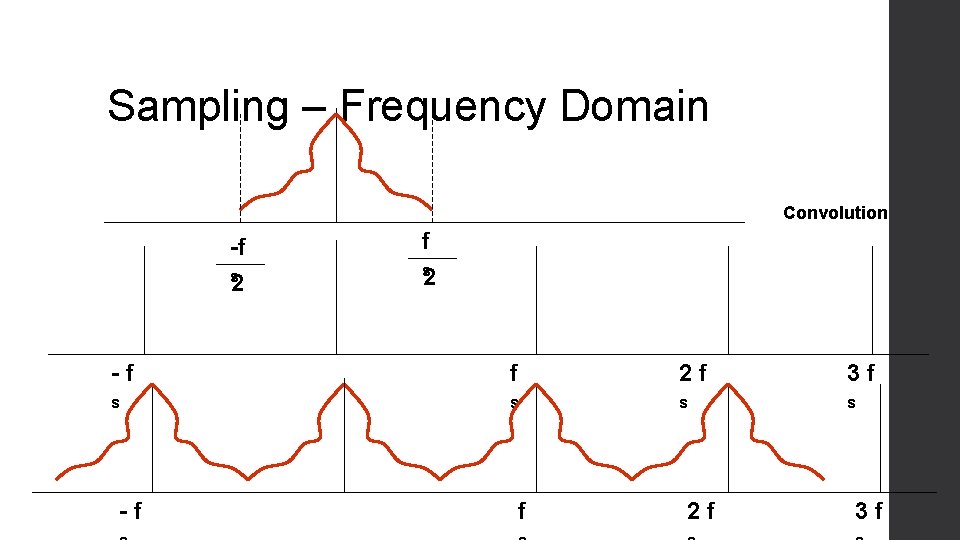
Sampling – Frequency Domain Convolution -f f s s 2 2 -f f 2 f 3 f s s -f f 2 f 3 f
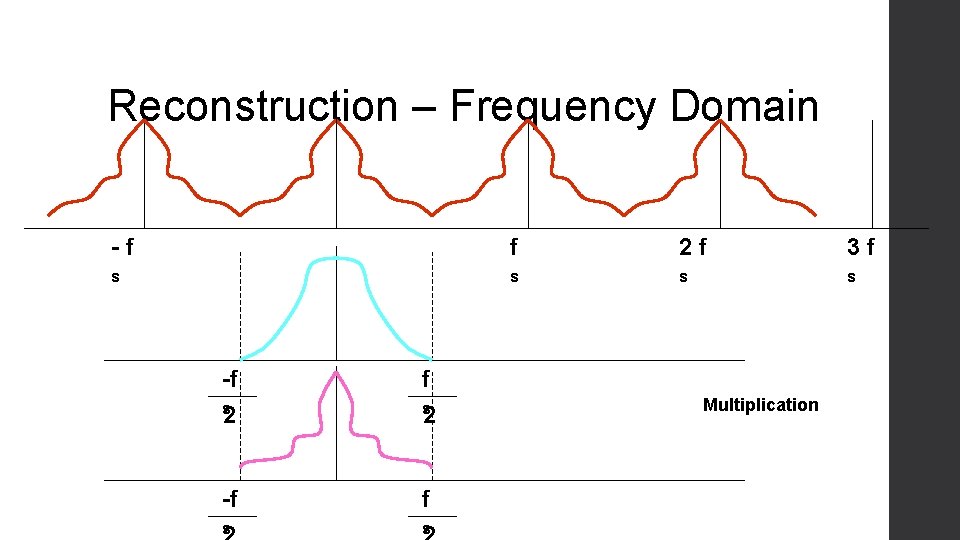
Reconstruction – Frequency Domain -f f 2 f 3 f s s -f f s 2 s -f f s s 2 Multiplication
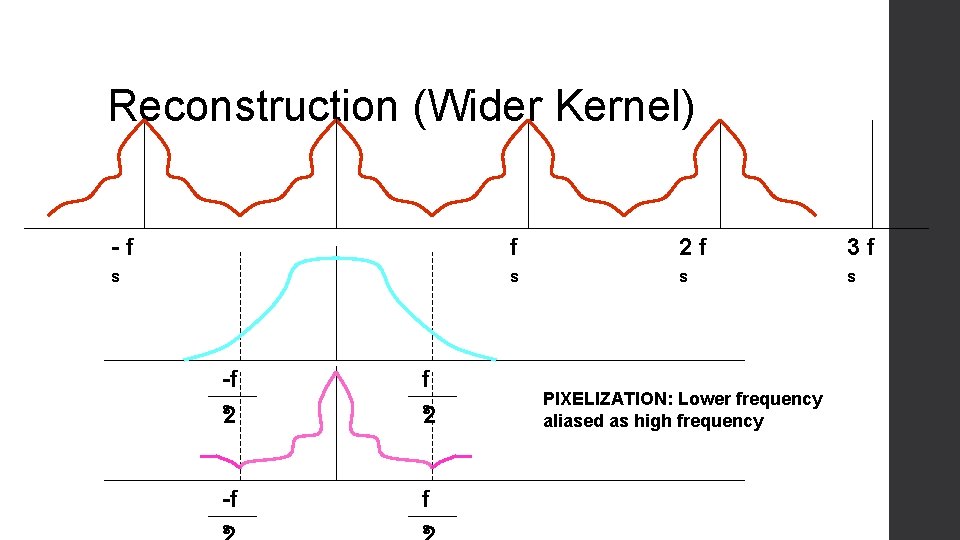
Reconstruction (Wider Kernel) -f f 2 f 3 f s s -f f s 2 s -f f s s 2 PIXELIZATION: Lower frequency aliased as high frequency
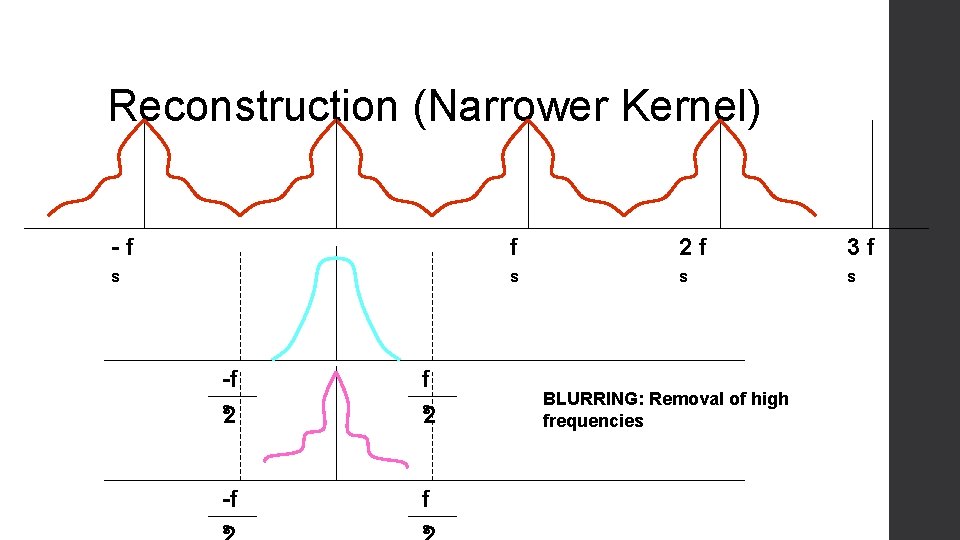
Reconstruction (Narrower Kernel) -f f 2 f 3 f s s -f f s 2 s -f f s s 2 BLURRING: Removal of high frequencies
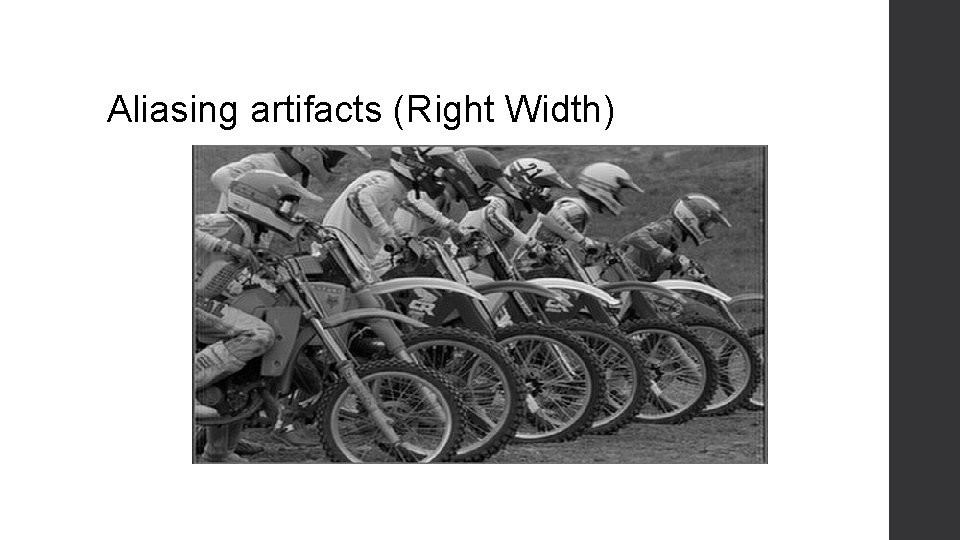
Aliasing artifacts (Right Width)
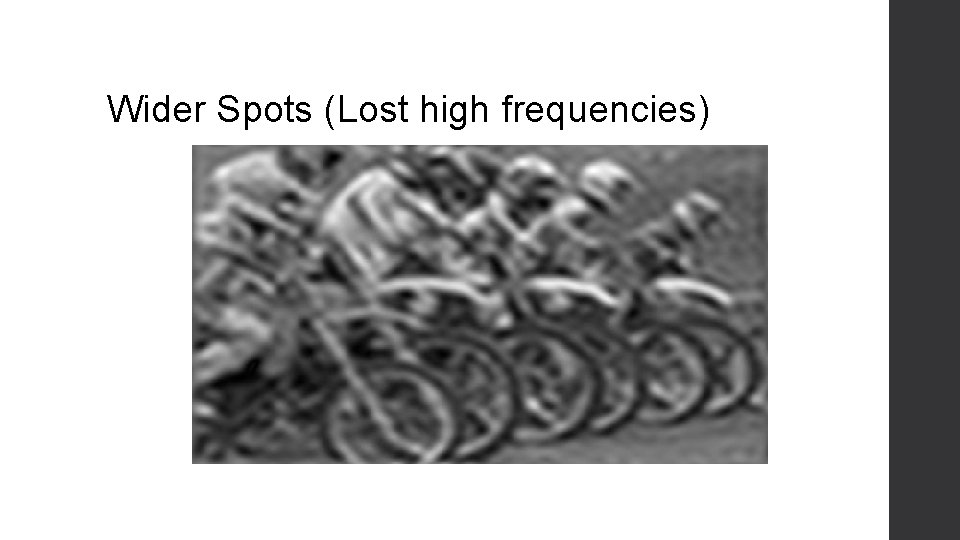
Wider Spots (Lost high frequencies)
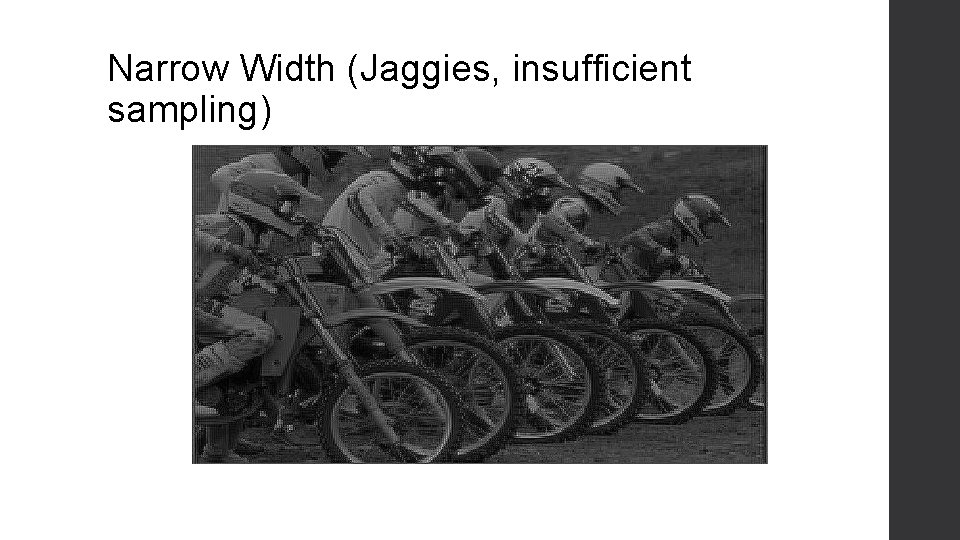
Narrow Width (Jaggies, insufficient sampling)
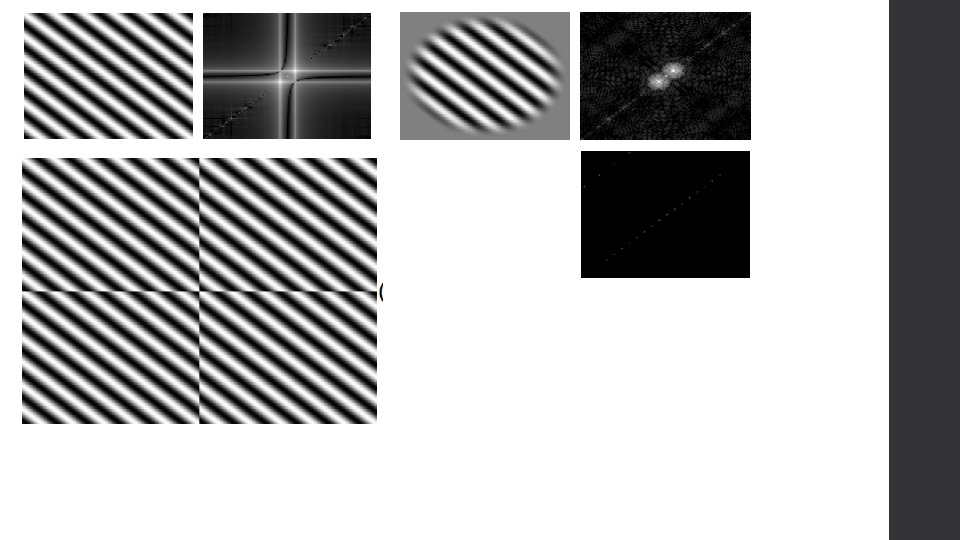
DFT extended to 2 D : Axes • Frequency ● Only positive • Orientation ● 0 to 180 • Repeats in negative frequency ● Just as in 1 D
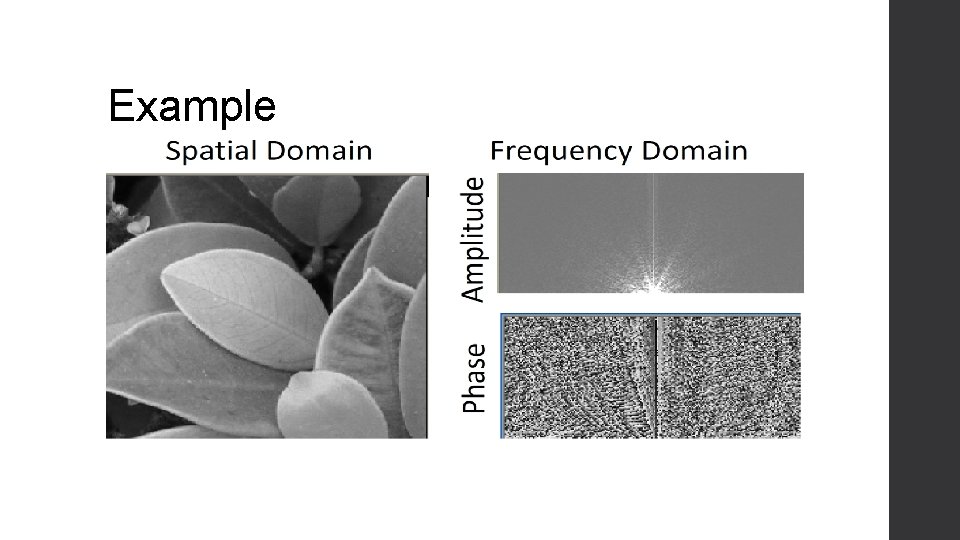
Example
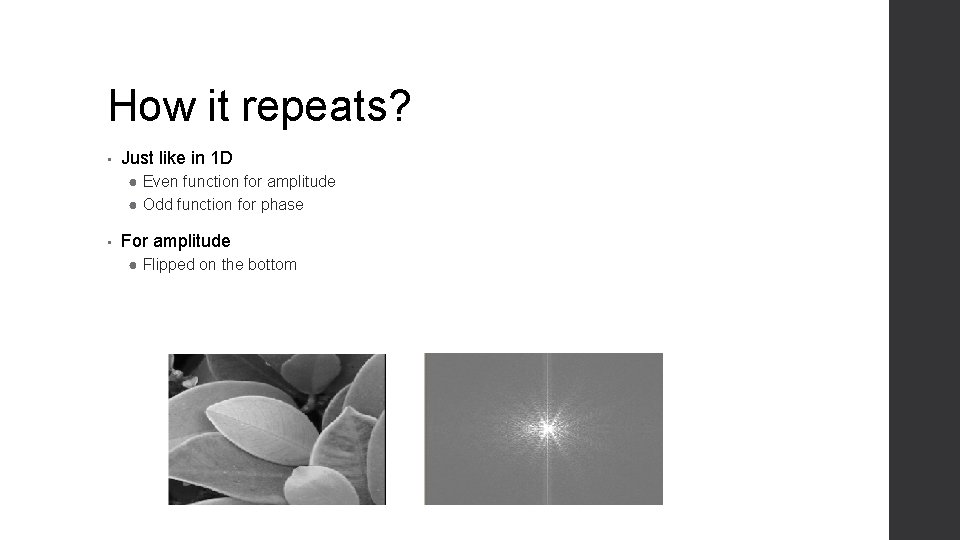
How it repeats? • Just like in 1 D ● Even function for amplitude ● Odd function for phase • For amplitude ● Flipped on the bottom
Why all the noise? • Values much bigger than 255 • DC is often 1000 times more than the highest frequencies • Difficult to show all in only 255 gray values
Mapping • Numerical value = i • Gray value = g • Linear Mapping is g = ki • Logarithmic mapping is g = k log (i) ● Compresses the range ● Reduces noise ● May still need thresholding to remove noise
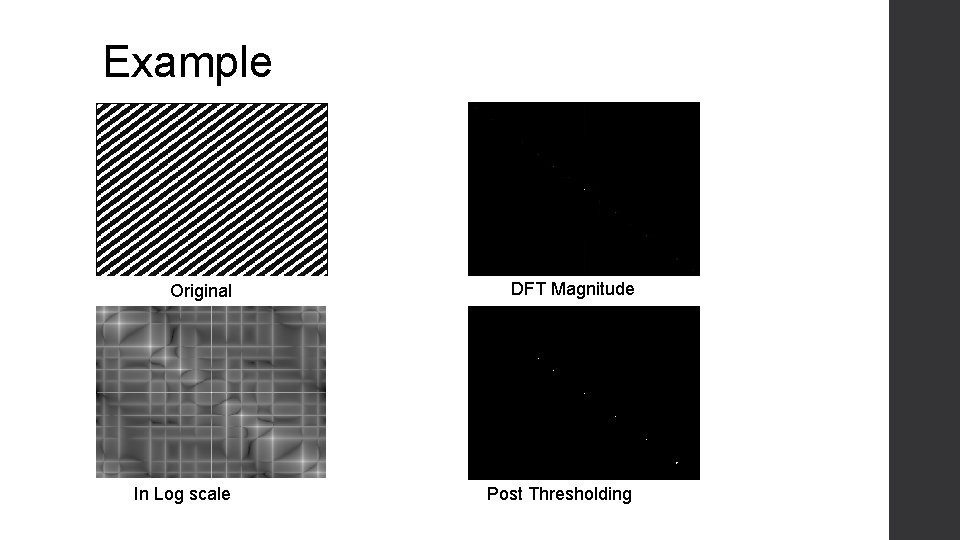
Example Original DFT Magnitude In Log scale Post Thresholding
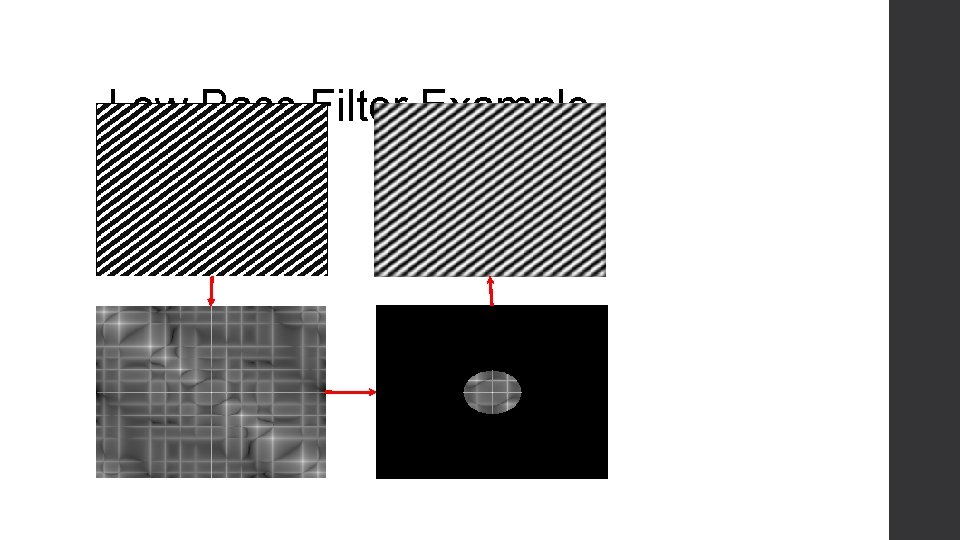
Low Pass Filter Example
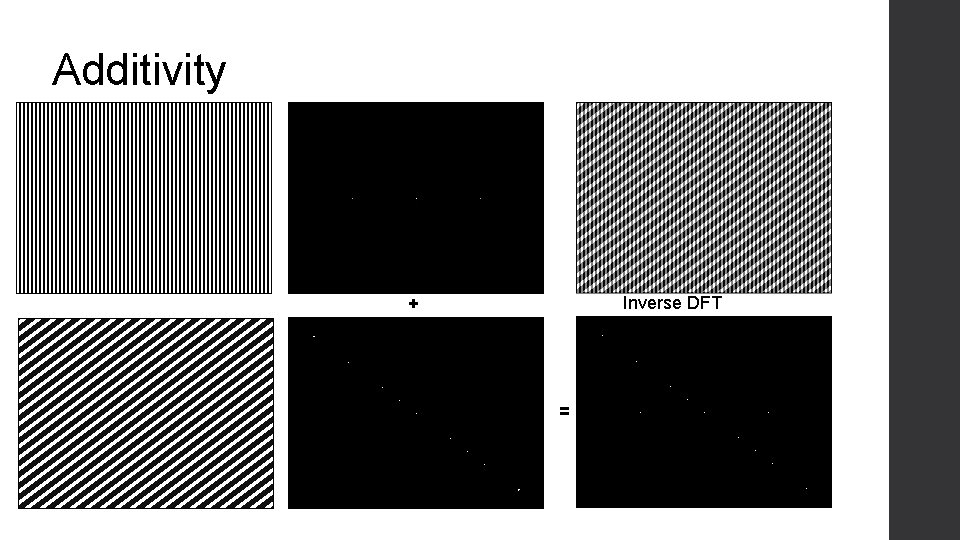
Additivity Inverse DFT + =
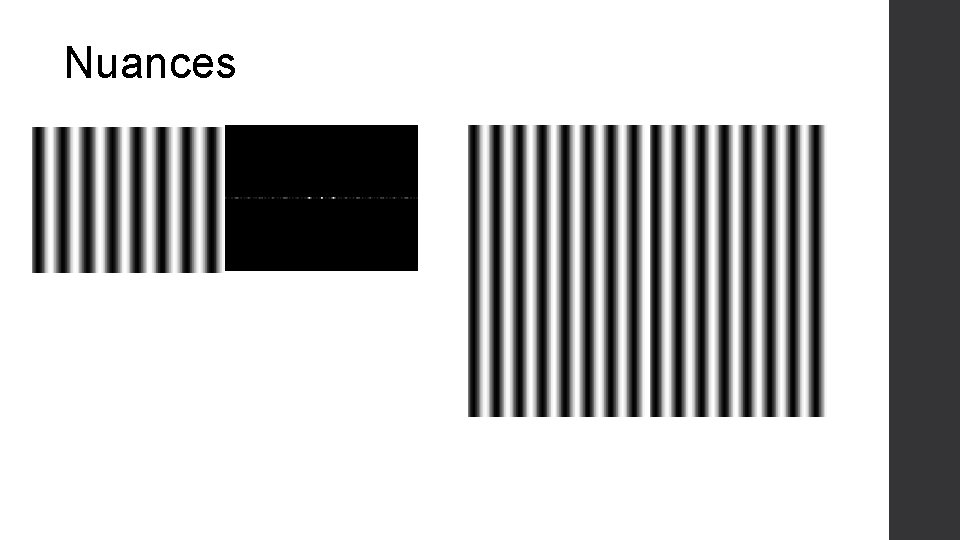
Nuances
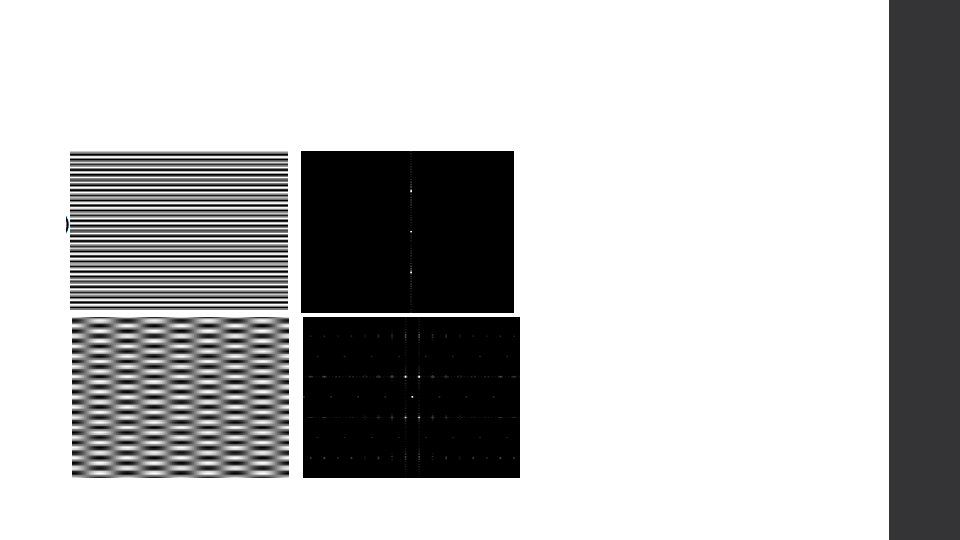
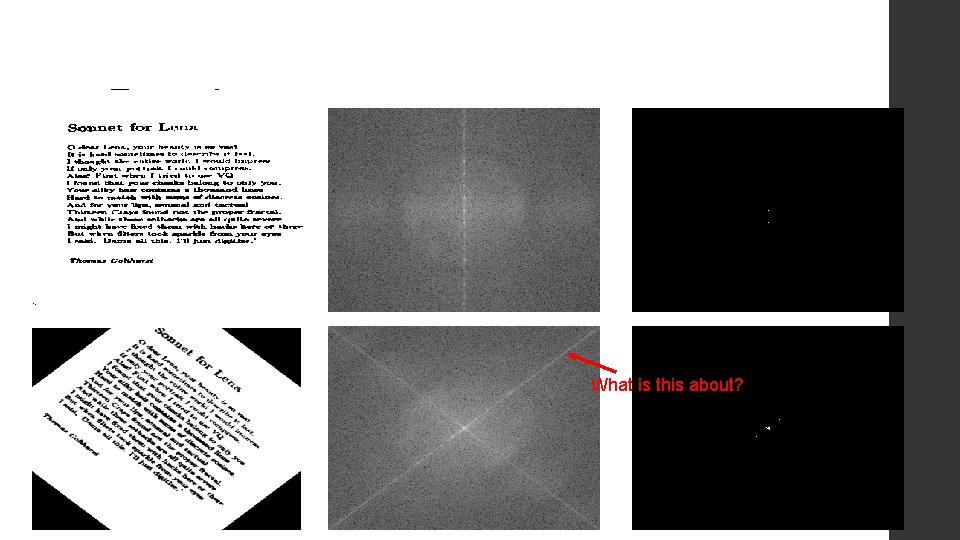
Rotation What is this about?
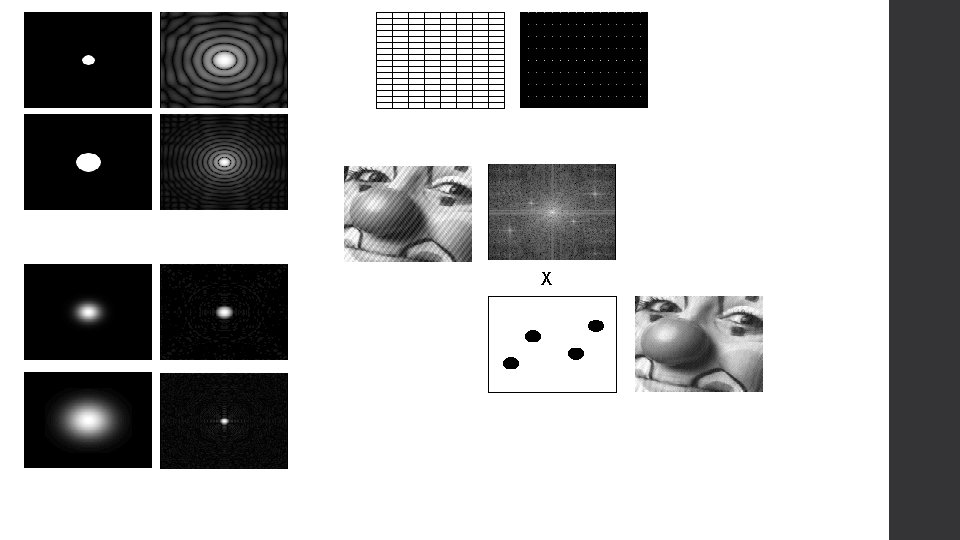
X
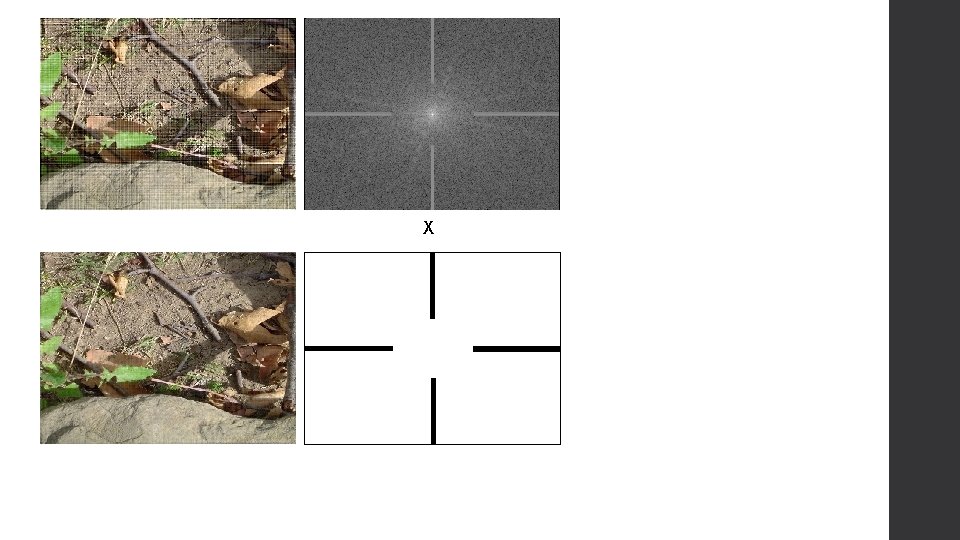
X
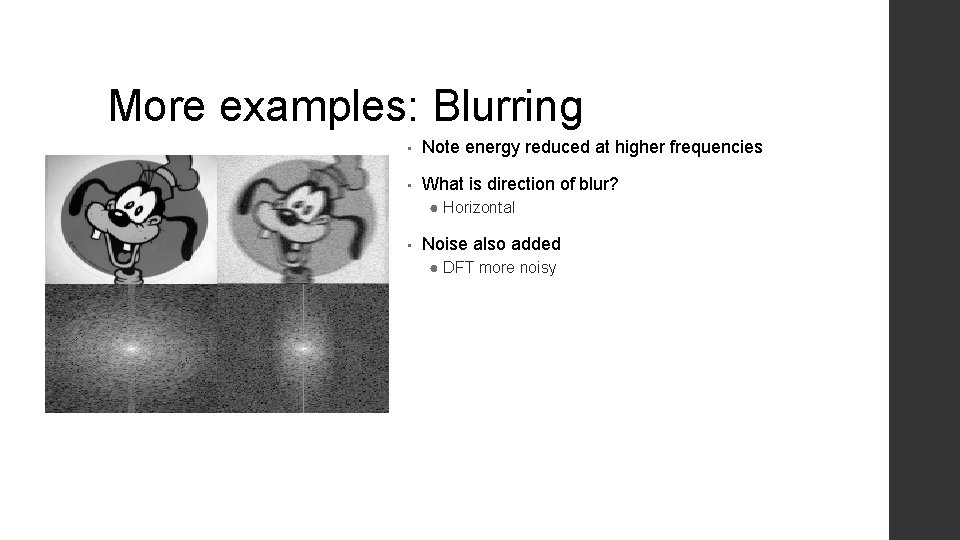
More examples: Blurring • Note energy reduced at higher frequencies • What is direction of blur? ● Horizontal • Noise also added ● DFT more noisy
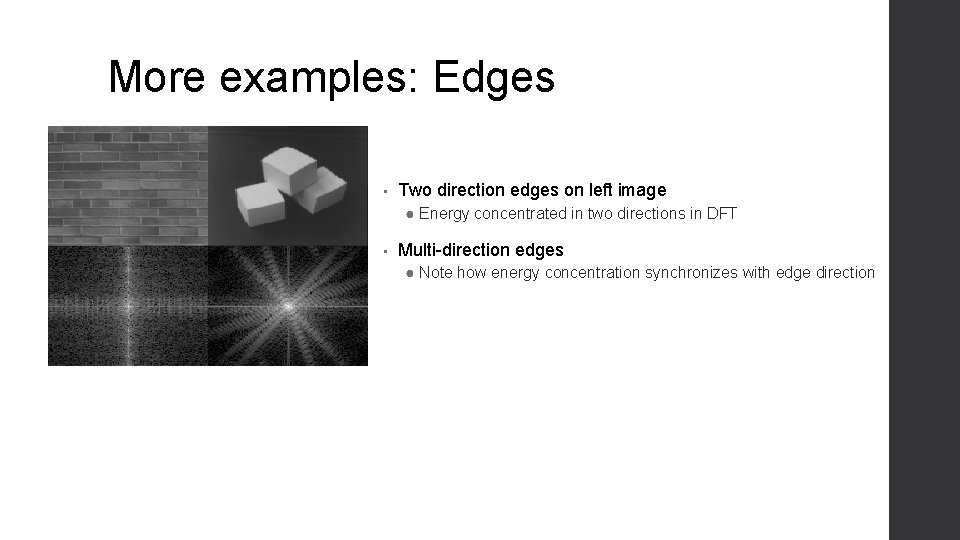
More examples: Edges • Two direction edges on left image ● Energy concentrated in two directions in DFT • Multi-direction edges ● Note how energy concentration synchronizes with edge direction
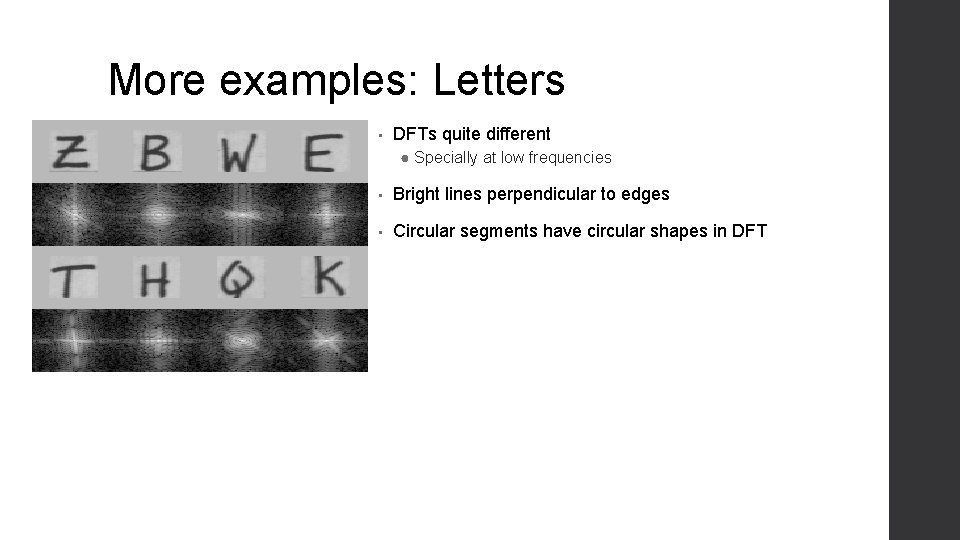
More examples: Letters • DFTs quite different ● Specially at low frequencies • Bright lines perpendicular to edges • Circular segments have circular shapes in DFT
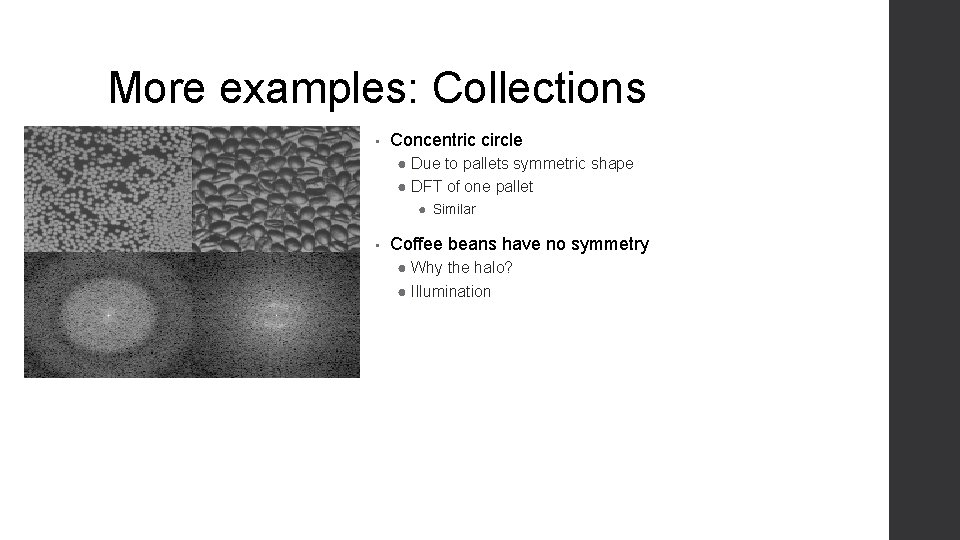
More examples: Collections • Concentric circle ● Due to pallets symmetric shape ● DFT of one pallet ● Similar • Coffee beans have no symmetry ● Why the halo? ● Illumination
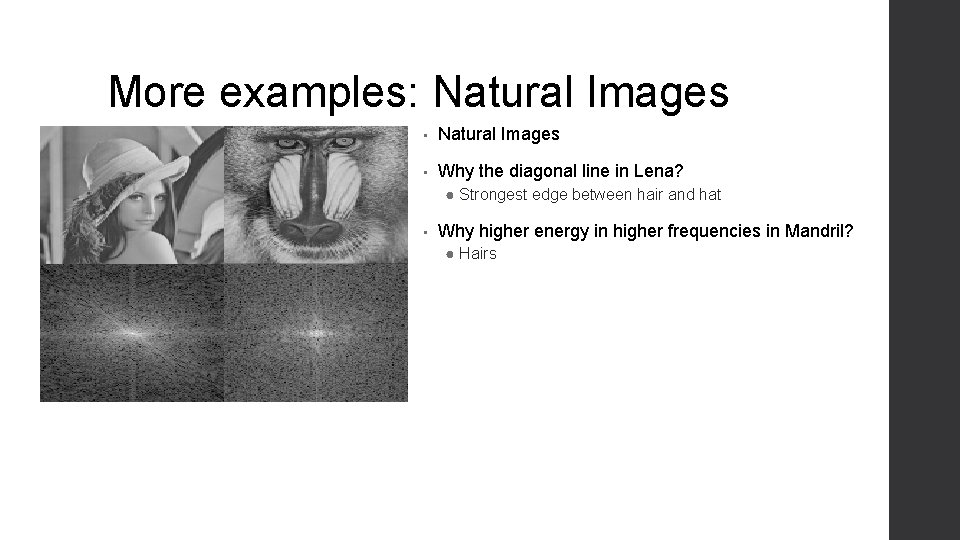
More examples: Natural Images • Natural Images • Why the diagonal line in Lena? ● Strongest edge between hair and hat • Why higher energy in higher frequencies in Mandril? ● Hairs
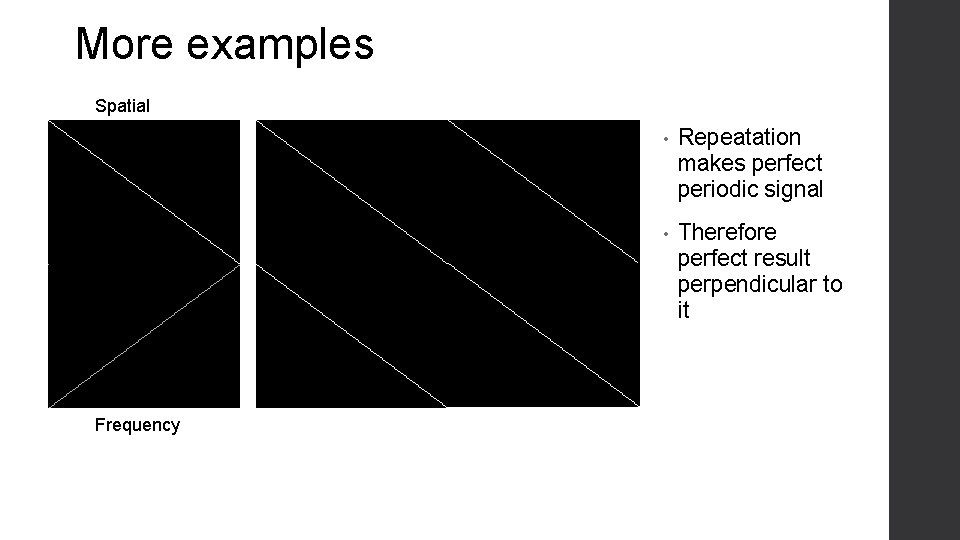
More examples Spatial Frequency • Repeatation makes perfect periodic signal • Therefore perfect result perpendicular to it
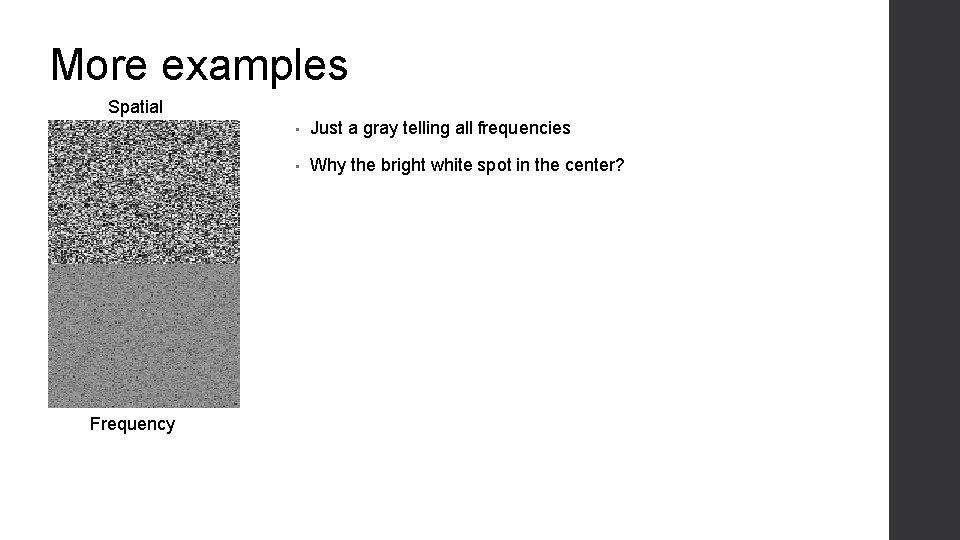
More examples Spatial Frequency • Just a gray telling all frequencies • Why the bright white spot in the center?
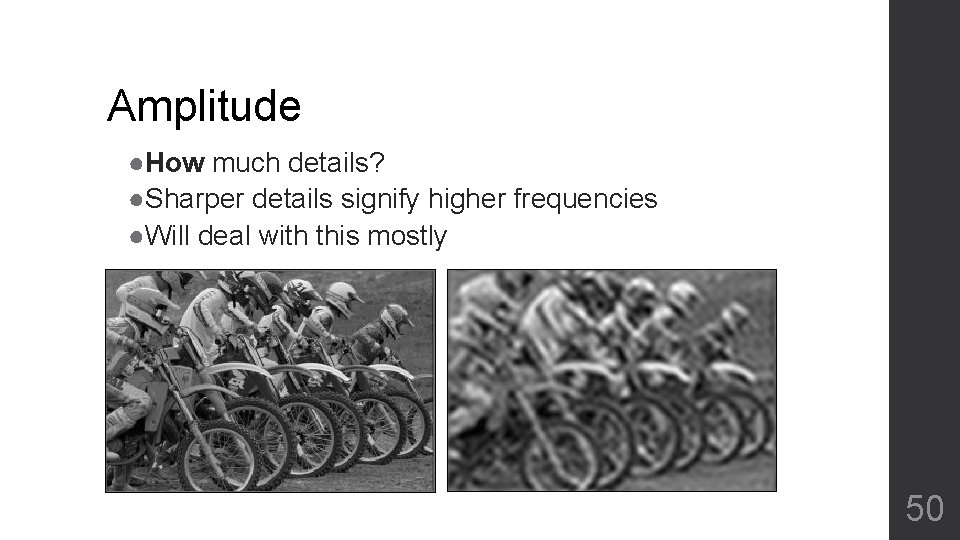
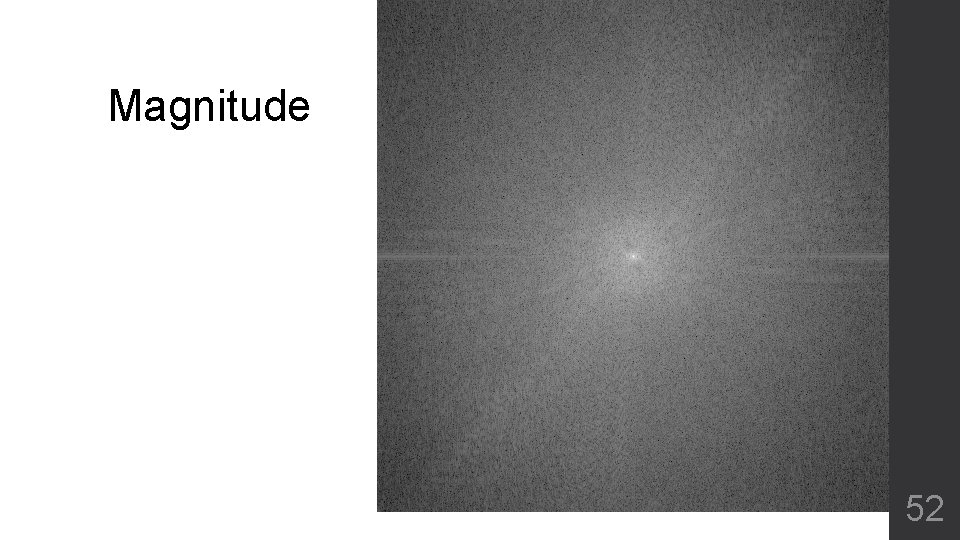
Amplitude ●How much details? ●Sharper details signify higher frequencies ●Will deal with this mostly 50
Cheetah 51
Magnitude 52
Phase 53
Zebra 54
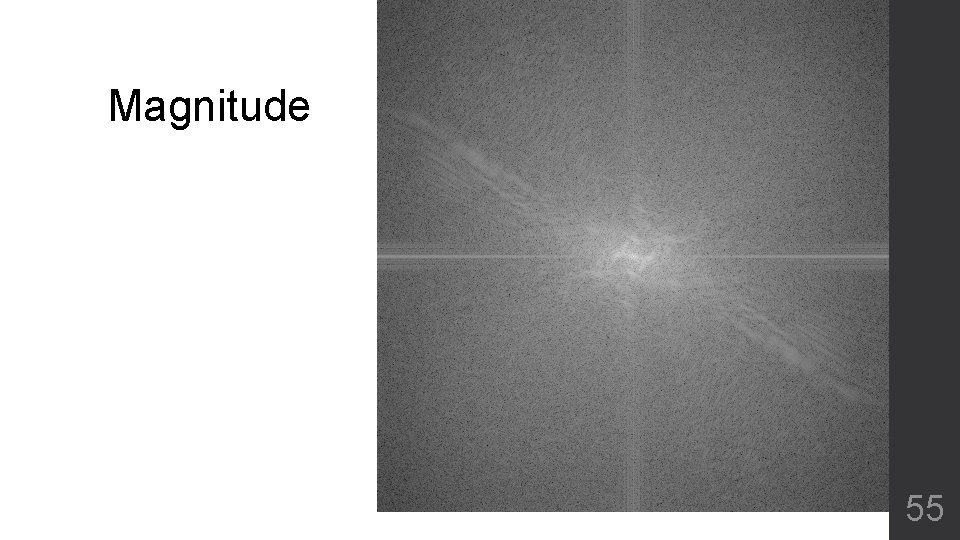
Magnitude 55
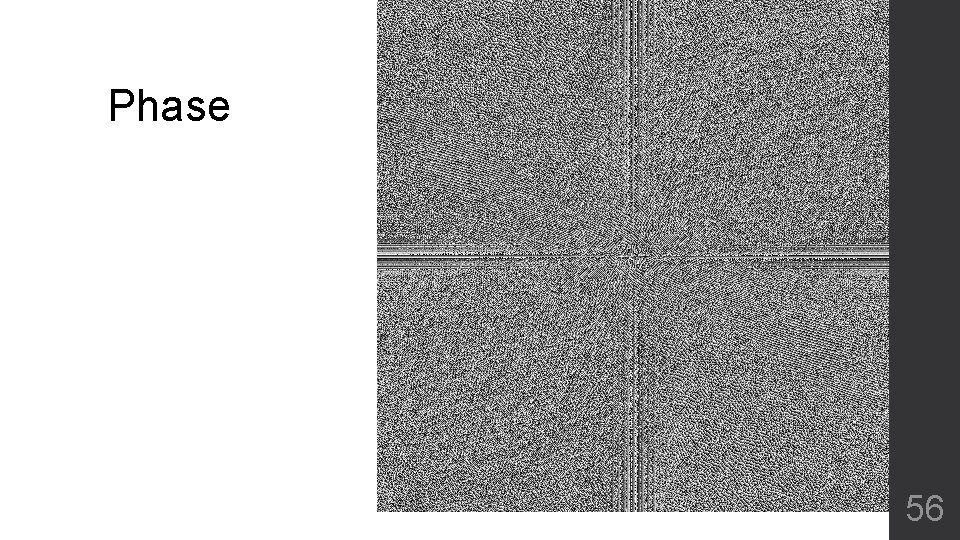
Phase 56
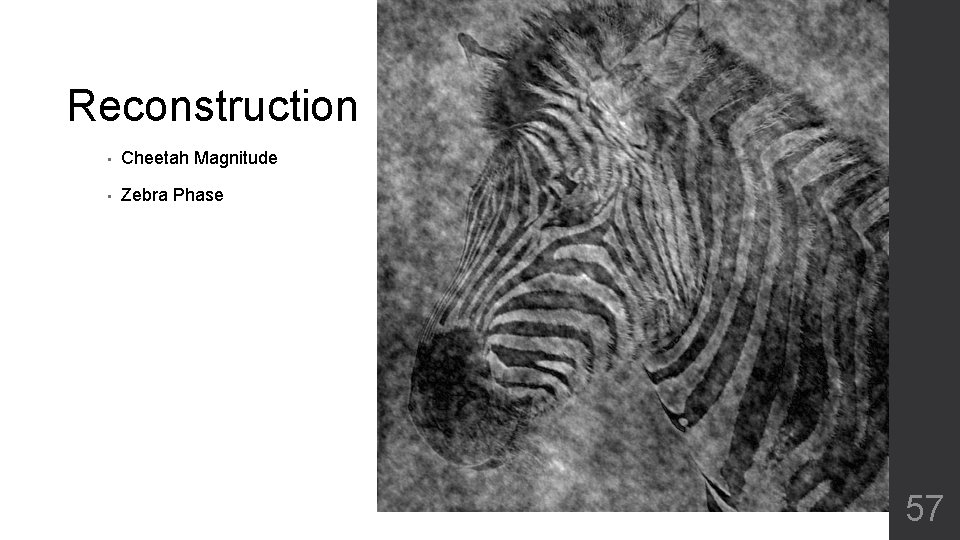
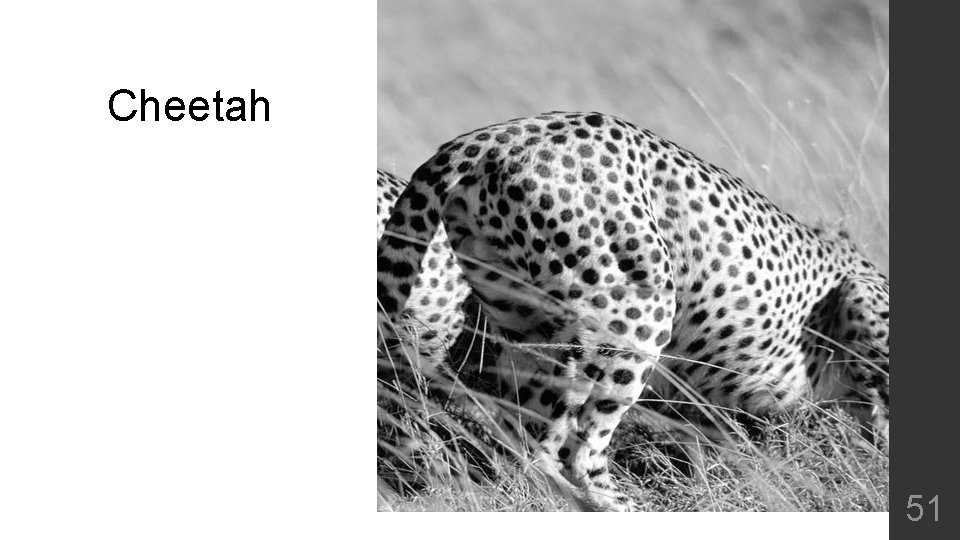
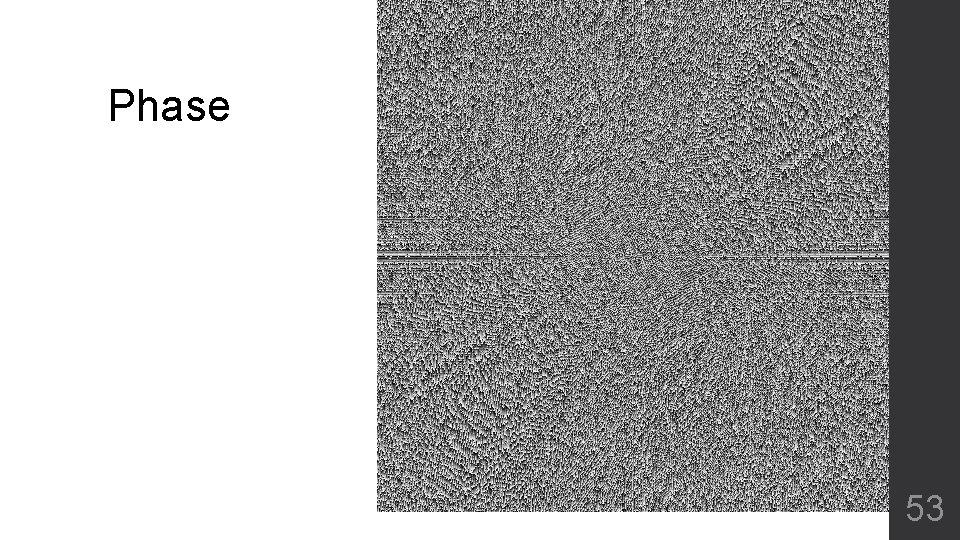
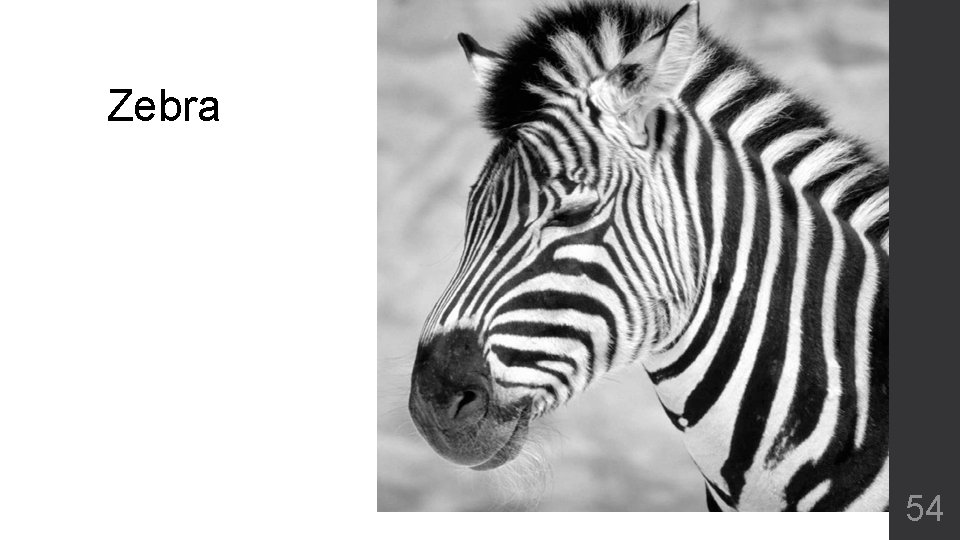
Reconstruction • Cheetah Magnitude • Zebra Phase 57
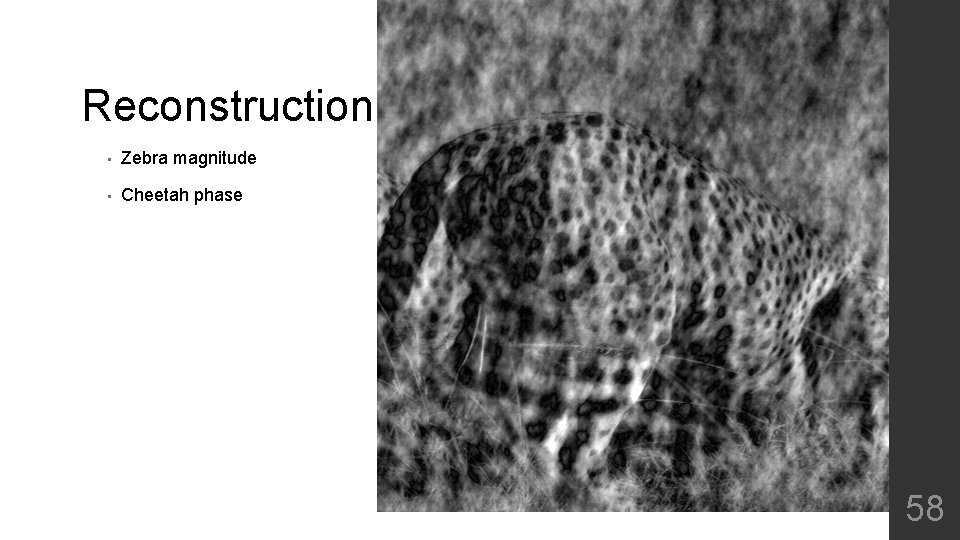
Reconstruction • Zebra magnitude • Cheetah phase 58

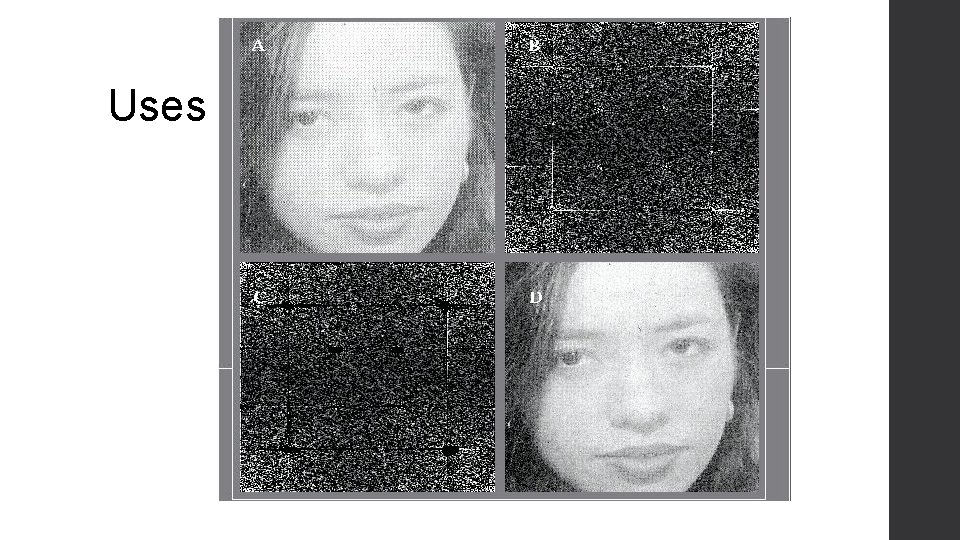
Uses – Notch Filter 59
Uses
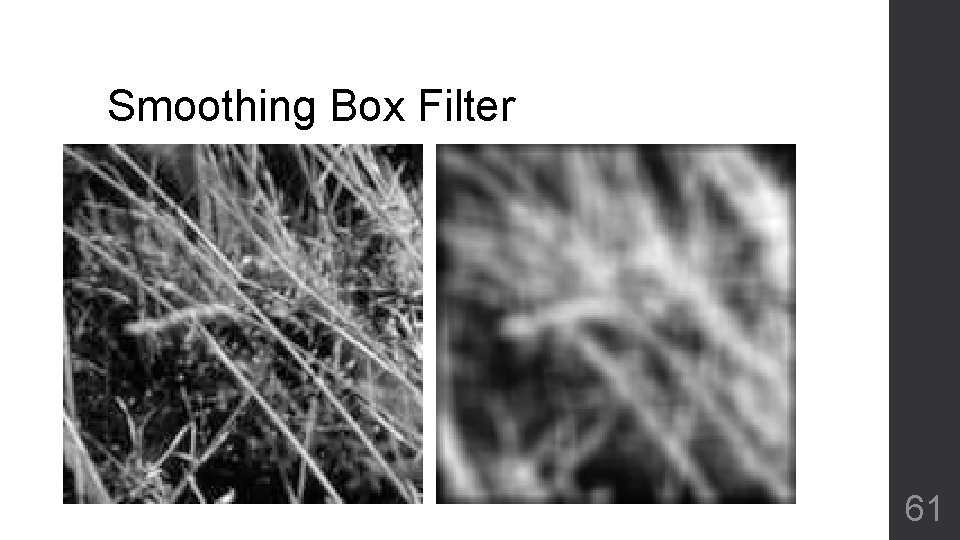
Smoothing Box Filter 61
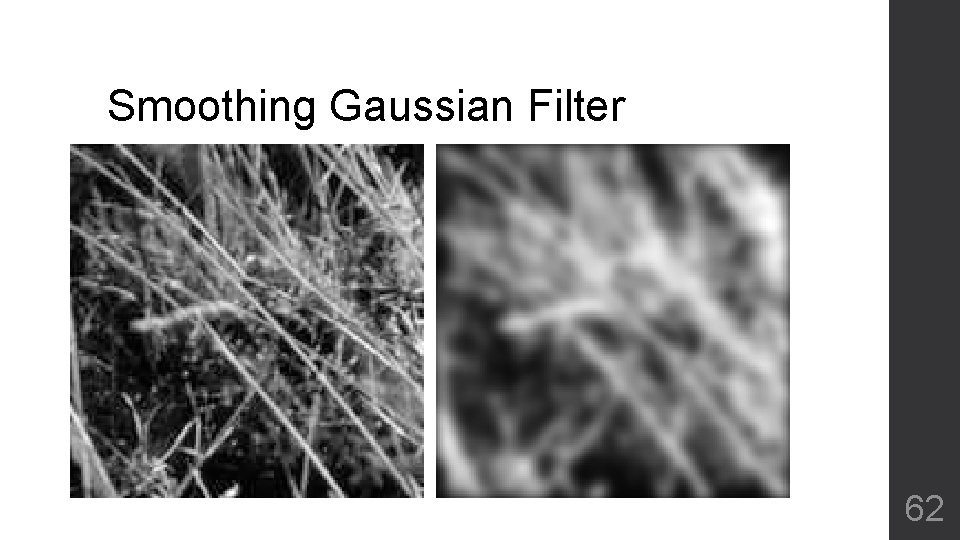
Smoothing Gaussian Filter 62
- Slides: 62