
Fourier Analysis of Discrete Time Signals For a
- Slides: 18
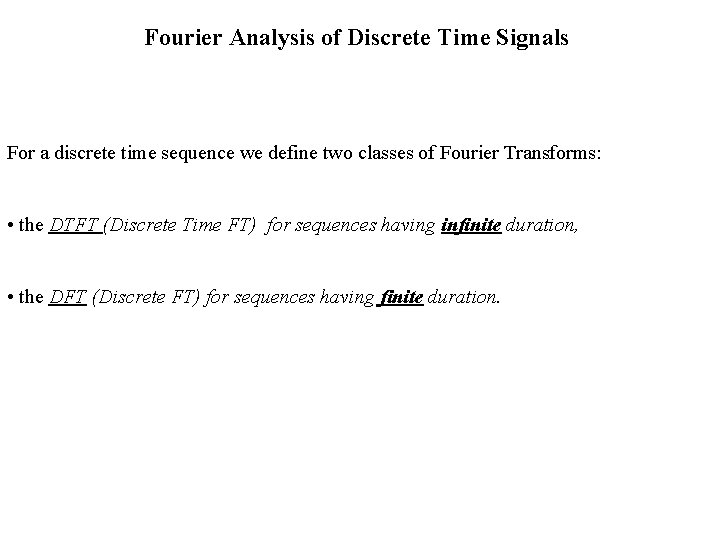
Fourier Analysis of Discrete Time Signals For a discrete time sequence we define two classes of Fourier Transforms: • the DTFT (Discrete Time FT) for sequences having infinite duration, • the DFT (Discrete FT) for sequences having finite duration.
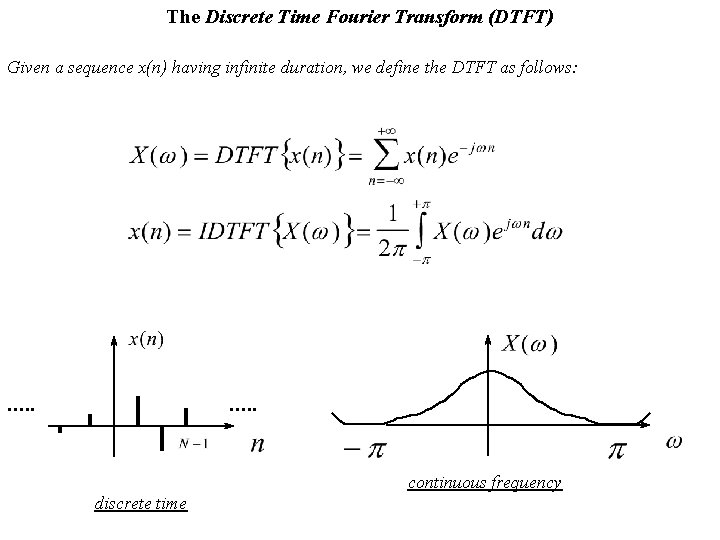
The Discrete Time Fourier Transform (DTFT) Given a sequence x(n) having infinite duration, we define the DTFT as follows: …. . continuous frequency discrete time
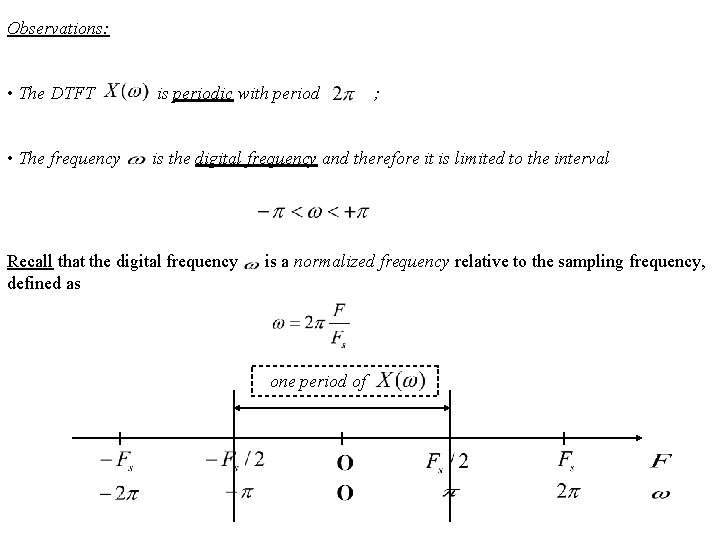
Observations: • The DTFT is periodic with period • The frequency is the digital frequency and therefore it is limited to the interval Recall that the digital frequency defined as ; is a normalized frequency relative to the sampling frequency, one period of
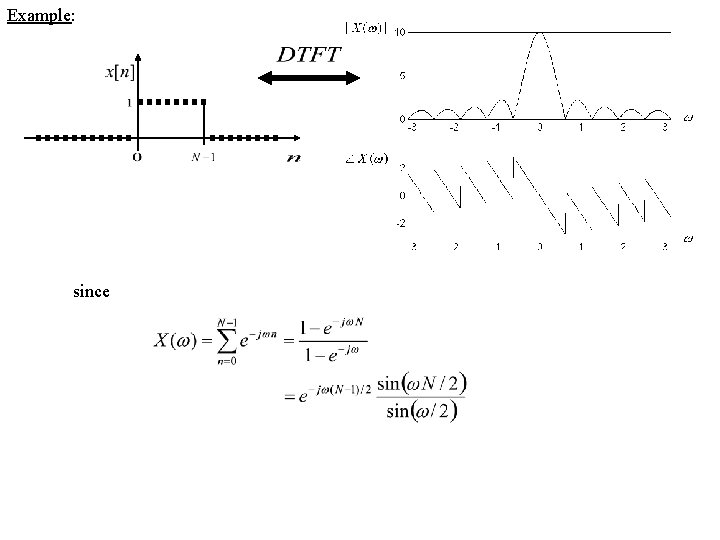
Example: since
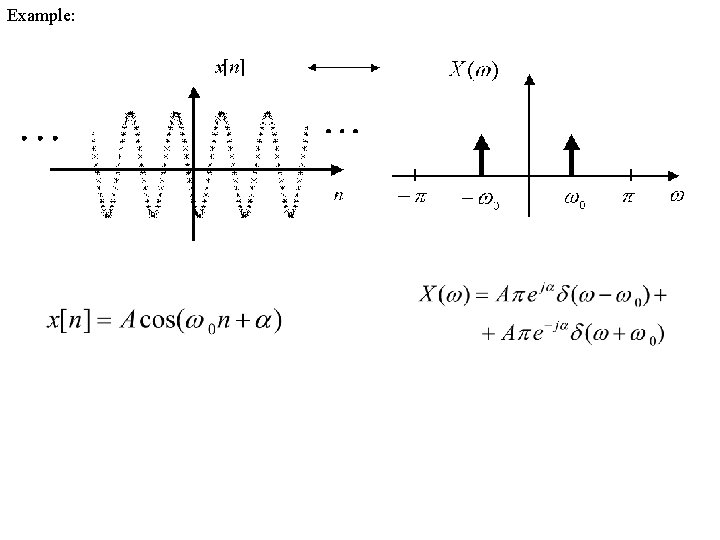
Example:
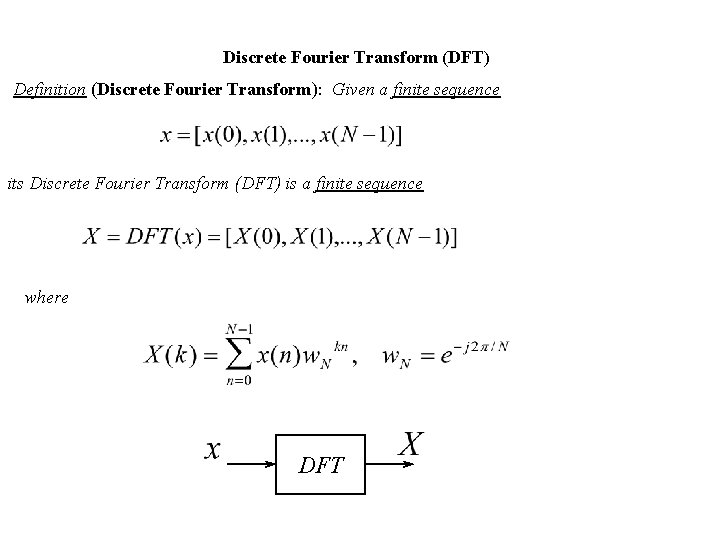
Discrete Fourier Transform (DFT) Definition (Discrete Fourier Transform): Given a finite sequence its Discrete Fourier Transform (DFT) is a finite sequence where DFT
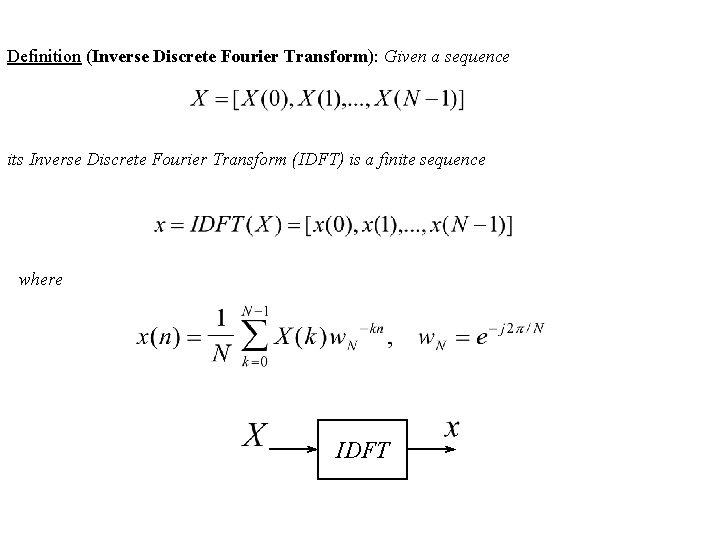
Definition (Inverse Discrete Fourier Transform): Given a sequence its Inverse Discrete Fourier Transform (IDFT) is a finite sequence where IDFT
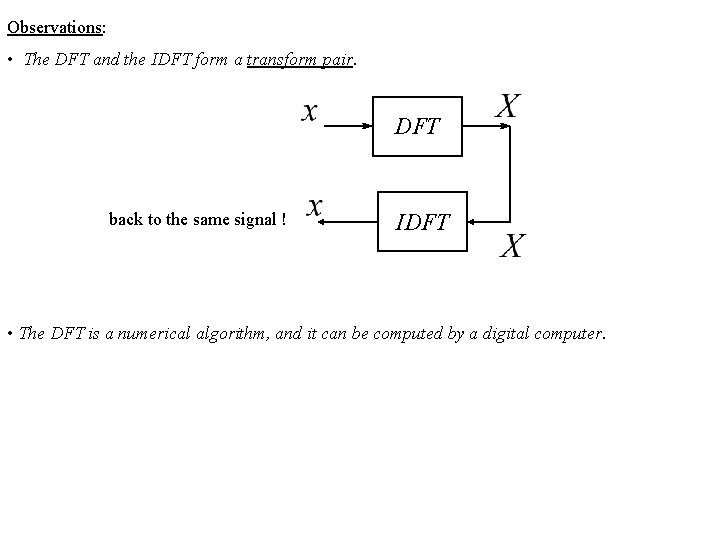
Observations: • The DFT and the IDFT form a transform pair. DFT back to the same signal ! IDFT • The DFT is a numerical algorithm, and it can be computed by a digital computer.
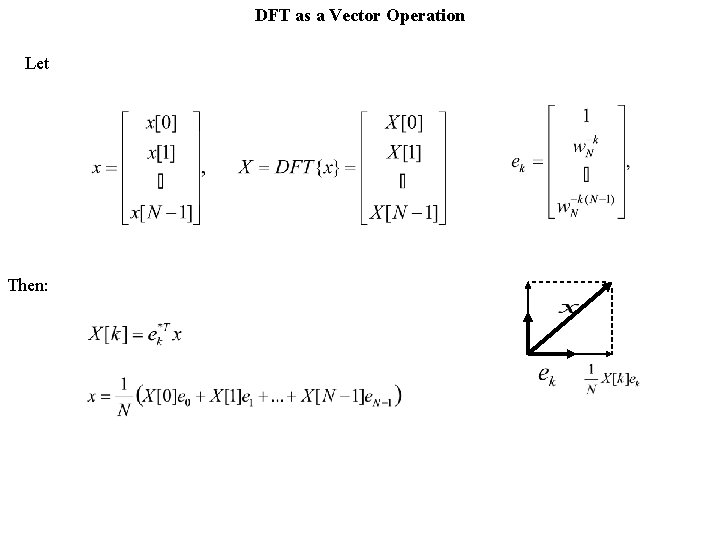
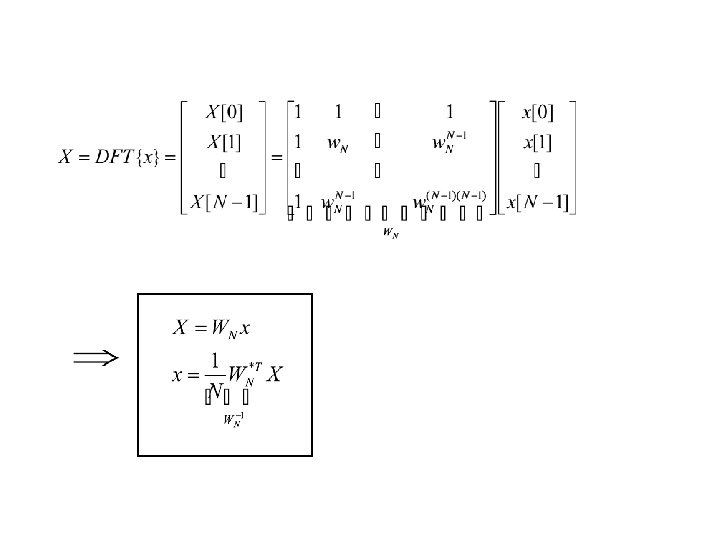
DFT as a Vector Operation Let Then:
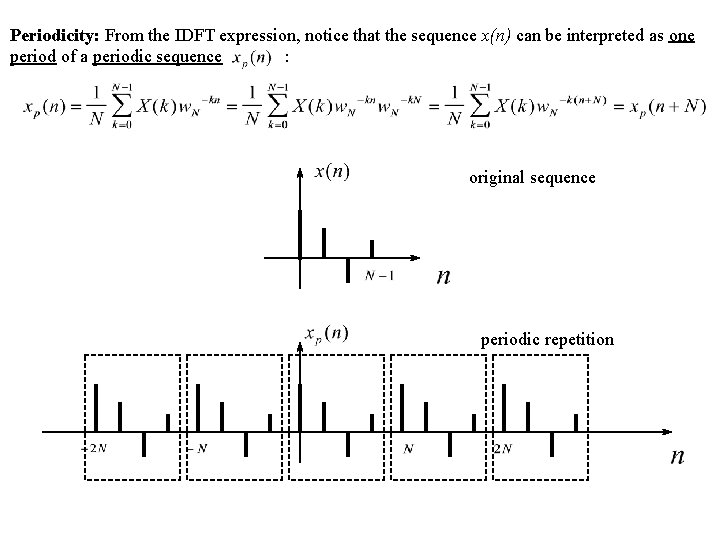
Periodicity: From the IDFT expression, notice that the sequence x(n) can be interpreted as one period of a periodic sequence : original sequence periodic repetition
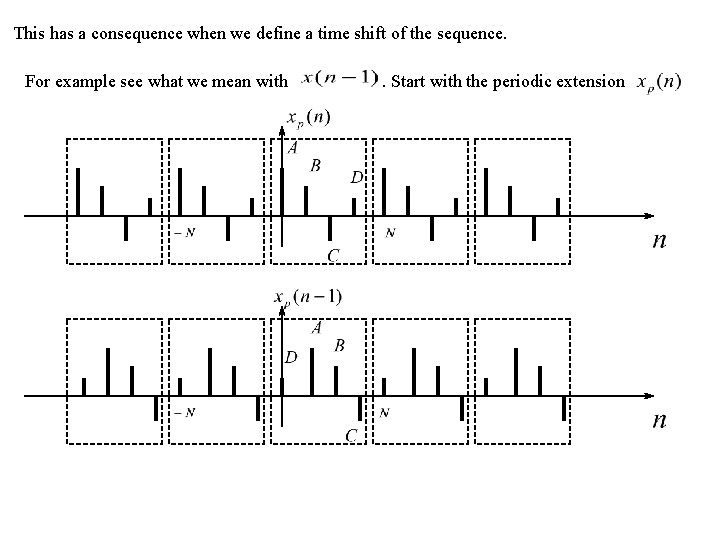
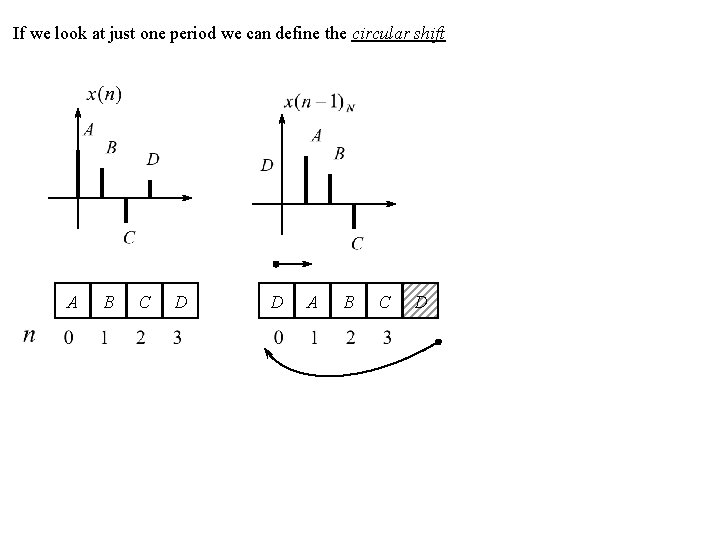
This has a consequence when we define a time shift of the sequence. For example see what we mean with . Start with the periodic extension
If we look at just one period we can define the circular shift A B C D D A B C D
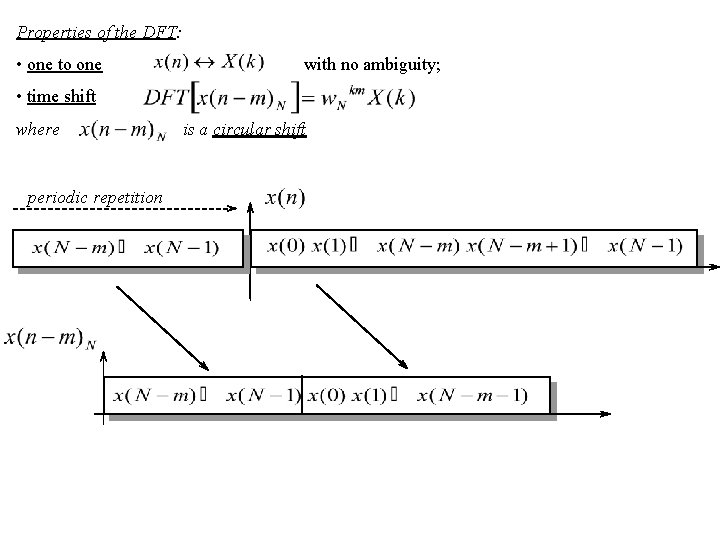
Properties of the DFT: • one to one with no ambiguity; • time shift where periodic repetition is a circular shift
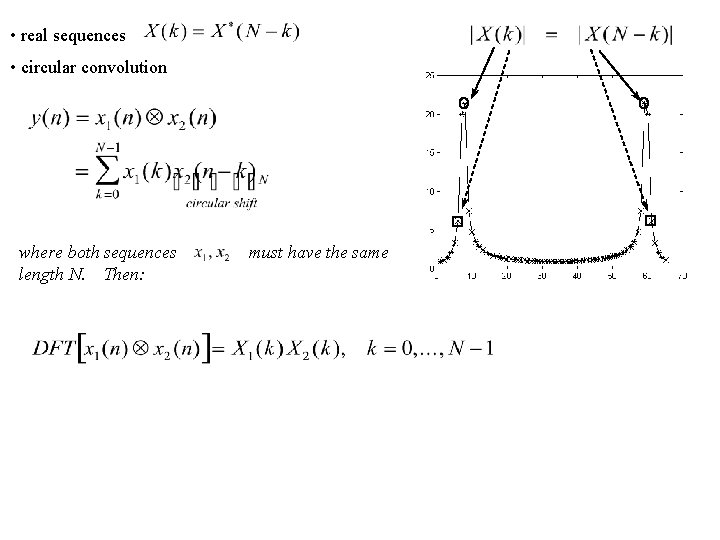
• real sequences • circular convolution where both sequences length N. Then: must have the same
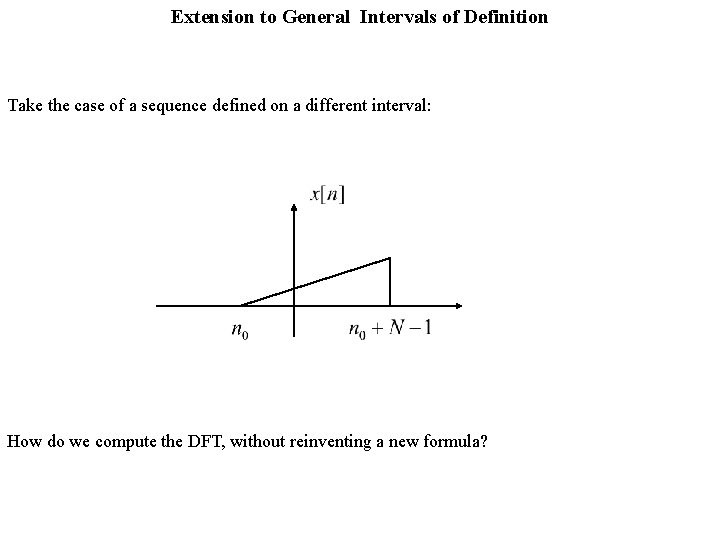
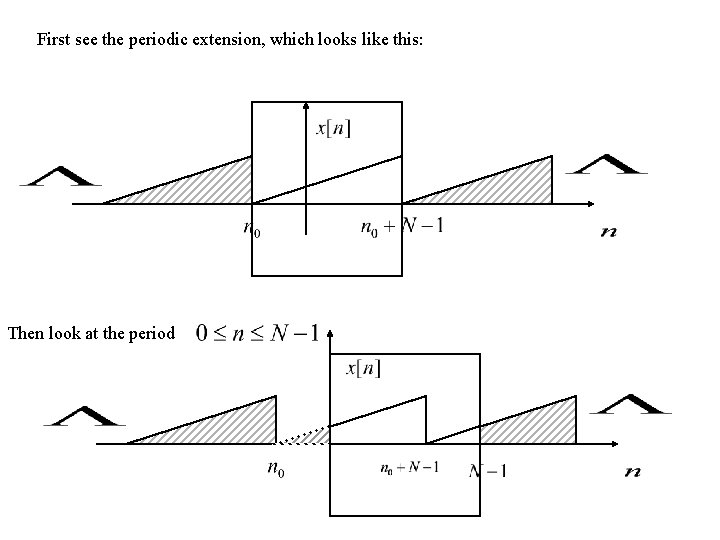
Extension to General Intervals of Definition Take the case of a sequence defined on a different interval: How do we compute the DFT, without reinventing a new formula?
First see the periodic extension, which looks like this: Then look at the period
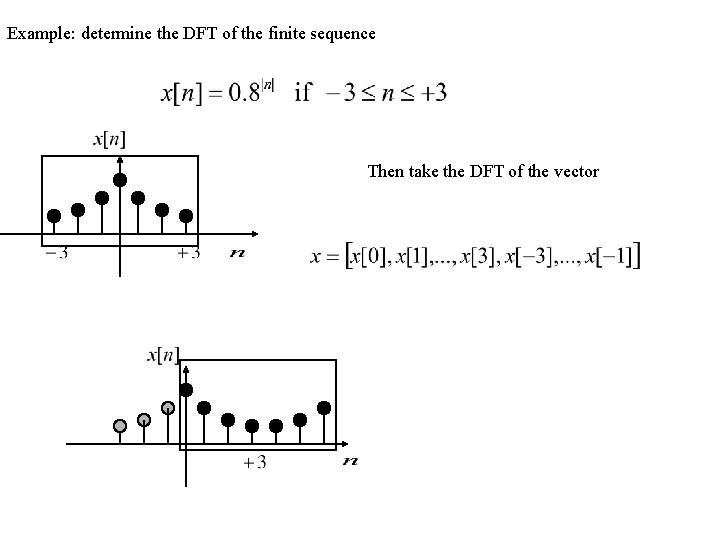
Example: determine the DFT of the finite sequence Then take the DFT of the vector