
Four Ways to get Vapor Pressure Short Cut
- Slides: 53
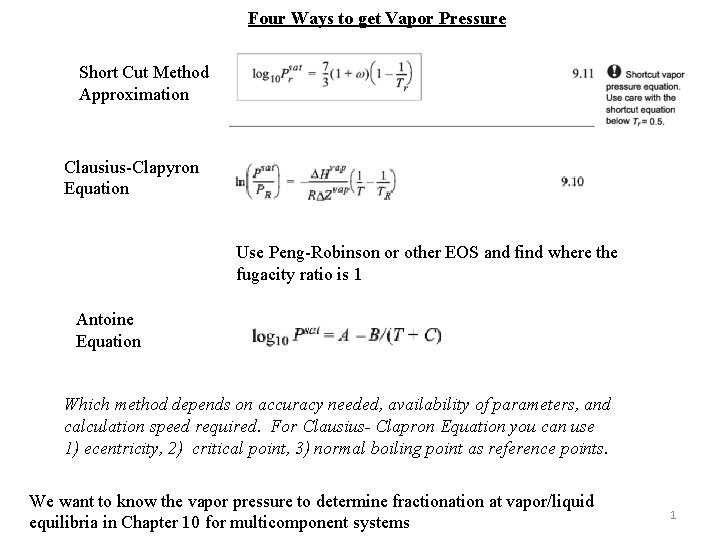
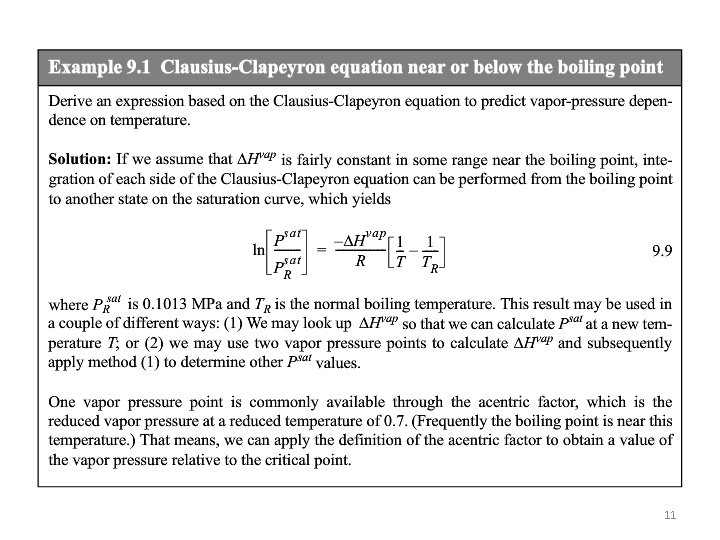
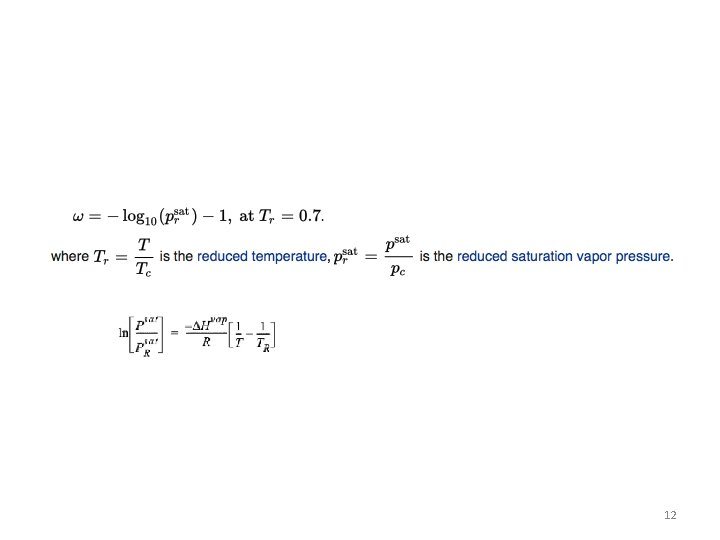
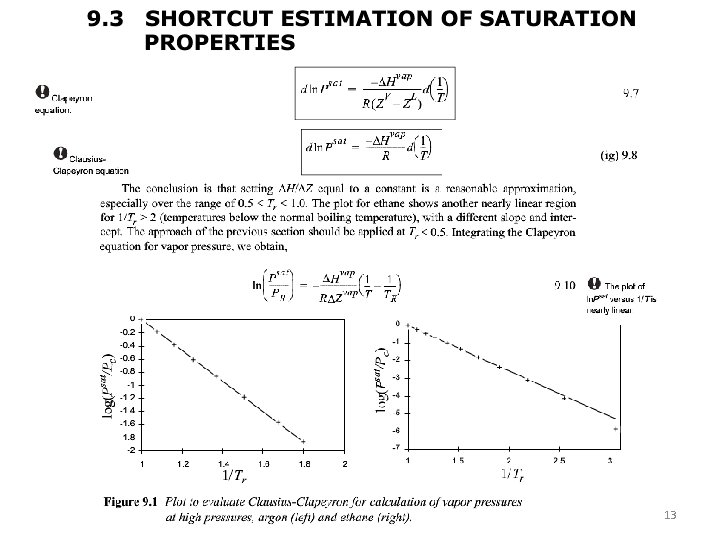
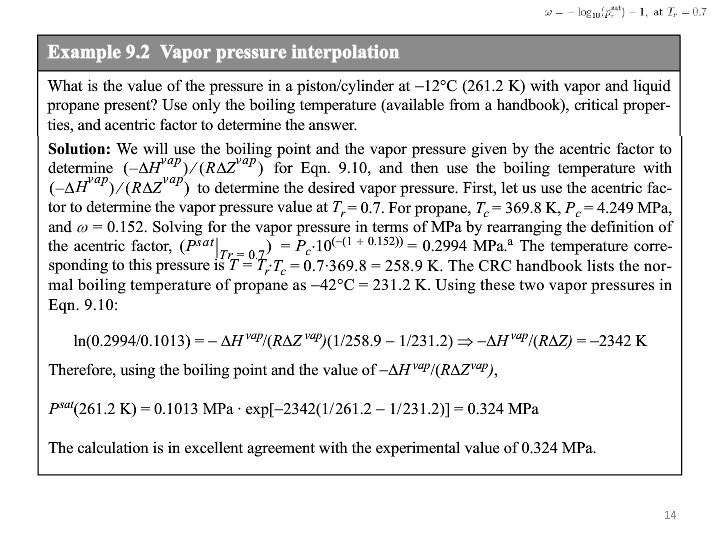
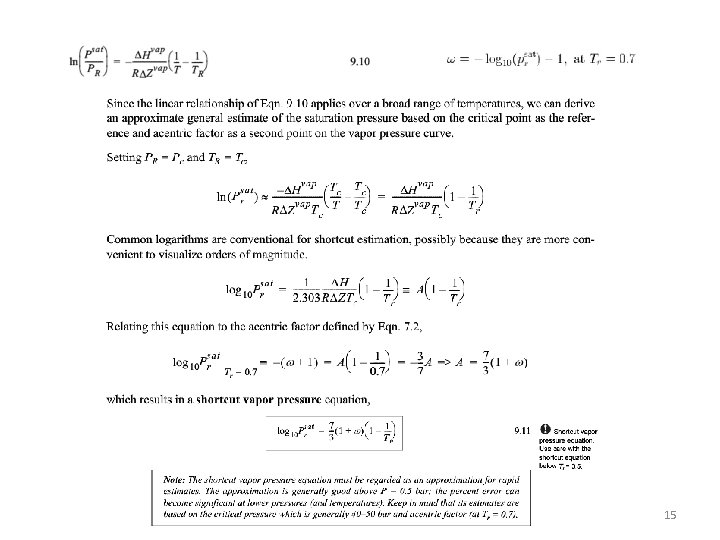
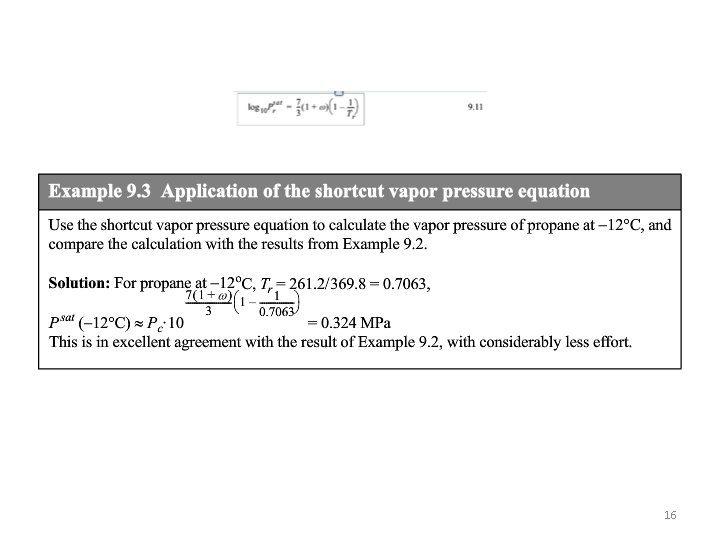
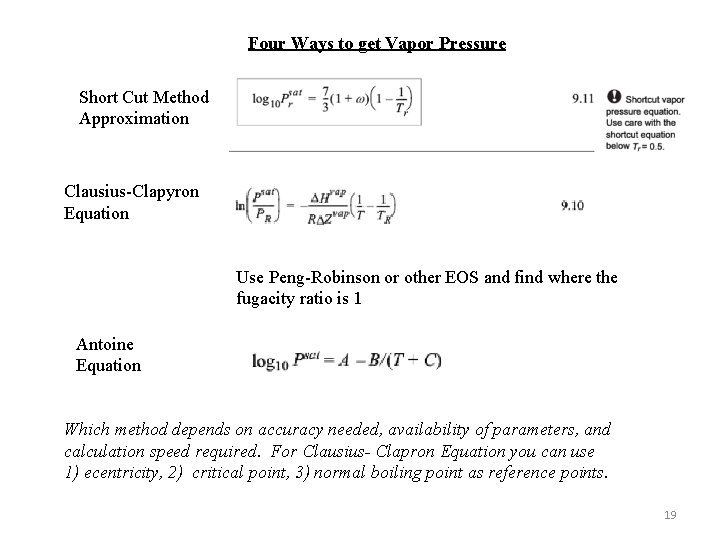
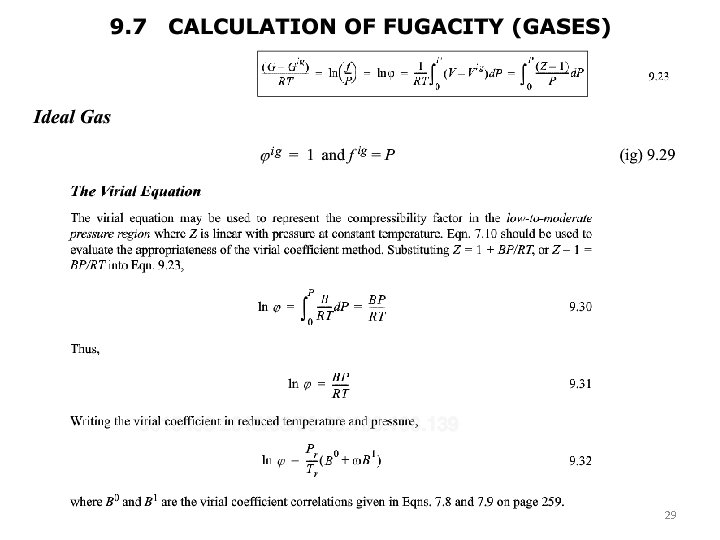
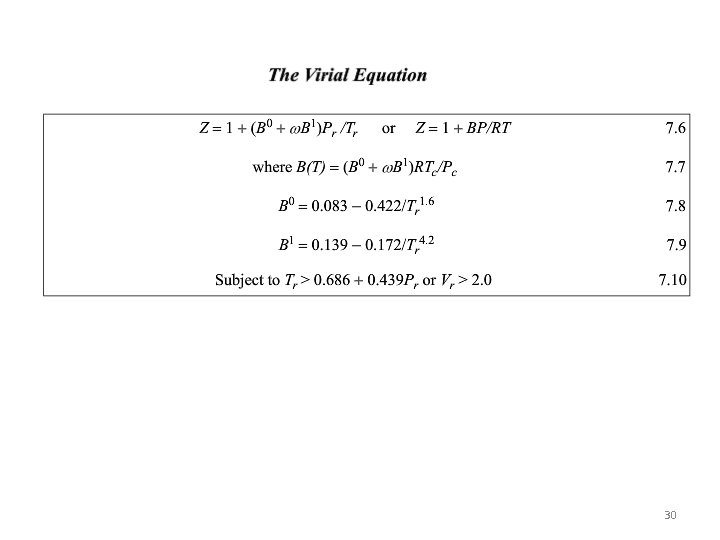
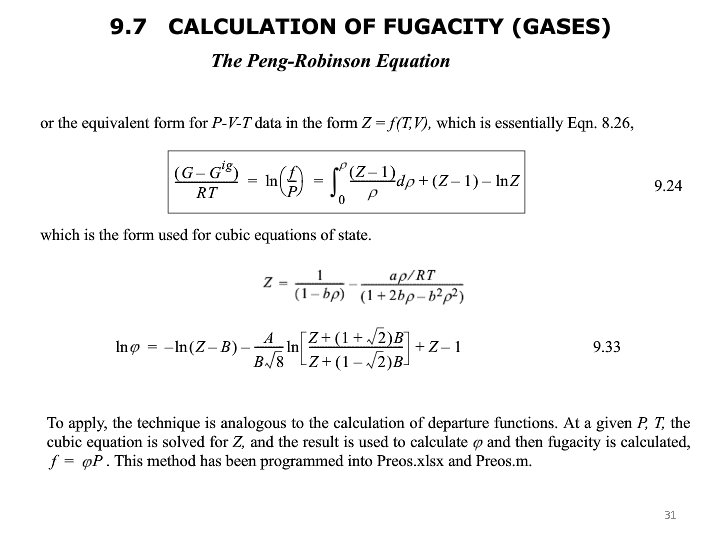
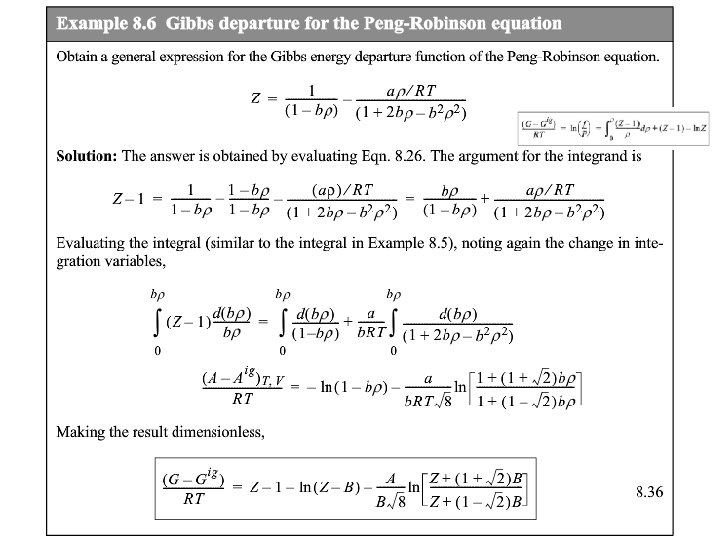
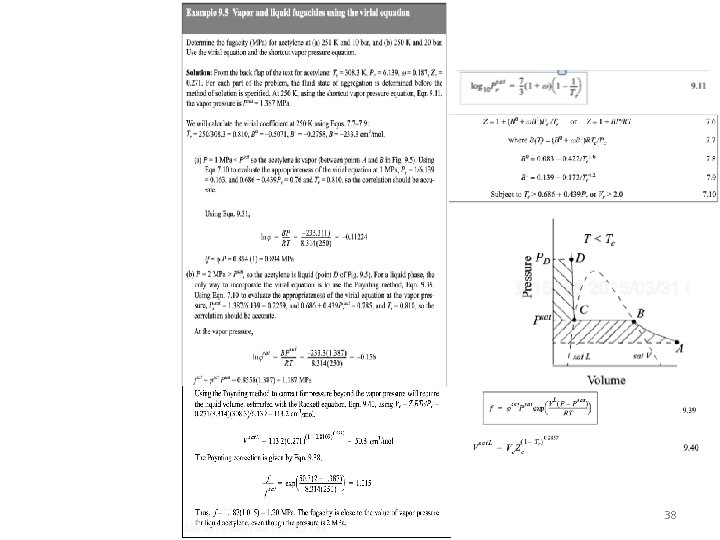
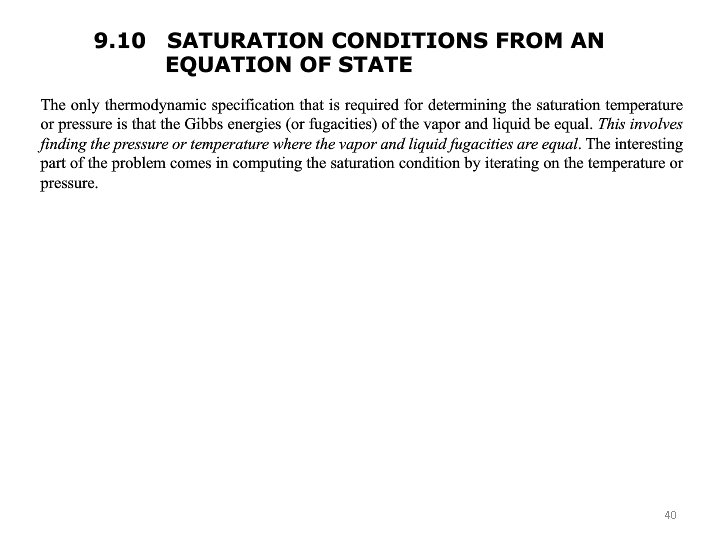
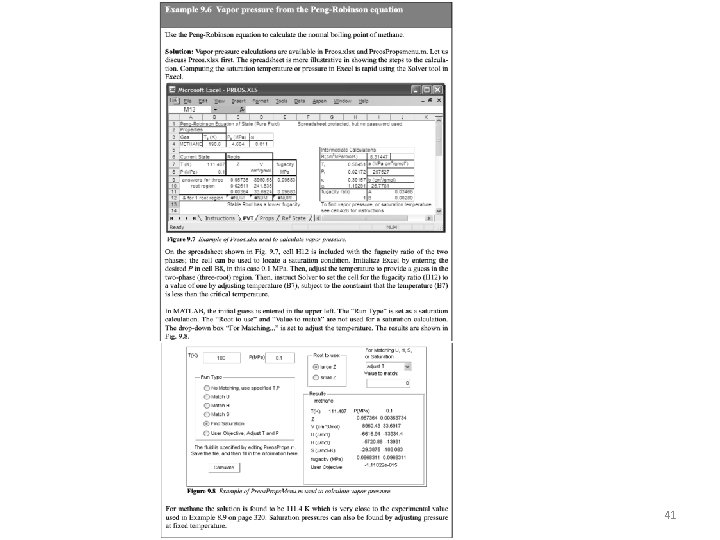
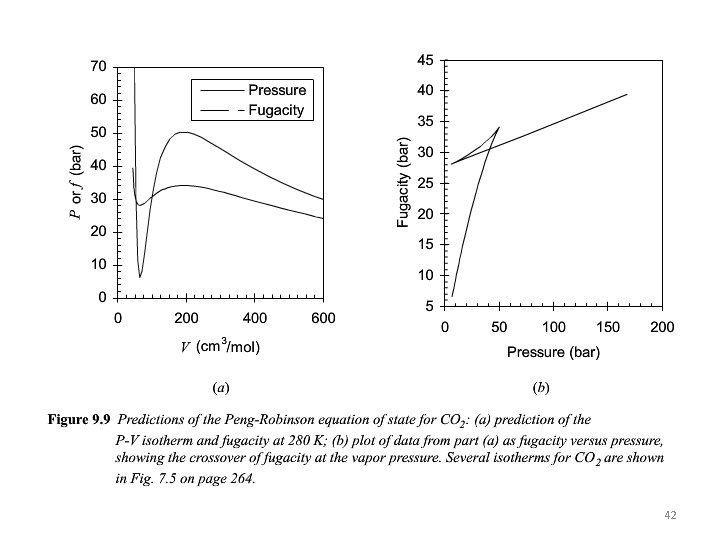
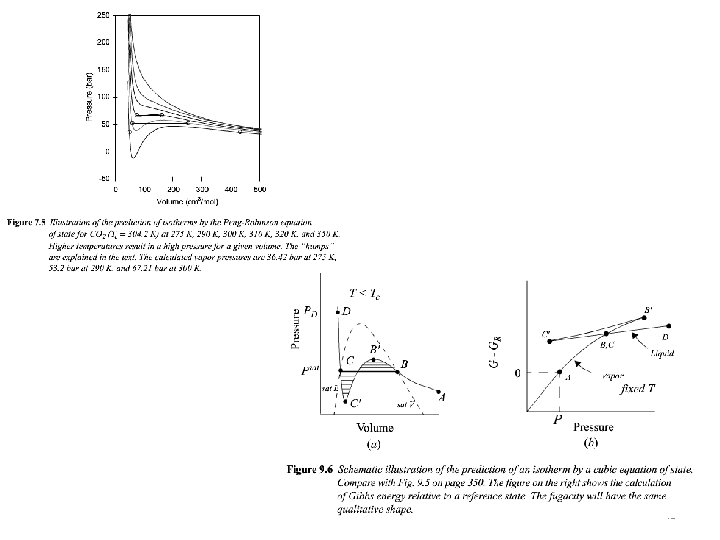
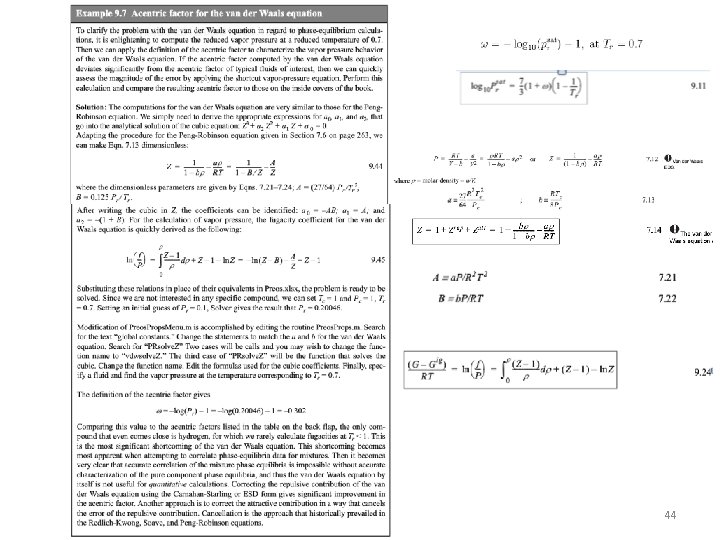
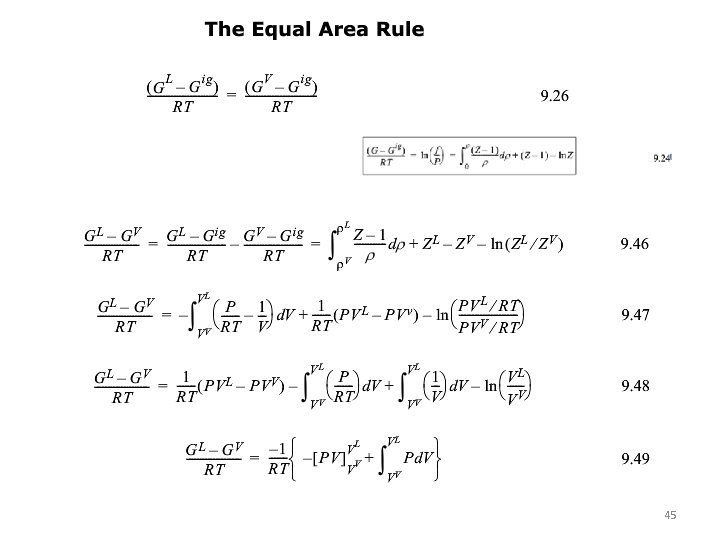
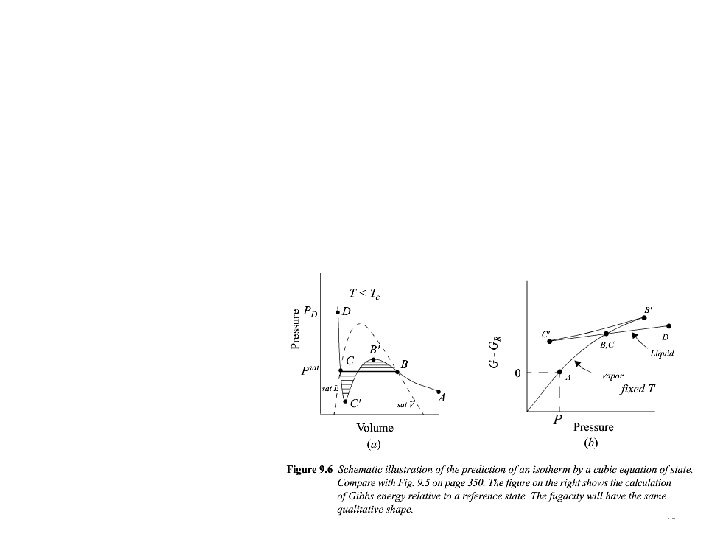
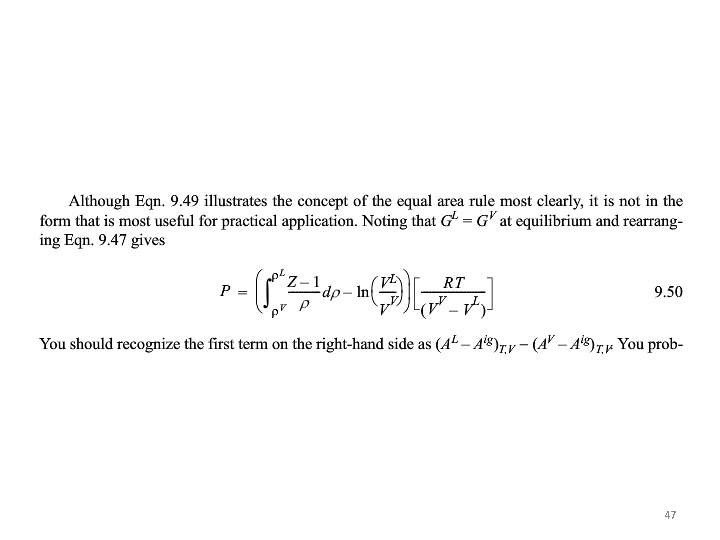
Four Ways to get Vapor Pressure Short Cut Method Approximation Clausius-Clapyron Equation Use Peng-Robinson or other EOS and find where the fugacity ratio is 1 Antoine Equation Which method depends on accuracy needed, availability of parameters, and calculation speed required. For Clausius- Clapron Equation you can use 1) ecentricity, 2) critical point, 3) normal boiling point as reference points. We want to know the vapor pressure to determine fractionation at vapor/liquid equilibria in Chapter 10 for multicomponent systems 1
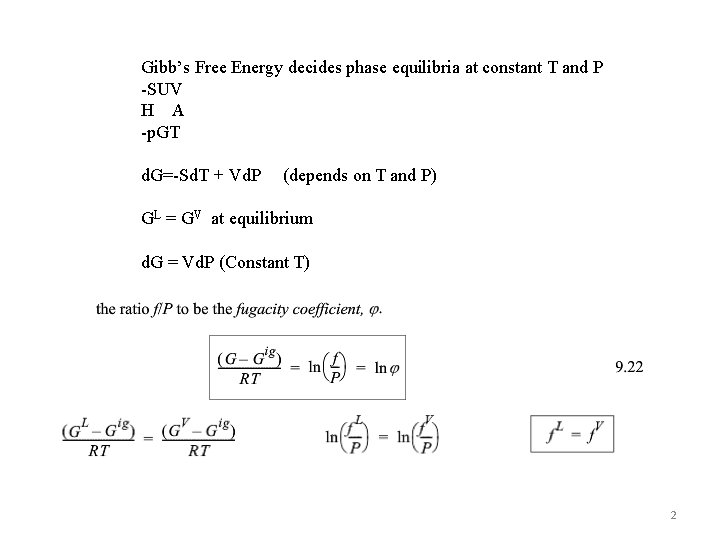
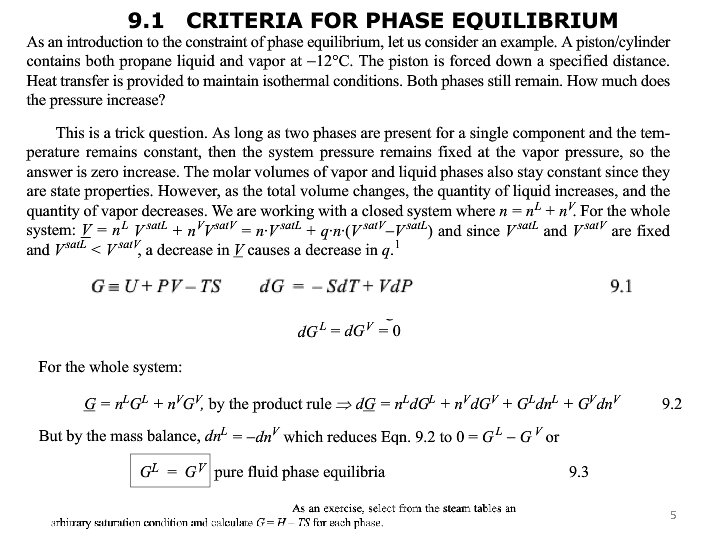
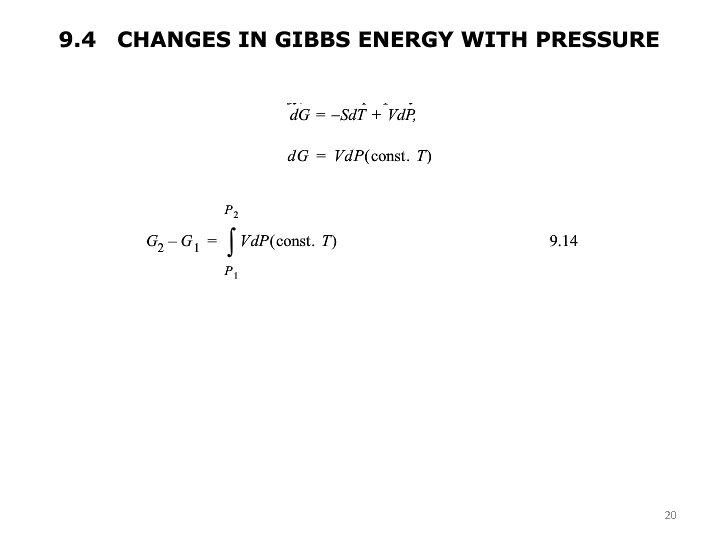
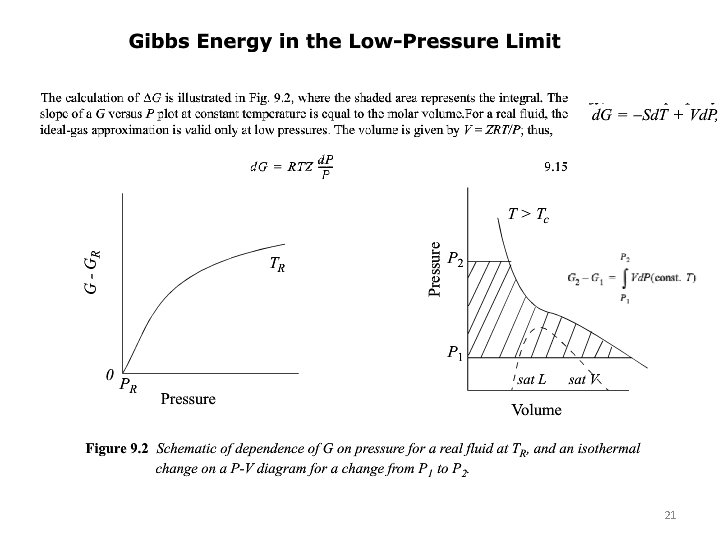
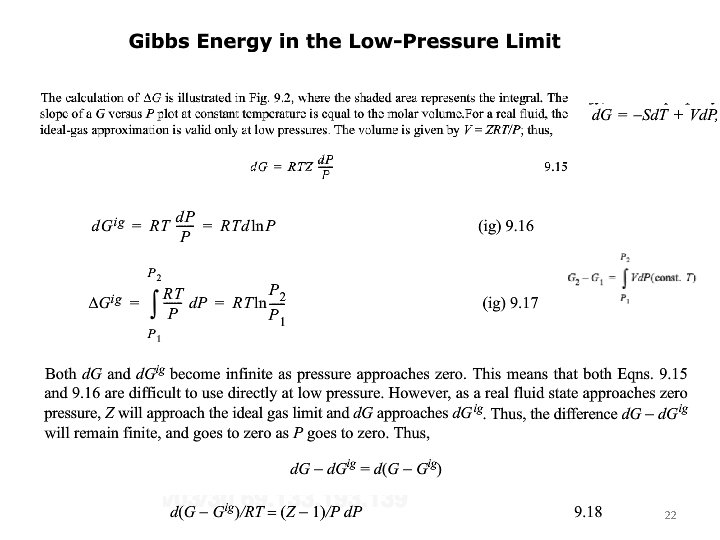
Gibb’s Free Energy decides phase equilibria at constant T and P -SUV H A -p. GT d. G=-Sd. T + Vd. P (depends on T and P) GL = GV at equilibrium d. G = Vd. P (Constant T) 2
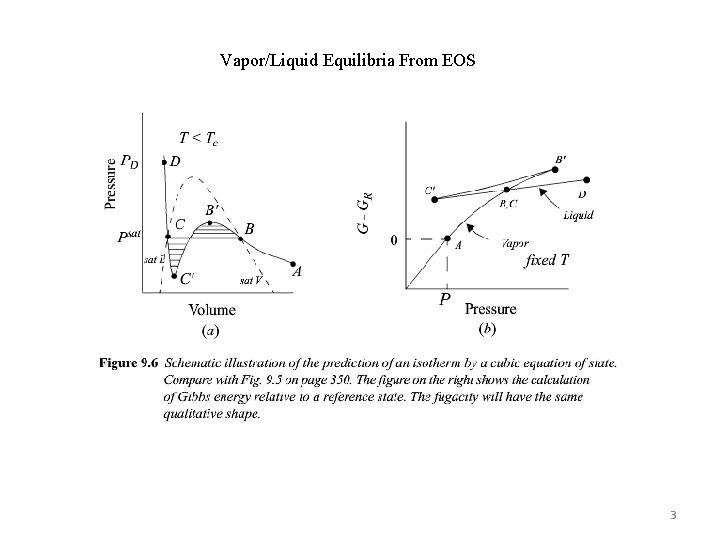
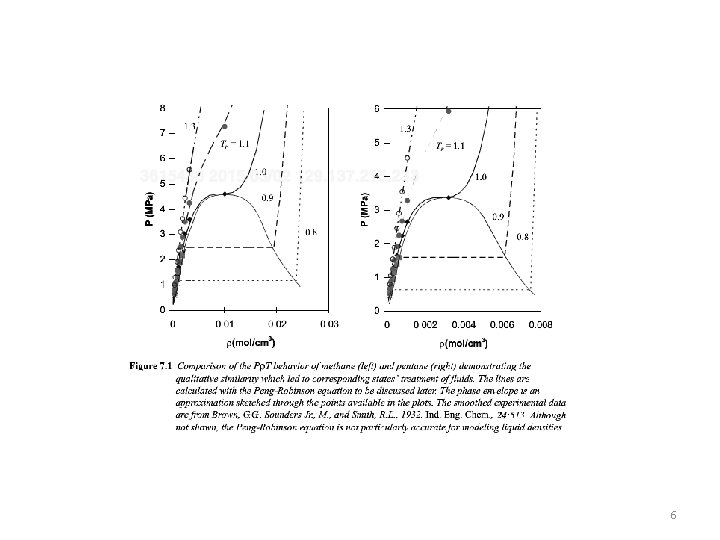
Vapor/Liquid Equilibria From EOS 3
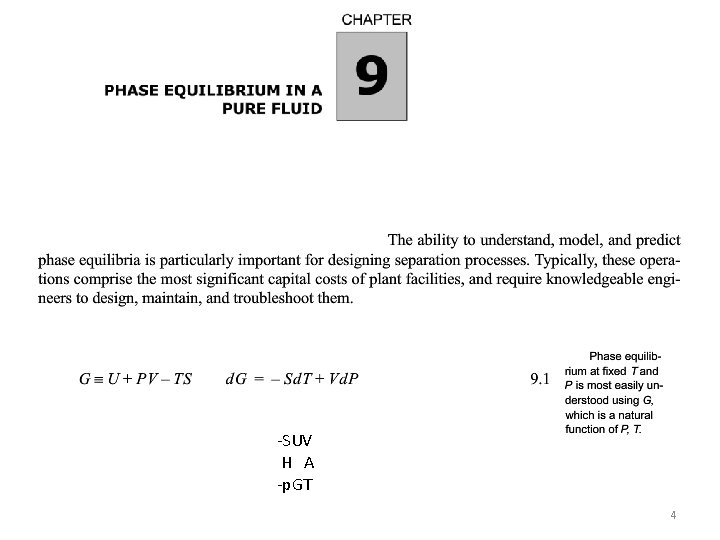
-SUV H A -p. GT 4
5
6
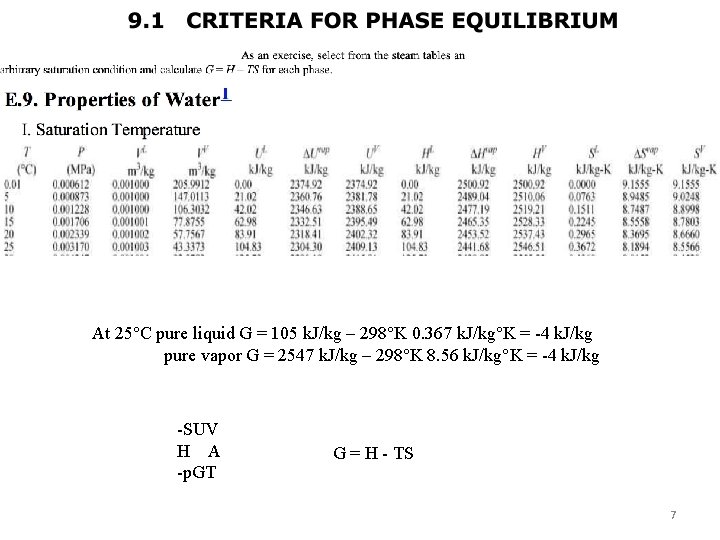
At 25°C pure liquid G = 105 k. J/kg – 298°K 0. 367 k. J/kg°K = -4 k. J/kg pure vapor G = 2547 k. J/kg – 298°K 8. 56 k. J/kg°K = -4 k. J/kg -SUV H A -p. GT G = H - TS 7
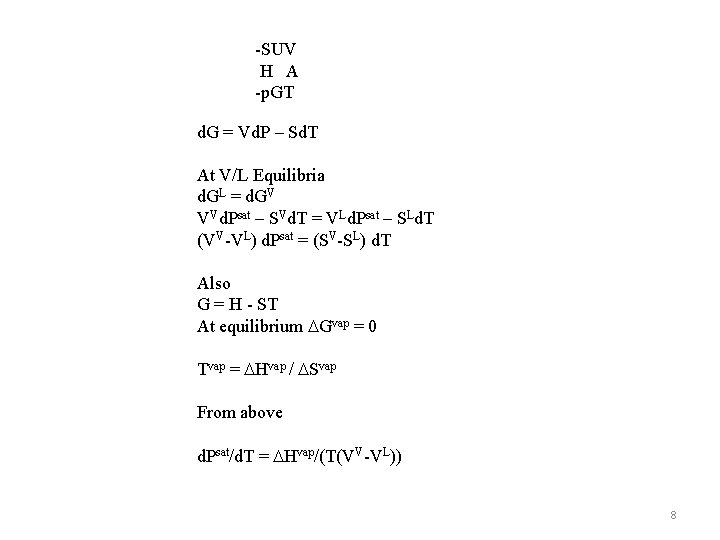
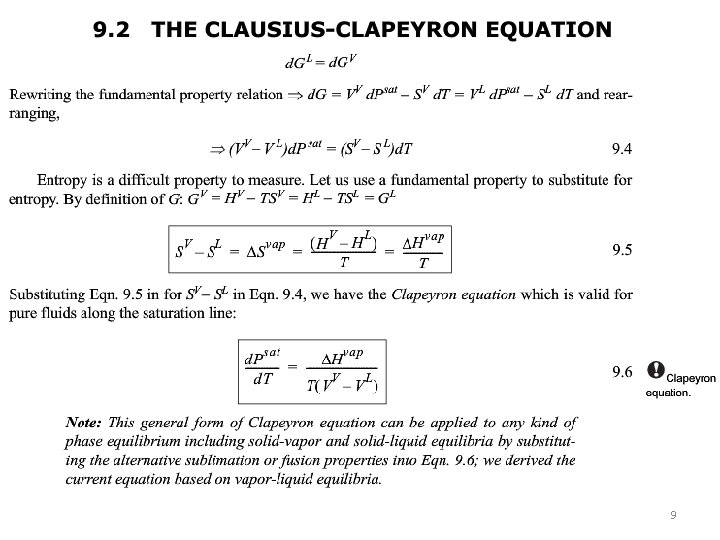
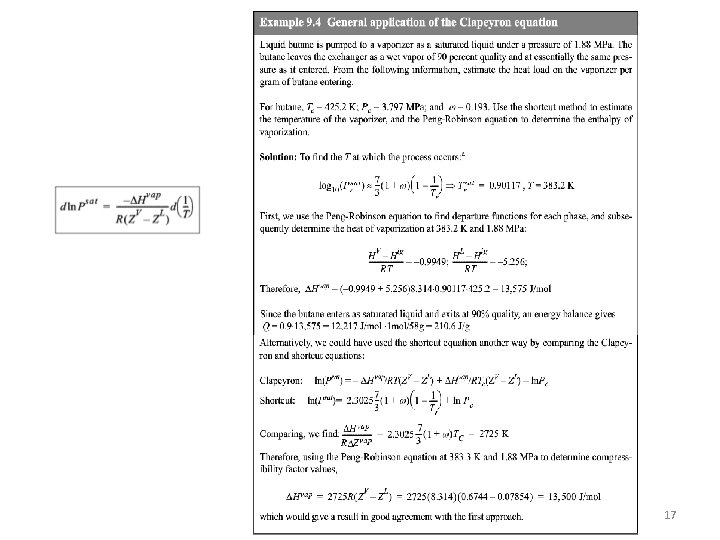
-SUV H A -p. GT d. G = Vd. P – Sd. T At V/L Equilibria d. GL = d. GV VVd. Psat – SVd. T = VLd. Psat – SLd. T (VV-VL) d. Psat = (SV-SL) d. T Also G = H - ST At equilibrium DGvap = 0 Tvap = DHvap / DSvap From above d. Psat/d. T = DHvap/(T(VV-VL)) 8
9
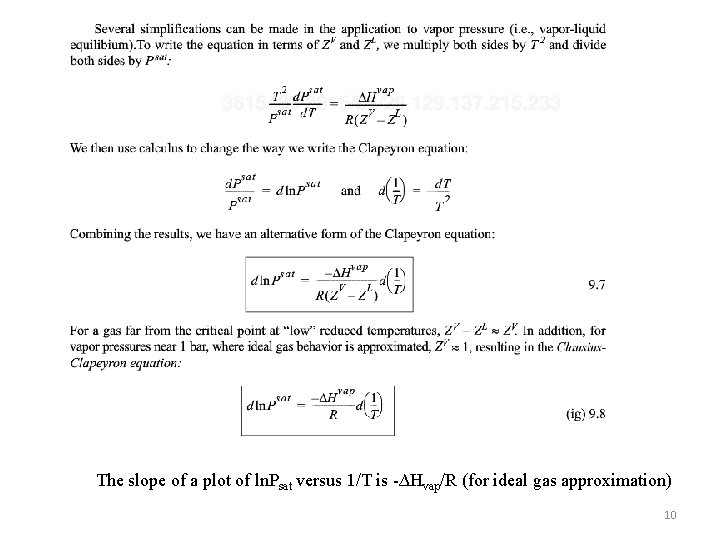
The slope of a plot of ln. Psat versus 1/T is -∆Hvap/R (for ideal gas approximation) 10
11
12
13
14
15
16
17
18
Four Ways to get Vapor Pressure Short Cut Method Approximation Clausius-Clapyron Equation Use Peng-Robinson or other EOS and find where the fugacity ratio is 1 Antoine Equation Which method depends on accuracy needed, availability of parameters, and calculation speed required. For Clausius- Clapron Equation you can use 1) ecentricity, 2) critical point, 3) normal boiling point as reference points. 19
20
21
22
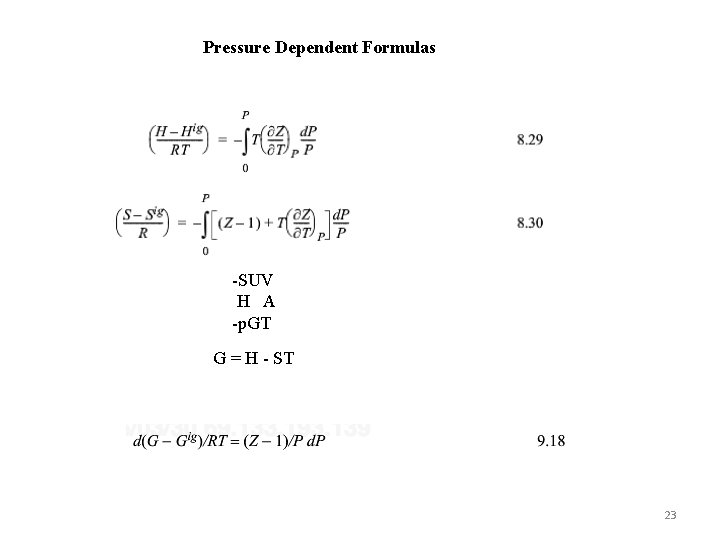
Pressure Dependent Formulas -SUV H A -p. GT G = H - ST 23
24
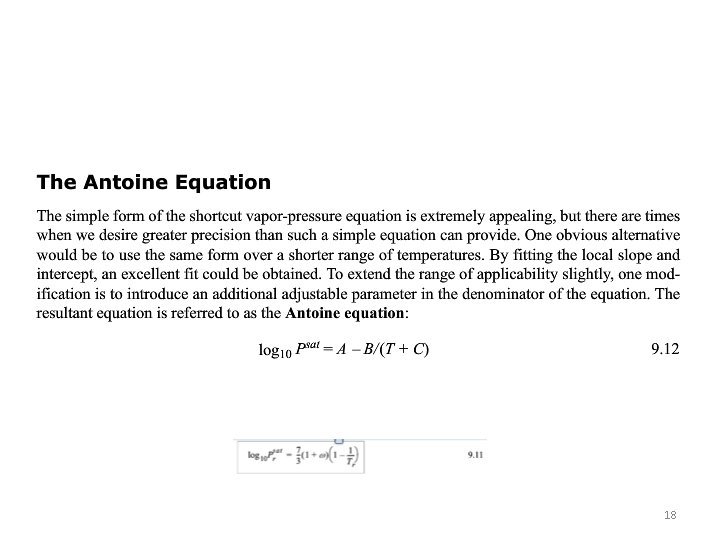
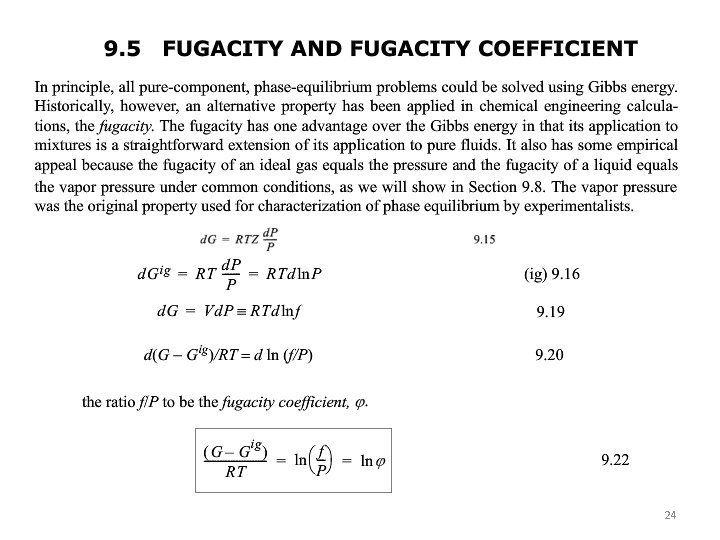
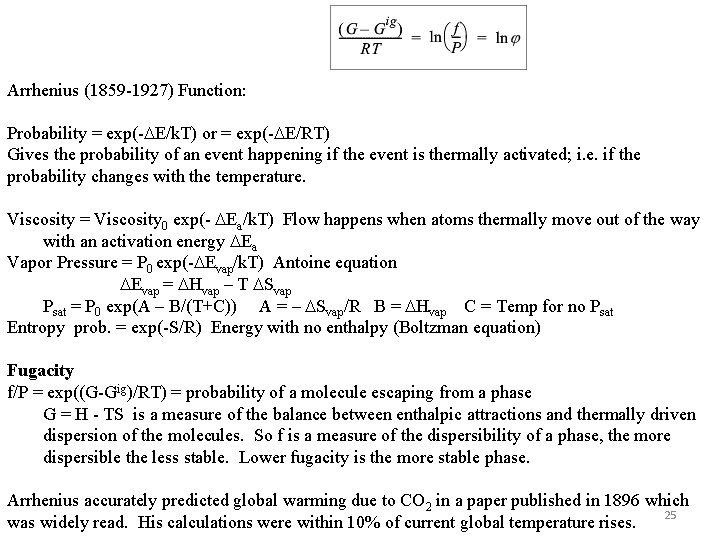
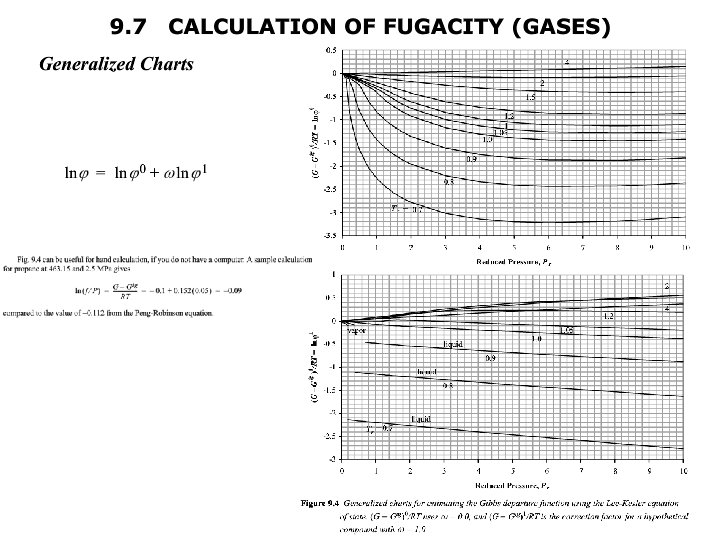
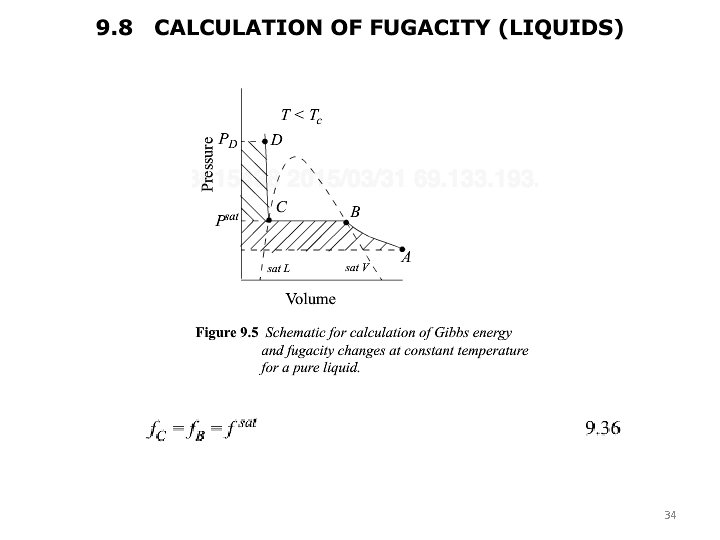
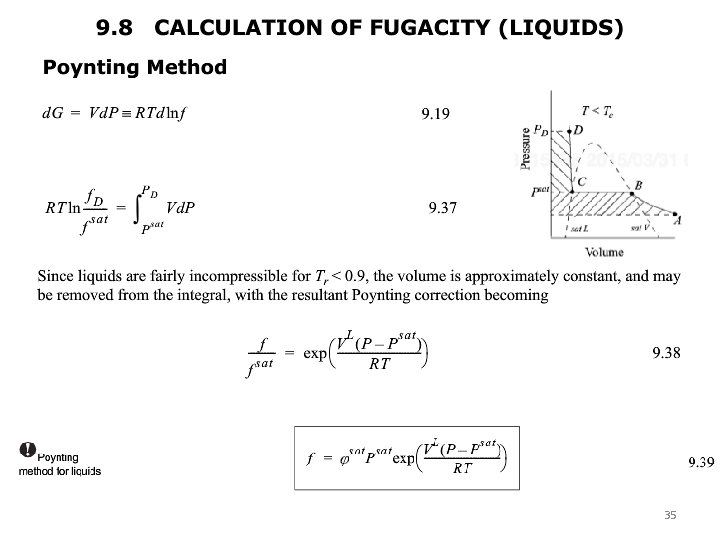
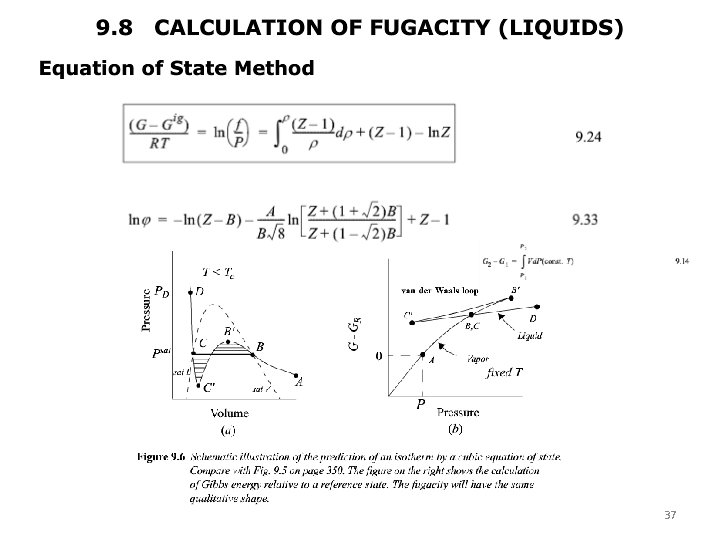
Arrhenius (1859 -1927) Function: Probability = exp(-DE/k. T) or = exp(-DE/RT) Gives the probability of an event happening if the event is thermally activated; i. e. if the probability changes with the temperature. Viscosity = Viscosity 0 exp(- DEa/k. T) Flow happens when atoms thermally move out of the way with an activation energy DEa Vapor Pressure = P 0 exp(-DEvap/k. T) Antoine equation DEvap = DHvap – T DSvap Psat = P 0 exp(A – B/(T+C)) A = – DSvap/R B = DHvap C = Temp for no Psat Entropy prob. = exp(-S/R) Energy with no enthalpy (Boltzman equation) Fugacity f/P = exp((G-Gig)/RT) = probability of a molecule escaping from a phase G = H - TS is a measure of the balance between enthalpic attractions and thermally driven dispersion of the molecules. So f is a measure of the dispersibility of a phase, the more dispersible the less stable. Lower fugacity is the more stable phase. Arrhenius accurately predicted global warming due to CO 2 in a paper published in 1896 which 25 was widely read. His calculations were within 10% of current global temperature rises.
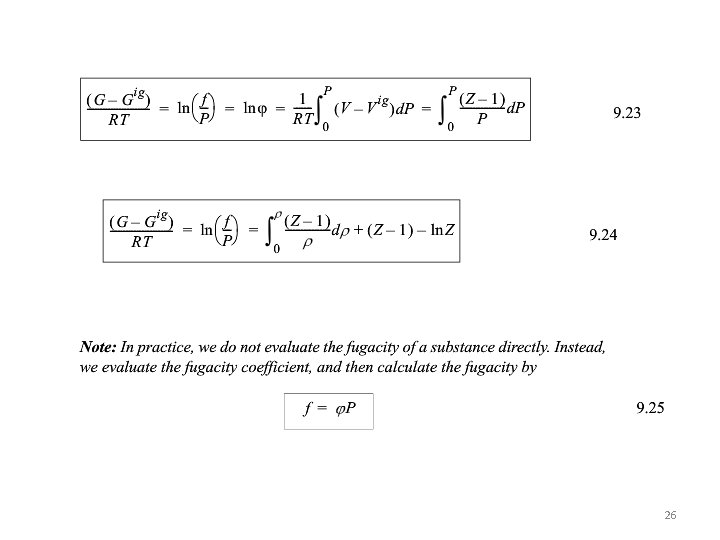
26
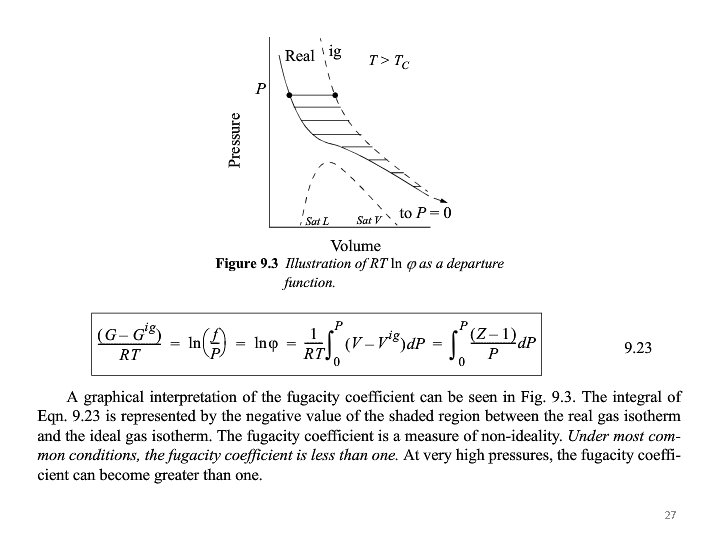
27
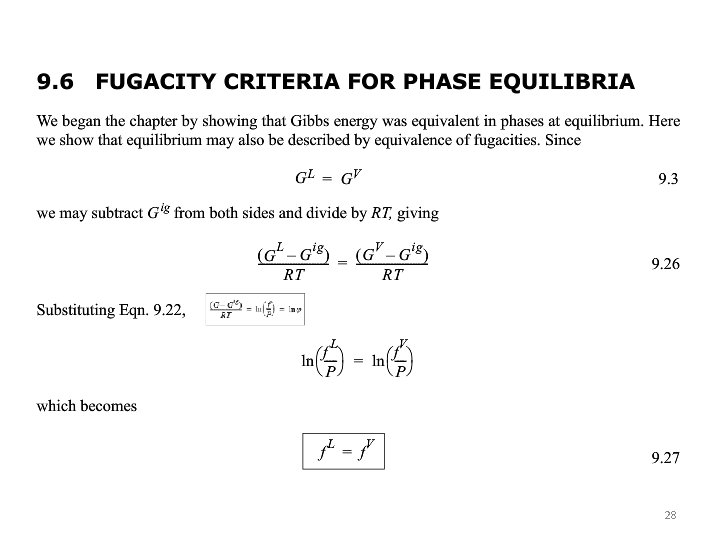
28
29
30
31
32
33
34
35
36
37
38
39
40
41
42
43
44
45
46
47
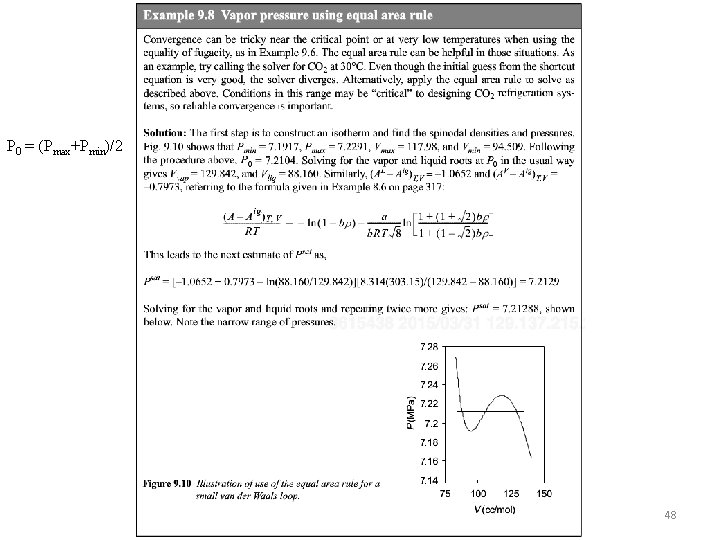
P 0 = (Pmax+Pmin)/2 48
49
50
51
52
53