
Four States of Matter The physical forms in
- Slides: 20
Four States of Matter The physical forms in which a substance can exist • Solid • Liquid • Gas • Plasma
Plasma is a gas like state of matter consisting of a mixture of free electrons and atoms that are stripped of their electrons (ionized). Where is Plasma? Both ordinary and exotic places! When an electric current is passed through neon gas, it produces both plasma and light. Also in fluorescent lights. Lightning is a massive electrical discharge in the atmosphere that creates a jagged column of plasma. Part of a comet's streaming tail is plasma from gas ionized by sunlight and other unknown processes. The Sun is a 1. 5 -million-kilometer ball of plasma, heated by nuclear fusion
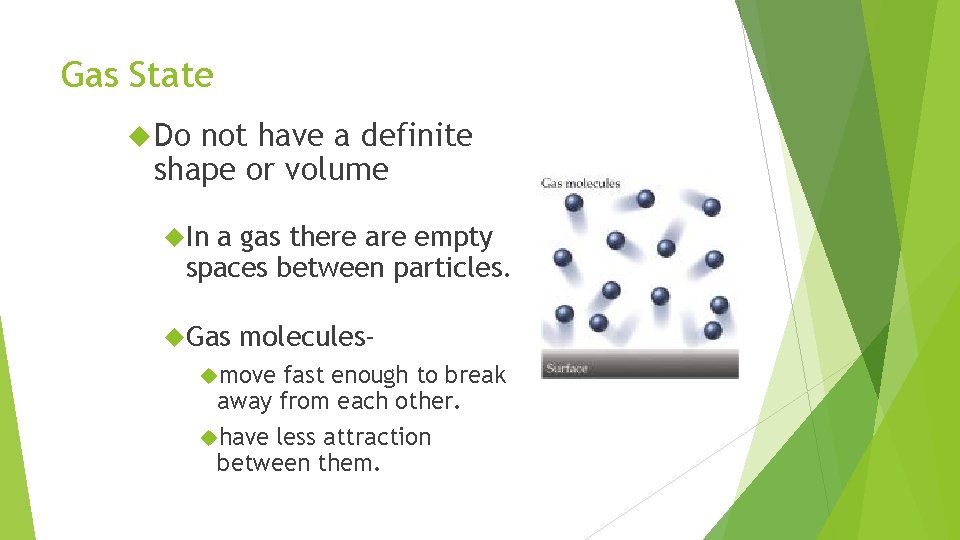
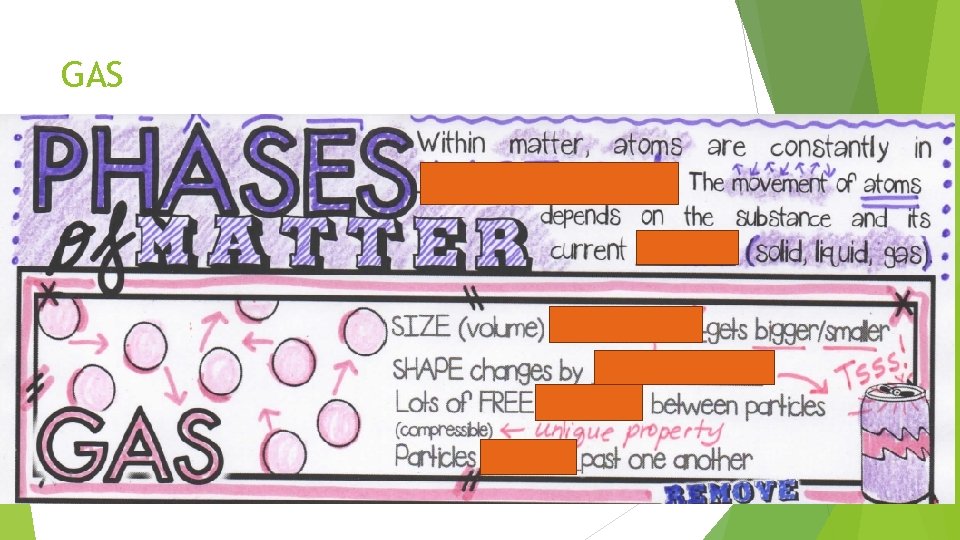
Gas State Do not have a definite shape or volume In a gas there are empty spaces between particles. Gas molecules- move fast enough to break away from each other. have less attraction between them.
GAS
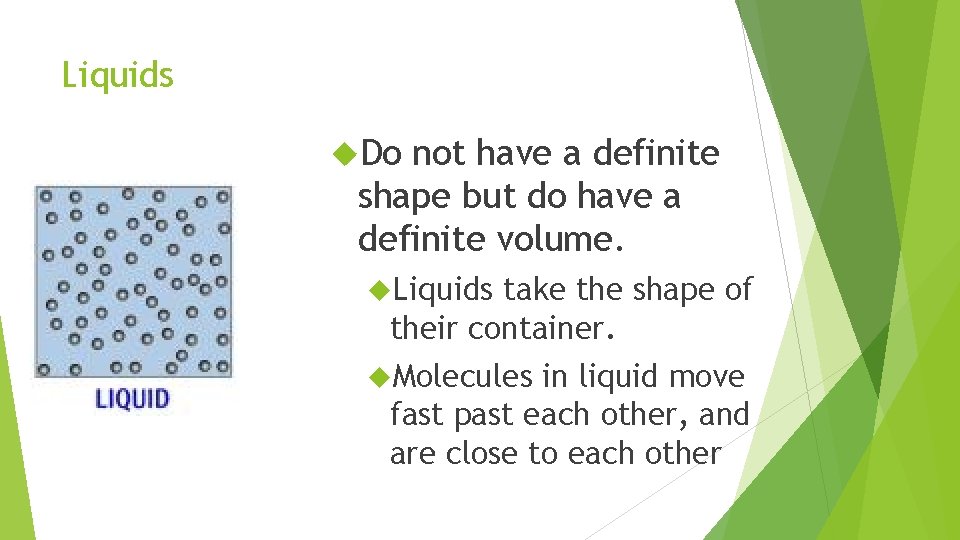
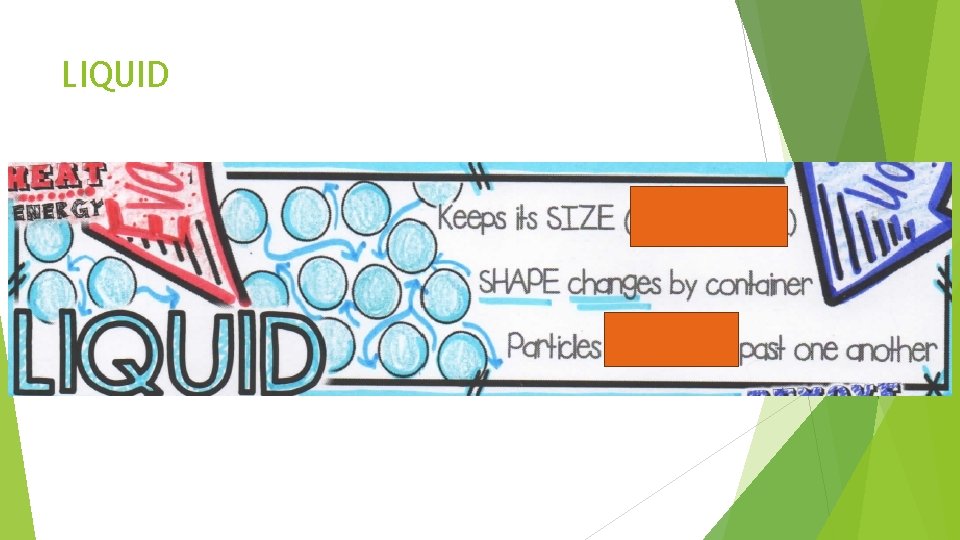
Liquids Do not have a definite shape but do have a definite volume. Liquids take the shape of their container. Molecules in liquid move fast past each other, and are close to each other
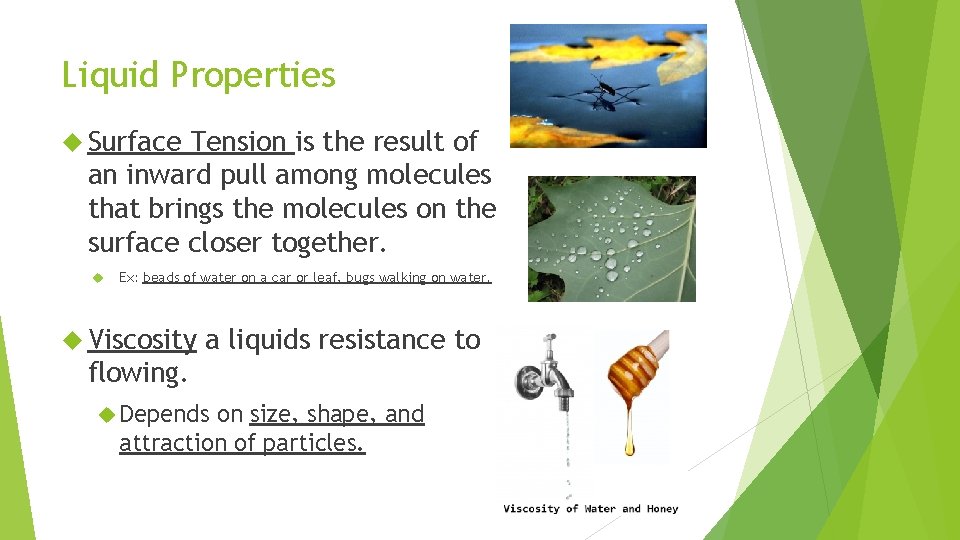
Liquid Properties Surface Tension is the result of an inward pull among molecules that brings the molecules on the surface closer together. Ex: beads of water on a car or leaf, bugs walking on water. Viscosity a liquids resistance to flowing. Depends on size, shape, and attraction of particles.
LIQUID
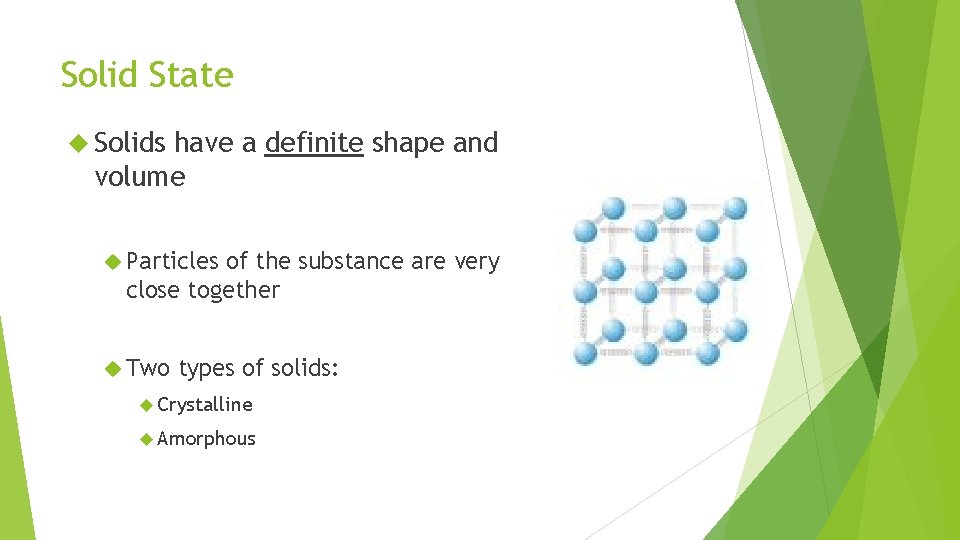
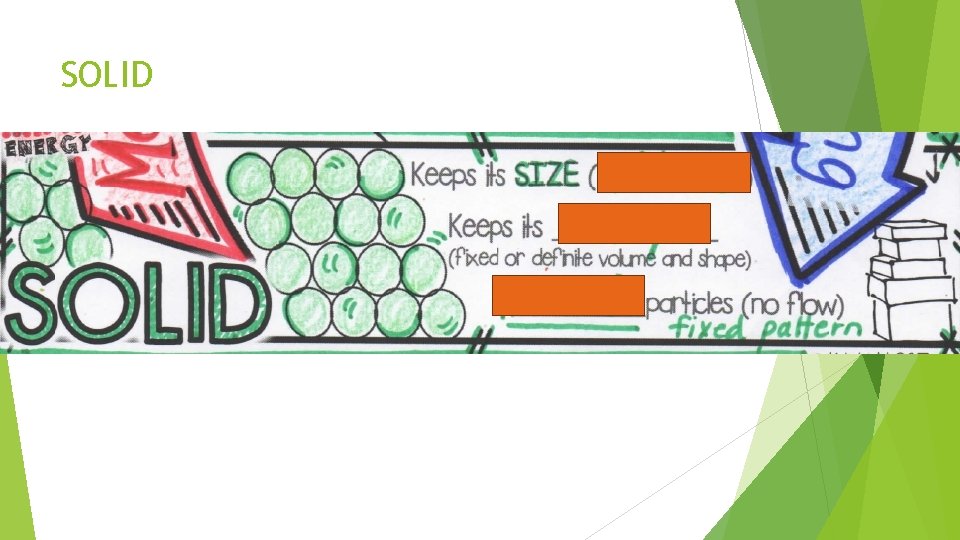
Solid State Solids have a definite shape and volume Particles of the substance are very close together Two types of solids: Crystalline Amorphous
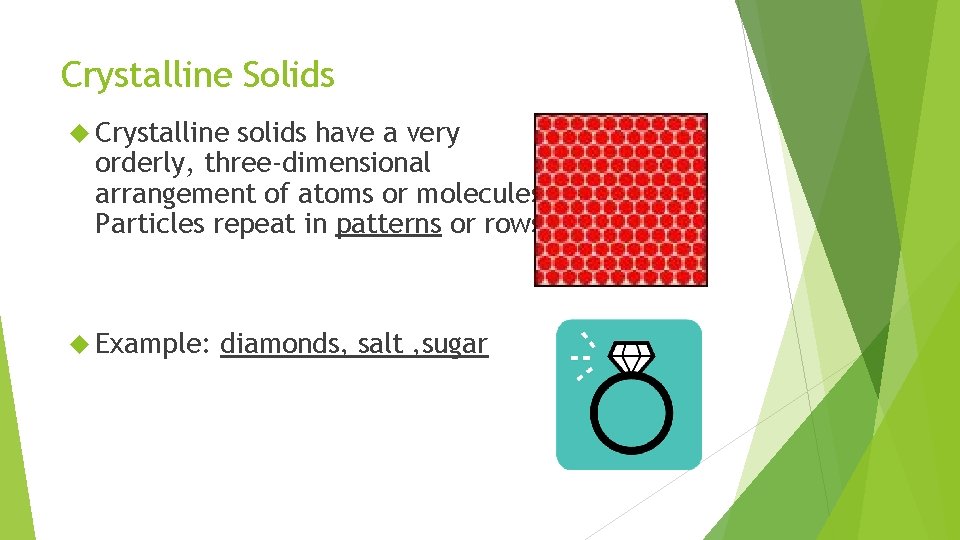
Crystalline Solids Crystalline solids have a very orderly, three-dimensional arrangement of atoms or molecules. Particles repeat in patterns or rows Example: diamonds, salt , sugar
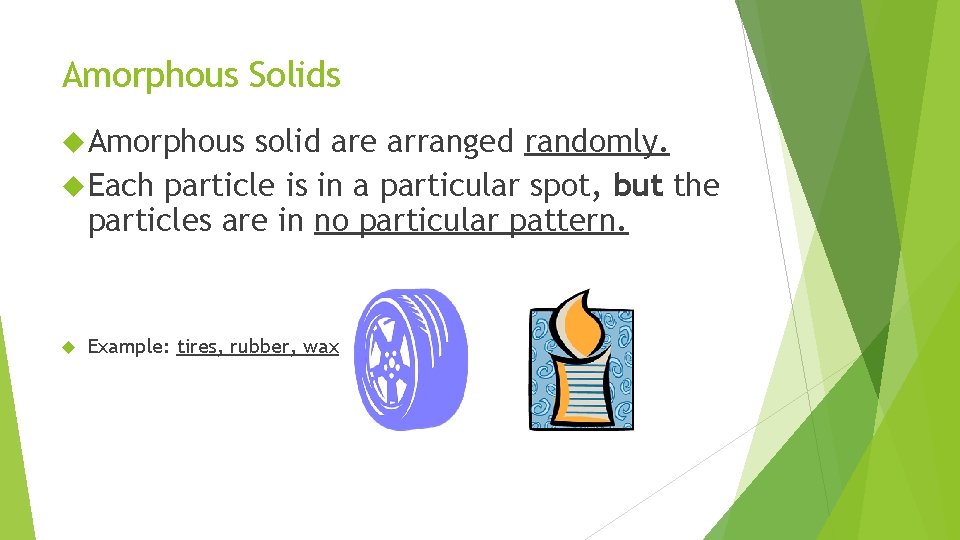
Amorphous Solids Amorphous solid are arranged randomly. Each particle is in a particular spot, but the particles are in no particular pattern. Example: tires, rubber, wax
SOLID
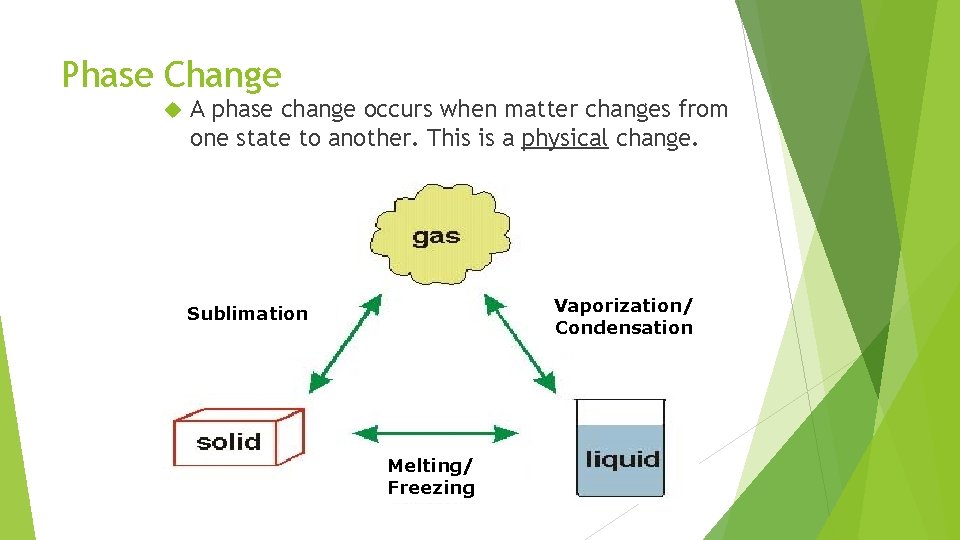
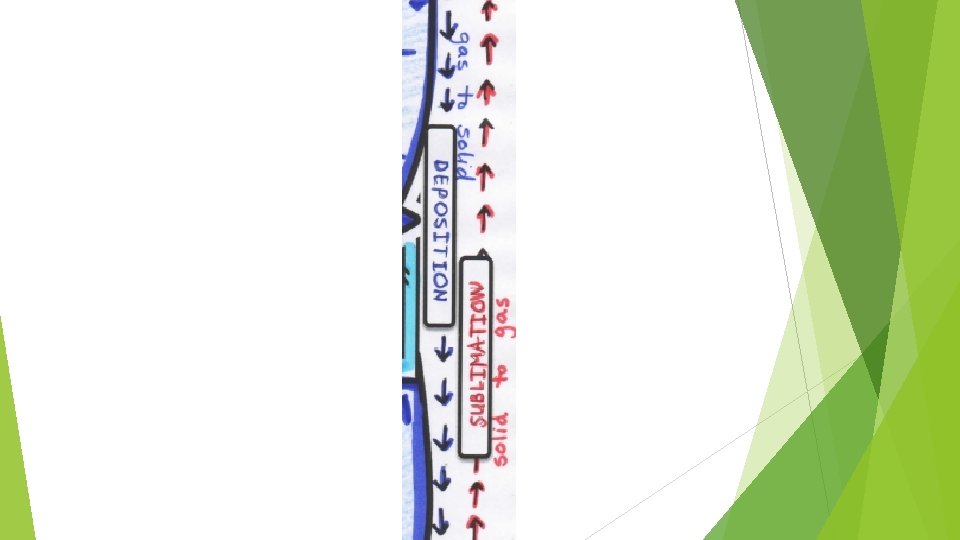
Phase Change A phase change occurs when matter changes from one state to another. This is a physical change. Vaporization/ Condensation Sublimation Melting/ Freezing
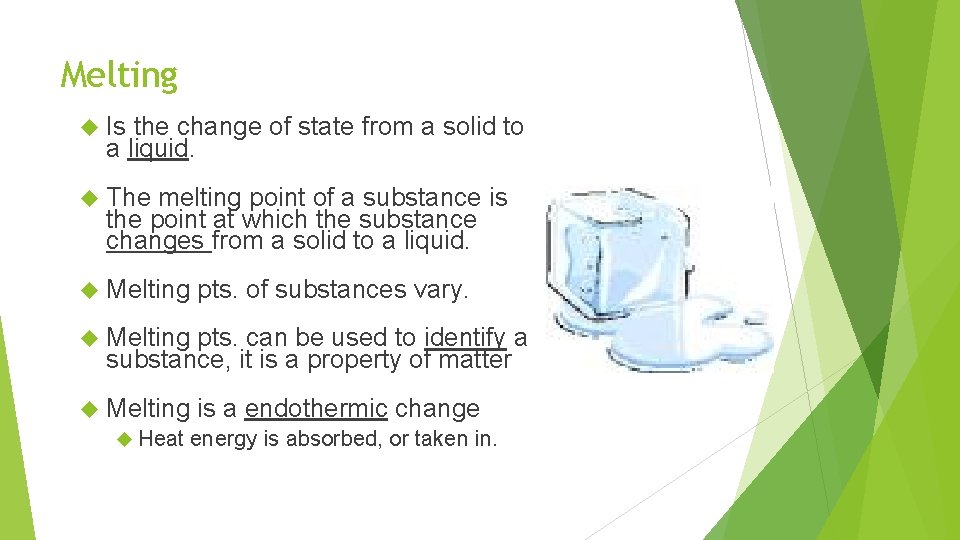
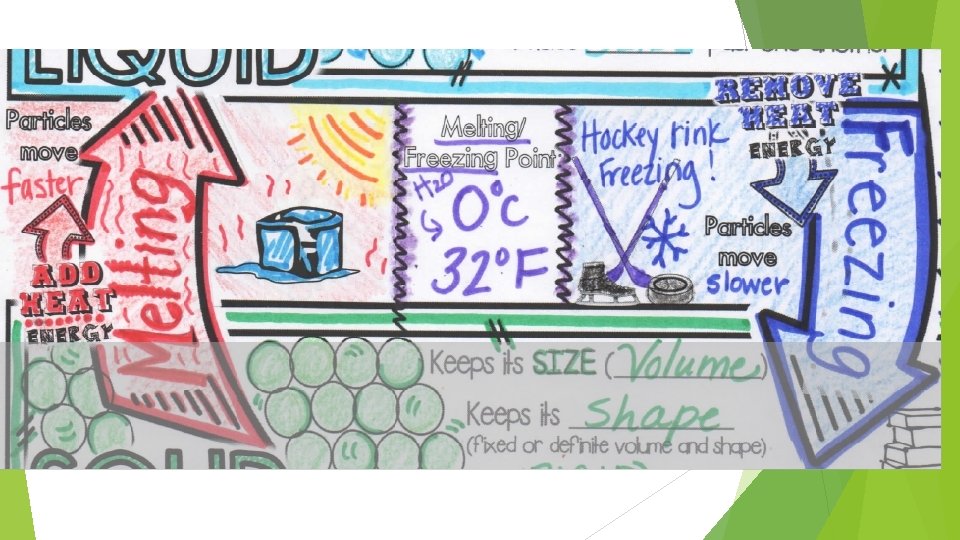
Melting Is the change of state from a solid to a liquid. The melting point of a substance is the point at which the substance changes from a solid to a liquid. Melting pts. of substances vary. Melting pts. can be used to identify a substance, it is a property of matter Melting is a endothermic change Heat energy is absorbed, or taken in.
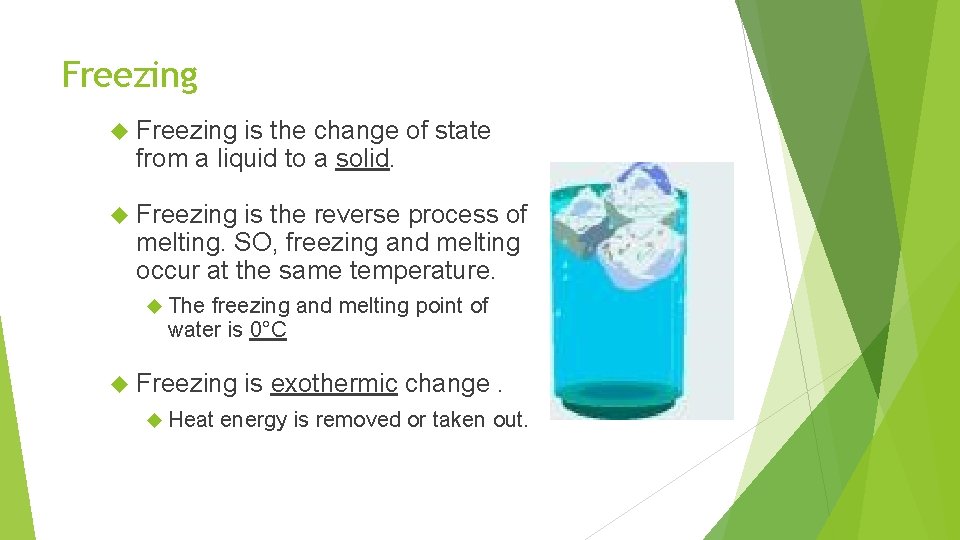
Freezing is the change of state from a liquid to a solid. Freezing is the reverse process of melting. SO, freezing and melting occur at the same temperature. The freezing and melting point of water is 0°C Freezing Heat is exothermic change. energy is removed or taken out.
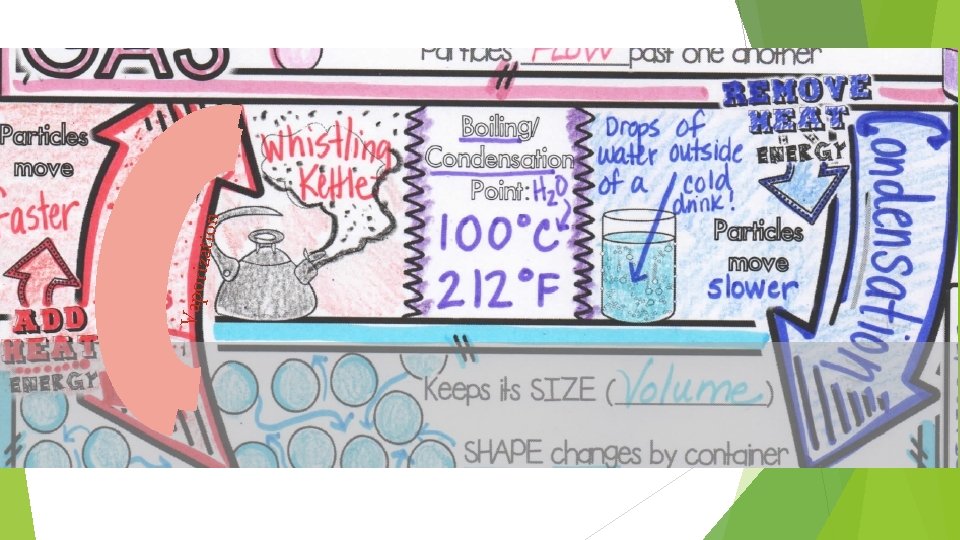
Vaporization Is a change from liquid to gas Boiling is vaporization that occurs throughout the liquid. Boiling pt. is a physical property of matter When a liquids becomes a gas the atoms spread apart. Pressure affects boiling points Evaporation is vaporization that occurs at the surface of the liquid. Vaporization is a endothermic change Evaporation point is below boiling pt.
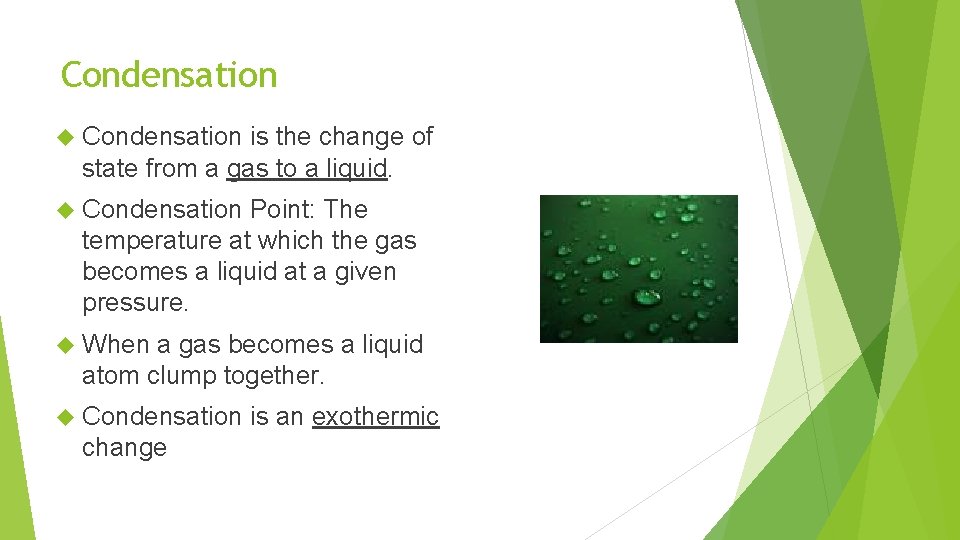
Condensation is the change of state from a gas to a liquid. Condensation Point: The temperature at which the gas becomes a liquid at a given pressure. When a gas becomes a liquid atom clump together. Condensation change is an exothermic
Vaporiza tion
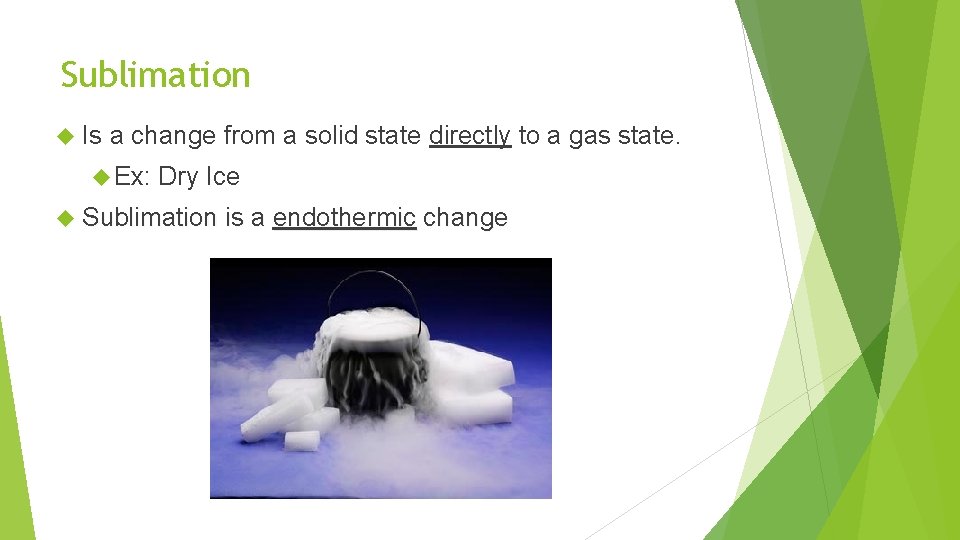
Sublimation Is a change from a solid state directly to a gas state. Ex: Dry Ice Sublimation is a endothermic change