
Four State EPA Region 7 State Implementation Plan

- Slides: 15
Four State / EPA Region 7 State Implementation Plan (SIP) Kaizen Process 1
Why Do Kaizen Process for SIPs “Transform the SIP process into a more dynamic and collaborative, performance oriented, multipollutant air quality management plan. ” Air Quality Management in the United States National Research Council 2
Why Do Kaizen Process for SIPs? n Duplicative Work n Investment Time vs Environmental Results n Past SIP Development and SIP Processing Performance 3
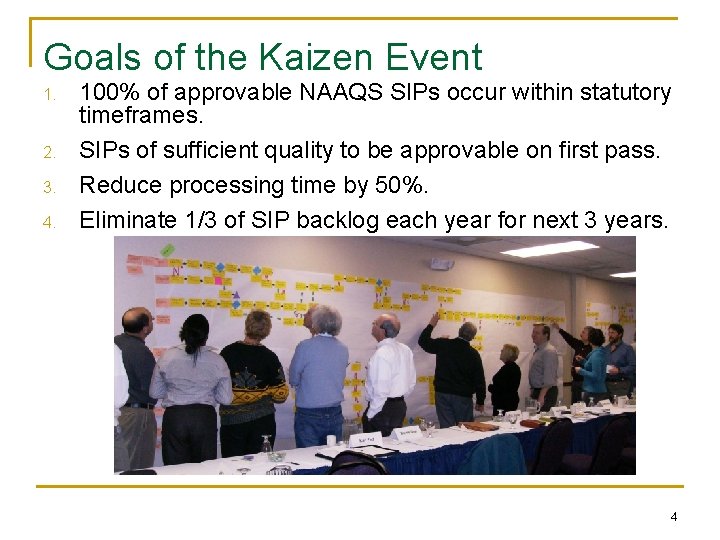
Goals of the Kaizen Event 1. 2. 3. 4. 100% of approvable NAAQS SIPs occur within statutory timeframes. SIPs of sufficient quality to be approvable on first pass. Reduce processing time by 50%. Eliminate 1/3 of SIP backlog each year for next 3 years. 4
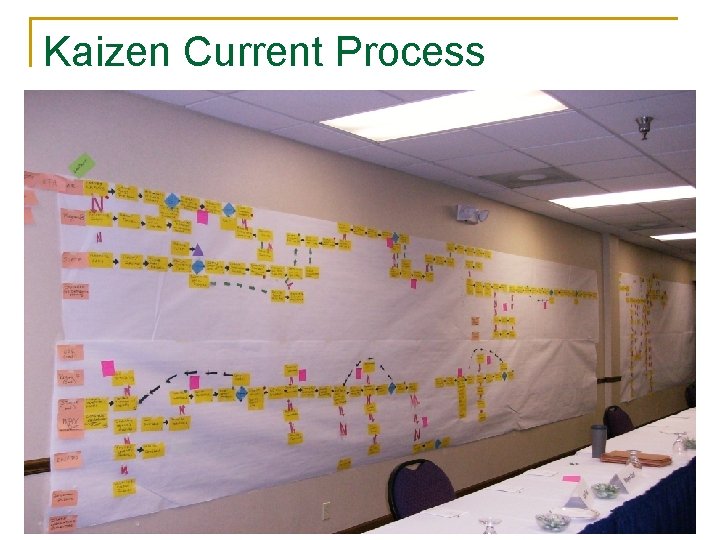
Kaizen Current Process 5
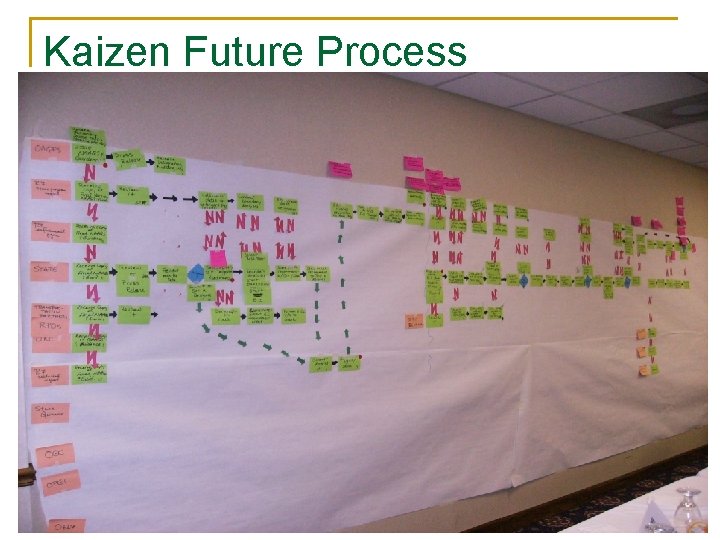
Kaizen Future Process 6
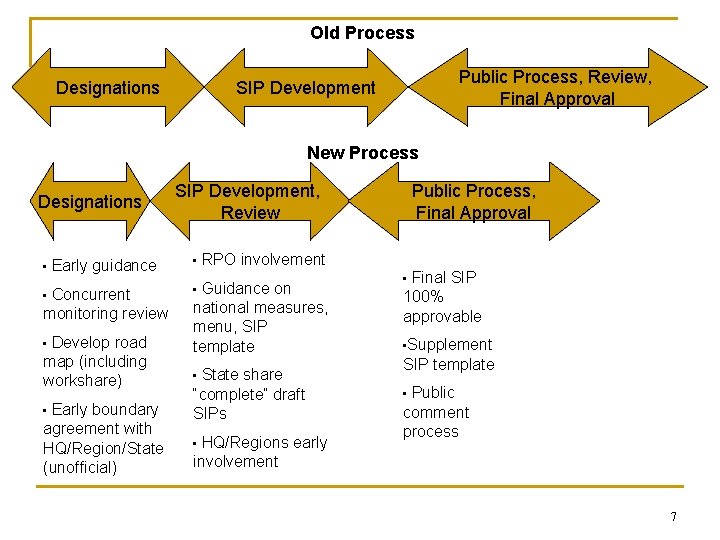
Old Process Designations Public Process, Review, Final Approval SIP Development New Process Designations SIP Development, Review Early guidance • Concurrent monitoring review • • • Develop road map (including workshare) • Early boundary agreement with HQ/Region/State (unofficial) • RPO involvement Guidance on national measures, menu, SIP template State share “complete” draft SIPs • HQ/Regions early involvement • Public Process, Final Approval Final SIP 100% approvable • • Supplement SIP template Public comment process • 7
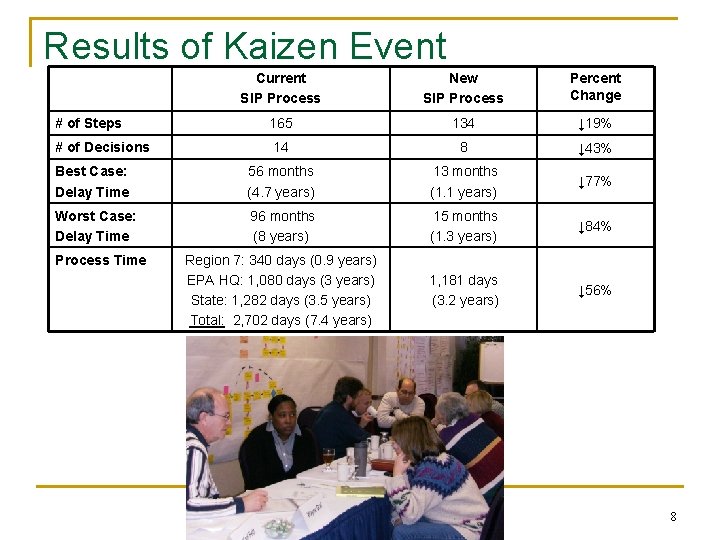
Results of Kaizen Event Current SIP Process New SIP Process Percent Change # of Steps 165 134 ↓ 19% # of Decisions 14 8 ↓ 43% Best Case: Delay Time 56 months (4. 7 years) 13 months (1. 1 years) ↓ 77% Worst Case: Delay Time 96 months (8 years) 15 months (1. 3 years) ↓ 84% Region 7: 340 days (0. 9 years) EPA HQ: 1, 080 days (3 years) State: 1, 282 days (3. 5 years) Total: 2, 702 days (7. 4 years) 1, 181 days (3. 2 years) ↓ 56% Process Time 8
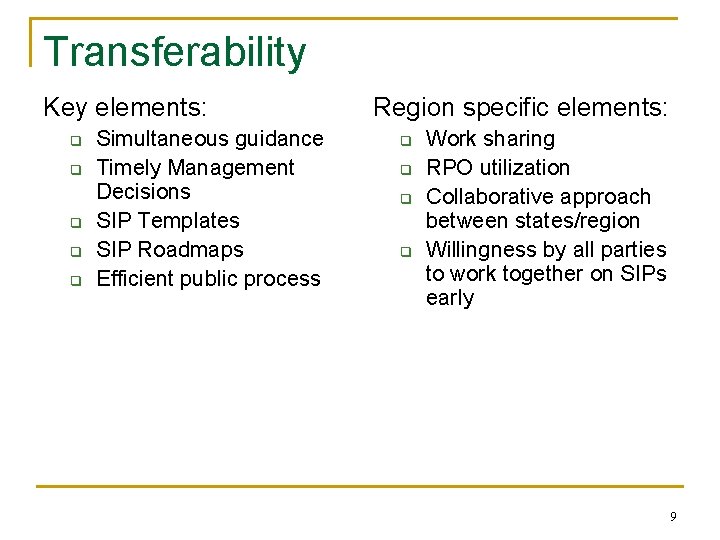
Transferability Key elements: q q q Simultaneous guidance Timely Management Decisions SIP Templates SIP Roadmaps Efficient public process Region specific elements: q q Work sharing RPO utilization Collaborative approach between states/region Willingness by all parties to work together on SIPs early 9
Questions? Rick Brunetti, Director Bureau of Air Kansas Department of Health and Environment rbrunetti@kdheks. gov (785) 296 -1593 Josh Tapp, Chief Air Planning Branch EPA Region 7 Tapp. joshua@epa. gov (913) 551 -7606 10
11
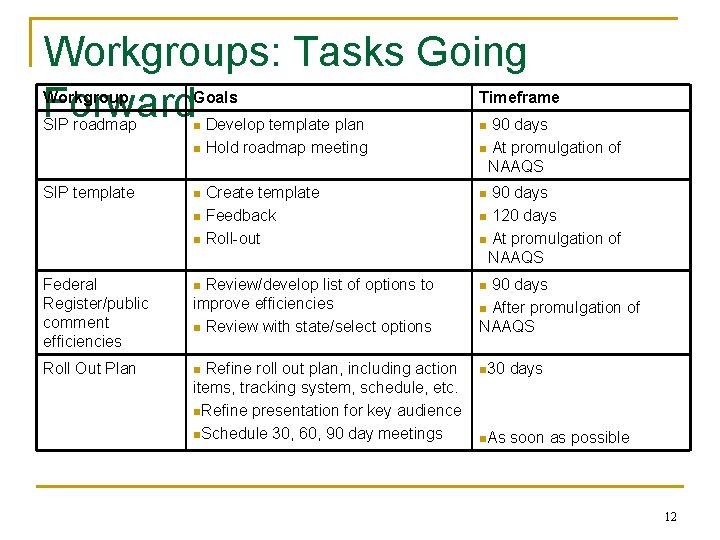
Workgroups: Tasks Going Forward Workgroup Goals Timeframe SIP roadmap n Develop template plan n Hold roadmap meeting n SIP template n Create template n Feedback n Roll-out n Federal Register/public comment efficiencies n Review/develop list of options to improve efficiencies n Review with state/select options n Roll Out Plan n Refine roll out plan, including action items, tracking system, schedule, etc. n. Refine presentation for key audience n. Schedule 30, 60, 90 day meetings n 30 days n. As soon as possible 90 days n At promulgation of NAAQS 90 days n 120 days n At promulgation of NAAQS 90 days n After promulgation of NAAQS 12
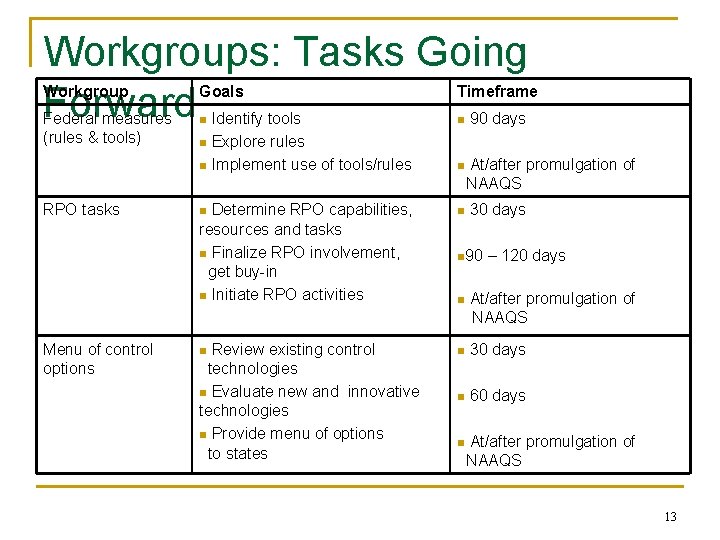
Workgroups: Tasks Going Forward Workgroup Goals Timeframe Federal measures (rules & tools) n Identify tools n Explore rules n Implement use of tools/rules n Determine RPO capabilities, resources and tasks n Finalize RPO involvement, get buy-in n Initiate RPO activities n n At/after promulgation of NAAQS Review existing control technologies n Evaluate new and innovative technologies n Provide menu of options to states n 30 days n 60 days RPO tasks Menu of control options n n n 90 days At/after promulgation of NAAQS 30 days n 90 n – 120 days At/after promulgation of NAAQS 13
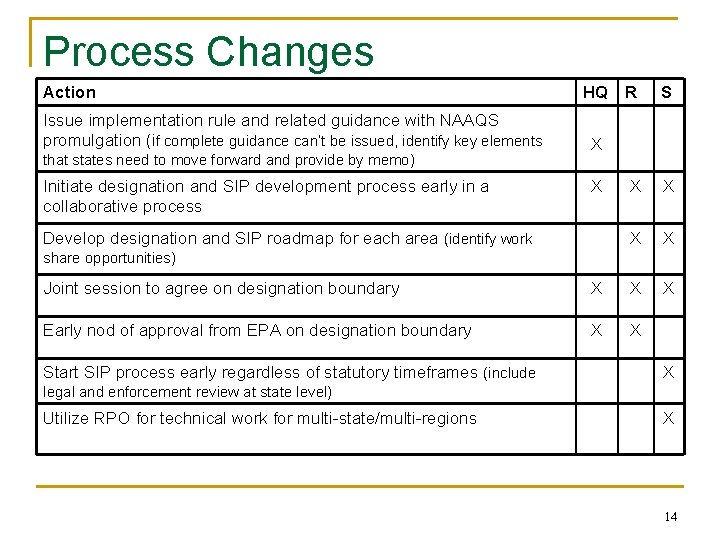
Process Changes Action Issue implementation rule and related guidance with NAAQS promulgation (if complete guidance can’t be issued, identify key elements that states need to move forward and provide by memo) Initiate designation and SIP development process early in a collaborative process HQ R S X X Develop designation and SIP roadmap for each area (identify work X X X share opportunities) Joint session to agree on designation boundary X X Early nod of approval from EPA on designation boundary X X Start SIP process early regardless of statutory timeframes (include X legal and enforcement review at state level) Utilize RPO for technical work for multi-state/multi-regions X 14
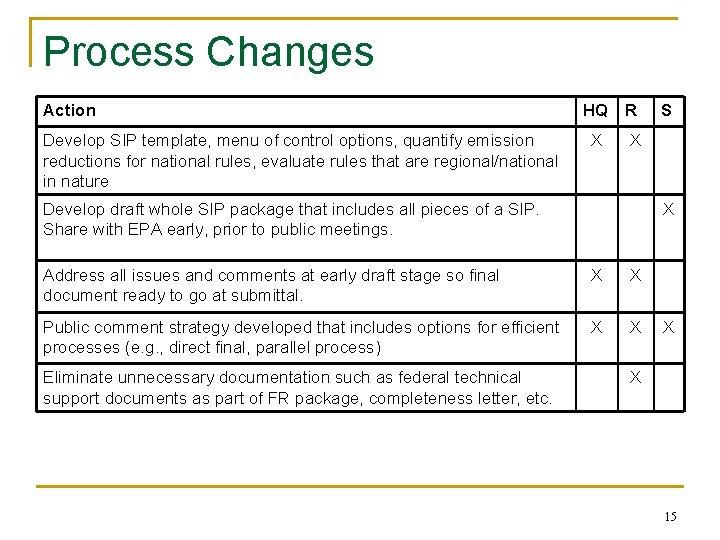
Process Changes Action Develop SIP template, menu of control options, quantify emission reductions for national rules, evaluate rules that are regional/national in nature HQ R X X Develop draft whole SIP package that includes all pieces of a SIP. Share with EPA early, prior to public meetings. X Address all issues and comments at early draft stage so final document ready to go at submittal. X X Public comment strategy developed that includes options for efficient processes (e. g. , direct final, parallel process) X X Eliminate unnecessary documentation such as federal technical support documents as part of FR package, completeness letter, etc. S X X 15