
Four Sectors Levels of Industries Primary Level I


- Slides: 29
Four Sectors (Levels) of Industries • Primary (Level I) • Secondary (Level II) • Tertiary (Service) (Level III) • Quaternary (Level IV) • Quarter (1/4) • US$: 25 cents (1/4 dollar) • Time: 15 minutes (1/4 hour)
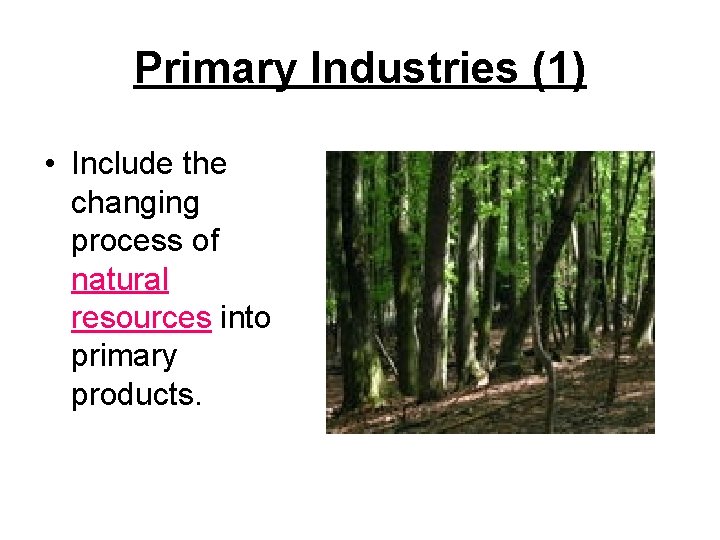
Primary Industries (1) • Include the changing process of natural resources into primary products.
Primary Industries (2) • Most products from this sector are considered raw materials for other industries. • Examples • Agriculture - covers all activities required to food production • Forestry - provide timber as raw material for wood products • Mining- Materials recovered by mining include gold, diamonds, …and so on
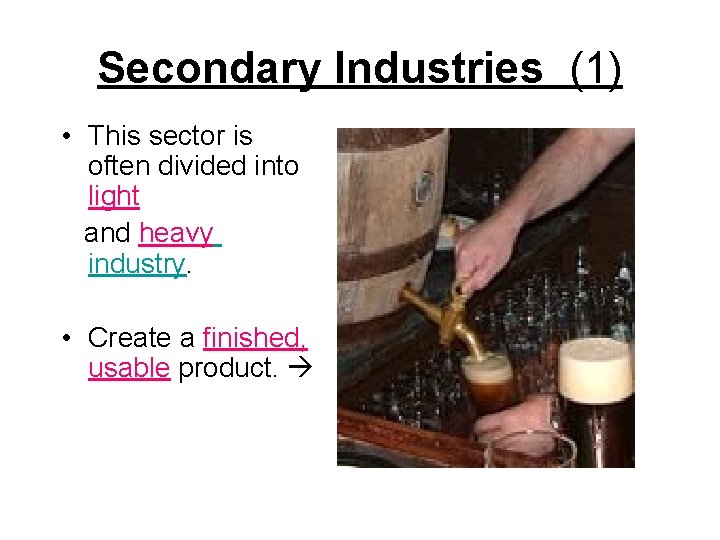
Secondary Industries (1) • This sector is often divided into light and heavy industry. • Create a finished, usable product.
Secondary Industries (2) • Examples – Manufacturing- the use of tools and labor to make things for use or sale. – Chemical Industry-produce industrial chemicals, Polymers and plastics – Steel Industry-steel is one of the most common materials in the world
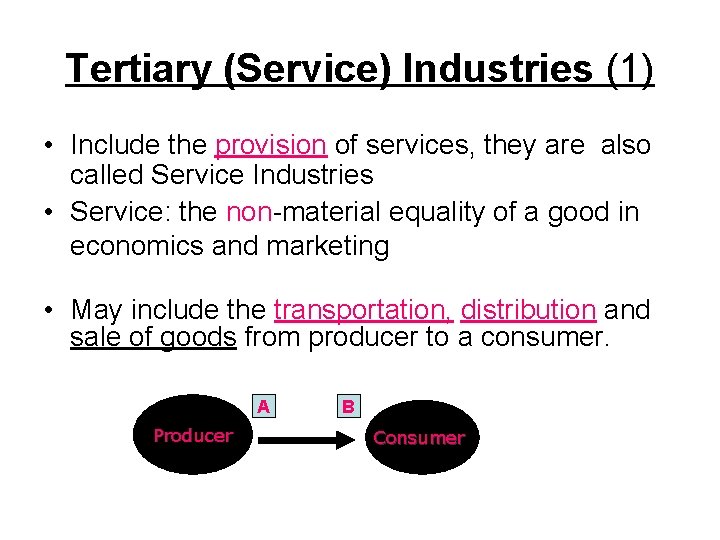
Tertiary (Service) Industries (1) • Include the provision of services, they are also called Service Industries • Service: the non-material equality of a good in economics and marketing • May include the transportation, distribution and sale of goods from producer to a consumer. A Producer B Consumer
Tertiary (Service) Industries (2) • Examples – Wholesaling – Retailing Producer Wholesaling Retailing Consumer – Restaurant A restaurant in New York
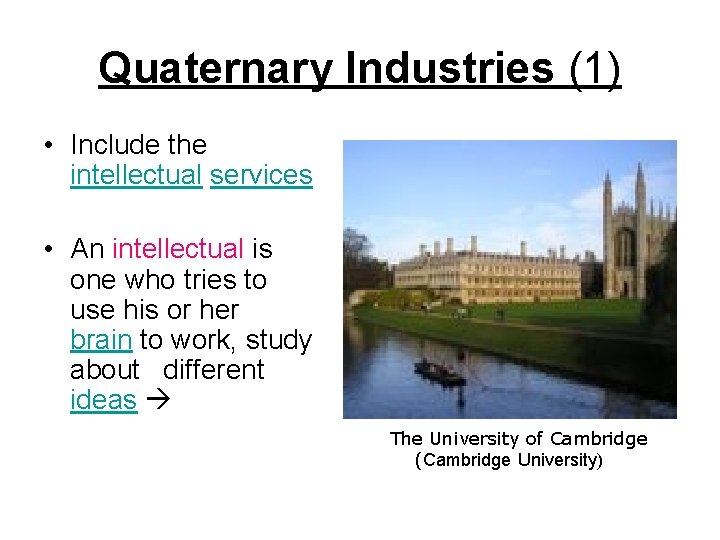
Quaternary Industries (1) • Include the intellectual services • An intellectual is one who tries to use his or her brain to work, study about different ideas The University of Cambridge (Cambridge University)
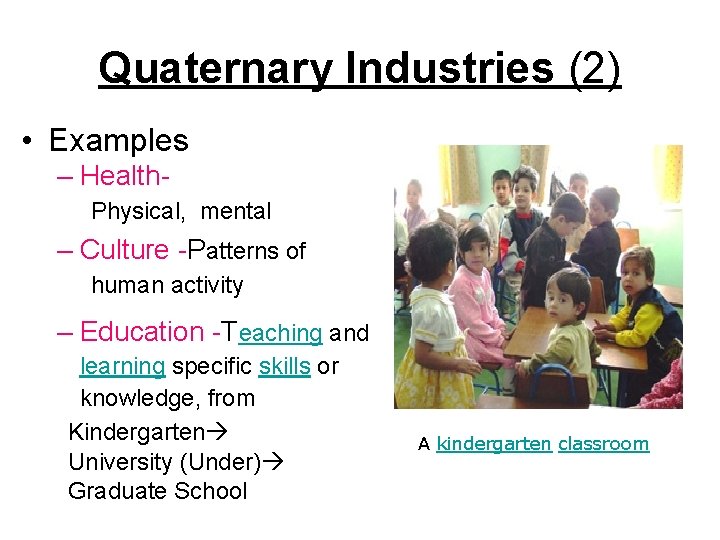
Quaternary Industries (2) • Examples – Health. Physical, mental – Culture -Patterns of human activity – Education -Teaching and learning specific skills or knowledge, from Kindergarten University (Under) Graduate School A kindergarten classroom
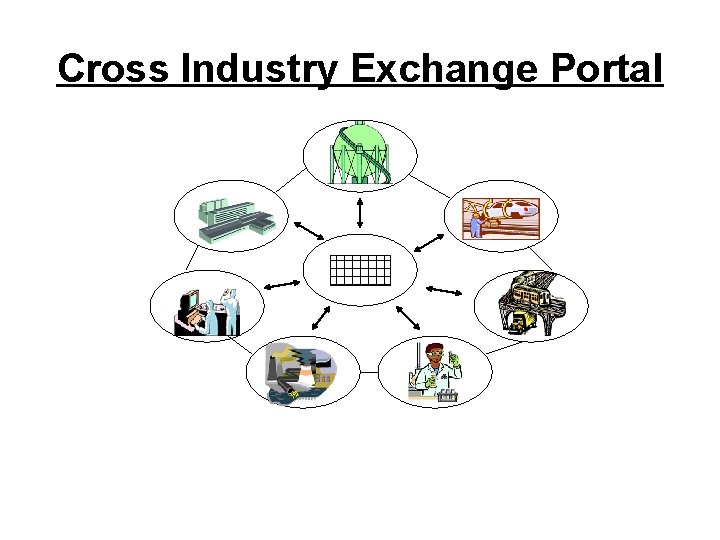
Cross Industry Exchange Portal
Commerce • Includes – Tertiary (Service) industries • and – Quaternary industries • Examples: – Wholesaling, Retailing, Restaurant… – Health, Culture, Education…
Commerce (2) • Commerce is a branch of production which deals with the exchange of goods and services from producer to consumer. • It comprises the trading of something of economic value such as goods, services, information or money between two or more entities.
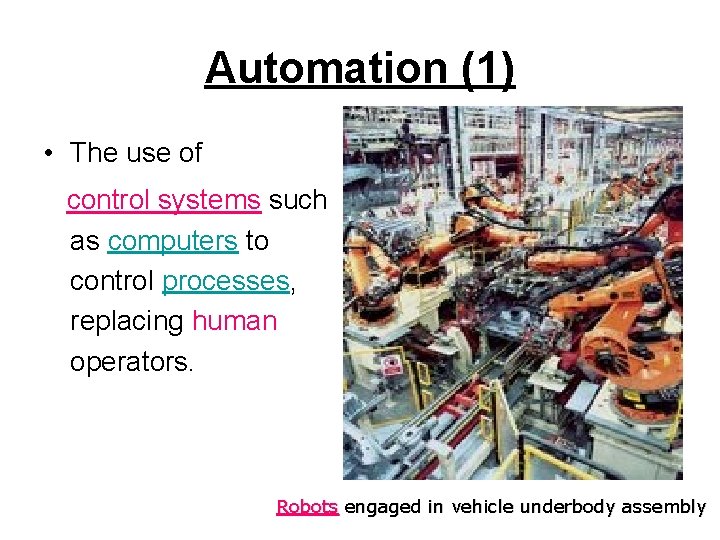
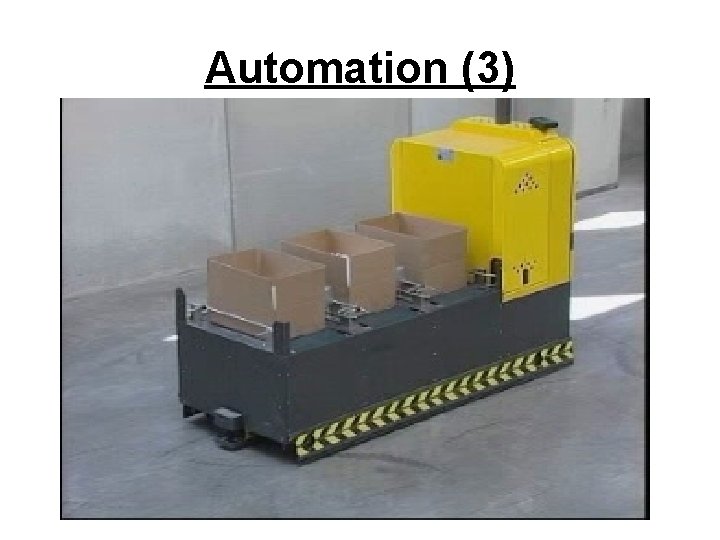
Automation (1) • The use of control systems such as computers to control processes, replacing human operators. Robots engaged in vehicle underbody assembly
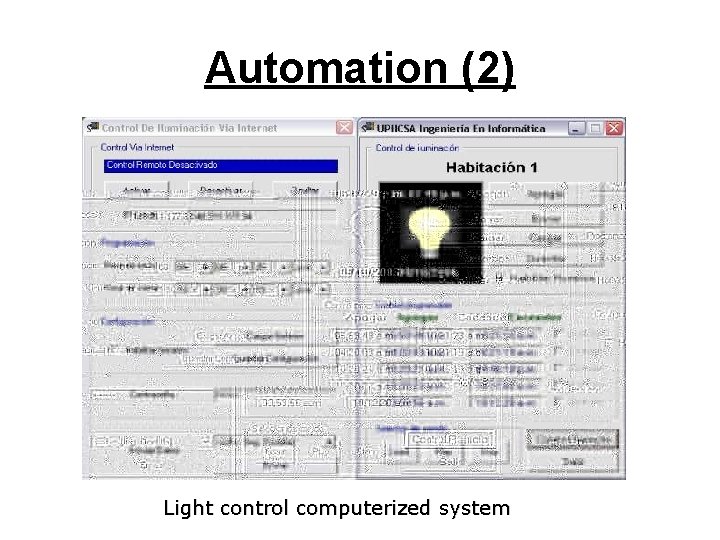
Automation (2) Light control computerized system
Automation (3)
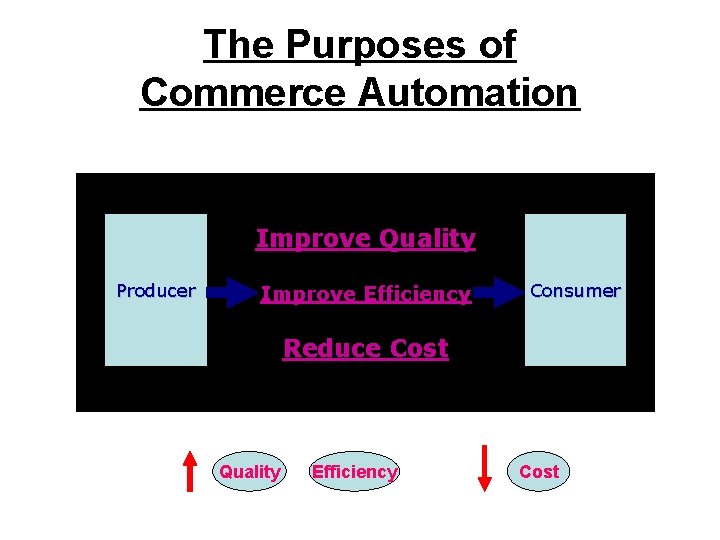
The Purposes of Commerce Automation Improve Quality Producer Improve Efficiency Consumer Reduce Cost Quality Efficiency Cost
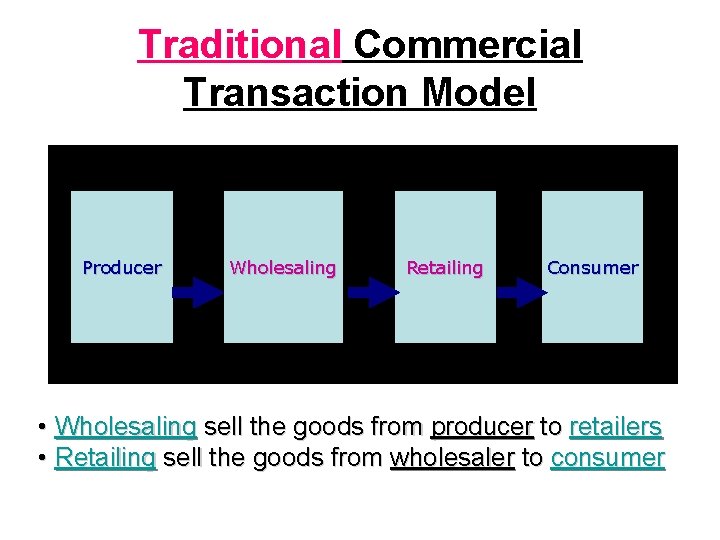
Traditional Commercial Transaction Model Producer Wholesaling Retailing Consumer • Wholesaling sell the goods from producer to retailers • Retailing sell the goods from wholesaler to consumer
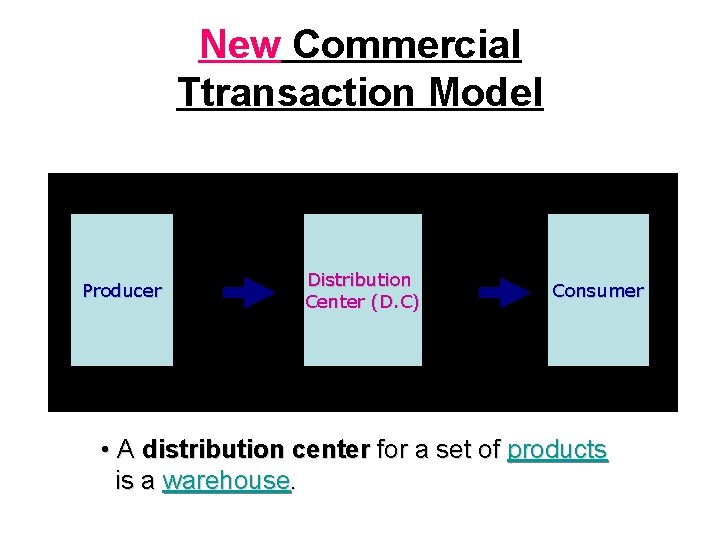
New Commercial Ttransaction Model Producer Distribution Center (D. C) Consumer • A distribution center for a set of products is a warehouse.
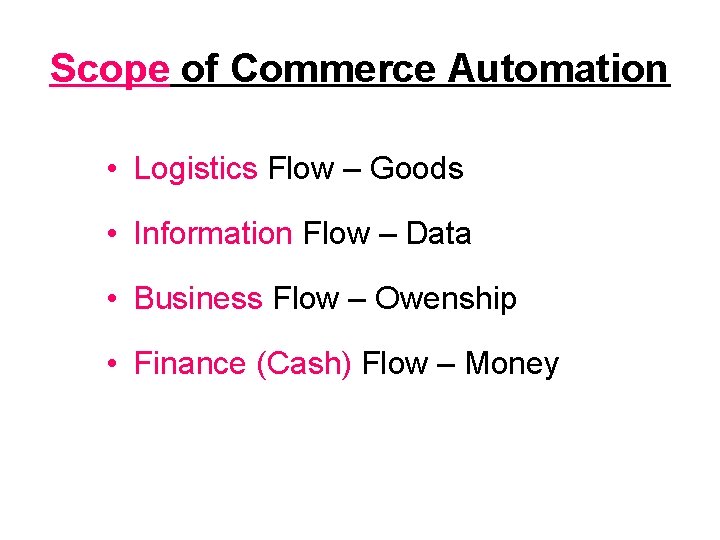
Scope of Commerce Automation • Logistics Flow – Goods • Information Flow – Data • Business Flow – Owenship • Finance (Cash) Flow – Money
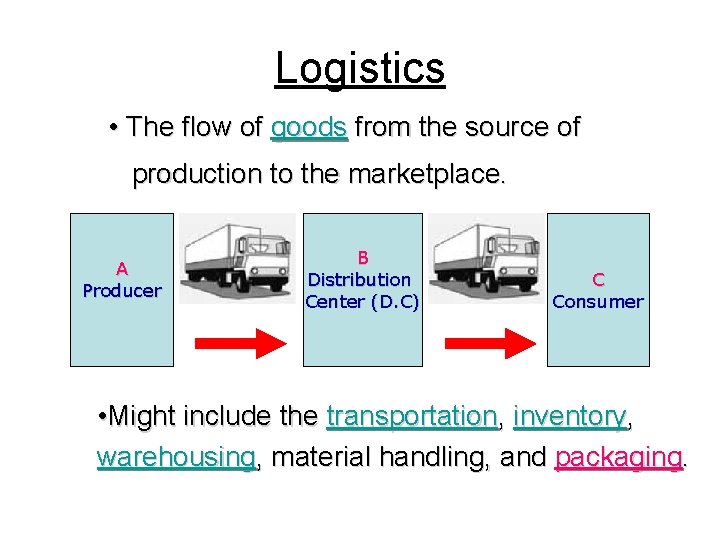
Logistics • The flow of goods from the source of production to the marketplace. A Producer B Distribution Center (D. C) C Consumer • Might include the transportation, inventory, warehousing, material handling, and packaging.
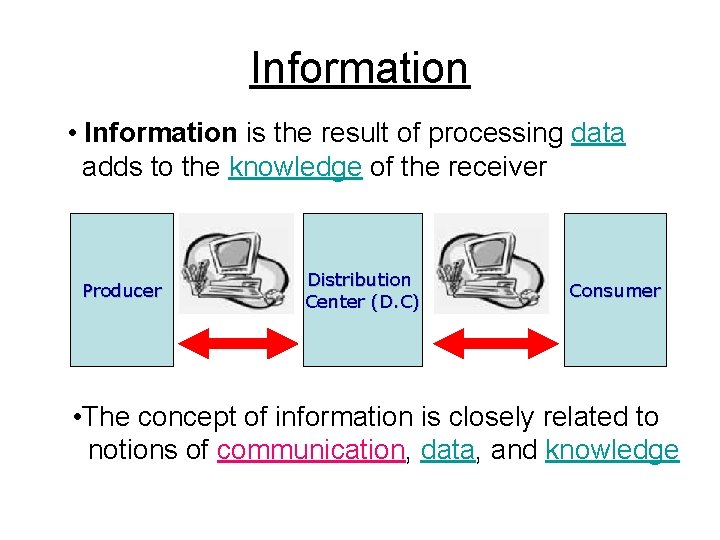
Information • Information is the result of processing data adds to the knowledge of the receiver Producer Distribution Center (D. C) Consumer • The concept of information is closely related to notions of communication, data, and knowledge
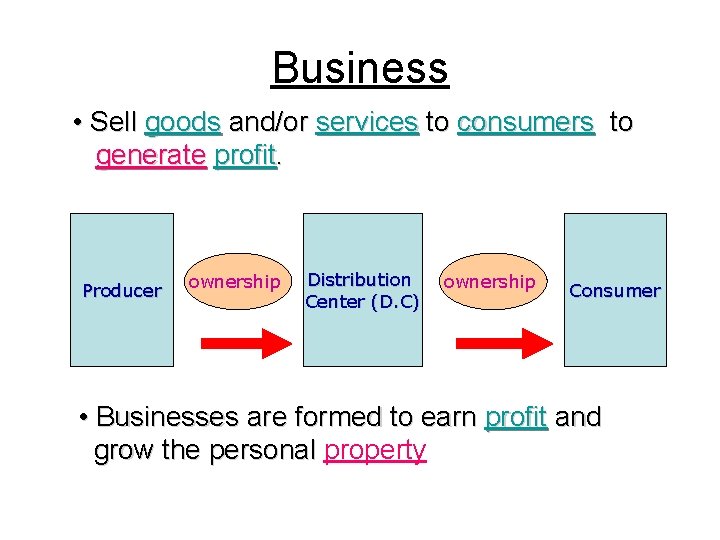
Business • Sell goods and/or services to consumers to generate profit. Producer ownership Distribution Center (D. C) ownership Consumer • Businesses are formed to earn profit and grow the personal property
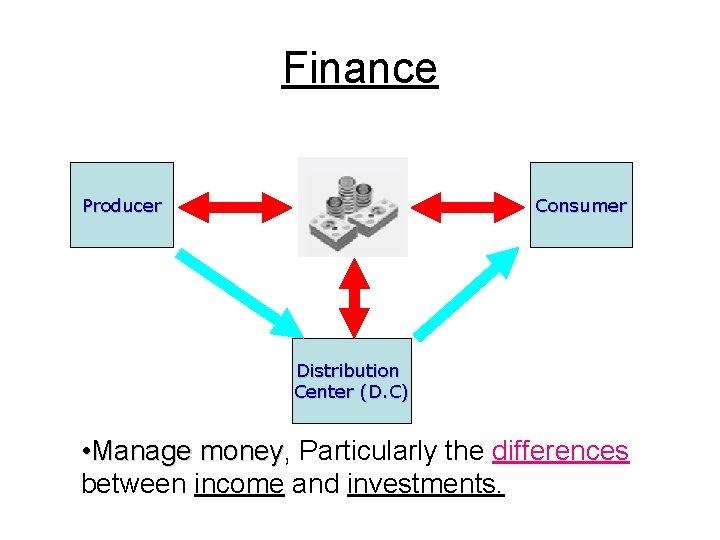
Finance Producer Consumer Distribution Center (D. C) • Manage money, money Particularly the differences between income and investments.
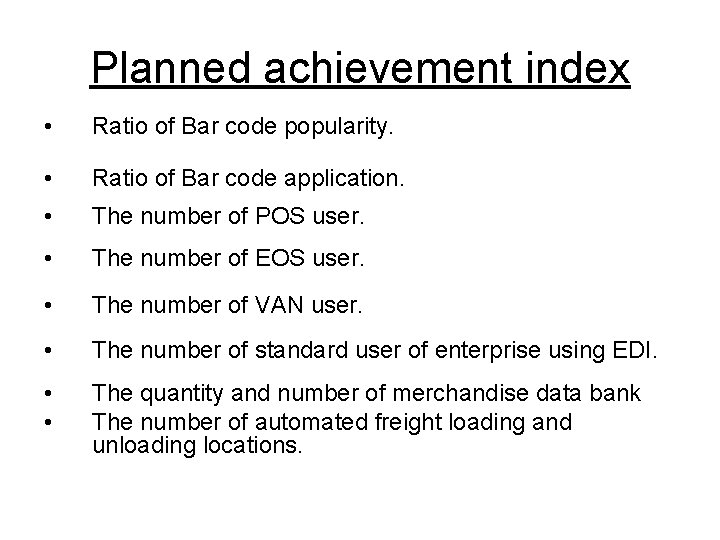
Planned achievement index • Ratio of Bar code popularity. • Ratio of Bar code application. • The number of POS user. • The number of EOS user. • The number of VAN user. • The number of standard user of enterprise using EDI. • • The quantity and number of merchandise data bank The number of automated freight loading and unloading locations.
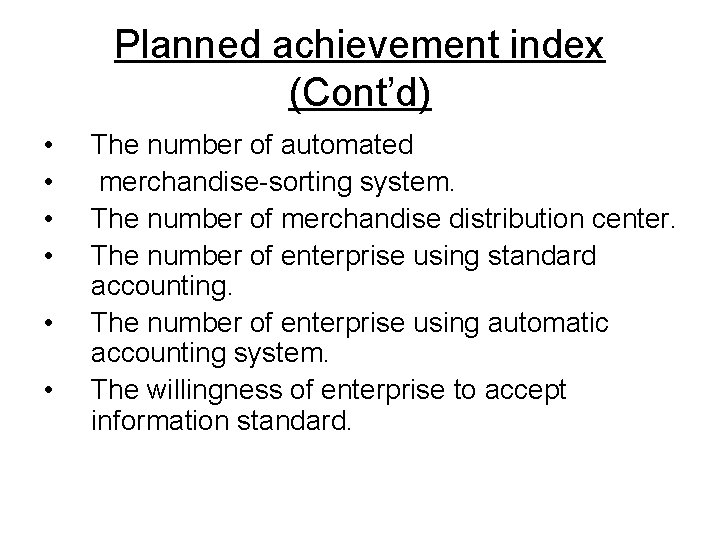
Planned achievement index (Cont’d) • • • The number of automated merchandise-sorting system. The number of merchandise distribution center. The number of enterprise using standard accounting. The number of enterprise using automatic accounting system. The willingness of enterprise to accept information standard.
The Economical Benefit of Commerce Automation a. Expand marketing channel and promote sales of products. b. Tax can be more effectively collected. (Financial Charge) c. Reduce the garbage handling volume. (Paperless) d. Raise the trade speed and efficiency.
The Social Benefit of Commerce Automation a. It can provide country fellow with safe and hygiene foods. b. It can greatly reduce labors moving work. c. It can raise the quality of life owing to automatic consumer behavior. d. It can protect the interests of producers to downright distribution system.
The Environmental Benefit of Commerce Automation a. It can greatly reduce the metro and home garbage pollution. b. It can minimize the vehicle trips thus improves transportation and reduce pollution owing to efficient wholesale distribution operation.