
Four Quadrants Midsagittal Plane Vertical line going through
- Slides: 9
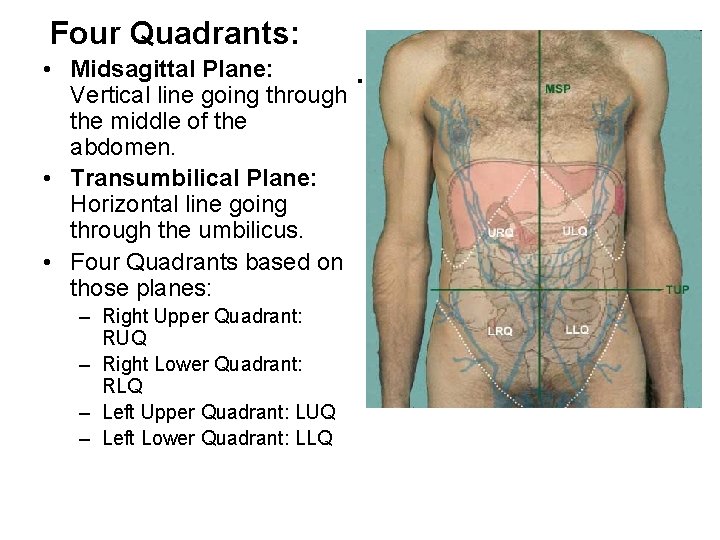
Four Quadrants: • Midsagittal Plane: Vertical line going through the middle of the abdomen. • Transumbilical Plane: Horizontal line going through the umbilicus. • Four Quadrants based on those planes: – Right Upper Quadrant: RUQ – Right Lower Quadrant: RLQ – Left Upper Quadrant: LUQ – Left Lower Quadrant: LLQ .
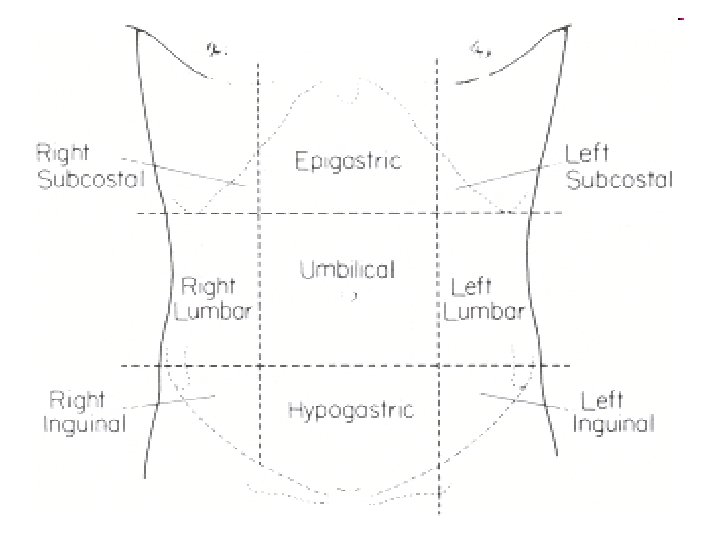
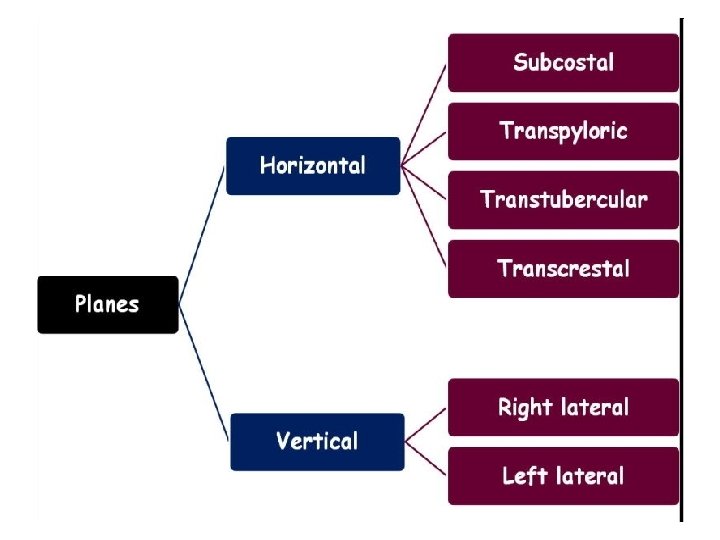
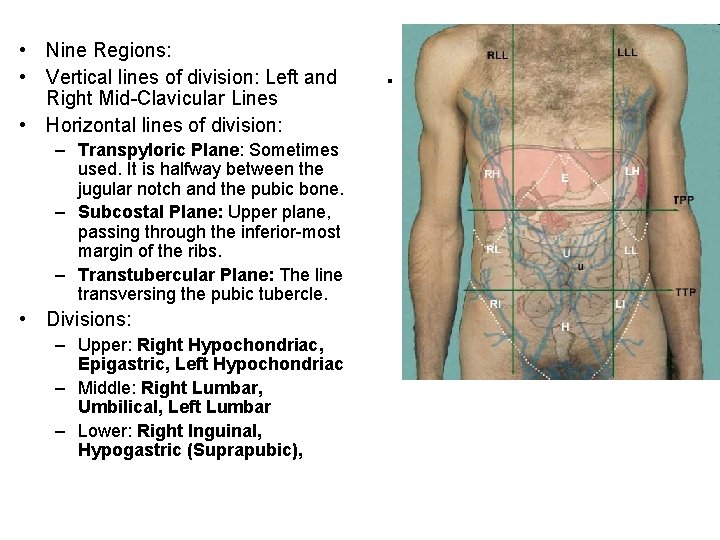
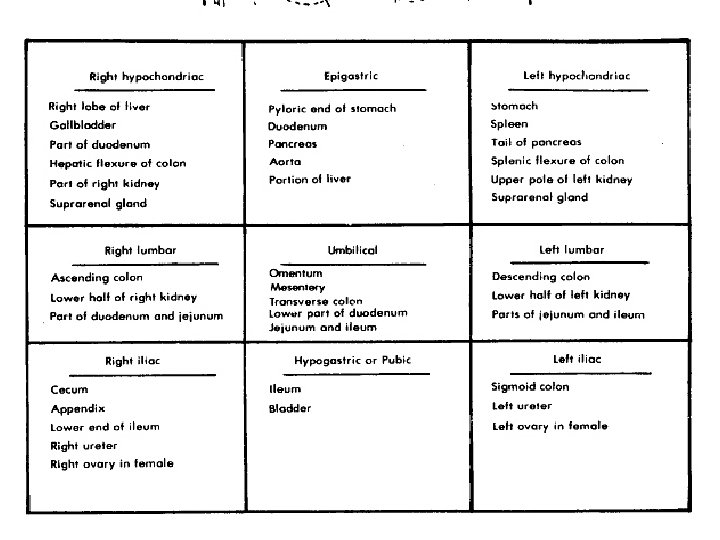
• Nine Regions: • Vertical lines of division: Left and Right Mid-Clavicular Lines • Horizontal lines of division: – Transpyloric Plane: Sometimes used. It is halfway between the jugular notch and the pubic bone. – Subcostal Plane: Upper plane, passing through the inferior-most margin of the ribs. – Transtubercular Plane: The line transversing the pubic tubercle. • Divisions: – Upper: Right Hypochondriac, Epigastric, Left Hypochondriac – Middle: Right Lumbar, Umbilical, Left Lumbar – Lower: Right Inguinal, Hypogastric (Suprapubic), .
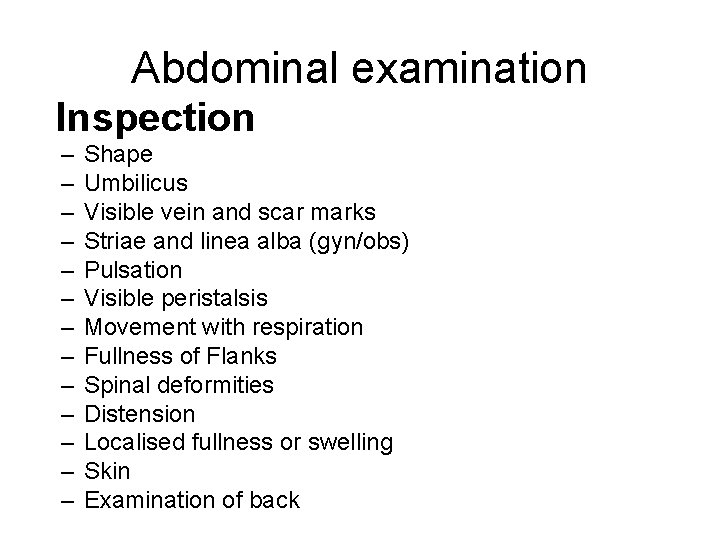
Abdominal examination Inspection – – – – Shape Umbilicus Visible vein and scar marks Striae and linea alba (gyn/obs) Pulsation Visible peristalsis Movement with respiration Fullness of Flanks Spinal deformities Distension Localised fullness or swelling Skin Examination of back
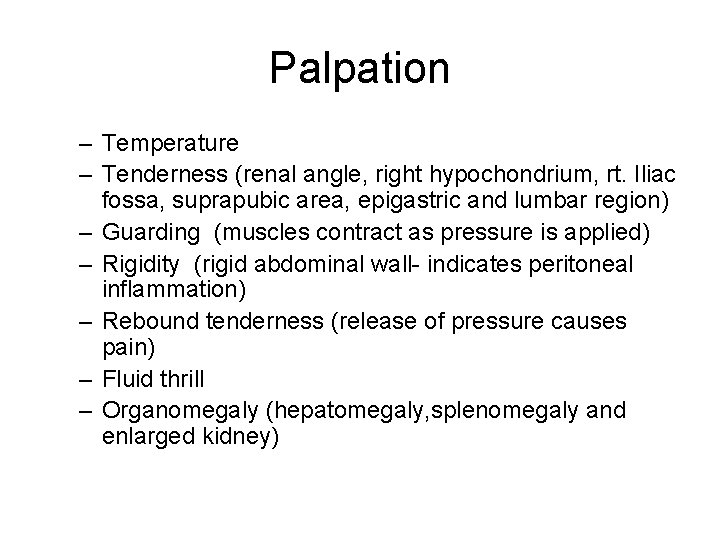
Palpation – Temperature – Tenderness (renal angle, right hypochondrium, rt. Iliac fossa, suprapubic area, epigastric and lumbar region) – Guarding (muscles contract as pressure is applied) – Rigidity (rigid abdominal wall- indicates peritoneal inflammation) – Rebound tenderness (release of pressure causes pain) – Fluid thrill – Organomegaly (hepatomegaly, splenomegaly and enlarged kidney)
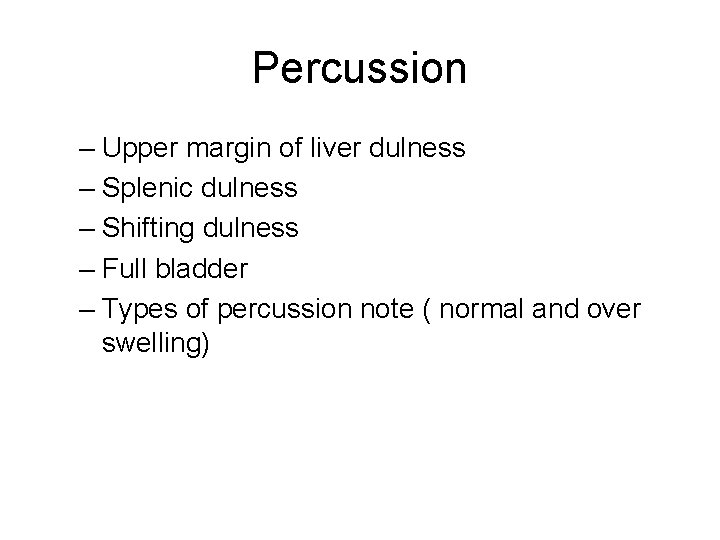
Percussion – Upper margin of liver dulness – Splenic dulness – Shifting dulness – Full bladder – Types of percussion note ( normal and over swelling)
Auscultation – Bowel sound – Bruit • Genitalia examination