
FOUR PRINCIPLES OF THE CONSTITUTION 1 Separation of
- Slides: 14
FOUR PRINCIPLES OF THE CONSTITUTION: 1. Separation of Powers 2. Checks and Balances 3. Limited Government 4. Federalism
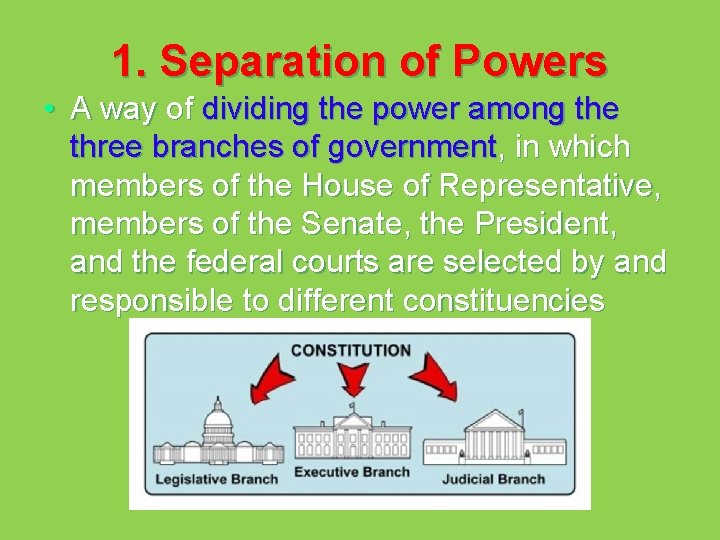
1. Separation of Powers • A way of dividing the power among the three branches of government, in which members of the House of Representative, members of the Senate, the President, and the federal courts are selected by and responsible to different constituencies
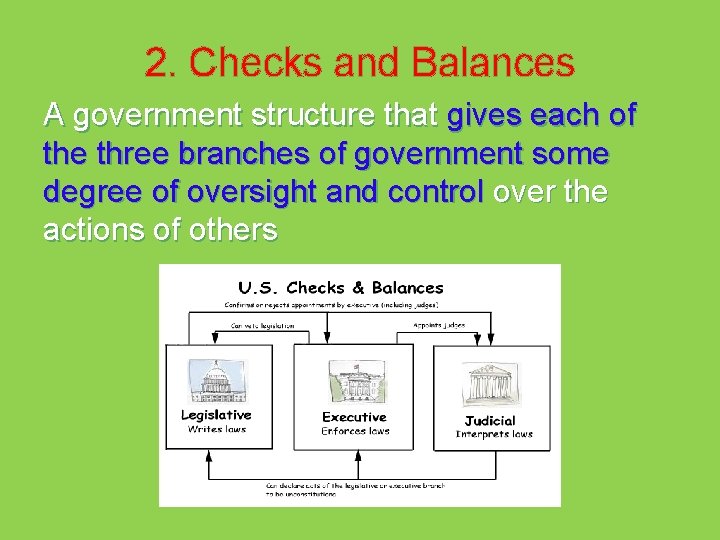
2. Checks and Balances A government structure that gives each of the three branches of government some degree of oversight and control over the actions of others
3. Limited government • A type of government in which the functions and powers of authority are written, limited, and restricted by law to protect the citizens
4. Federalism How does this system divide powers between a central government and state governments?
What is Federalism? • A system of government where powers are equally divided between state and national governments • Provides specific powers for the national level and the state level
th 10 Amendment “The powers not delegated to the United States by the Constitution, nor prohibited by it to the States, are reserved to the States respectively, or to the people. ” ________________________________ • What does this mean? th • Why is the 10 Amendment
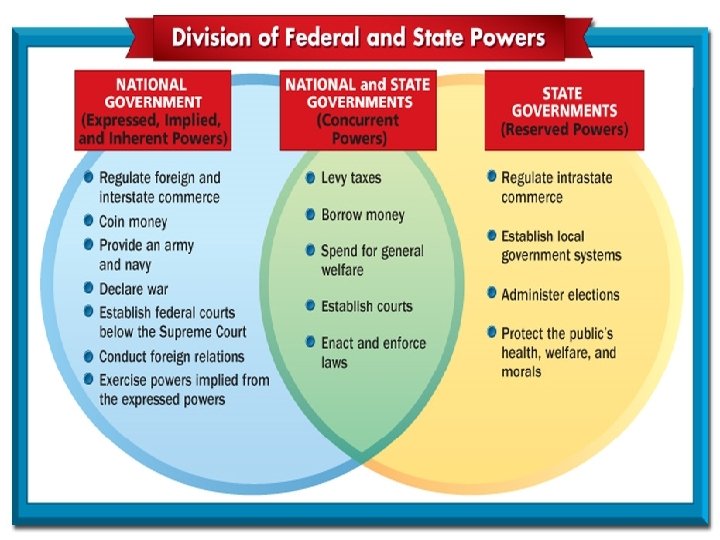
Division of Powers • Expressed Powers – granted to the United States government through the Constitution – Implied Powers (Necessary & Proper Clause) – Inherent Powers • Reserved Powers – granted to the state governments • Concurrent Powers- powers granted to the United States government and state
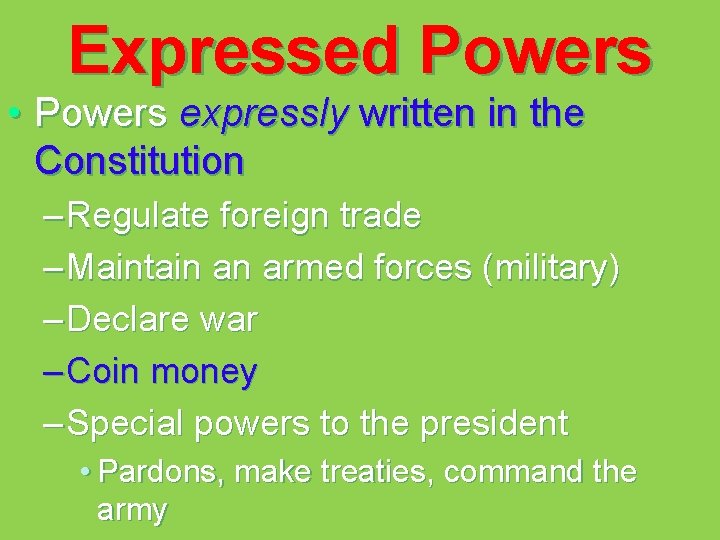
Expressed Powers • Powers expressly written in the Constitution – Regulate foreign trade – Maintain an armed forces (military) – Declare war – Coin money – Special powers to the president • Pardons, make treaties, command the army
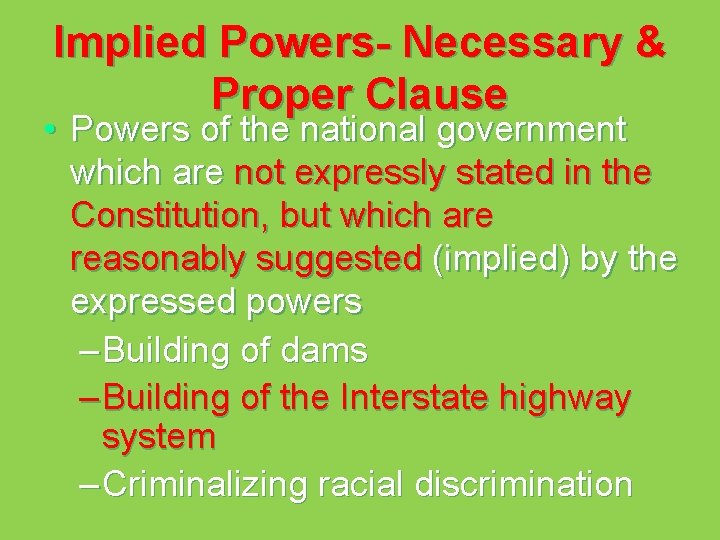
Implied Powers- Necessary & Proper Clause • Powers of the national government which are not expressly stated in the Constitution, but which are reasonably suggested (implied) by the expressed powers – Building of dams – Building of the Interstate highway system – Criminalizing racial discrimination
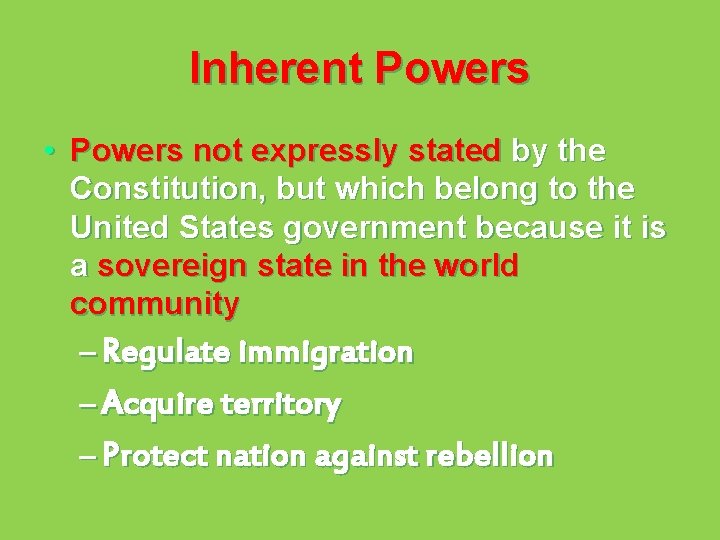
Inherent Powers • Powers not expressly stated by the Constitution, but which belong to the United States government because it is a sovereign state in the world community – Regulate immigration – Acquire territory – Protect nation against rebellion
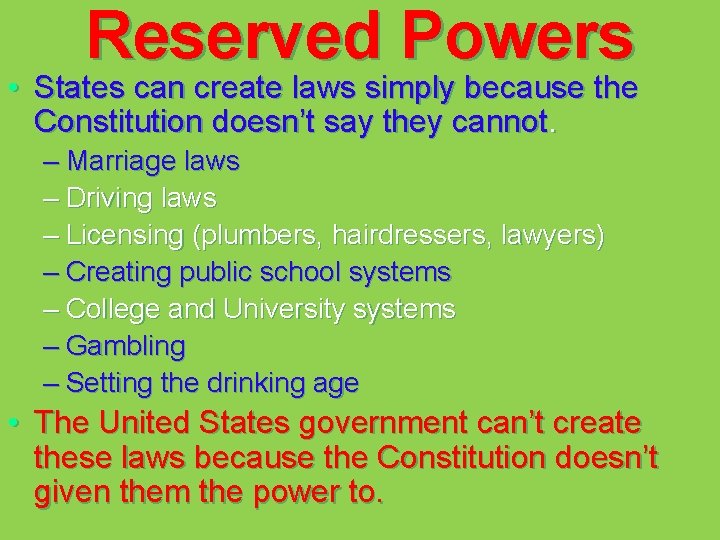
Reserved Powers • States can create laws simply because the Constitution doesn’t say they cannot. – Marriage laws – Driving laws – Licensing (plumbers, hairdressers, lawyers) – Creating public school systems – College and University systems – Gambling – Setting the drinking age • The United States government can’t create these laws because the Constitution doesn’t given them the power to.
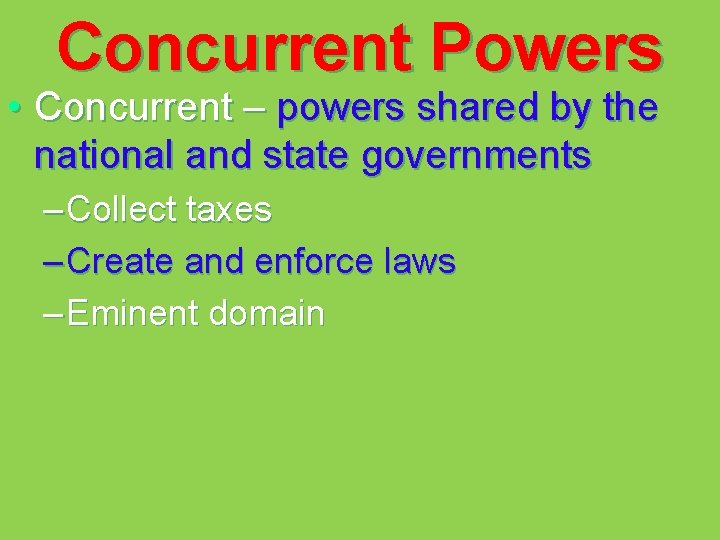
Concurrent Powers • Concurrent – powers shared by the national and state governments – Collect taxes – Create and enforce laws – Eminent domain