
Four Market Models Demand as seen by a
Four Market Models Demand as seen by a Purely Competitive Seller Short-Run Profit Maximization Marginal Revenue – Marginal Cost Approach Short-Run Competitive Equilibrium Long-Run Supply Long-Run Equilibrium for a Competitive Firm Pure Competition and Efficiency Key Terms Pure Competition
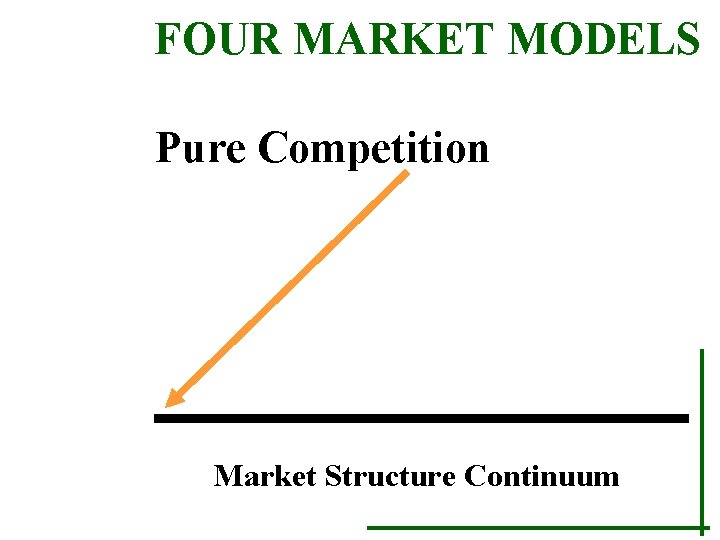
FOUR MARKET MODELS Four Market Models Demand as seen by a Purely Competitive Seller Short-Run Profit Maximization Pure Competition Marginal Revenue – Marginal Cost Approach Short-Run Competitive Equilibrium Long-Run Supply Long-Run Equilibrium for a Competitive Firm Pure Competition and Efficiency Key Terms Market Structure Continuum
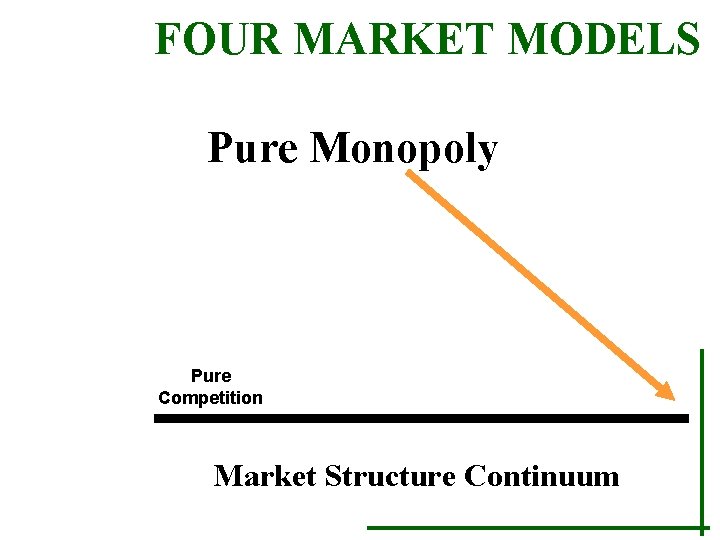
FOUR MARKET MODELS Four Market Models Demand as seen by a Purely Competitive Seller Short-Run Profit Maximization Pure Monopoly Marginal Revenue – Marginal Cost Approach Short-Run Competitive Equilibrium Long-Run Supply Long-Run Equilibrium for a Competitive Firm Pure Competition and Efficiency Key Terms Pure Competition Market Structure Continuum
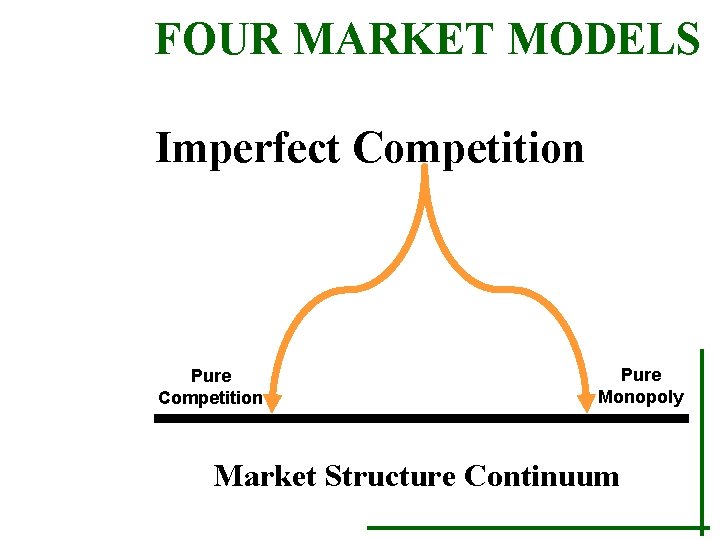
FOUR MARKET MODELS Four Market Models Demand as seen by a Purely Competitive Seller Short-Run Profit Maximization Imperfect Competition Marginal Revenue – Marginal Cost Approach Short-Run Competitive Equilibrium Long-Run Supply Long-Run Equilibrium for a Competitive Firm Pure Competition and Efficiency Key Terms Pure Competition Pure Monopoly Market Structure Continuum
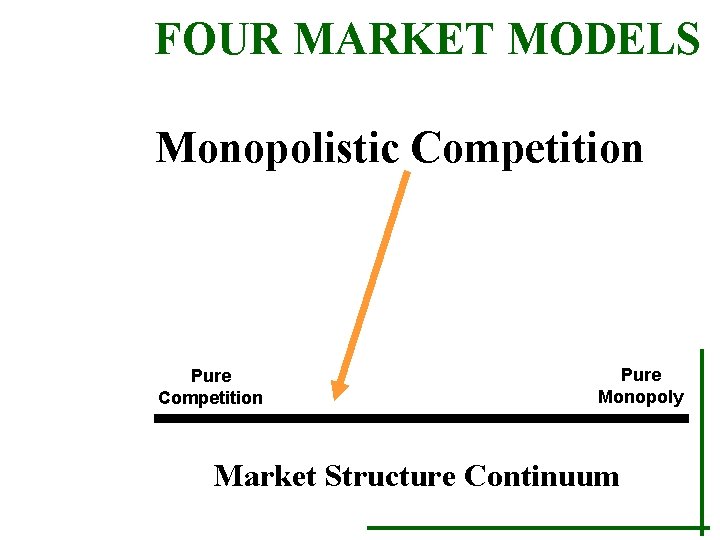
FOUR MARKET MODELS Four Market Models Demand as seen by a Purely Competitive Seller Short-Run Profit Maximization Monopolistic Competition Marginal Revenue – Marginal Cost Approach Short-Run Competitive Equilibrium Long-Run Supply Long-Run Equilibrium for a Competitive Firm Pure Competition and Efficiency Key Terms Pure Competition Pure Monopoly Market Structure Continuum
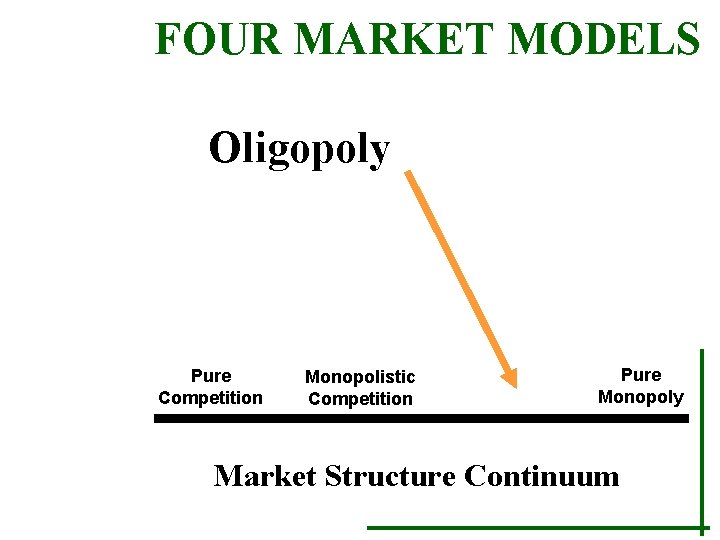
FOUR MARKET MODELS Four Market Models Demand as seen by a Purely Competitive Seller Short-Run Profit Maximization Oligopoly Marginal Revenue – Marginal Cost Approach Short-Run Competitive Equilibrium Long-Run Supply Long-Run Equilibrium for a Competitive Firm Pure Competition and Efficiency Key Terms Pure Competition Monopolistic Competition Pure Monopoly Market Structure Continuum
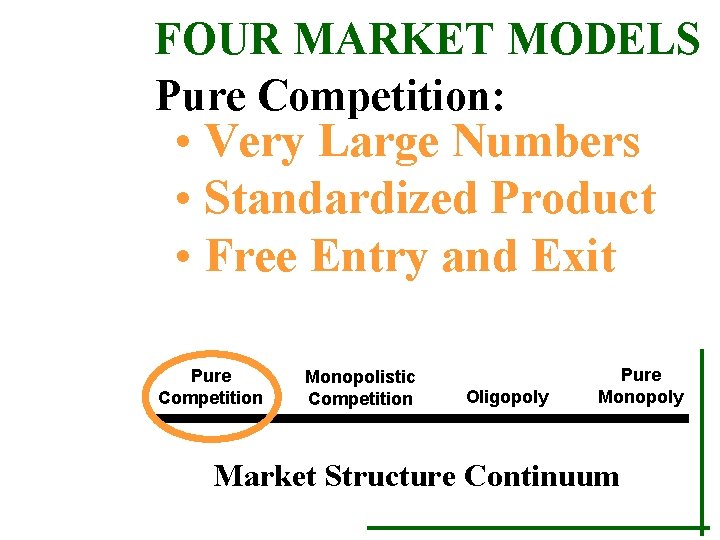
Four Market Models Demand as seen by a Purely Competitive Seller Short-Run Profit Maximization Marginal Revenue – Marginal Cost Approach Short-Run Competitive Equilibrium FOUR MARKET MODELS Pure Competition: • Very Large Numbers • Standardized Product • Free Entry and Exit Long-Run Supply Long-Run Equilibrium for a Competitive Firm Pure Competition and Efficiency Key Terms Pure Competition Monopolistic Competition Oligopoly Pure Monopoly Market Structure Continuum
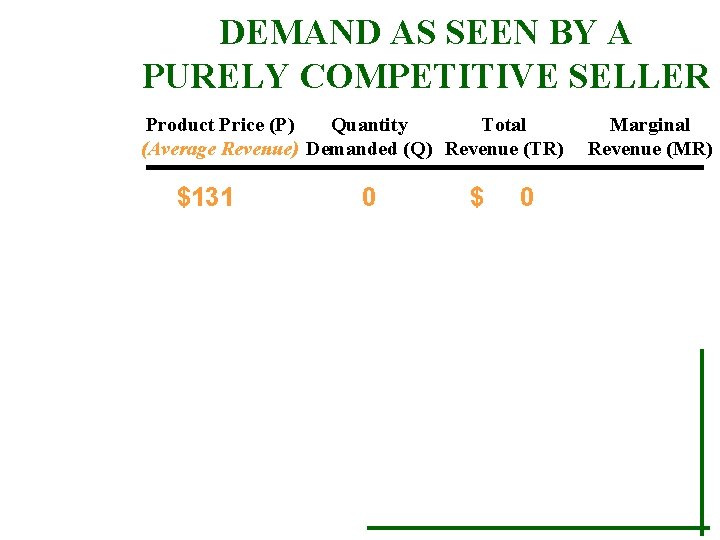
Four Market Models Demand as seen by a Purely Competitive Seller Short-Run Profit Maximization Marginal Revenue – Marginal Cost Approach Short-Run Competitive Equilibrium Long-Run Supply Long-Run Equilibrium for a Competitive Firm Pure Competition and Efficiency Key Terms DEMAND AS SEEN BY A PURELY COMPETITIVE SELLER Product Price (P) Quantity Total (Average Revenue) Demanded (Q) Revenue (TR) $131 0 $ 0 Marginal Revenue (MR)
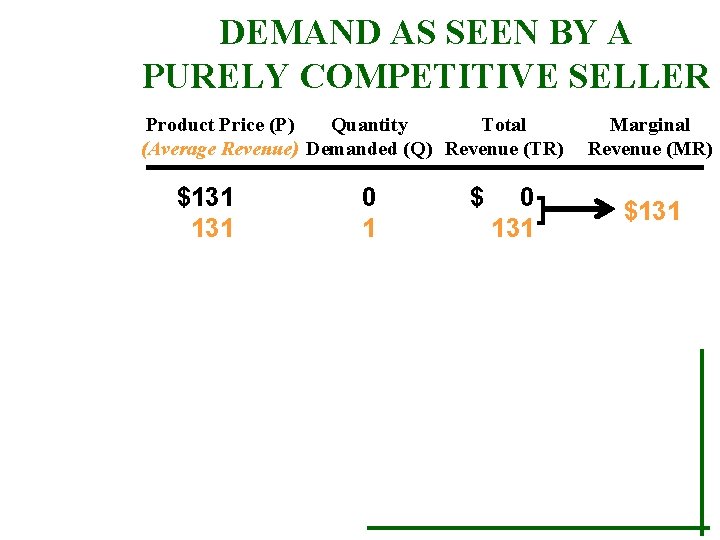
Four Market Models Demand as seen by a Purely Competitive Seller Short-Run Profit Maximization Marginal Revenue – Marginal Cost Approach Short-Run Competitive Equilibrium Long-Run Supply Long-Run Equilibrium for a Competitive Firm Pure Competition and Efficiency Key Terms DEMAND AS SEEN BY A PURELY COMPETITIVE SELLER Product Price (P) Quantity Total (Average Revenue) Demanded (Q) Revenue (TR) $131 0 1 $ 0 ] 131 Marginal Revenue (MR) $131
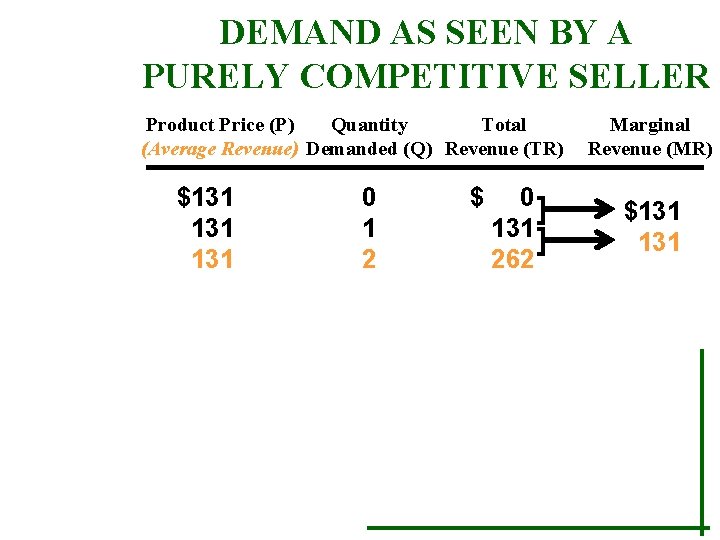
Four Market Models Demand as seen by a Purely Competitive Seller Short-Run Profit Maximization Marginal Revenue – Marginal Cost Approach Short-Run Competitive Equilibrium Long-Run Supply Long-Run Equilibrium for a Competitive Firm Pure Competition and Efficiency Key Terms DEMAND AS SEEN BY A PURELY COMPETITIVE SELLER Product Price (P) Quantity Total (Average Revenue) Demanded (Q) Revenue (TR) $131 131 0 1 2 $ 0 ] 131 ] 262 Marginal Revenue (MR) $131
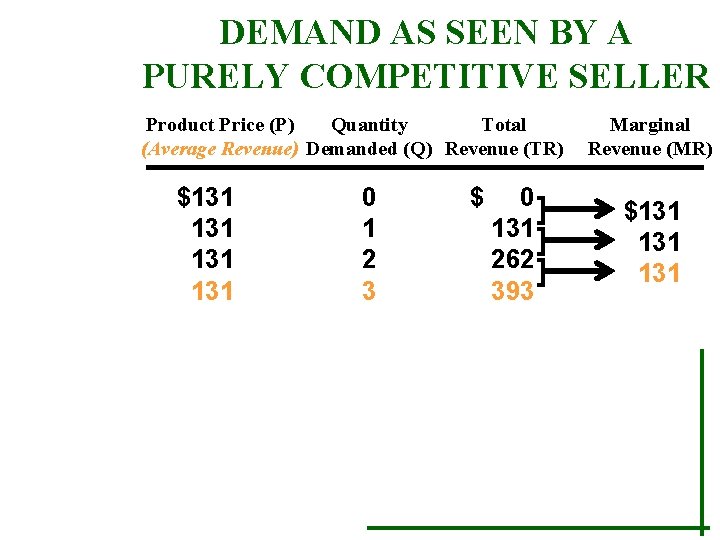
Four Market Models Demand as seen by a Purely Competitive Seller Short-Run Profit Maximization Marginal Revenue – Marginal Cost Approach Short-Run Competitive Equilibrium Long-Run Supply Long-Run Equilibrium for a Competitive Firm Pure Competition and Efficiency Key Terms DEMAND AS SEEN BY A PURELY COMPETITIVE SELLER Product Price (P) Quantity Total (Average Revenue) Demanded (Q) Revenue (TR) $131 131 0 1 2 3 $ 0 ] 131 ] 262 ] 393 Marginal Revenue (MR) $131 131
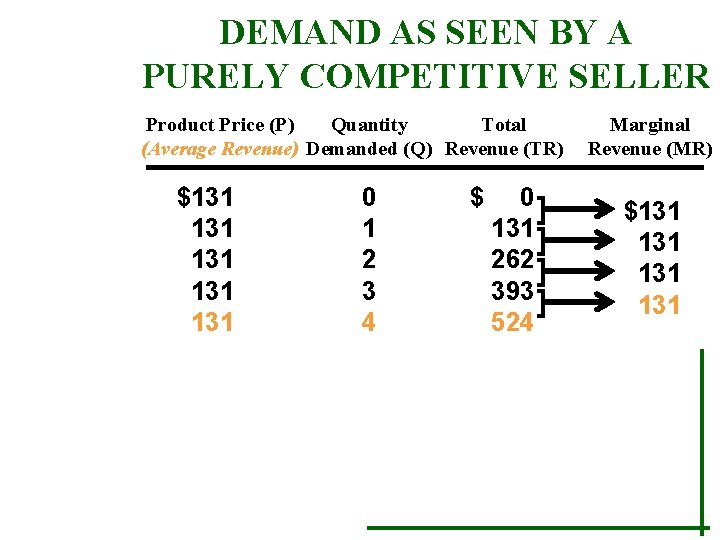
Four Market Models Demand as seen by a Purely Competitive Seller Short-Run Profit Maximization Marginal Revenue – Marginal Cost Approach Short-Run Competitive Equilibrium Long-Run Supply Long-Run Equilibrium for a Competitive Firm Pure Competition and Efficiency Key Terms DEMAND AS SEEN BY A PURELY COMPETITIVE SELLER Product Price (P) Quantity Total (Average Revenue) Demanded (Q) Revenue (TR) $131 131 131 0 1 2 3 4 $ 0 ] 131 ] 262 ] 393 ] 524 Marginal Revenue (MR) $131 131
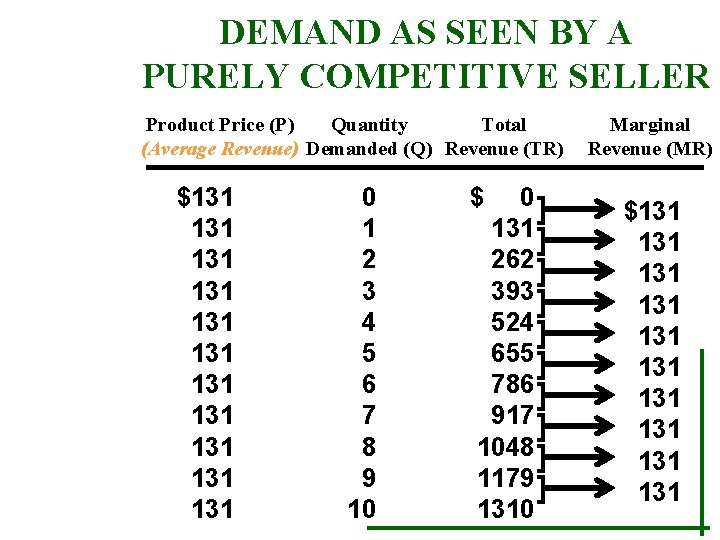
Four Market Models Demand as seen by a Purely Competitive Seller Short-Run Profit Maximization Marginal Revenue – Marginal Cost Approach Short-Run Competitive Equilibrium Long-Run Supply Long-Run Equilibrium for a Competitive Firm Pure Competition and Efficiency Key Terms DEMAND AS SEEN BY A PURELY COMPETITIVE SELLER Product Price (P) Quantity Total (Average Revenue) Demanded (Q) Revenue (TR) $131 131 131 0 1 2 3 4 5 6 7 8 9 10 $ 0 ] 131 ] 262 ] 393 ] 524 ] 655 ] 786 ] 917 ] 1048 ] 1179 ] 1310 Marginal Revenue (MR) $131 131 131
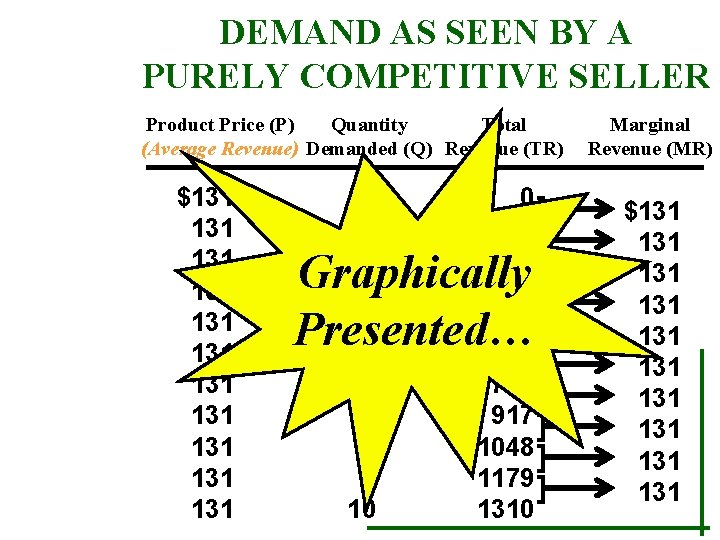
Four Market Models Demand as seen by a Purely Competitive Seller Short-Run Profit Maximization Marginal Revenue – Marginal Cost Approach Short-Run Competitive Equilibrium Long-Run Supply Long-Run Equilibrium for a Competitive Firm Pure Competition and Efficiency Key Terms DEMAND AS SEEN BY A PURELY COMPETITIVE SELLER Product Price (P) Quantity Total (Average Revenue) Demanded (Q) Revenue (TR) $131 131 131 0 1 2 3 4 5 6 7 8 9 10 $ 0 ] 131 ] 262 ] 393 ] 524 ] 655 ] 786 ] 917 ] 1048 ] 1179 ] 1310 Graphically Presented… Marginal Revenue (MR) $131 131 131
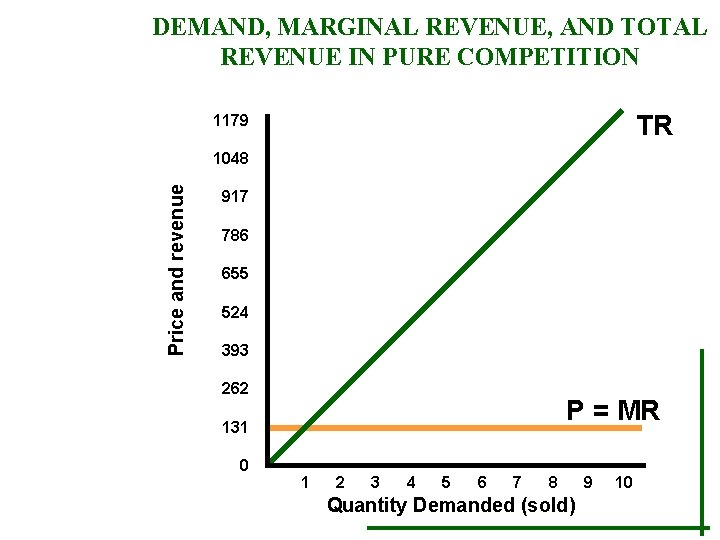
DEMAND, MARGINAL REVENUE, AND TOTAL REVENUE IN PURE COMPETITION Four Market Models Demand as seen by a Purely Competitive Seller Marginal Revenue – Marginal Cost Approach Short-Run Competitive Equilibrium Long-Run Supply Long-Run Equilibrium for a Competitive Firm Pure Competition and Efficiency Key Terms 1048 Price and revenue Short-Run Profit Maximization TR 1179 917 786 655 524 393 262 P = MR 131 0 1 2 3 4 5 6 7 8 Quantity Demanded (sold) 9 10
SHORT RUN PROFIT MAXIMIZATION Four Market Models Demand as seen by a Purely Competitive Seller Short-Run Profit Maximization Marginal Revenue – Marginal Cost Approach Short-Run Competitive Equilibrium Long-Run Supply Long-Run Equilibrium for a Competitive Firm Pure Competition and Efficiency Key Terms Marginal-Revenue -Marginal Cost Approach MR = MC Rule
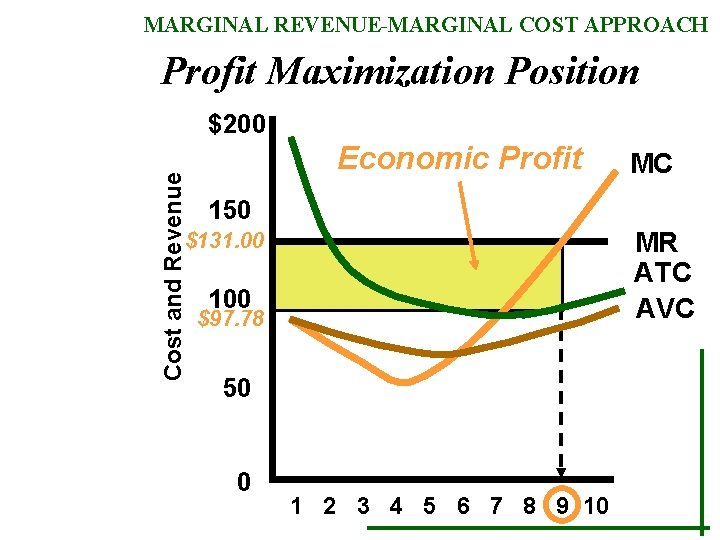
MARGINAL REVENUE-MARGINAL COST APPROACH Four Market Models Profit Maximization Position $200 Short-Run Profit Maximization Marginal Revenue – Marginal Cost Approach Short-Run Competitive Equilibrium Long-Run Supply Long-Run Equilibrium for a Competitive Firm Pure Competition and Efficiency Key Terms Cost and Revenue Demand as seen by a Purely Competitive Seller Economic Profit MC 150 MR ATC AVC $131. 00 100 $97. 78 50 0 1 2 3 4 5 6 7 8 9 10
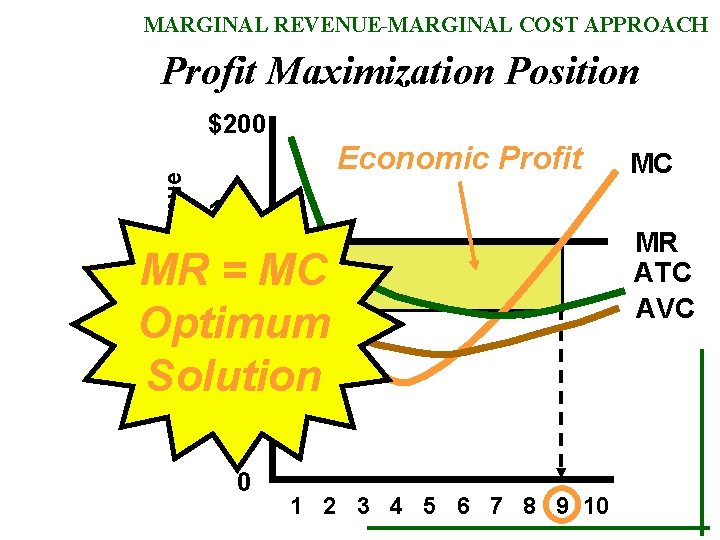
MARGINAL REVENUE-MARGINAL COST APPROACH Four Market Models Profit Maximization Position $200 Short-Run Profit Maximization Marginal Revenue – Marginal Cost Approach Short-Run Competitive Equilibrium Long-Run Supply Long-Run Equilibrium for a Competitive Firm Pure Competition and Efficiency Key Terms Cost and Revenue Demand as seen by a Purely Competitive Seller Economic Profit MC 150 $131. 00 MR = MC 100 $97. 78 Optimum Solution 50 0 1 2 3 4 5 6 7 8 9 10 MR ATC AVC
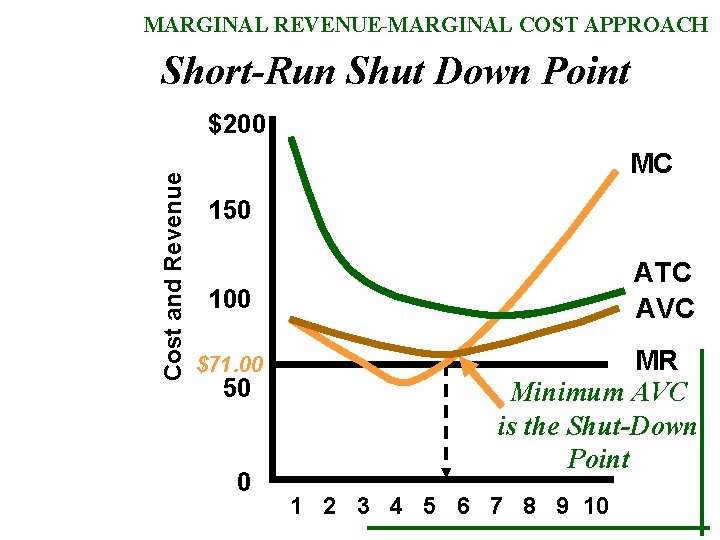
MARGINAL REVENUE-MARGINAL COST APPROACH Four Market Models Short-Run Shut Down Point $200 Short-Run Profit Maximization Marginal Revenue – Marginal Cost Approach Short-Run Competitive Equilibrium Long-Run Supply Long-Run Equilibrium for a Competitive Firm Pure Competition and Efficiency Key Terms Cost and Revenue Demand as seen by a Purely Competitive Seller MC 150 ATC AVC 100 $71. 00 50 0 MR Minimum AVC is the Shut-Down Point 1 2 3 4 5 6 7 8 9 10
- Slides: 19