
Four Important Periods in the History of the

- Slides: 22
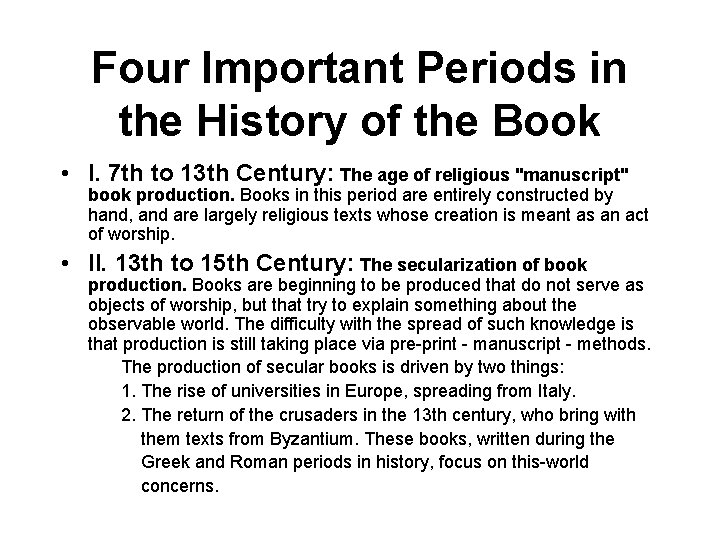
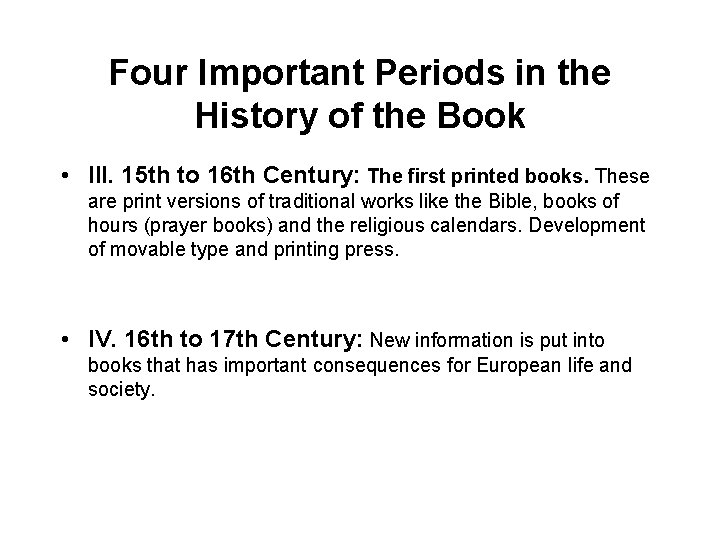
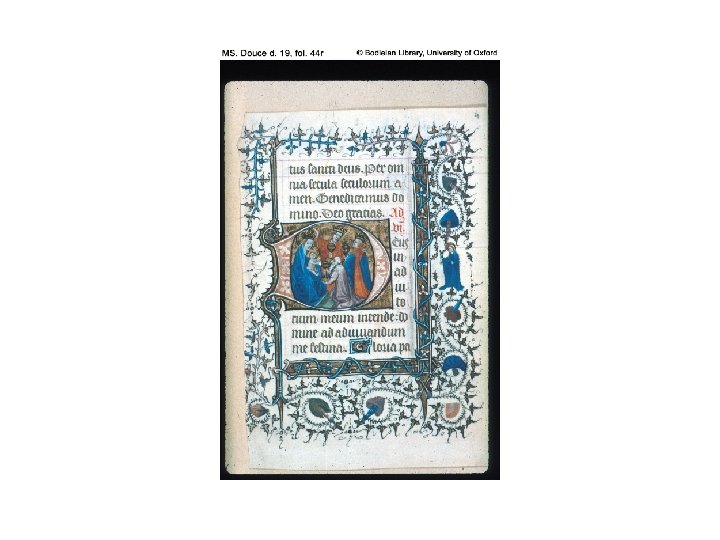
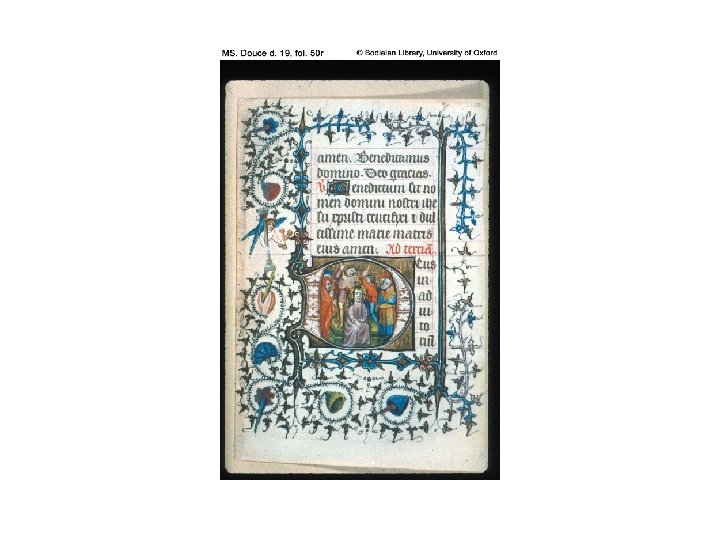
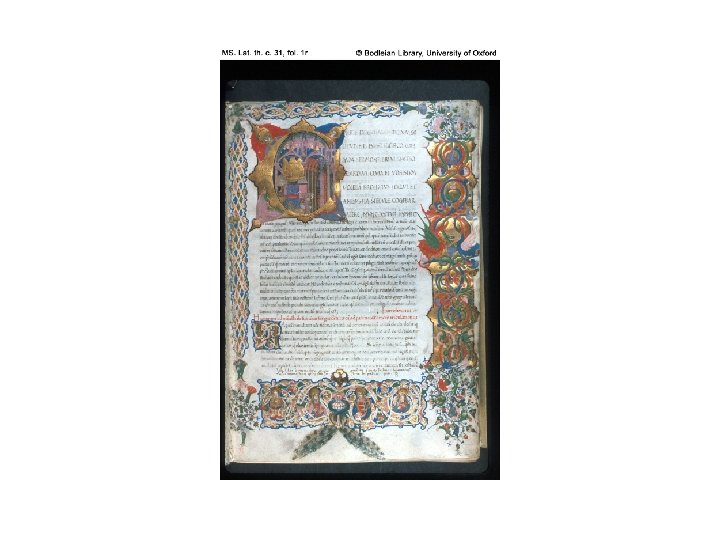
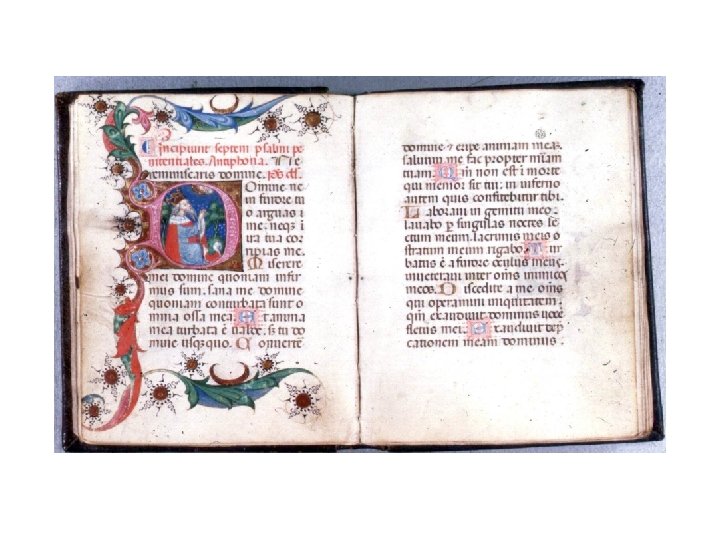
Four Important Periods in the History of the Book • I. 7 th to 13 th Century: The age of religious "manuscript" book production. Books in this period are entirely constructed by hand, and are largely religious texts whose creation is meant as an act of worship. • II. 13 th to 15 th Century: The secularization of book production. Books are beginning to be produced that do not serve as objects of worship, but that try to explain something about the observable world. The difficulty with the spread of such knowledge is that production is still taking place via pre-print - manuscript - methods. The production of secular books is driven by two things: 1. The rise of universities in Europe, spreading from Italy. 2. The return of the crusaders in the 13 th century, who bring with them texts from Byzantium. These books, written during the Greek and Roman periods in history, focus on this-world concerns.
Four Important Periods in the History of the Book • III. 15 th to 16 th Century: The first printed books. These are print versions of traditional works like the Bible, books of hours (prayer books) and the religious calendars. Development of movable type and printing press. • IV. 16 th to 17 th Century: New information is put into books that has important consequences for European life and society.
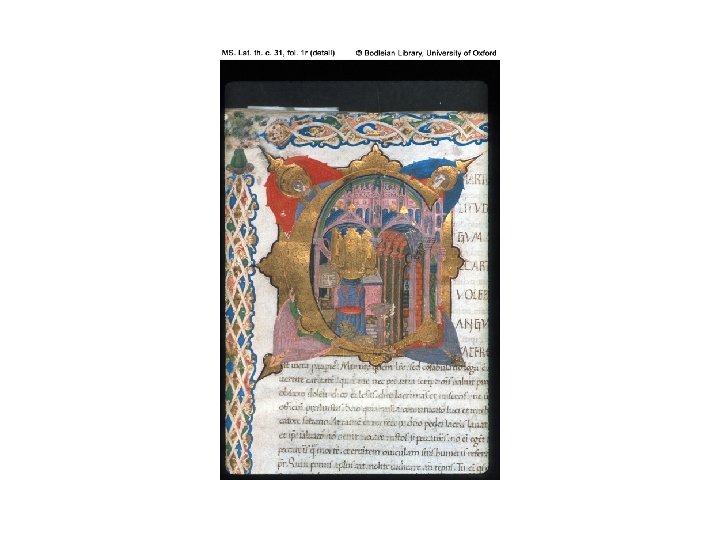
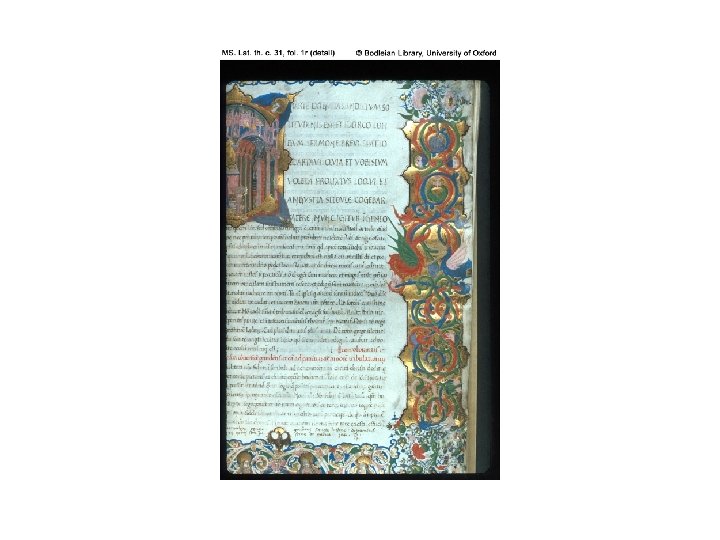
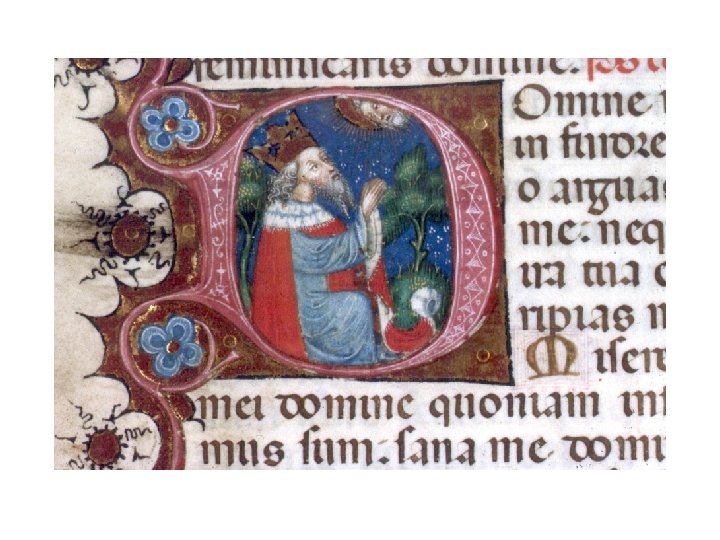
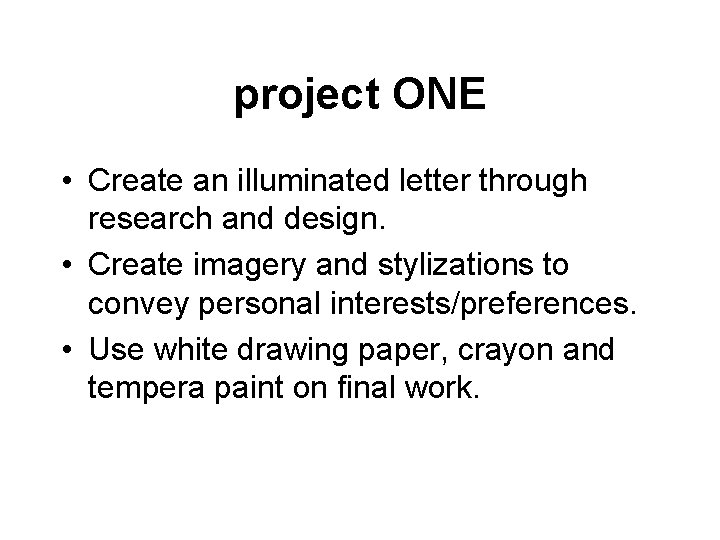
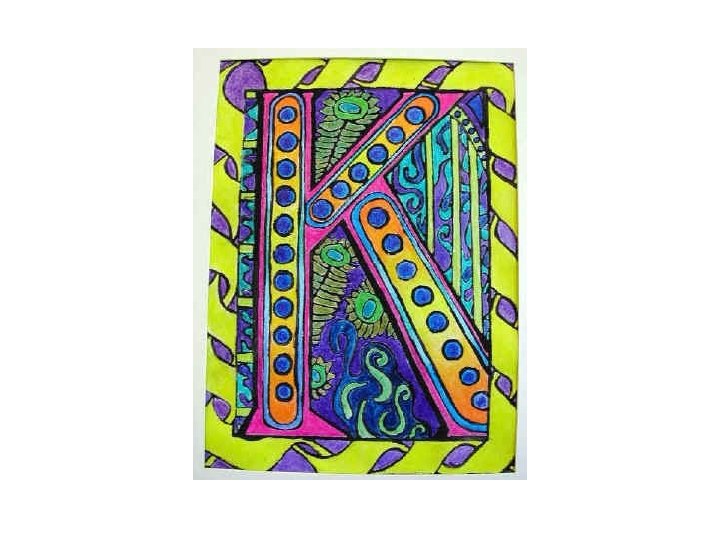
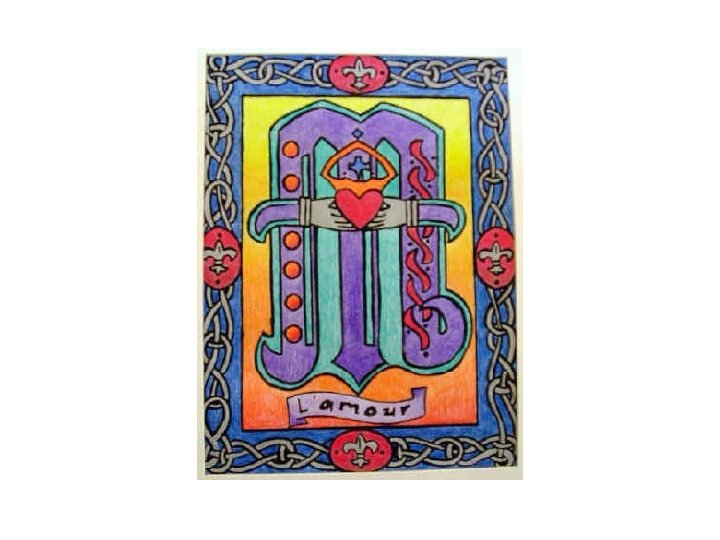
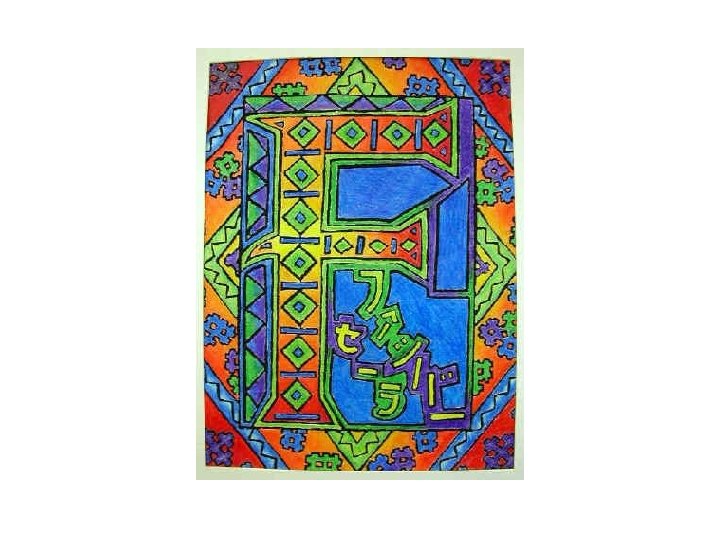
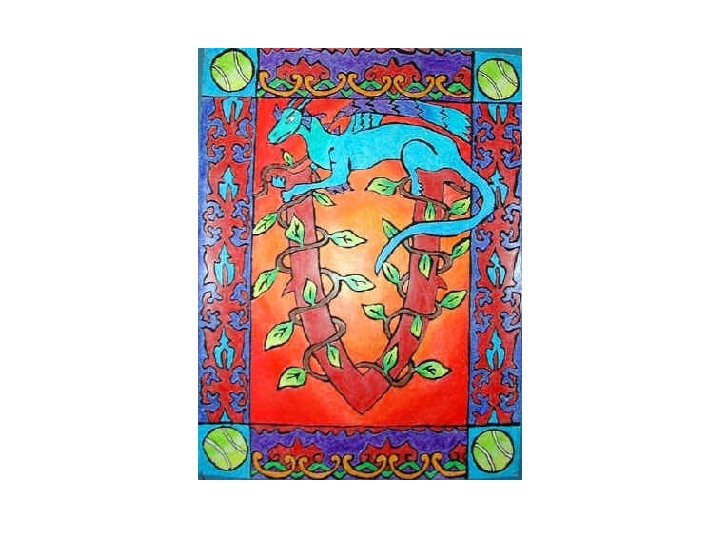
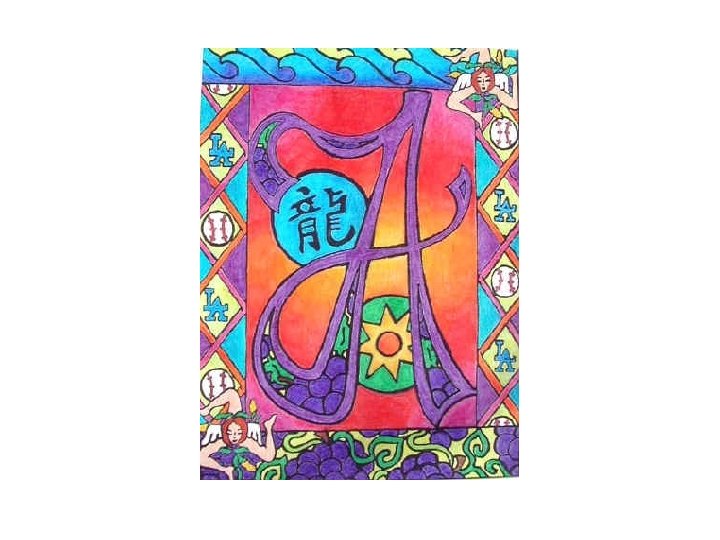
project ONE • Create an illuminated letter through research and design. • Create imagery and stylizations to convey personal interests/preferences. • Use white drawing paper, crayon and tempera paint on final work.
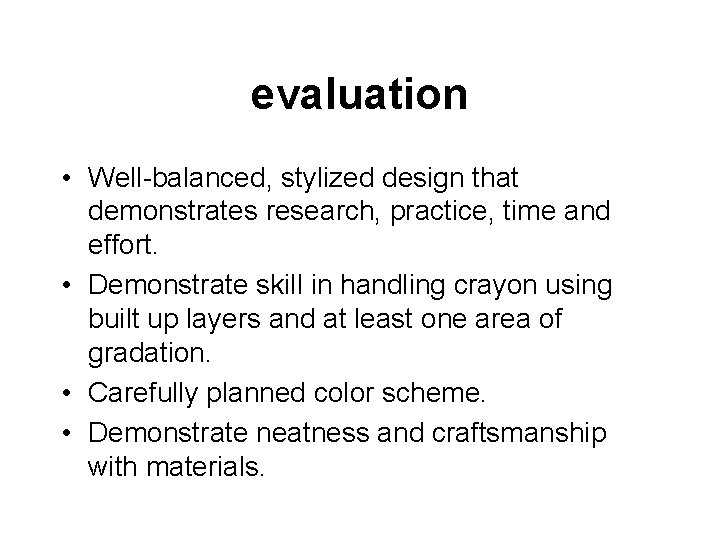
evaluation • Well-balanced, stylized design that demonstrates research, practice, time and effort. • Demonstrate skill in handling crayon using built up layers and at least one area of gradation. • Carefully planned color scheme. • Demonstrate neatness and craftsmanship with materials.
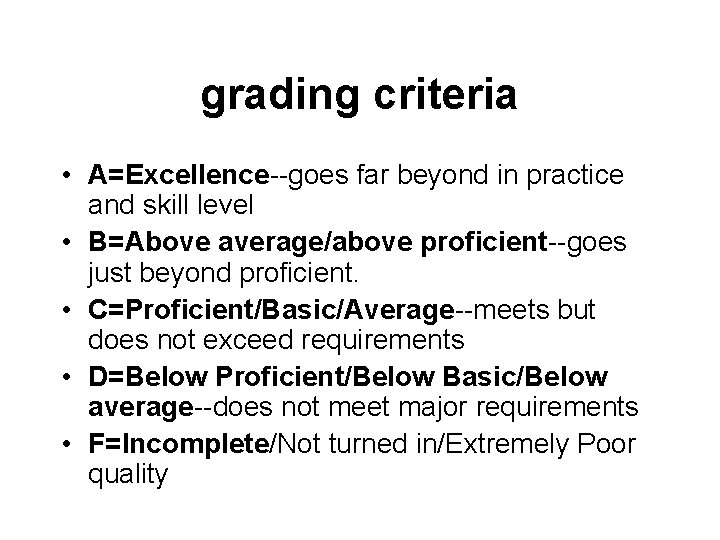
grading criteria • A=Excellence--goes far beyond in practice and skill level • B=Above average/above proficient--goes just beyond proficient. • C=Proficient/Basic/Average--meets but does not exceed requirements • D=Below Proficient/Below Basic/Below average--does not meet major requirements • F=Incomplete/Not turned in/Extremely Poor quality
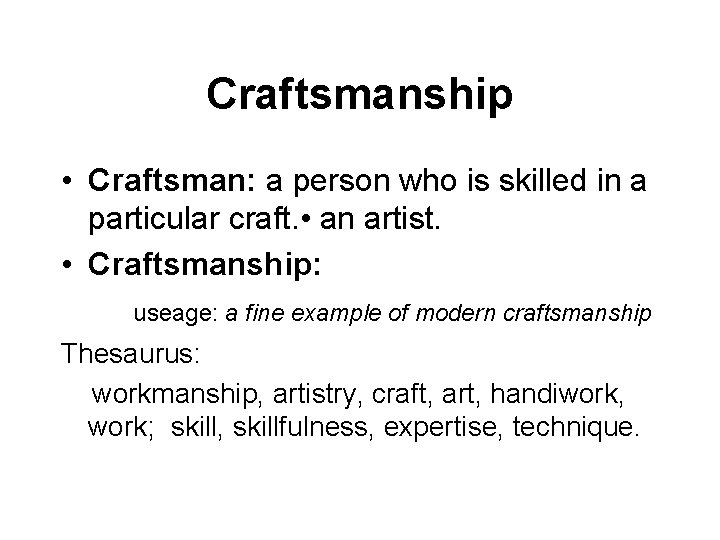
Craftsmanship • Craftsman: a person who is skilled in a particular craft. • an artist. • Craftsmanship: useage: a fine example of modern craftsmanship Thesaurus: workmanship, artistry, craft, art, handiwork, work; skill, skillfulness, expertise, technique.