
Foundations of Homeland Security Emergency Management Law Policy
- Slides: 8
Foundations of Homeland Security & Emergency Management Law & Policy NPHS 1510 J. James Bono, MA, EMT-P, CC
The Vigiles Urbani • Literally, “Watchmen of the City” • Established in 6 AD by Roman Emperor Augustus • Funded by taxes on slaves • “All Hazards” scope • Cohorts of Vigiles enforced laws, performed patrol functions, and responded to fires
Vigiles Urbani • Vigiles emerged from the need to protect the state from all hazards: internal and external • Enforced “Curfew” (“Couvre Feu”), checked to make sure that everyone was in compliance with codes: keeping water in upper rooms, buckets by the door, etc. • Provided training, command structure, and warrant • Vigiles can earn citizenship after years of service • Surveillance, Alerting and Response
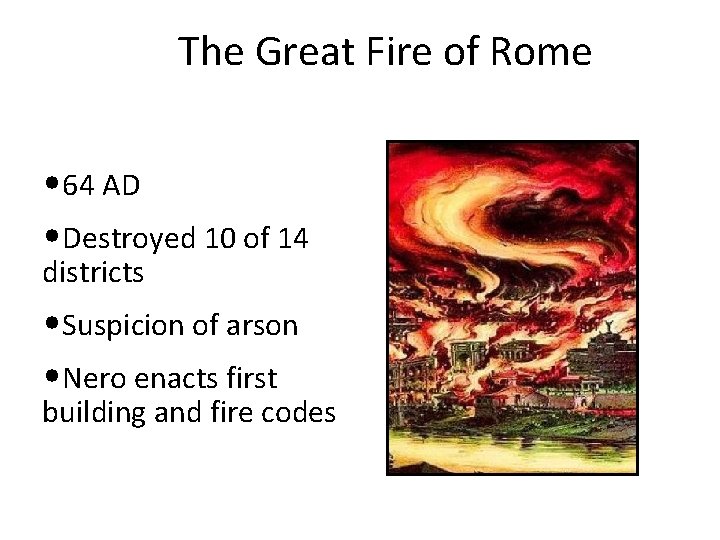
The Great Fire of Rome • 64 AD • Destroyed 10 of 14 districts • Suspicion of arson • Nero enacts first building and fire codes
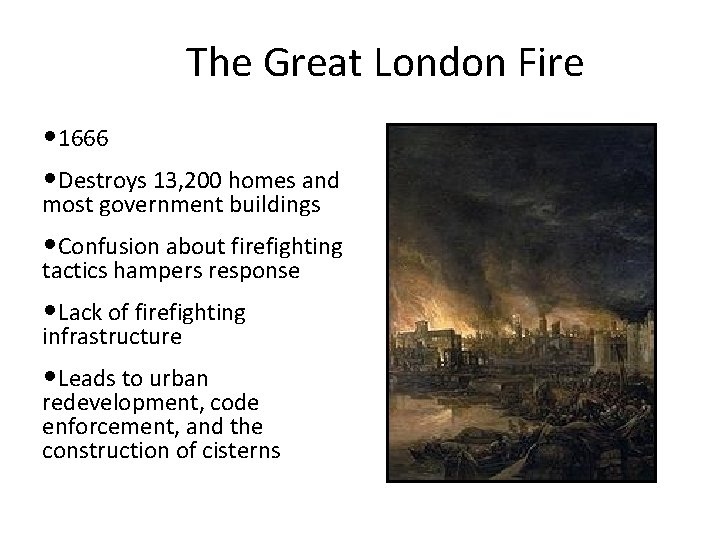
The Great London Fire • 1666 • Destroys 13, 200 homes and most government buildings • Confusion about firefighting tactics hampers response • Lack of firefighting infrastructure • Leads to urban redevelopment, code enforcement, and the construction of cisterns
Great London Fire • Arson • Probably saved London from the plague • “Fire Plug”
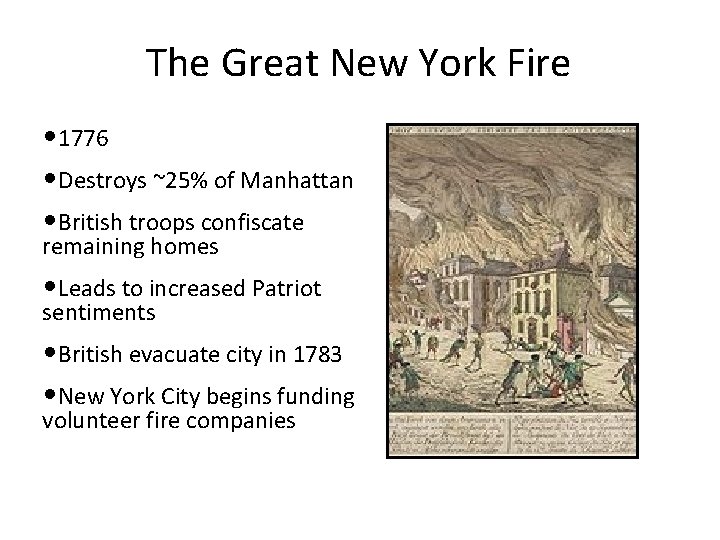
The Great New York Fire • 1776 • Destroys ~25% of Manhattan • British troops confiscate remaining homes • Leads to increased Patriot sentiments • British evacuate city in 1783 • New York City begins funding volunteer fire companies
The Great New York Fire • Posse Comitatus & political leveraging • “Protection from all threats, foreign and domestic”