
Foundations of Globalization Social Studies 10 1 Key
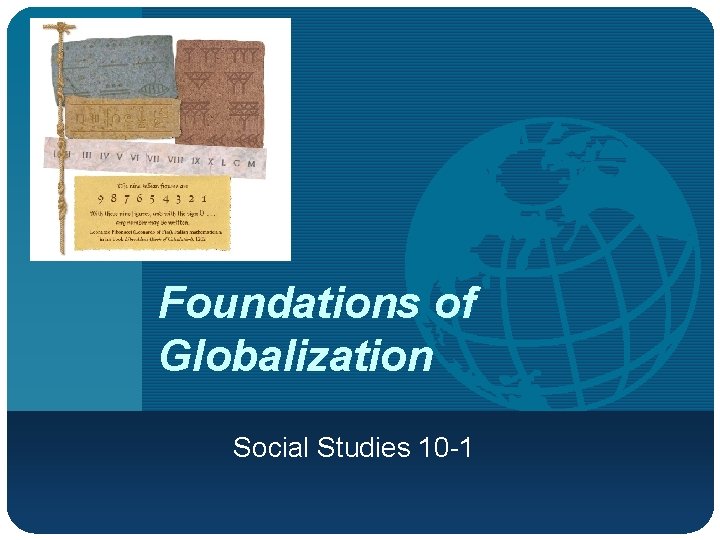
Foundations of Globalization Social Studies 10 -1
Key Ideas 1. Imperialism 2. Historic Globalization 3. Mercantilism 4. Capitalism 5. Grand Exchange 6. Industrial Revolution
What will we answer? • Why and how did globalization begin? • How did the foundations of historical globalization affect people? • How might the use of a single number system contribute to globalization?
Conflicting Theories • Some say globalization is as old as trade among peoples. • Others say it began in about 325 BCE when the Buddhist leader Chandragupta Maurya combined religion, trade, and military might to create a vast protected trading area in much of present-day India. • Still others say that globalization started in the 1100 s when Genghis Khan, the Mongolian warrior-ruler, introduced the idea of fighting from horseback. • And many other experts date the rise of globalization to 1492, the year Christopher Columbus made his first trip to the Americas.
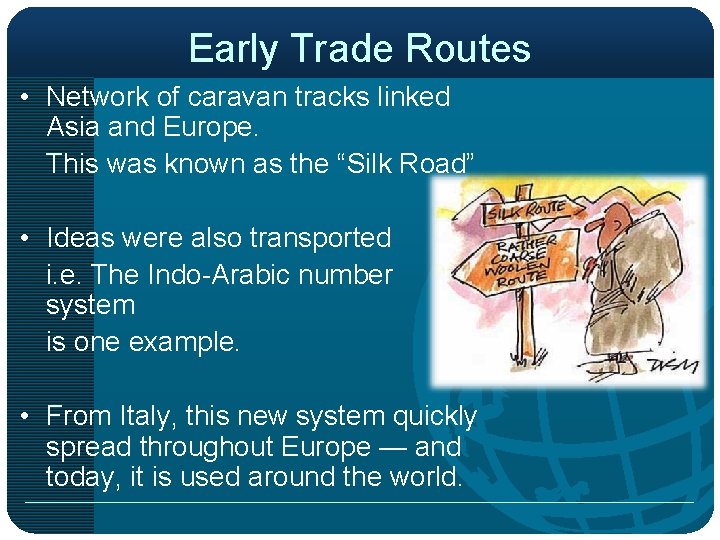
Early Trade Routes • Network of caravan tracks linked Asia and Europe. This was known as the “Silk Road” • Ideas were also transported i. e. The Indo-Arabic number system is one example. • From Italy, this new system quickly spread throughout Europe — and today, it is used around the world.
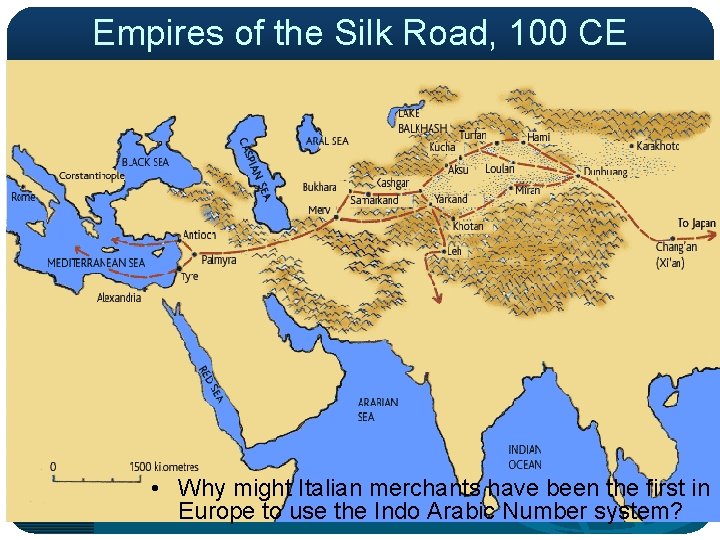
Empires of the Silk Road, 100 CE • Why might Italian merchants have been the first in Europe to use the Indo Arabic Number system?
Ashutosh Sheshabalaya heads Europe-based India. Advisory • First Round – Arab civilizations the first, they transferred knowledge of Indian science, medicine, literature, and mathematics to Europe. • Second Round – Late 1400’s, gave way to European technologies and set the stage for advancing ideas of Imperialism. • Third Round – Time after WWII, rapid growth of markets, China and India are economic powers. Nearly instant communication.
Historic Globalization • 1492, the year Columbus discovered the new world • These individuals say that this period ended only when the US and Soviets emerged from WWII as superpowers. • At this time it is know as the period of Contemporary Globalization.
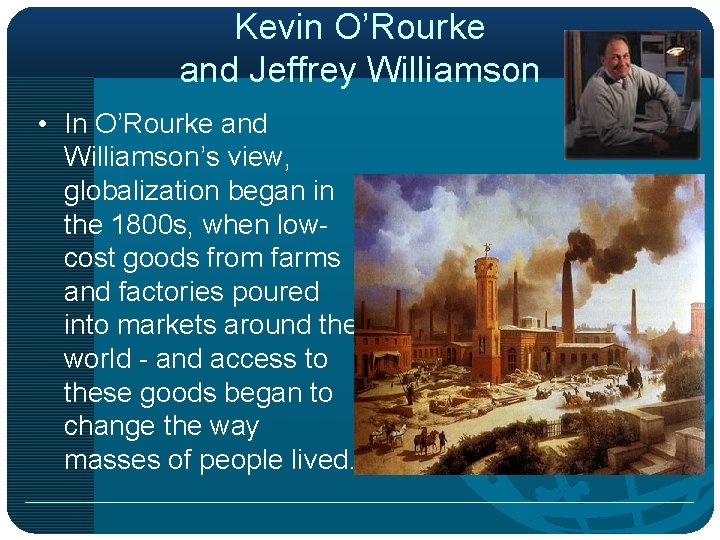
Kevin O’Rourke and Jeffrey Williamson • In O’Rourke and Williamson’s view, globalization began in the 1800 s, when lowcost goods from farms and factories poured into markets around the world - and access to these goods began to change the way masses of people lived.
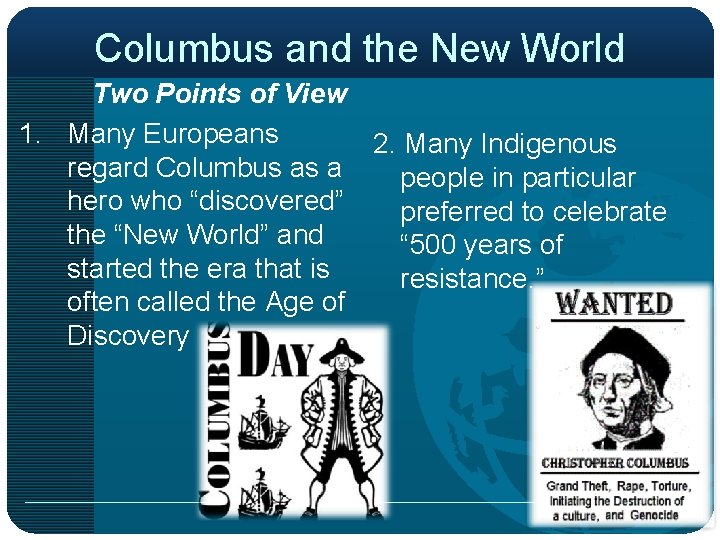
Columbus and the New World Two Points of View 1. Many Europeans 2. Many Indigenous regard Columbus as a people in particular hero who “discovered” preferred to celebrate the “New World” and “ 500 years of started the era that is resistance. ” often called the Age of Discovery
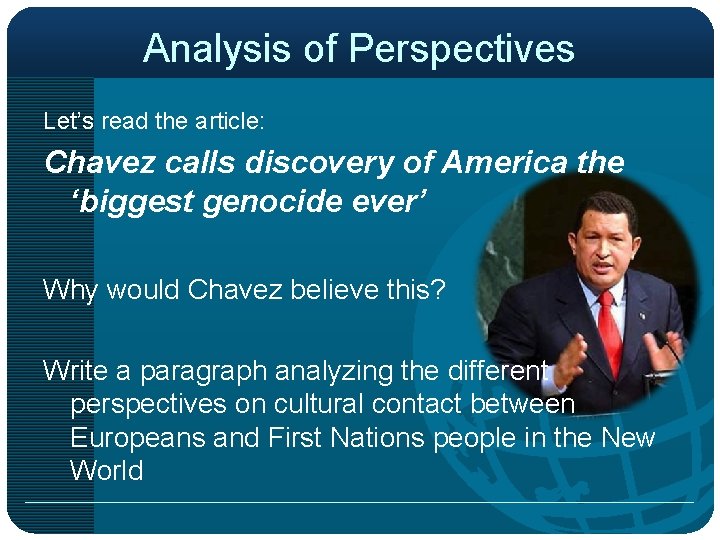
Analysis of Perspectives Let’s read the article: Chavez calls discovery of America the ‘biggest genocide ever’ Why would Chavez believe this? Write a paragraph analyzing the different perspectives on cultural contact between Europeans and First Nations people in the New World
How Historical Globalization Affected People
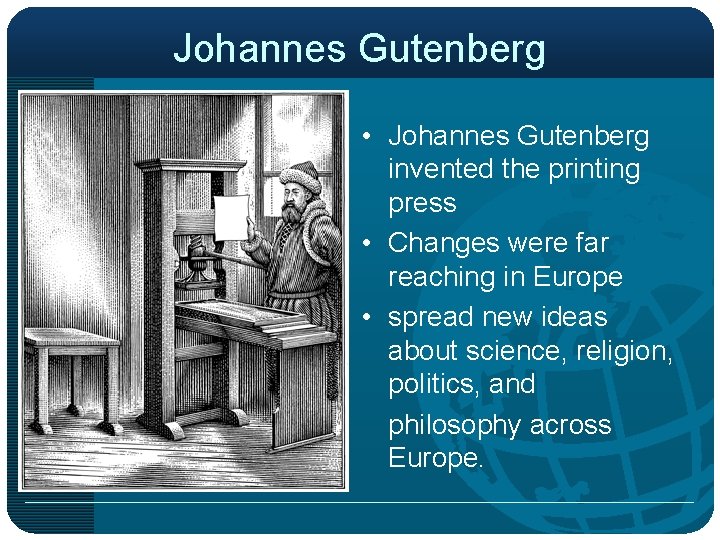
Johannes Gutenberg • Johannes Gutenberg invented the printing press • Changes were far reaching in Europe • spread new ideas about science, religion, politics, and philosophy across Europe.
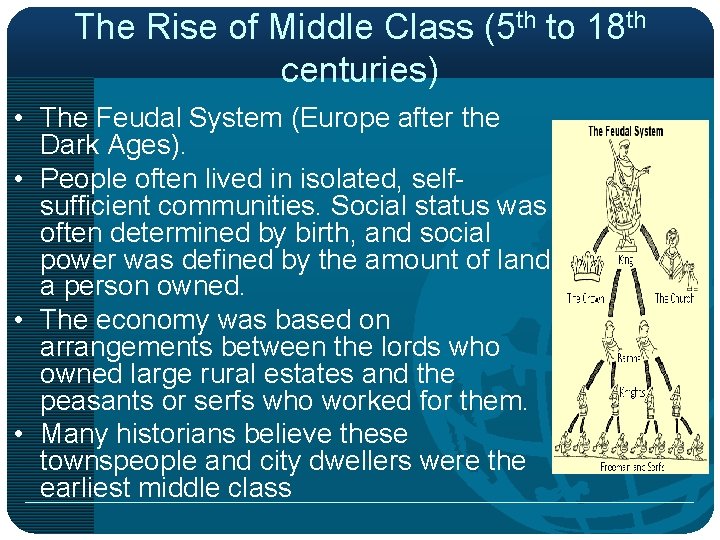
The Rise of Middle Class (5 th to 18 th centuries) • The Feudal System (Europe after the Dark Ages). • People often lived in isolated, selfsufficient communities. Social status was often determined by birth, and social power was defined by the amount of land a person owned. • The economy was based on arrangements between the lords who owned large rural estates and the peasants or serfs who worked for them. • Many historians believe these townspeople and city dwellers were the earliest middle class
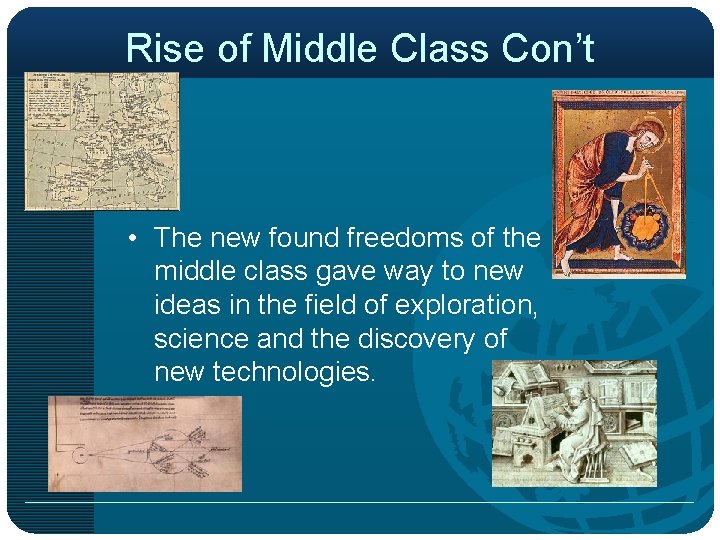
Rise of Middle Class Con’t • The new found freedoms of the middle class gave way to new ideas in the field of exploration, science and the discovery of new technologies.
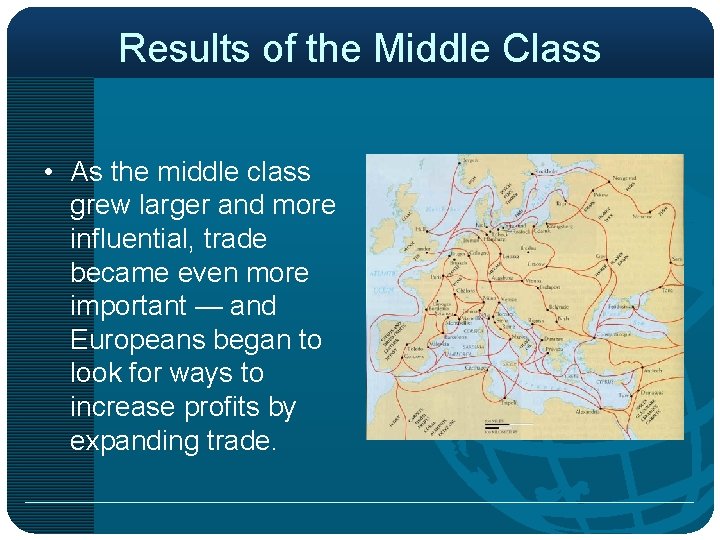
Results of the Middle Class • As the middle class grew larger and more influential, trade became even more important — and Europeans began to look for ways to increase profits by expanding trade.
New Ideas and Technology • From about the 9 th to the 13 th century, Middle Eastern civilizations were centres of innovation and learning. • The introduction of large, square sails and the lateen • Improvements in navigational tools, such as the magnetic compass, the mariner’s astrolabe, the sextant, and maps. • Gunpowder, which was invented in China, was first used in European warfare in 1324.
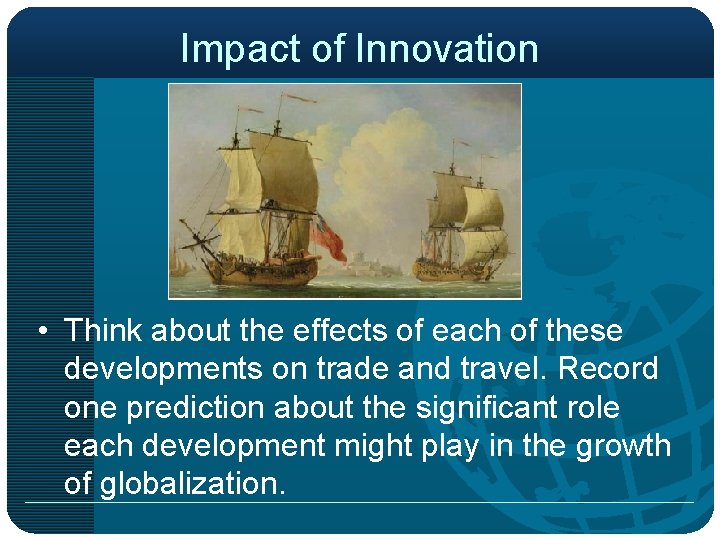
Impact of Innovation • Think about the effects of each of these developments on trade and travel. Record one prediction about the significant role each development might play in the growth of globalization.
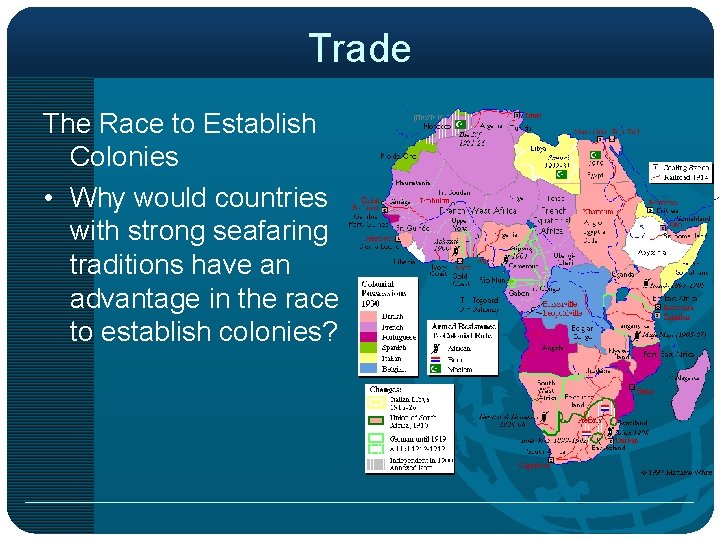
Trade The Race to Establish Colonies • Why would countries with strong seafaring traditions have an advantage in the race to establish colonies?
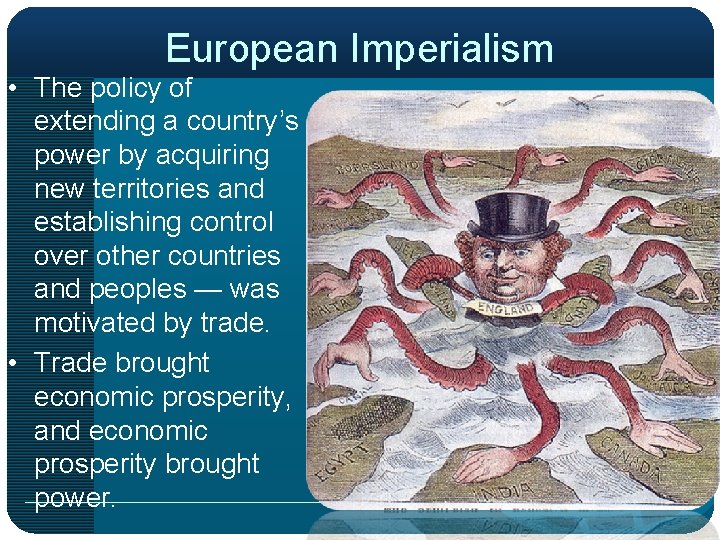
European Imperialism • The policy of extending a country’s power by acquiring new territories and establishing control over other countries and peoples — was motivated by trade. • Trade brought economic prosperity, and economic prosperity brought power.
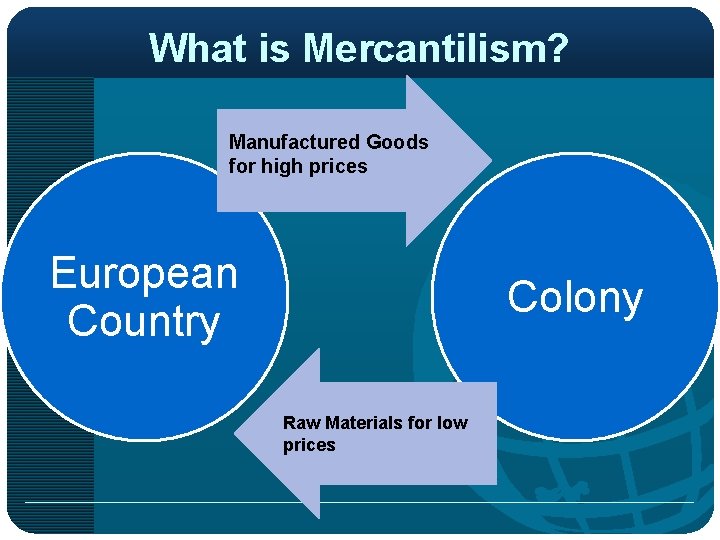
What is Mercantilism? Manufactured Goods for high prices European Country Colony Raw Materials for low prices
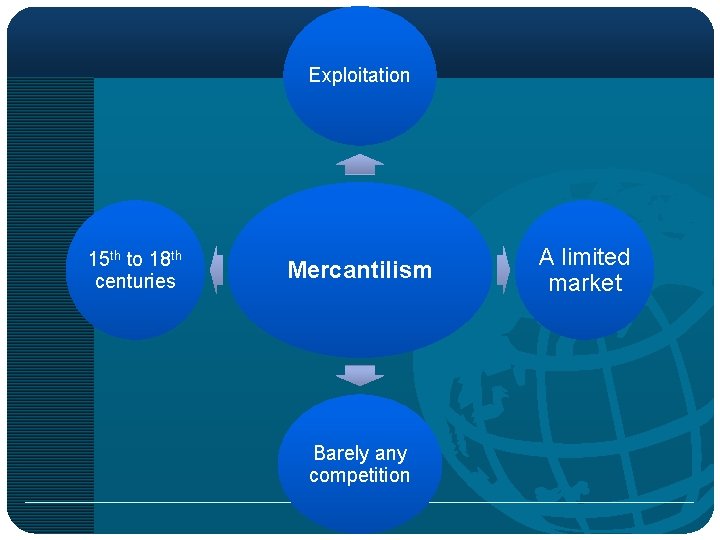
Exploitation 15 th to 18 th centuries Mercantilism Barely any competition A limited market
What is Mercantilism? • Is an economic system that attempts to increase a nation’s wealth by government regulation of all the nation’s commercial interests. • The government/state regulates trade and production to enable the state to become self-sufficient.
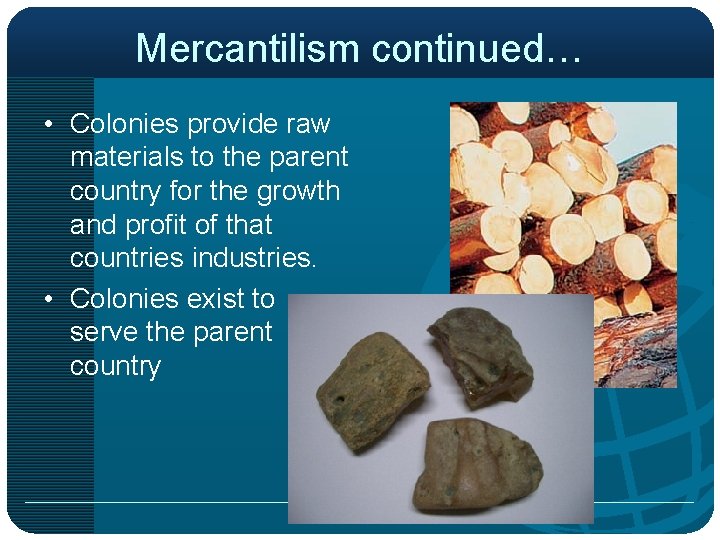
Mercantilism continued… • Colonies provide raw materials to the parent country for the growth and profit of that countries industries. • Colonies exist to serve the parent country
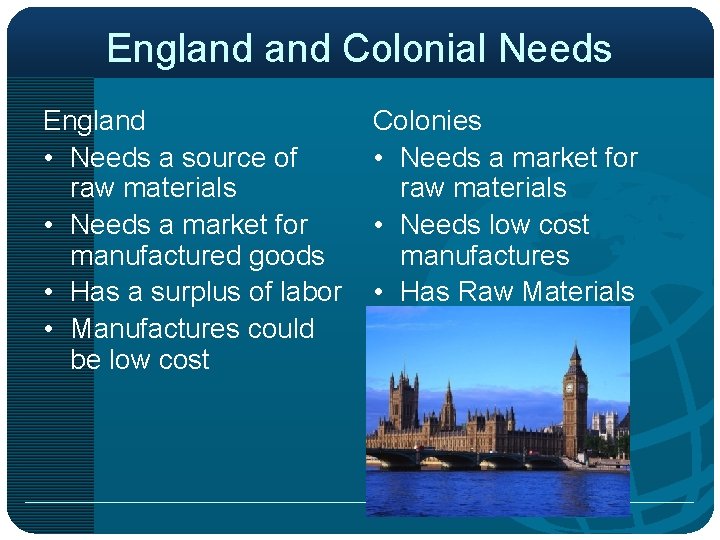
England Colonial Needs England • Needs a source of raw materials • Needs a market for manufactured goods • Has a surplus of labor • Manufactures could be low cost Colonies • Needs a market for raw materials • Needs low cost manufactures • Has Raw Materials
Results for the colonies Positives • New England Shipbuilding thrived • Tobacco producing colonies had a monopoly in England • English military protected colonial trade Negatives • Colonial manufacturing was limited • Farmers received low prices for crops • Manufactured goods from England were not cheap
Results for England • Colonial competition was curtailed • Benefited from the import and custom duties paid on goods • England had trouble enforcing the Navigation Acts, expensive • French and Dutch merchants still made off with materials produced in the colonies • Will be a source of tension between the Colonies and England, Opposition from Massachusetts
- Slides: 27