
Foundations of Georgias Government Separation of Powers Checks
- Slides: 28
Foundations of Georgia’s Government Separation of Powers, Checks and Balances, Citizens’ Rights and Responsibilities
Georgia’s Government What is the Georgia state constitution? • It is the governing document that explains the laws, governmental offices, and citizens rights and responsibilities in the state of Georgia.
Georgia’s Government What is the basic structure of the Georgia state constitution? • Structure of the Georgia state constitution: – Preamble (Introduction) – Articles (11 main articles) –Sections –Paragraphs
Georgia’s Government What is the basic structure of the Georgia state constitution? • • • Article I: Bill of Rights Article II: Voting & Elections Article III: Legislative Branch Article IV: Constitutional Boards & Commissions Article V: Executive Branch Article VI: Judicial Branch Article VII: Taxation & Finance Article VIII: Education Article IX: Counties & Municipal Corporations Article X: Amendments to the Constitution Article XI: Miscellaneous Provisions
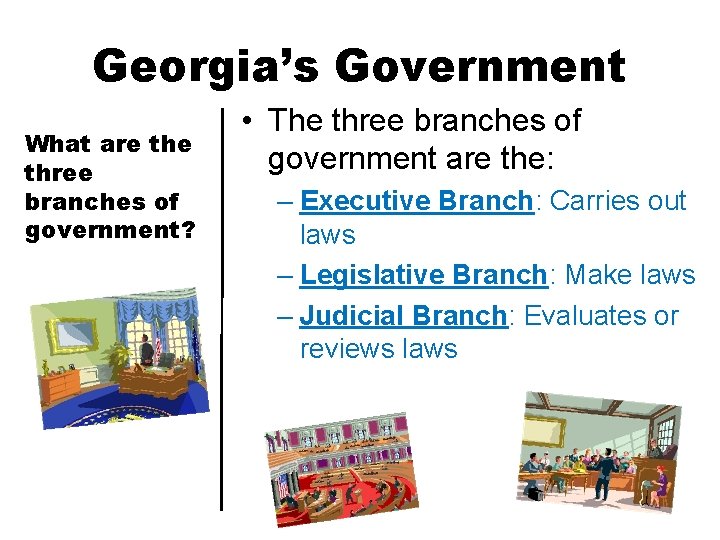
Georgia’s Government What are three branches of government? • The three branches of government are the: – Executive Branch: Carries out laws – Legislative Branch: Make laws – Judicial Branch: Evaluates or reviews laws
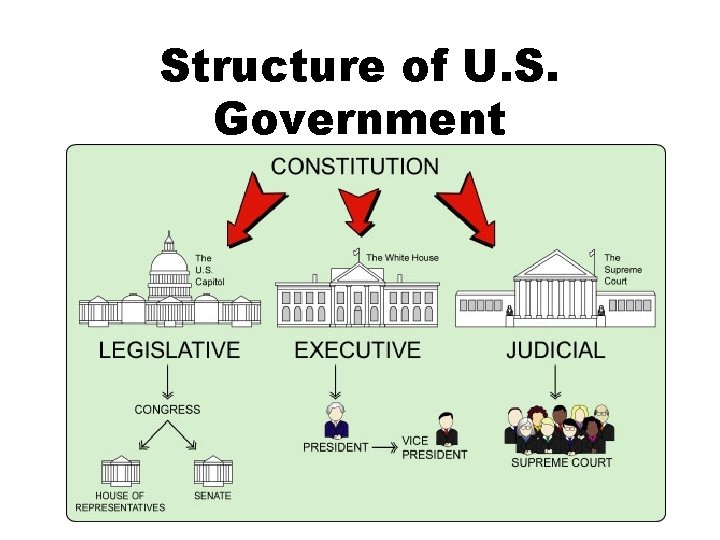
Structure of U. S. Government
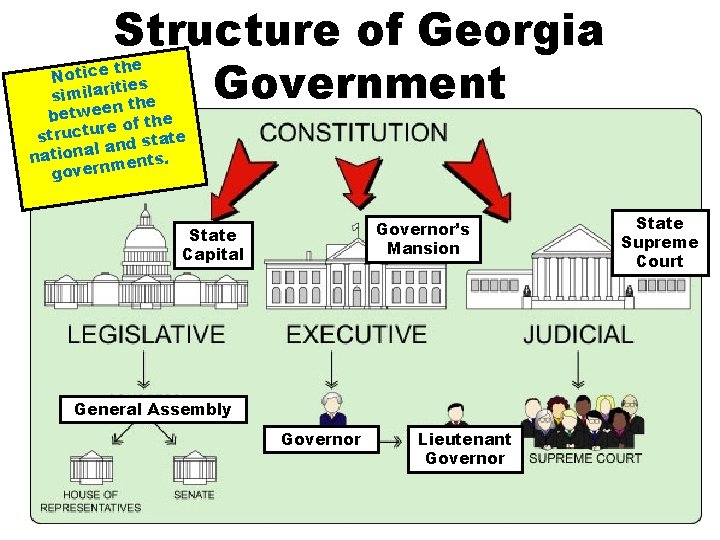
Structure of Georgia Government the Notice ities similar the n e e w t be of the e r u t c u str state d n a l a nation nts. e m n r e gov Governor’s Mansion State Capital General Assembly Governor Lieutenant Governor State Supreme Court
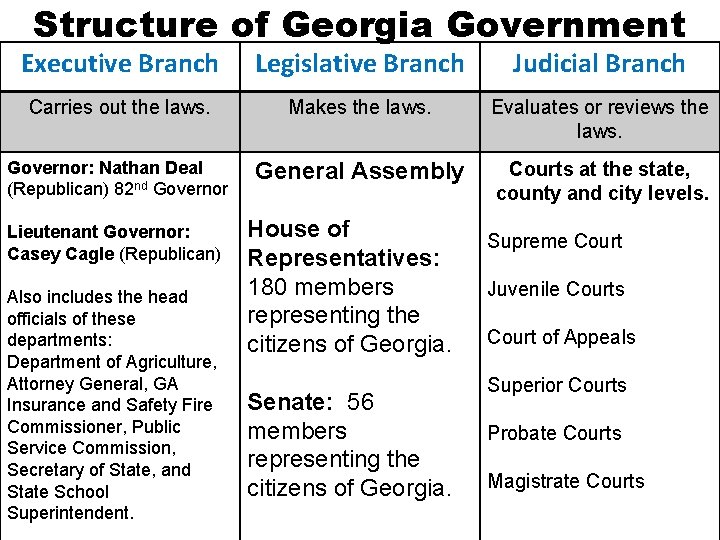
Structure of Georgia Government Executive Branch Legislative Branch Judicial Branch Carries out the laws. Makes the laws. Evaluates or reviews the laws. Governor: Nathan Deal (Republican) 82 nd Governor General Assembly Courts at the state, county and city levels. Lieutenant Governor: Casey Cagle (Republican) Also includes the head officials of these departments: Department of Agriculture, Attorney General, GA Insurance and Safety Fire Commissioner, Public Service Commission, Secretary of State, and State School Superintendent. House of Representatives: 180 members representing the citizens of Georgia. Senate: 56 members representing the citizens of Georgia. Supreme Court Juvenile Courts Court of Appeals Superior Courts Probate Courts Magistrate Courts
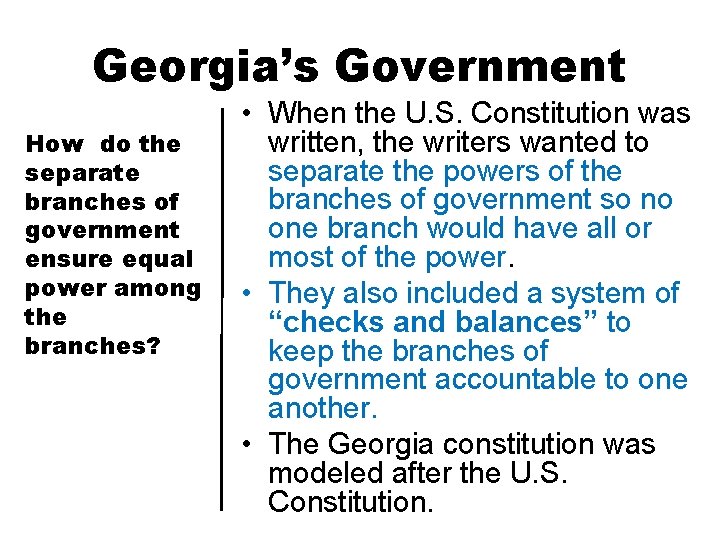
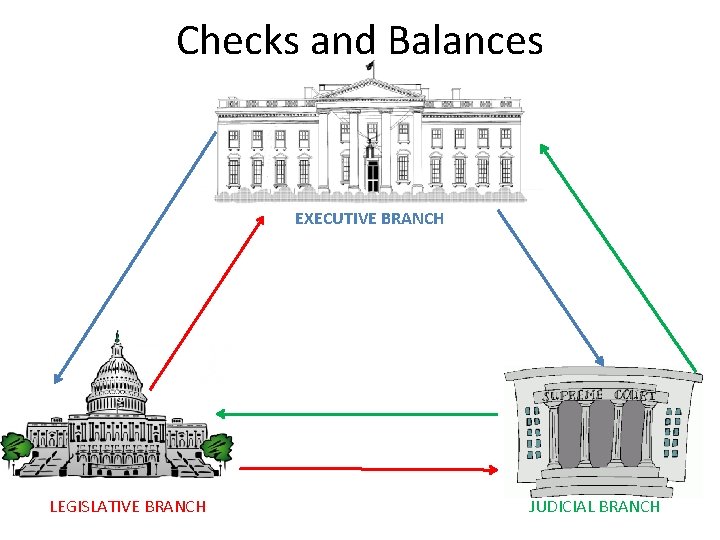
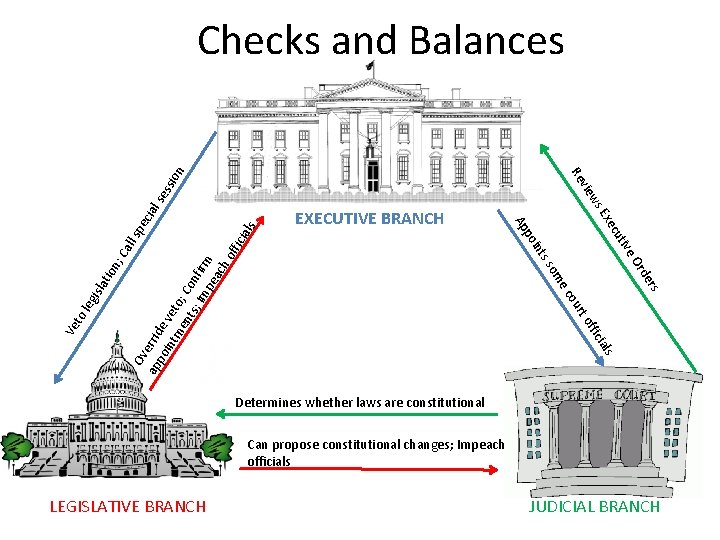
Georgia’s Government How do the separate branches of government ensure equal power among the branches? • When the U. S. Constitution was written, the writers wanted to separate the powers of the branches of government so no one branch would have all or most of the power. • They also included a system of “checks and balances” to keep the branches of government accountable to one another. • The Georgia constitution was modeled after the U. S. Constitution.
Checks and Balances EXECUTIVE BRANCH LEGISLATIVE BRANCH JUDICIAL BRANCH
vie Re rt ou Ca ll s n; tio isla rs rde ec leg O ve om ss ls icia off to ti cu int po Ve xe E ws EXECUTIVE BRANCH Ap Ov pe cia ap errid l se po ssi int e vet on me o; nts Co ; Im nfir pe m ac ho ffic ial s Checks and Balances Determines whether laws are constitutional Can propose constitutional changes; Impeach officials LEGISLATIVE BRANCH JUDICIAL BRANCH
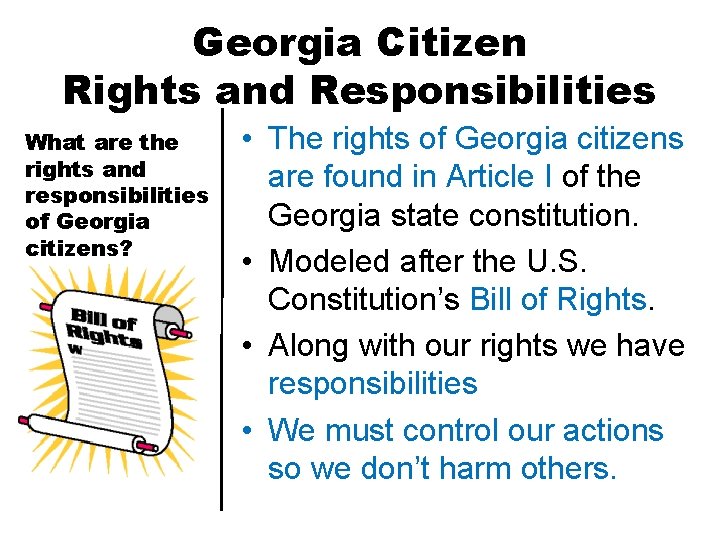
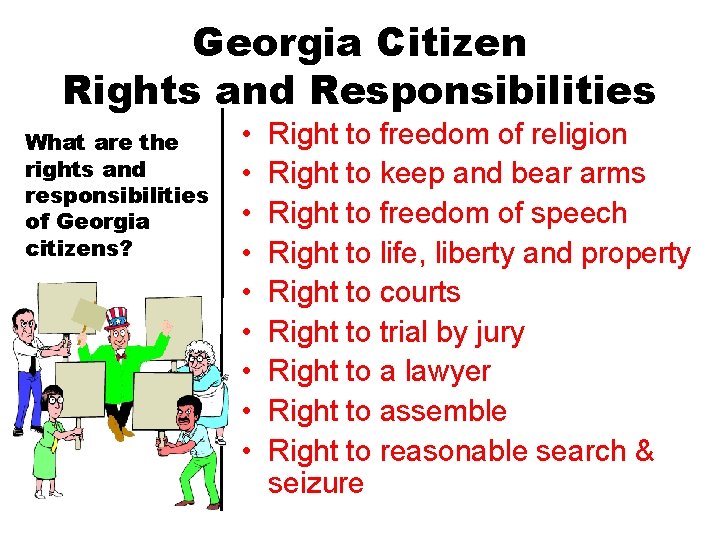
Georgia Citizen Rights and Responsibilities What are the rights and responsibilities of Georgia citizens? • The rights of Georgia citizens are found in Article I of the Georgia state constitution. • Modeled after the U. S. Constitution’s Bill of Rights. • Along with our rights we have responsibilities • We must control our actions so we don’t harm others.
Georgia Citizen Rights and Responsibilities What are the rights and responsibilities of Georgia citizens? • • • Right to freedom of religion Right to keep and bear arms Right to freedom of speech Right to life, liberty and property Right to courts Right to trial by jury Right to a lawyer Right to assemble Right to reasonable search & seizure
Georgia Citizen Rights and Responsibilities What actions • Actions that harm others could take these rights • Actions that are immoral away? • Actions that break laws • Actions that infringe on others’ rights
Georgia Citizen Rights and Responsibilities What are the responsibilities of Georgia citizens? • Wait! Don’t think that the government should only do things for the citizens. The citizens also have responsibilities to the government. Voting is an example of a citizen responsibility. • Other examples of citizen responsibilities: – Jury Duty – Serving in military when required.
Election & Voter Requirements What are the requirements to vote in Georgia? • You must be 18 years of age or older. • Be a citizen of the U. S. • Citizen of Georgia and live in the county where you wish to vote. • Be registered with the Secretary of State’s office 30 days before election. • Have a VALID form of identification – such as a voter ID card, driver’s license or state issued ID
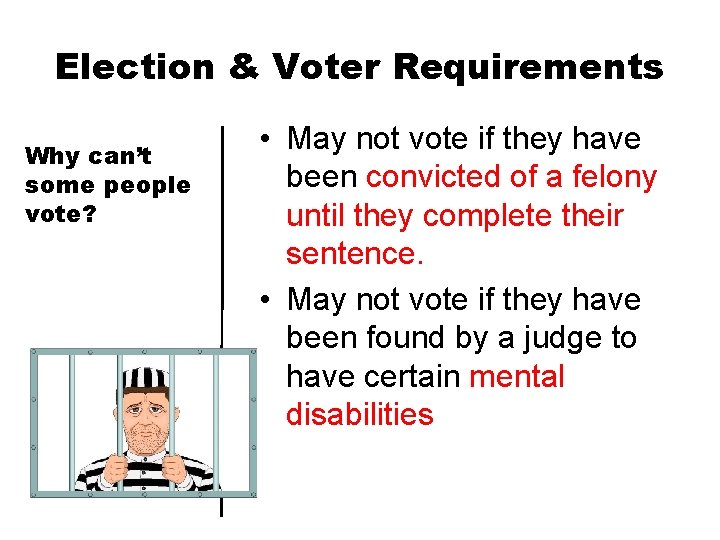
Election & Voter Requirements Why can’t some people vote? • May not vote if they have been convicted of a felony until they complete their sentence. • May not vote if they have been found by a judge to have certain mental disabilities
Election & Voter Requirements When are elections held in Georgia? • Remember, the citizens or voters hold the power by electing officials to represent them and their interests. • A general election is held in November on the first Tuesday after the first Monday in every evennumbered year. – This is when national and state officials are elected. – Other elections are held to elect officials or vote for issues, such as an increase in the sales tax. – Run-off elections or specials elections are held when neither candidate receives at least 50% of the vote plus one.
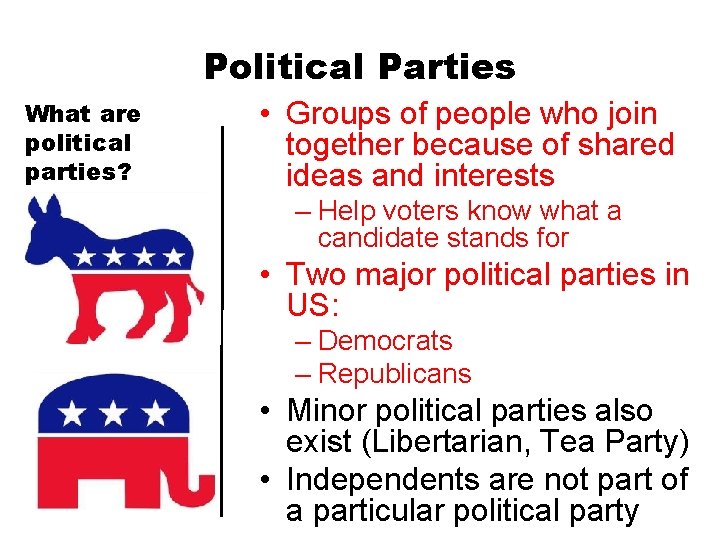
Political Parties What are political parties? • Groups of people who join together because of shared ideas and interests – Help voters know what a candidate stands for • Two major political parties in US: – Democrats – Republicans • Minor political parties also exist (Libertarian, Tea Party) • Independents are not part of a particular political party
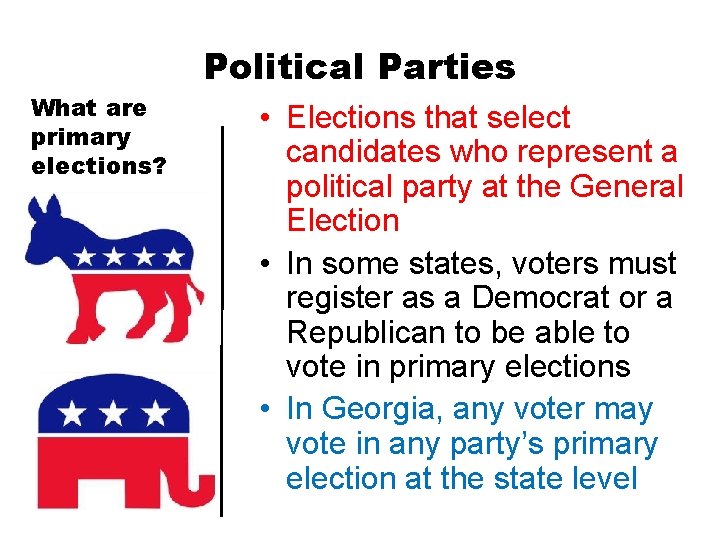
What are primary elections? Political Parties • Elections that select candidates who represent a political party at the General Election • In some states, voters must register as a Democrat or a Republican to be able to vote in primary elections • In Georgia, any voter may vote in any party’s primary election at the state level
Voter Scenarios • Tammy has just moved to Atlanta from Houston, TX. It is the day before the election and she has decided that she wants to vote in this year’s presidential election. Can she vote in this year’s election? Why or why not?
Voter Scenarios • Adam has lived in Conyers for a year and a half and loves getting involved in local politics. He has proof of residency proving that he is a legal resident of Georgia. However, Adam never changed his driver’s license from his home state of New York. The election is next week. Can he vote in the election? Why or why not?
Voter Scenarios • Sam has just been released from prison for robbery – a felony crime. He is not on probation and is anxious to find a job and get on with his life. His friends are encouraging him to vote for Senator Barack Obama for president. Sam is hesitant because he doesn’t know if he is eligible to vote. Can he vote in the election? Why or why not?
Voter Scenarios • Tasha just received a speeding ticket in De. Kalb county. She’s never been in trouble with the law before and is nervous that this speeding ticket will go on her record. Can she vote in the election? Why or why not?
Voter Scenarios • Jake’s 18 th birthday is on Friday. The Friday before the election. He really likes John Mc. Cain and wants to help him win the presidency. Can he vote in the election? Why or why not?
Voter Scenarios • Renee currently lives in Covington, GA (Newton County), but she is still registered to vote in Cobb County. The election is three weeks away. Can she vote in the election? Why or why not?
Voter Scenarios • Tony has suffered from many mental disabilities most of his adult life. He works at the local grocery store and owns his own home. The neighborhood kids even call him the crazy man because he sits on his front porch and whispers to himself. He is registered to vote. Can he vote in the election? Why or why not?
Voter Scenarios • Dr. Smith is what some call a “mad scientist. ” He is a genius in the sciences and has even come close to discovering a cure for cancer. He is a celebrated doctor and scientist. Unfortunately, last year Dr. Smith was committed to a mental institution by a judge due to mental distress he suffered after the death of his cat. Can he vote in the election? Why or why not?