
Foundations of Design of High Performance Team Learning
![What do you already know about course design? [Background Knowledge Survey] • What is](https://slidetodoc.com/presentation_image_h/fc6266f5b8022f42725b2d21a18bb127/image-4.jpg "What do you already know about course design? [Background Knowledge Survey] • What is")
![What do you already know about course design? [Background Knowledge Survey] Short Answer Questions](https://slidetodoc.com/presentation_image_h/fc6266f5b8022f42725b2d21a18bb127/image-5.jpg "What do you already know about course design? [Background Knowledge Survey] Short Answer Questions")

- Slides: 38
Foundations of Design of High Performance Team Learning Environments – Understanding by Design and How People Learn Karl A. Smith Engineering Education – Purdue University Technological Leadership Institute/ STEM Education Center/ Civil Engineering - University of Minnesota ksmith@umn. edu - http: //www. ce. umn. edu/~smith Nanyang Business School Nanyang Technological University Teaching Strategies for Cooperative Learning Workshop December 12 -15, 2011
Session 1 Layout • Welcome & Overview • Course Design Foundations – Understanding by Design (Ud. B) • Integrated Course Design (CAP Model) – Content – Assessment – Pedagogy – How People Learn (HPL) • How Learning Works (Ambrose, et al. ) • Session 2 Preview – Pedagogies of Engagement – Cooperative Learning and Challenge Based Learning – Informal – Bookends on a Class Session – Formal Cooperative Learning 2 • Design and Implementation
Session objectives 1. Articulate an integrated approach to course design which aligns content, assessment and pedagogy (CAP) 2. Critically describe the research-based features of CAP 3. Apply CAP principles to a learning environment (course, module, etc). 4. Use reflection and discussion to deepen your learning.
What do you already know about course design? [Background Knowledge Survey] • What is your experience with course (re) design? – 1 -5: never done it (1) to very experienced (5) • What is your level of familiarity with HPL & Ub. D? – 1 -5: low (1) to high (5)
What do you already know about course design? [Background Knowledge Survey] Short Answer Questions • What do you feel are important considerations about course (re) design? • What are challenges you have faced with course (re) design?
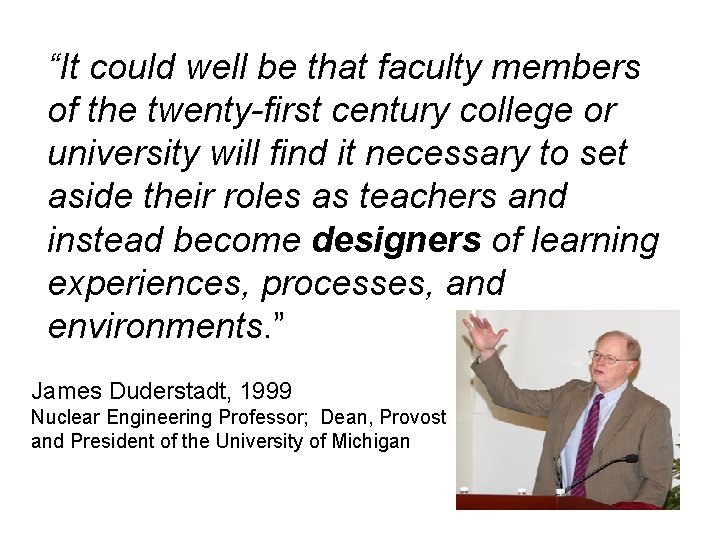
“It could well be that faculty members of the twenty-first century college or university will find it necessary to set aside their roles as teachers and instead become designers of learning experiences, processes, and environments. ” James Duderstadt, 1999 Nuclear Engineering Professor; Dean, Provost and President of the University of Michigan
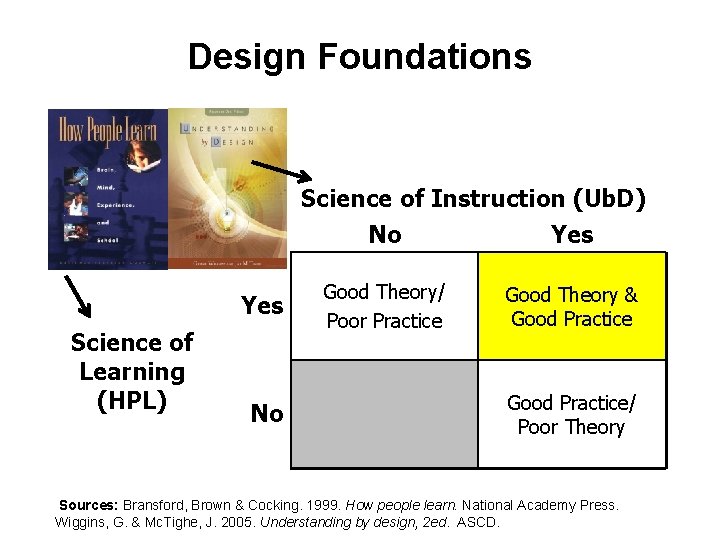
Design Foundations Science of Instruction (Ub. D) No Yes Science of Learning (HPL) No Good Theory/ Poor Practice Good Theory & Good Practice/ Poor Theory Sources: Bransford, Brown & Cocking. 1999. How people learn. National Academy Press. Wiggins, G. & Mc. Tighe, J. 2005. Understanding by design, 2 ed. ASCD.
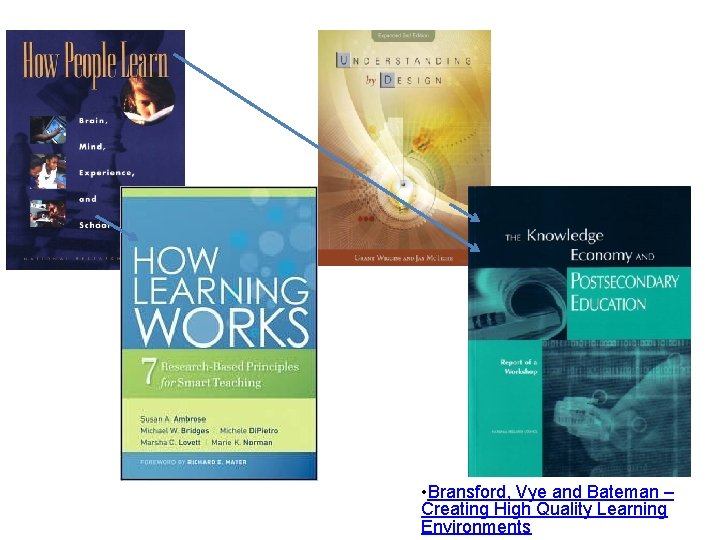
• Bransford, Vye and Bateman – Creating High Quality Learning Environments
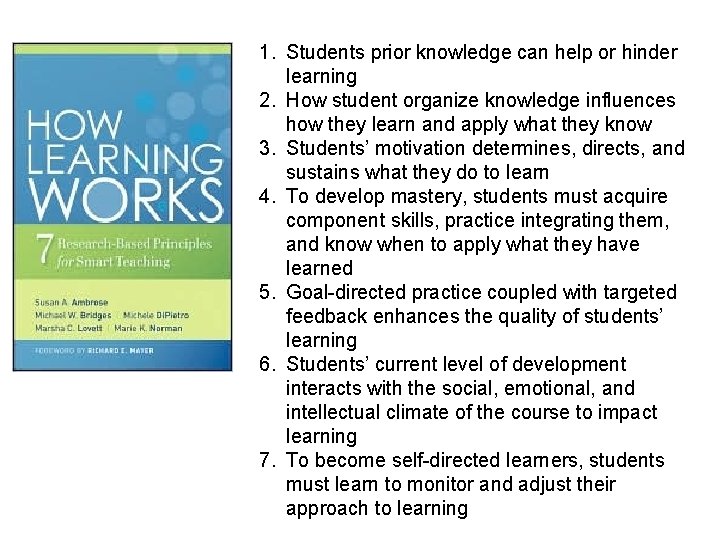
1. Students prior knowledge can help or hinder learning 2. How student organize knowledge influences how they learn and apply what they know 3. Students’ motivation determines, directs, and sustains what they do to learn 4. To develop mastery, students must acquire component skills, practice integrating them, and know when to apply what they have learned 5. Goal-directed practice coupled with targeted feedback enhances the quality of students’ learning 6. Students’ current level of development interacts with the social, emotional, and intellectual climate of the course to impact learning 7. To become self-directed learners, students must learn to monitor and adjust their approach to learning
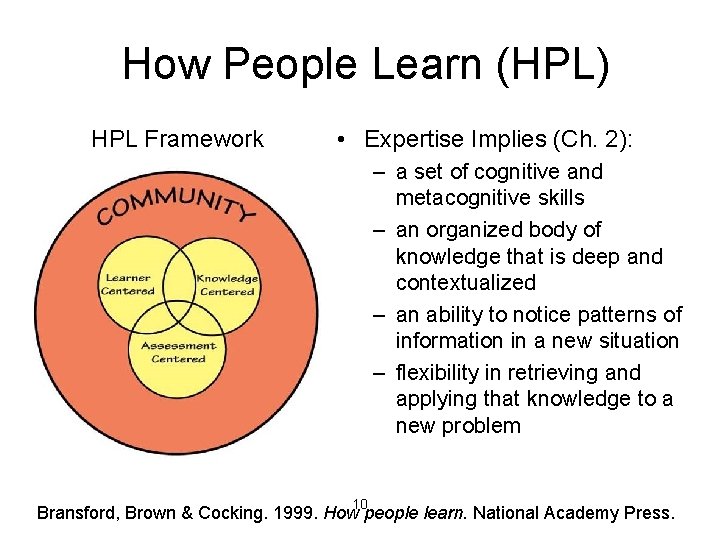
How People Learn (HPL) HPL Framework • Expertise Implies (Ch. 2): – a set of cognitive and metacognitive skills – an organized body of knowledge that is deep and contextualized – an ability to notice patterns of information in a new situation – flexibility in retrieving and applying that knowledge to a new problem 10 Bransford, Brown & Cocking. 1999. How people learn. National Academy Press.
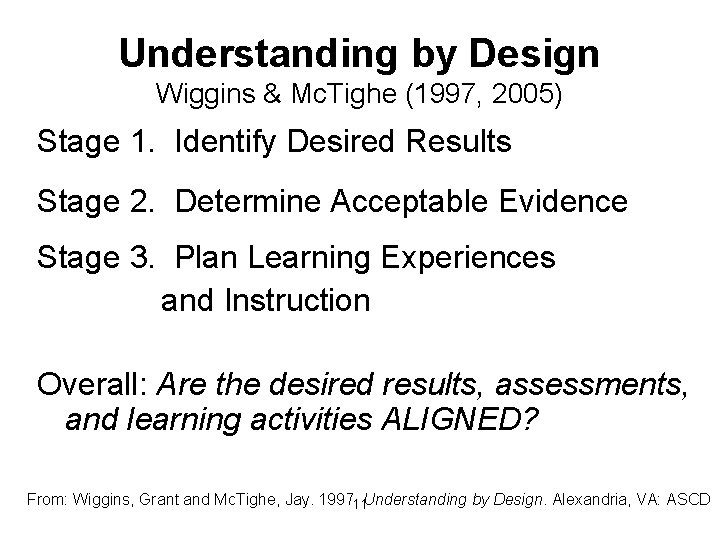
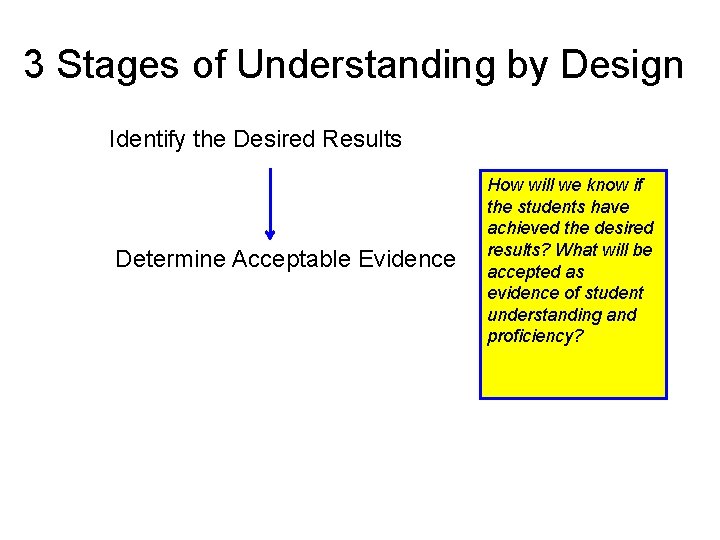
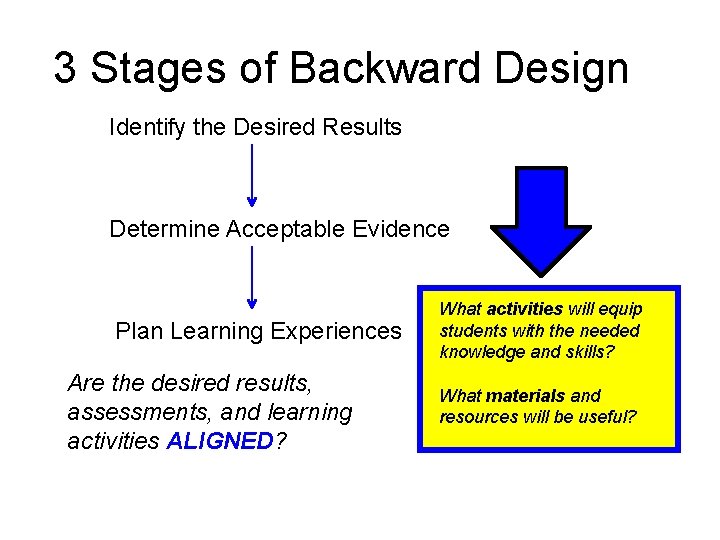
Understanding by Design Wiggins & Mc. Tighe (1997, 2005) Stage 1. Identify Desired Results Stage 2. Determine Acceptable Evidence Stage 3. Plan Learning Experiences and Instruction Overall: Are the desired results, assessments, and learning activities ALIGNED? From: Wiggins, Grant and Mc. Tighe, Jay. 1997. 11 Understanding by Design. Alexandria, VA: ASCD
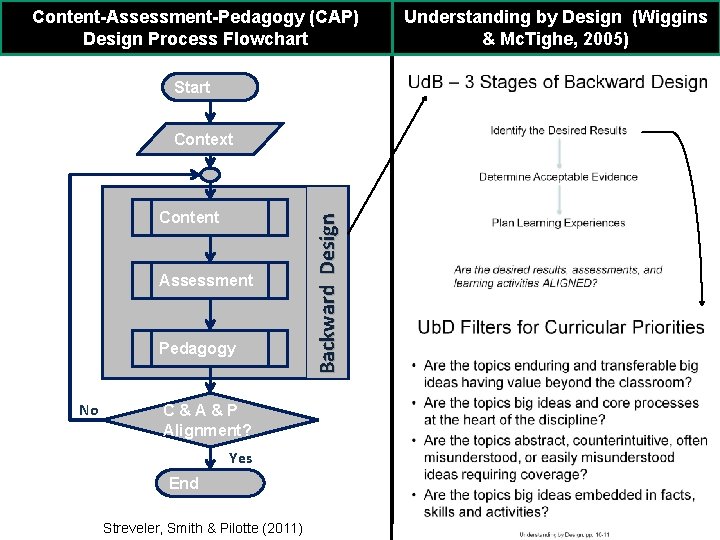
Content-Assessment-Pedagogy (CAP) Design Process Flowchart Understanding by Design (Wiggins & Mc. Tighe, 2005) Start Content Assessment Pedagogy No Backward Design Context C&A&P Alignment? Yes End 12 Streveler, Smith & Pilotte (2011)
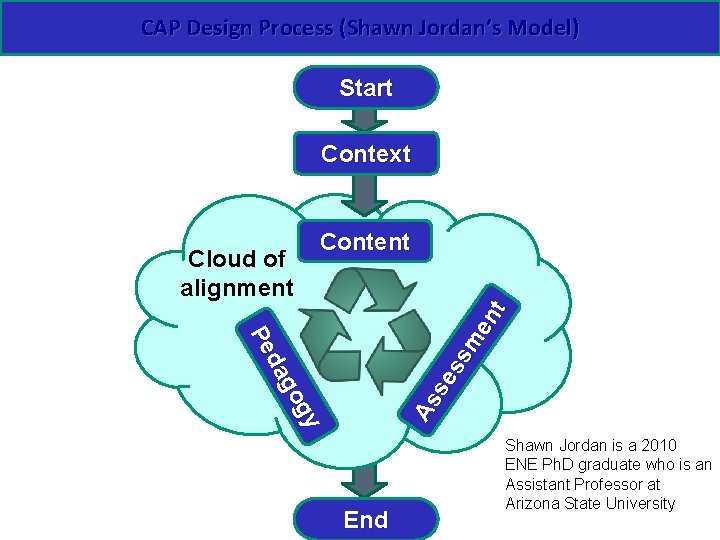
CAP Design Process (Shawn Jordan’s Model) Start Context gy go da Pe As se ss m en t Cloud of alignment Content 13 End Shawn Jordan is a 2010 ENE Ph. D graduate who is an Assistant Professor at Arizona State University
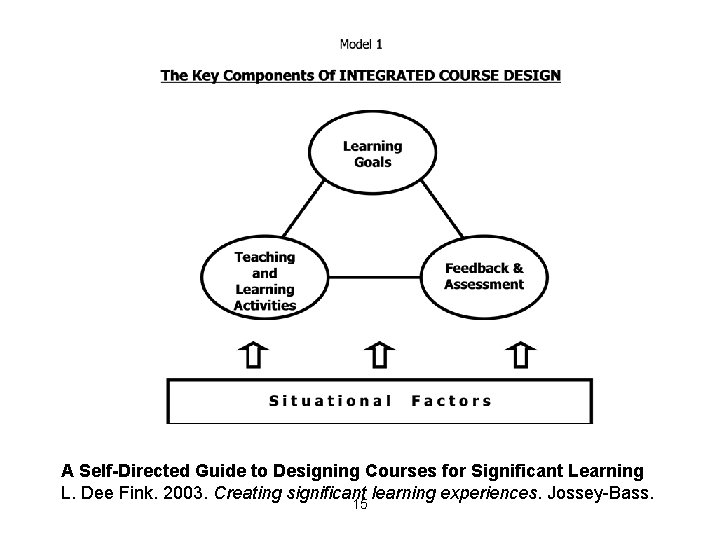
Related Integrated Course Design Model • Fink, L. D. 2003. Creating significant learning experiences: An integrated approach to designing. Jossey-Bass • Fink, L. D. 2003. A Self-Directed Guide to Designing Courses for Significant Learning. http: //www. deefinkandassociates. com/G uideto. Course. Design. Aug 05. pdf 14
A Self-Directed Guide to Designing Courses for Significant Learning L. Dee Fink. 2003. Creating significant learning experiences. Jossey-Bass. 15
Your turn Select a course or learning module you would like to (re)design especially by incorporating cooperative learning 16
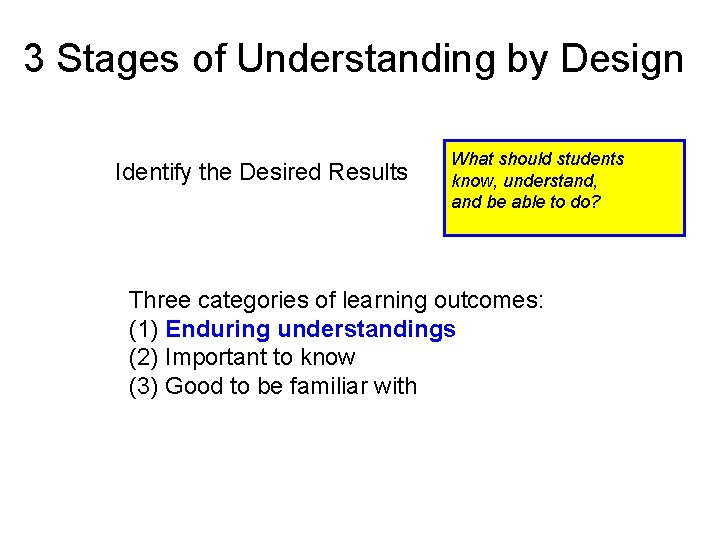
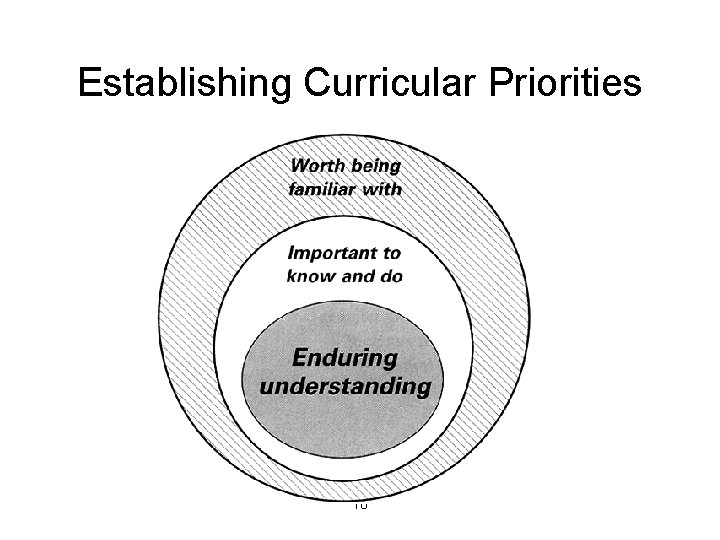
3 Stages of Understanding by Design Identify the Desired Results What should students know, understand, and be able to do? Three categories of learning outcomes: (1) Enduring understandings (2) Important to know (3) Good to be familiar with
Establishing Curricular Priorities 18
Your turn • What are your intentions for student learning? – Individually make a list
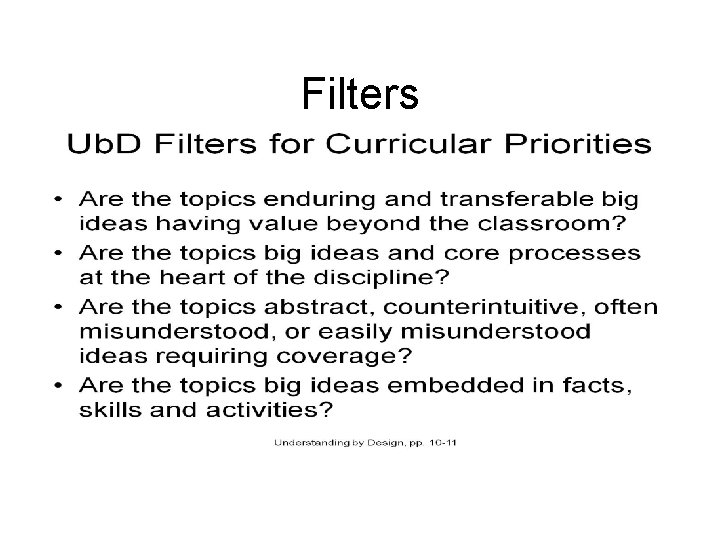
Filters • Which of these learning outcomes represents the enduring understandings? – Look at these filters
Understanding Misunderstanding A Private Universe – 21 minute video available from www. learner. org Also see Minds of our own (Annenberg/CPB Math and Science Collection – www. learner. org) 1. Can we believe our eyes? 2. Lessons from thin air 3. Under construction 21
Your turn • Which of these learning outcomes represents the enduring understandings?
Your turn • Share your list with a partner § Discuss each other’s list for enduring understanding. § Questions? § Clarifications?
3 Stages of Understanding by Design Identify the Desired Results Determine Acceptable Evidence How will we know if the students have achieved the desired results? What will be accepted as evidence of student understanding and proficiency?
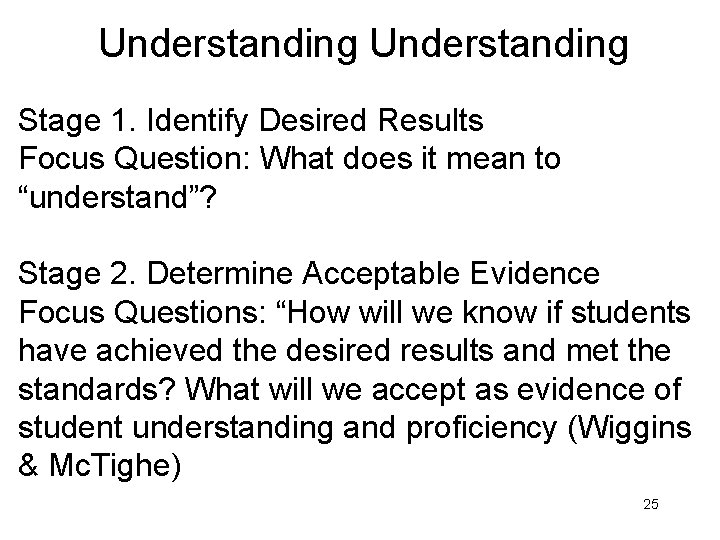
Understanding Stage 1. Identify Desired Results Focus Question: What does it mean to “understand”? Stage 2. Determine Acceptable Evidence Focus Questions: “How will we know if students have achieved the desired results and met the standards? What will we accept as evidence of student understanding and proficiency (Wiggins & Mc. Tighe) 25
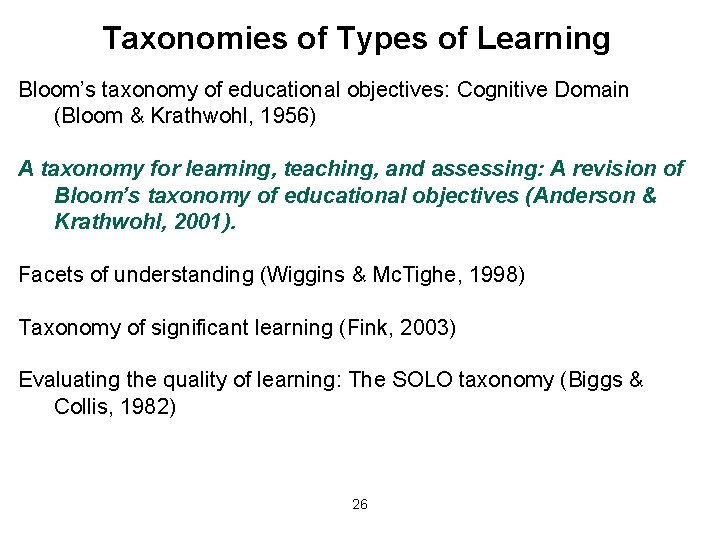
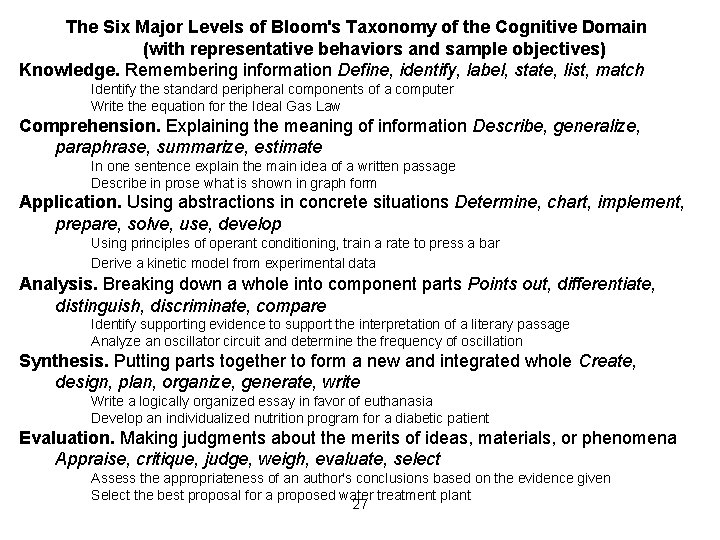
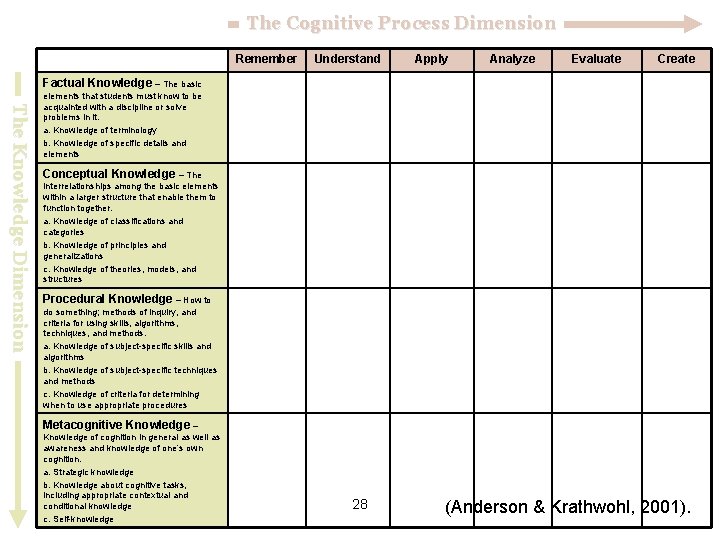
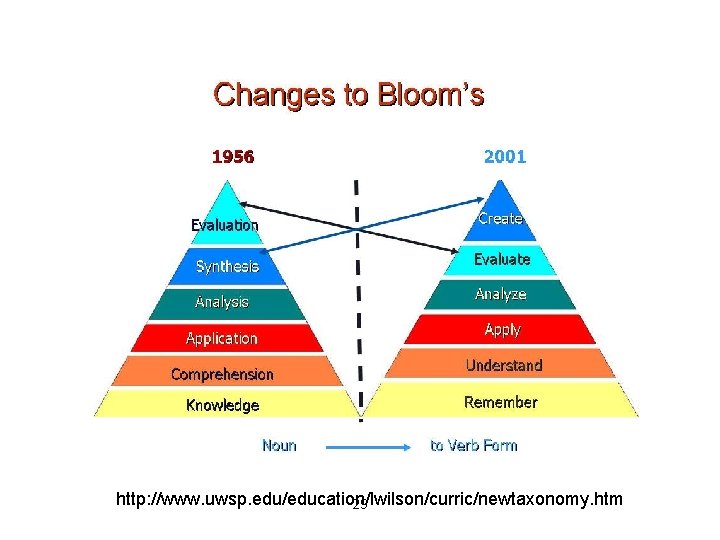
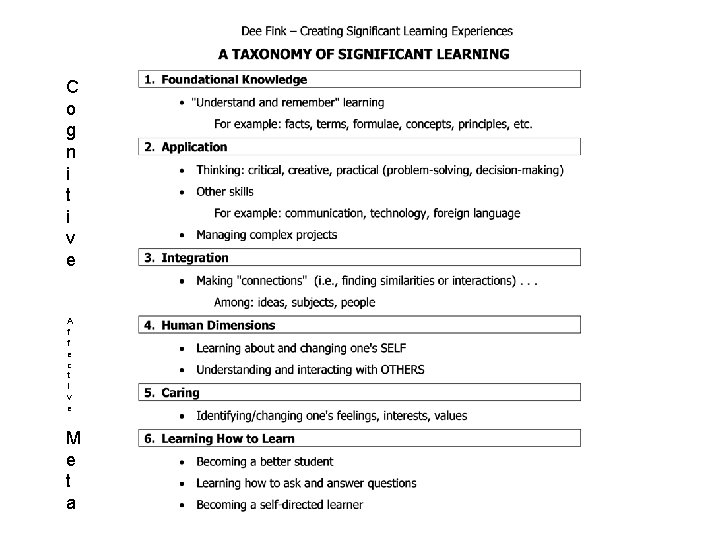
Taxonomies of Types of Learning Bloom’s taxonomy of educational objectives: Cognitive Domain (Bloom & Krathwohl, 1956) A taxonomy for learning, teaching, and assessing: A revision of Bloom’s taxonomy of educational objectives (Anderson & Krathwohl, 2001). Facets of understanding (Wiggins & Mc. Tighe, 1998) Taxonomy of significant learning (Fink, 2003) Evaluating the quality of learning: The SOLO taxonomy (Biggs & Collis, 1982) 26
The Six Major Levels of Bloom's Taxonomy of the Cognitive Domain (with representative behaviors and sample objectives) Knowledge. Remembering information Define, identify, label, state, list, match Identify the standard peripheral components of a computer Write the equation for the Ideal Gas Law Comprehension. Explaining the meaning of information Describe, generalize, paraphrase, summarize, estimate In one sentence explain the main idea of a written passage Describe in prose what is shown in graph form Application. Using abstractions in concrete situations Determine, chart, implement, prepare, solve, use, develop Using principles of operant conditioning, train a rate to press a bar Derive a kinetic model from experimental data Analysis. Breaking down a whole into component parts Points out, differentiate, distinguish, discriminate, compare Identify supporting evidence to support the interpretation of a literary passage Analyze an oscillator circuit and determine the frequency of oscillation Synthesis. Putting parts together to form a new and integrated whole Create, design, plan, organize, generate, write Write a logically organized essay in favor of euthanasia Develop an individualized nutrition program for a diabetic patient Evaluation. Making judgments about the merits of ideas, materials, or phenomena Appraise, critique, judge, weigh, evaluate, select Assess the appropriateness of an author's conclusions based on the evidence given Select the best proposal for a proposed water treatment plant 27
The Cognitive Process Dimension Remember Understand Apply Analyze Evaluate Create Factual Knowledge – The basic The Knowledge Dimension elements that students must know to be acquainted with a discipline or solve problems in it. a. Knowledge of terminology b. Knowledge of specific details and elements Conceptual Knowledge – The interrelationships among the basic elements within a larger structure that enable them to function together. a. Knowledge of classifications and categories b. Knowledge of principles and generalizations c. Knowledge of theories, models, and structures Procedural Knowledge – How to do something; methods of inquiry, and criteria for using skills, algorithms, techniques, and methods. a. Knowledge of subject-specific skills and algorithms b. Knowledge of subject-specific techniques and methods c. Knowledge of criteria for determining when to use appropriate procedures Metacognitive Knowledge – Knowledge of cognition in general as well as awareness and knowledge of one’s own cognition. a. Strategic knowledge b. Knowledge about cognitive tasks, including appropriate contextual and conditional knowledge c. Self-knowledge 28 (Anderson & Krathwohl, 2001).
http: //www. uwsp. edu/education/lwilson/curric/newtaxonomy. htm 29
C o g n i t i v e A f f e c t i v e M e t a
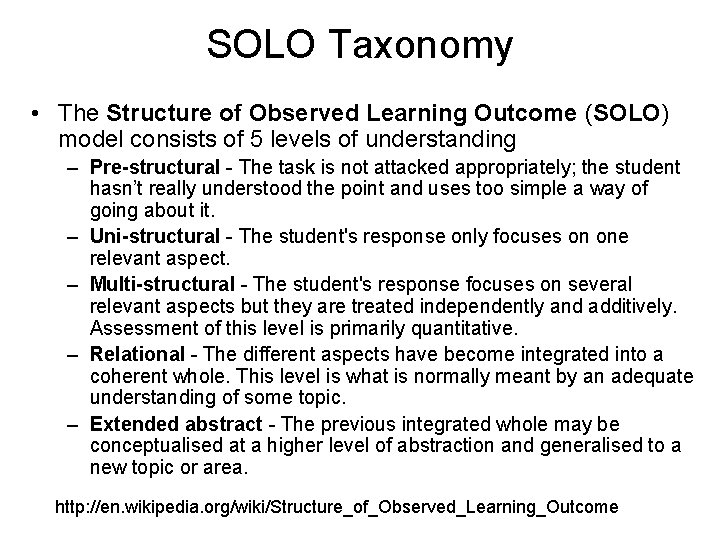
SOLO Taxonomy • The Structure of Observed Learning Outcome (SOLO) model consists of 5 levels of understanding – Pre-structural - The task is not attacked appropriately; the student hasn’t really understood the point and uses too simple a way of going about it. – Uni-structural - The student's response only focuses on one relevant aspect. – Multi-structural - The student's response focuses on several relevant aspects but they are treated independently and additively. Assessment of this level is primarily quantitative. – Relational - The different aspects have become integrated into a coherent whole. This level is what is normally meant by an adequate understanding of some topic. – Extended abstract - The previous integrated whole may be conceptualised at a higher level of abstraction and generalised to a new topic or area. http: //en. wikipedia. org/wiki/Structure_of_Observed_Learning_Outcome
Teaching and Understanding • Biggs SOLO taxonomy • http: //video. google. com/videoplay? docid=5629273206953884671#
Your turn • Are you measuring what is most important? – Is enduring understanding assessed? – Are assessment measures appropriate for enduring understanding?
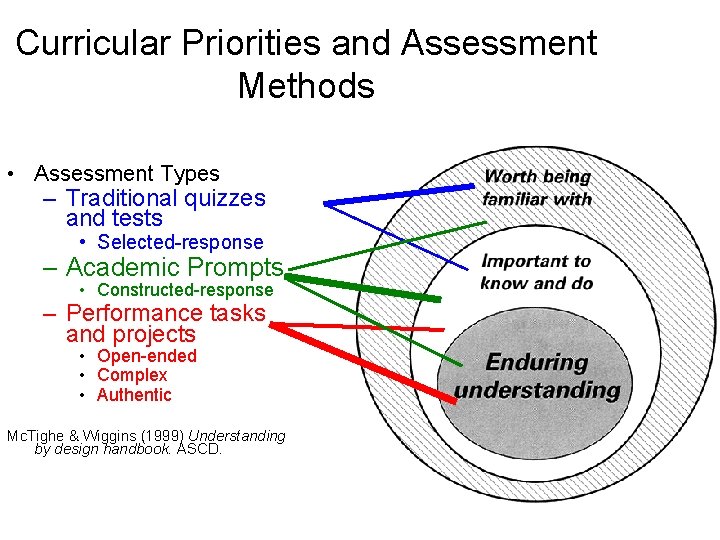
Curricular Priorities and Assessment Methods • Assessment Types – Traditional quizzes and tests • Selected-response – Academic Prompts • Constructed-response – Performance tasks and projects • Open-ended • Complex • Authentic Mc. Tighe & Wiggins (1999) Understanding by design handbook. ASCD.
3 Stages of Backward Design Identify the Desired Results Determine Acceptable Evidence Plan Learning Experiences Are the desired results, assessments, and learning activities ALIGNED? What activities will equip students with the needed knowledge and skills? What materials and resources will be useful?
Your turn • How will you help students master the enduring understanding? • What kind of learning opportunity can you design?
Session Summary (Minute Paper) Reflect on the session: 1. Most interesting, valuable, useful thing you learned. 2. Things that helped you learn. 3. Question, comments, suggestions. 4. Pace: Too slow 1. . 5 Too fast 5. Relevance: Little 1. . . 5 Lots 6. Instructional Format: Ugh 1. . . 5 Ah 37
MOT 8221 – Spring 2011 – Session 1 (3/25/11) 16 14 12 1 10 2 8 3 6 4 5 4 2 0 Q 4 Q 5 Q 6 Q 4 – Pace: Too slow 1. . 5 Too fast (2. 9) Q 5 – Relevance: Little 1. . . 5 Lots (3. 9) Q 6 – Format: Ugh 1. . . 5 Ah (3. 7)