
Foundations of Assessment I Understanding the Assessment Process

- Slides: 21
Foundations of Assessment I Understanding the Assessment Process
Outcomes of Today’s Presentation Participants will be able to: 1. Articulate why assessment is critical to our effectiveness in student affairs 2. Describe the assessment cycle and components within 3. Use newly developed skills to practice assessment planning
A few questions • What comes to mind when you hear the word assessment? • What is your previous experience with assessment? • Are you currently working on an assessment project?
What is Assessment? Assessment: Any effort to gather, analyze, and interpret evidence which describes departmental, divisional, or program effectiveness.
Why Focus on Assessment? • Continuous improvement • Internal and external accountability • It’s an expected competency within our profession • It’s good practice and we owe it to the students
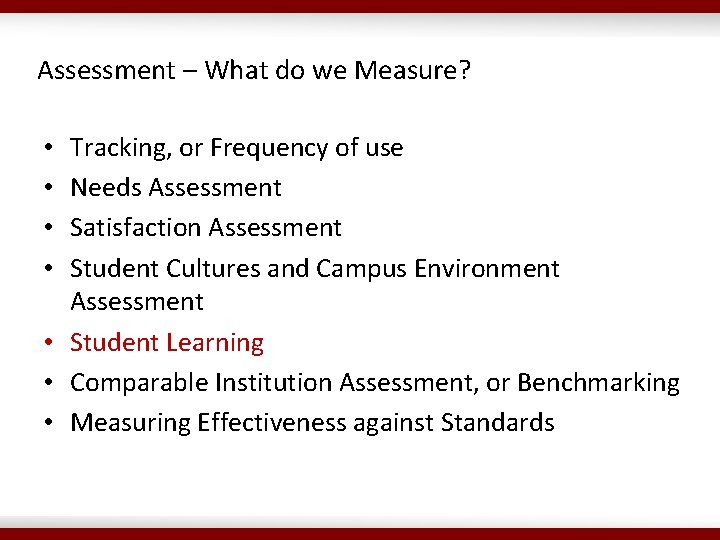
Assessment – What do we Measure? Tracking, or Frequency of use Needs Assessment Satisfaction Assessment Student Cultures and Campus Environment Assessment • Student Learning • Comparable Institution Assessment, or Benchmarking • Measuring Effectiveness against Standards • •
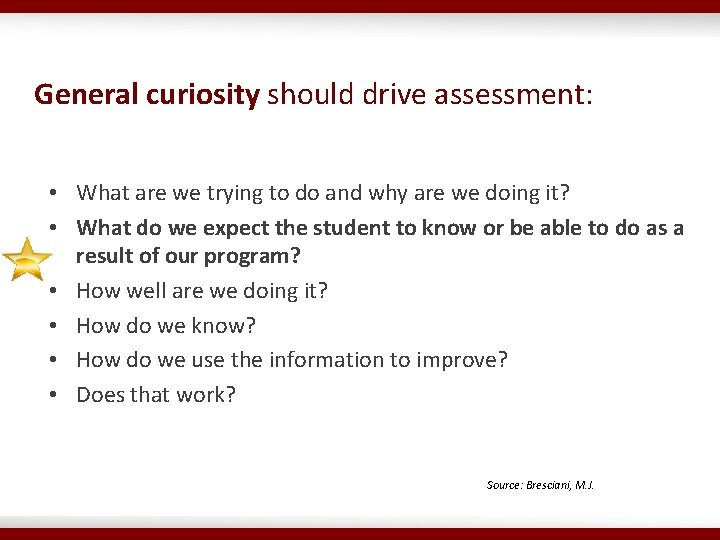
General curiosity should drive assessment: • What are we trying to do and why are we doing it? • What do we expect the student to know or be able to do as a result of our program? • How well are we doing it? • How do we know? • How do we use the information to improve? • Does that work? Source: Bresciani, M. J.
The Assessment Process
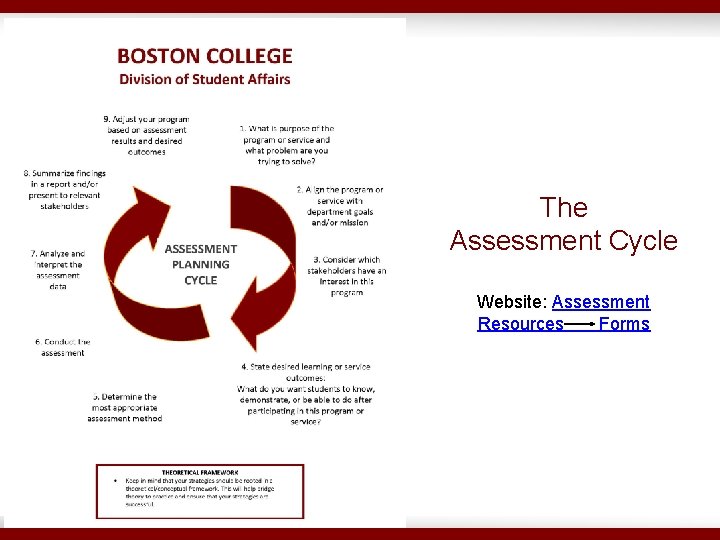
The Assessment Cycle Website: Assessment Resources Forms
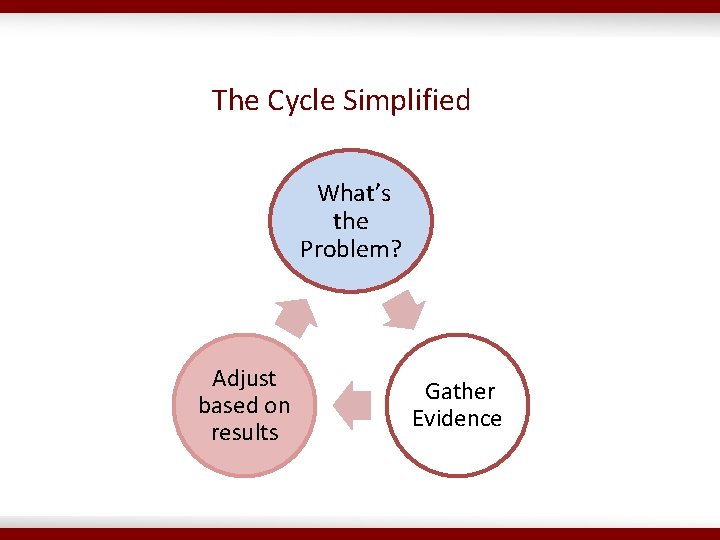
The Cycle Simplified What’s the Problem? Adjust based on results Gather Evidence
Step 1: What is the purpose of your program or service? What problem are you trying to solve? This step is a critical one Suggested Resource: Assessment Conversation Guide and Project Request Form
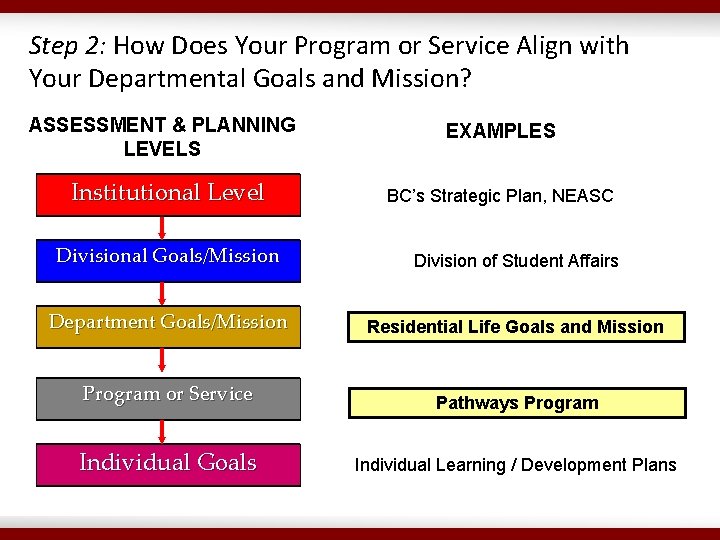
Step 2: How Does Your Program or Service Align with Your Departmental Goals and Mission? ASSESSMENT & PLANNING LEVELS Institutional Level EXAMPLES BC’s Strategic Plan, NEASC Divisional Goals/Mission Division of Student Affairs Department Goals/Mission Residential Life Goals and Mission Program or Service Pathways Program Individual Goals Individual Learning / Development Plans
Step 3: Identify Stakeholders • Primary stakeholders: are those ultimately affected, either positively or negatively • Secondary stakeholders: are the ‘intermediaries’, that is, persons or organizations who are indirectly affected • Key stakeholders: (who can also belong to the first two groups) have significant influence.
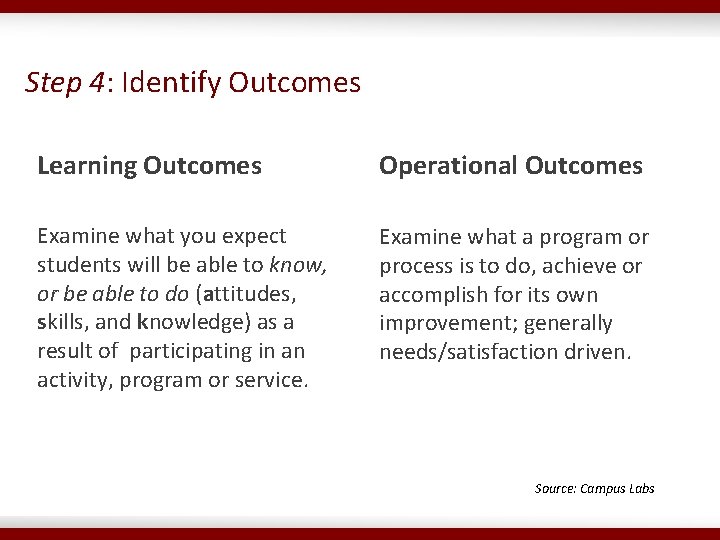
Step 4: Identify Outcomes Learning Outcomes Operational Outcomes Examine what you expect students will be able to know, or be able to do (attitudes, skills, and knowledge) as a result of participating in an activity, program or service. Examine what a program or process is to do, achieve or accomplish for its own improvement; generally needs/satisfaction driven. Source: Campus Labs
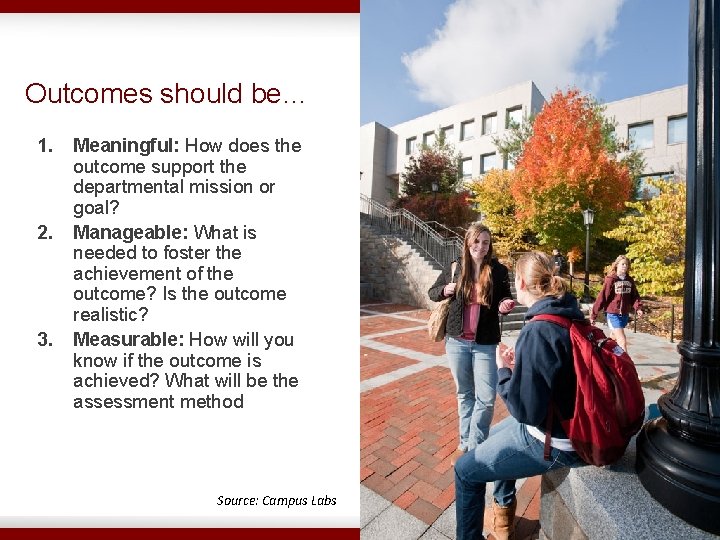
Outcomes should be… 1. 2. 3. Meaningful: How does the outcome support the departmental mission or goal? Manageable: What is needed to foster the achievement of the outcome? Is the outcome realistic? Measurable: How will you know if the outcome is achieved? What will be the assessment method Source: Campus Labs
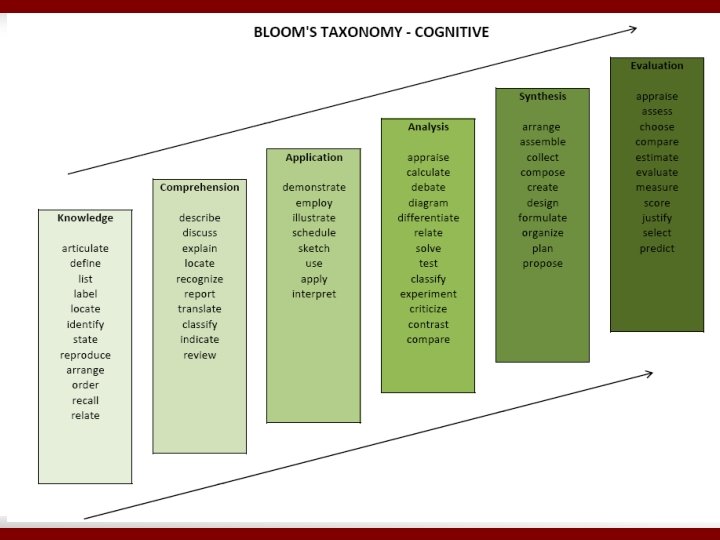
How To Write a Learning Outcome http: //youtu. be/z 35 c 2 Oa. YZNE
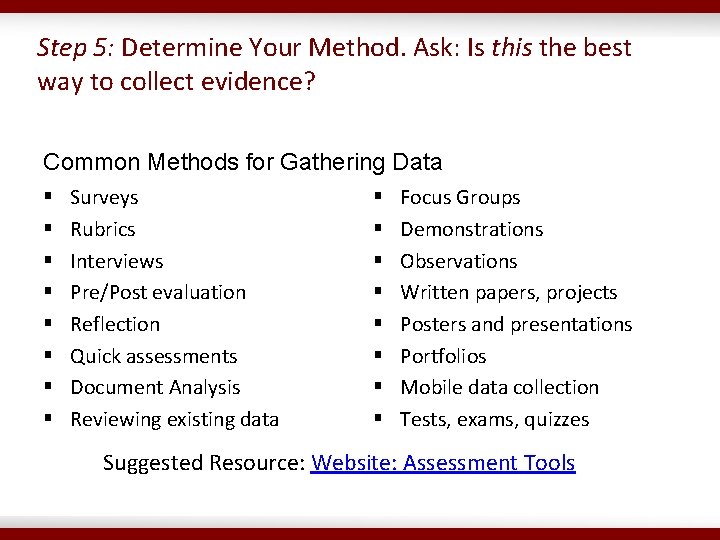
Step 5: Determine Your Method. Ask: Is this the best way to collect evidence? Common Methods for Gathering Data § § § § Surveys Rubrics Interviews Pre/Post evaluation Reflection Quick assessments Document Analysis Reviewing existing data § § § § Focus Groups Demonstrations Observations Written papers, projects Posters and presentations Portfolios Mobile data collection Tests, exams, quizzes Suggested Resource: Website: Assessment Tools
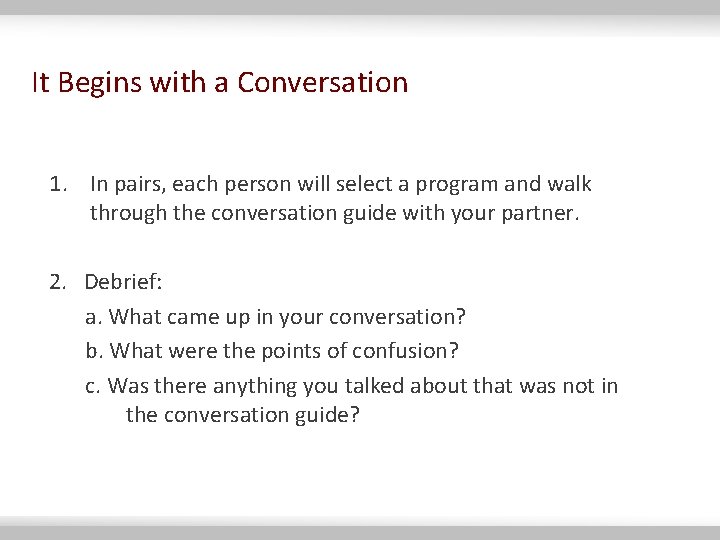
It Begins with a Conversation 1. In pairs, each person will select a program and walk through the conversation guide with your partner. 2. Debrief: a. What came up in your conversation? b. What were the points of confusion? c. Was there anything you talked about that was not in the conversation guide?
Resources • Assessment Website
Questions/Discussion