
Foundations in Biology Block 1 B Cell division

Foundations in Biology Block 1 B – Cell division, cell diversity and cellular organisation 2. 1. 6 Meiosis and genetic variation
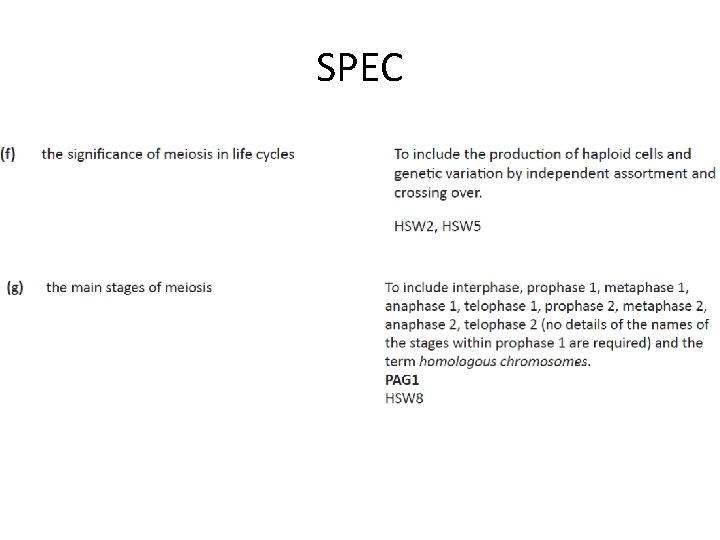
SPEC
Starter • Compare mitosis and meiosis
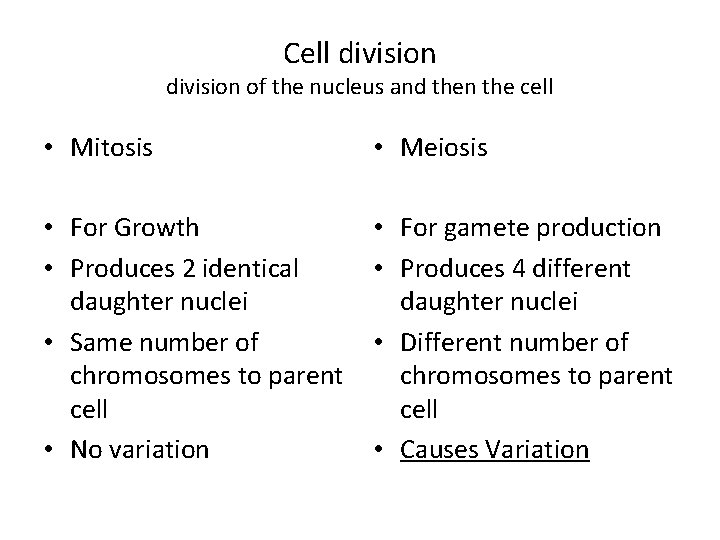
Cell division of the nucleus and then the cell • Mitosis • Meiosis • For Growth • Produces 2 identical daughter nuclei • Same number of chromosomes to parent cell • No variation • For gamete production • Produces 4 different daughter nuclei • Different number of chromosomes to parent cell • Causes Variation
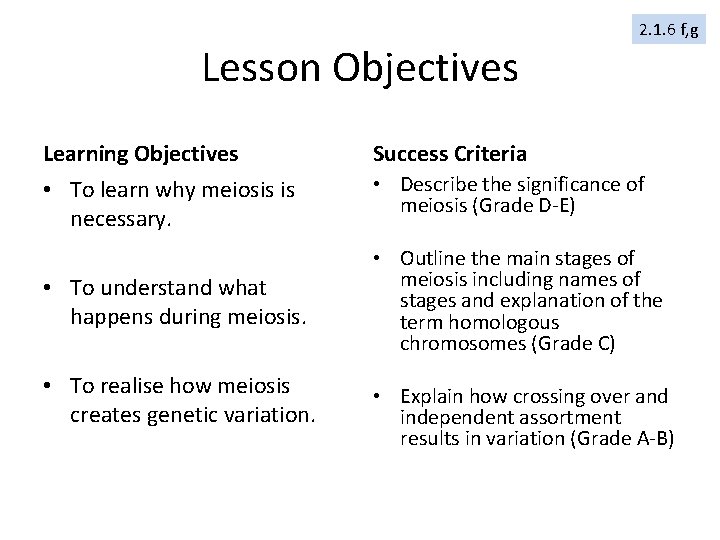
Lesson Objectives 2. 1. 6 f, g Learning Objectives Success Criteria • To learn why meiosis is necessary. • Describe the significance of meiosis (Grade D-E) • To understand what happens during meiosis. • Outline the main stages of meiosis including names of stages and explanation of the term homologous chromosomes (Grade C) • To realise how meiosis creates genetic variation. • Explain how crossing over and independent assortment results in variation (Grade A-B)
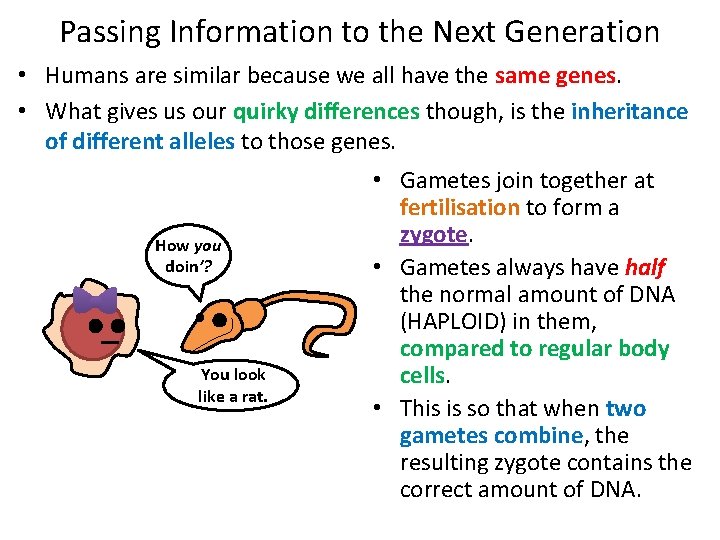
Passing Information to the Next Generation • Humans are similar because we all have the same genes. • What gives us our quirky differences though, is the inheritance of different alleles to those genes. How you doin’? You look like a rat. • Gametes join together at fertilisation to form a zygote. • Gametes always have half the normal amount of DNA (HAPLOID) in them, compared to regular body cells. • This is so that when two gametes combine, the resulting zygote contains the correct amount of DNA.
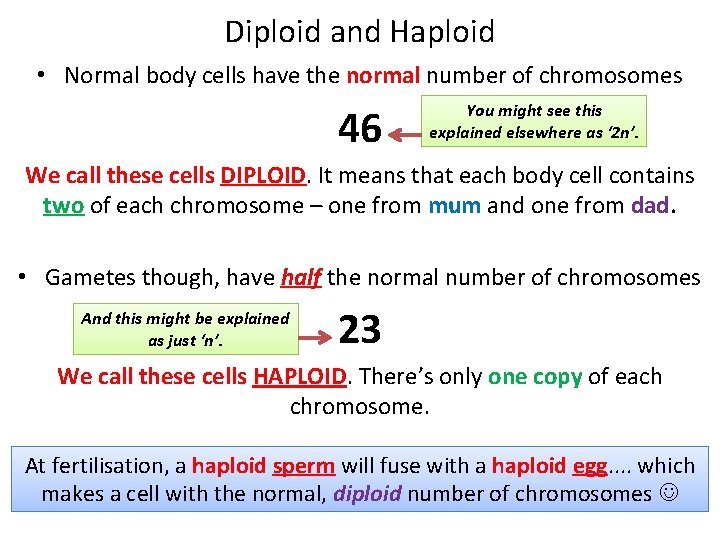
Diploid and Haploid • Normal body cells have the normal number of chromosomes 46 You might see this explained elsewhere as ‘ 2 n’. We call these cells DIPLOID. It means that each body cell contains two of each chromosome – one from mum and one from dad. • Gametes though, have half the normal number of chromosomes And this might be explained as just ‘n’. 23 We call these cells HAPLOID. There’s only one copy of each chromosome. At fertilisation, a haploid sperm will fuse with a haploid egg. . which makes a cell with the normal, diploid number of chromosomes
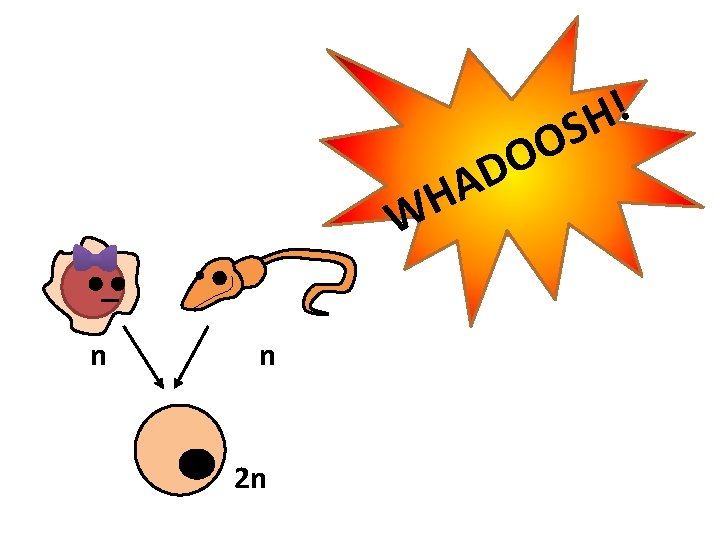
O O D ! SH A H W n n 2 n
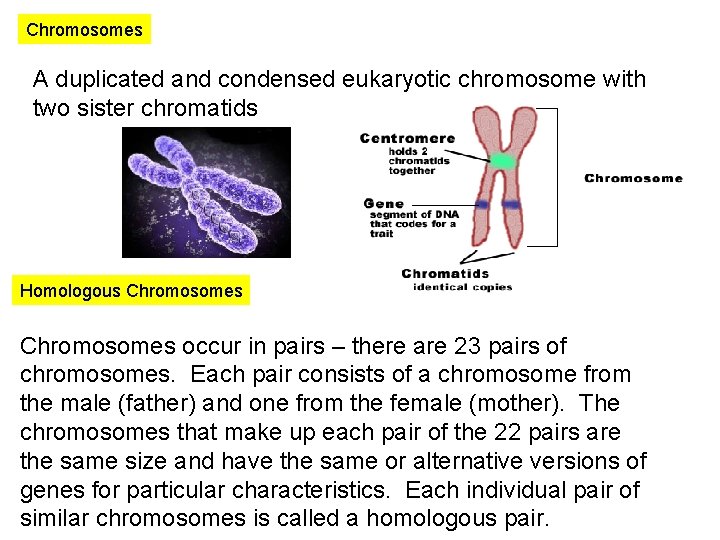
Chromosomes A duplicated and condensed eukaryotic chromosome with two sister chromatids Homologous Chromosomes occur in pairs – there are 23 pairs of chromosomes. Each pair consists of a chromosome from the male (father) and one from the female (mother). The chromosomes that make up each pair of the 22 pairs are the same size and have the same or alternative versions of genes for particular characteristics. Each individual pair of similar chromosomes is called a homologous pair.
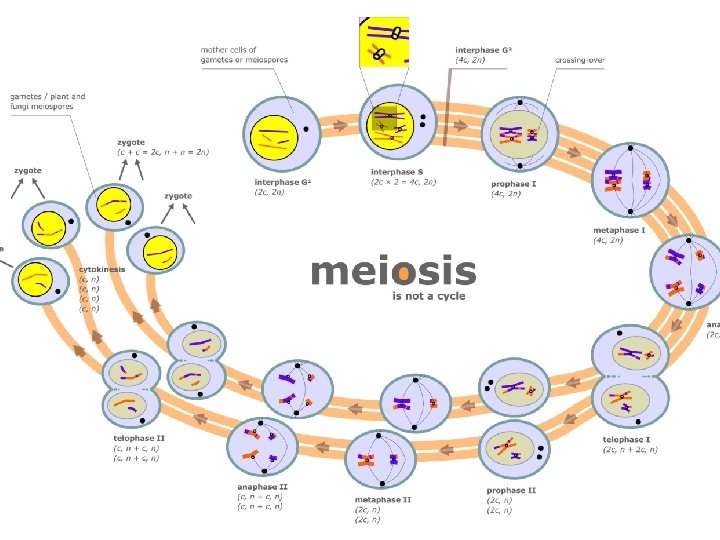
Meiosis is a type of cell division used in the formation of gametes (spermatozoa and ova) in animals, and spore formation (which precedes gamete formation) in plants - it is termed reduction division. It happens in the reproductive organs. Meiosis creates genetically different cells and variation within species The number of chromosomes is halved - from diploid (46) to haploid (23). Involves two distinct divisions Meiosis I – homologous pairs of replicated chromosomes are separated REDUCTION DIVISION Meiosis II –chromatids separated into individual haploid gametes Production of haploid (n) gametes ensures the maintenance of the diploid (2 n) number in subsequent generations Meiosis involves certain “mixing” events, and these, along with the random fusion of gametes in fertilisation to form a diploid zygote, results in genetic variation in the offspring which may be of adaptive advantage.
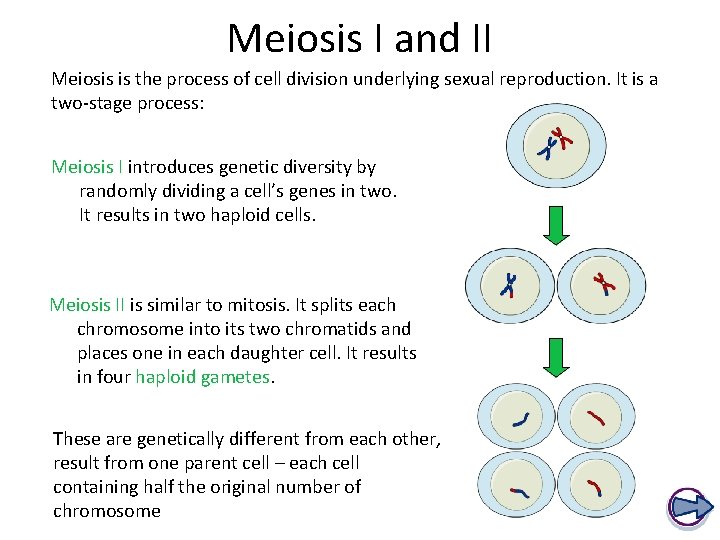
Meiosis I and II Meiosis is the process of cell division underlying sexual reproduction. It is a two-stage process: Meiosis I introduces genetic diversity by randomly dividing a cell’s genes in two. It results in two haploid cells. Meiosis II is similar to mitosis. It splits each chromosome into its two chromatids and places one in each daughter cell. It results in four haploid gametes. These are genetically different from each other, result from one parent cell – each cell containing half the original number of chromosome
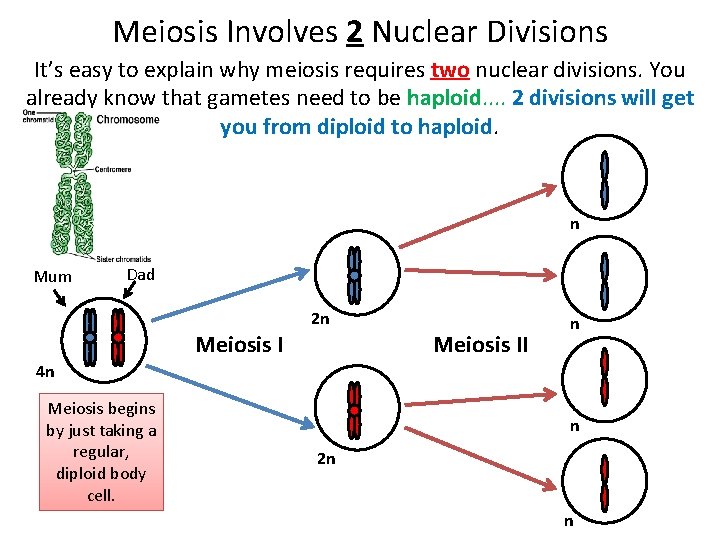
Meiosis Involves 2 Nuclear Divisions It’s easy to explain why meiosis requires two nuclear divisions. You already know that gametes need to be haploid. . 2 divisions will get you from diploid to haploid. n Mum Dad 2 n Meiosis II n 4 n Meiosis begins by just taking a regular, diploid body cell. n 2 n n
MEIOSIS CREATES GENETIC VARIATION
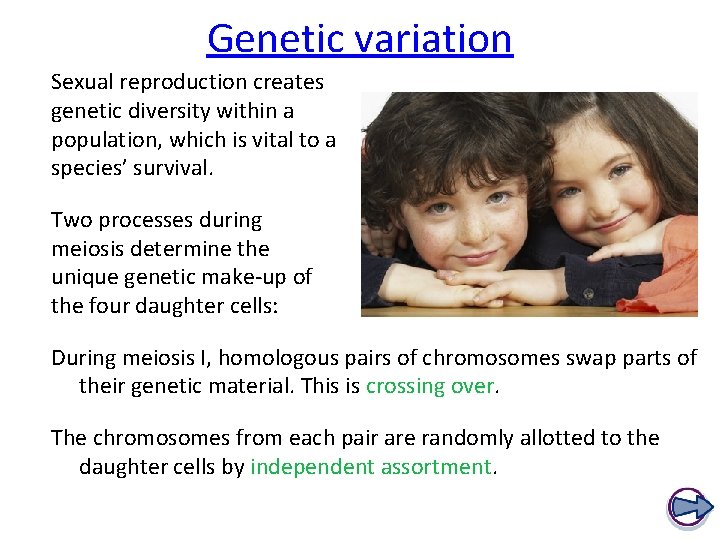
Genetic variation Sexual reproduction creates genetic diversity within a population, which is vital to a species’ survival. Two processes during meiosis determine the unique genetic make-up of the four daughter cells: During meiosis I, homologous pairs of chromosomes swap parts of their genetic material. This is crossing over. The chromosomes from each pair are randomly allotted to the daughter cells by independent assortment.
Genetic Variation During all of the amazing things that happen during meiosis, two events in particular, are very interesting. These two processes create genetic variation during meiosis: 1. Crossing Over 2. Independent Segregation of Chromosomes Crossing over occurs during prophase I. Basically the two chromosomes in each homologous pair twist around each other. Wherever they ‘touch’, genetic material is swapped between them. At the end of crossing over the genetic composition of each c’some is now different Independent segregation happens in metaphase I. Basically, when the homologous chromosomes line up, they do so randomly. This means that when they are pulled apart in anaphase, the combination of chromosomes going into the daughter cells is also random.
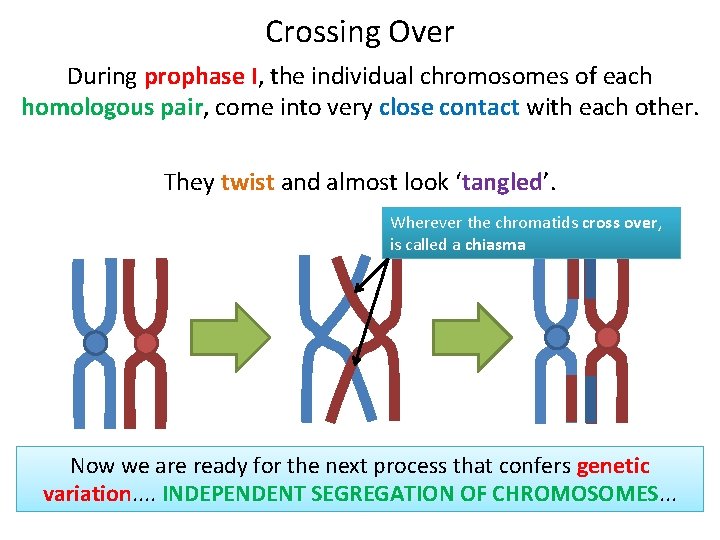
Crossing Over During prophase I, the individual chromosomes of each homologous pair, come into very close contact with each other. They twist and almost look ‘tangled’. Wherever the chromatids cross over, is called a chiasma Now we are ready for the next process that confers genetic variation. . INDEPENDENT SEGREGATION OF CHROMOSOMES. . .
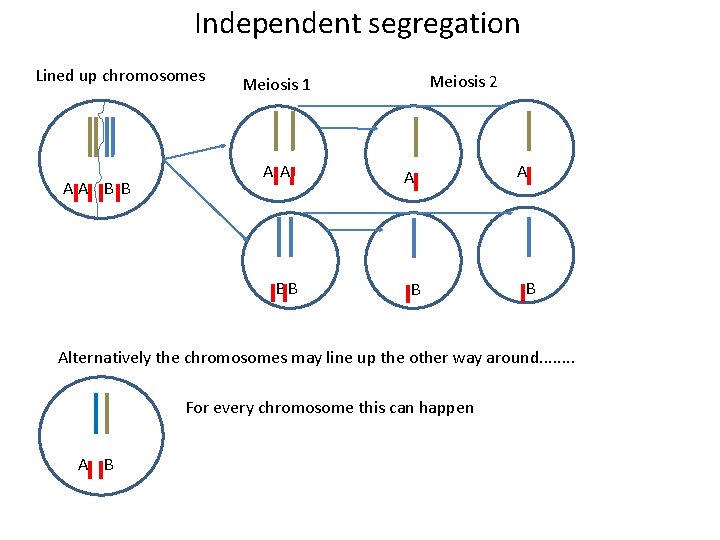
Independent segregation Lined up chromosomes AA B B Meiosis 2 Meiosis 1 AA BB A B Alternatively the chromosomes may line up the other way around. . . . For every chromosome this can happen A B
Genetic Variation • Use p 150 -152 in your textbook • Create a flow chart or storyboard that shows the stages of meiosis, ensure that the stages where variation occurs are indicated. Or label worksheet • Answer question 2 • Complete exam questions
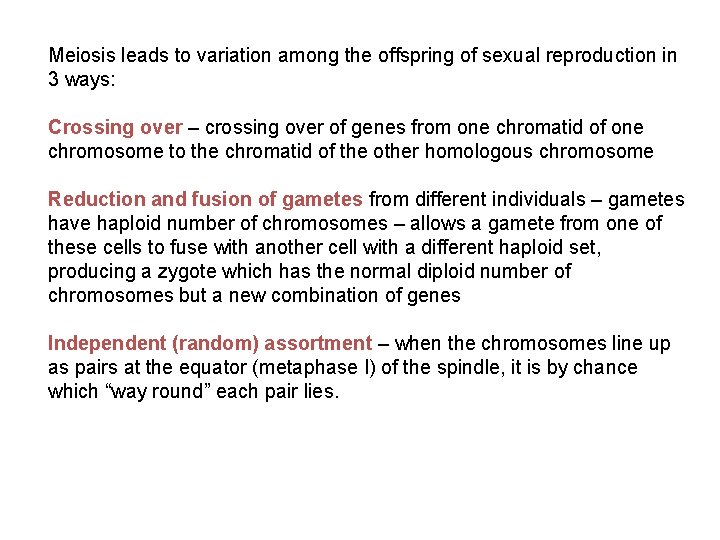
Meiosis leads to variation among the offspring of sexual reproduction in 3 ways: Crossing over – crossing over of genes from one chromatid of one chromosome to the chromatid of the other homologous chromosome Reduction and fusion of gametes from different individuals – gametes have haploid number of chromosomes – allows a gamete from one of these cells to fuse with another cell with a different haploid set, producing a zygote which has the normal diploid number of chromosomes but a new combination of genes Independent (random) assortment – when the chromosomes line up as pairs at the equator (metaphase I) of the spindle, it is by chance which “way round” each pair lies.
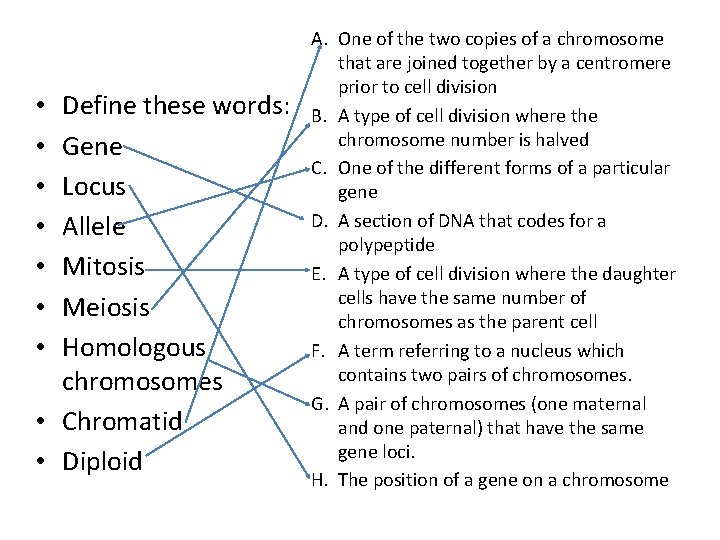
Define these words: Gene Locus Allele Mitosis Meiosis Homologous chromosomes • Chromatid • Diploid • • A. One of the two copies of a chromosome that are joined together by a centromere prior to cell division B. A type of cell division where the chromosome number is halved C. One of the different forms of a particular gene D. A section of DNA that codes for a polypeptide E. A type of cell division where the daughter cells have the same number of chromosomes as the parent cell F. A term referring to a nucleus which contains two pairs of chromosomes. G. A pair of chromosomes (one maternal and one paternal) that have the same gene loci. H. The position of a gene on a chromosome
Plenary • Meiosis/Mitosis card sort
- Slides: 22