
Foundation Safeguarding Child Protection Training Ground Rules Child


- Slides: 26
Foundation Safeguarding & Child Protection Training
Ground Rules • Child abuse can be a distressing and sensitive issue. Please ensure that you look after yourself and colleagues if you are affected by the training • Confidentiality • Respect each other’s views • Timekeeping • Please switch your phones to silent • Please ask questions – lots of questions
Aims & Objectives Aim: Increase your overall understanding of safeguarding and child protection in relation to your setting.
Aims & Objectives: • Identify the legislation and guidance for safeguarding children in your setting • Describe own role in keeping children safe in our setting • Demonstrate knowledge of the signs and symptoms of different types of child abuse • Demonstrate understanding of how and why we work with other agencies to safeguard children • Explain what to do if you have safeguarding concerns about a child or young person, concerns about a colleague, or about the safeguarding practices within an organisation.
From 7 th September 2019 the Keeping Bristol Safe Partnership is constituted to deliver the following statutory duties as follows: • To safeguard and promote the welfare of children as required by The Children Act 2004 and supported by the statutory guidance, Working Together to Safeguard Children 2018 • To help and protect adults with care and support needs at risk of abuse or neglect as defined by the Care Act 2014 and supporting statutory guidance • To reduce crime and disorder, substance misuse and re-offending as required by the Crime and Disorder Act 1998
• To cooperate to improve the wellbeing of children and young people as defined in The Children Act 2004 • The Local Arrangements 2019 -20 sets out how the partnership will work together to respond to the changes as prescribed in Working Together 2018. They can be found here: https: //bristolsafeguarding. org/media/42653/keeping-bristol-safeparthership-local-arrangements-2019 -20. pdf • The safeguarding partners in the city, along with local agencies and organisations are committed to the transformational journey to improve local safeguarding arrangements and outcomes for children, adults and communities. • The three statutory partners are: – Bristol City Council – Avon and Somerset Police – Bristol, North Somerset, South Gloucestershire CCG (BNSSG)
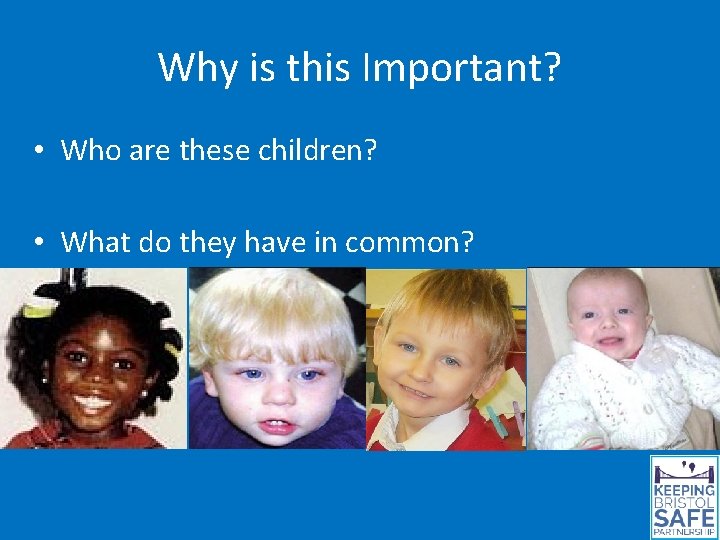
Why is this Important? • Who are these children? • What do they have in common?
Legislation and Guidance • We ALL have a duty to work with local authorities to promote the wellbeing of children & young people (The Children Act 2004, S 10) - This includes when we have child protection concerns. • Children Act 1989 – includes definitions for Child in Need, Child Protection, Looked after Children. • The Human Rights Act 1998 – applies to children! Parents can breach children’s rights, so can professionals and organisations. • UNCRC (United Nations Convention on the Rights of the Child) – in force in the UK since 1992
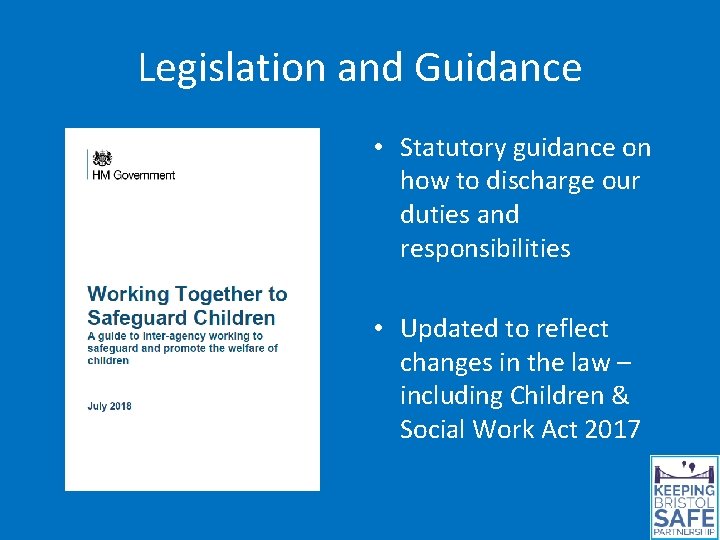
Legislation and Guidance • Statutory guidance on how to discharge our duties and responsibilities • Updated to reflect changes in the law – including Children & Social Work Act 2017
Safeguarding? Child Protection? Word storm – Safeguarding: what does it mean to you?
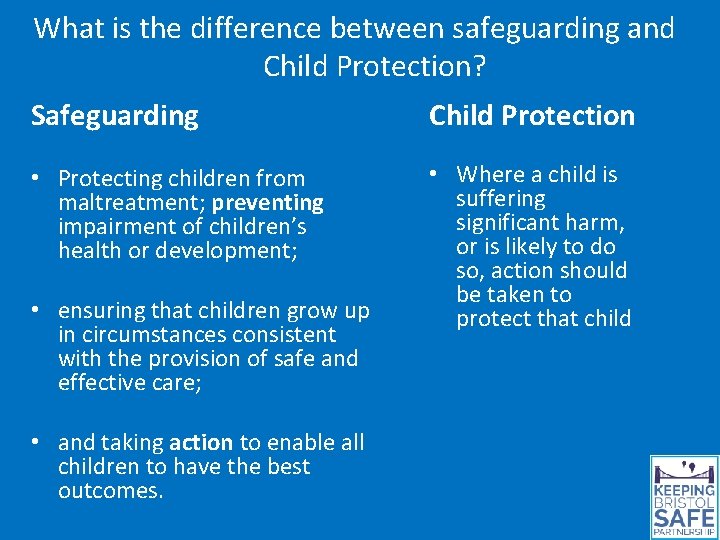
What is the difference between safeguarding and Child Protection? Safeguarding Child Protection • Protecting children from maltreatment; preventing impairment of children’s health or development; • Where a child is suffering significant harm, or is likely to do so, action should be taken to protect that child • ensuring that children grow up in circumstances consistent with the provision of safe and effective care; • and taking action to enable all children to have the best outcomes.
Values and Attitudes • Read the scenarios on your own – give each one a number to reflect your own personal view • Then discuss in your group your reasons for your score
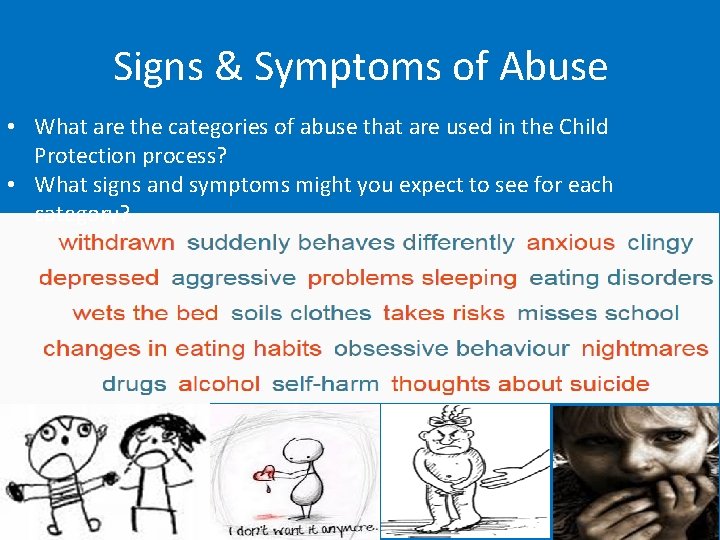
Signs & Symptoms of Abuse • What are the categories of abuse that are used in the Child Protection process? • What signs and symptoms might you expect to see for each category?
Signs and Symptoms of Abuse In groups, read the scenarios, then discuss the following questions: 1. Is this abuse? 2. If so, which category of abuse? 3. What are you worried about? 4. If nothing changes, what impact will this have on the child?
Abuse… it’s a complex issue
Adam’s Story
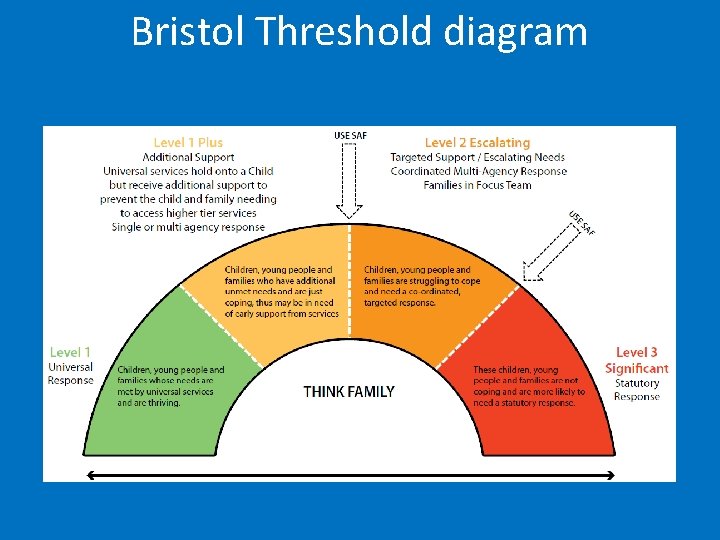
Bristol Threshold diagram
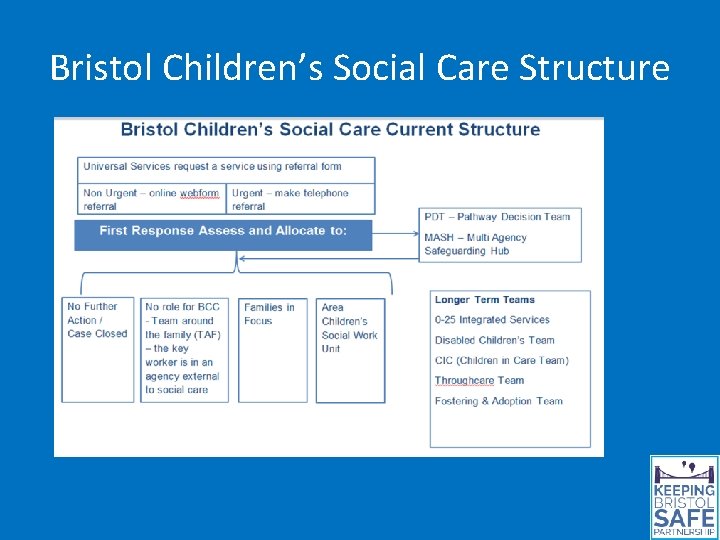
Bristol Children’s Social Care Structure
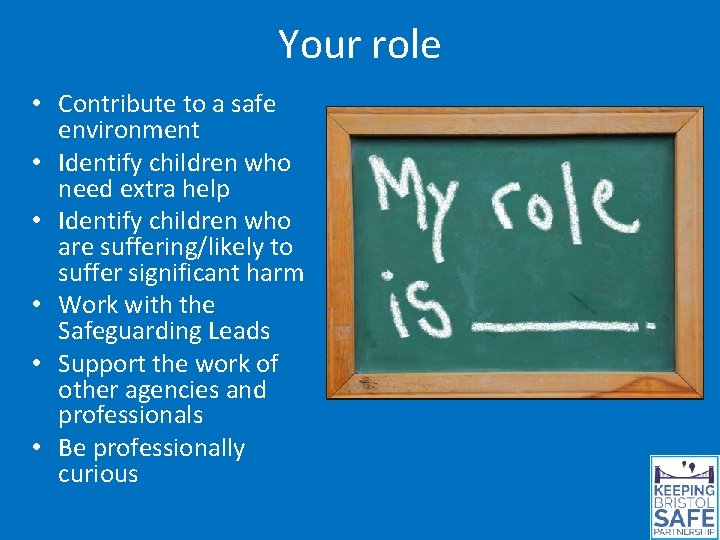
Your role • Contribute to a safe environment • Identify children who need extra help • Identify children who are suffering/likely to suffer significant harm • Work with the Safeguarding Leads • Support the work of other agencies and professionals • Be professionally curious
Managing a Disclosure • Recognise – be alert for any change in student behaviour or appearance • Respond – if a student wants to talk to you, make time for them • Reassure – tell the student that they have done the right thing. Explain that you will need to pass the information on to get them help. Don’t ask any leading questions. • Refer – pass the information onto the safeguarding lead immediately • Record – make sure that you record the conversation and your observations accurately and factually in writing and pass to the safeguarding lead.
What we do here 1. Who is the Safeguarding Lead? 2. Who do we talk to if the Lead is not available? 3. How and where do we record concerns?
Is this safe practice? 1. A parent sends a friend request to a worker on Facebook, the worker accepts the friend request. 2. A worker/volunteer is seen showing children a picture on their phone. 3. A child has not been collected at the end of their activity. A worker/volunteer drives them home as it was on their way. 4. The child comes to you and tells you that they hurt their knee. It comes to your attention that a colleague has had to forcibly remove the child for being disruptive. 5. A parent has complained that another child is being continuously favoured over the others.
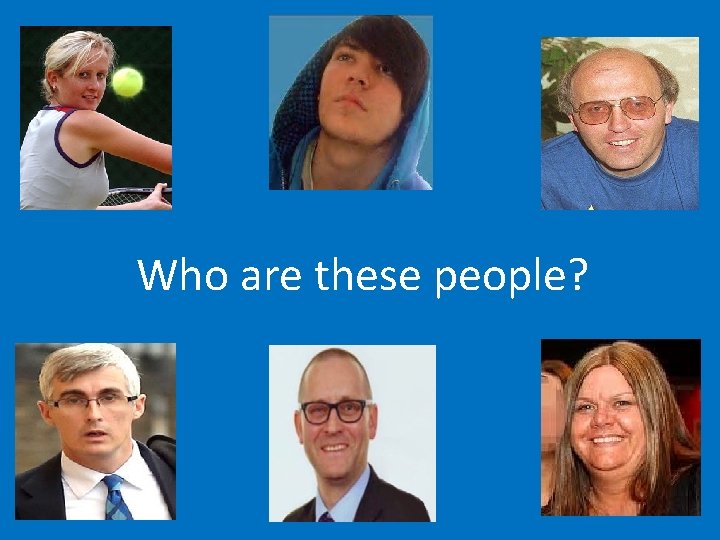
Who are these people?
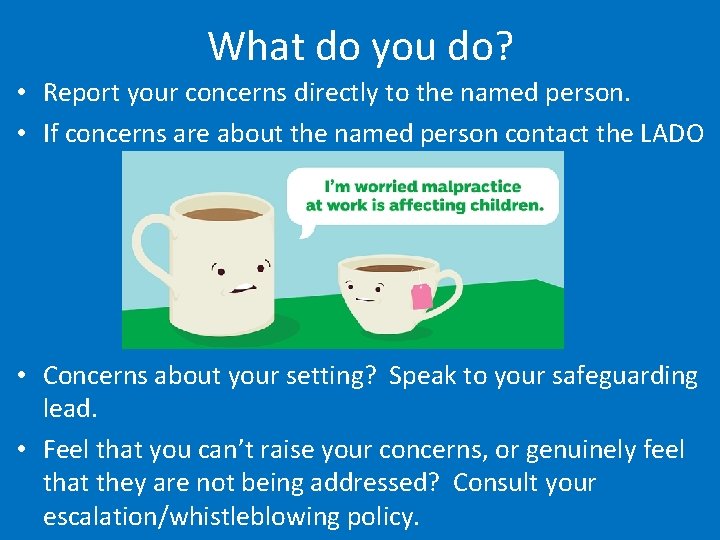
What do you do? • Report your concerns directly to the named person. • If concerns are about the named person contact the LADO • Concerns about your setting? Speak to your safeguarding lead. • Feel that you can’t raise your concerns, or genuinely feel that they are not being addressed? Consult your escalation/whistleblowing policy.
And finally!