
Foundation Design for A MultiStory Residential Building By

Foundation Design for A Multi-Story Residential Building By Firas Jaber– Reg. No: 11344722 Zeiad B 3 ara– Reg. No: 11344369 Omar Bishawi – Reg. No: 11344594 Under supervision of: Dr. Mohamad Ghazal.

Outlines Introduction Type of Foundations Site Description. Structural System. Analysis. Methodology Design & result
Introduction Aim of the project : This project aims to design a foundations for a residual building on three choices of footing design with variable values of bearing capacities for each choice. 1 st option single footing 2 nd option Raft(mat) foundation 3 rd option piles.
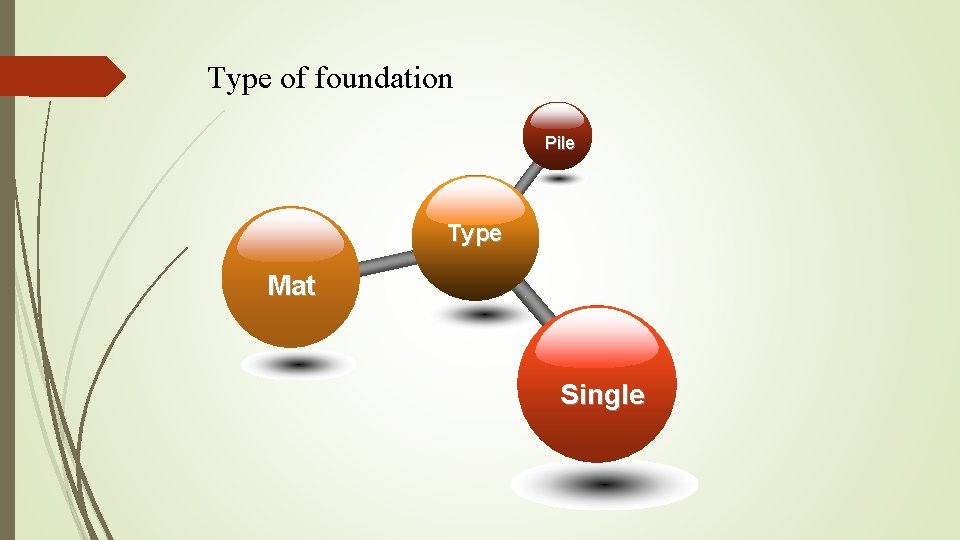
Type of foundation Pile Type Mat Single

The shallow foundation Single footing. Raft(mat) foundation. basement wall.
Deep foundation Pile: is a deep foundation which is used since the upper part of the soil is week and the bearing capacity is small can’t carry the building. Piles have two types: 1 - End bearing pile. 2 - Friction pile.
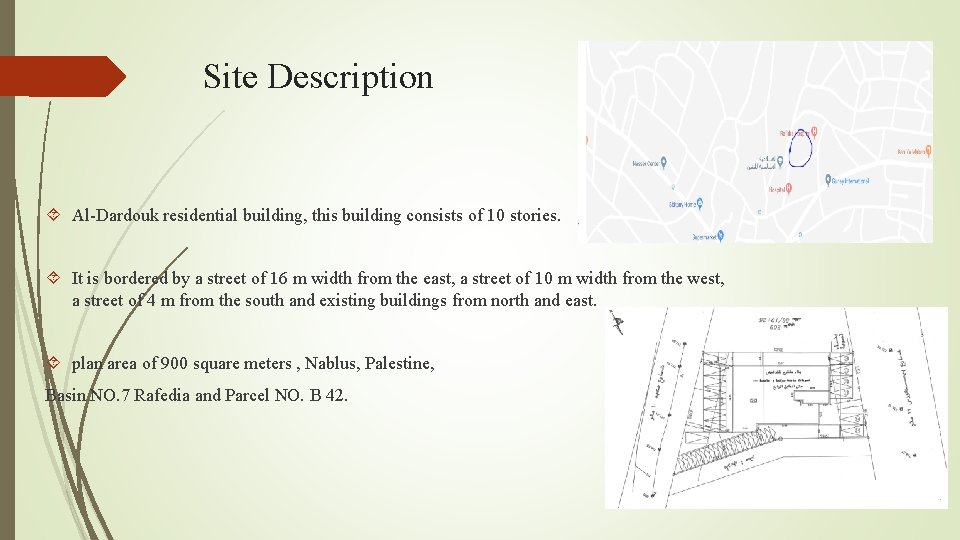
Site Description Al-Dardouk residential building, this building consists of 10 stories. It is bordered by a street of 16 m width from the east, a street of 10 m width from the west, a street of 4 m from the south and existing buildings from north and east. plan area of 900 square meters , Nablus, Palestine, Basin NO. 7 Rafedia and Parcel NO. B 42.
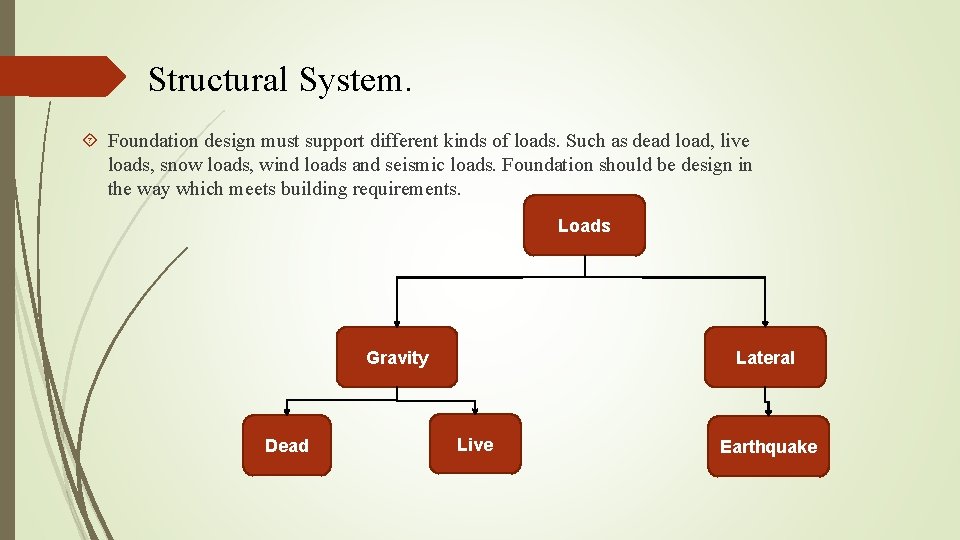
Structural System. Foundation design must support different kinds of loads. Such as dead load, live loads, snow loads, wind loads and seismic loads. Foundation should be design in the way which meets building requirements. Loads Gravity Dead Lateral Live Earthquake
Methodology The structure is going to be modeled using ETABS 2016 program in order to analyze and design the basement wall and to get the reaction values to use it in the designing of foundations in different conditions, and then SAFE 2016 to analyze and design the different types of footings.
Codes and Standards ACI 318 -14 (American Concrete Institute): building code requirements of structural concrete and commentary. ASCE 7 -2010 (American Society of Civil Engineers). Auto. CAD 2014. ETABS 2016& then SAFE 2016 program.
Analysis Loads and load combination: Dead loads: The dead load calculated by (ETABS). Wall weight = 22 KN/m Superimposed dead loads: The superimposed dead load was 4. 13 KN/m 2 Live loads: The live load was 3 KN/m 2.

The Center lines of columns:
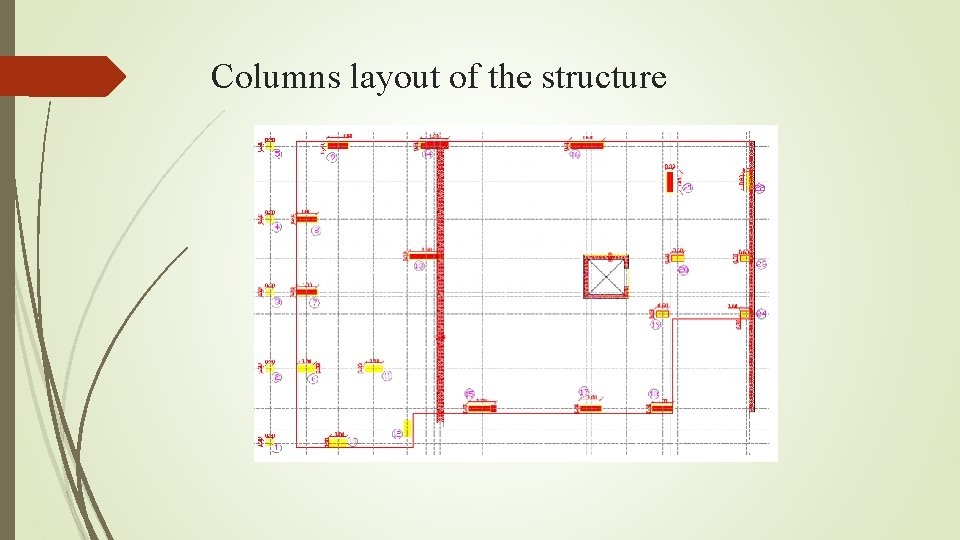
Columns layout of the structure
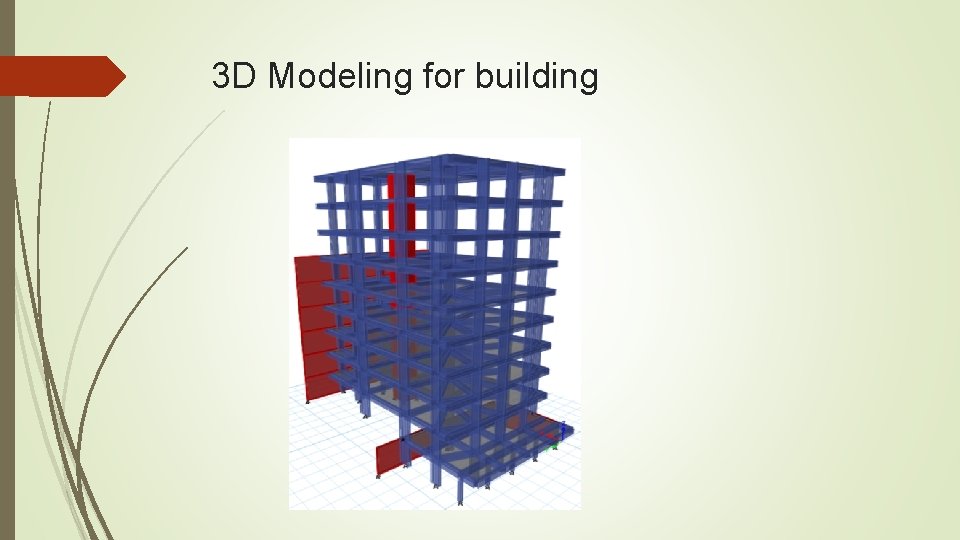
3 D Modeling for building
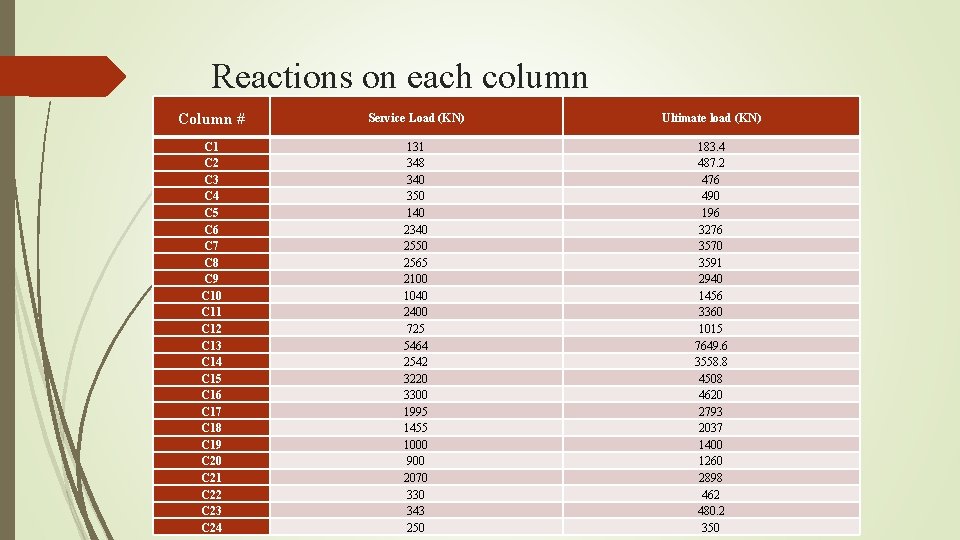
Reactions on each column Column # Service Load (KN) Ultimate load (KN) C 1 C 2 C 3 C 4 C 5 C 6 C 7 C 8 C 9 C 10 C 11 C 12 C 13 C 14 C 15 C 16 C 17 C 18 C 19 C 20 C 21 C 22 C 23 C 24 131 348 340 350 140 2340 2550 2565 2100 1040 2400 725 5464 2542 3220 3300 1995 1455 1000 900 2070 330 343 250 183. 4 487. 2 476 490 196 3276 3570 3591 2940 1456 3360 1015 7649. 6 3558. 8 4508 4620 2793 2037 1400 1260 2898 462 480. 2 350
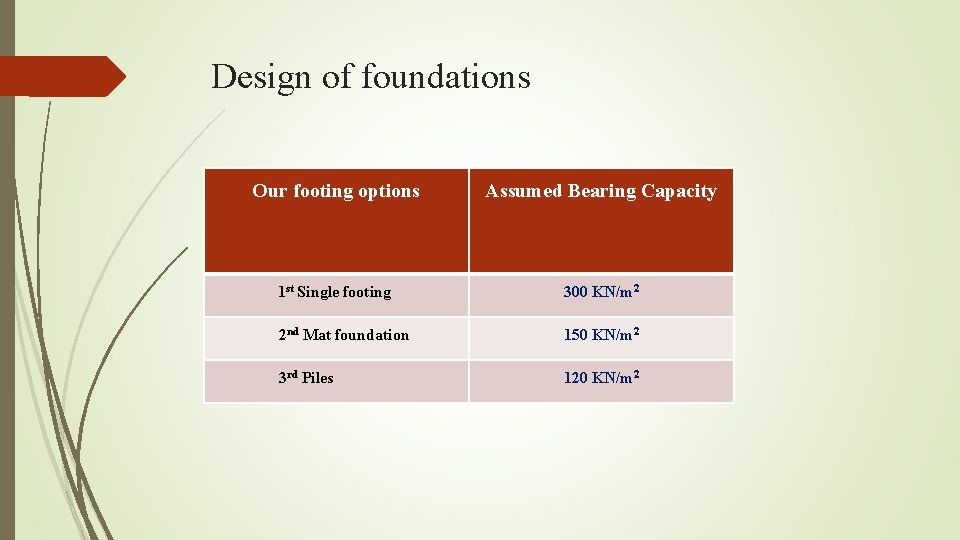
Design of foundations Our footing options Assumed Bearing Capacity 1 st Single footing 300 KN/m 2 2 nd Mat foundation 150 KN/m 2 3 rd Piles 120 KN/m 2
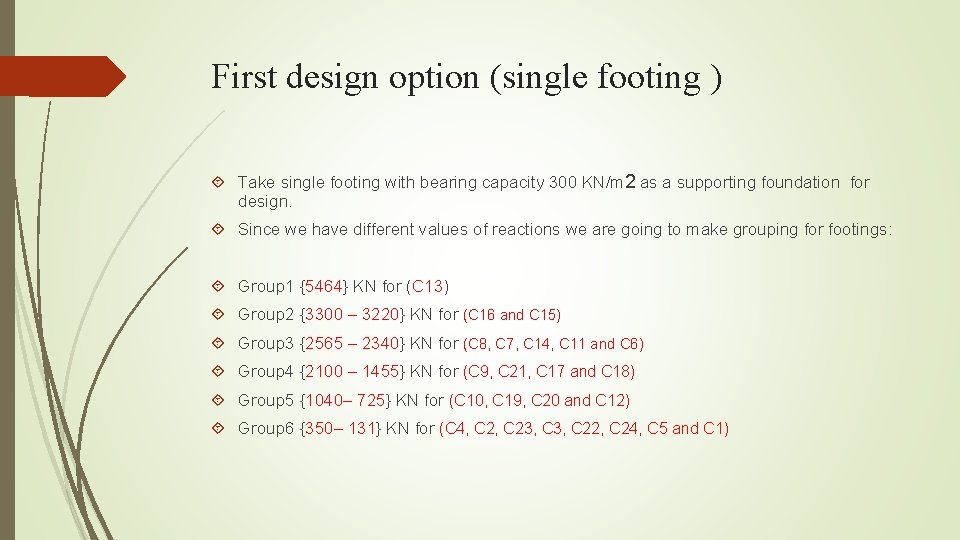
First design option (single footing ) Take single footing with bearing capacity 300 KN/m 2 as a supporting foundation for design. Since we have different values of reactions we are going to make grouping for footings: Group 1 {5464} KN for (C 13) Group 2 {3300 – 3220} KN for (C 16 and C 15) Group 3 {2565 – 2340} KN for (C 8, C 7, C 14, C 11 and C 6) Group 4 {2100 – 1455} KN for (C 9, C 21, C 17 and C 18) Group 5 {1040– 725} KN for (C 10, C 19, C 20 and C 12) Group 6 {350– 131} KN for (C 4, C 23, C 22, C 24, C 5 and C 1)

Figure ‑ 3 section in Footing F 1
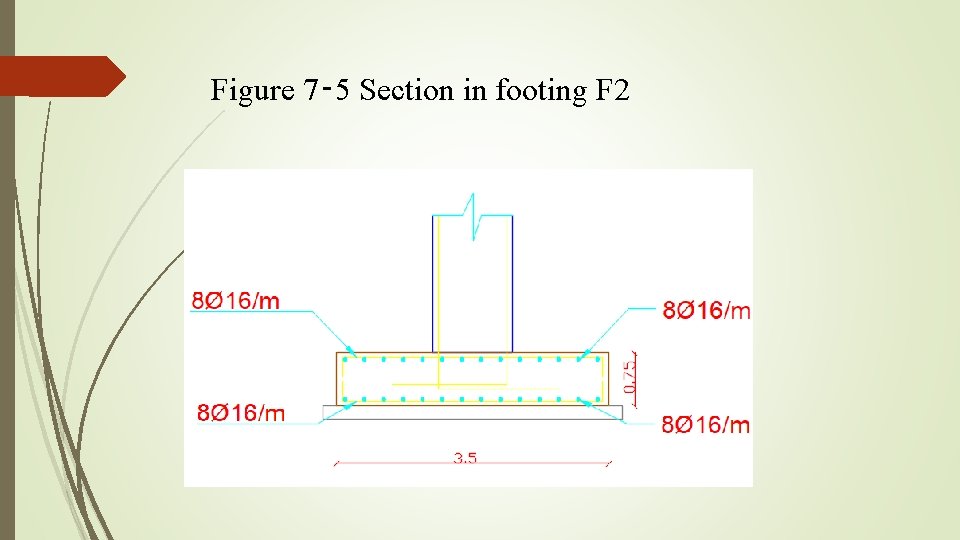
Figure 7‑ 5 Section in footing F 2
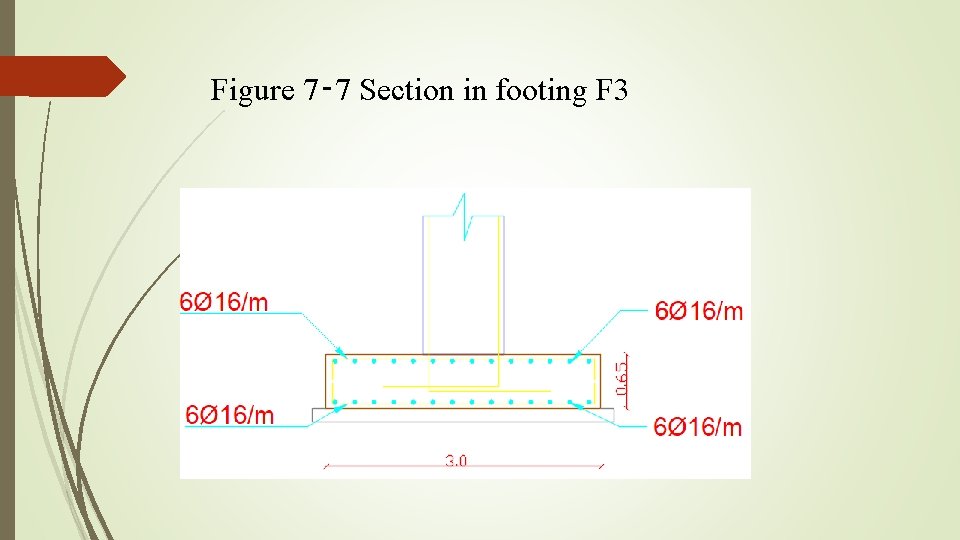
Figure 7‑ 7 Section in footing F 3
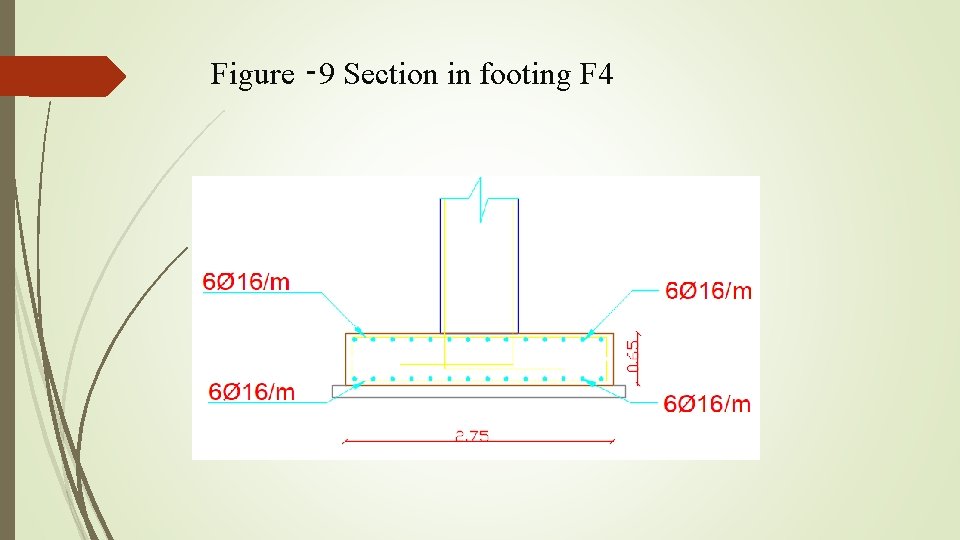
Figure ‑ 9 Section in footing F 4
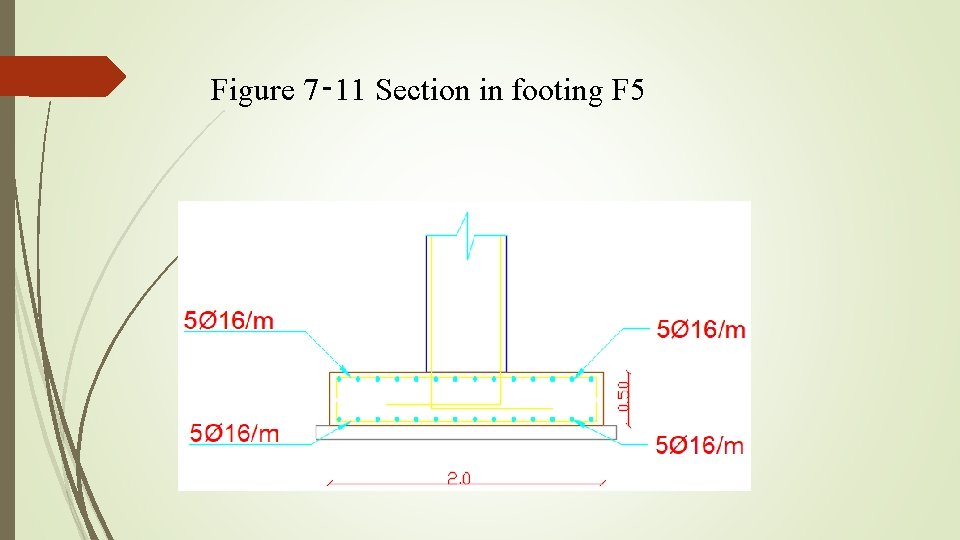
Figure 7‑ 11 Section in footing F 5
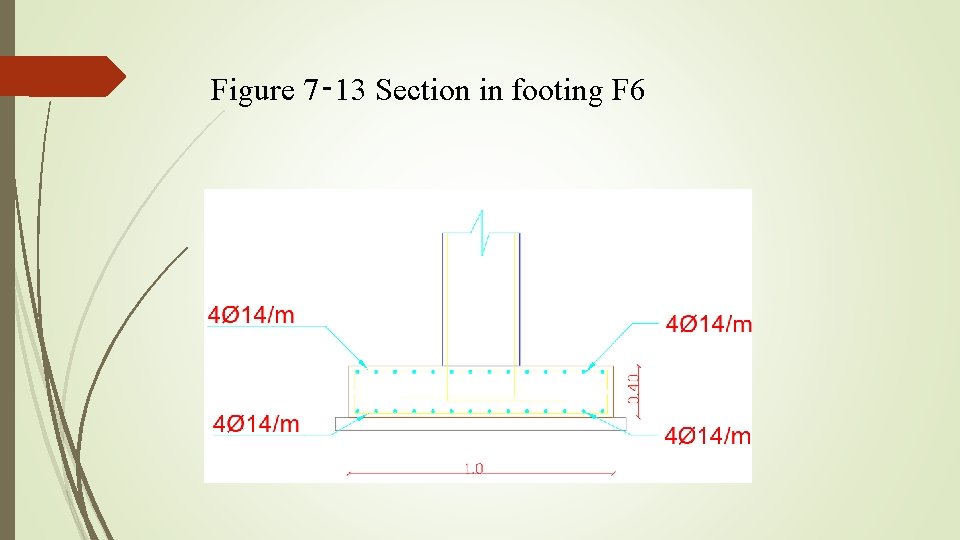
Figure 7‑ 13 Section in footing F 6
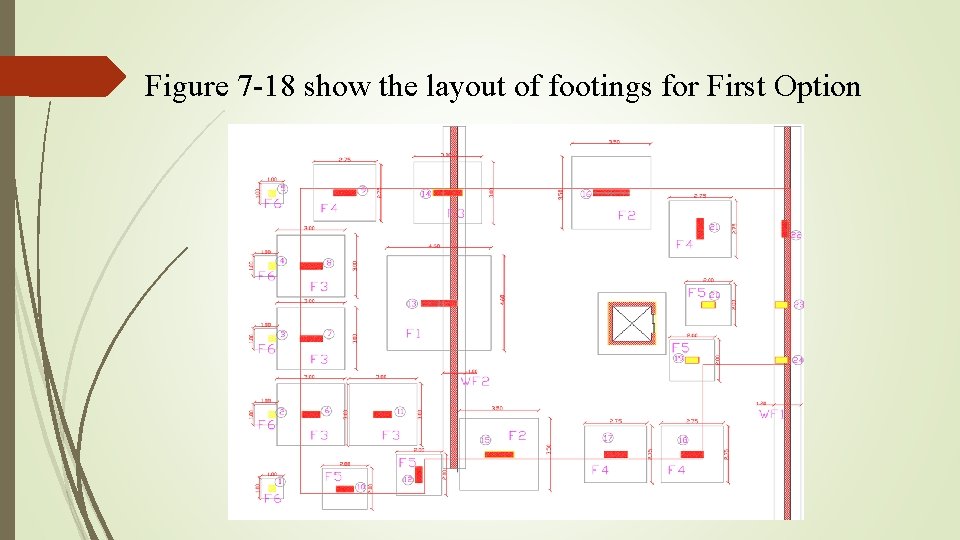
Figure 7 -18 show the layout of footings for First Option
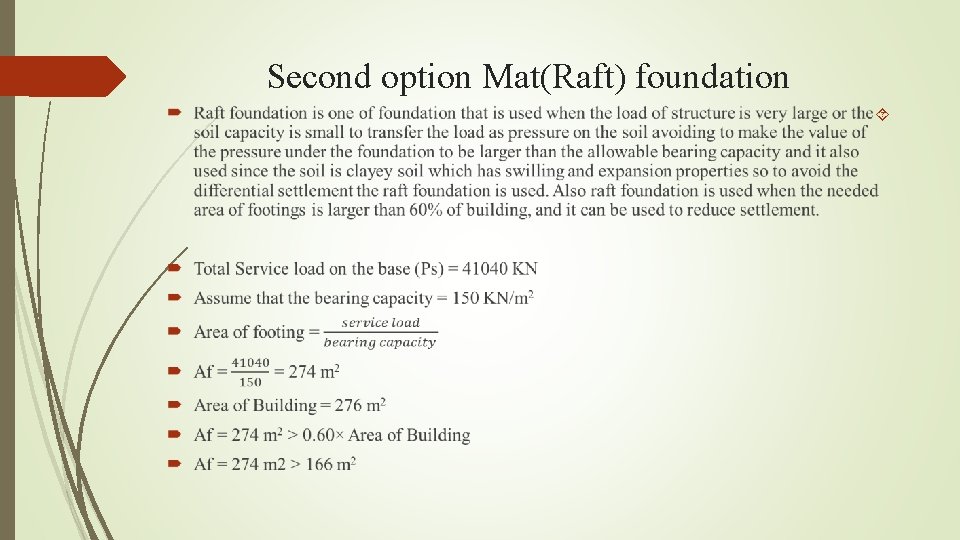
Second option Mat(Raft) foundation
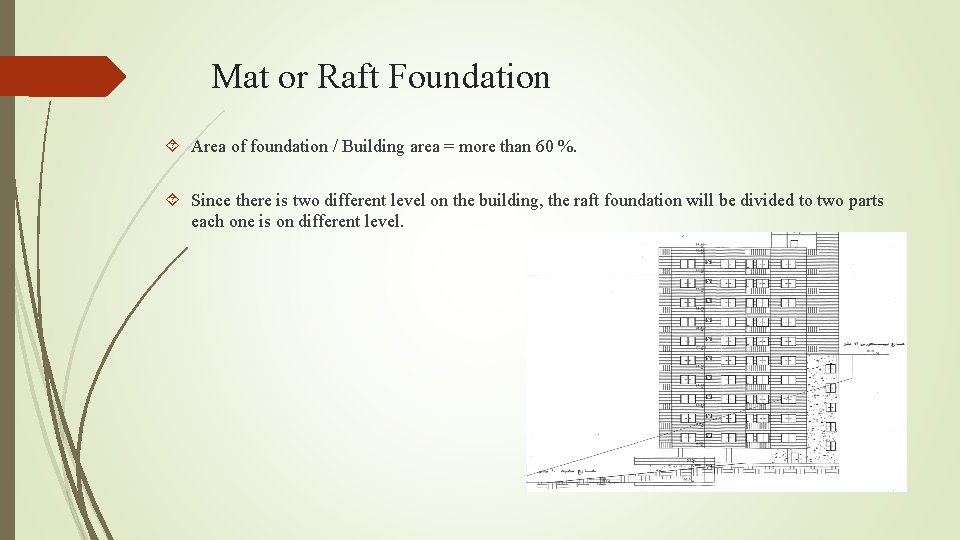
Mat or Raft Foundation Area of foundation / Building area = more than 60 %. Since there is two different level on the building, the raft foundation will be divided to two parts each one is on different level.
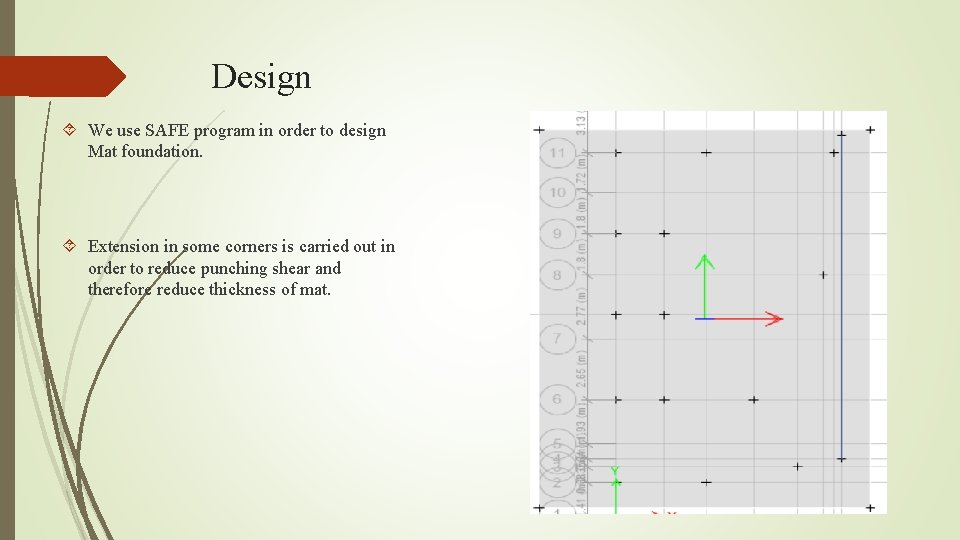
Design We use SAFE program in order to design Mat foundation. Extension in some corners is carried out in order to reduce punching shear and therefore reduce thickness of mat.

Design This Figure shows the model of part. 1& part. 2 of mat foundation.
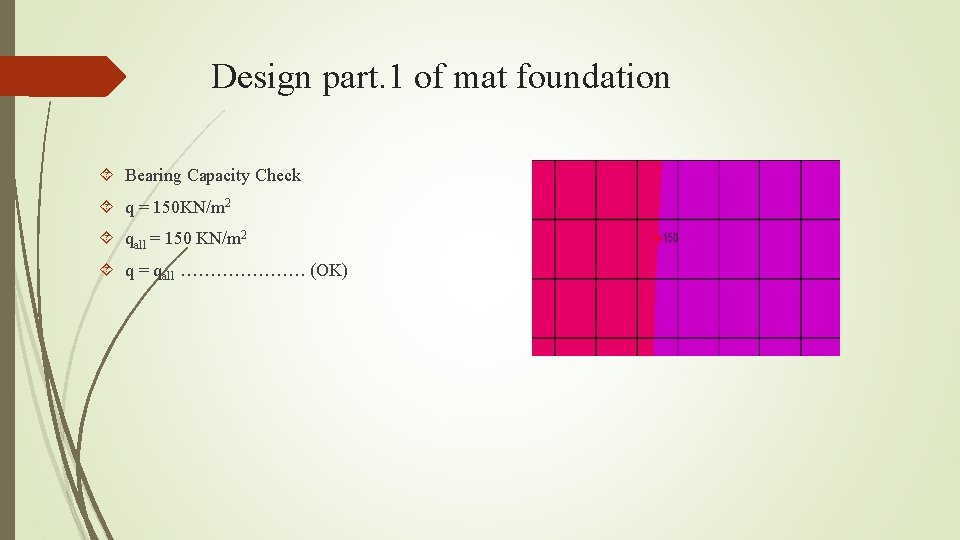
Design part. 1 of mat foundation Bearing Capacity Check q = 150 KN/m 2 qall = 150 KN/m 2 q = qall ………………… (OK)
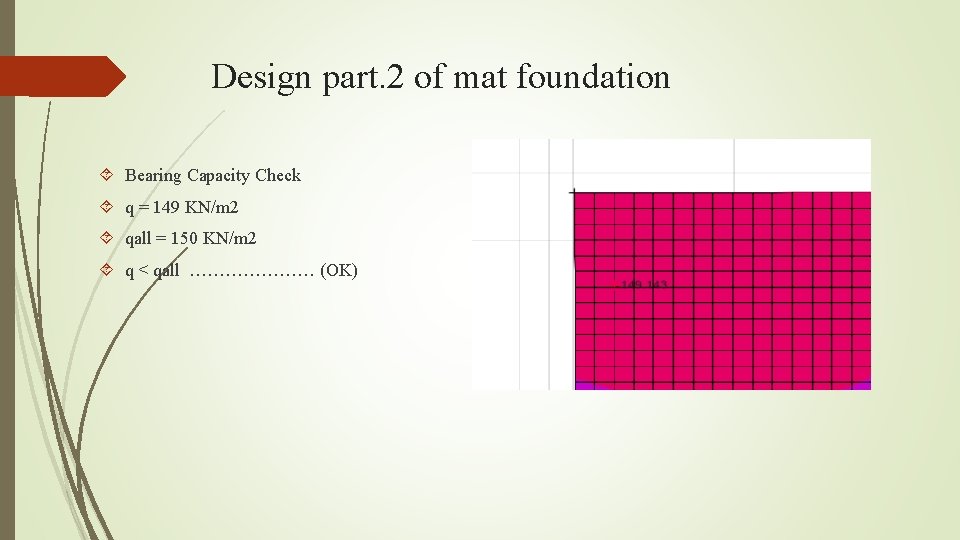
Design part. 2 of mat foundation Bearing Capacity Check q = 149 KN/m 2 qall = 150 KN/m 2 q < qall ………………… (OK)
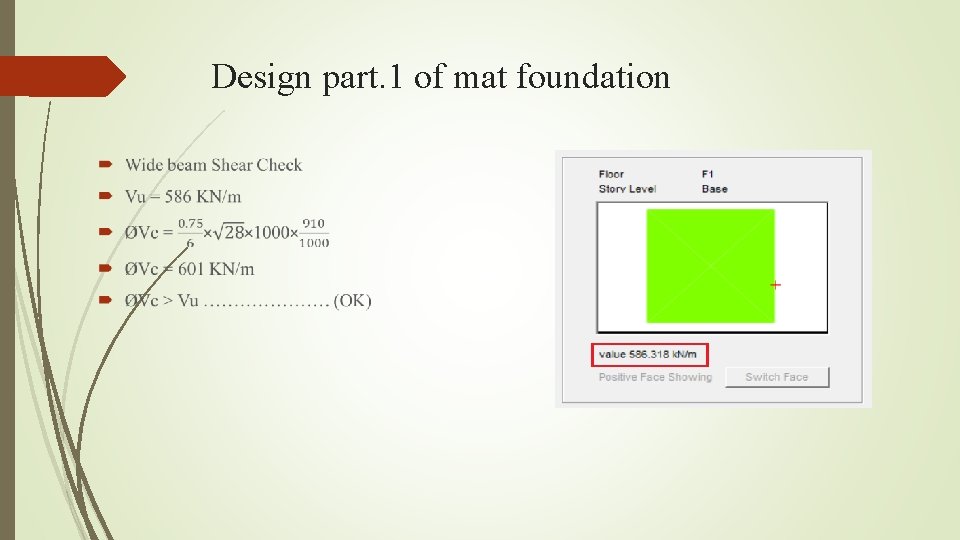
Design part. 1 of mat foundation
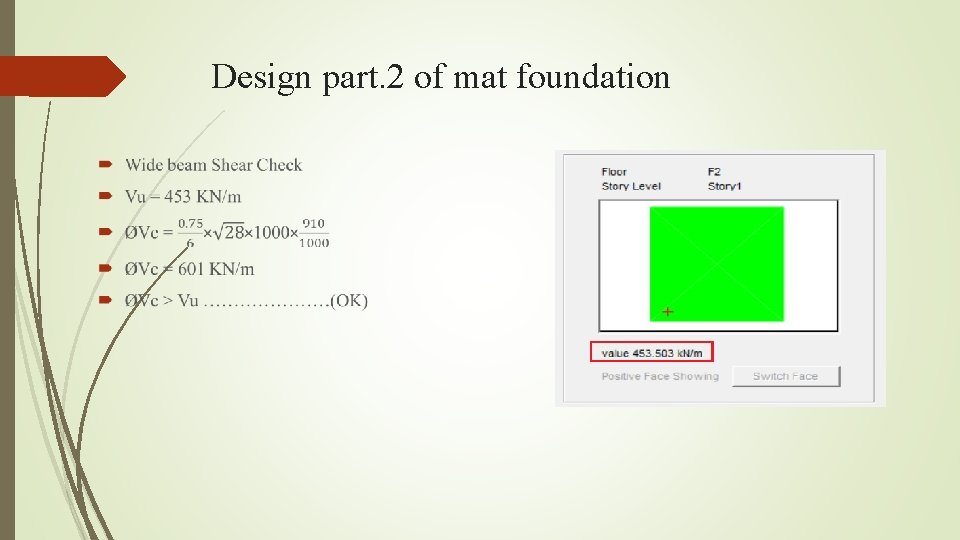
Design part. 2 of mat foundation
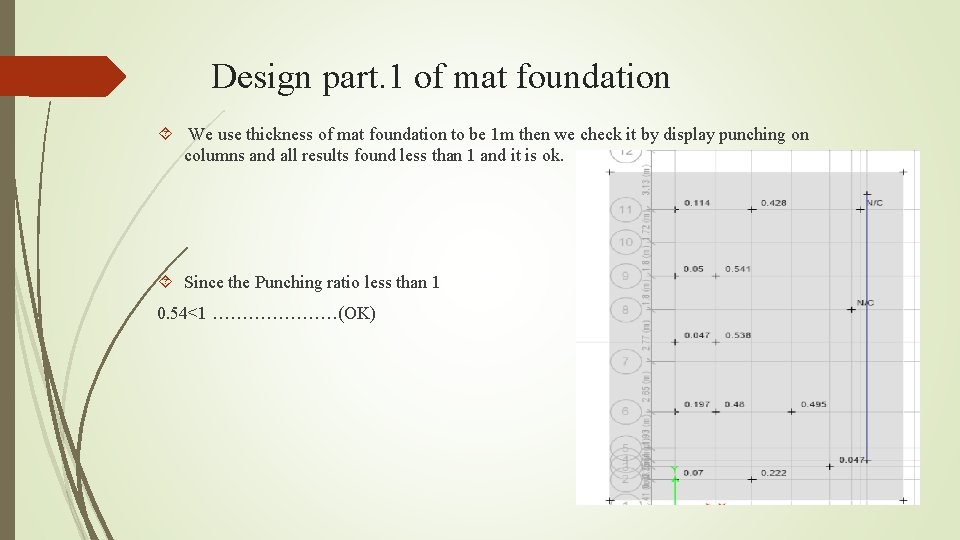
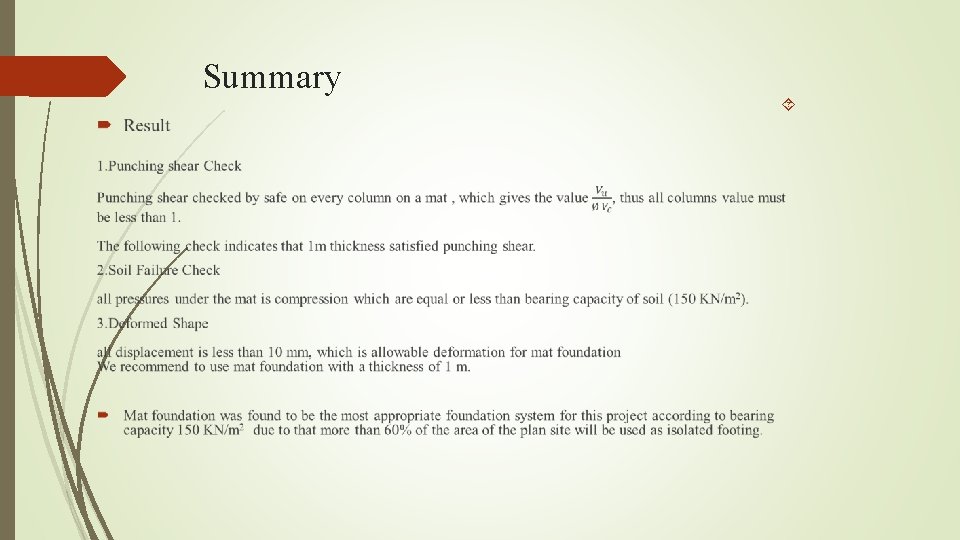
Design part. 1 of mat foundation We use thickness of mat foundation to be 1 m then we check it by display punching on columns and all results found less than 1 and it is ok. Since the Punching ratio less than 1 0. 54<1 …………………(OK)
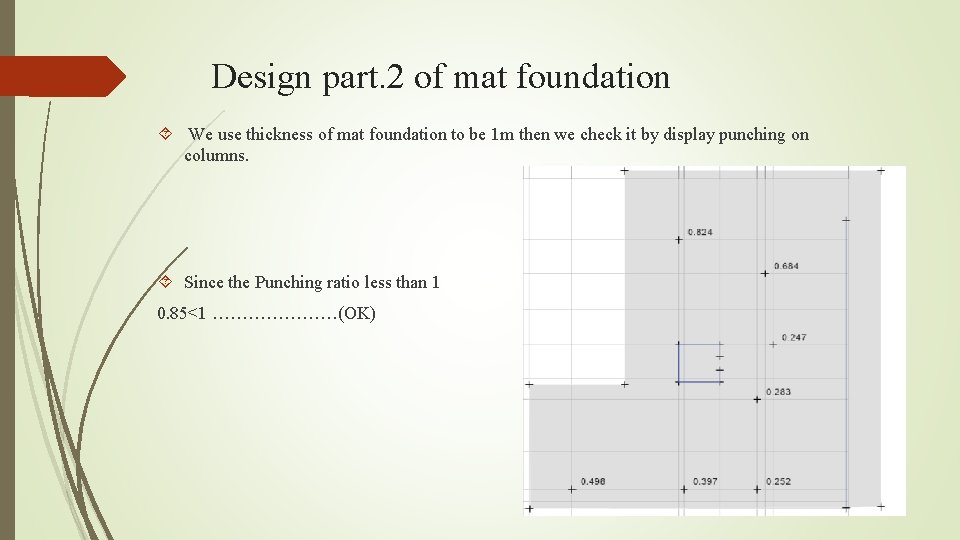
Design part. 2 of mat foundation We use thickness of mat foundation to be 1 m then we check it by display punching on columns. Since the Punching ratio less than 1 0. 85<1 …………………(OK)
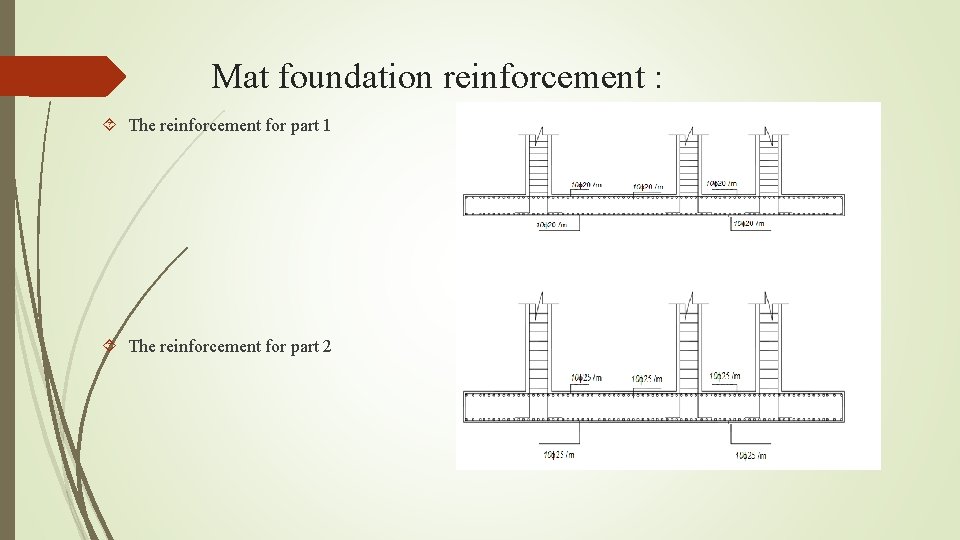
Mat foundation reinforcement : The reinforcement for part 1 The reinforcement for part 2
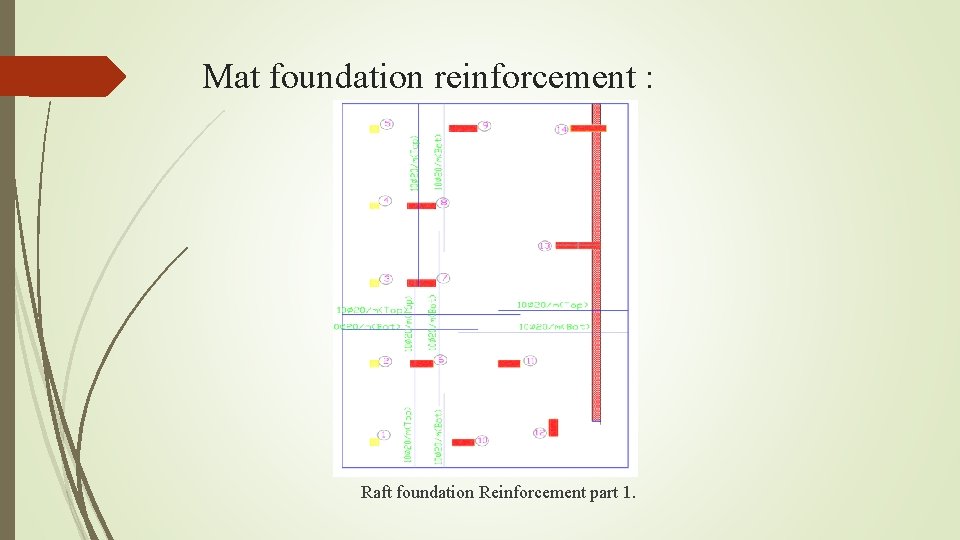
Mat foundation reinforcement : Raft foundation Reinforcement part 1.
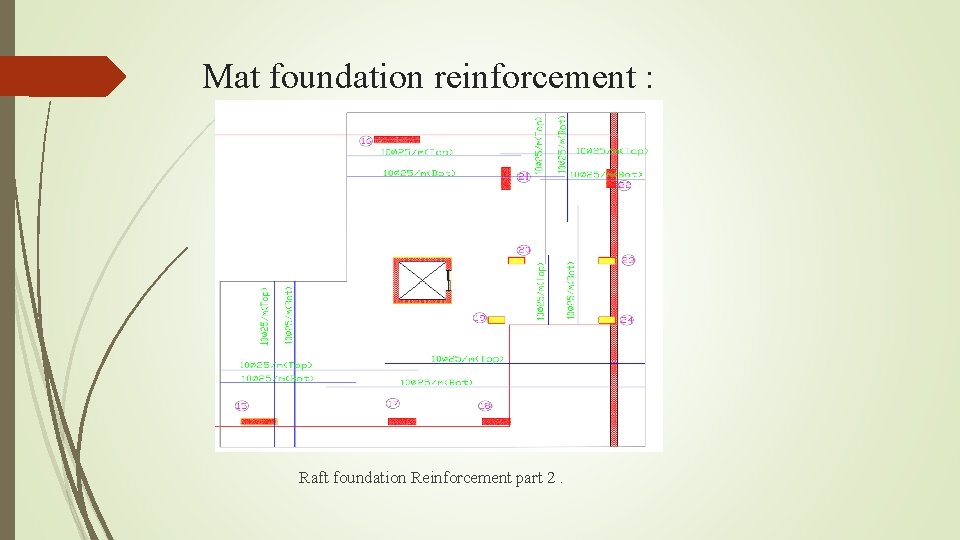
Mat foundation reinforcement : Raft foundation Reinforcement part 2.
Summary
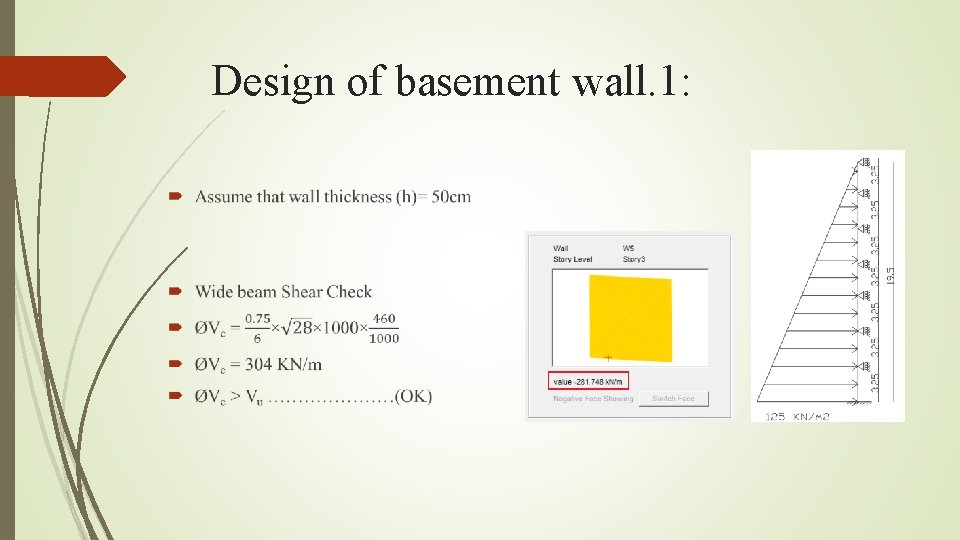
Design of basement wall. 1:
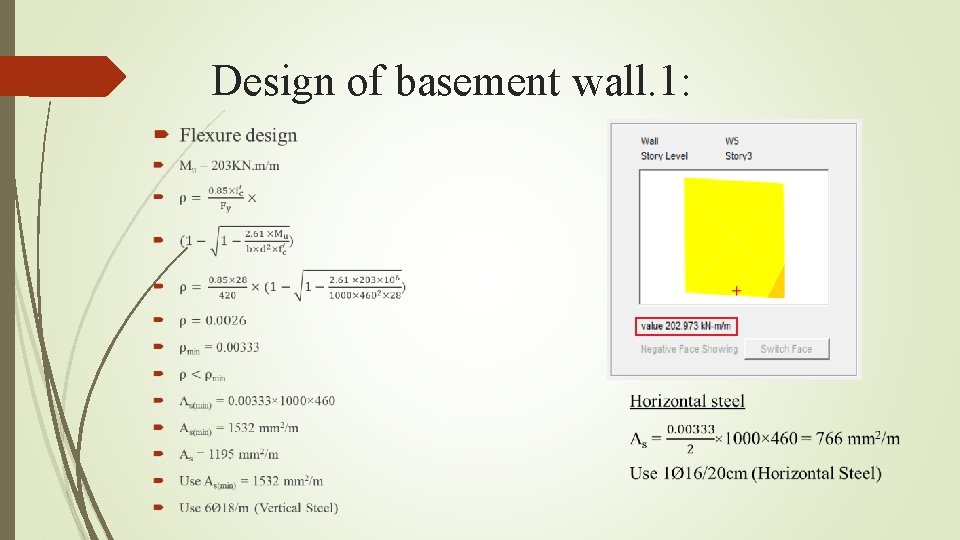
Design of basement wall. 1:
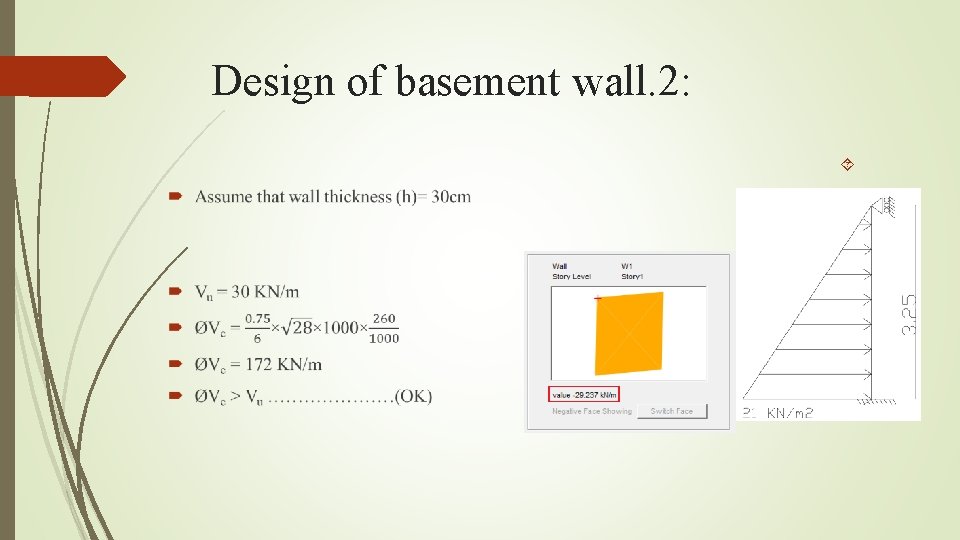
Design of basement wall. 2:
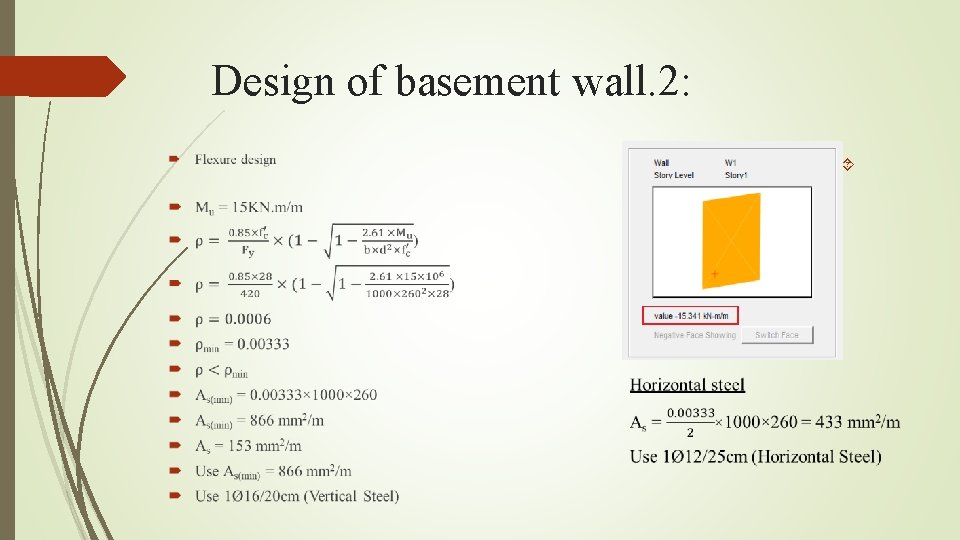
Design of basement wall. 2:
Third design option (piles ) For soil with bearing capacity 120 KN/m 2, each pile capacity was assumed to be 950 KN/m 2 as a supporting foundation for design. Since we have different values of reactions we are going to make grouping for piles. Group 1 {5464} KN for (C 13) Group 2 {3300 – 3220} KN for (C 16 and C 15) Group 3 {2565 – 2340} KN for (C 8, C 7, C 14, C 11 and C 6) Group 4 {2100 – 1455} KN for (C 9, C 21, C 17 and C 18) Group 5 {1040– 725} KN for (C 10, C 19, C 20 and C 12) Group 6 {350– 131} KN for (C 4, C 23, C 22, C 24, C 5 and C 1)
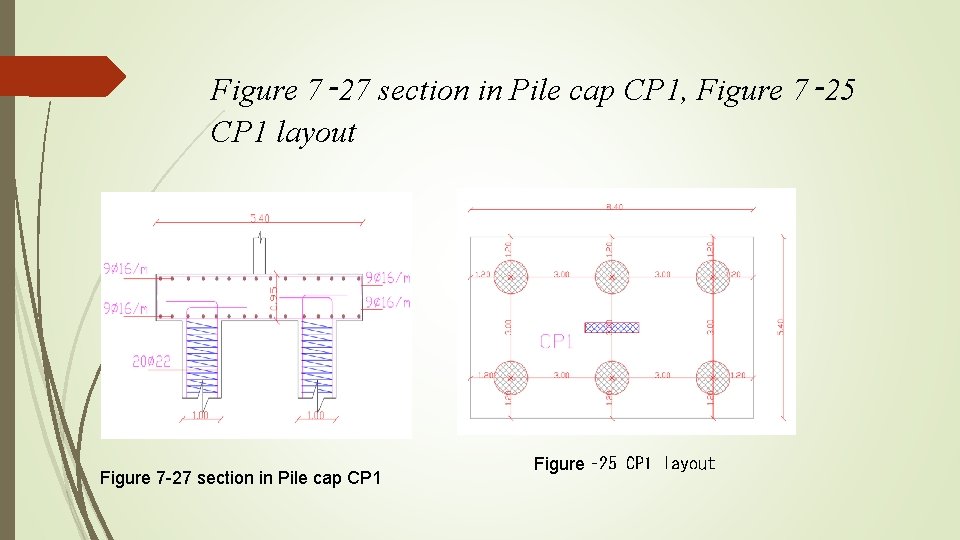
Figure 7‑ 27 section in Pile cap CP 1, Figure 7‑ 25 CP 1 layout Figure 7 -27 section in Pile cap CP 1 Figure ‑ 25 CP 1 layout
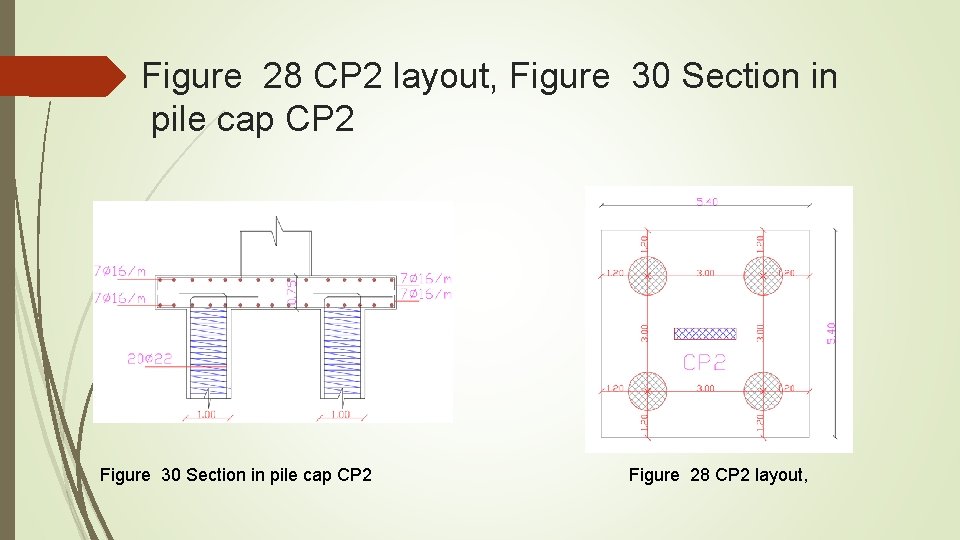
Figure 28 CP 2 layout, Figure 30 Section in pile cap CP 2 Figure 28 CP 2 layout,
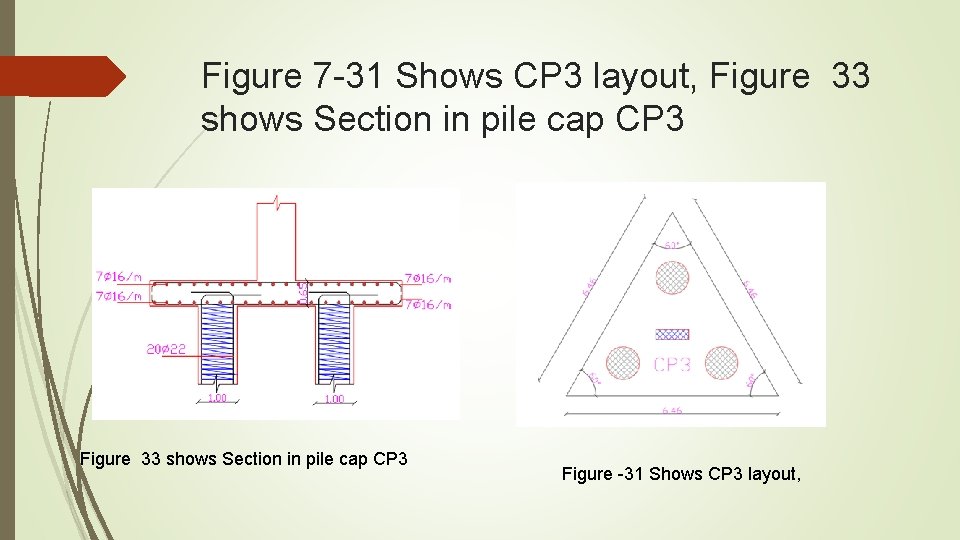
Figure 7 -31 Shows CP 3 layout, Figure 33 shows Section in pile cap CP 3 Figure -31 Shows CP 3 layout,
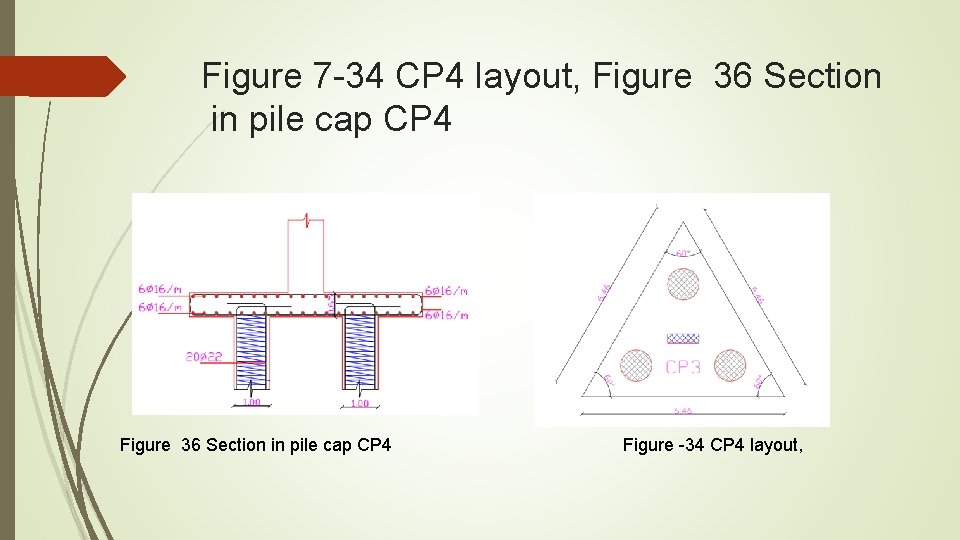
Figure 7 -34 CP 4 layout, Figure 36 Section in pile cap CP 4 Figure -34 CP 4 layout,
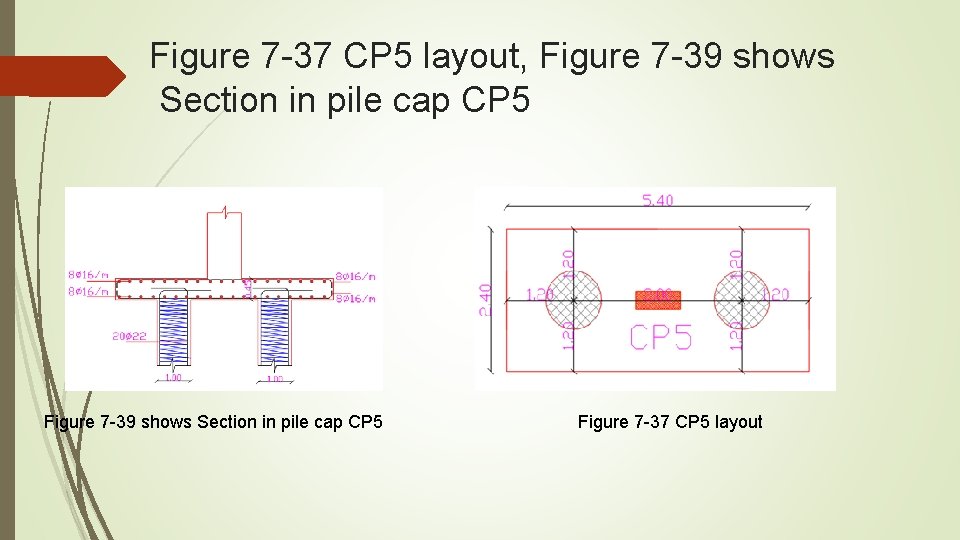
Figure 7 -37 CP 5 layout, Figure 7 -39 shows Section in pile cap CP 5 Figure 7 -37 CP 5 layout
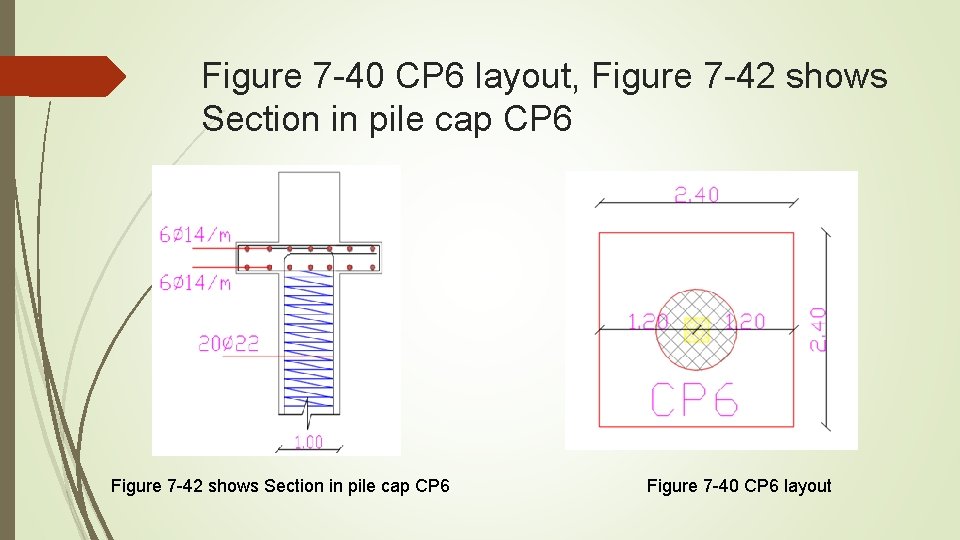
Figure 7 -40 CP 6 layout, Figure 7 -42 shows Section in pile cap CP 6 Figure 7 -40 CP 6 layout
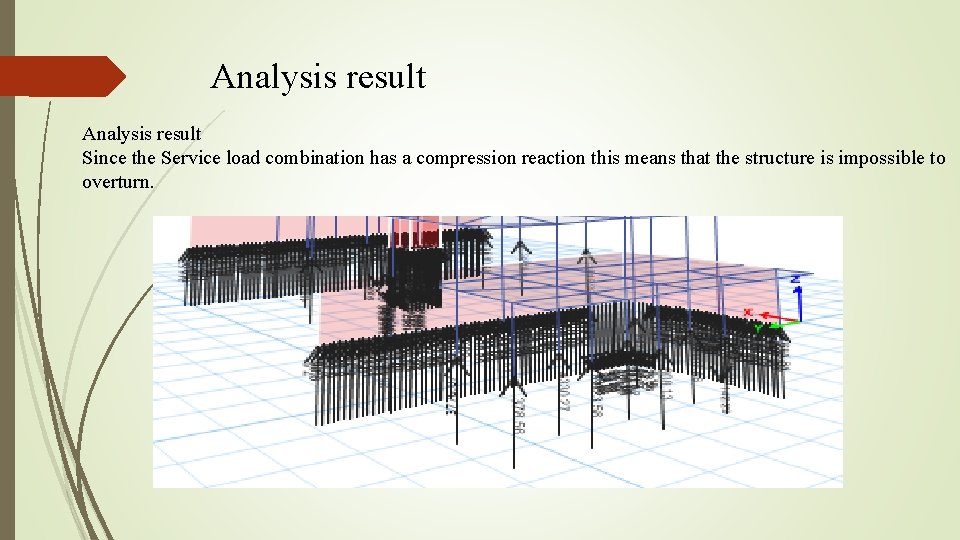
Analysis result Since the Service load combination has a compression reaction this means that the structure is impossible to overturn.
Recommendation According to our project site , which has a bearing capacity of soil =300 kn/m^2, we find that the best choice is to design it on single footings.

Thanks for being here
- Slides: 52