
Foundation Block Microbiology 2014 By Dr Malak M
( Foundation Block , Microbiology : 2014 ) By: Dr. Malak M. El-Hazmi
OBJECTIVES • definition and levels of viral pathogenesis. cellular level. host level. • The immune response to viral infection. • The stages of viral infection. • The types of viral infections at host level.
Pathogenesis of viral infection v Viral disease at the cellular level Ø v Cytopathogenesis Viral disease at the host level Ø Mechanism of the disease
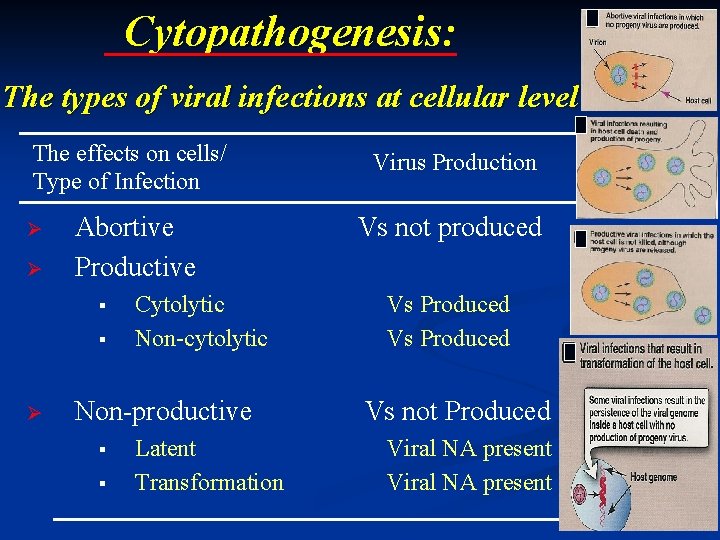
Cytopathogenesis: The types of viral infections at cellular level The effects on cells/ Type of Infection Virus Production Abortive Productive Vs not produced Ø Ø Ø Cytolytic Non-cytolytic Non-productive Latent Transformation Vs Produced Vs not Produced Viral NA present
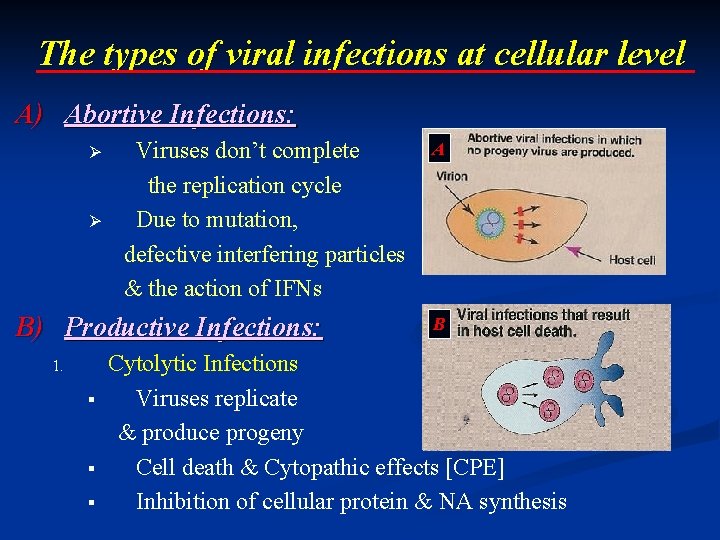
The types of viral infections at cellular level A) Abortive Infections: Ø Ø Viruses don’t complete the replication cycle Due to mutation, defective interfering particles & the action of IFNs B) Productive Infections: 1. A B Cytolytic Infections Viruses replicate & produce progeny Cell death & Cytopathic effects [CPE] Inhibition of cellular protein & NA synthesis
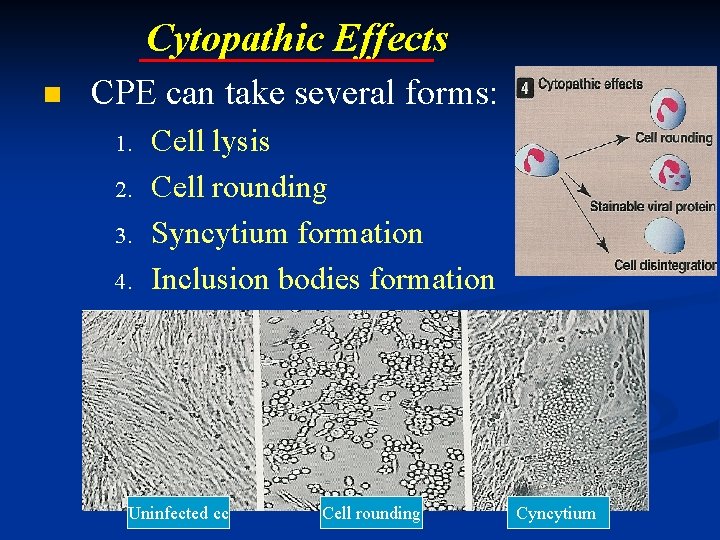
Cytopathic Effects n CPE can take several forms: 1. 2. 3. 4. Cell lysis Cell rounding Syncytium formation Inclusion bodies formation Uninfected cc Cell rounding Cyncytium
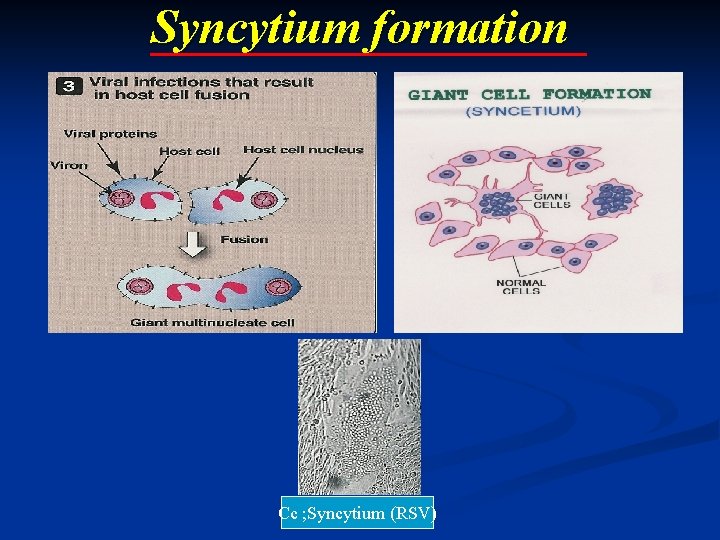
Syncytium formation Cc ; Syncytium (RSV)
![Inclusion bodies formation v Site: Intranuclear [Herpes] Intracytoplasmic [Rabies] v Take several forms: Ø](http://slidetodoc.com/presentation_image_h2/40d11da68b4f29bed02ac83d3a586e6e/image-8.jpg "Inclusion bodies formation v Site: Intranuclear [Herpes] Intracytoplasmic [Rabies] v Take several forms: Ø")
Inclusion bodies formation v Site: Intranuclear [Herpes] Intracytoplasmic [Rabies] v Take several forms: Ø Ø Ø Small/large Single/multiple Round/irregular
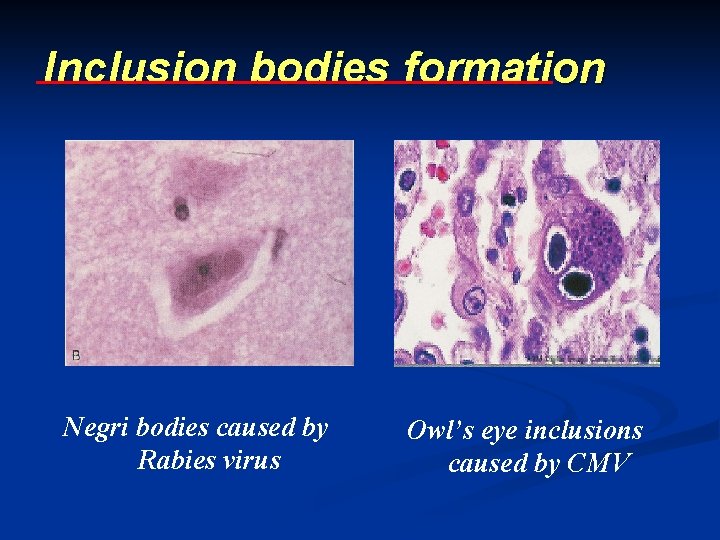
Inclusion bodies formation Negri bodies caused by Rabies virus Owl’s eye inclusions caused by CMV
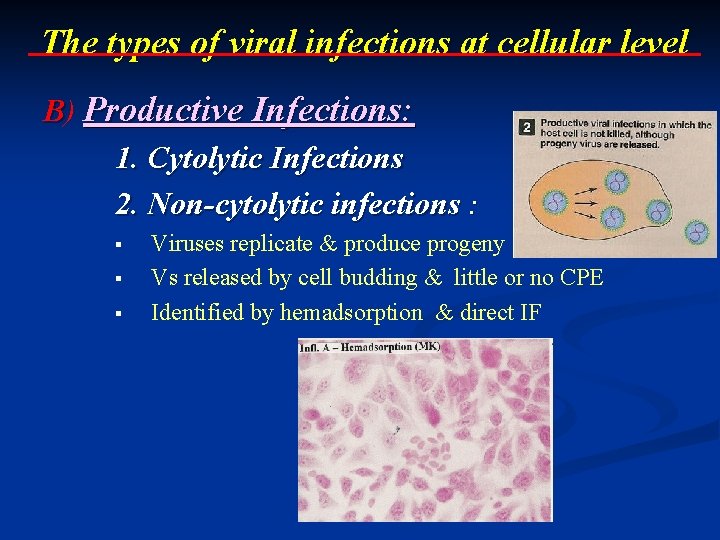
The types of viral infections at cellular level B) Productive Infections: 1. Cytolytic Infections 2. Non-cytolytic infections : Viruses replicate & produce progeny Vs released by cell budding & little or no CPE Identified by hemadsorption & direct IF
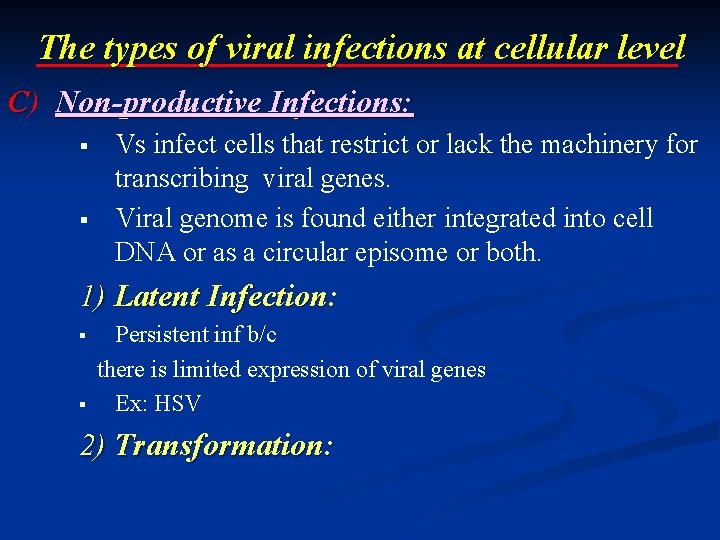
The types of viral infections at cellular level C) Non-productive Infections: Vs infect cells that restrict or lack the machinery for transcribing viral genes. Viral genome is found either integrated into cell DNA or as a circular episome or both. 1) Latent Infection: Persistent inf b/c there is limited expression of viral genes Ex: HSV 2) Transformation:
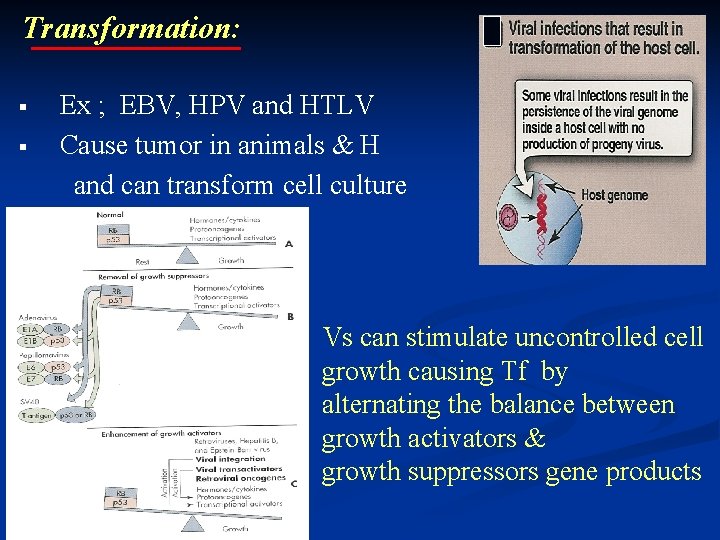
Transformation: Ex ; EBV, HPV and HTLV Cause tumor in animals & H and can transform cell culture Vs can stimulate uncontrolled cell growth causing Tf by alternating the balance between growth activators & growth suppressors gene products
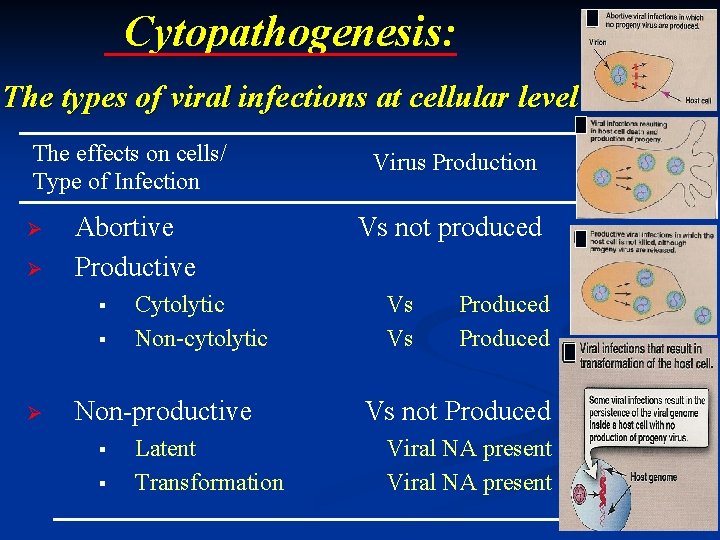
Cytopathogenesis: The types of viral infections at cellular level The effects on cells/ Type of Infection Virus Production Abortive Productive Vs not produced Ø Ø Ø Cytolytic Non-cytolytic Non-productive Latent Transformation Vs Vs Produced Vs not Produced Viral NA present
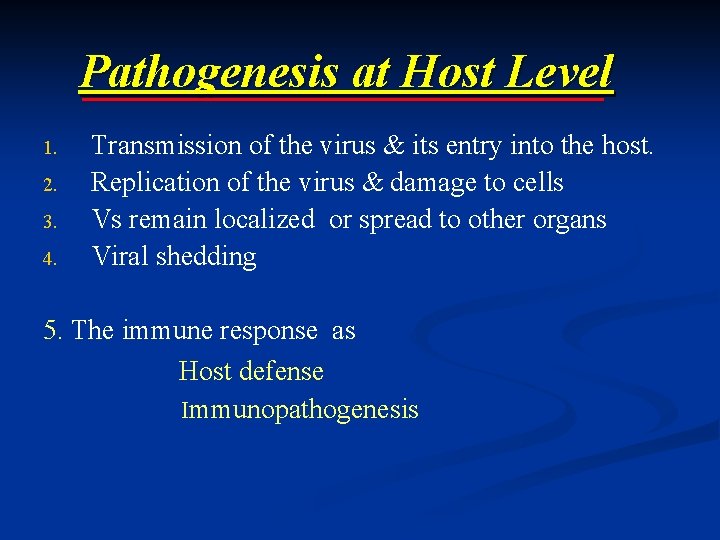
Pathogenesis at Host Level 1. 2. 3. 4. Transmission of the virus & its entry into the host. Replication of the virus & damage to cells Vs remain localized or spread to other organs Viral shedding 5. The immune response as Host defense Immunopathogenesis

Transmission 1. Person to person a) b) 2. Horizontal transmission Skin contact , Blood Respiratory route Fecal - oral route Genital contact Vertical transmission Animal to person Reservoir Human (Rabies v. ) vector Human (YFV)
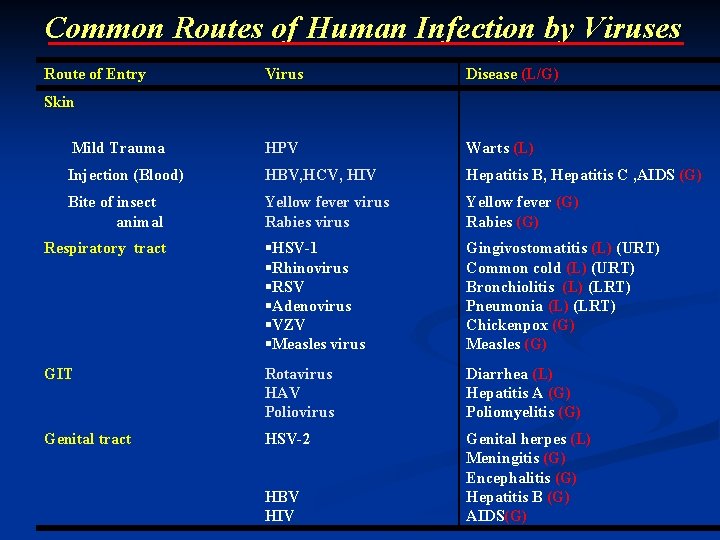
Common Routes of Human Infection by Viruses Route of Entry Virus Disease (L/G) Mild Trauma HPV Warts (L) Injection (Blood) HBV, HCV, HIV Hepatitis B, Hepatitis C , AIDS (G) Bite of insect animal Yellow fever virus Rabies virus Yellow fever (G) Rabies (G) Respiratory tract HSV-1 Rhinovirus RSV Adenovirus VZV Measles virus Gingivostomatitis (L) (URT) Common cold (L) (URT) Bronchiolitis (L) (LRT) Pneumonia (L) (LRT) Chickenpox (G) Measles (G) GIT Rotavirus HAV Poliovirus Diarrhea (L) Hepatitis A (G) Poliomyelitis (G) Genital tract HSV-2 Genital herpes (L) Meningitis (G) Encephalitis (G) Hepatitis B (G) AIDS(G) Skin HBV HIV
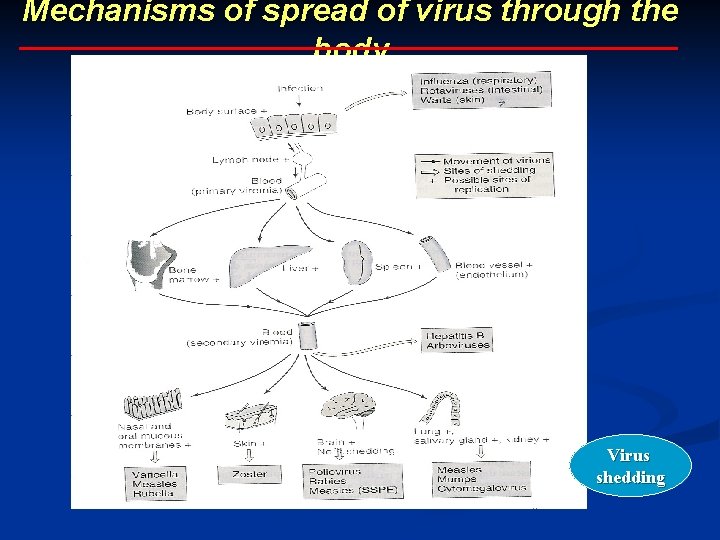
Mechanisms of spread of virus through the body Virus shedding
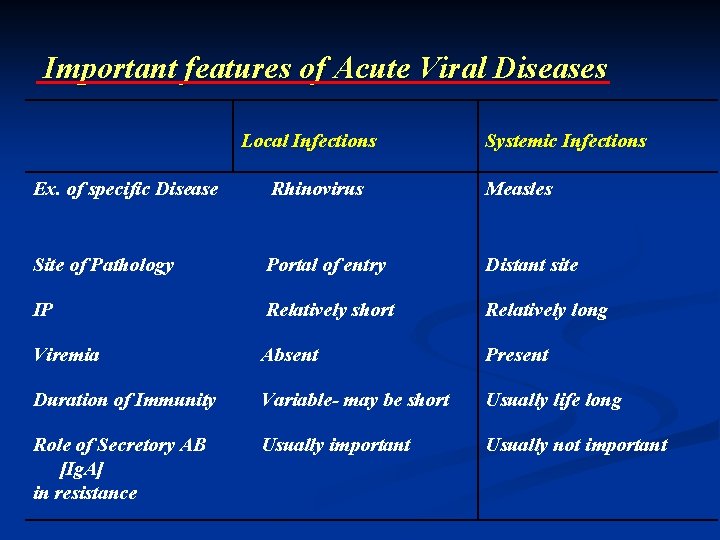
Important features of Acute Viral Diseases Local Infections Systemic Infections Ex. of specific Disease Rhinovirus Measles Site of Pathology Portal of entry Distant site IP Relatively short Relatively long Viremia Absent Present Duration of Immunity Variable- may be short Usually life long Role of Secretory AB [Ig. A] in resistance Usually important Usually not important
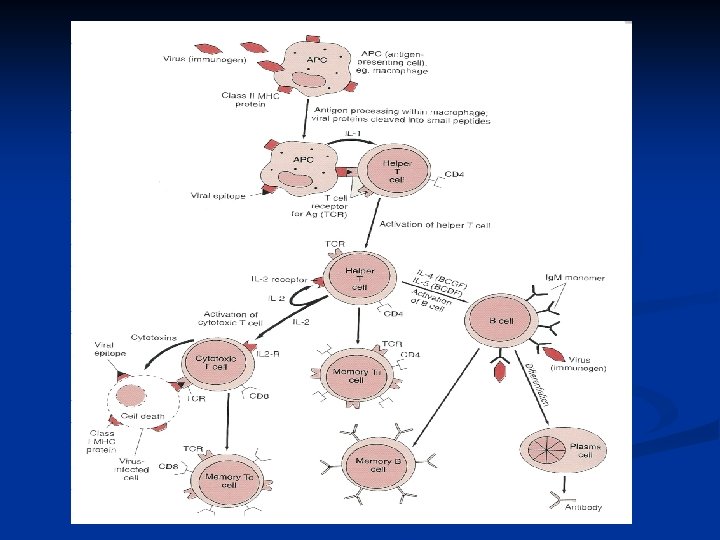
The immune response to virus
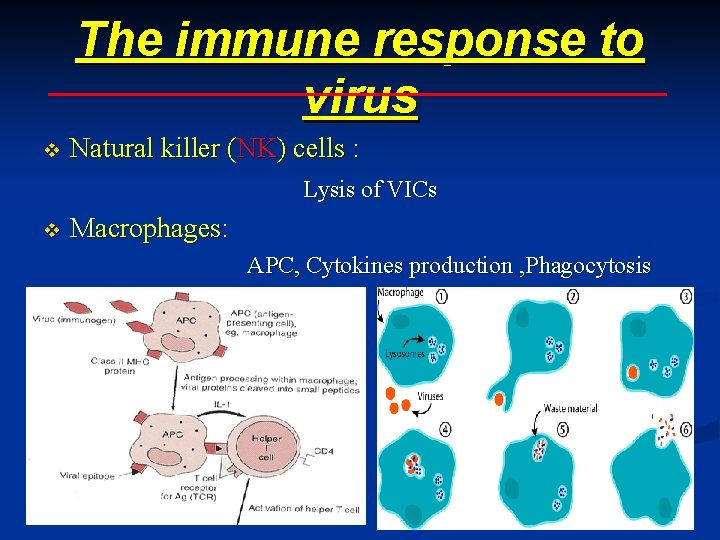
The immune response to virus v Natural killer (NK) cells : Lysis of VICs v Macrophages: APC, Cytokines production , Phagocytosis
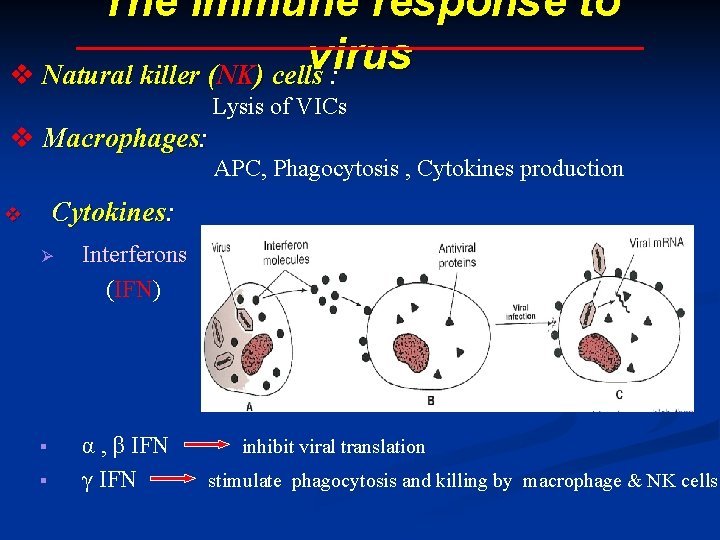
The immune response to virus v Natural killer (NK) cells : Lysis of VICs v Macrophages: APC, Phagocytosis , Cytokines production Cytokines: v Ø Interferons (IFN) α , β IFN γ IFN inhibit viral translation stimulate phagocytosis and killing by macrophage & NK cells
The immune response to virus
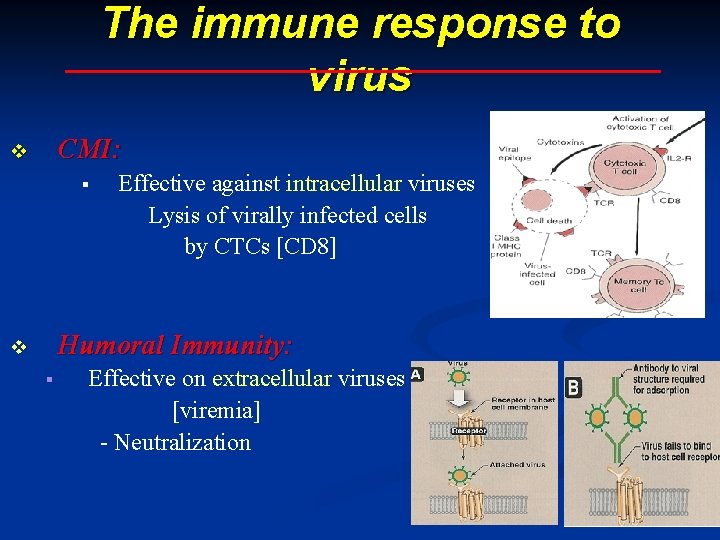
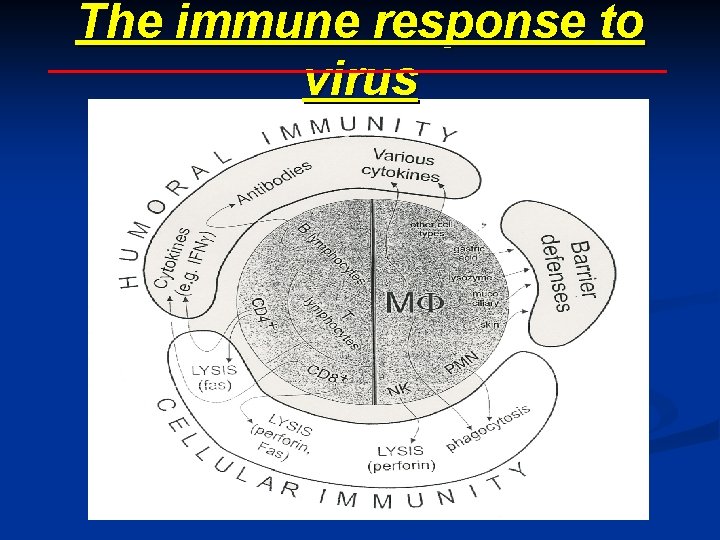
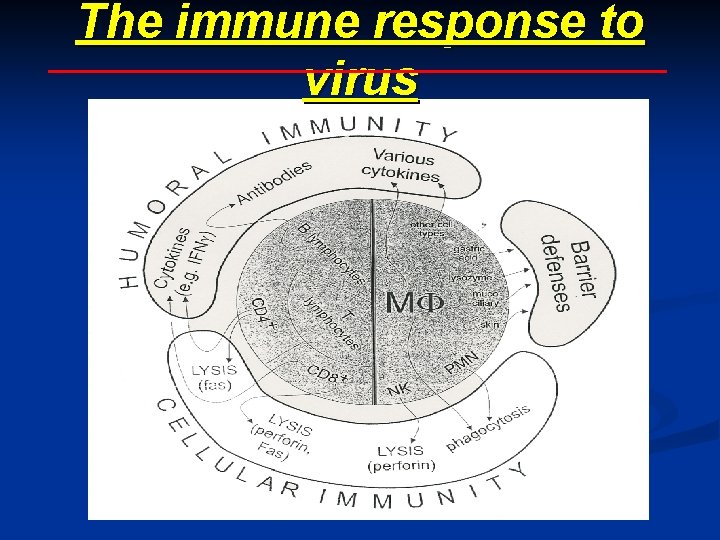
The immune response to virus CMI: v Effective against intracellular viruses Lysis of virally infected cells by CTCs [CD 8] Humoral Immunity: v Effective on extracellular viruses [viremia] - Neutralization
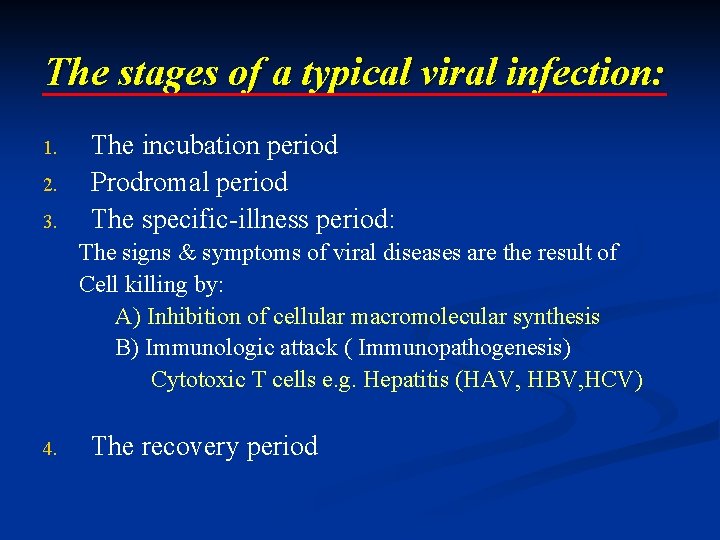
The stages of a typical viral infection: 1. 2. 3. The incubation period Prodromal period The specific-illness period: The signs & symptoms of viral diseases are the result of Cell killing by: A) Inhibition of cellular macromolecular synthesis B) Immunologic attack ( Immunopathogenesis) Cytotoxic T cells e. g. Hepatitis (HAV, HBV, HCV) 4. The recovery period
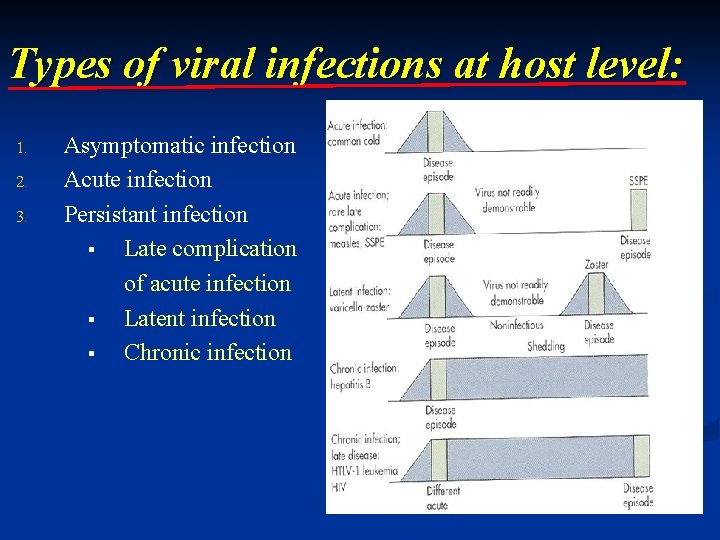
Types of viral infections at host level: 1. 2. 3. Asymptomatic infection Acute infection Persistant infection Late complication of acute infection Latent infection Chronic infection
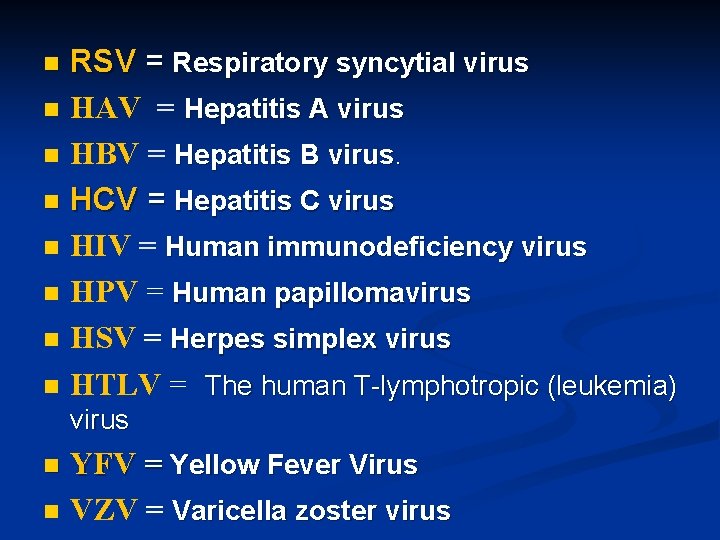
RSV = Respiratory syncytial virus n HAV = Hepatitis A virus n HBV = Hepatitis B virus. n HCV = Hepatitis C virus n HIV = Human immunodeficiency virus n HPV = Human papillomavirus n HSV = Herpes simplex virus n HTLV = The human T-lymphotropic (leukemia) n virus n n YFV = Yellow Fever Virus VZV = Varicella zoster virus
Reference books &the relevant page numbers n n n Medical Microbiology and Immunology By: Warren Levinson. 10 th Edition, 2008. Pages; 221 -232 Medical Microbiology. By: David Greenwood , Richard C. B. Slack John F Peutherer and Mike Barer. 17 th Edition, 2007. Pages; 80, 90 -92 Lippincott’s Illustrated Reviews: Microbiology By: William A. Strohl , Harriet Rouse & Bruce D. Fisher 2 nd Edition, 2007. Pages; 15 -17, 242 -243.

- Slides: 30