
Fostering Pragmatic Language Skills What is Pragmatic Language

- Slides: 12
Fostering Pragmatic Language Skills
What is Pragmatic Language? Pragmatic language refers to the way in which language is used to communicate in a variety of contexts It involves communicative intent, rules, and social aspects of language Major components of pragmatic language are being able to read the cues of the communication partner and following conversational rules
Difficulties Using Pragmatic Language Using appropriate eye contact Initiating and maintaining conversations Appropriately greeting others Joining ongoing activities and conversations Requesting help, various items, etc. Tendency to be overly literal Difficulty understanding emotions Reading nonverbal social cues Perspective taking (how someone might feel in a given situation)
What Does It Mean to Be Social? Sharing ideas, feelings, activities Cooperation and flexibility Showing interest Using eye gaze to connect Establishing common ground
Why Is It Hard for Some Children to Learn Social Skills? Physical Difficulties Verbal Difficulties Thinking Difficulties
I LAUGH: An Acronym for Elements of Communication and Problem Solving I = Initiating L = Listening with eyes and brain A = Abstracting and inferencing U = Understanding perspective G = Getting the big picture H = Humor and human relationships
Think With Your Eyes We use our eyes for many different reasons in communication We can learn how to use our eyes to figure out what someone is looking at and then figure out what someone may be thinking about With our eyes we can: Consider other’s point of view Pay respect Be rude Ignore people
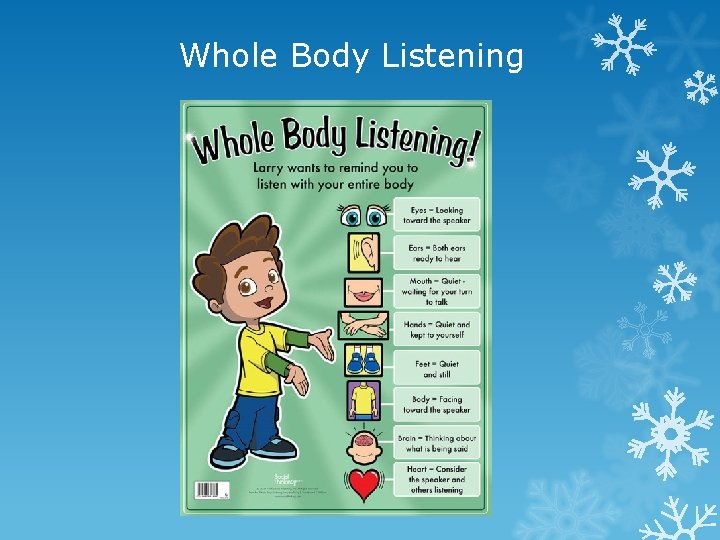
Whole Body Listening
Using Language to Relate Add a thought: we can do this to maintain communication. We can show our life experience or knowledge connects to what our communication partner has said. Supporting comments: we can use head nods, say things like, “that’s cool, ” “wow, ” “that sounds like fun, ” etc. Ask a question: ask questions to learn more information about the topic or about your communication partner. This also shows you are actively listening during the conversation.
Activities Structured conversations about preferred and non-preferred topics -pick topics out of a hat Play games to encourage appropriate turn taking Scripts – ordering at a restaurant or on the phone Social Groups Applications – Flummox & Friends, Between the Lines
Children’s Literature Listening with Eyes and Brain Wombat Walkabout by Carol Diggory Sheilds Personal Space Camp by Julia Cook Howard Wigglebottom Learns to Listen by Howard Binkow Listen Buddy by Helen Lester
Group Discussion What are some of your biggest concerns? In which types of situations do these things take place? What are some strategies you use with your children?