
FOSTER PARENTS TRAUMA IN CHILDREN An Adlerian Perspective





- Slides: 49
FOSTER PARENTS TRAUMA IN CHILDREN: An Adlerian Perspective
DEALING WITH TRAUMA: NURTURING RESILIENCY IN FOSTER CHILDREN AND YOUTH PRESENTER: James Skinner ADLER CENTRE 440 -2184 W Broadway Vancouver, V 6 K 2 E 1 phone: 604 742 1818
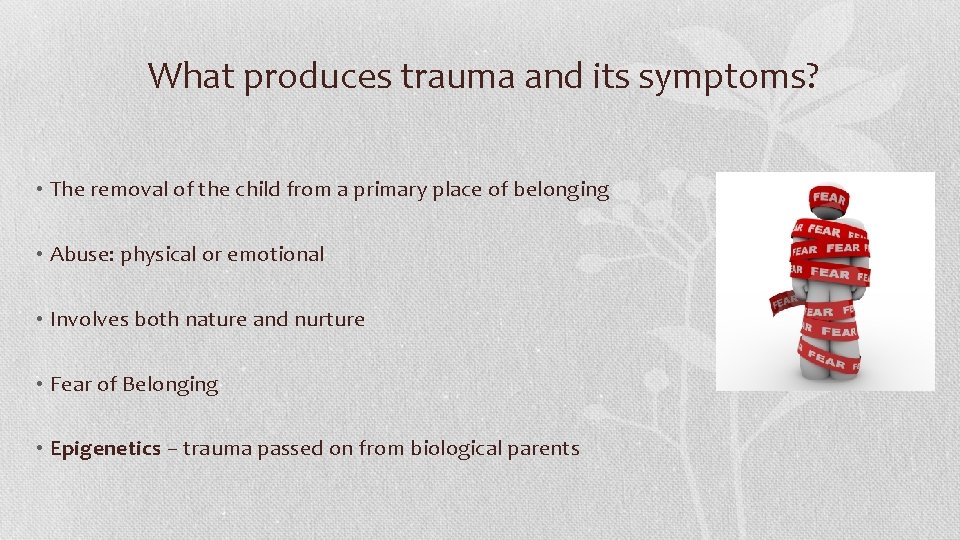
What produces trauma and its symptoms? • The removal of the child from a primary place of belonging • Abuse: physical or emotional • Involves both nature and nurture • Fear of Belonging • Epigenetics – trauma passed on from biological parents
TRAUMATIZED KIDS ARE TRIGGERED MORE QUICKLY AND TAKE LONGER TO RETURN TO BASE • Big ‘T’ Trauma is often produced by any sharp and intense contrast in the child’s experience • Small ‘t’s are produced by singular or repeated contrasts in the child’s experience. • Trauma once triggered can be expressed as: Fear, Anxiety, Depression, Withdrawal, Anger or Dissassociative behaviours. • Phobias and Panic attacks are also possible signs of trauma
“Anxiety is fear about the Future” Eric Fromm
Fear is usually about external objects or situations. Anxiety is more internal. Can’t often specify what they are anxious about
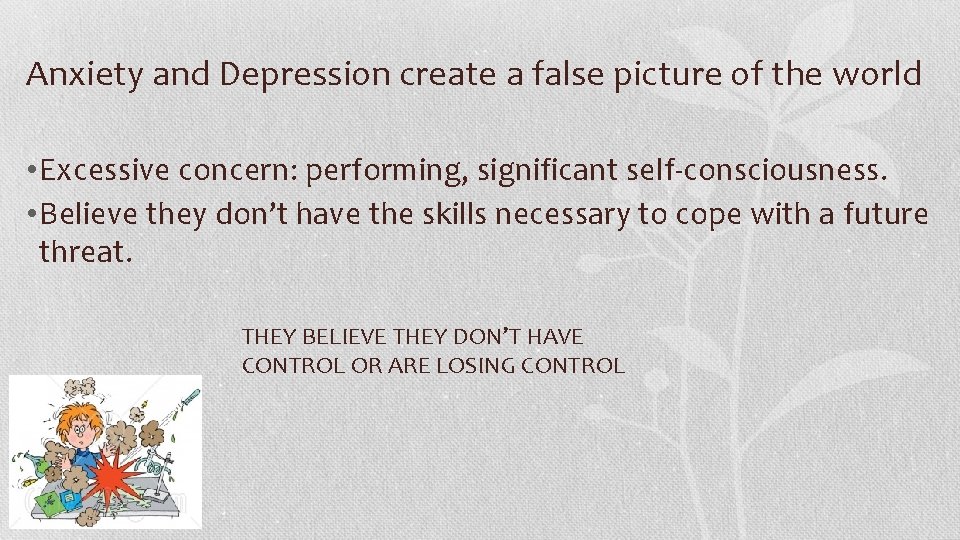
Anxiety and Depression create a false picture of the world • Excessive concern: performing, significant self-consciousness. • Believe they don’t have the skills necessary to cope with a future threat. THEY BELIEVE THEY DON’T HAVE CONTROL OR ARE LOSING CONTROL
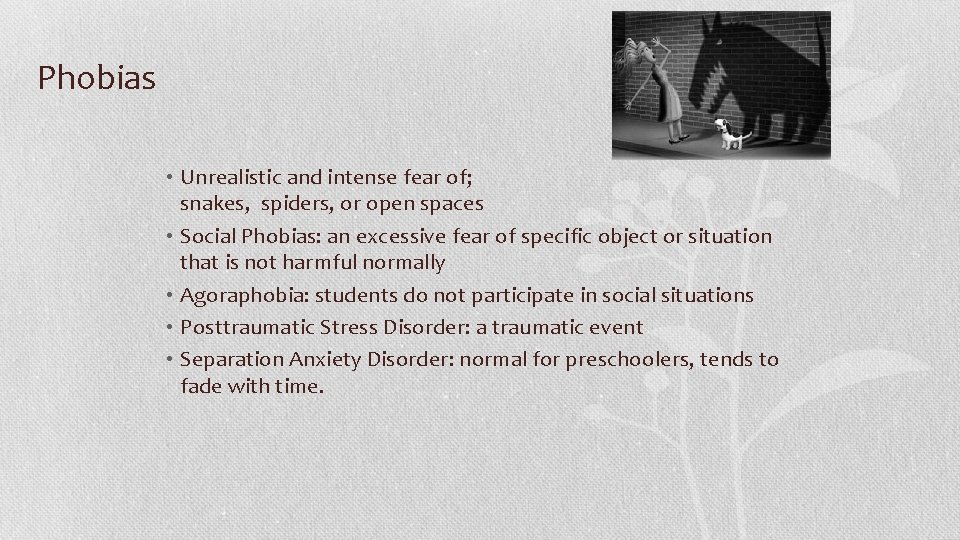
Phobias • Unrealistic and intense fear of; snakes, spiders, or open spaces • Social Phobias: an excessive fear of specific object or situation that is not harmful normally • Agoraphobia: students do not participate in social situations • Posttraumatic Stress Disorder: a traumatic event • Separation Anxiety Disorder: normal for preschoolers, tends to fade with time.
Types of Anxiety General Anxiety Disorder: out of the blue, can seriously hamper school work, social relationships, daily life Obsessive-Compulsive Disorder: Also a debilitating anxiety. Negative repetitive thoughts Panic Disorder: panic attacks, overpowering fear, fear of it happening again.
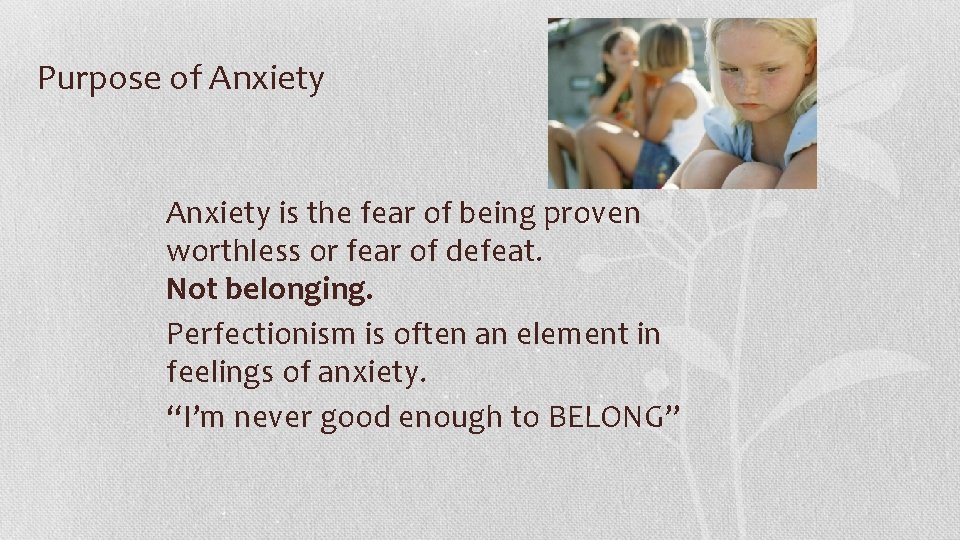
Purpose of Anxiety is the fear of being proven worthless or fear of defeat. Not belonging. Perfectionism is often an element in feelings of anxiety. “I’m never good enough to BELONG”
SOME BASIC ADLERIAN PRINCIPLES • Everyone chooses to belong • We are all of Equal Value • We are Creative Beings • We are Goal Oriented
THE FOUR GOALS OF MISHAVIOUR • ATTENTION: Active/Passive • POWER: Active/Passive • REVENGE: Active/Passive • DISPLAY OF INADEQUATE: Passive
BELONGING “We are hardwired to belong. ” Daniel Goldman “ The brain is a social organ, it grows and changes when it interacts with other brains. ” Nancy Graham
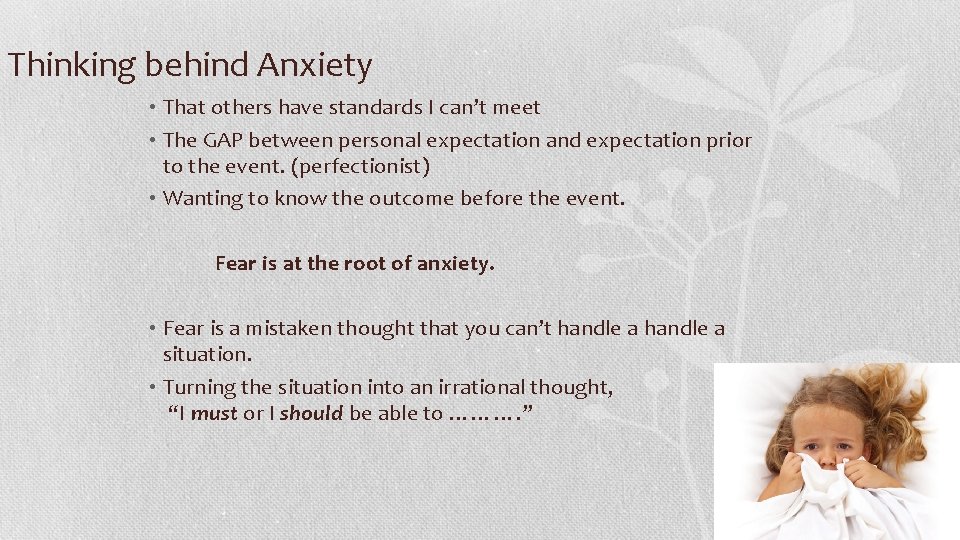
Thinking behind Anxiety • That others have standards I can’t meet • The GAP between personal expectation and expectation prior to the event. (perfectionist) • Wanting to know the outcome before the event. Fear is at the root of anxiety. • Fear is a mistaken thought that you can’t handle a situation. • Turning the situation into an irrational thought, “I must or I should be able to ………. ”
Unhelpful Ways of Dealing with Anxiety in Children • Providing too much or too little reassurance. “everything will be alright”, “nothing to be afraid of” The more assurance you give the more they want. • Being too Directive: Micro-managing, taking over and directing the child. • Permitting or Encouraging Avoidance: As long as children continue to avoid they won’t overcome their anxiety • Becoming Impatient with Your Child: It is too easy to become impatient and frustrated with an anxious or depressed child.
“I don’t think I am able to do it. ”
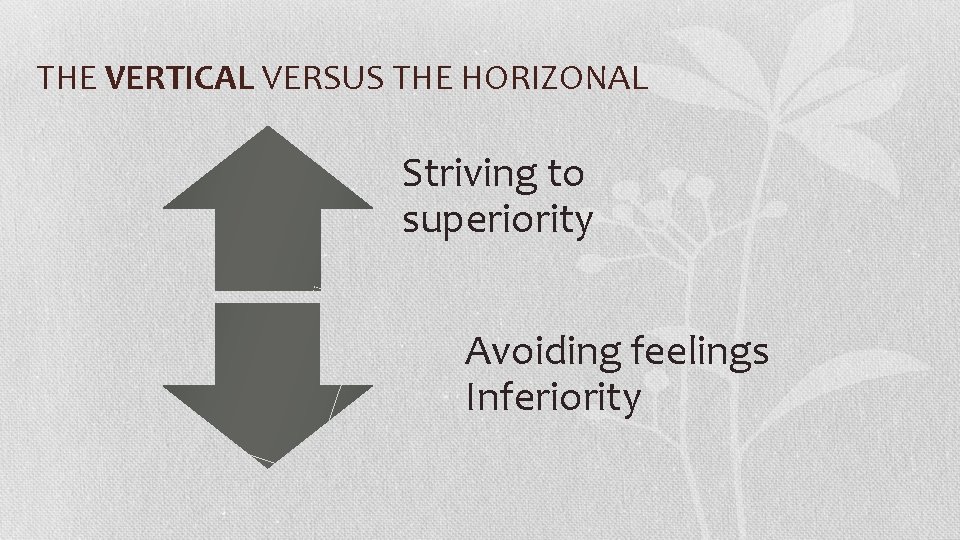
THE VERTICAL VERSUS THE HORIZONAL Striving to superiority Avoiding feelings Inferiority
The Vertical Mode: each striving to overcome feelings of inferiority in order to achieve superiority at the top.
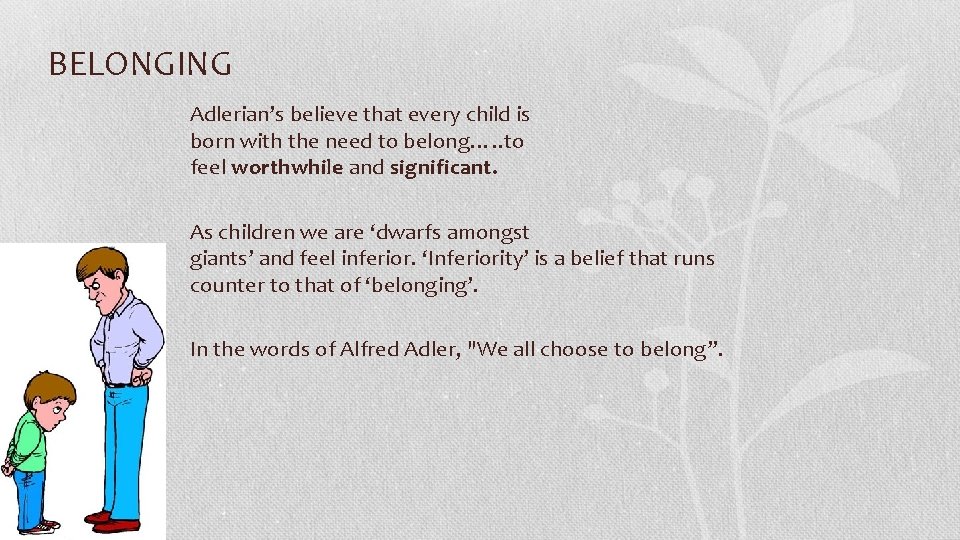
BELONGING Adlerian’s believe that every child is born with the need to belong…. . to feel worthwhile and significant. As children we are ‘dwarfs amongst giants’ and feel inferior. ‘Inferiority’ is a belief that runs counter to that of ‘belonging’. In the words of Alfred Adler, "We all choose to belong”.
A Story of Belonging … then we create ‘a story/a Fiction’ of what we believe will help us belong, and then we strive to achieve that mistaken belief.
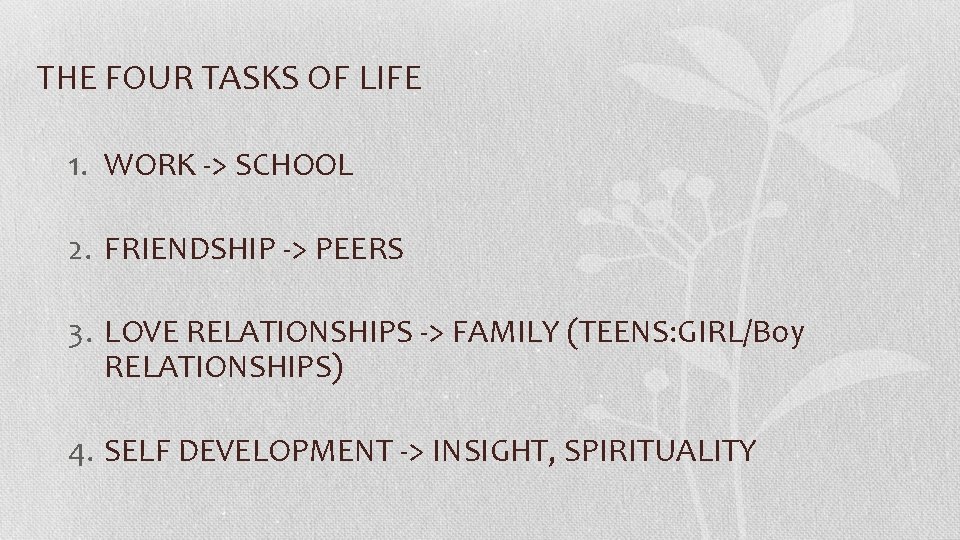
THE FOUR TASKS OF LIFE 1. WORK -> SCHOOL 2. FRIENDSHIP -> PEERS 3. LOVE RELATIONSHIPS -> FAMILY (TEENS: GIRL/Boy RELATIONSHIPS) 4. SELF DEVELOPMENT -> INSIGHT, SPIRITUALITY
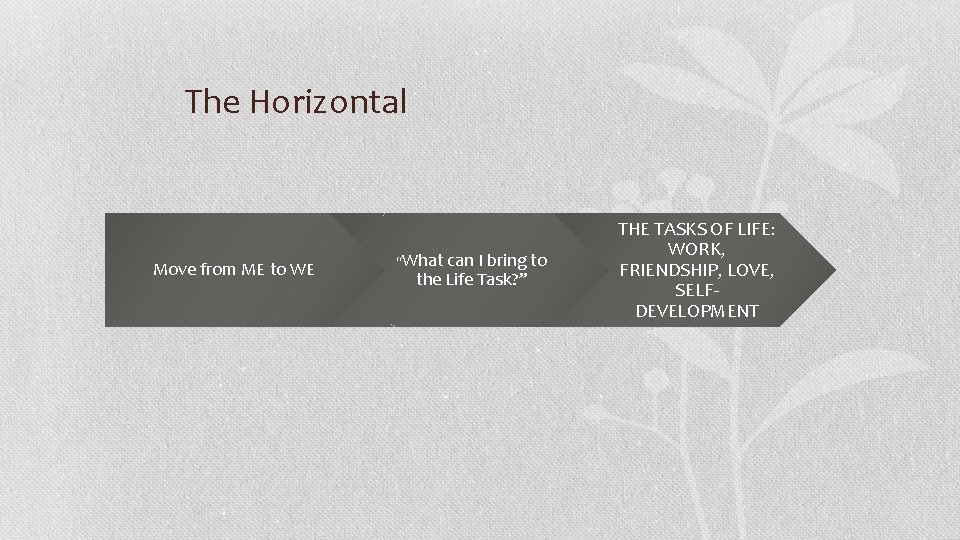
The Horizontal THE TASKS OF LIFE: What can I WORK, Move from Me to “What can I bring to Move from ME to WE LOVE, bring to FRIENDSHIP, the Life Task? ” We SELFTask? DEVELOPMENT
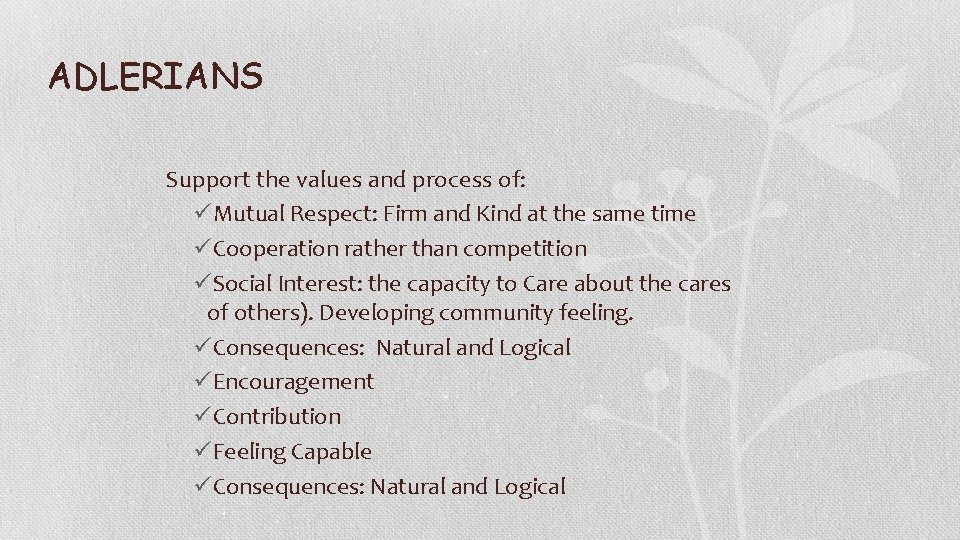
ADLERIANS Support the values and process of: üMutual Respect: Firm and Kind at the same time üCooperation rather than competition üSocial Interest: the capacity to Care about the cares of others). Developing community feeling. üConsequences: Natural and Logical üEncouragement üContribution üFeeling Capable üConsequences: Natural and Logical
Social Interest/State of Well Being is having: “Community feeling” or the “Capacity to “Care about the Cares of Others”
Adler’s Path to Transformation • Acknowledgement and acceptance of ones imperfections. “The Courage to be Imperfect” • The language of praise is replaced by the language of encouragement • The locus of control goes from external to internal • The mind set is the move from “me” to “we”
Daniel Siegel says: “ The brain in each life situation decides whether the situation is safe or dangerous. If the situation is dangerous it will trigger a ‘fight, flight’ response or freeze mode. This inhibits emotional & cognitive growth. ” “If the situation is deemed safe the safety mechanism is triggered (love without fear) which allows the student to sustain focus. ”
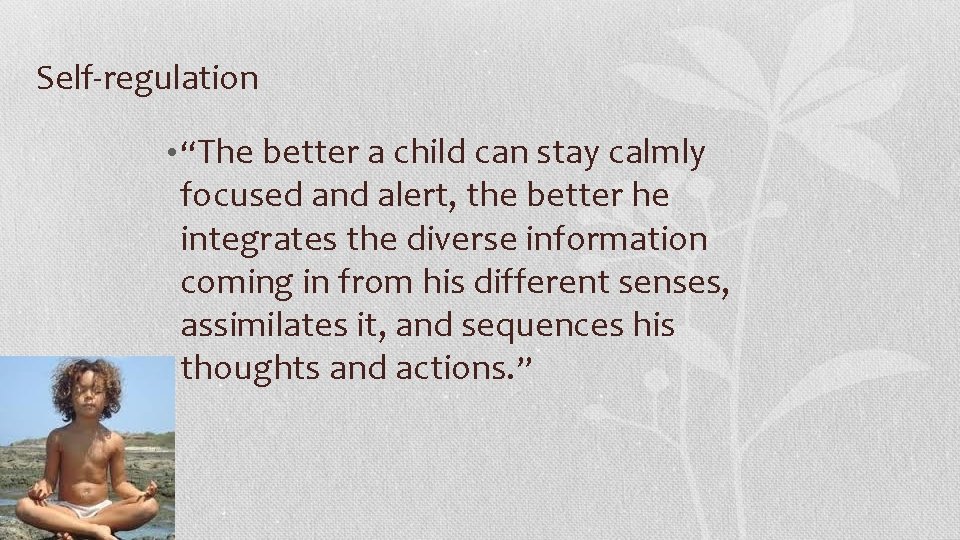
Reduce Anxiety through Self-Regulation: Calm and Alert • Self-regulation is the ability to stay calm and focused and alert. • Compliance is based on external reward and punishment • Self-regulation nurtures the ability to cope with greater and greater challenges
Self-regulation • “The better a child can stay calmly focused and alert, the better he integrates the diverse information coming in from his different senses, assimilates it, and sequences his thoughts and actions. ”
HELPING SELF REGULATE 1. Don’t isolate … encourage teens to use their social network 2. Exercise …. Particularly cardio activities 3. Sleep …. Turn off your devices and get plenty of rest!
Relaxing Helps reduce Anxiety TENSE AND RELEASE: 1. Sitting in a chair, arms hanging down, put up with your arms. Hold for 5 sec. and repeat 2. Sitting in a chair scrunch your face tight for 5 sec. Repeat. 3. Next tense your lower body include your back and stomach. 5 sec. twice 4. Now your whole body 5 sec twice
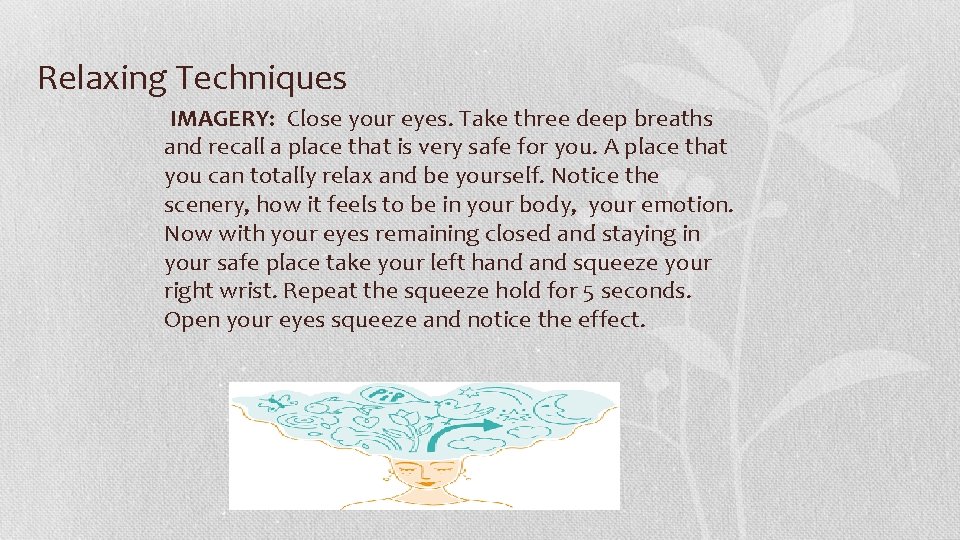
Relaxing Techniques IMAGERY: Close your eyes. Take three deep breaths and recall a place that is very safe for you. A place that you can totally relax and be yourself. Notice the scenery, how it feels to be in your body, your emotion. Now with your eyes remaining closed and staying in your safe place take your left hand squeeze your right wrist. Repeat the squeeze hold for 5 seconds. Open your eyes squeeze and notice the effect.
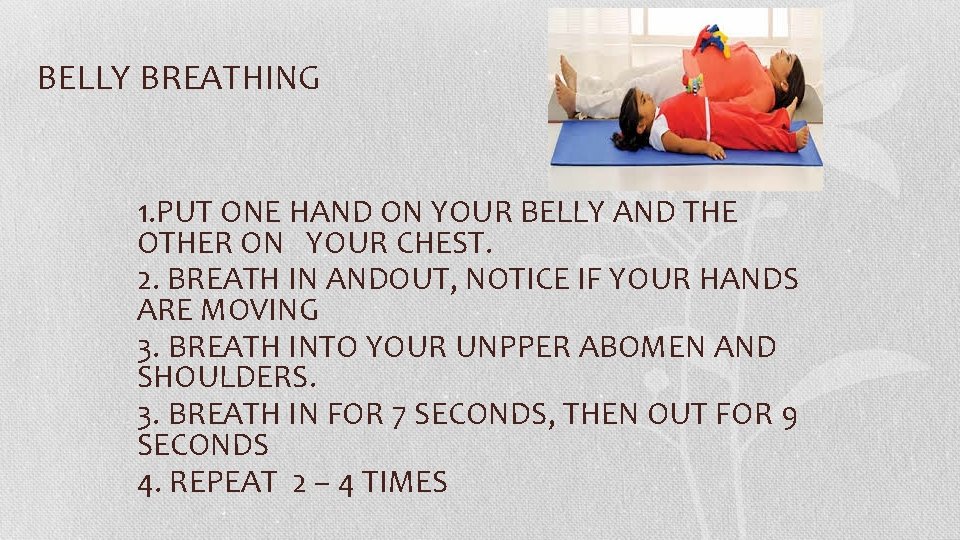
BELLY BREATHING 1. PUT ONE HAND ON YOUR BELLY AND THE OTHER ON YOUR CHEST. 2. BREATH IN ANDOUT, NOTICE IF YOUR HANDS ARE MOVING 3. BREATH INTO YOUR UNPPER ABOMEN AND SHOULDERS. 3. BREATH IN FOR 7 SECONDS, THEN OUT FOR 9 SECONDS 4. REPEAT 2 – 4 TIMES
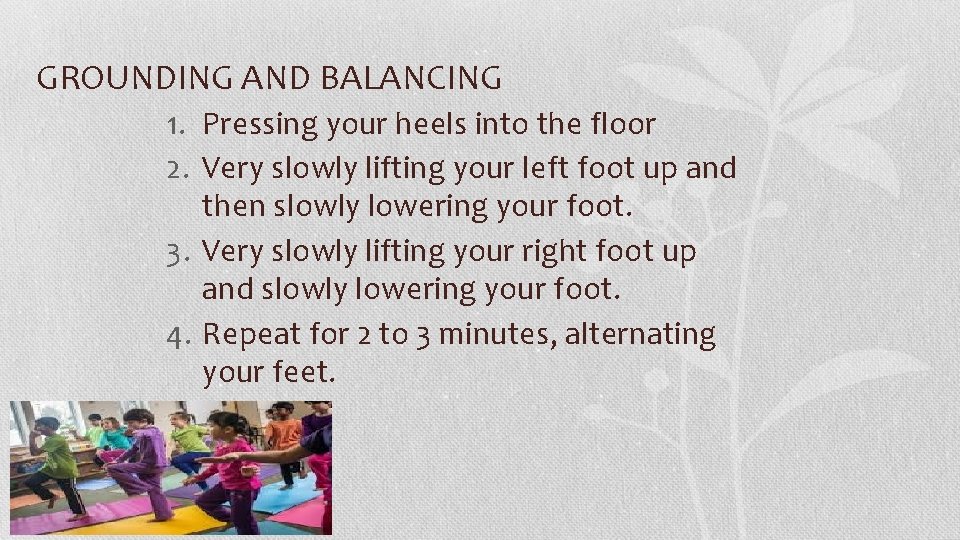
GROUNDING AND BALANCING 1. Pressing your heels into the floor 2. Very slowly lifting your left foot up and then slowly lowering your foot. 3. Very slowly lifting your right foot up and slowly lowering your foot. 4. Repeat for 2 to 3 minutes, alternating your feet.
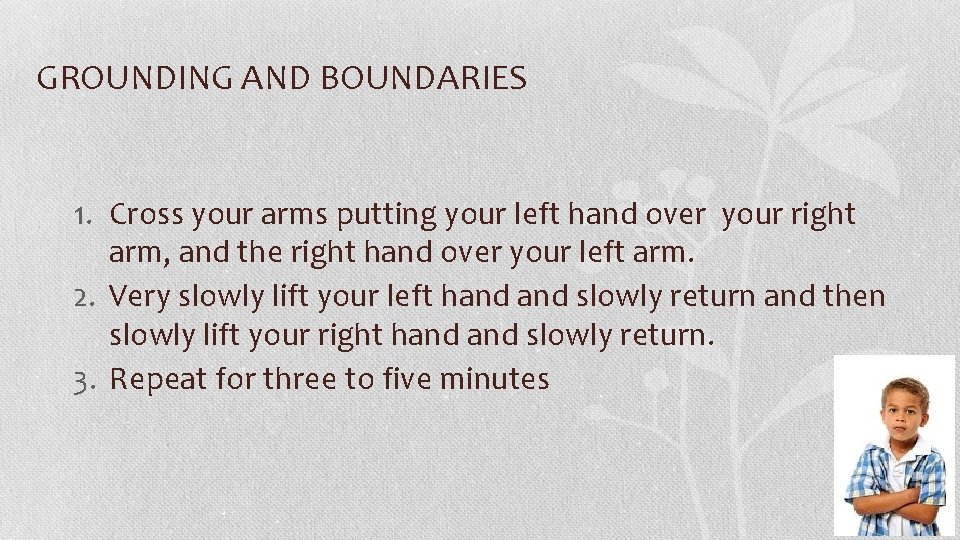
GROUNDING AND BOUNDARIES 1. Cross your arms putting your left hand over your right arm, and the right hand over your left arm. 2. Very slowly lift your left hand slowly return and then slowly lift your right hand slowly return. 3. Repeat for three to five minutes
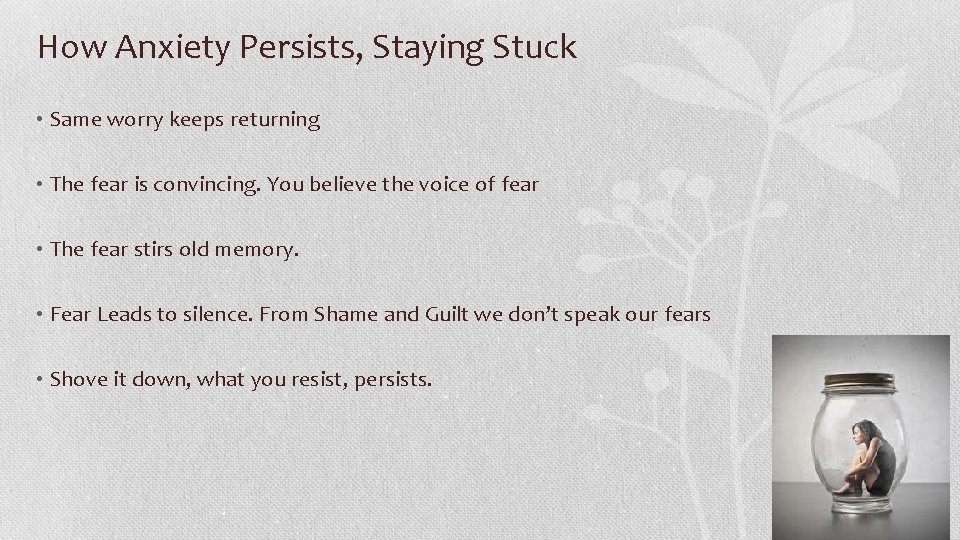
How Anxiety Persists, Staying Stuck • Same worry keeps returning • The fear is convincing. You believe the voice of fear • The fear stirs old memory. • Fear Leads to silence. From Shame and Guilt we don’t speak our fears • Shove it down, what you resist, persists.
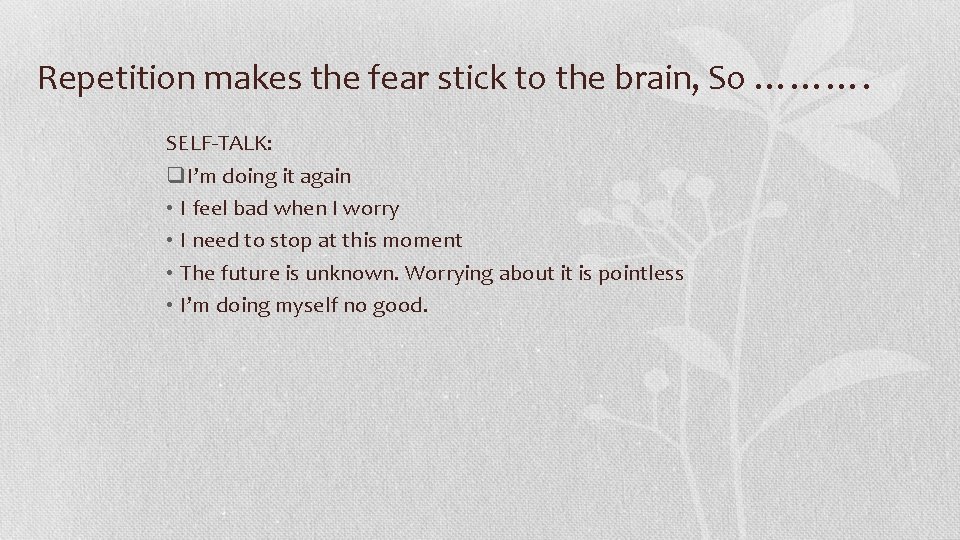
Repetition makes the fear stick to the brain, So ………. SELF-TALK: q. I’m doing it again • I feel bad when I worry • I need to stop at this moment • The future is unknown. Worrying about it is pointless • I’m doing myself no good.
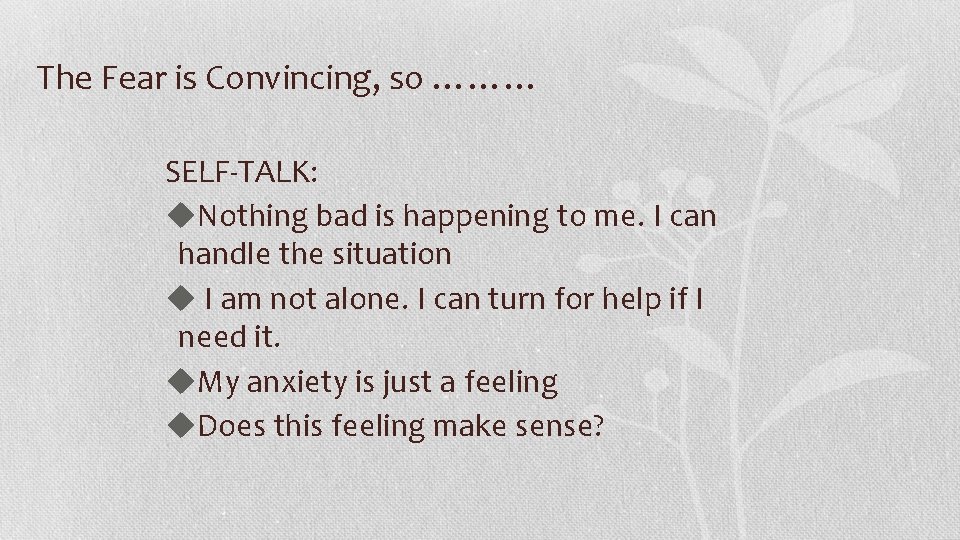
The Fear is Convincing, so ……… SELF-TALK: u. Nothing bad is happening to me. I can handle the situation u I am not alone. I can turn for help if I need it. u. My anxiety is just a feeling u. Does this feeling make sense?
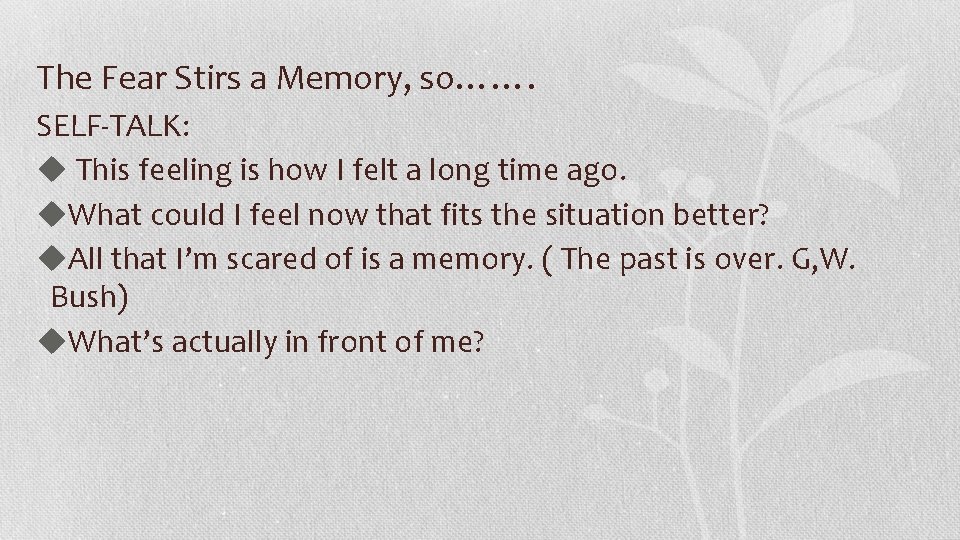
The Fear Stirs a Memory, so……. SELF-TALK: u This feeling is how I felt a long time ago. u. What could I feel now that fits the situation better? u. All that I’m scared of is a memory. ( The past is over. G, W. Bush) u. What’s actually in front of me?
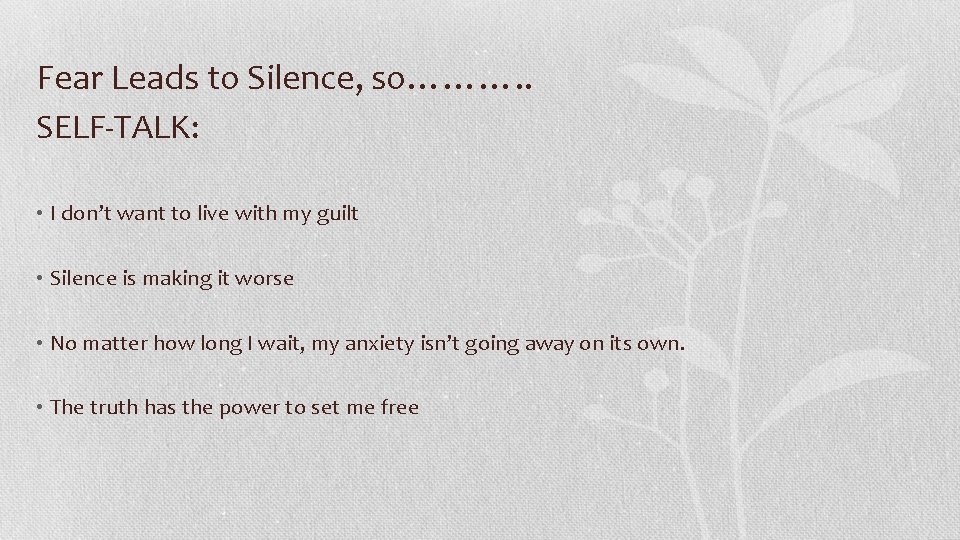
Fear Leads to Silence, so………. . SELF-TALK: • I don’t want to live with my guilt • Silence is making it worse • No matter how long I wait, my anxiety isn’t going away on its own. • The truth has the power to set me free
You shove the pain out of sight, so………………. • SELF-TALK: • I know I am hiding something, and it hurts • It’s scary to come clean, but that’s how I heal. • I want to be unburdened • Being haunted makes me too anxious • I am not going to die, no matter how scary this is. • The more I face fear, the more control I gain over it
“Children need encouragement like a plant needs water” Dreikurs • Encouraging and Acknowledging Brave, Non-anxious Behaviour • Encouraging the Child to Cope Constructively: Helping the child acknowledge their fear, encourage him to come up with ways of coping.
ENCOURAGEMENT: is the total acceptance of the person as they are, regardless of their lack of skills and ability. • “Children need encouragement the same way a plant needs water. ” • Rudolph Dreikurs
Methods of Encouragement üFocus on strengths and abilities üAcknowledge effort and improvements üMake every effort to eliminate criticism üAccept the student’s feelings. Truly listen to students üRecognize contributions üShow faith in the child üEncourage the child to self-assess
Methods of Encouragement Continued üDon’t feel sorry for the child üDon’t praise the child üAvoid bribery to control üInstill “The Courage to be imperfect. ” ü Look for opportunities to develop empathy üDon’t be to helpful, but provide scaffolding to assist üTeach kids to ‘care about the cares of others. ’
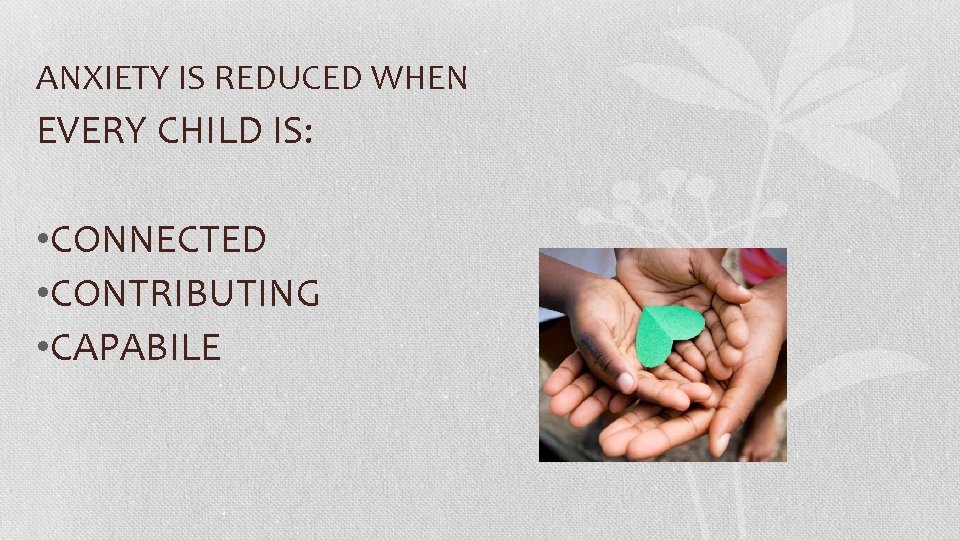
ANXIETY IS REDUCED WHEN EVERY CHILD IS: • CONNECTED • CONTRIBUTING • CAPABILE
Safety Mechanism • It the situation is deemed safe, then the Safety Mechanism is triggered • (Love without Fear) which allows the student to sustain focus.
MINDFULNESS AND MEDITATION Mindfulness Techniques take the attention to the present moment and away from the Future were anxiety lives. Produces theta waves in the brain. Meditation, ‘TM’ in particular produces deep rest which dissolves deep rooted stress and strain. Produces Alpha waves. Integrates the whole brain thus Improved learning
QUESTIONS AND DISCUSSION
THANK YOU! You can download this Power Point at: www. adlercentre. ca OR Email: apabc@adler. bc. ca