
Fossils What is a Fossil Remains or evidence
- Slides: 18
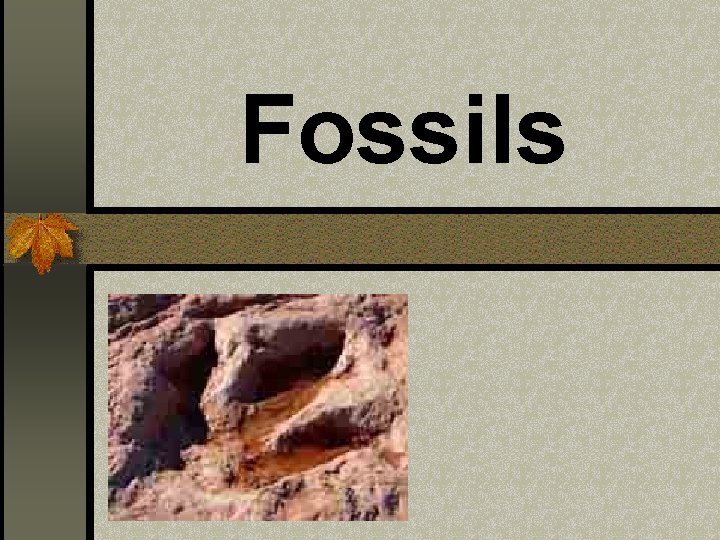
Fossils
What is a Fossil? Remains or evidence of any organism that once lived on the Earth
Yes/No Signs! Hold up your sign to tell me if you think the example is a fossil or not!
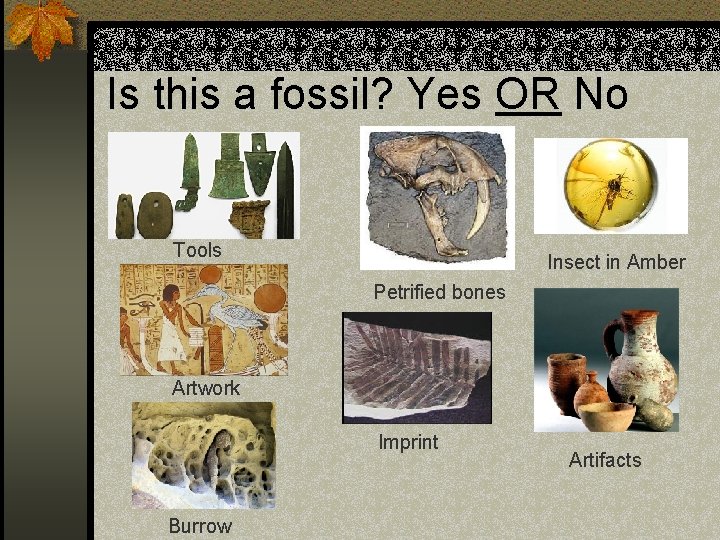
Is this a fossil? Yes OR No Tools Insect in Amber Petrified bones Artwork Imprint Burrow Artifacts
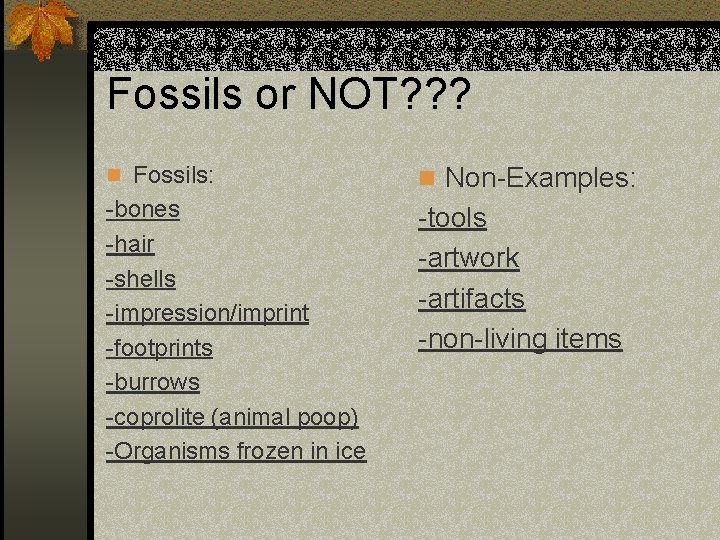
Fossils or NOT? ? ? n Fossils: n Non-Examples: -bones -hair -shells -impression/imprint -footprints -burrows -coprolite (animal poop) -Organisms frozen in ice -tools -artwork -artifacts -non-living items
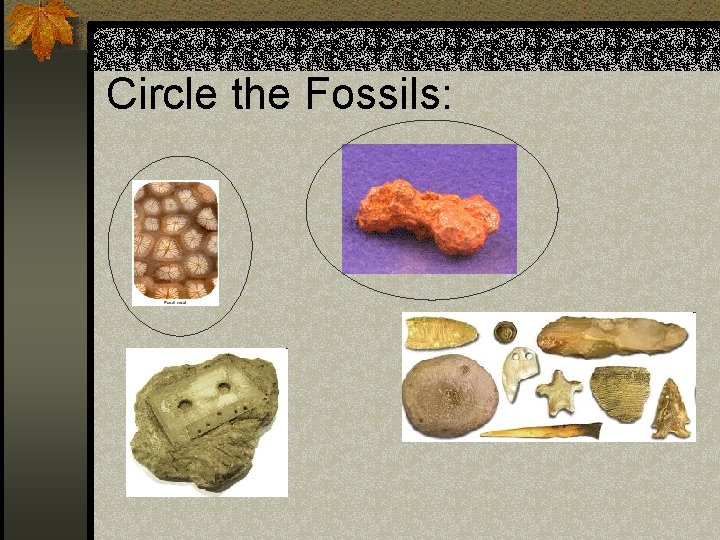
Circle the Fossils:
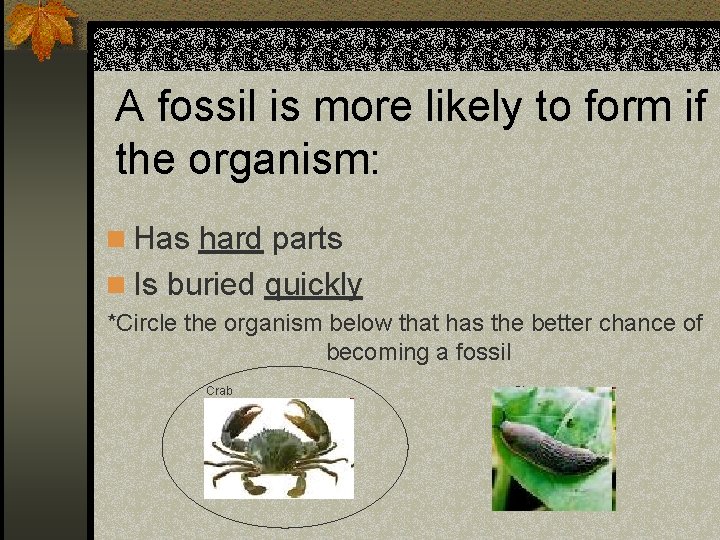
A fossil is more likely to form if the organism: n Has hard parts n Is buried quickly *Circle the organism below that has the better chance of becoming a fossil Crab Slug
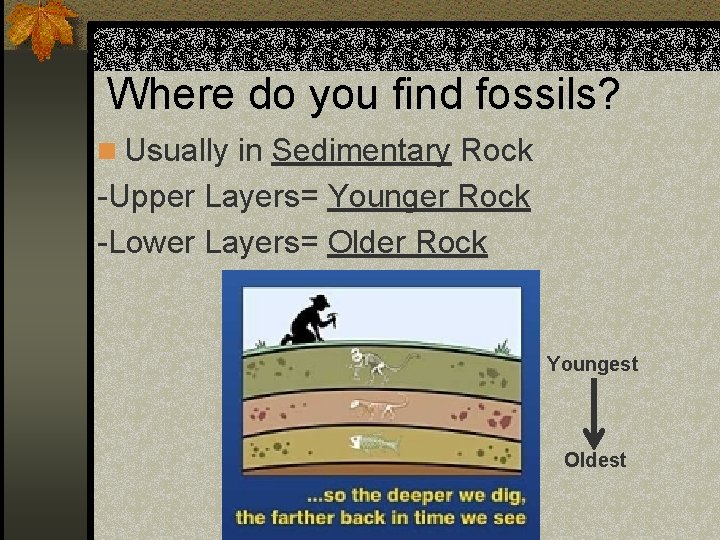
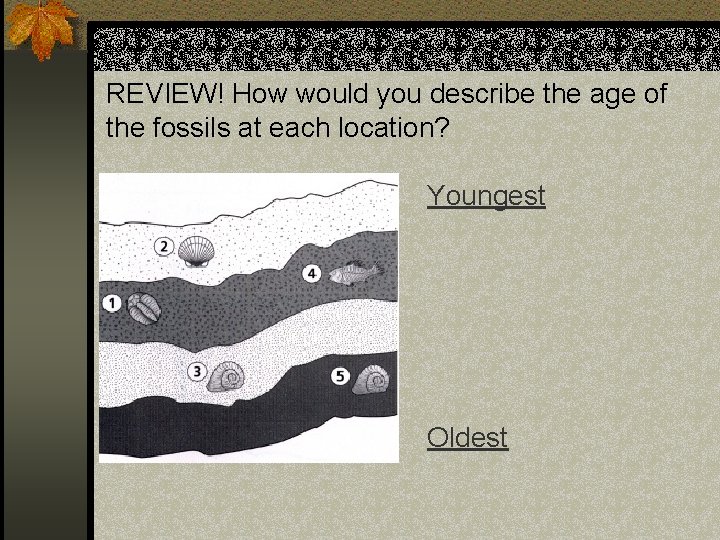
Where do you find fossils? n Usually in Sedimentary Rock -Upper Layers= Younger Rock -Lower Layers= Older Rock Youngest Oldest
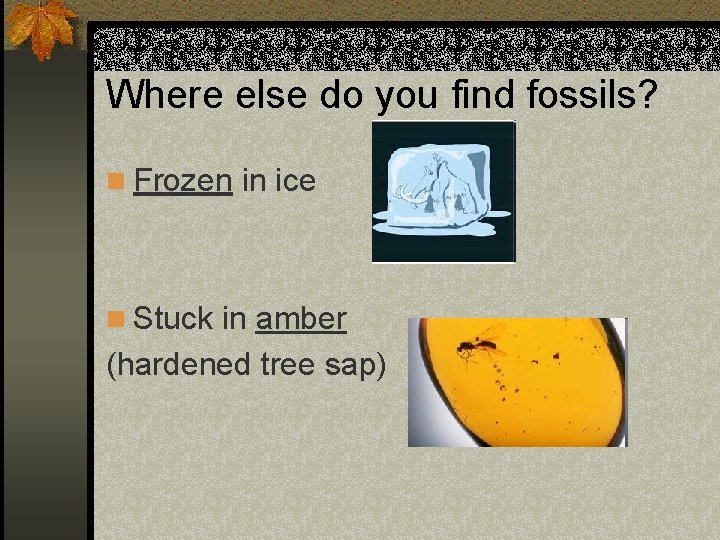
Where else do you find fossils? n Frozen in ice n Stuck in amber (hardened tree sap)
REVIEW! How would you describe the age of the fossils at each location? Youngest Oldest
What can fossils show us? n What organisms looked like in the past n What the organism ate n Behavior of the organism (like if it traveled in herds or not) n What the climate was like at that time n Whether the area was under water n Periods of mass extinction
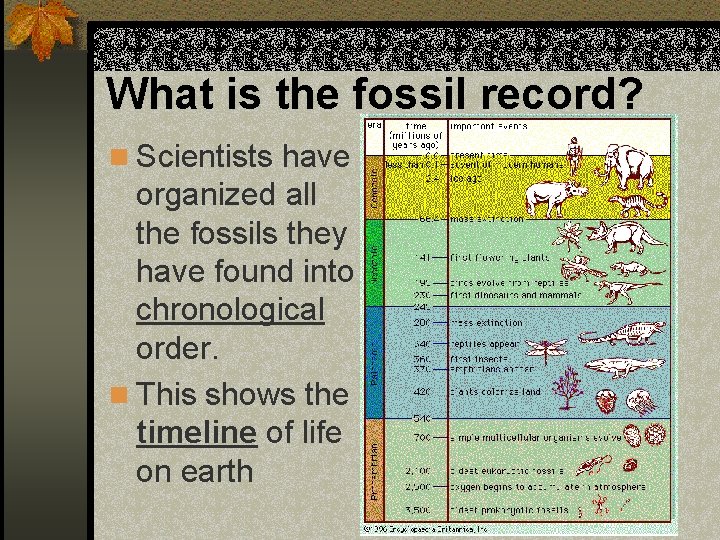
What is the fossil record? n Scientists have organized all the fossils they have found into chronological order. n This shows the timeline of life on earth
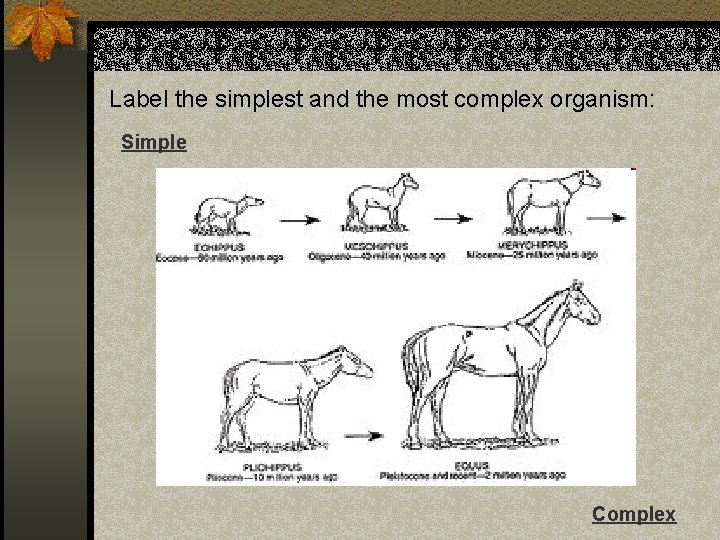
How can fossils show evolution? Paleontologists have found the older the fossil is, the more simple it is. A more recent fossil is more complex.
Label the simplest and the most complex organism: Simple Complex
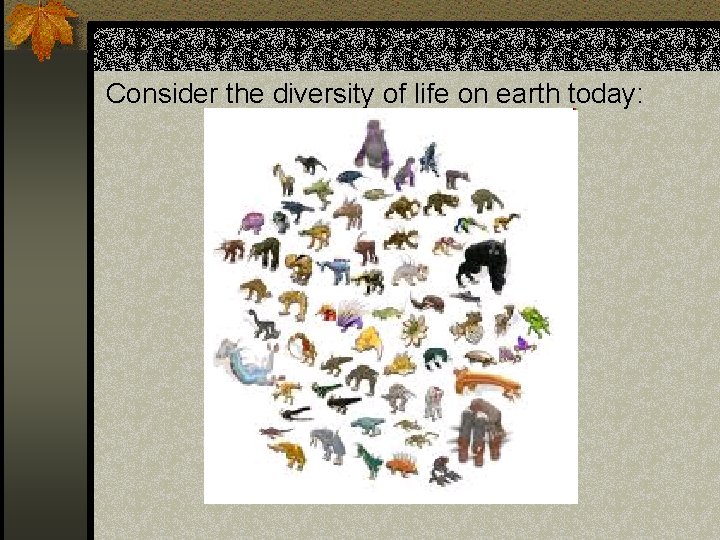
Consider the diversity of life on earth today:
This is only 1% of what has ever existed!!! 99% of the species that ever lived on Earth are now extinct!
What percent of life ever gets fossilized? Less than 10%
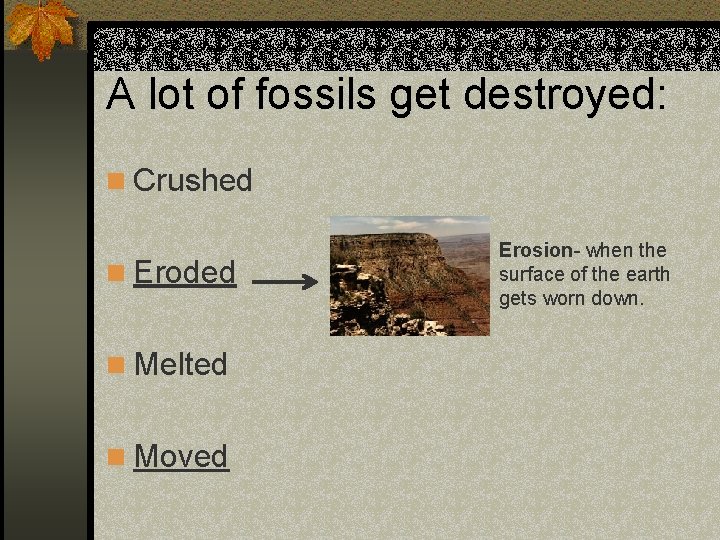
A lot of fossils get destroyed: n Crushed n Eroded n Melted n Moved Erosion- when the surface of the earth gets worn down.