
FOSSILS GEOLOGICAL TIME WHAT IS A FOSSIL A
- Slides: 15
FOSSILS GEOLOGICAL TIME
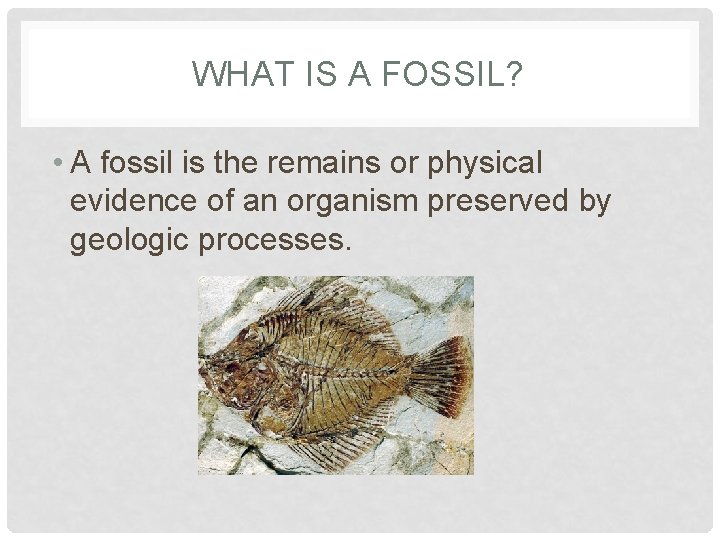
WHAT IS A FOSSIL? • A fossil is the remains or physical evidence of an organism preserved by geologic processes.
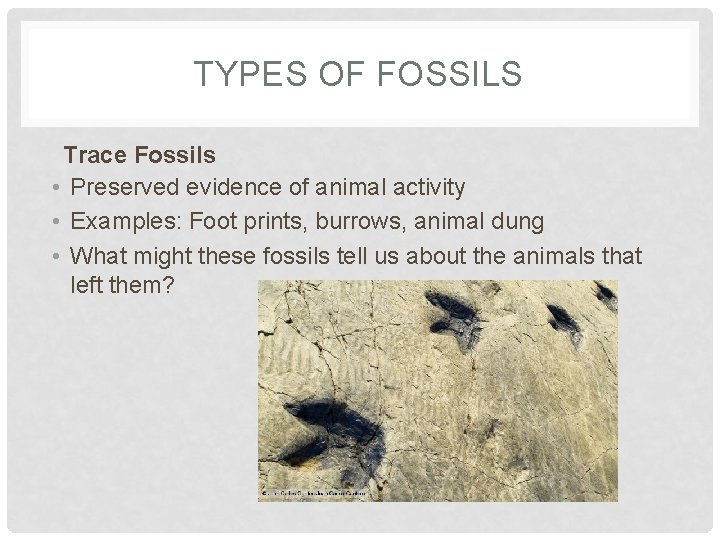
TYPES OF FOSSILS Trace Fossils • Preserved evidence of animal activity • Examples: Foot prints, burrows, animal dung • What might these fossils tell us about the animals that left them?
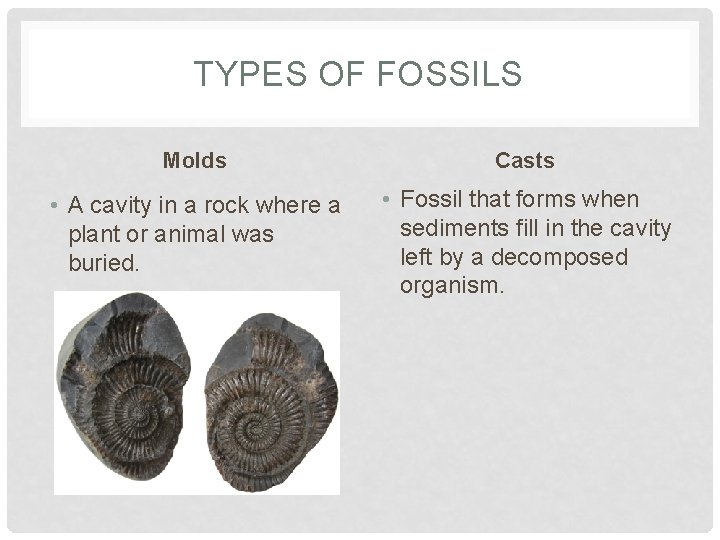
TYPES OF FOSSILS Molds Casts • A cavity in a rock where a plant or animal was buried. • Fossil that forms when sediments fill in the cavity left by a decomposed organism.
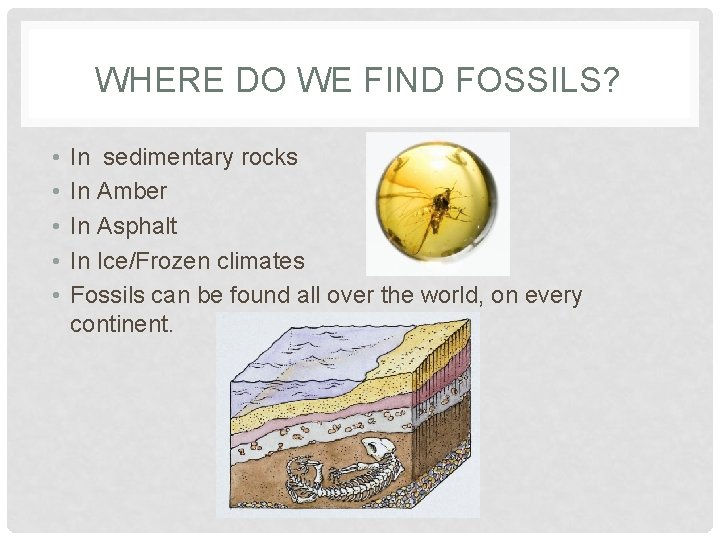
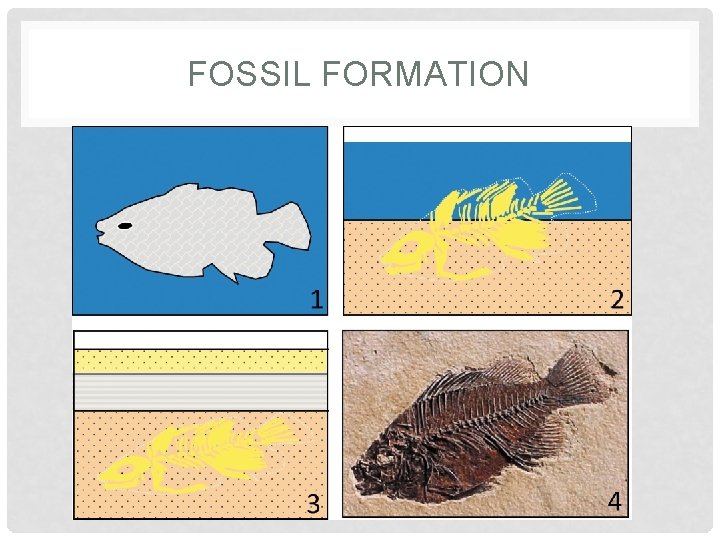
WHERE DO WE FIND FOSSILS? • • • In sedimentary rocks In Amber In Asphalt In Ice/Frozen climates Fossils can be found all over the world, on every continent.
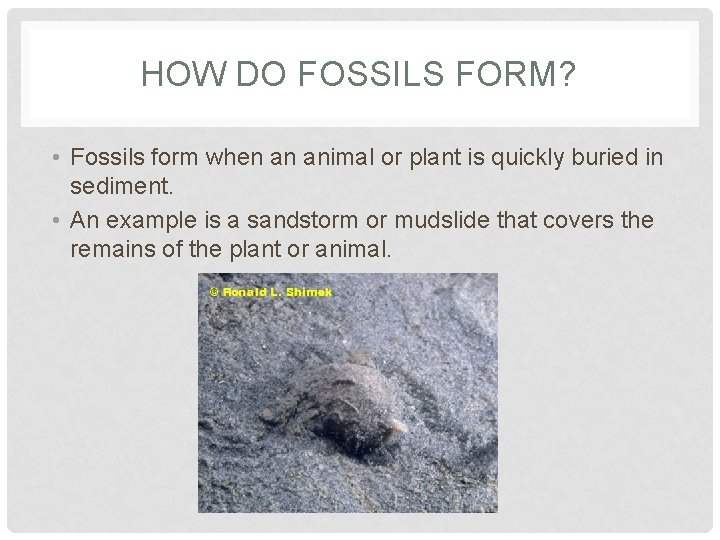
FOSSIL FORMATION
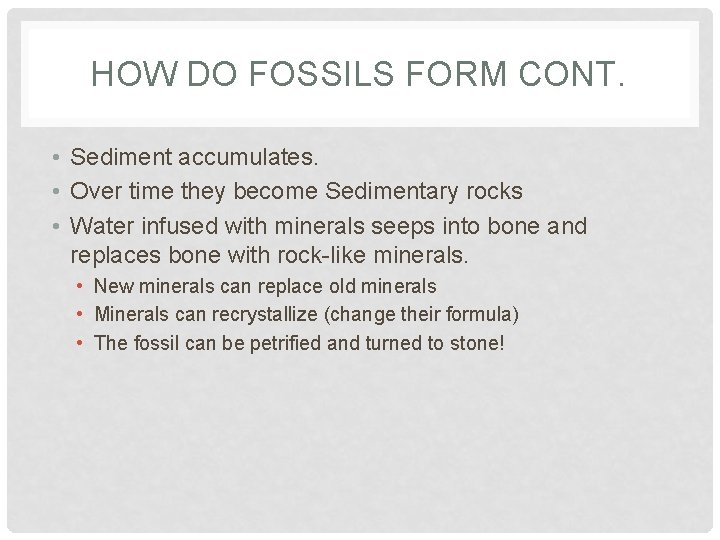
HOW DO FOSSILS FORM? • Fossils form when an animal or plant is quickly buried in sediment. • An example is a sandstorm or mudslide that covers the remains of the plant or animal.
HOW DO FOSSILS FORM CONT. • Sediment accumulates. • Over time they become Sedimentary rocks • Water infused with minerals seeps into bone and replaces bone with rock-like minerals. • New minerals can replace old minerals • Minerals can recrystallize (change their formula) • The fossil can be petrified and turned to stone!
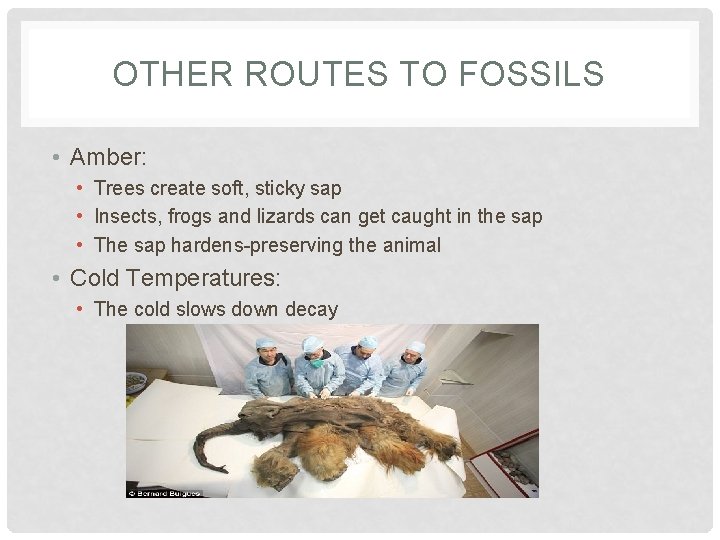
OTHER ROUTES TO FOSSILS • Amber: • Trees create soft, sticky sap • Insects, frogs and lizards can get caught in the sap • The sap hardens-preserving the animal • Cold Temperatures: • The cold slows down decay
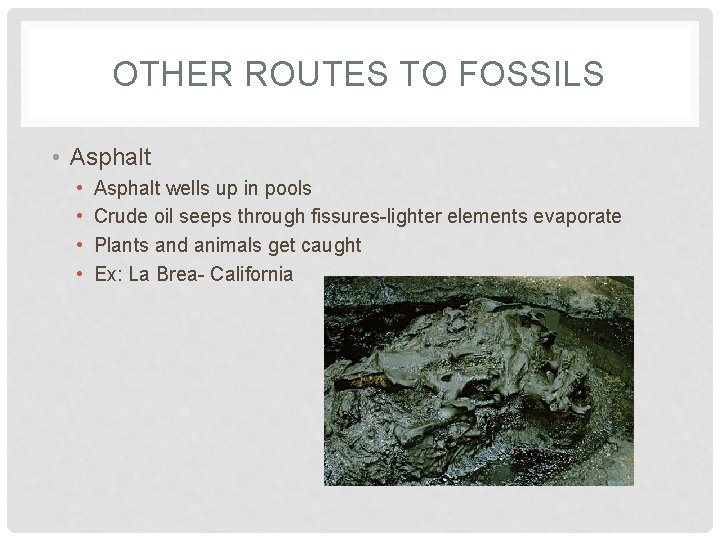
OTHER ROUTES TO FOSSILS • Asphalt • • Asphalt wells up in pools Crude oil seeps through fissures-lighter elements evaporate Plants and animals get caught Ex: La Brea- California
THE LUCKY FEW • The majority of all living things either decompose because they are exposed to the elements or they are consumed by other animals! • Check out the decomposition of this bunny: • https: //www. youtube. com/watch? v=C 6 s. FP_7 Vezg
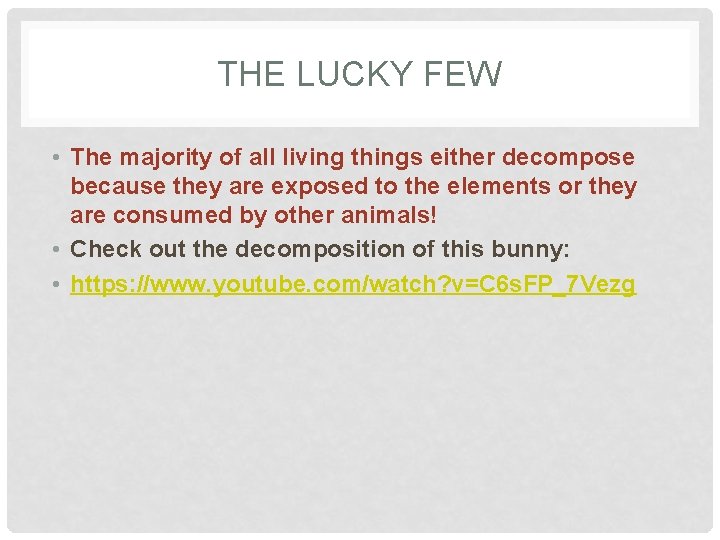
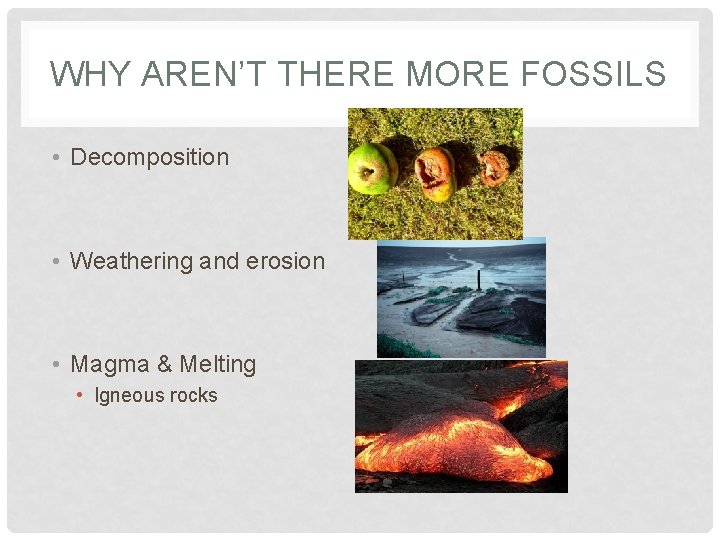
WHY AREN’T THERE MORE FOSSILS • Decomposition • Weathering and erosion • Magma & Melting • Igneous rocks
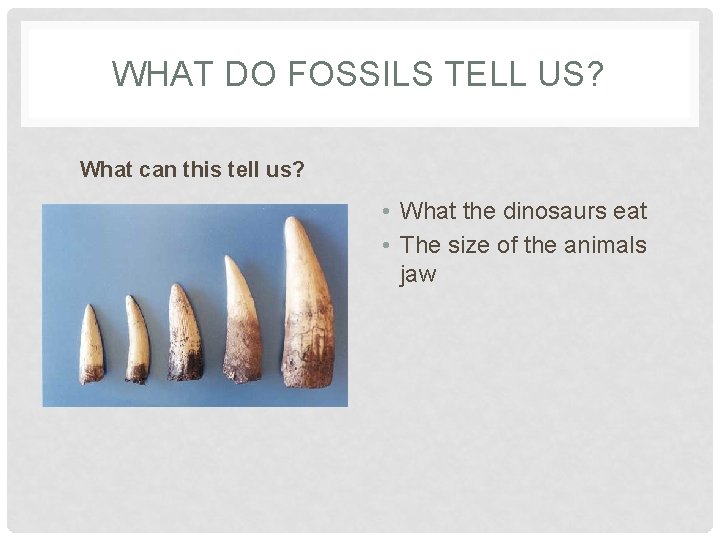
WHAT DO FOSSILS TELL US? What can this tell us? • What the dinosaurs eat • The size of the animals jaw
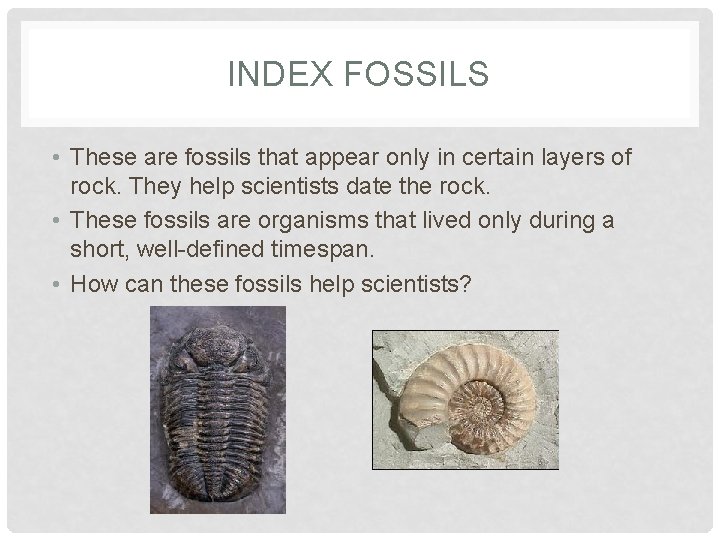
INDEX FOSSILS • These are fossils that appear only in certain layers of rock. They help scientists date the rock. • These fossils are organisms that lived only during a short, well-defined timespan. • How can these fossils help scientists?
I CAN • How can this help you explain why the fossil record is an incomplete record of life on Earth? • How can this help you explain how scientists use fossils?