
FOSSILS Fossils From the Latin word fossilis meaning

- Slides: 18
FOSSILS
• Fossils – From the Latin word “fossilis” meaning “dug-up” – Any trace remains of once living organisms
• What can fossils tell us? – When life began – What & where organisms once lived – How organisms lived/behaved – Environmental conditions
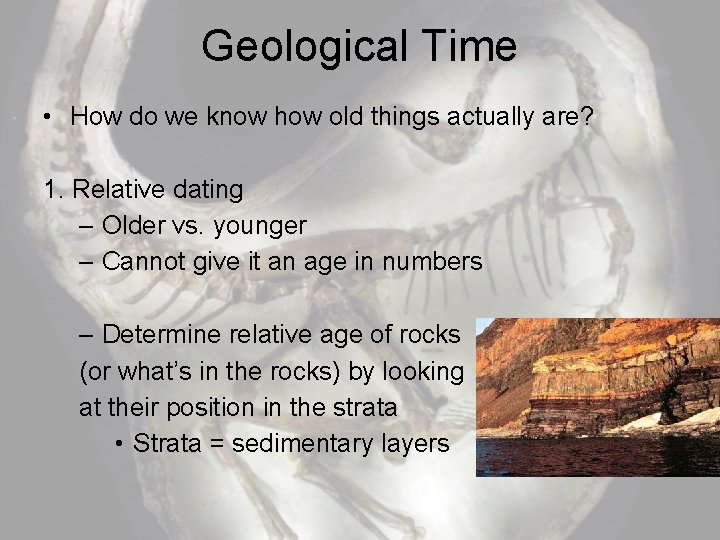
Geological Time • How do we know how old things actually are? 1. Relative dating – Older vs. younger – Cannot give it an age in numbers – Determine relative age of rocks (or what’s in the rocks) by looking at their position in the strata • Strata = sedimentary layers
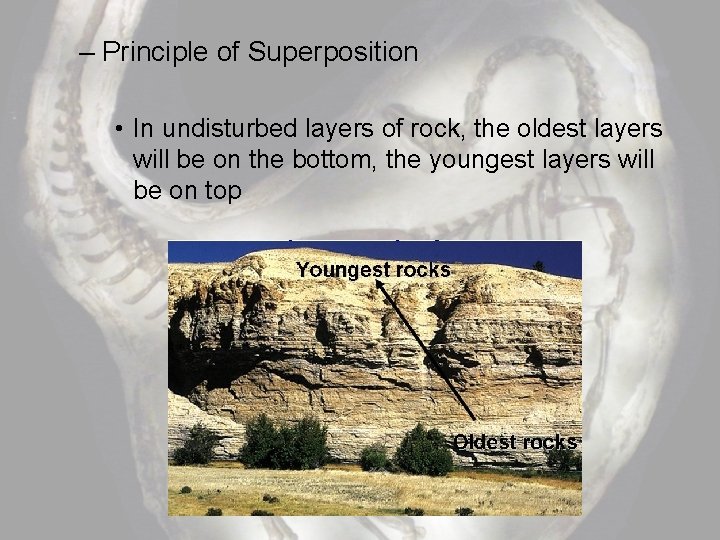
– Principle of Superposition • In undisturbed layers of rock, the oldest layers will be on the bottom, the youngest layers will be on top
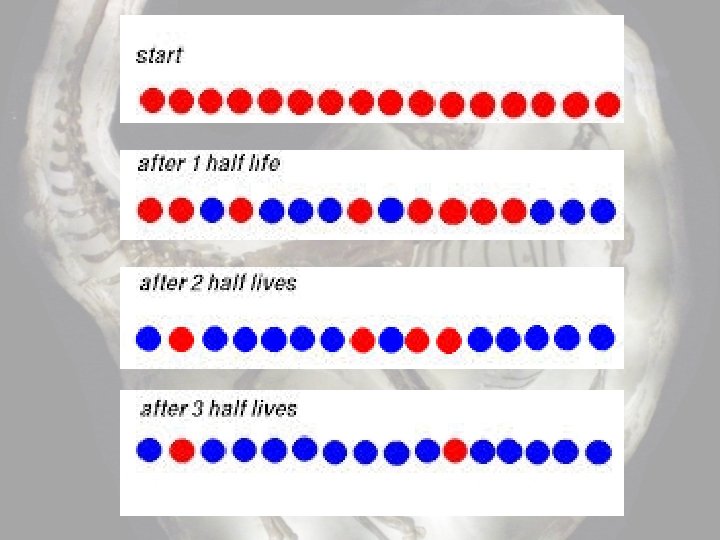
2. Radiometric dating – Determine the absolute age of a rock by measuring the amount of chemical elements – Over billions of years, some chemicals change into others • Ex. uranium lead carbon-14 nitrogen
Fossil Formation • Remains (plant or animal) are protected from scavengers, decomposers and the environment & preserved
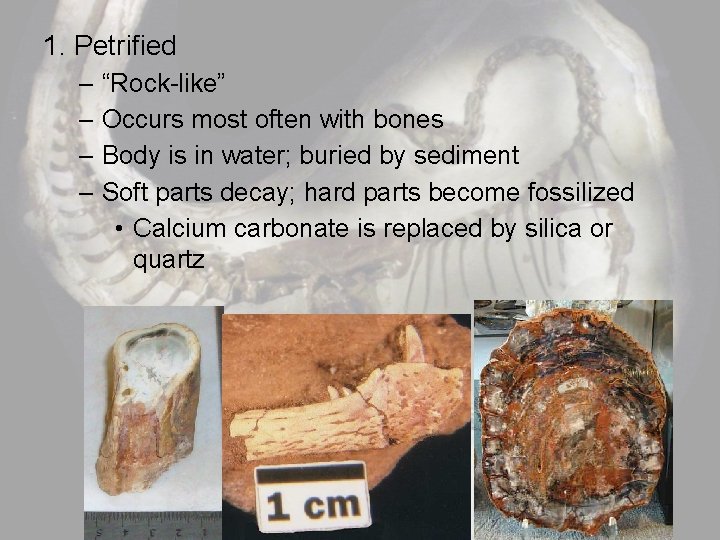
1. Petrified – – “Rock-like” Occurs most often with bones Body is in water; buried by sediment Soft parts decay; hard parts become fossilized • Calcium carbonate is replaced by silica or quartz
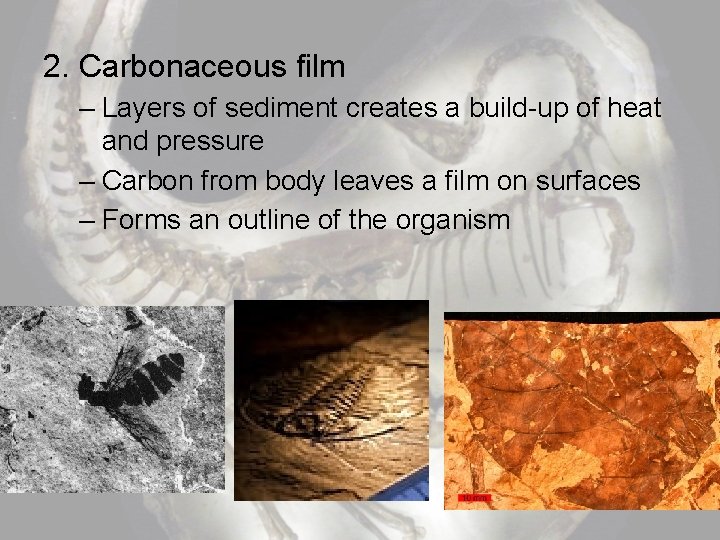
2. Carbonaceous film – Layers of sediment creates a build-up of heat and pressure – Carbon from body leaves a film on surfaces – Forms an outline of the organism
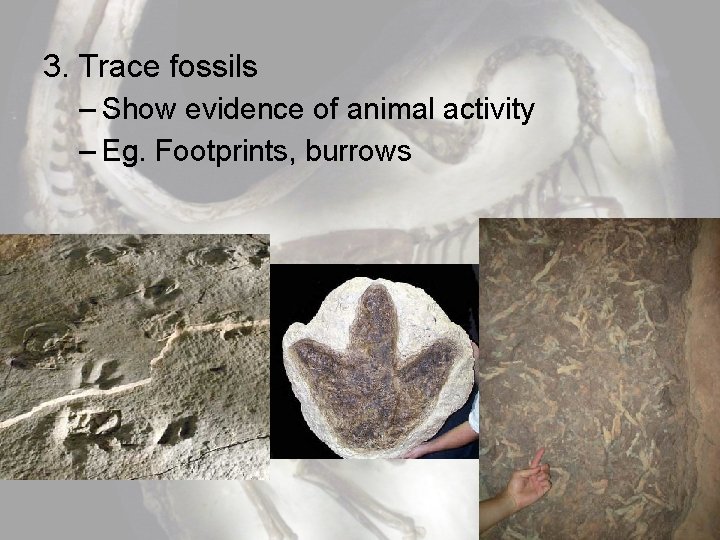
3. Trace fossils – Show evidence of animal activity – Eg. Footprints, burrows
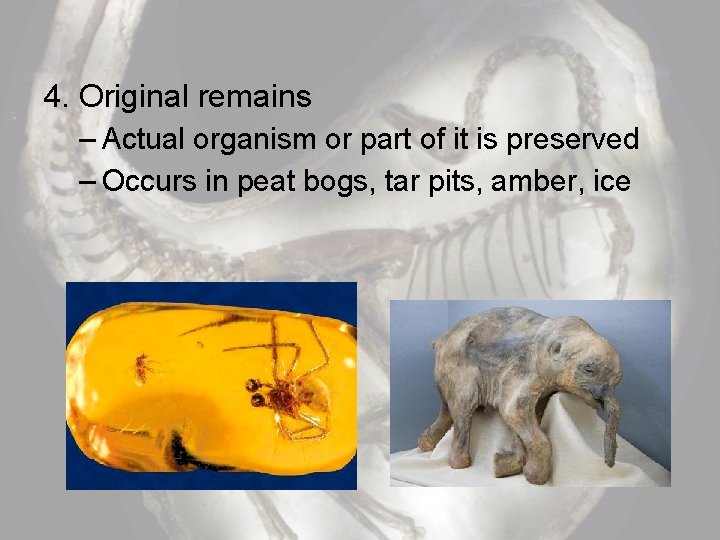
4. Original remains – Actual organism or part of it is preserved – Occurs in peat bogs, tar pits, amber, ice
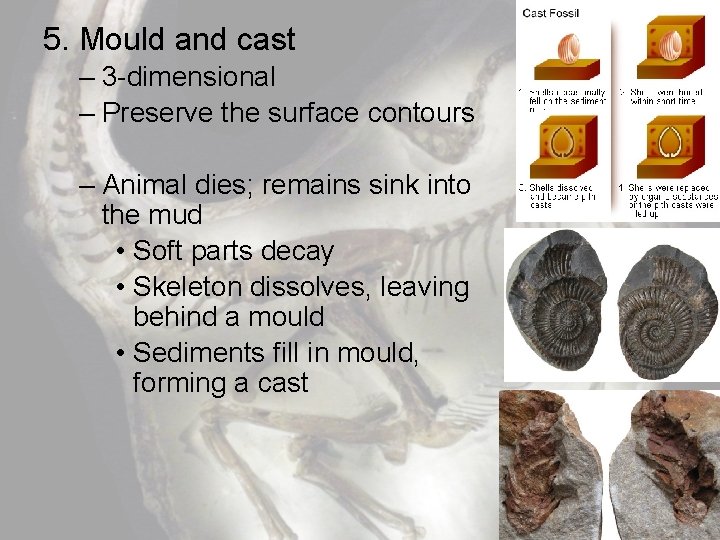
5. Mould and cast – 3 -dimensional – Preserve the surface contours – Animal dies; remains sink into the mud • Soft parts decay • Skeleton dissolves, leaving behind a mould • Sediments fill in mould, forming a cast
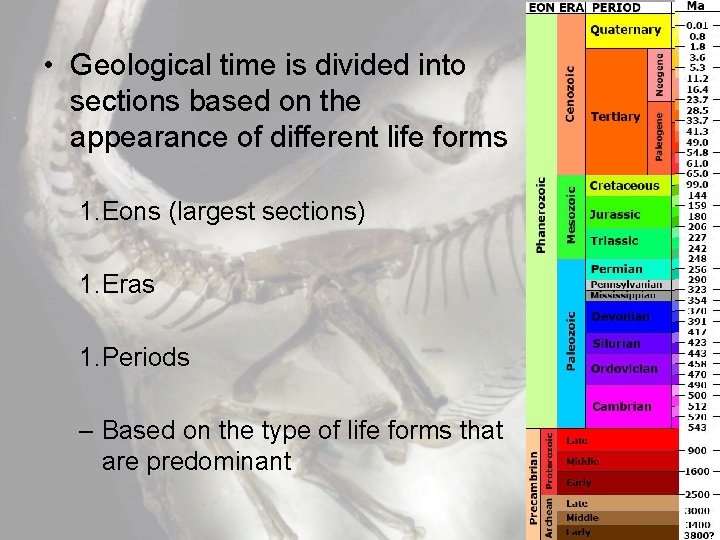
• Geological time is divided into sections based on the appearance of different life forms 1. Eons (largest sections) 1. Eras 1. Periods – Based on the type of life forms that are predominant
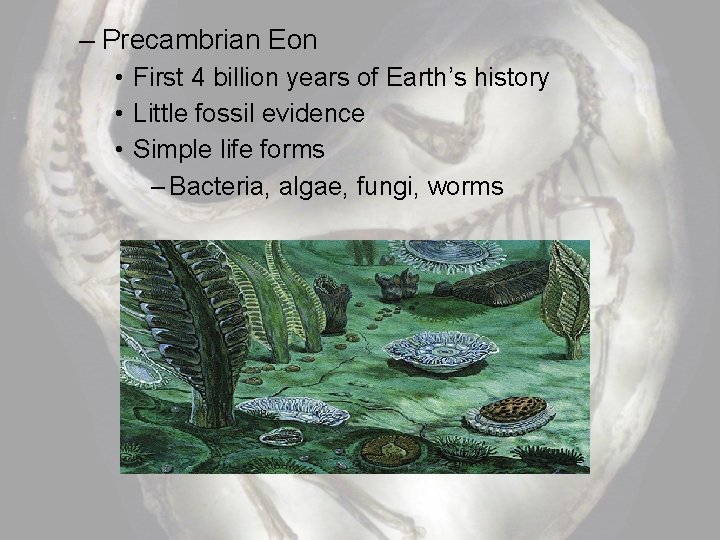
– Precambrian Eon • First 4 billion years of Earth’s history • Little fossil evidence • Simple life forms – Bacteria, algae, fungi, worms
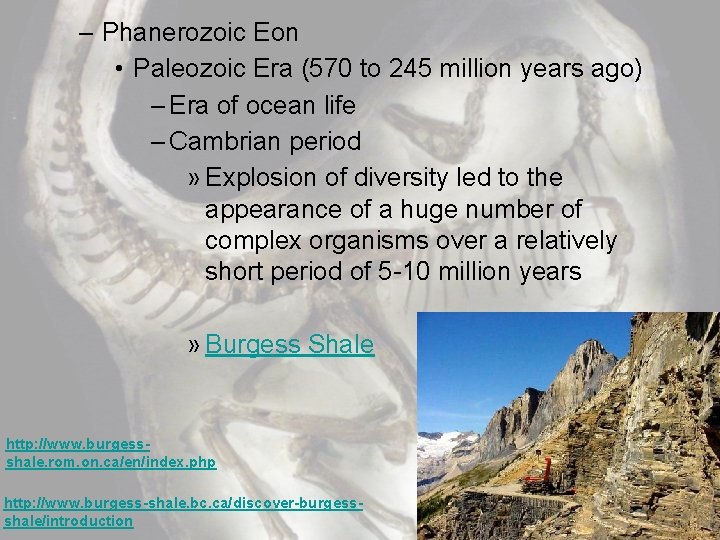
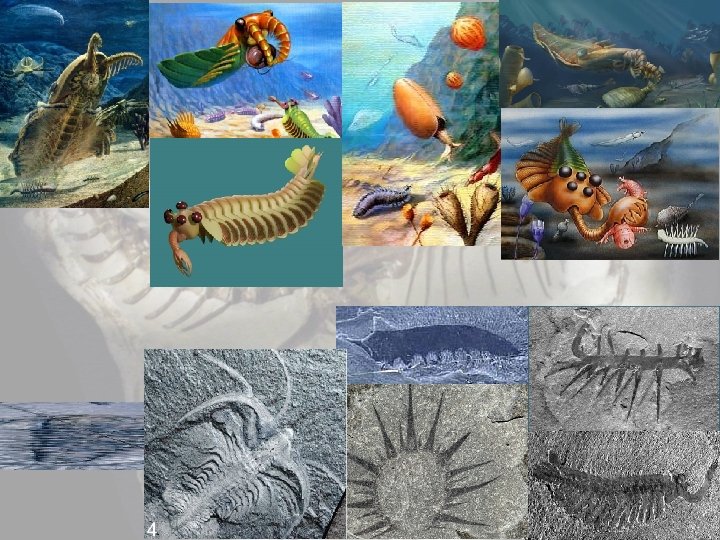
– Phanerozoic Eon • Paleozoic Era (570 to 245 million years ago) – Era of ocean life – Cambrian period » Explosion of diversity led to the appearance of a huge number of complex organisms over a relatively short period of 5 -10 million years » Burgess Shale http: //www. burgessshale. rom. on. ca/en/index. php http: //www. burgess-shale. bc. ca/discover-burgessshale/introduction
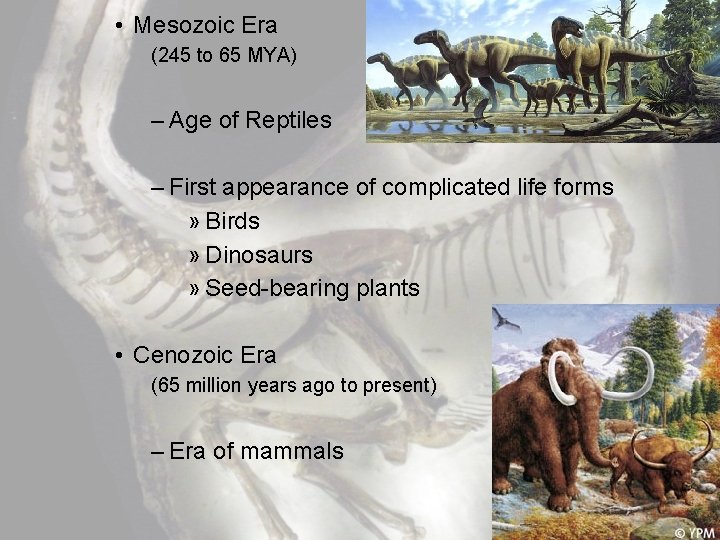
• Mesozoic Era (245 to 65 MYA) – Age of Reptiles – First appearance of complicated life forms » Birds » Dinosaurs » Seed-bearing plants • Cenozoic Era (65 million years ago to present) – Era of mammals