
Fossils Fossil The preserved remains or evidence of
- Slides: 13
Fossils
Fossil The preserved remains or evidence of ancient living things
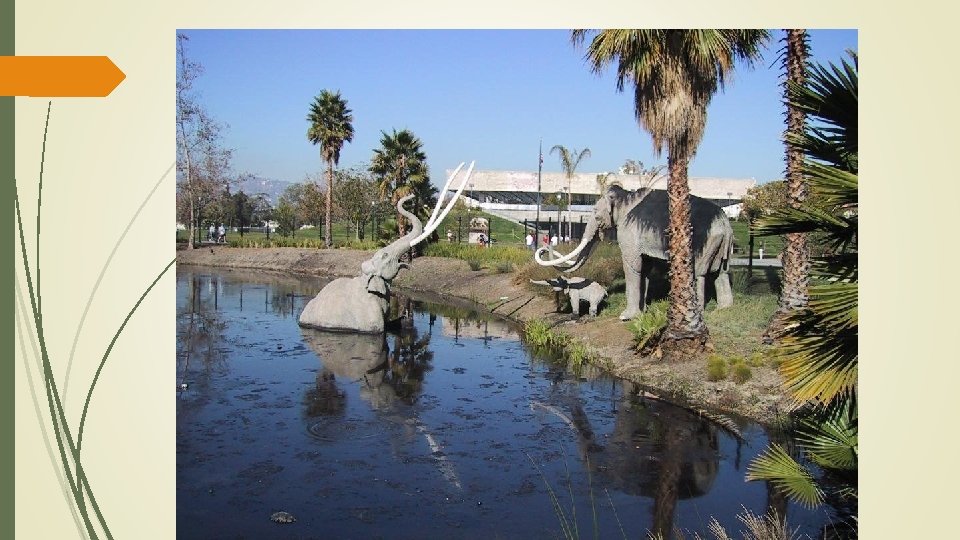
Formation of Fossils Most plants and animals are eaten or decay; leaving no evidence behind Some conditions increase the chances of fossil formation Has hard parts – shells, teeth or bones Buried quickly after it dies
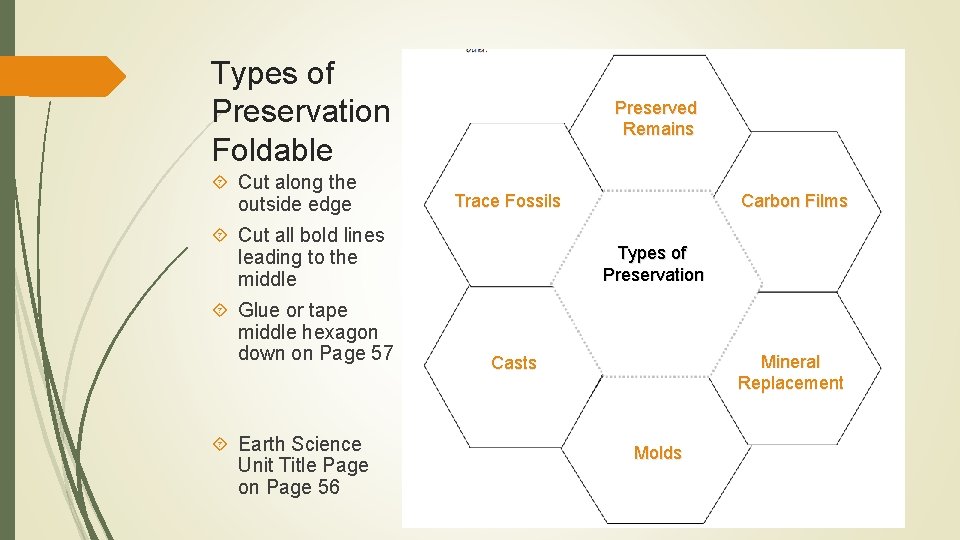
Types of Preservation Foldable Cut along the outside edge Preserved Remains Trace Fossils Cut all bold lines leading to the middle Glue or tape middle hexagon down on Page 57 Earth Science Unit Title Page on Page 56 Carbon Films Types of Preservation Mineral Replacement Casts Molds
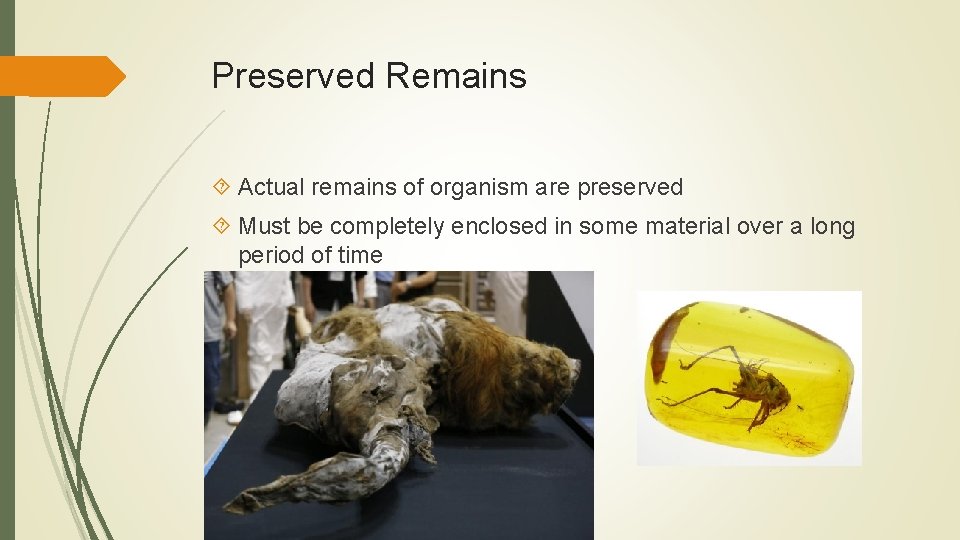
Preserved Remains Actual remains of organism are preserved Must be completely enclosed in some material over a long period of time
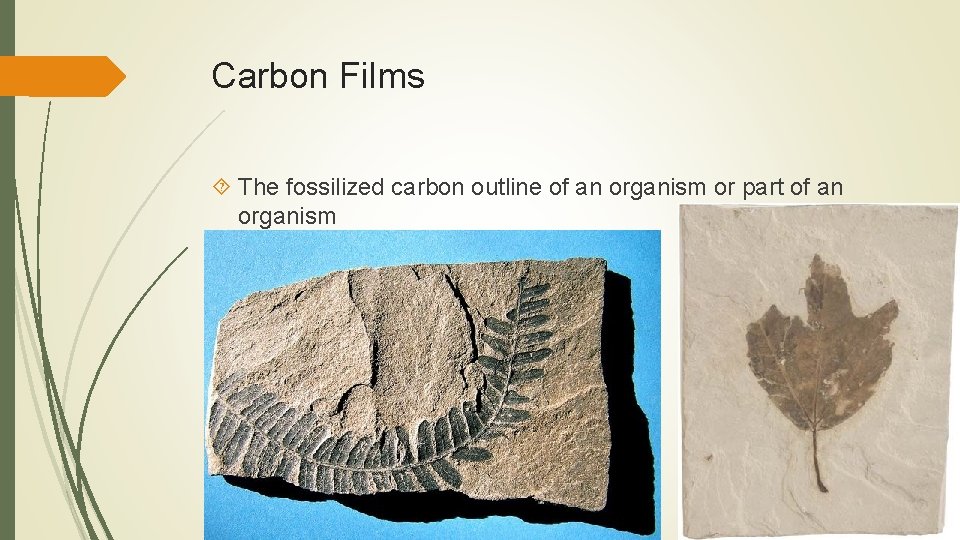
Carbon Films The fossilized carbon outline of an organism or part of an organism
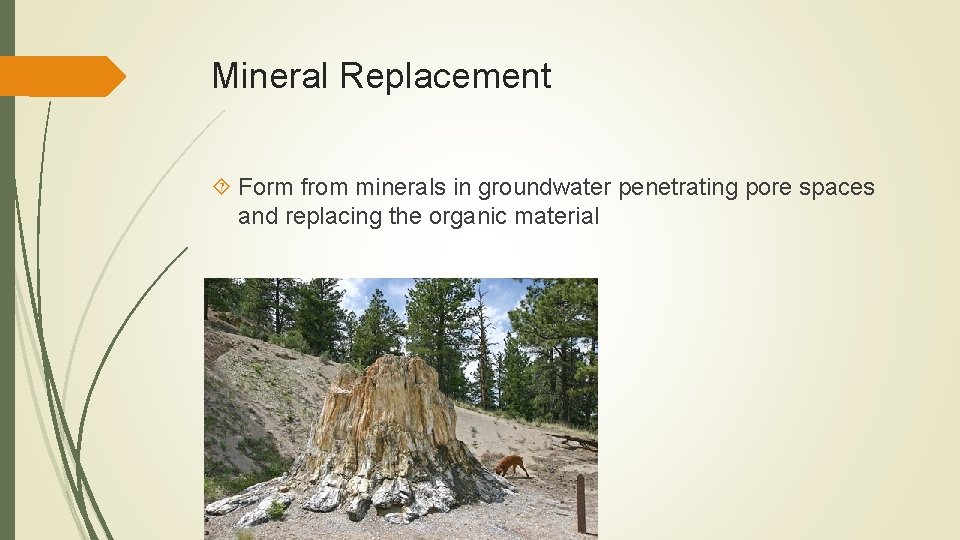
Mineral Replacement Form from minerals in groundwater penetrating pore spaces and replacing the organic material
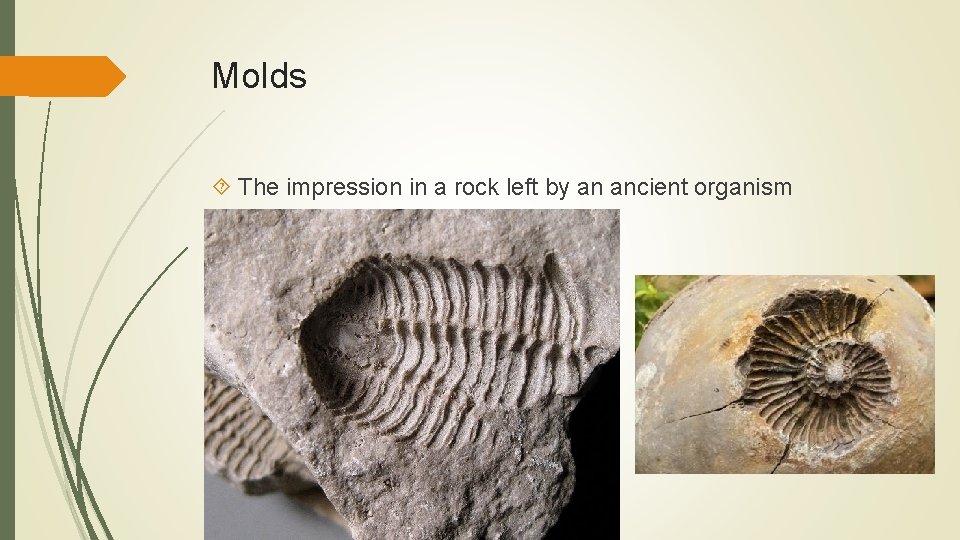
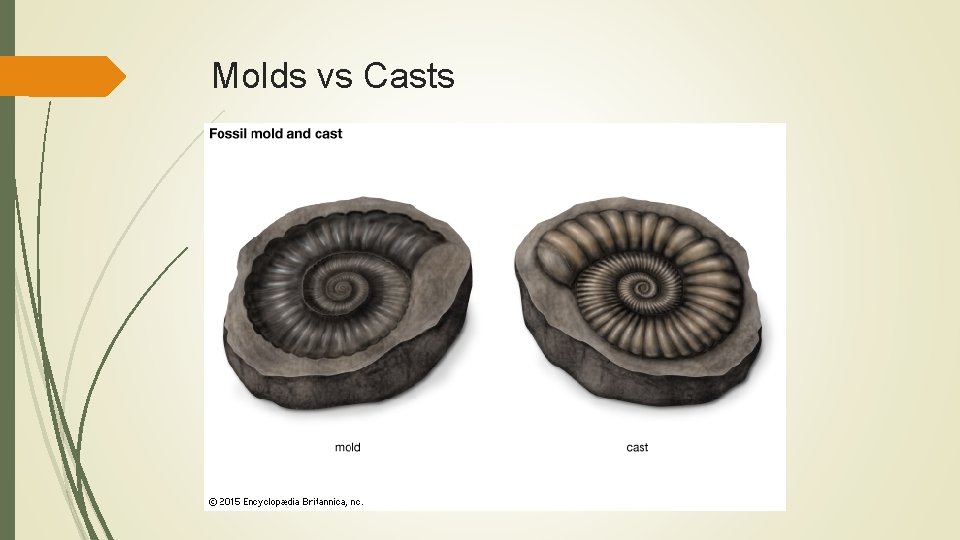
Molds The impression in a rock left by an ancient organism
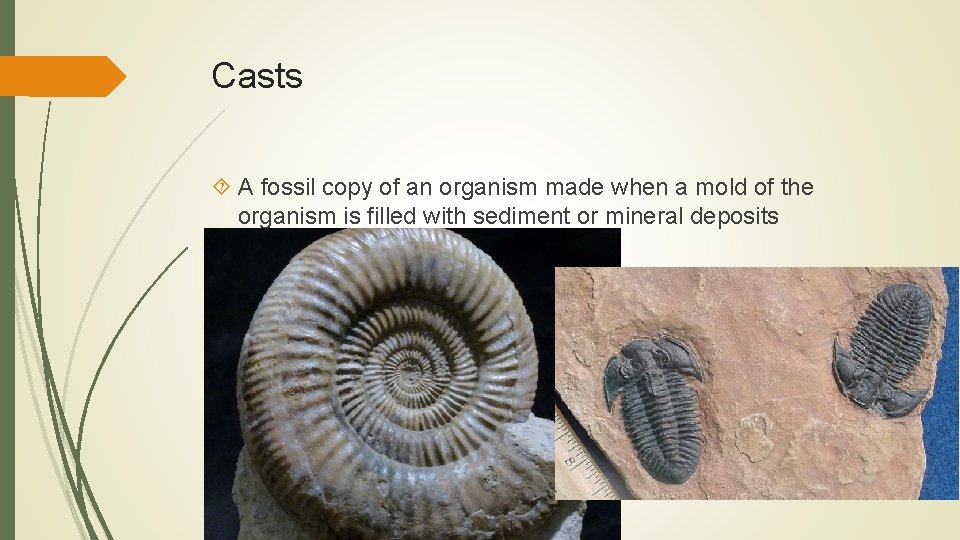
Casts A fossil copy of an organism made when a mold of the organism is filled with sediment or mineral deposits
Molds vs Casts
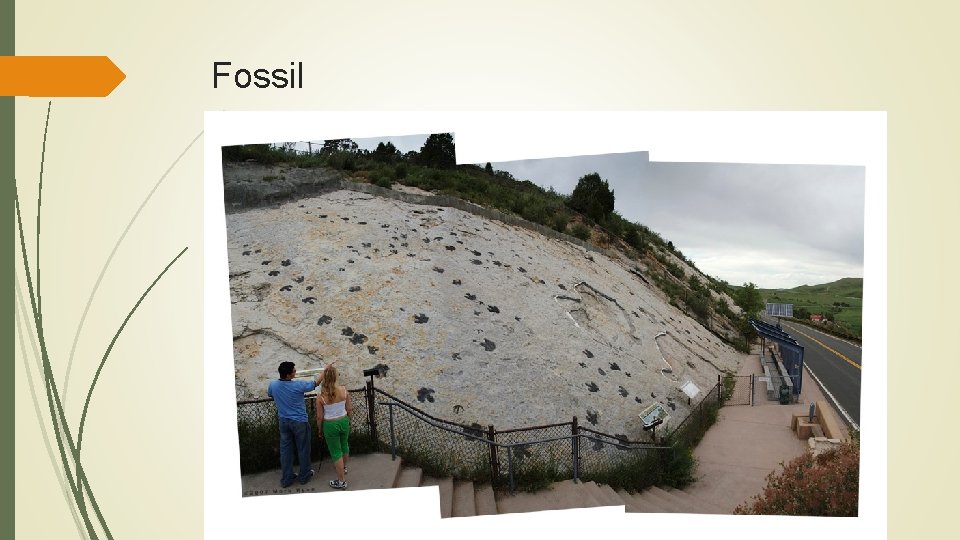
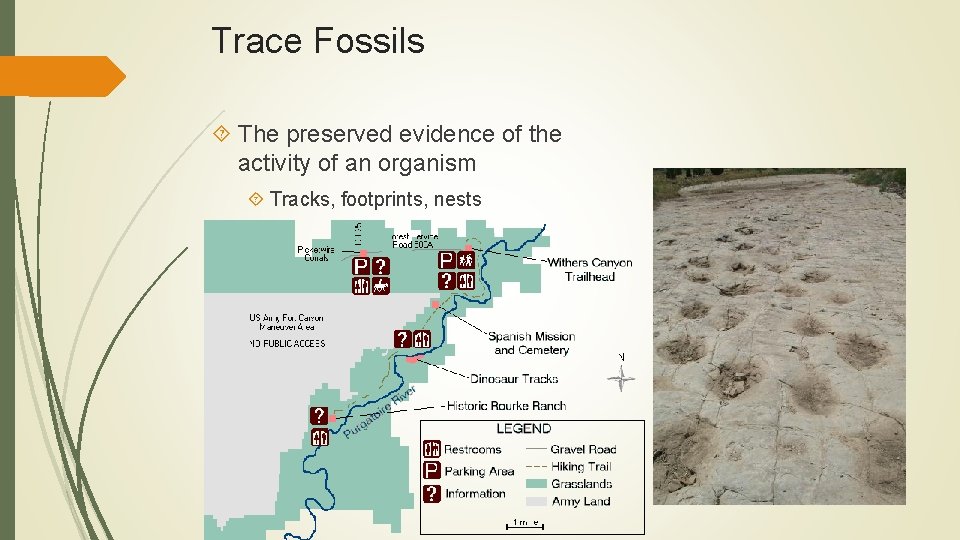
Trace Fossils The preserved evidence of the activity of an organism Tracks, footprints, nests
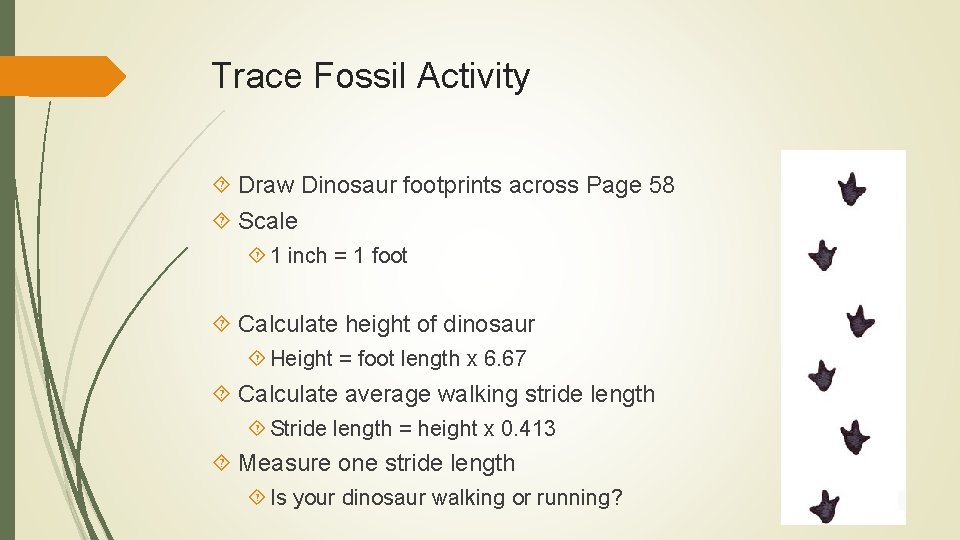
Trace Fossil Activity Draw Dinosaur footprints across Page 58 Scale 1 inch = 1 foot Calculate height of dinosaur Height = foot length x 6. 67 Calculate average walking stride length Stride length = height x 0. 413 Measure one stride length Is your dinosaur walking or running?