
Fossils defined Types of fossils Fossilization Mass extinctions
- Slides: 71
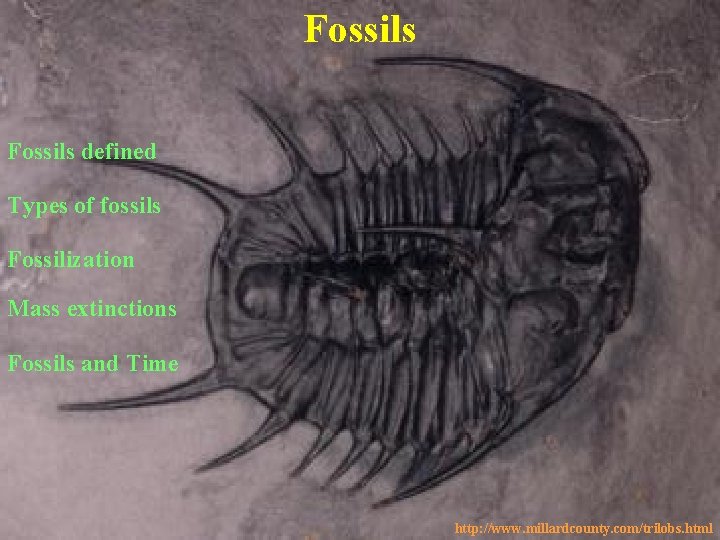
Fossils defined Types of fossils Fossilization Mass extinctions Fossils and Time http: //www. millardcounty. com/trilobs. html
Definitions Fossil: any evidence of ancient life that is preserved in an unconsolidated sediment or sedimentary rock. Paleontology: the branch of geology that focuses on the study of fossils. Paleobiology: The study of the organisms that are preserved as fossils. Taxonomy: The classification of fossils (species, genera, taxa). Paleoecology: The study of the relationship between fossil organisms and their environment. Taphonomy: The study of changes to fossils after the death of the organism.
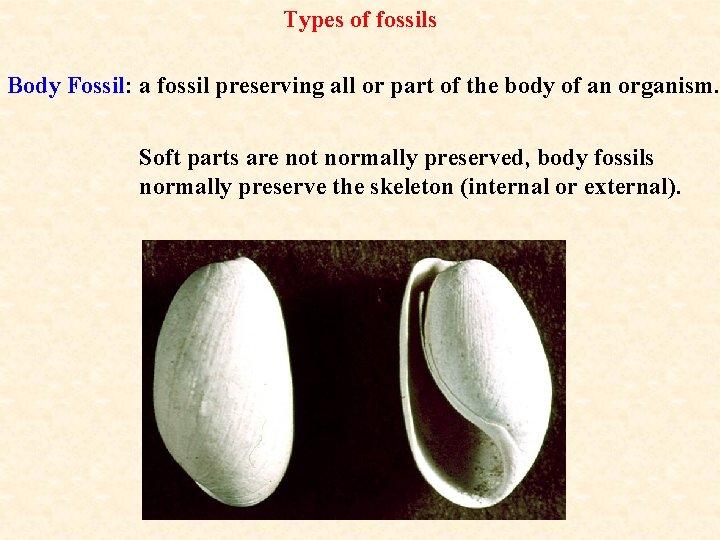
Types of fossils Body Fossil: a fossil preserving all or part of the body of an organism. Soft parts are not normally preserved, body fossils normally preserve the skeleton (internal or external).
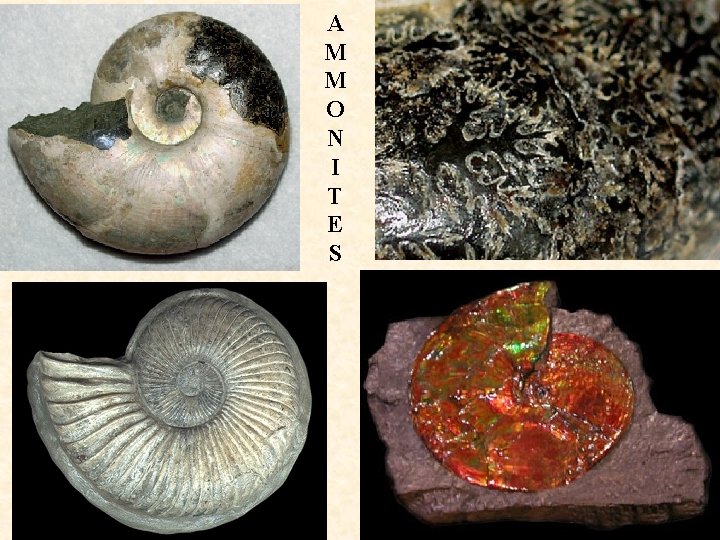
A M M O N I T E S
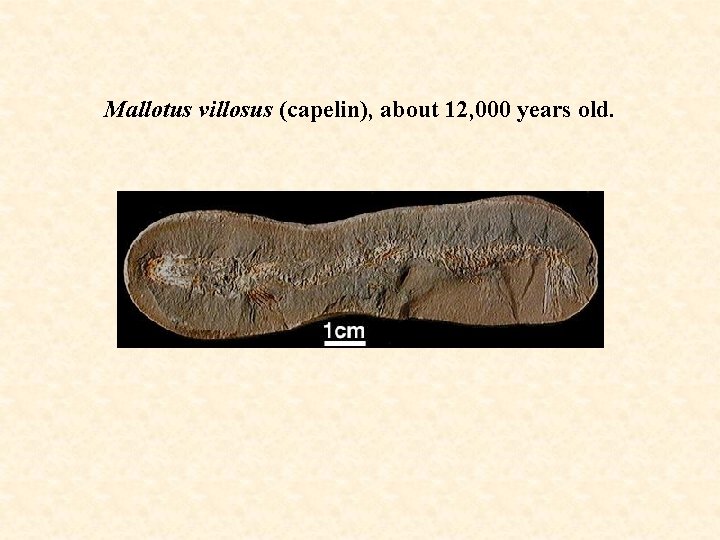
Mallotus villosus (capelin), about 12, 000 years old.
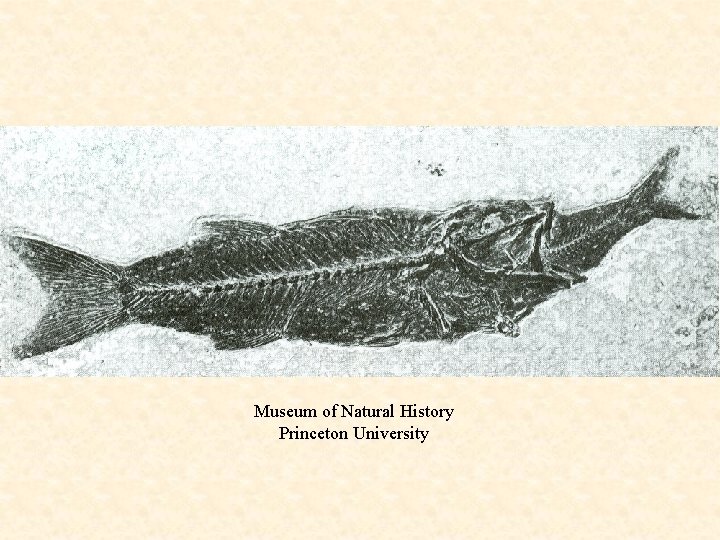
Museum of Natural History Princeton University
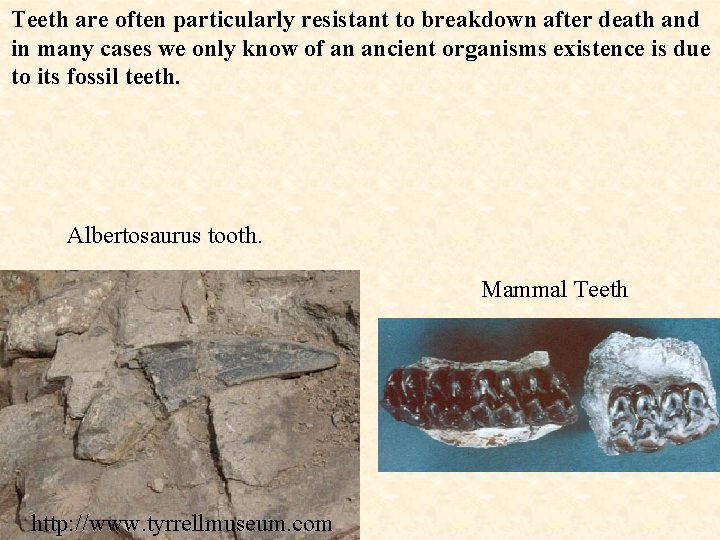
Teeth are often particularly resistant to breakdown after death and in many cases we only know of an ancient organisms existence is due to its fossil teeth. Albertosaurus tooth. Mammal Teeth http: //www. tyrrellmuseum. com
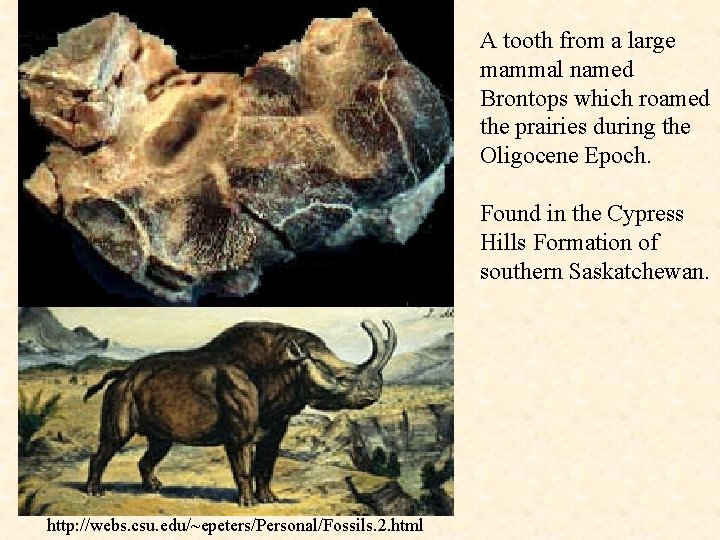
A tooth from a large mammal named Brontops which roamed the prairies during the Oligocene Epoch. Found in the Cypress Hills Formation of southern Saskatchewan. http: //webs. csu. edu/~epeters/Personal/Fossils. 2. html
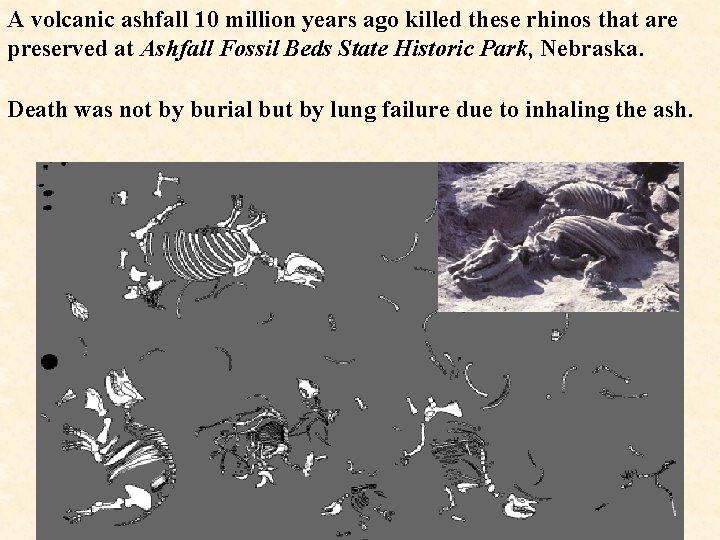
A volcanic ashfall 10 million years ago killed these rhinos that are preserved at Ashfall Fossil Beds State Historic Park, Nebraska. Death was not by burial but by lung failure due to inhaling the ash.
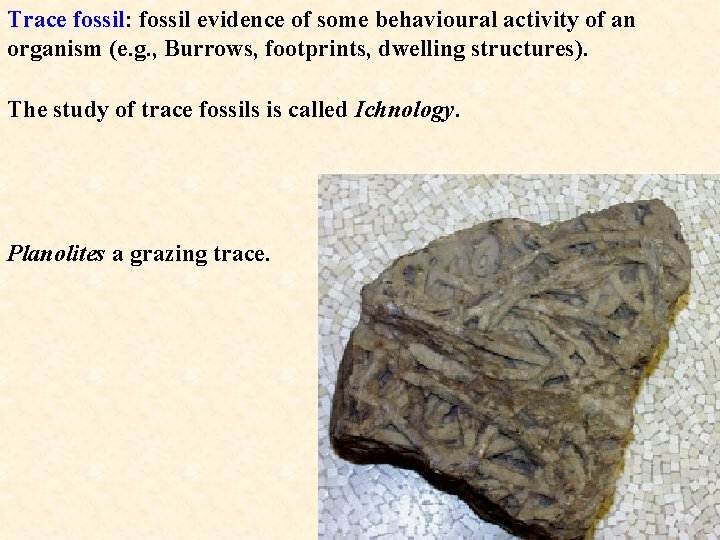
Trace fossil: fossil evidence of some behavioural activity of an organism (e. g. , Burrows, footprints, dwelling structures). The study of trace fossils is called Ichnology. Planolites a grazing trace.
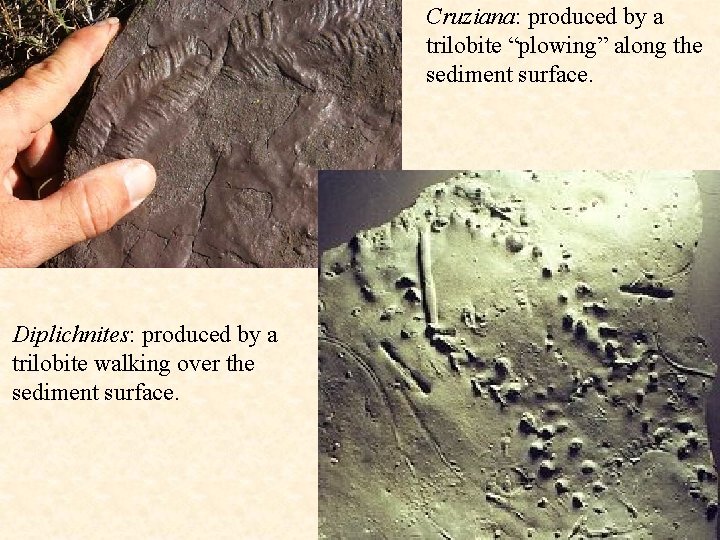
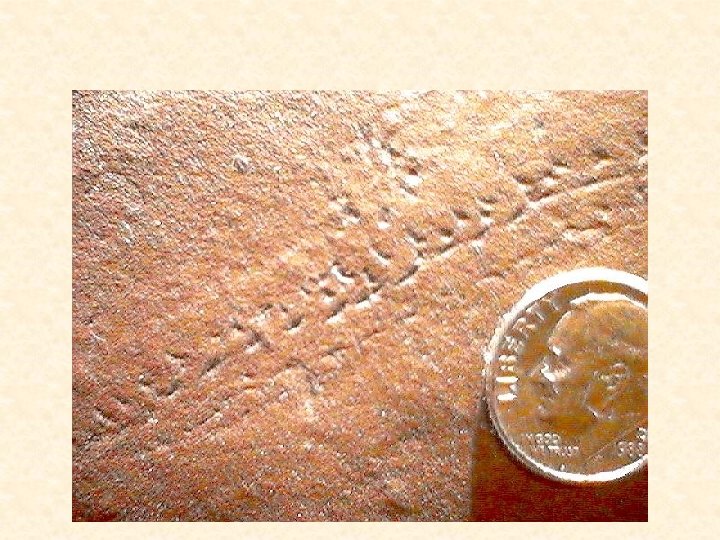
Cruziana: produced by a trilobite “plowing” along the sediment surface. Diplichnites: produced by a trilobite walking over the sediment surface.
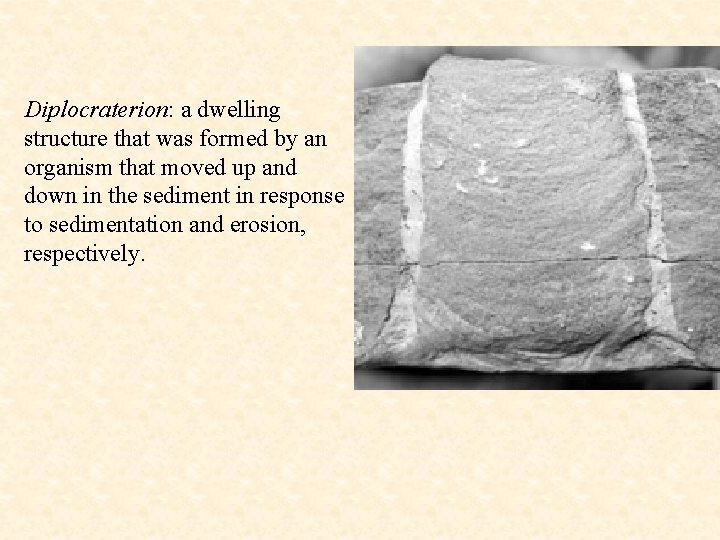
Diplocraterion: a dwelling structure that was formed by an organism that moved up and down in the sediment in response to sedimentation and erosion, respectively.
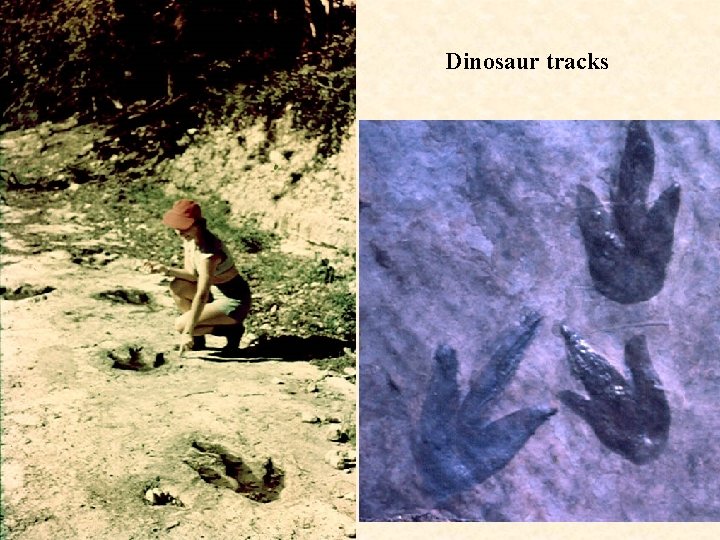
Dinosaur tracks
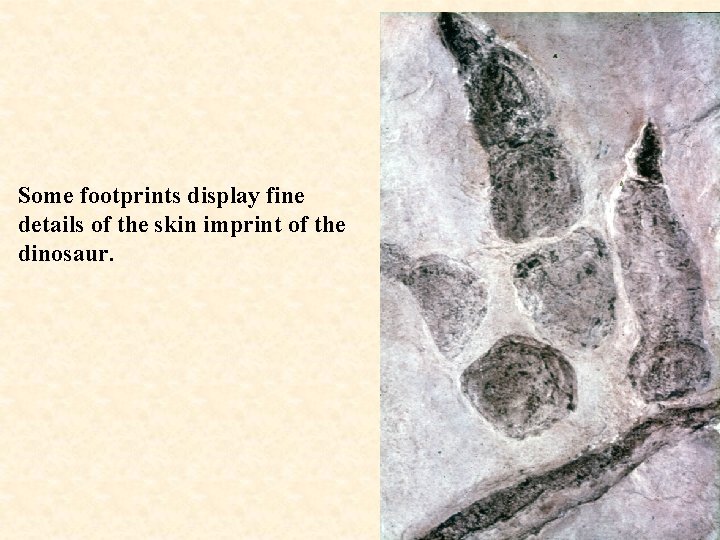
Some footprints display fine details of the skin imprint of the dinosaur.
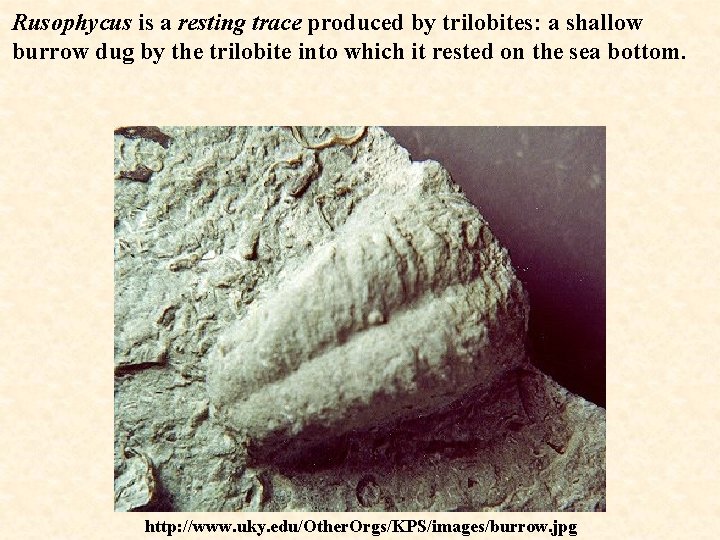
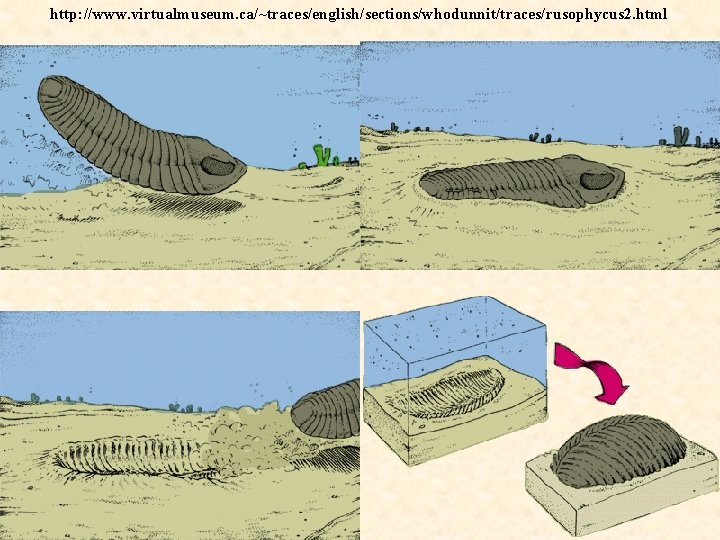
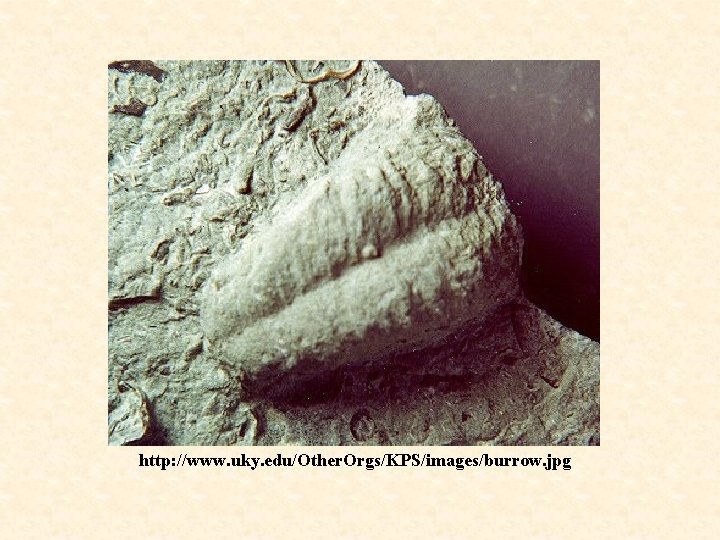
Rusophycus is a resting trace produced by trilobites: a shallow burrow dug by the trilobite into which it rested on the sea bottom. http: //www. uky. edu/Other. Orgs/KPS/images/burrow. jpg
http: //www. virtualmuseum. ca/~traces/english/sections/whodunnit/traces/rusophycus 2. html
http: //www. uky. edu/Other. Orgs/KPS/images/burrow. jpg
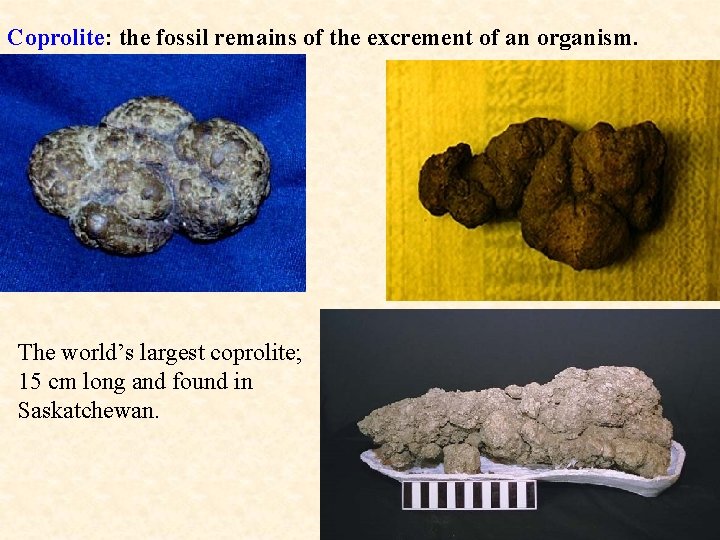
Coprolite: the fossil remains of the excrement of an organism. The world’s largest coprolite; 15 cm long and found in Saskatchewan.
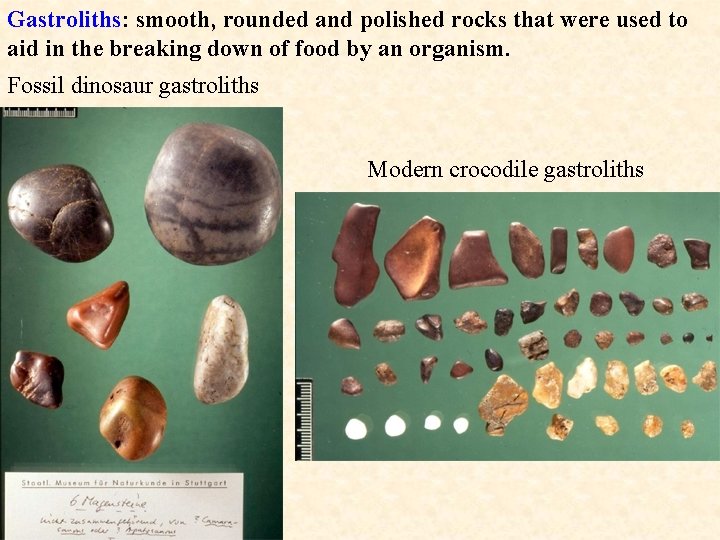
Gastroliths: smooth, rounded and polished rocks that were used to aid in the breaking down of food by an organism. Fossil dinosaur gastroliths Modern crocodile gastroliths
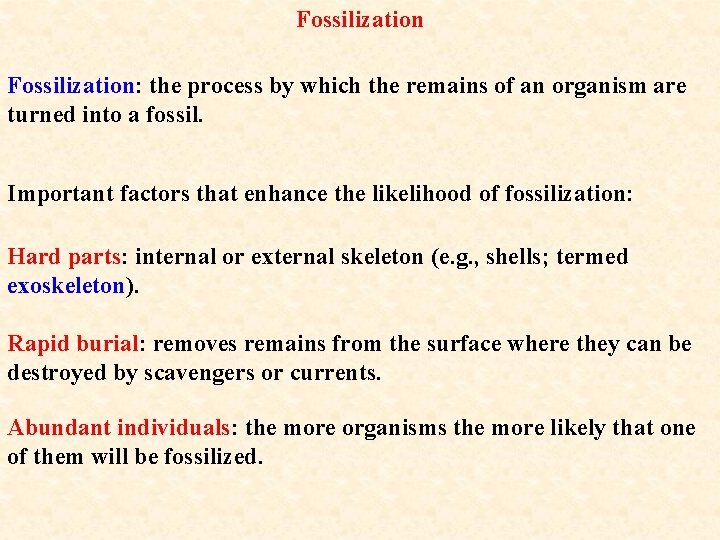
Fossilization: the process by which the remains of an organism are turned into a fossil. Important factors that enhance the likelihood of fossilization: Hard parts: internal or external skeleton (e. g. , shells; termed exoskeleton). Rapid burial: removes remains from the surface where they can be destroyed by scavengers or currents. Abundant individuals: the more organisms the more likely that one of them will be fossilized.
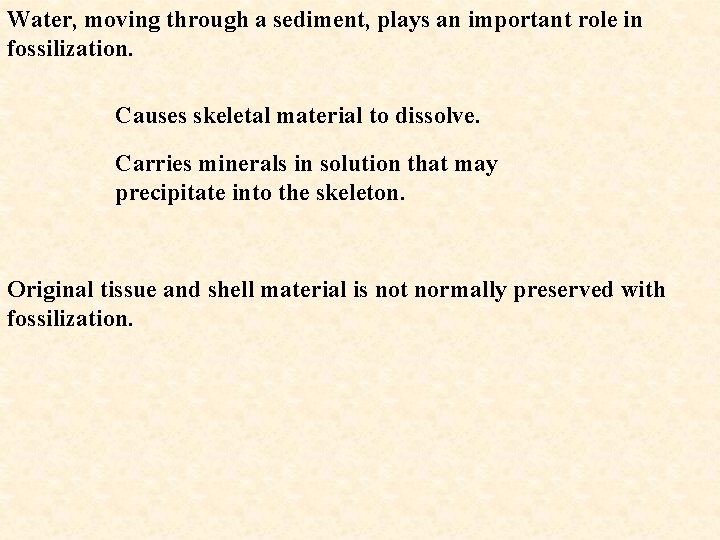
Water, moving through a sediment, plays an important role in fossilization. Causes skeletal material to dissolve. Carries minerals in solution that may precipitate into the skeleton. Original tissue and shell material is not normally preserved with fossilization.
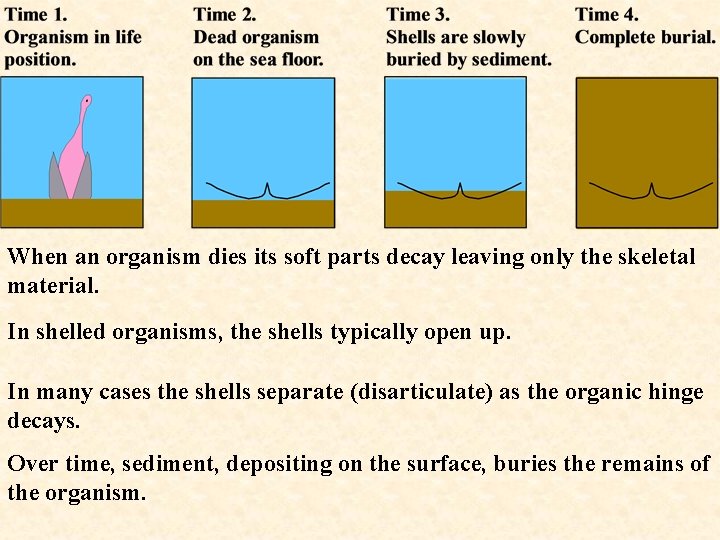
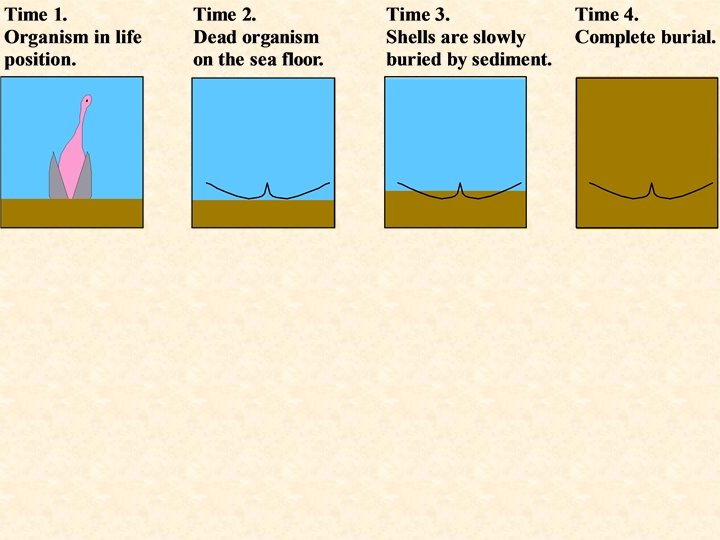
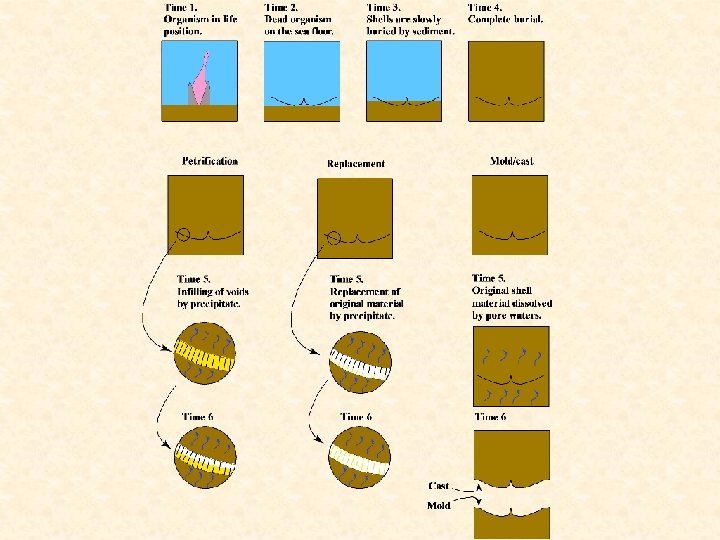
When an organism dies its soft parts decay leaving only the skeletal material. In shelled organisms, the shells typically open up. In many cases the shells separate (disarticulate) as the organic hinge decays. Over time, sediment, depositing on the surface, buries the remains of the organism.
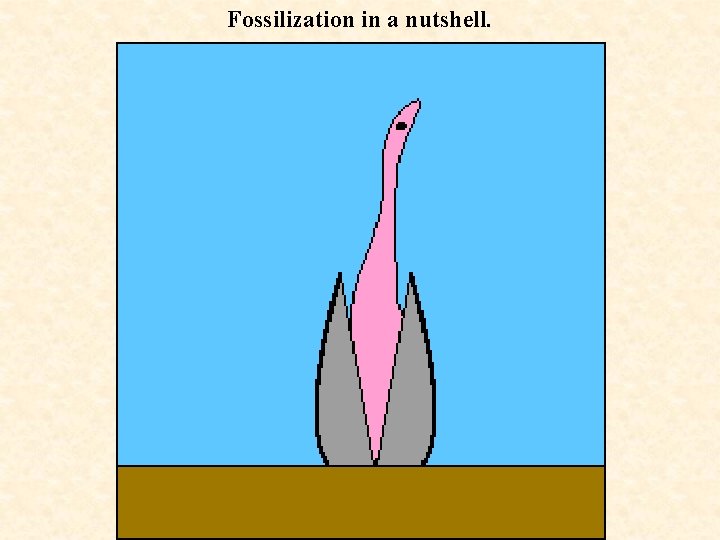
Fossilization in a nutshell.
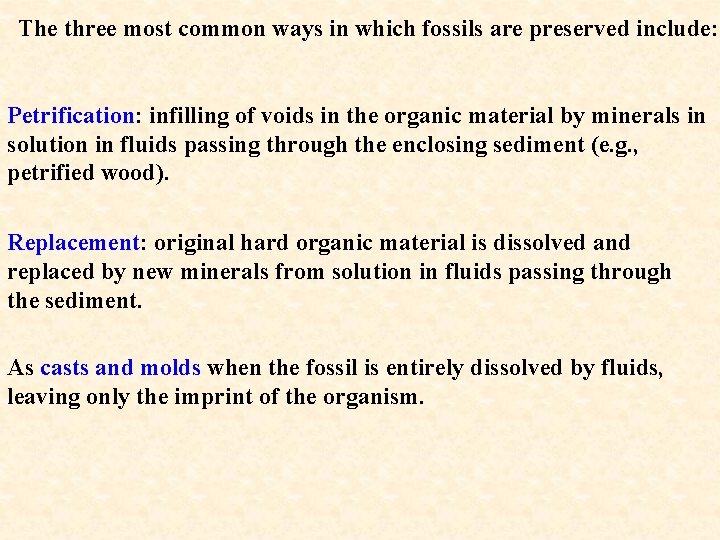
The three most common ways in which fossils are preserved include: Petrification: infilling of voids in the organic material by minerals in solution in fluids passing through the enclosing sediment (e. g. , petrified wood). Replacement: original hard organic material is dissolved and replaced by new minerals from solution in fluids passing through the sediment. As casts and molds when the fossil is entirely dissolved by fluids, leaving only the imprint of the organism.
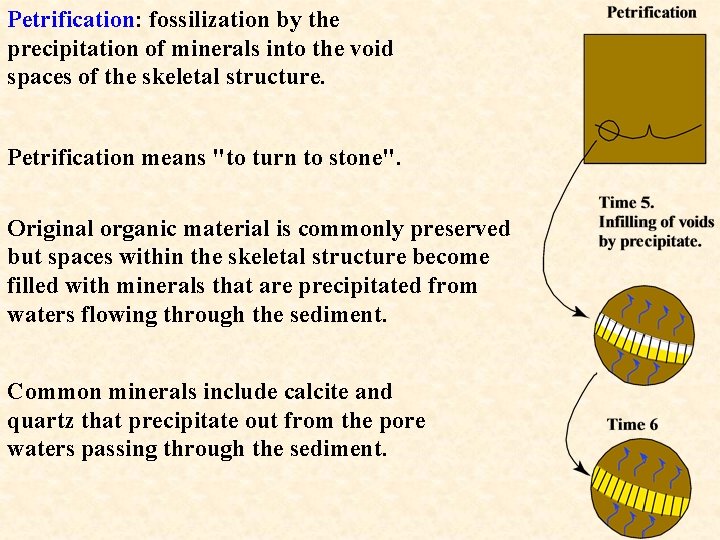
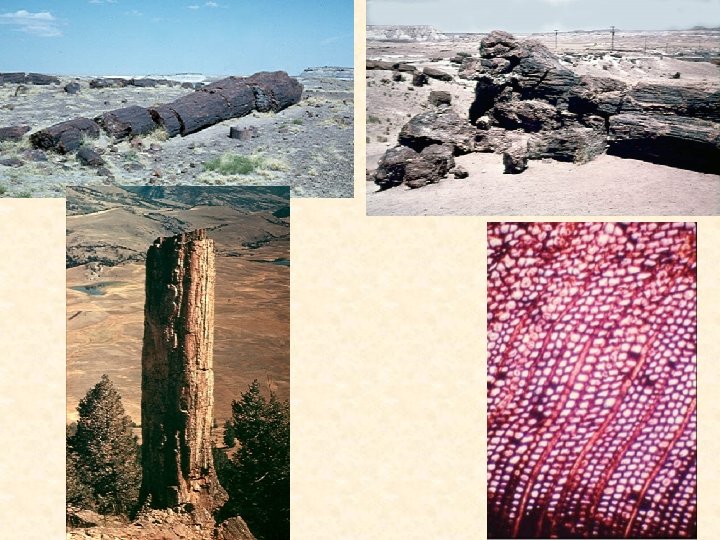
Petrification: fossilization by the precipitation of minerals into the void spaces of the skeletal structure. Petrification means "to turn to stone". Original organic material is commonly preserved but spaces within the skeletal structure become filled with minerals that are precipitated from waters flowing through the sediment. Common minerals include calcite and quartz that precipitate out from the pore waters passing through the sediment.
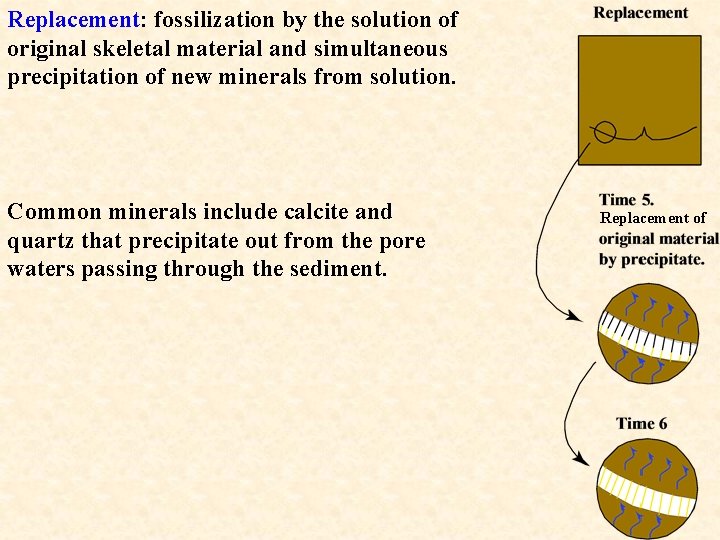
Replacement: fossilization by the solution of original skeletal material and simultaneous precipitation of new minerals from solution. Common minerals include calcite and quartz that precipitate out from the pore waters passing through the sediment. Replacement of
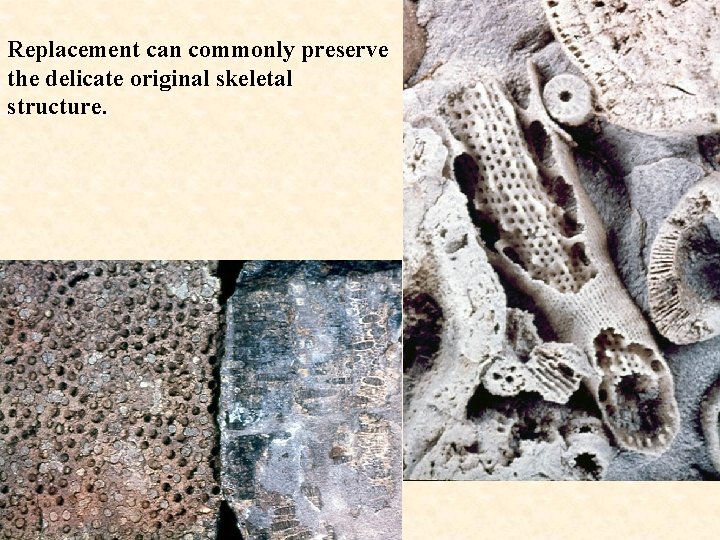
Replacement can commonly preserve the delicate original skeletal structure.
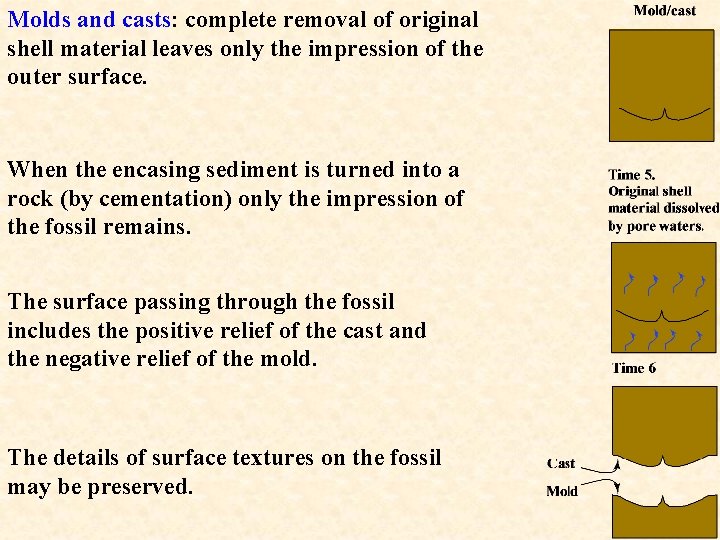
Molds and casts: complete removal of original shell material leaves only the impression of the outer surface. When the encasing sediment is turned into a rock (by cementation) only the impression of the fossil remains. The surface passing through the fossil includes the positive relief of the cast and the negative relief of the mold. The details of surface textures on the fossil may be preserved.
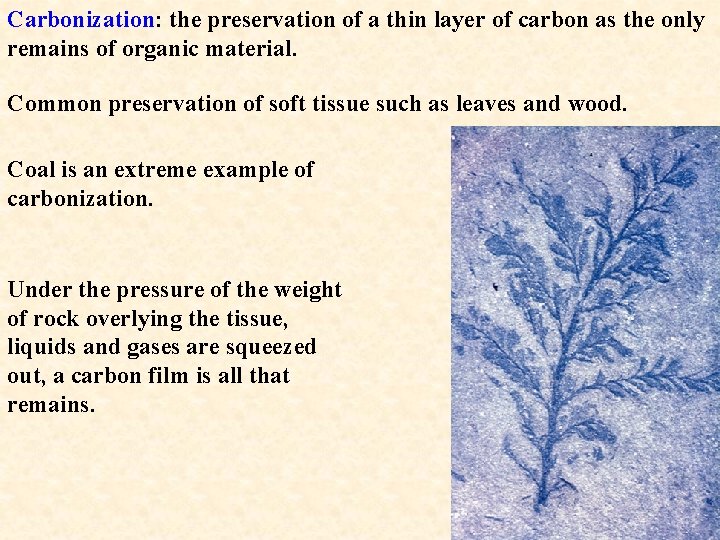
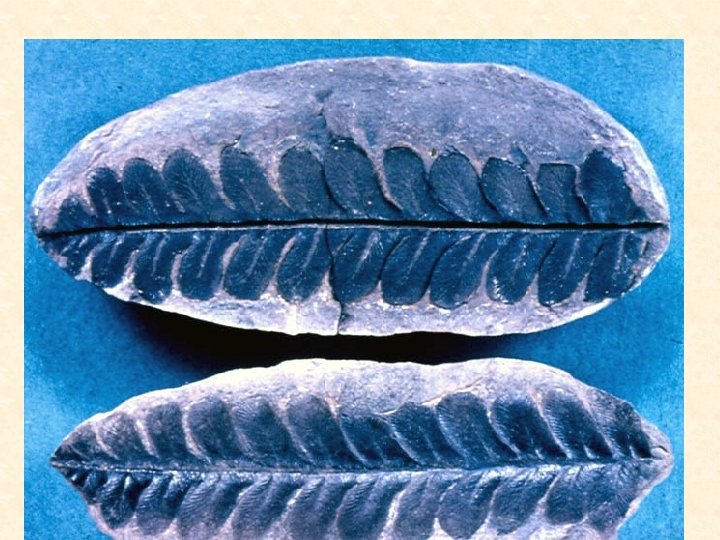
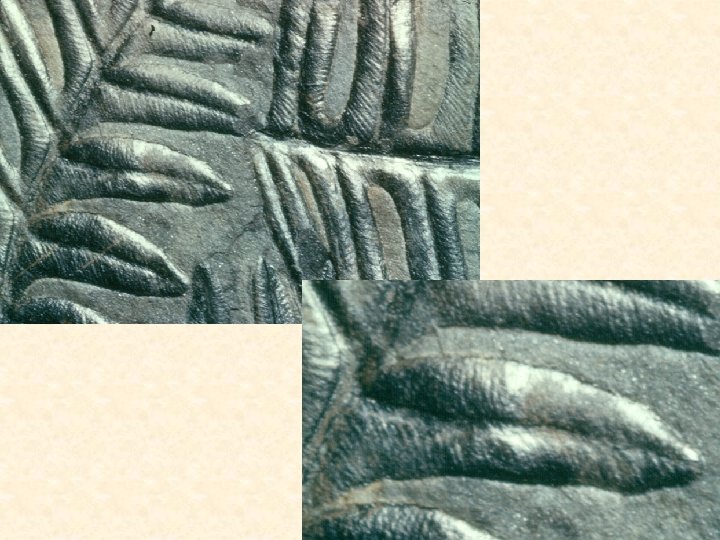
Carbonization: the preservation of a thin layer of carbon as the only remains of organic material. Common preservation of soft tissue such as leaves and wood. Coal is an extreme example of carbonization. Under the pressure of the weight of rock overlying the tissue, liquids and gases are squeezed out, a carbon film is all that remains.
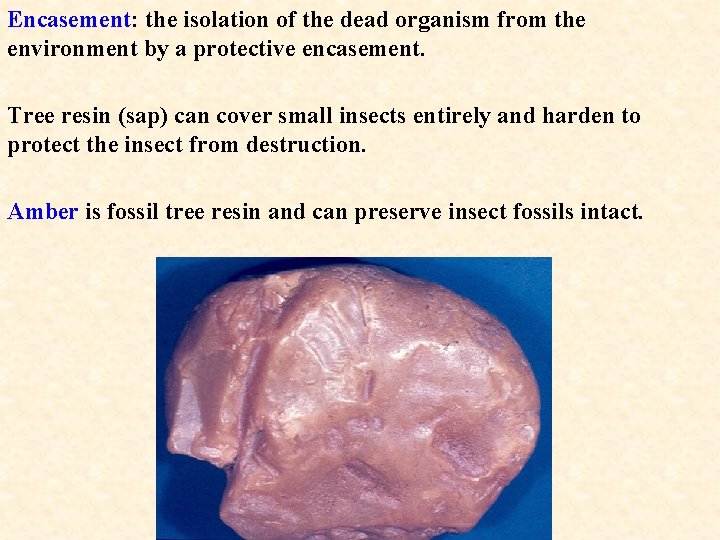
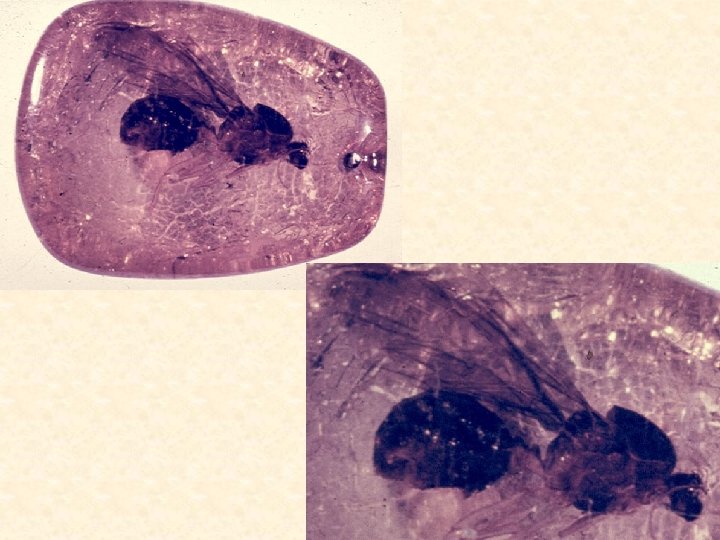
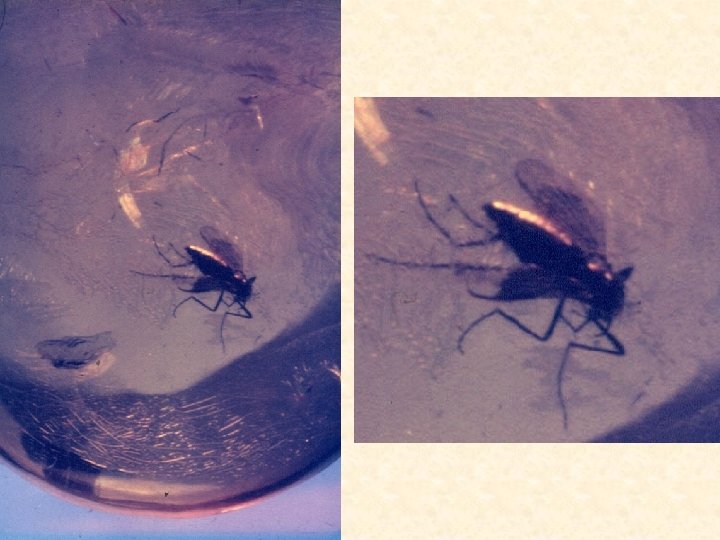
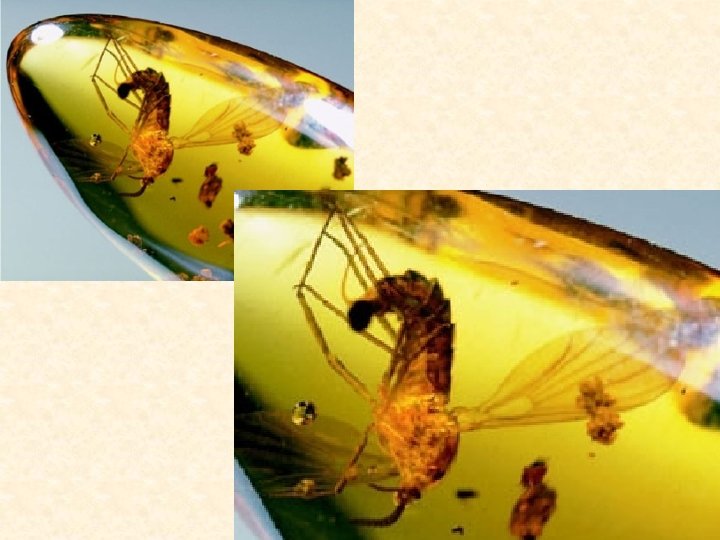
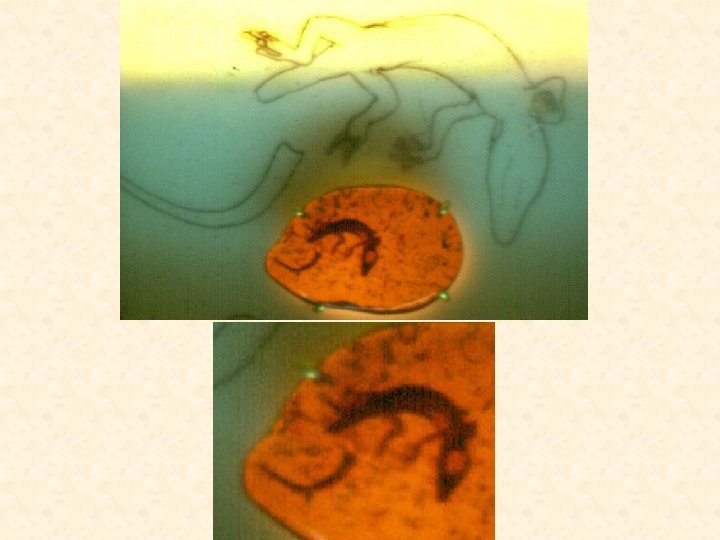
Encasement: the isolation of the dead organism from the environment by a protective encasement. Tree resin (sap) can cover small insects entirely and harden to protect the insect from destruction. Amber is fossil tree resin and can preserve insect fossils intact.
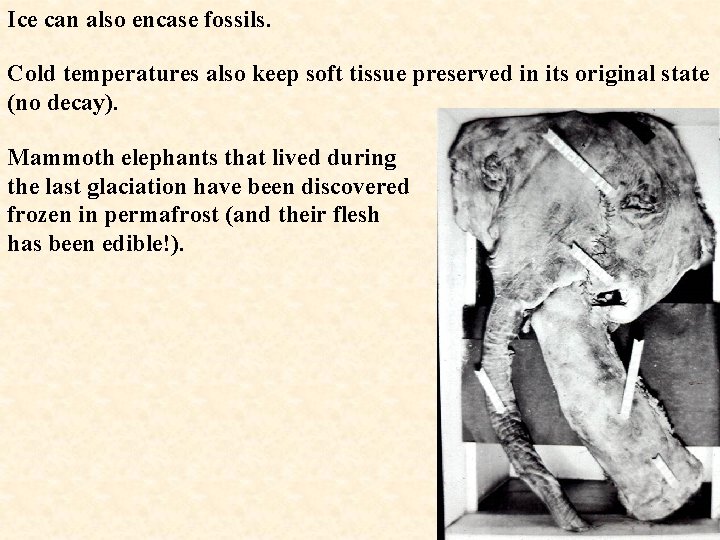
Ice can also encase fossils. Cold temperatures also keep soft tissue preserved in its original state (no decay). Mammoth elephants that lived during the last glaciation have been discovered frozen in permafrost (and their flesh has been edible!).
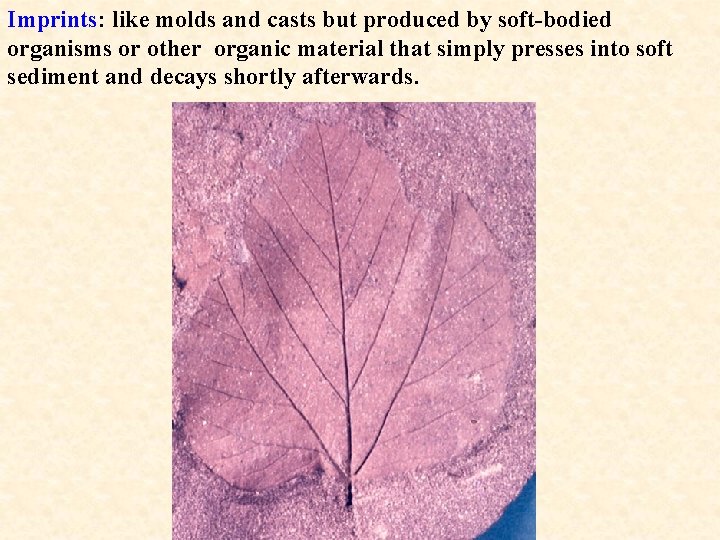
Imprints: like molds and casts but produced by soft-bodied organisms or other organic material that simply presses into soft sediment and decays shortly afterwards.
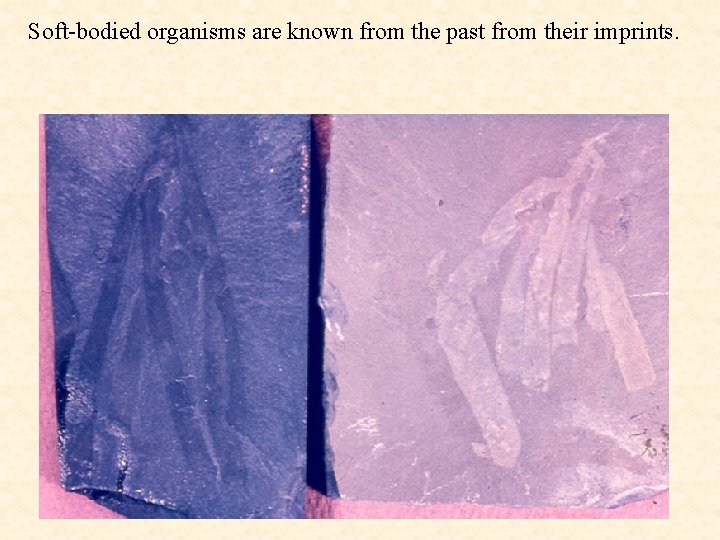
Soft-bodied organisms are known from the past from their imprints.
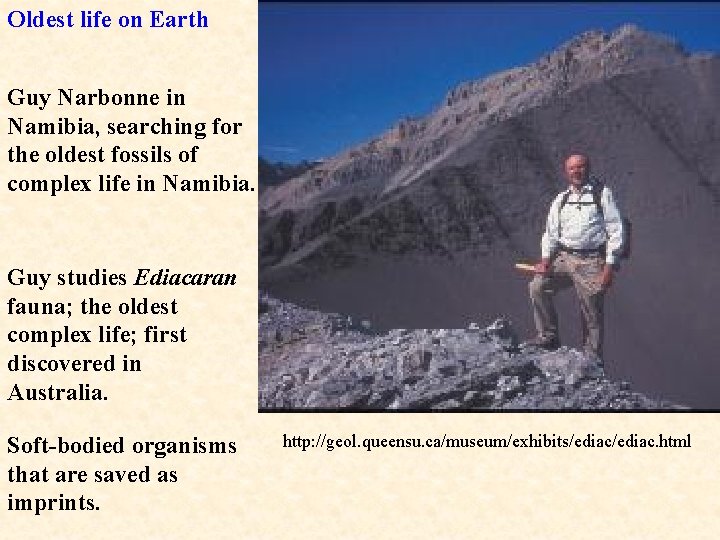
Oldest life on Earth Guy Narbonne in Namibia, searching for the oldest fossils of complex life in Namibia. Guy studies Ediacaran fauna; the oldest complex life; first discovered in Australia. Soft-bodied organisms that are saved as imprints. http: //geol. queensu. ca/museum/exhibits/ediac. html
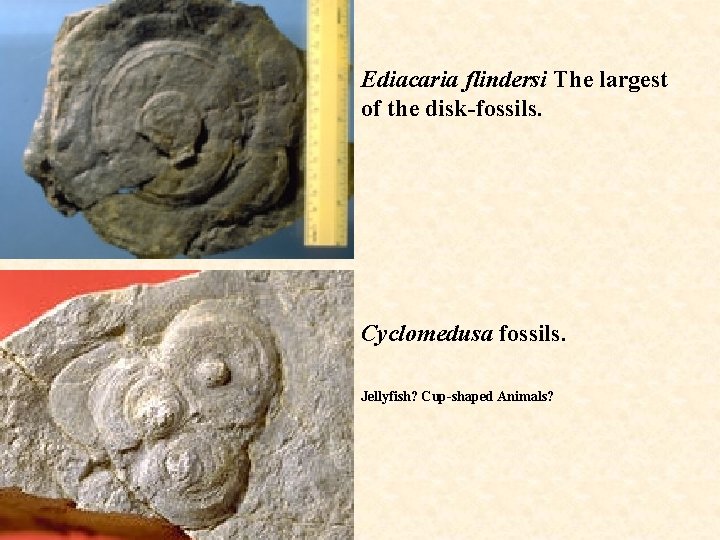
Ediacaria flindersi The largest of the disk-fossils. Cyclomedusa fossils. Jellyfish? Cup-shaped Animals?
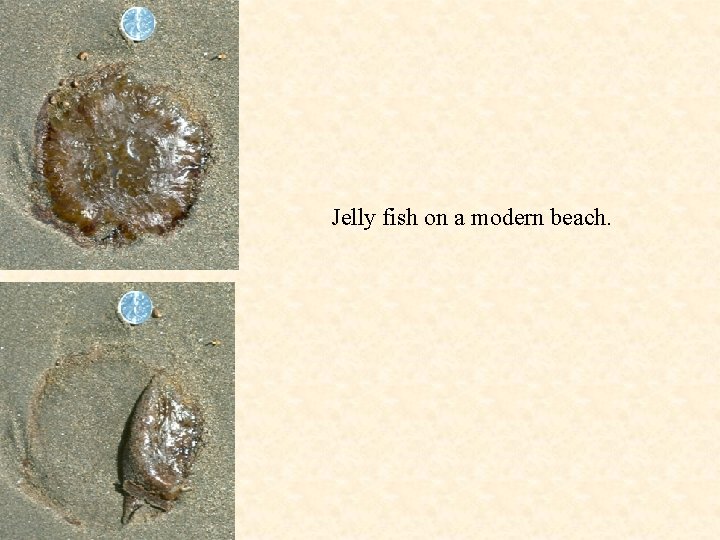
Jelly fish on a modern beach.
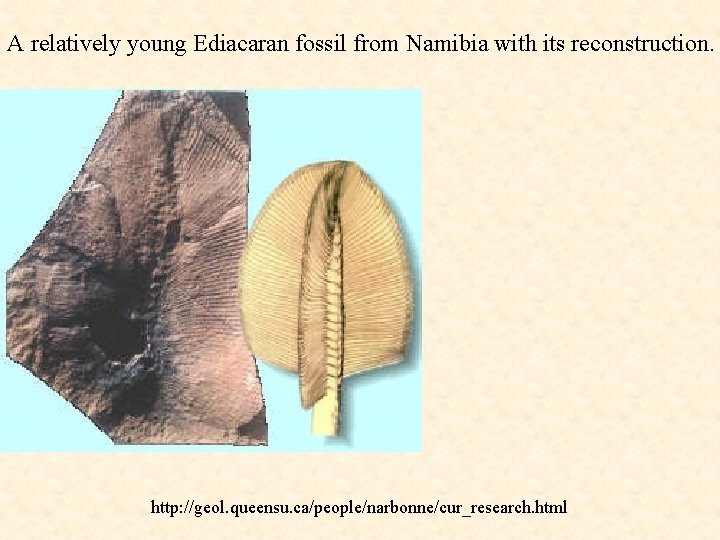
A relatively young Ediacaran fossil from Namibia with its reconstruction. http: //geol. queensu. ca/people/narbonne/cur_research. html
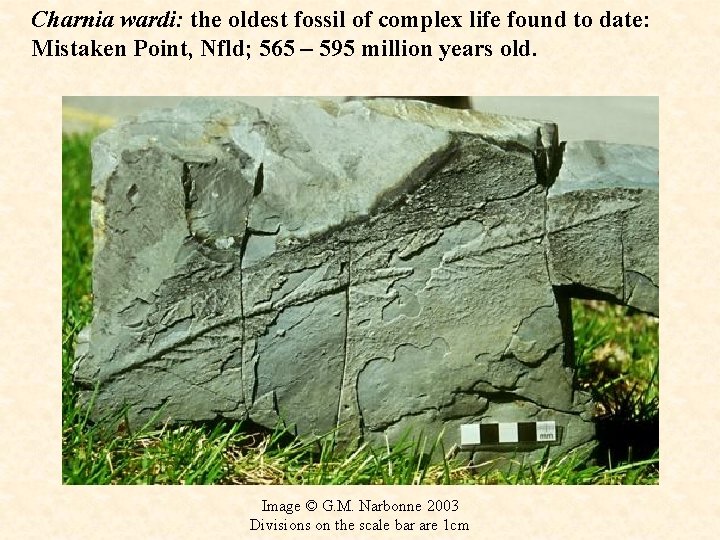
Charnia wardi: the oldest fossil of complex life found to date: Mistaken Point, Nfld; 565 – 595 million years old. Image © G. M. Narbonne 2003 Divisions on the scale bar are 1 cm
Fossils and the history of life on Earth The fossil record provides evidence for evolution and how evolution works. However, the fossil record is incomplete. Fossils are commonly poorly preserved and must be pieced together. Fossils represent only a small fraction of all organisms that have lived over geologic time. Over 1. 4 million species of plants and animals have been identified to live on Earth today. A reasonable estimate is that when all have been identified the total number of species will be about 20 million. (e. g. , 10, 000 new insects are identified each year!)
The total number of fossil species that have been identified is approximately 250, 000. This is 8. 5% of known organisms today and about 1. 25% of the likely total number of modern organisms. Most fossils are found in rocks spanning a period of 600 million years. If fossil preservation were good, there would be many more fossil species than living species today. The vast majority of organisms that ever lived on Earth are not represented in the fossil record.
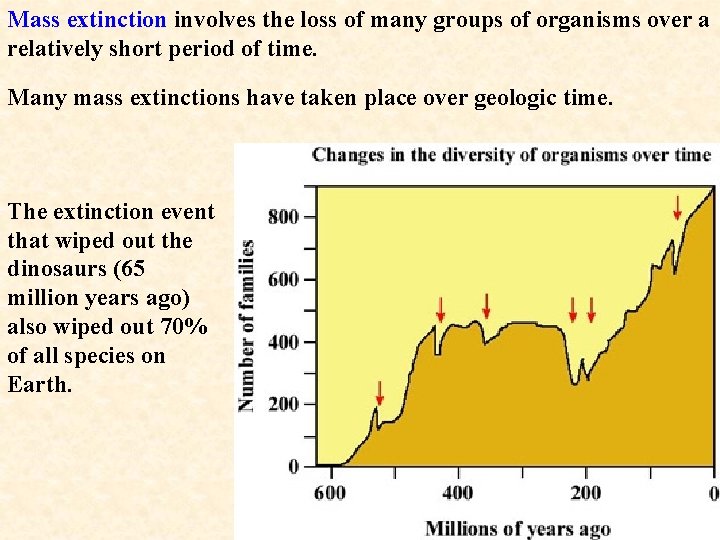
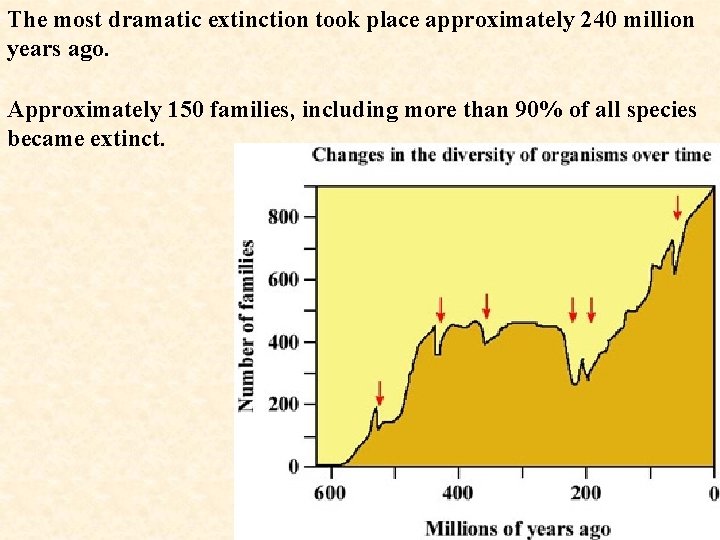
Mass extinction involves the loss of many groups of organisms over a relatively short period of time. Many mass extinctions have taken place over geologic time. The extinction event that wiped out the dinosaurs (65 million years ago) also wiped out 70% of all species on Earth.
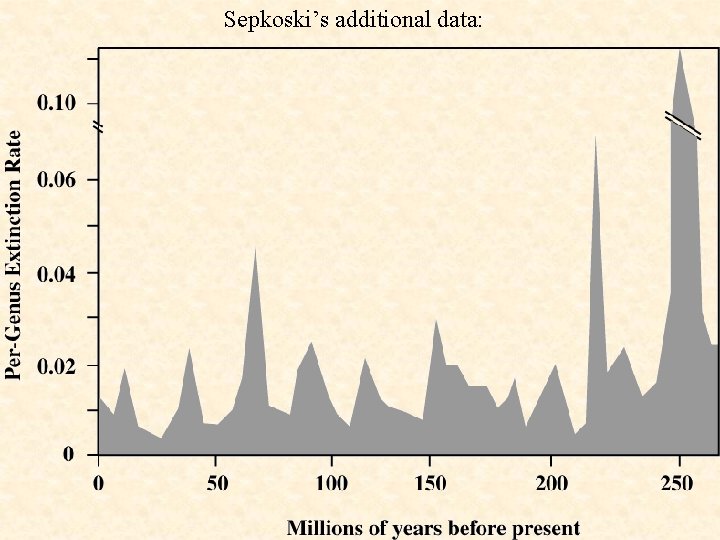
The most dramatic extinction took place approximately 240 million years ago. Approximately 150 families, including more than 90% of all species became extinct.
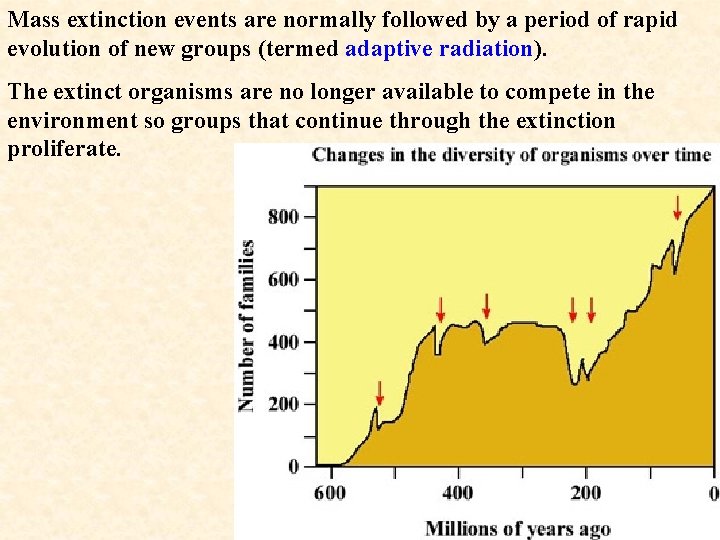
Mass extinction events are normally followed by a period of rapid evolution of new groups (termed adaptive radiation). The extinct organisms are no longer available to compete in the environment so groups that continue through the extinction proliferate.
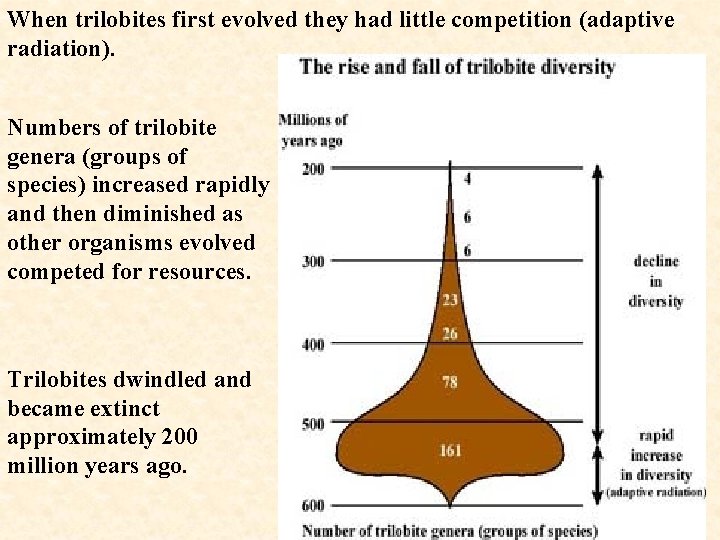
When trilobites first evolved they had little competition (adaptive radiation). Numbers of trilobite genera (groups of species) increased rapidly and then diminished as other organisms evolved competed for resources. Trilobites dwindled and became extinct approximately 200 million years ago.
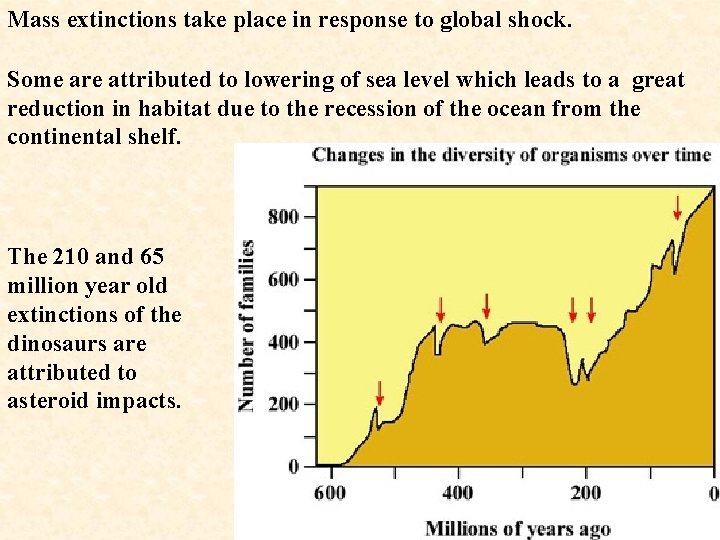
Mass extinctions take place in response to global shock. Some are attributed to lowering of sea level which leads to a great reduction in habitat due to the recession of the ocean from the continental shelf. The 210 and 65 million year old extinctions of the dinosaurs are attributed to asteroid impacts.
Modern thinking is that the demise of the dinosaurs was due to the effects of a large number of significant impacts over the span of several hundred thousands of years. The vast amount of dust and debris that was sent up into the atmosphere is thought to have caused a prolonged period of cold climate. Recent literature suggests that smoke and ash from global forest fires that followed the impact may have contributed significantly to cooling the Earth. Dinosaurs and many other groups of organisms could not adapt to the cold temperatures and became extinct. Without the dinosaurs to compete with Mammals underwent an adaptive radiation and eventually evolved humans.
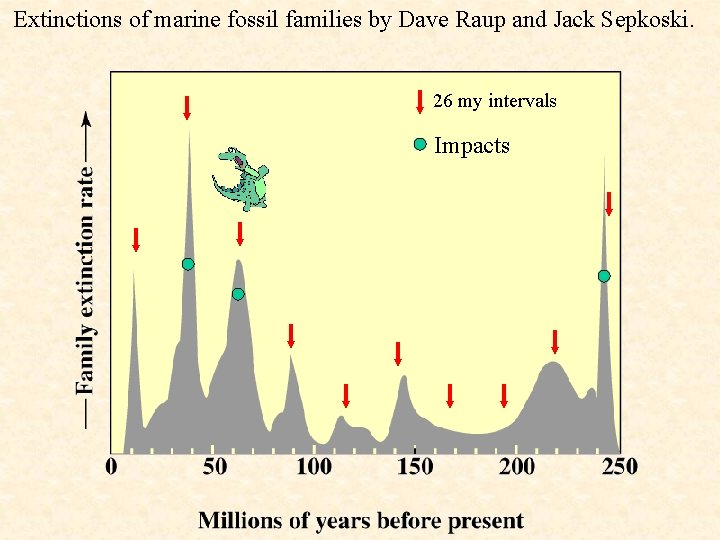
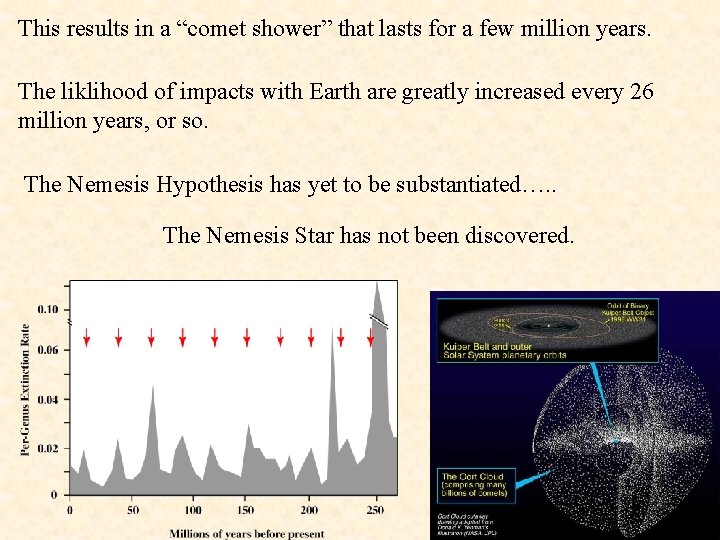
Extinctions of marine fossil families by Dave Raup and Jack Sepkoski. 26 my intervals Impacts
Sepkoski’s additional data:
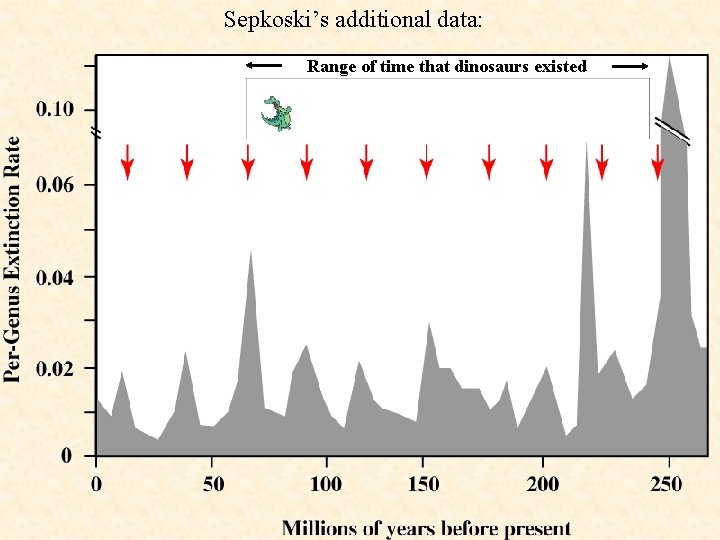
Sepkoski’s additional data: Range of time that dinosaurs existed
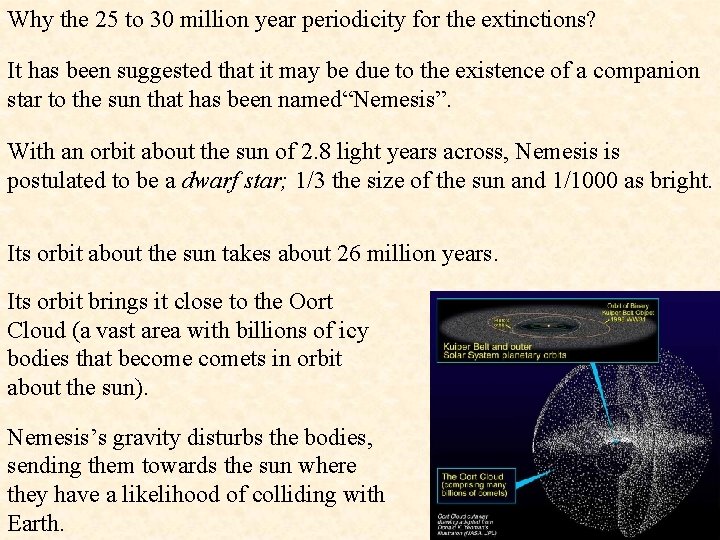
Why the 25 to 30 million year periodicity for the extinctions? It has been suggested that it may be due to the existence of a companion star to the sun that has been named“Nemesis”. With an orbit about the sun of 2. 8 light years across, Nemesis is postulated to be a dwarf star; 1/3 the size of the sun and 1/1000 as bright. Its orbit about the sun takes about 26 million years. Its orbit brings it close to the Oort Cloud (a vast area with billions of icy bodies that becomets in orbit about the sun). Nemesis’s gravity disturbs the bodies, sending them towards the sun where they have a likelihood of colliding with Earth.
This results in a “comet shower” that lasts for a few million years. The liklihood of impacts with Earth are greatly increased every 26 million years, or so. The Nemesis Hypothesis has yet to be substantiated…. . The Nemesis Star has not been discovered.
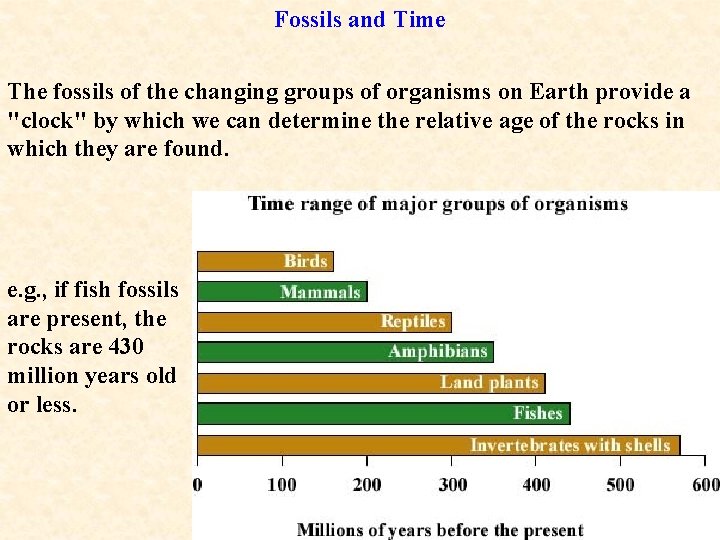
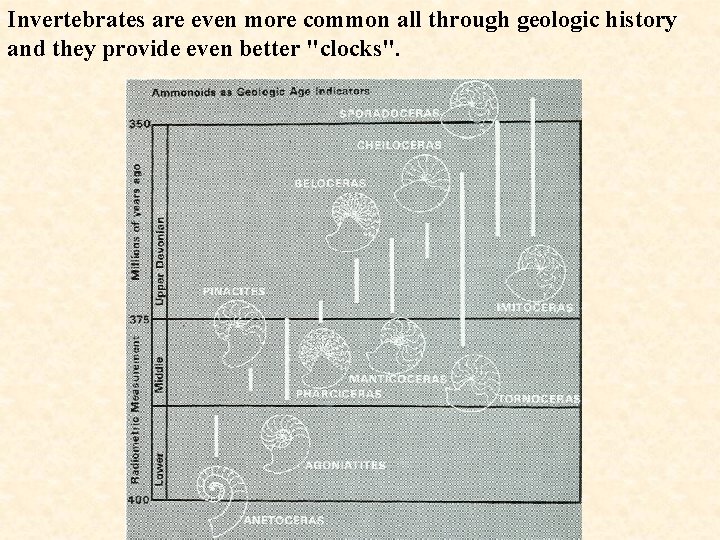
Fossils and Time The fossils of the changing groups of organisms on Earth provide a "clock" by which we can determine the relative age of the rocks in which they are found. e. g. , if fish fossils are present, the rocks are 430 million years old or less.
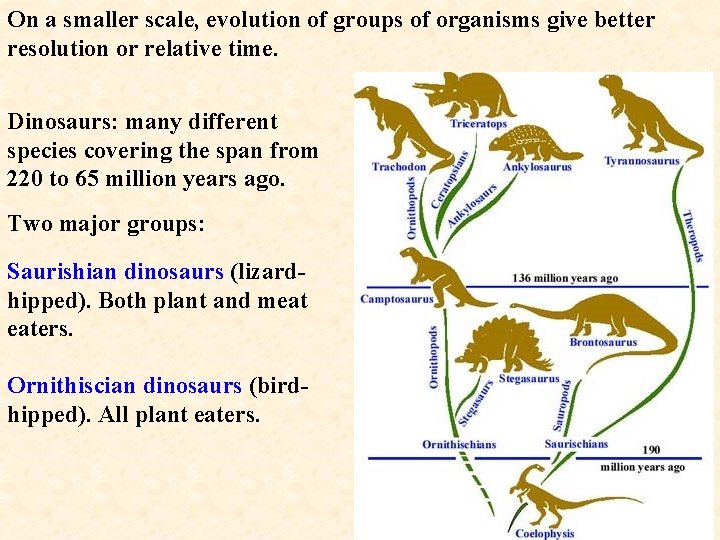
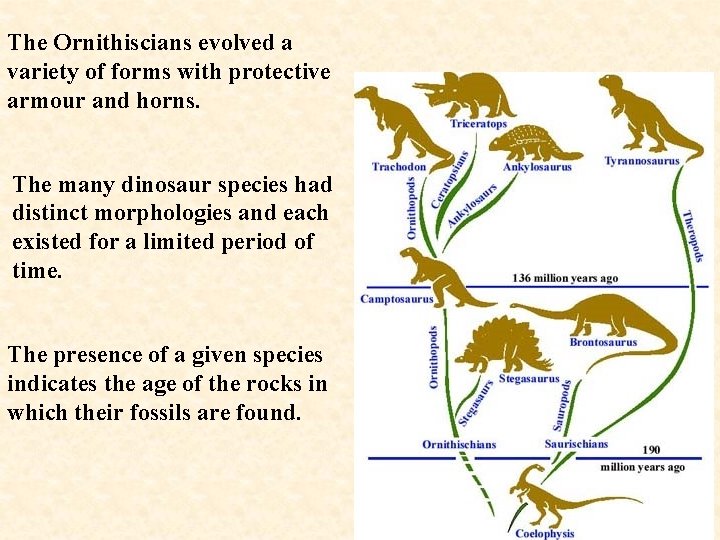
On a smaller scale, evolution of groups of organisms give better resolution or relative time. Dinosaurs: many different species covering the span from 220 to 65 million years ago. Two major groups: Saurishian dinosaurs (lizardhipped). Both plant and meat eaters. Ornithiscian dinosaurs (birdhipped). All plant eaters.
The Ornithiscians evolved a variety of forms with protective armour and horns. The many dinosaur species had distinct morphologies and each existed for a limited period of time. The presence of a given species indicates the age of the rocks in which their fossils are found.
Invertebrates are even more common all through geologic history and they provide even better "clocks".
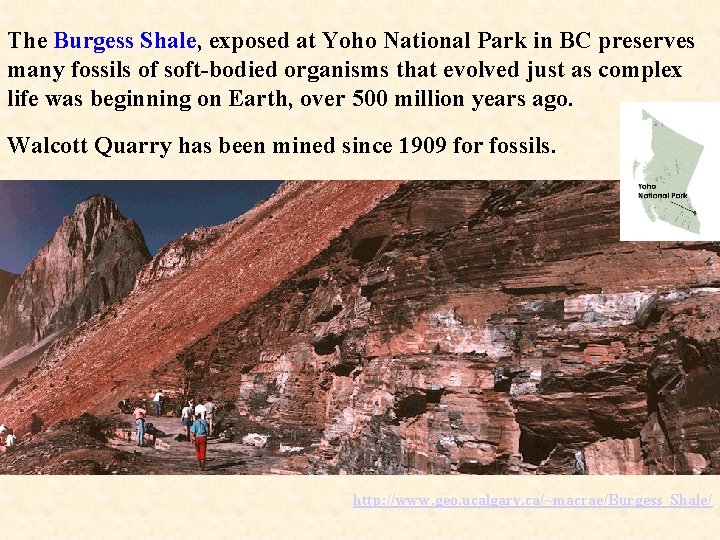
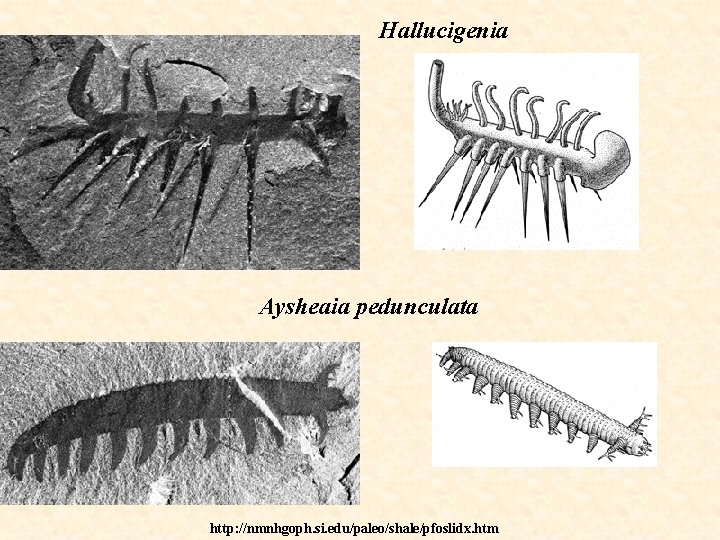
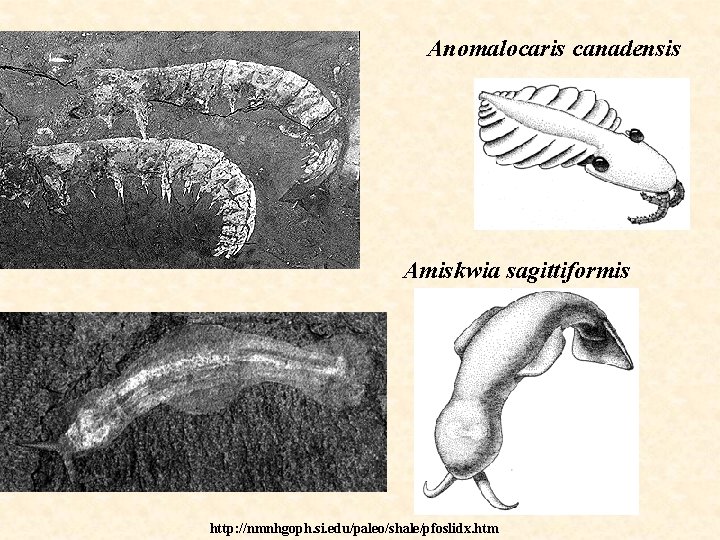
The Burgess Shale, exposed at Yoho National Park in BC preserves many fossils of soft-bodied organisms that evolved just as complex life was beginning on Earth, over 500 million years ago. Walcott Quarry has been mined since 1909 for fossils. http: //www. geo. ucalgary. ca/~macrae/Burgess_Shale/
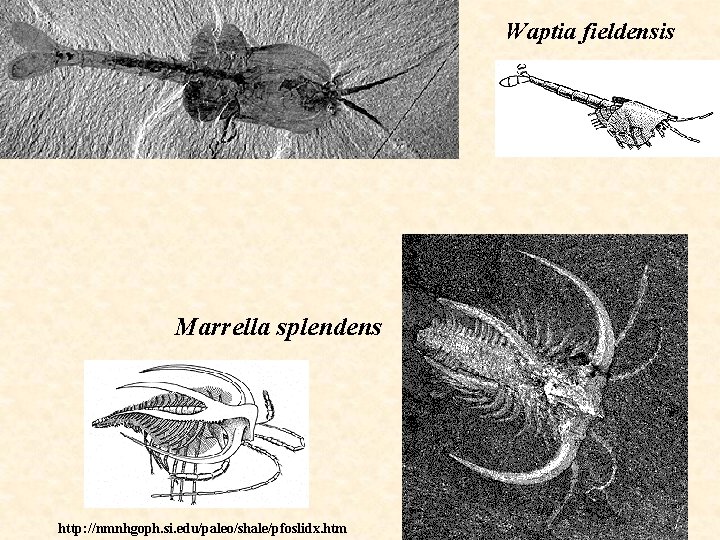
Waptia fieldensis Marrella splendens http: //nmnhgoph. si. edu/paleo/shale/pfoslidx. htm
Hallucigenia Aysheaia pedunculata http: //nmnhgoph. si. edu/paleo/shale/pfoslidx. htm
Anomalocaris canadensis Amiskwia sagittiformis http: //nmnhgoph. si. edu/paleo/shale/pfoslidx. htm
Such diversity of complex life 500 million years ago was surprising to geologists and biologists. Rocks just 100 million years older are almost devoid of fossils. Suggests a very rapid increase in diversity of life……. Possibly following the near elimination of life through the period of Snowball Earth 600 to 700 million years ago.