
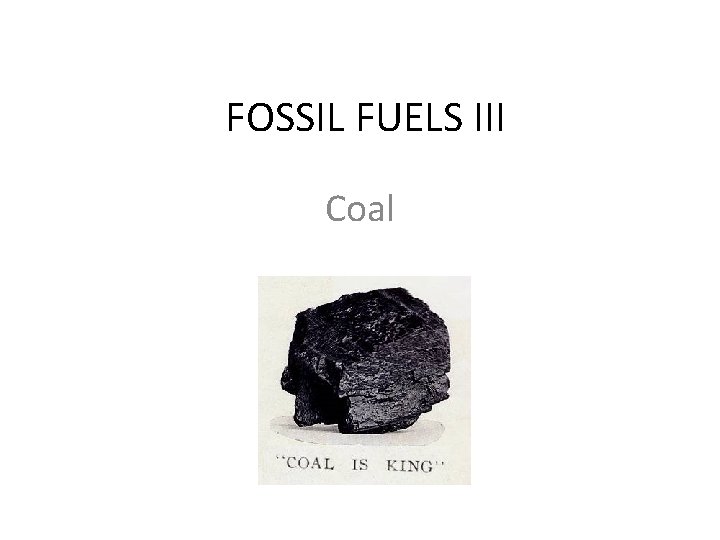
FOSSIL FUELS III Coal Formed from ancient plants


- Slides: 46
FOSSIL FUELS III Coal
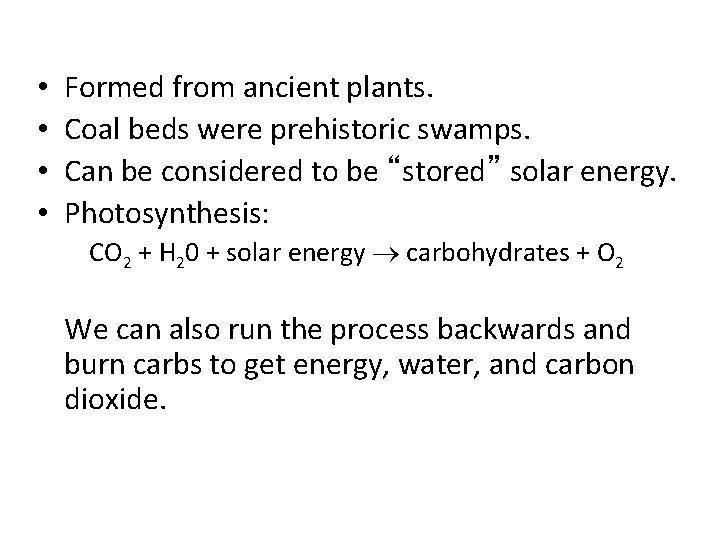
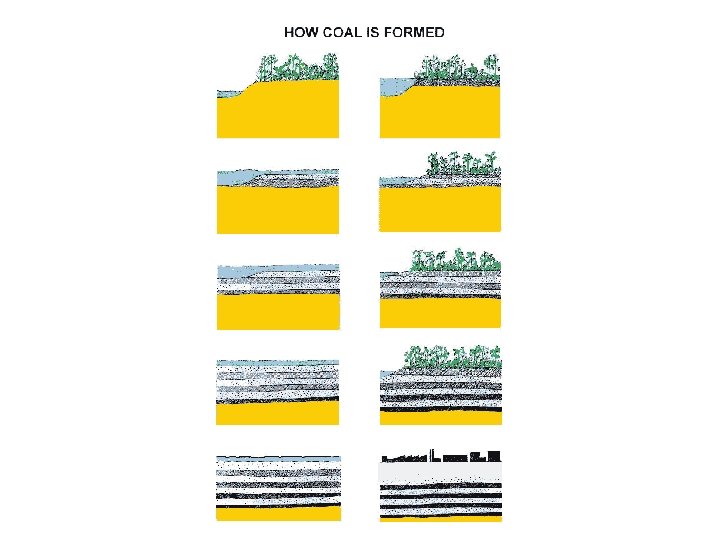
• • Formed from ancient plants. Coal beds were prehistoric swamps. Can be considered to be “stored” solar energy. Photosynthesis: CO 2 + H 20 + solar energy carbohydrates + O 2 We can also run the process backwards and burn carbs to get energy, water, and carbon dioxide.
• Normally when a plant dies it decomposes. • If there is not enough oxygen, it can’t completely decompose, thus we get a slow accumulation of energy. • In a swamp, the bacteria that decompose the plants also use up the Oxygen. • Coal found today formed between 1 and 440 million years ago.
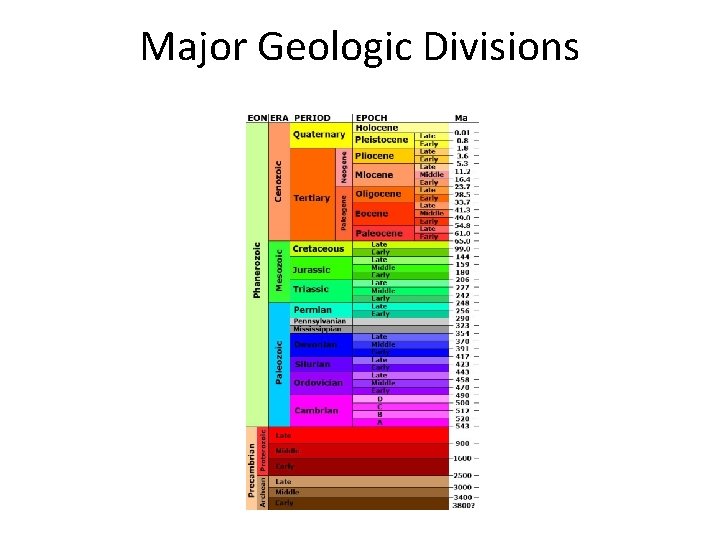
Major Coal Forming Periods • Carboniferous and Permian 360 to 250 MYA – High quality bituminous and anthracite • Upper Cretaceous to Miocene 100 to 5 MYA – Low quality subbituminous and lignite coals • Quaternary 2. 6 MYA to present – peat
Major Geologic Divisions
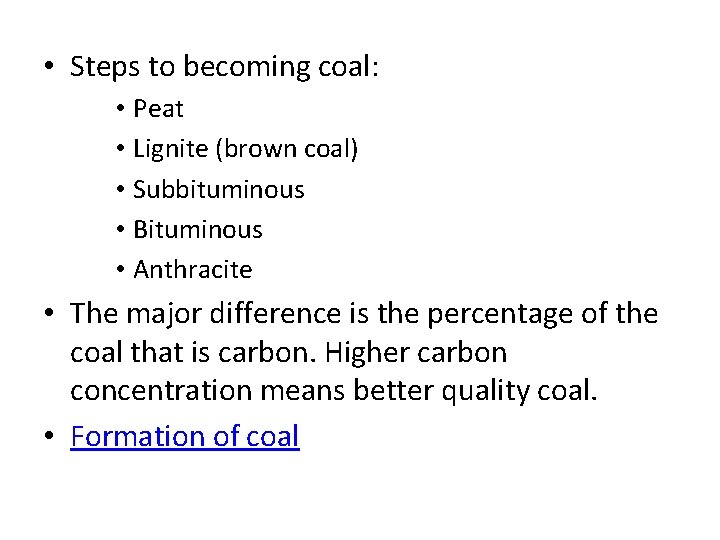
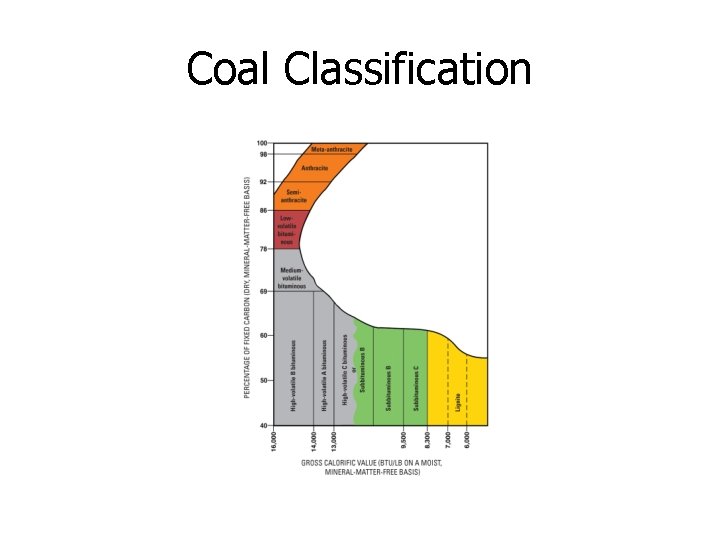
• Steps to becoming coal: • Peat • Lignite (brown coal) • Subbituminous • Bituminous • Anthracite • The major difference is the percentage of the coal that is carbon. Higher carbon concentration means better quality coal. • Formation of coal
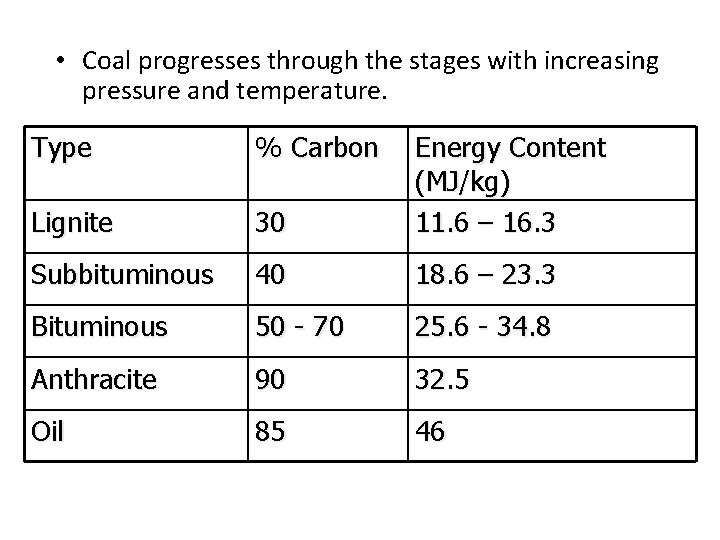
• Coal progresses through the stages with increasing pressure and temperature. Type % Carbon Lignite 30 Energy Content (MJ/kg) 11. 6 – 16. 3 Subbituminous 40 18. 6 – 23. 3 Bituminous 50 - 70 25. 6 - 34. 8 Anthracite 90 32. 5 Oil 85 46
Coal Classification
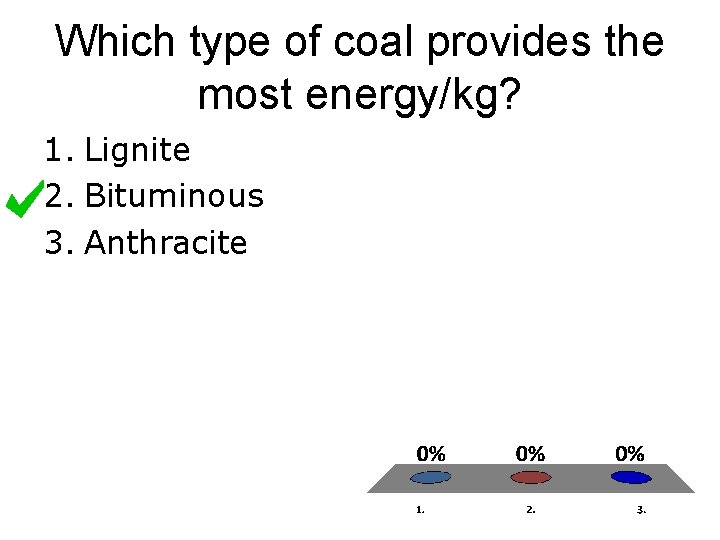
Which type of coal provides the most energy/kg? 1. Lignite 2. Bituminous 3. Anthracite
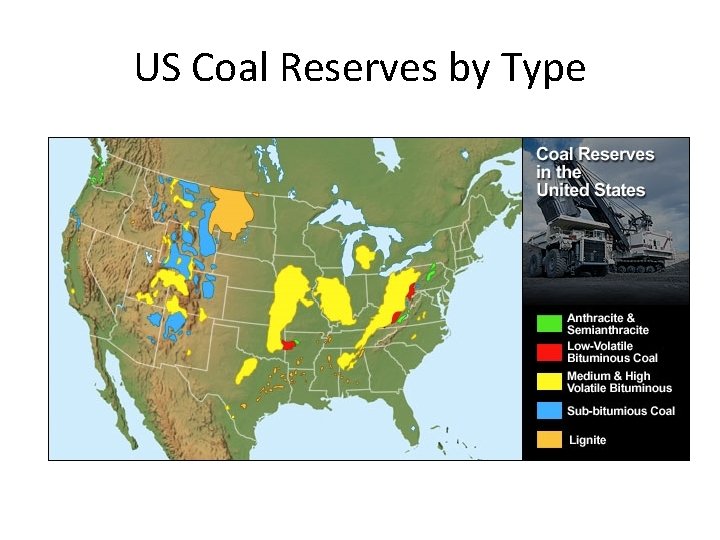
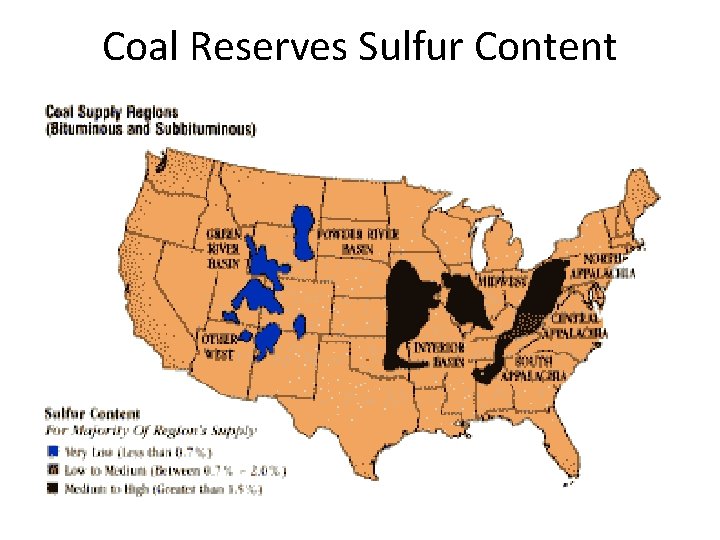
• The largest amount of US coal is Bituminous. • Approximately 1% is Anthracite. (Found in Pennsylvania. ) • Many coal veins have a high sulfur content. – Significant contributor to acid rain. – S+O 2 SO 2 – SO 2 combines with water in atmosphere to form sulfuric acid. – Limits the use of those coals • Coal has uranium & thorium: radioactive – Concentrated when coal is burned
• Other contributions. • Mercury • Arsenic • Selenium
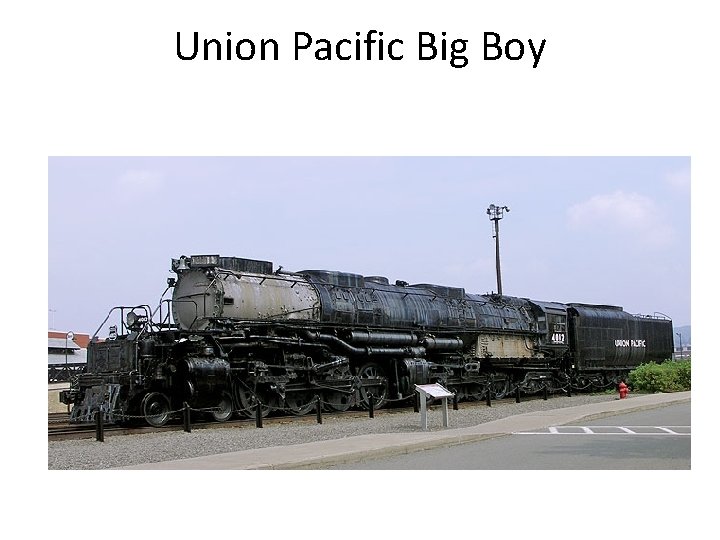
Union Pacific Big Boy
Coal Mining • Coal veins can be 1 in to 400 ft thick. • Must be at least 2 ft thick to make mining profitable. • Underground mining is a dangerous occupation in America.
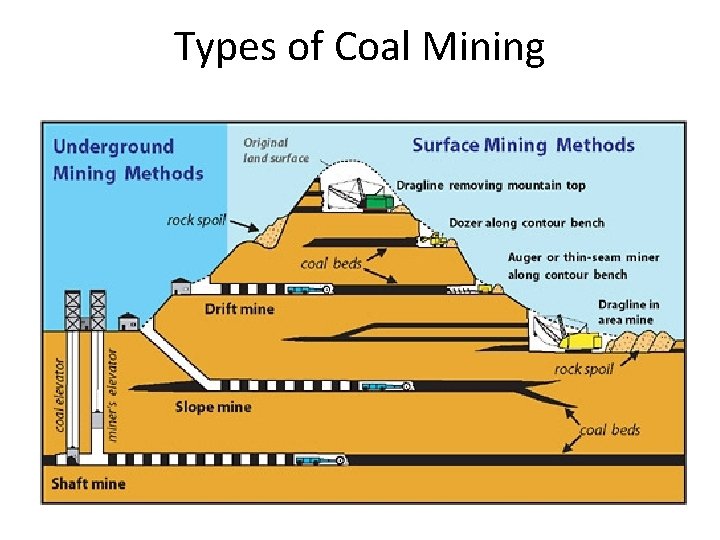
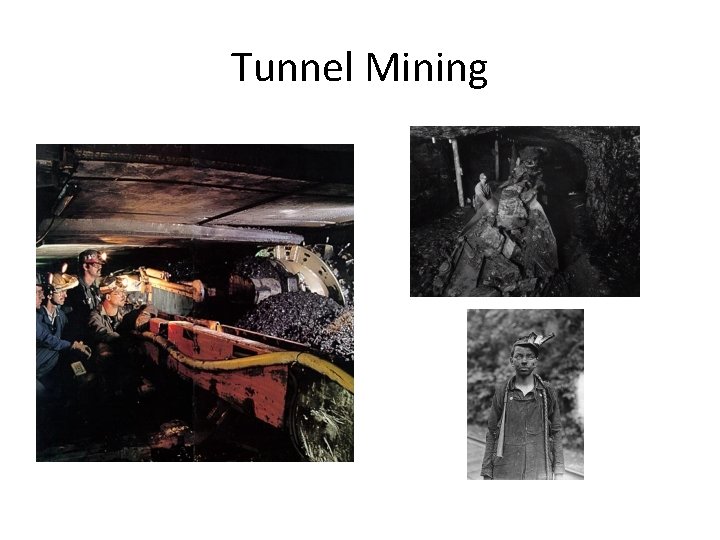
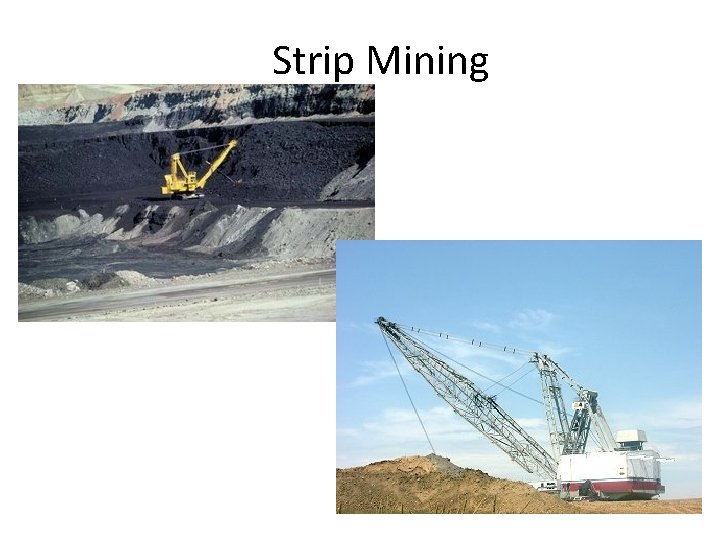
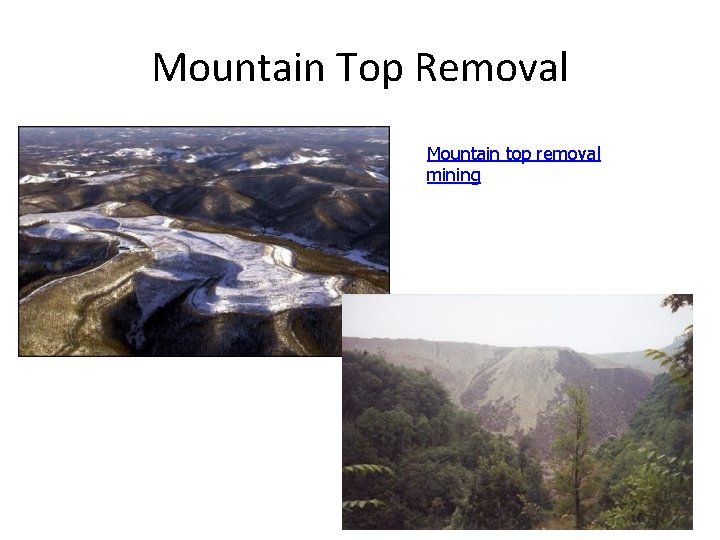
Coal Mining • Tunneling – 40% • Surface mining – 60% – Removing overburden to get to coal • Strip mining • Mountaintop removal
Types of Coal Mining
Tunnel Mining
Strip Mining
Mountain Top Removal Mountain top removal mining
Should Mountain Top Removable be allowed in the U. S. ? 1. Yes 2. No
US Coal Reserves by Type
Coal Reserves Sulfur Content
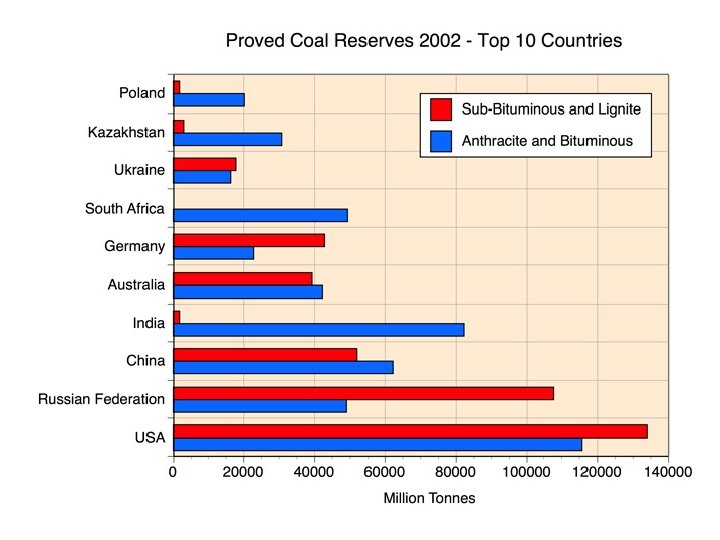
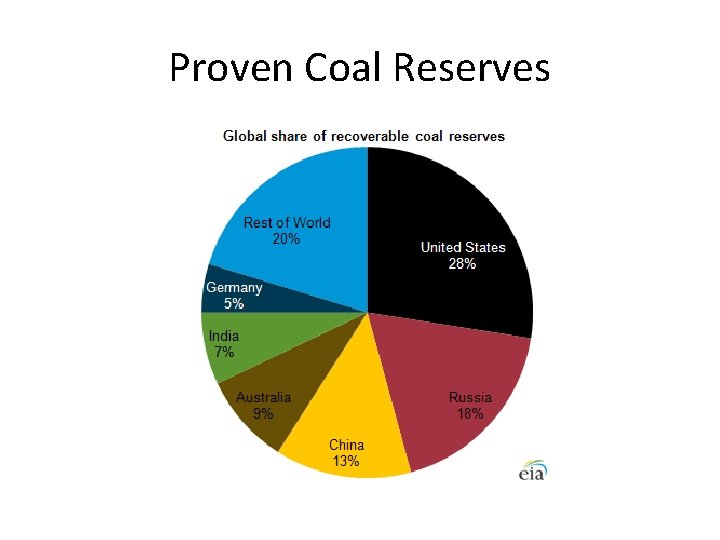
Proven Coal Reserves
Proven Coal Reserves
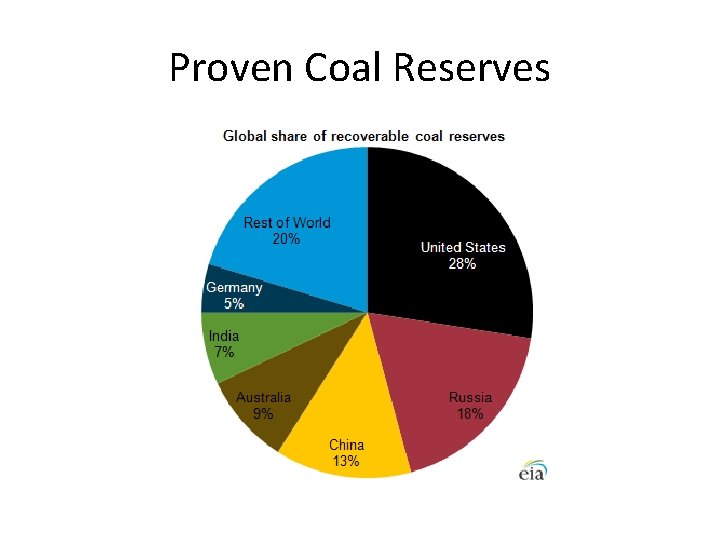
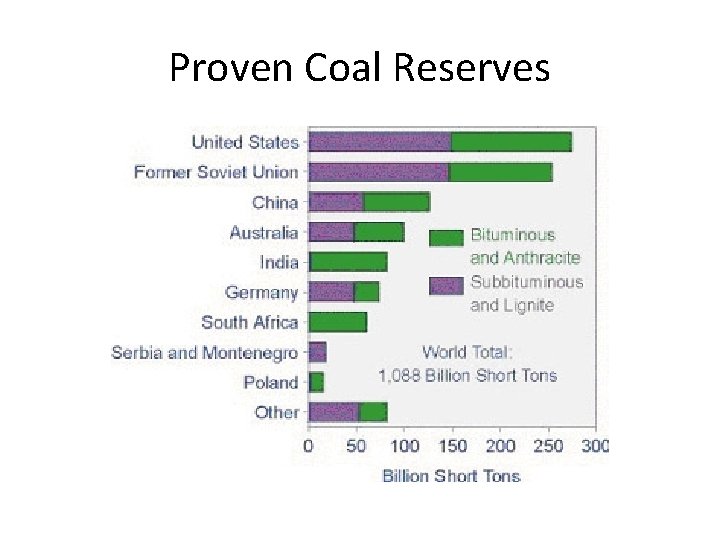
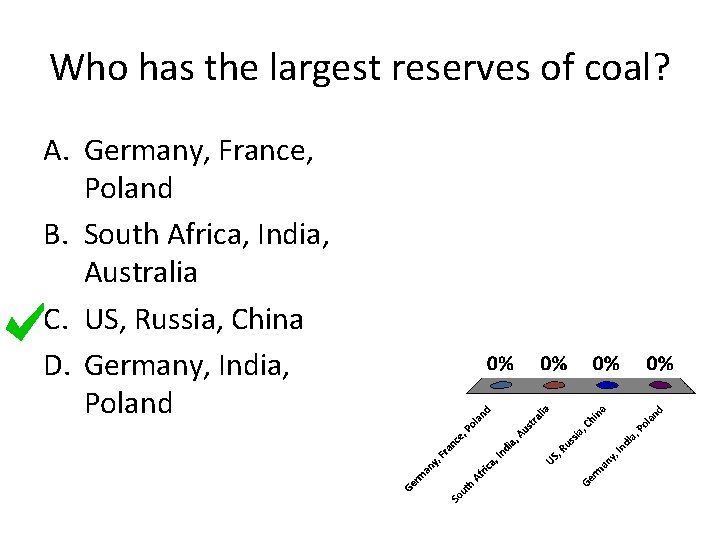
Who has the largest reserves of coal? A. Germany, France, Poland B. South Africa, India, Australia C. US, Russia, China D. Germany, India, Poland
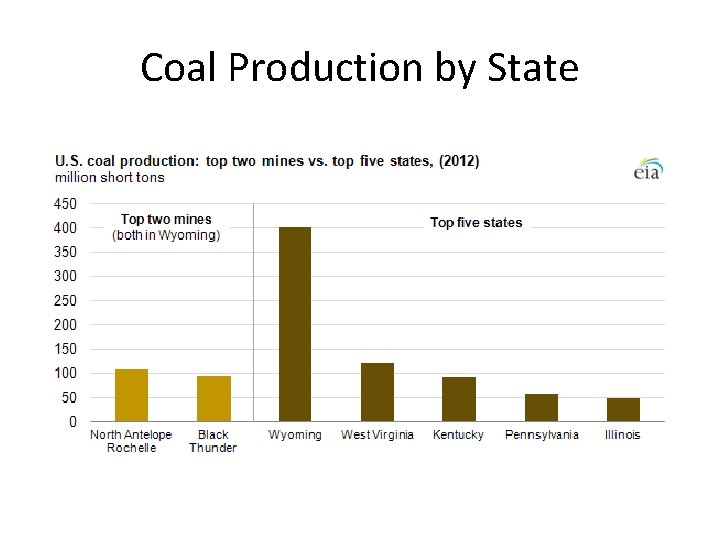
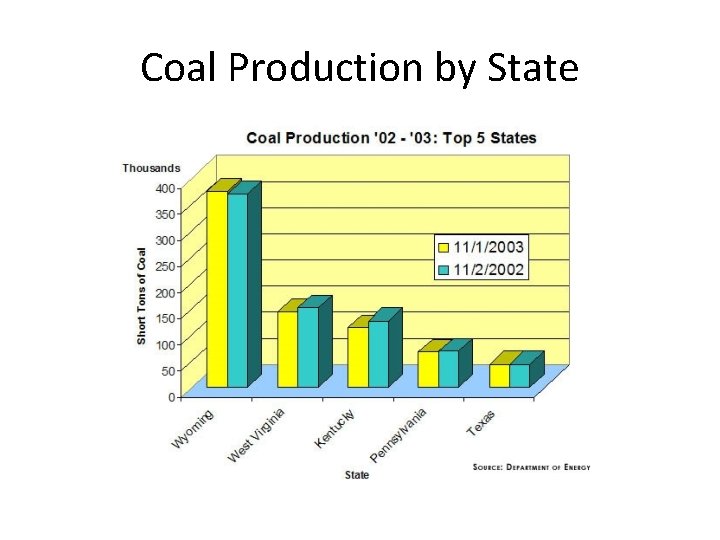
Coal Production by State
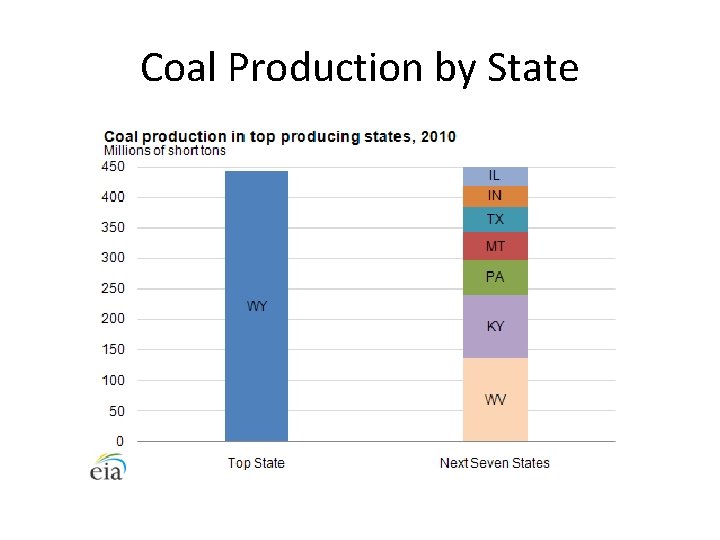
Coal Production by State
Coal Production by State
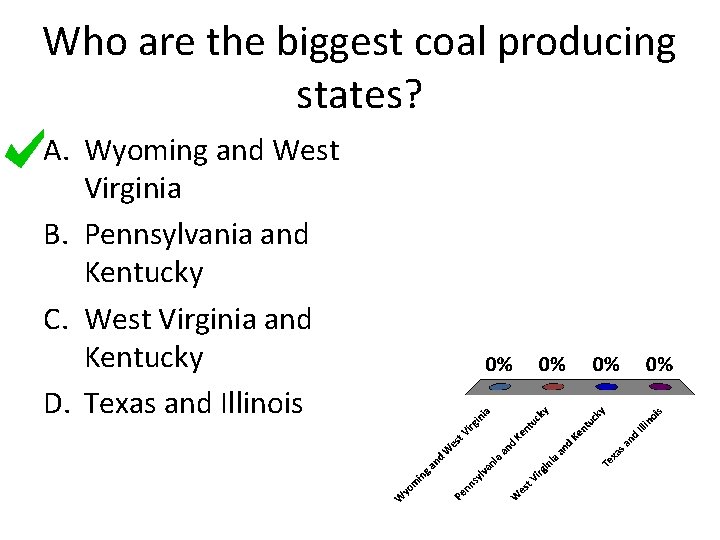
Who are the biggest coal producing states? A. Wyoming and West Virginia B. Pennsylvania and Kentucky C. West Virginia and Kentucky D. Texas and Illinois
Proven Coal Reserves
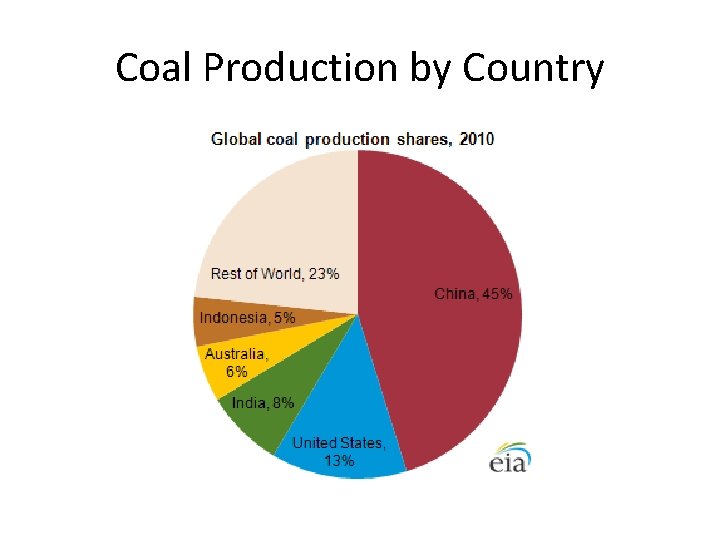
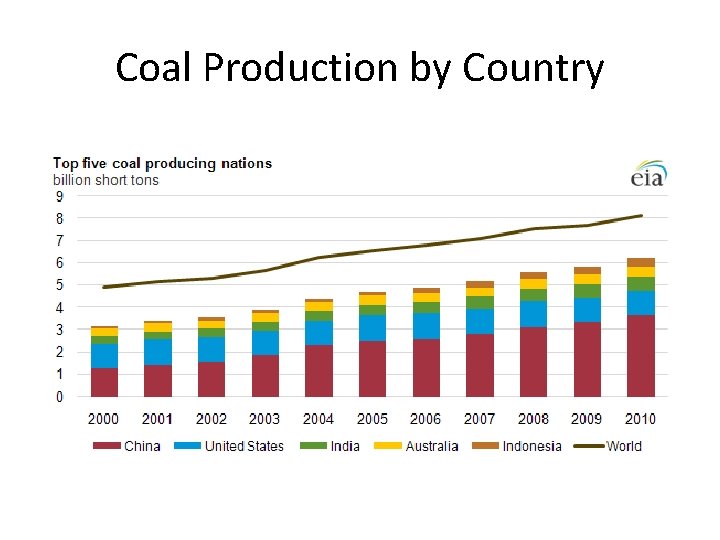
Coal Production by Country
Coal Production by Country
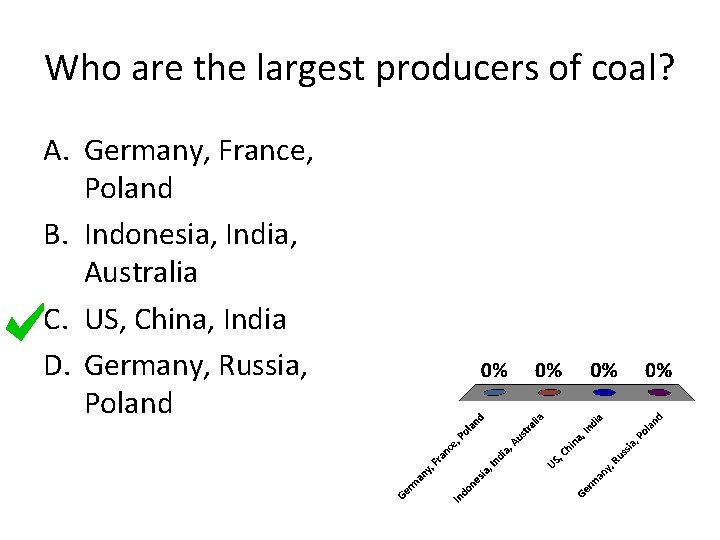
Who are the largest producers of coal? A. Germany, France, Poland B. Indonesia, India, Australia C. US, China, India D. Germany, Russia, Poland
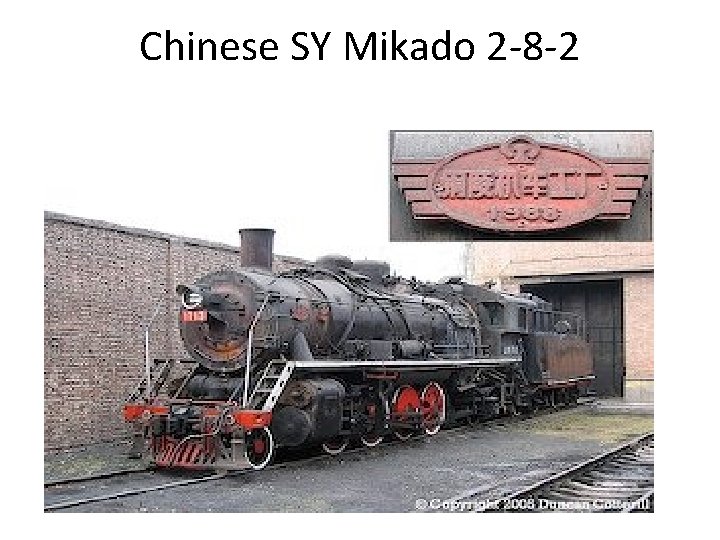
Chinese SY Mikado 2 -8 -2
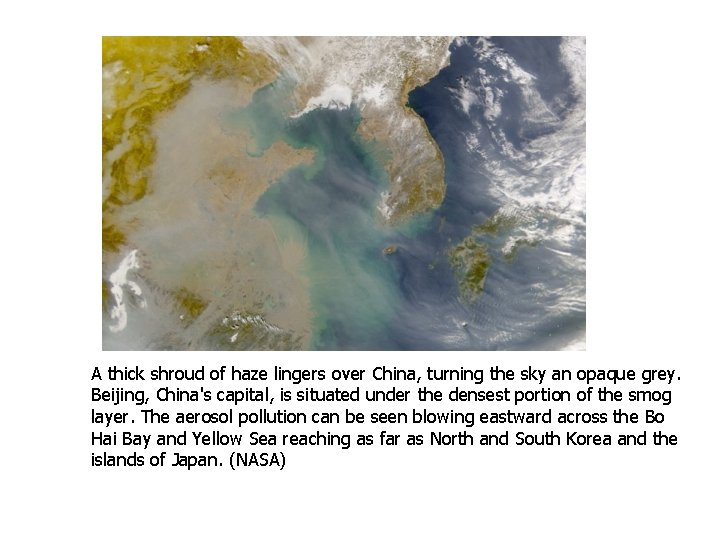
A thick shroud of haze lingers over China, turning the sky an opaque grey. Beijing, China's capital, is situated under the densest portion of the smog layer. The aerosol pollution can be seen blowing eastward across the Bo Hai Bay and Yellow Sea reaching as far as North and South Korea and the islands of Japan. (NASA)
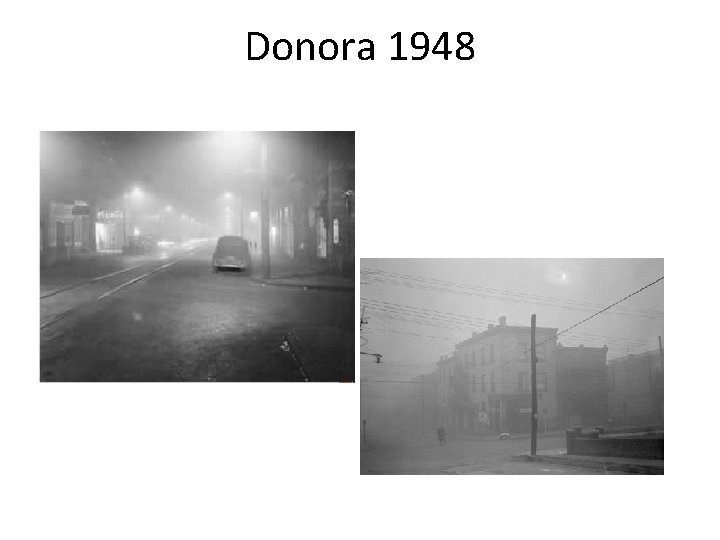
Donora 1948
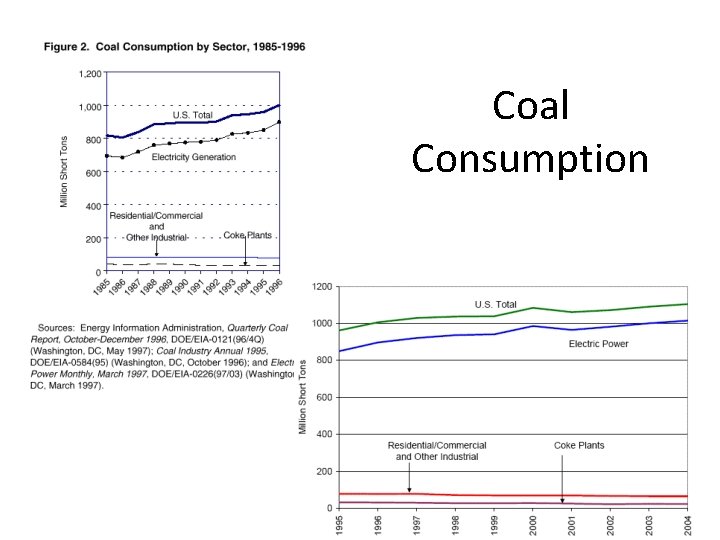
Coal Consumption
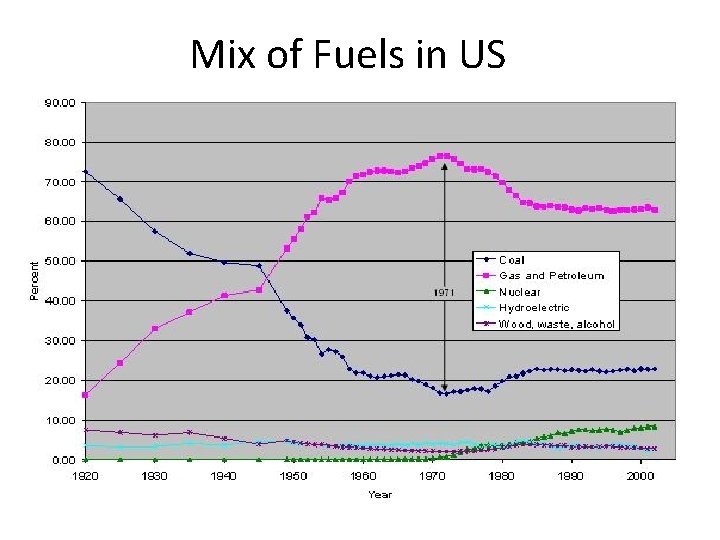
Mix of Fuels in US
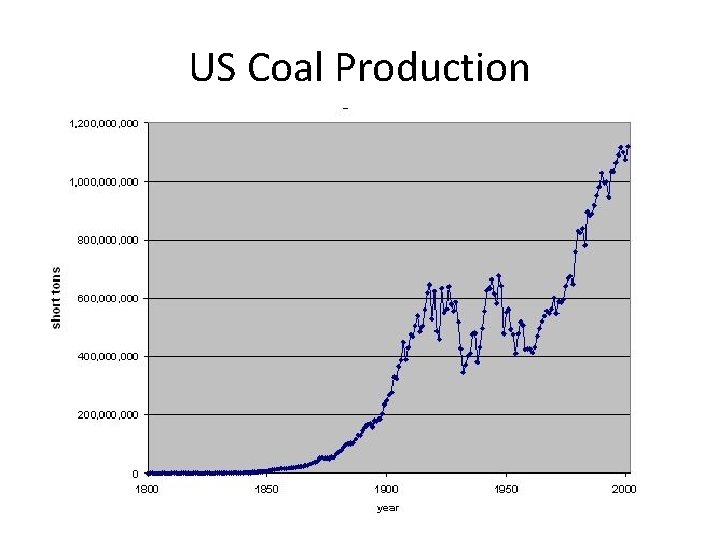
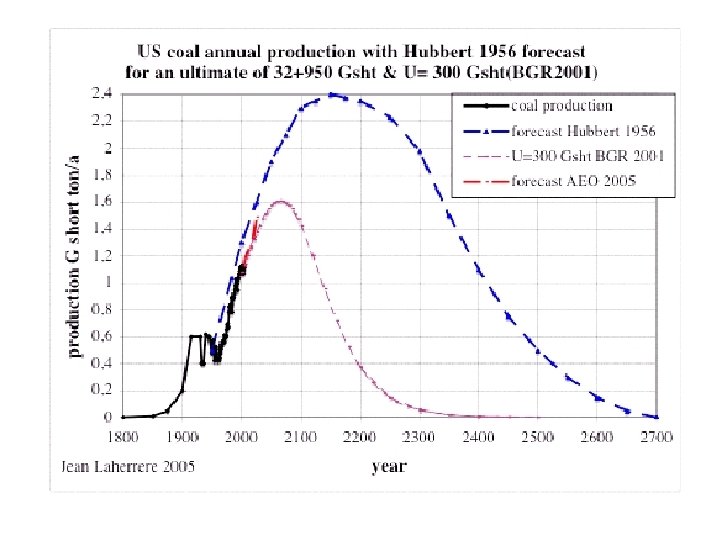
US Coal Production
• Estimated that we have enough reserves for 200 -300 years at current production rates. • Use may be expanded – Replace aging oil/natural gas/nuclear electric plants – More demand for electrical energy – Alternative uses such as coal gasification.
Should the use of coal in America be expanded? A. Yes B. No