
Fossil Dating Relative and Absolute Dating HOW DO
Fossil Dating
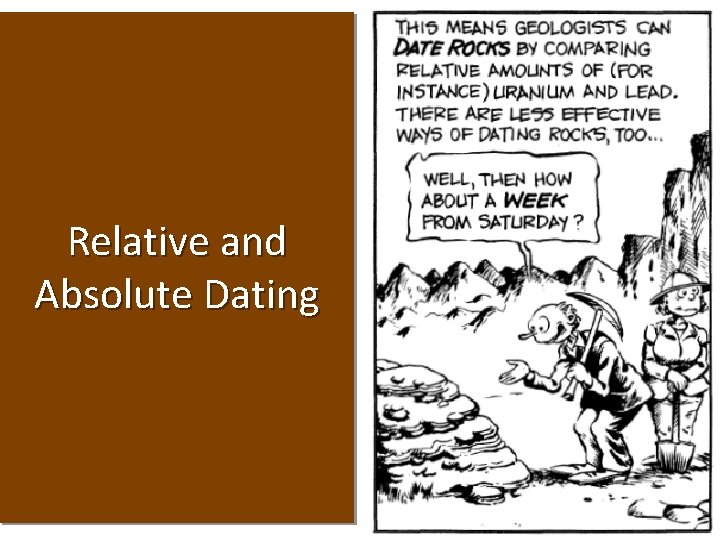
Relative and Absolute Dating
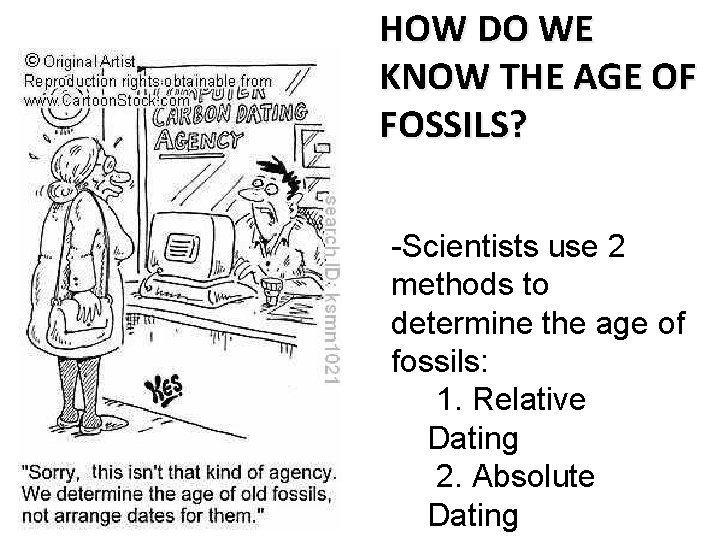
HOW DO WE KNOW THE AGE OF FOSSILS? -Scientists use 2 methods to determine the age of fossils: 1. Relative Dating 2. Absolute Dating

Relative and Absolute Dating
What is Dating? l When geologists date rocks, they are determining how long ago they formed. l Two ways to do this: ¡Relative Dating ¡Absolute Dating
Relative Dating l Determining how old something is compared to something else l Use words like “older” or “younger” instead of exact numbers
I. Relative Dating l Relative Dating is when you give the age of a rock or fossil compared to another rock or fossil. ¡Example: Rock A is OLDER than Rock B. ¡An actual age in years is not determined.
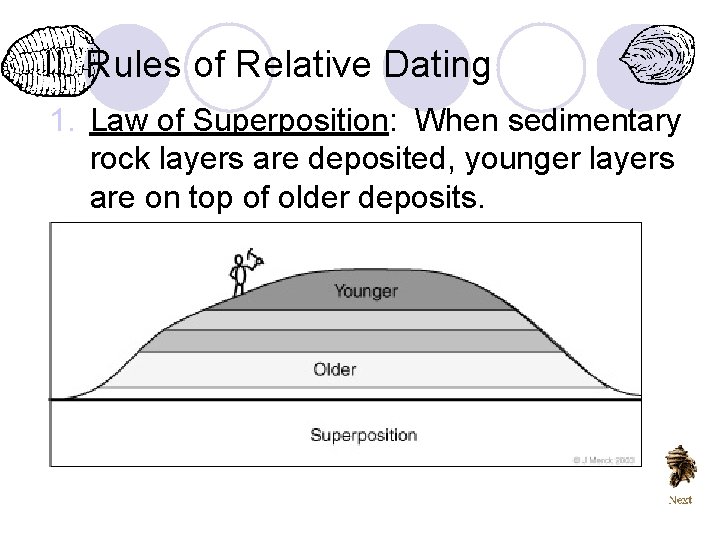
II. Rules of Relative Dating 1. Law of Superposition: Superposition When sedimentary rock layers are deposited, younger layers are on top of older deposits.
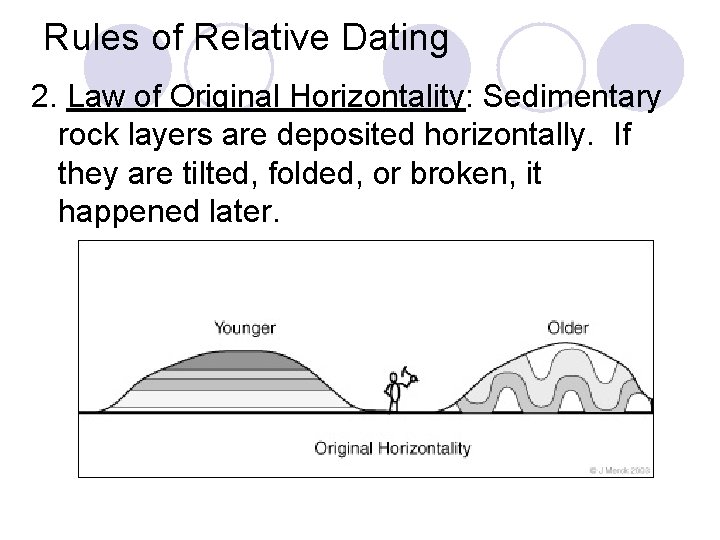
Rules of Relative Dating 2. Law of Original Horizontality: Horizontality Sedimentary rock layers are deposited horizontally. If they are tilted, folded, or broken, it happened later.
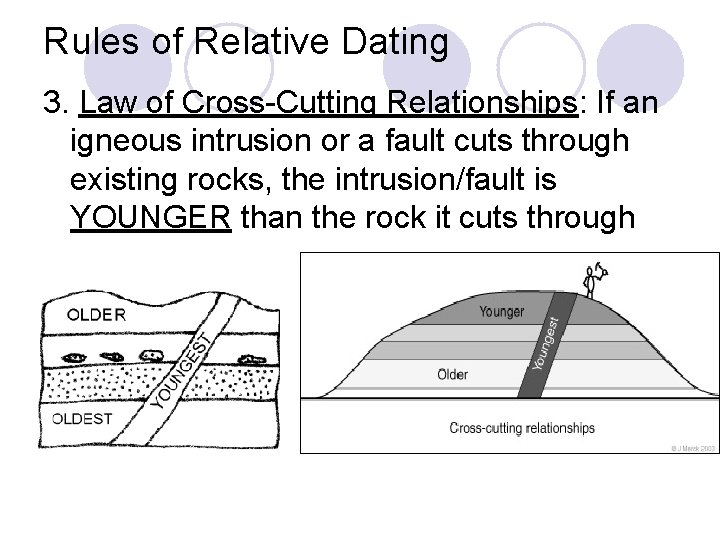
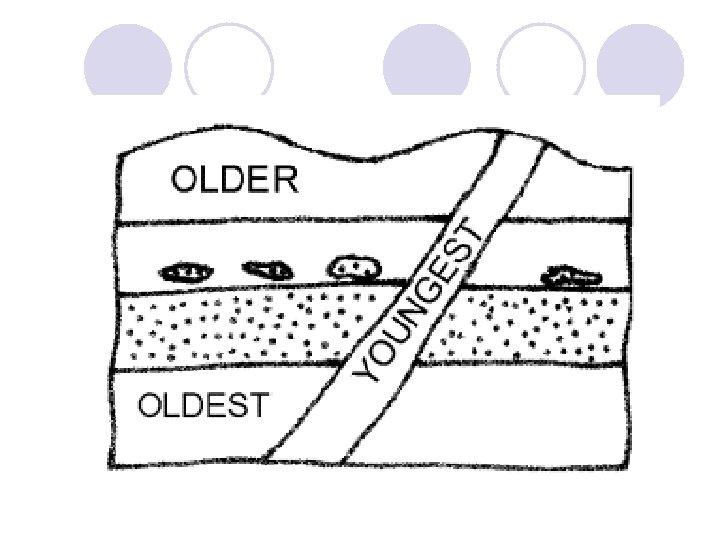
Rules of Relative Dating 3. Law of Cross-Cutting Relationships: Relationships If an igneous intrusion or a fault cuts through existing rocks, the intrusion/fault is YOUNGER than the rock it cuts through
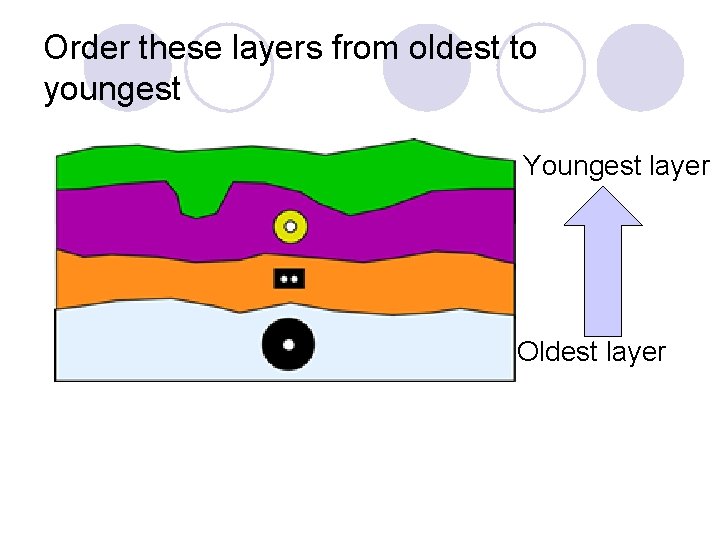
Order these layers from oldest to youngest Youngest layer Oldest layer
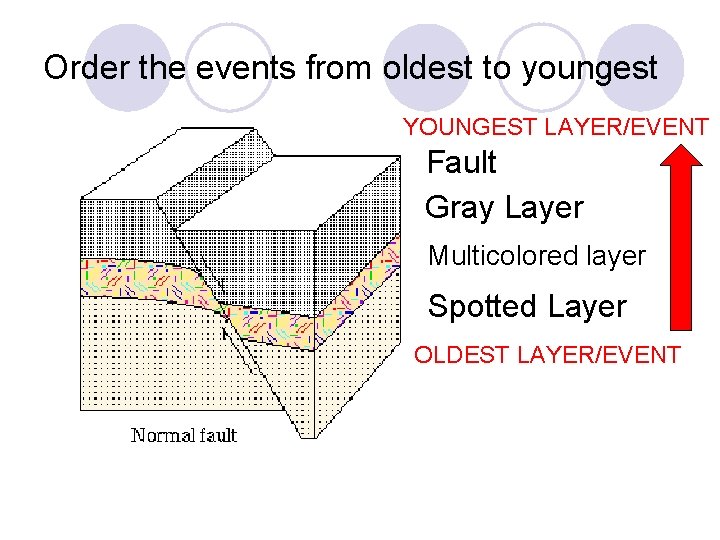
Order the events from oldest to youngest YOUNGEST LAYER/EVENT Fault Gray Layer Multicolored layer Spotted Layer OLDEST LAYER/EVENT
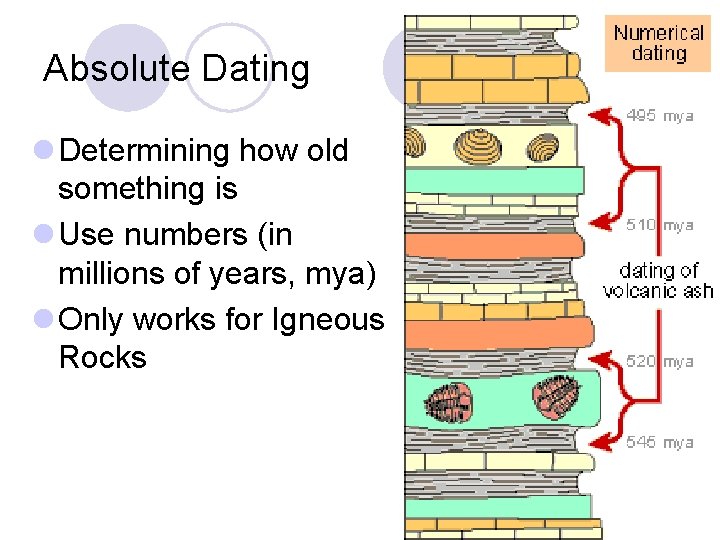
Absolute Dating l Determining how old something is l Use numbers (in millions of years, mya) l Only works for Igneous Rocks
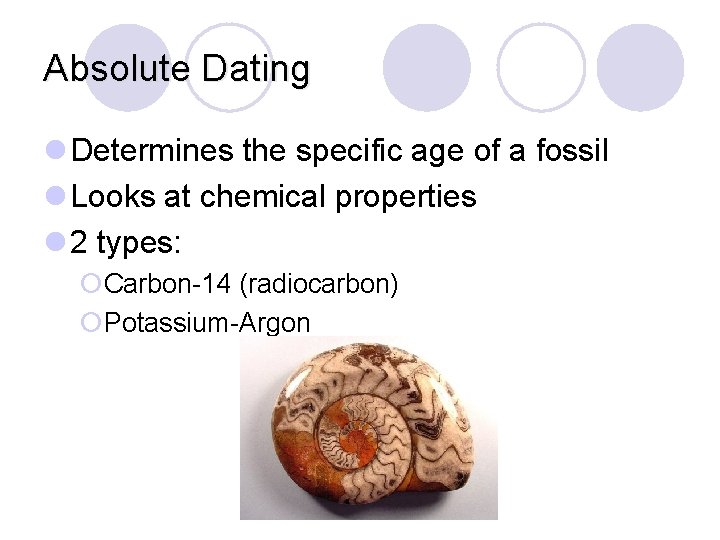
Absolute Dating l Determines the specific age of a fossil l Looks at chemical properties l 2 types: ¡Carbon-14 (radiocarbon) ¡Potassium-Argon
Carbon-14 Dating l Also known as Radiocarbon dating l Used to date organic substances l Scientists measure the radiocarbon in the fossil to determine its age l Can only date specimens up to about 60, 000 years old
Potassium-Argon Dating l Scientists determine the age of the rock surrounding the fossil to determine the fossil’s age. l Used only for inorganic substances (rocks and minerals) l Scientists measure the amount of argon in the rock to determine its age l Dates rock 60, 000 years old and older
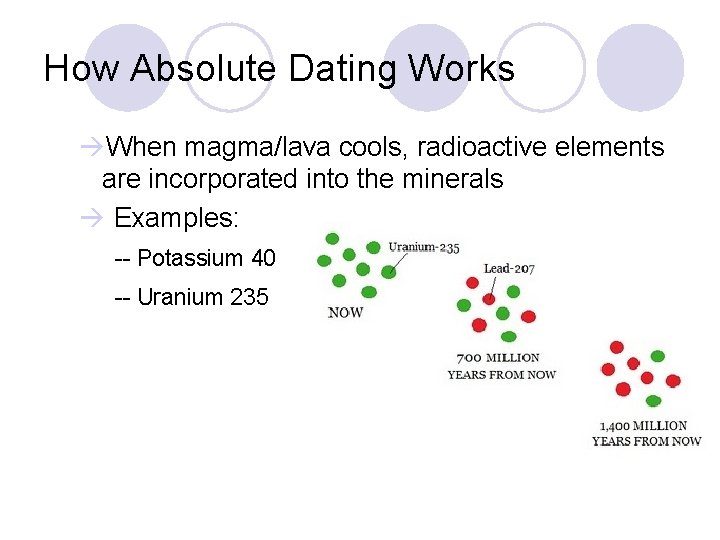
How Absolute Dating Works àWhen magma/lava cools, radioactive elements are incorporated into the minerals à Examples: -- Potassium 40 -- Uranium 235
How Absolute Dating Works àThese elements begin to decay at a known rate starting when the rock cools àWe can measure how much of the element is left àTells us how much time has passed since the rock formed.

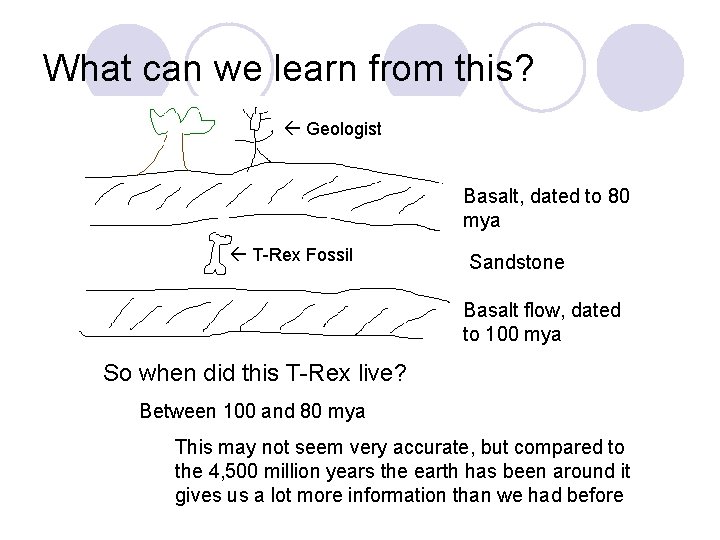
What can we learn from this? Geologist Basalt, dated to 80 mya T-Rex Fossil Sandstone Basalt flow, dated to 100 mya So when did this T-Rex live? Between 100 and 80 mya This may not seem very accurate, but compared to the 4, 500 million years the earth has been around it gives us a lot more information than we had before
What can we learn from this? l Absolute Dating ¡Helps us determine the age of the earth ¡Helps us determine when specific events in the history of the earth happened (ex. Extinction of the dinosaurs) l Relative Dating ¡Can help us estimate the time span between major earthquakes, storms, tsunamis etc ¡Can help us determine the order that life forms developed on earth
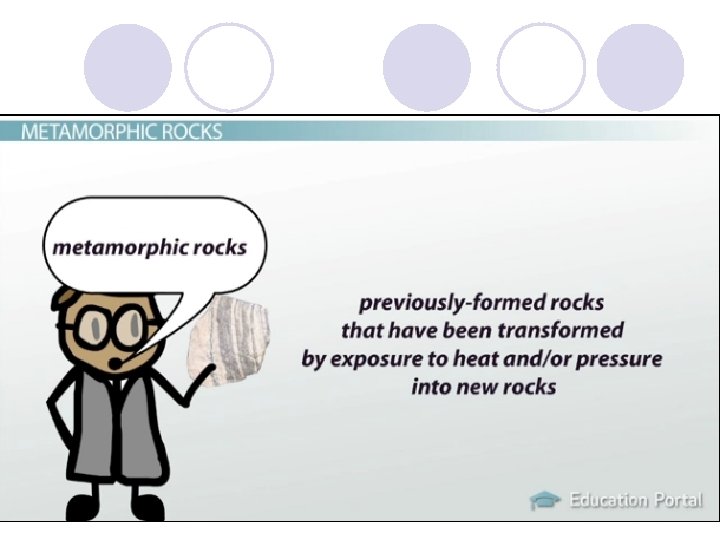

QUIZ
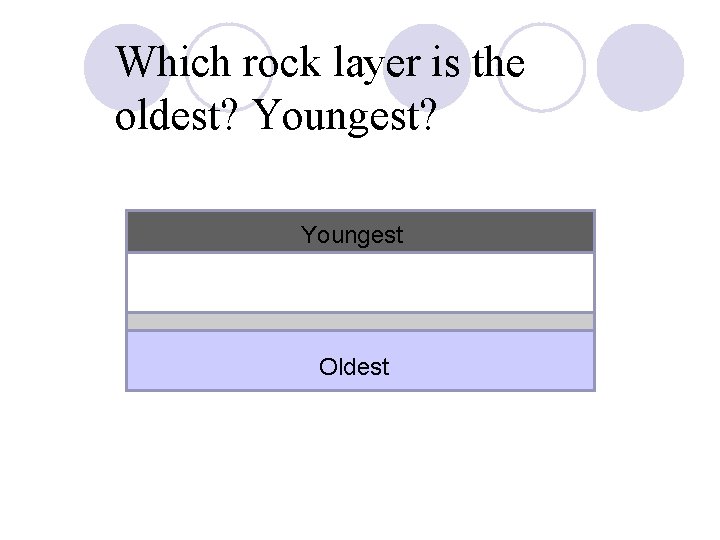
Which rock layer is the oldest? Youngest Oldest
If you wanted to figure out the exact age of a rock, what technique would you use? a. Relative Dating b. Carbon-14 Dating c. Law of Superposition d. Potassium-Argon Dating
If you were looking to find the exact age of a fossil that is at least 1 million years old, what technique would you use? a. Carbon-14 Dating b. Potassium-Argon Dating c. Relative Dating d. You can’t; it is impossible
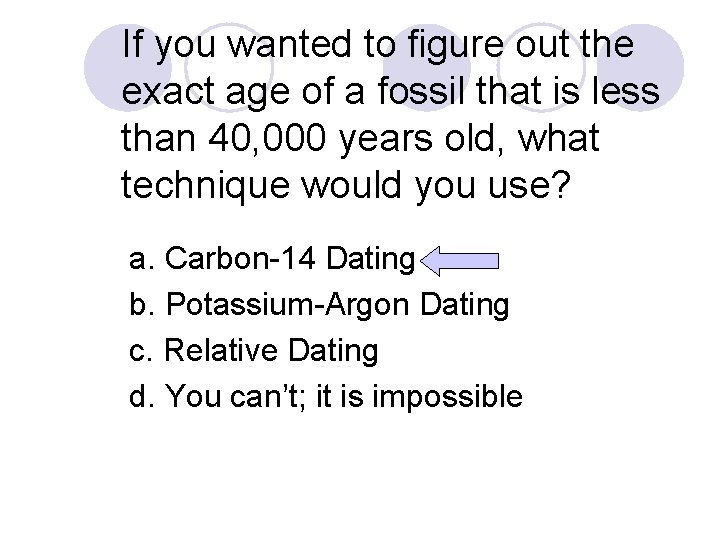
If you wanted to figure out the exact age of a fossil that is less than 40, 000 years old, what technique would you use? a. Carbon-14 Dating b. Potassium-Argon Dating c. Relative Dating d. You can’t; it is impossible

- Slides: 29