
Fortifying Young Minds Against Misinformation John C Silva
- Slides: 35
Fortifying Young Minds Against Misinformation John C. Silva, NBCT Director of Education The News Literacy Project October 16, 2018 @News. Lit. Project The. News. Literacy. Project @Mr. Silva @News. Lit. Project @Mr. Silva
@News. Lit. Project @Mr. Silva
@News. Lit. Project @Mr. Silva
Two Things I Don’t Know (but I’m working to find out) 1. What age should we start teaching news literacy? 2. What are the skills we need to start with? @News. Lit. Project @Mr. Silva
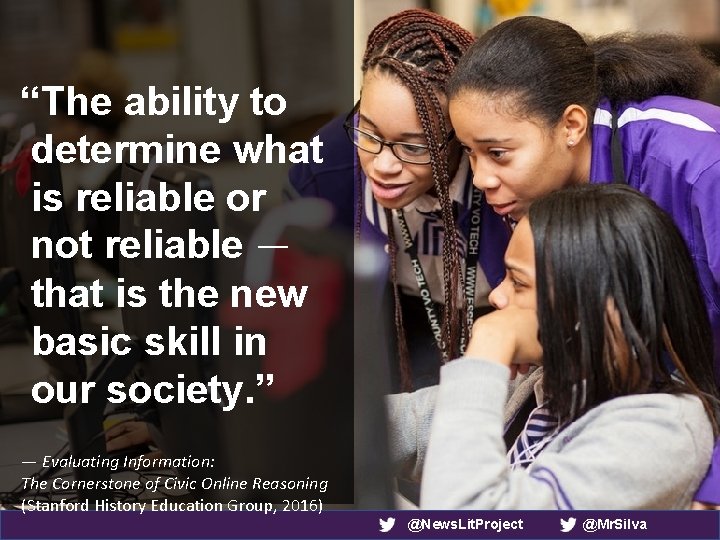
“The ability to determine what is reliable or not reliable — that is the new basic skill in our society. ” — Evaluating Information: The Cornerstone of Civic Online Reasoning (Stanford History Education Group, 2016) @News. Lit. Project @Mr. Silva
@News. Lit. Project @Mr. Silva
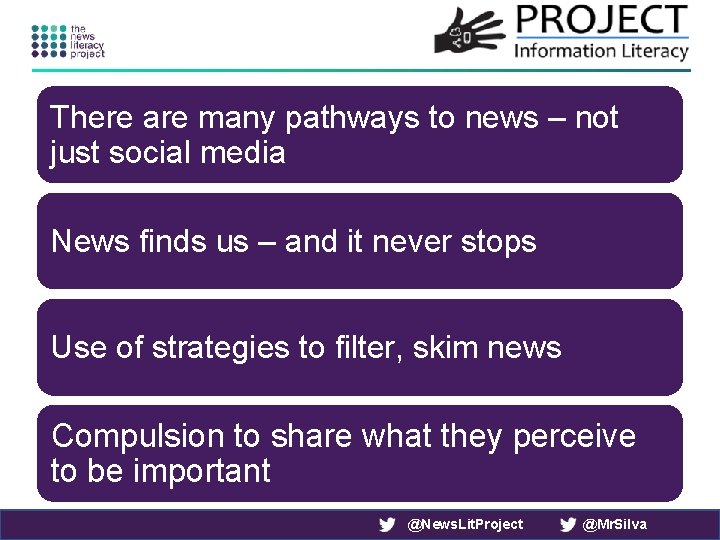
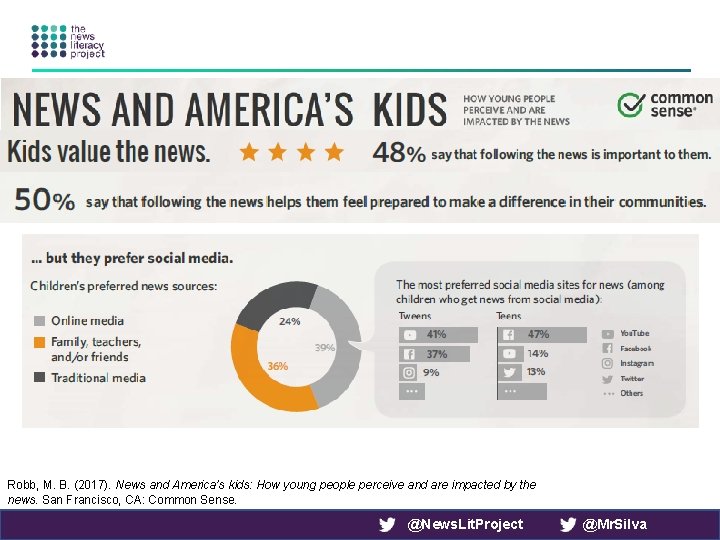
There are many pathways to news – not just social media News finds us – and it never stops Use of strategies to filter, skim news Compulsion to share what they perceive to be important @News. Lit. Project @Mr. Silva
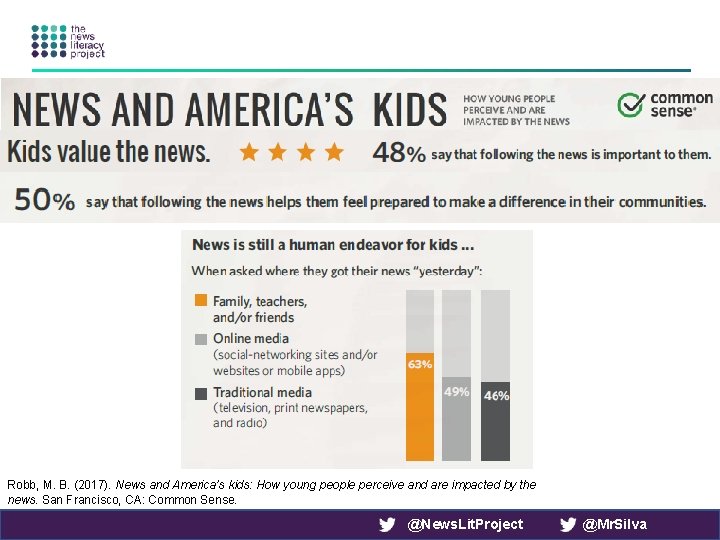
Robb, M. B. (2017). News and America’s kids: How young people perceive and are impacted by the news. San Francisco, CA: Common Sense. @News. Lit. Project @Mr. Silva
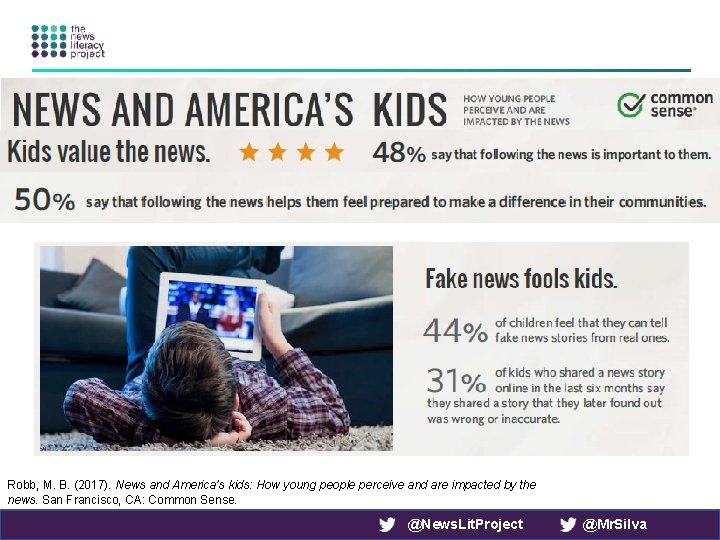
Robb, M. B. (2017). News and America’s kids: How young people perceive and are impacted by the news. San Francisco, CA: Common Sense. @News. Lit. Project @Mr. Silva
Robb, M. B. (2017). News and America’s kids: How young people perceive and are impacted by the news. San Francisco, CA: Common Sense. @News. Lit. Project @Mr. Silva
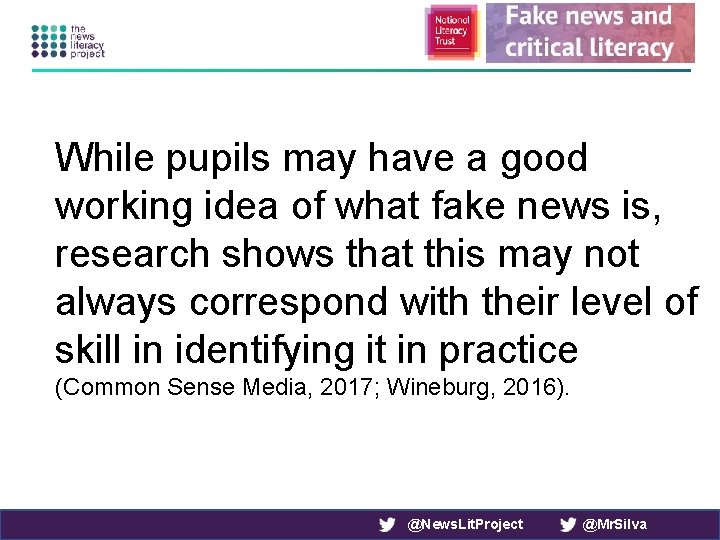
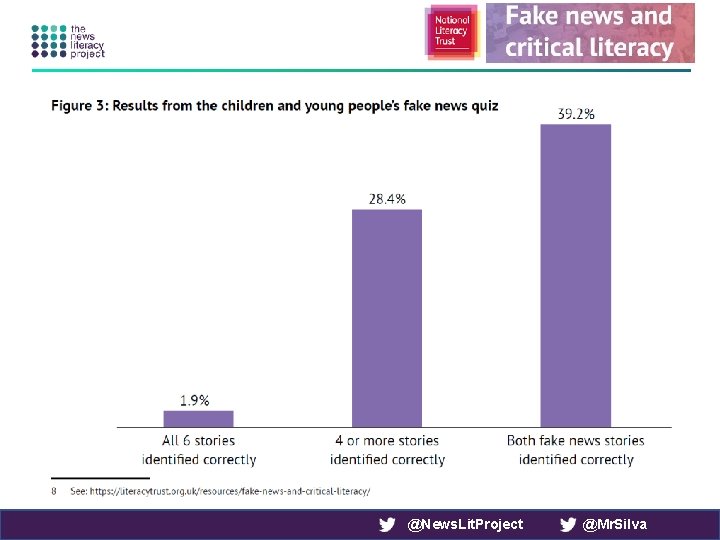
While pupils may have a good working idea of what fake news is, research shows that this may not always correspond with their level of skill in identifying it in practice (Common Sense Media, 2017; Wineburg, 2016). @News. Lit. Project @Mr. Silva
@News. Lit. Project @Mr. Silva
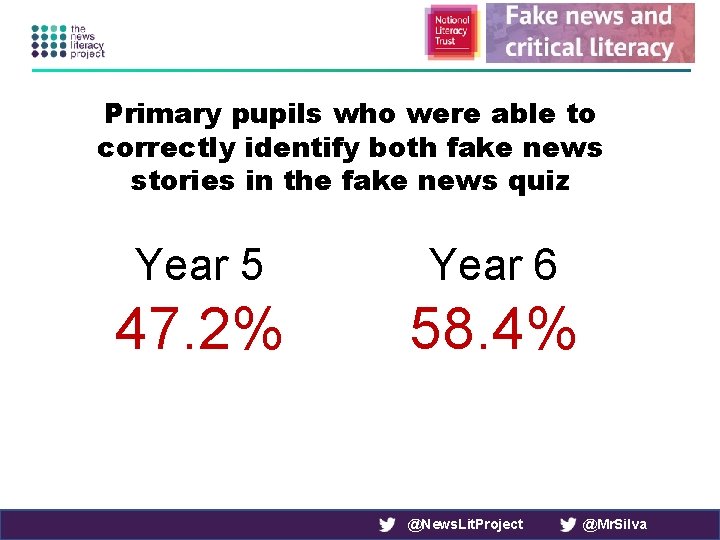
Primary pupils who were able to correctly identify both fake news stories in the fake news quiz Year 5 Year 6 47. 2% 58. 4% @News. Lit. Project @Mr. Silva
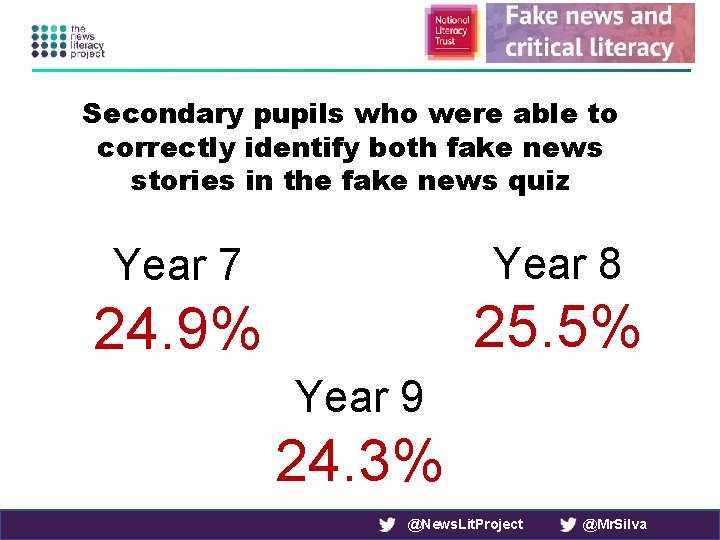
Secondary pupils who were able to correctly identify both fake news stories in the fake news quiz Year 7 Year 8 24. 9% 25. 5% Year 9 24. 3% @News. Lit. Project @Mr. Silva
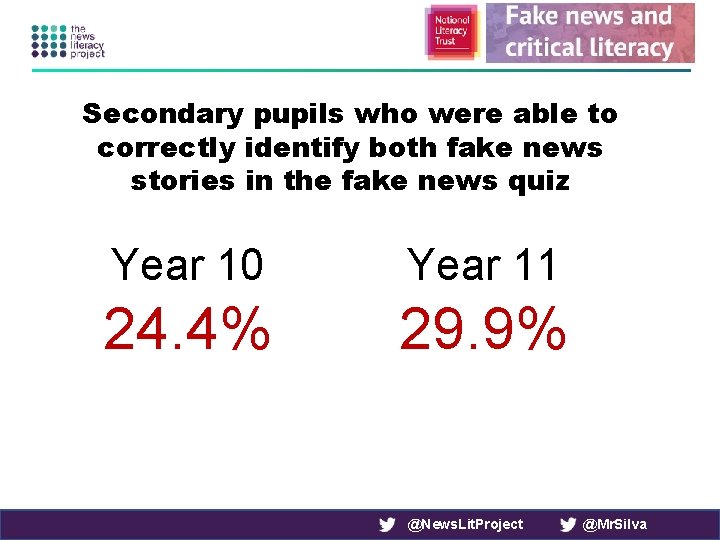
Secondary pupils who were able to correctly identify both fake news stories in the fake news quiz Year 10 Year 11 24. 4% 29. 9% @News. Lit. Project @Mr. Silva
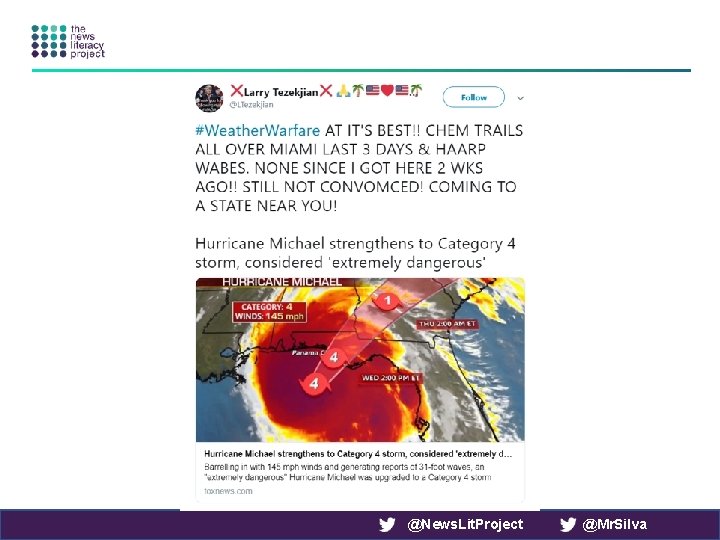
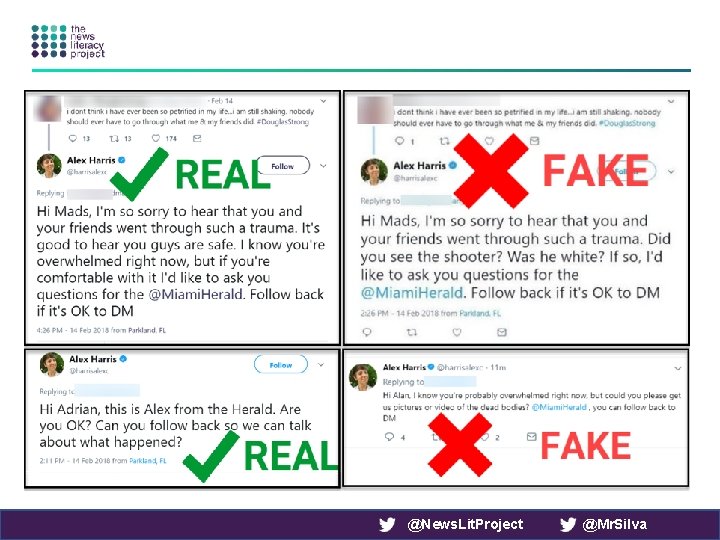
“Fake News” is more complicated than most realize @News. Lit. Project @Mr. Silva
SHEG Study @News. Lit. Project @Mr. Silva
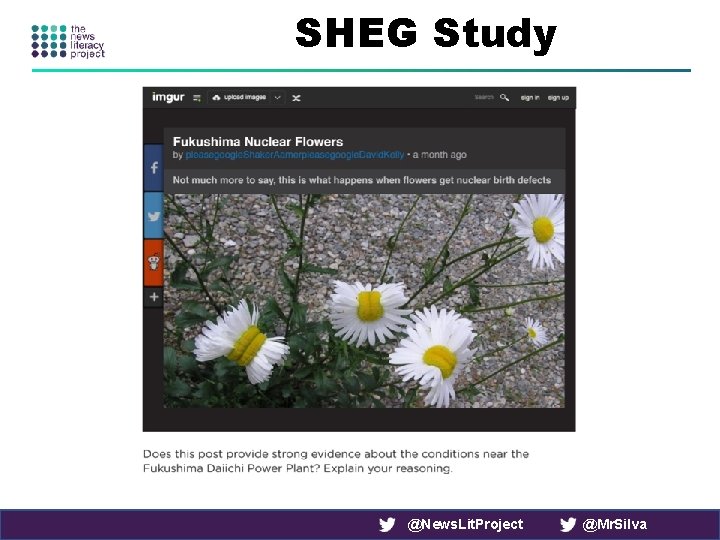
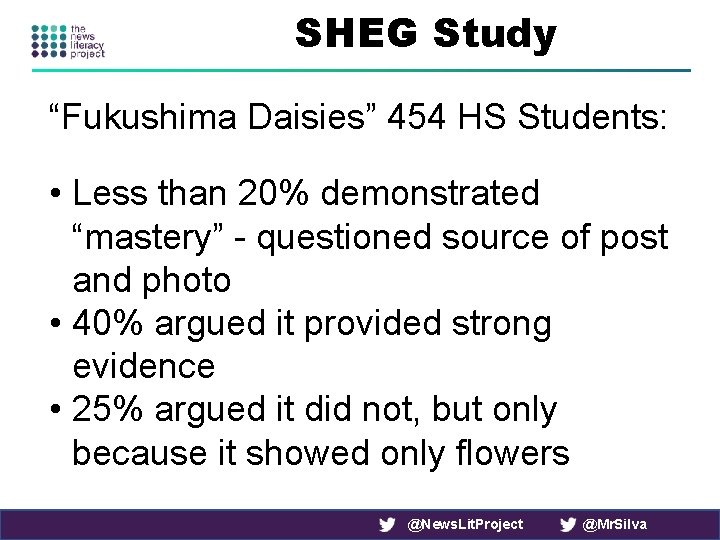
SHEG Study “Fukushima Daisies” 454 HS Students: • Less than 20% demonstrated “mastery” - questioned source of post and photo • 40% argued it provided strong evidence • 25% argued it did not, but only because it showed only flowers @News. Lit. Project @Mr. Silva
@News. Lit. Project @Mr. Silva
SHEG Study @News. Lit. Project @Mr. Silva
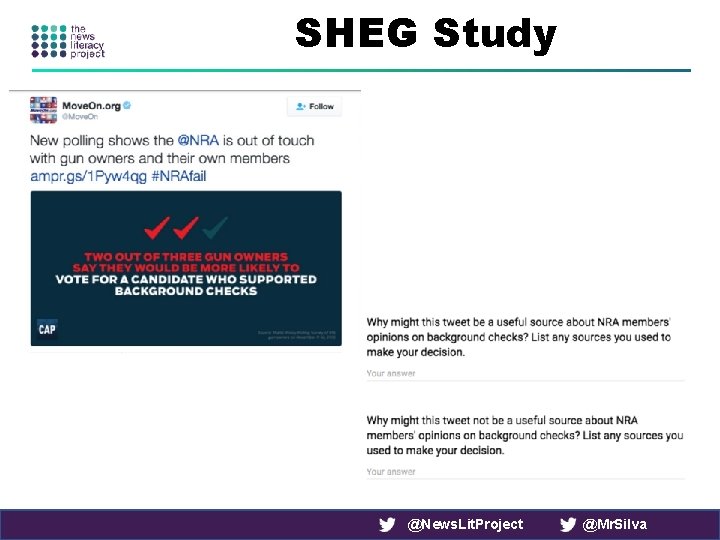
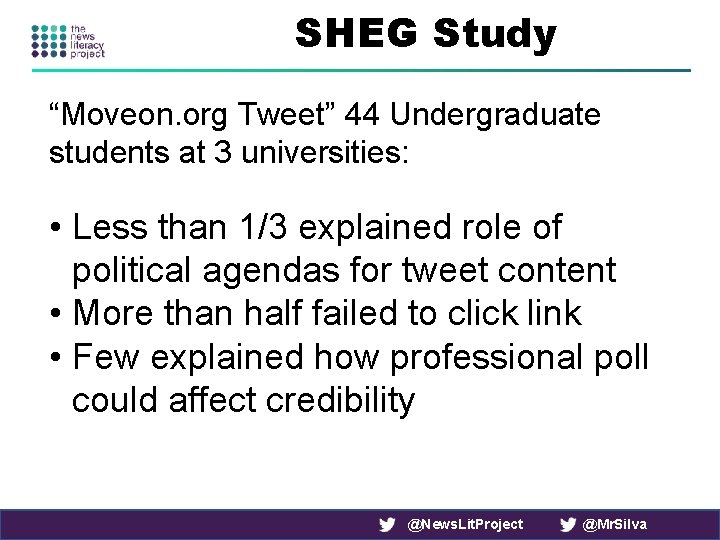
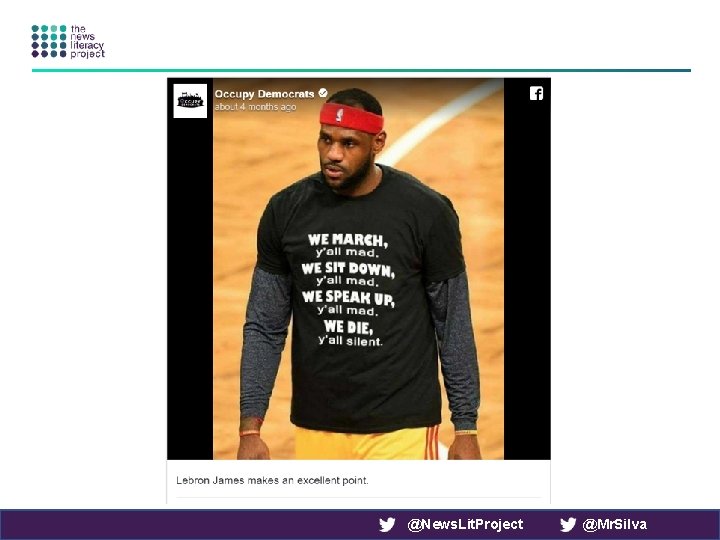
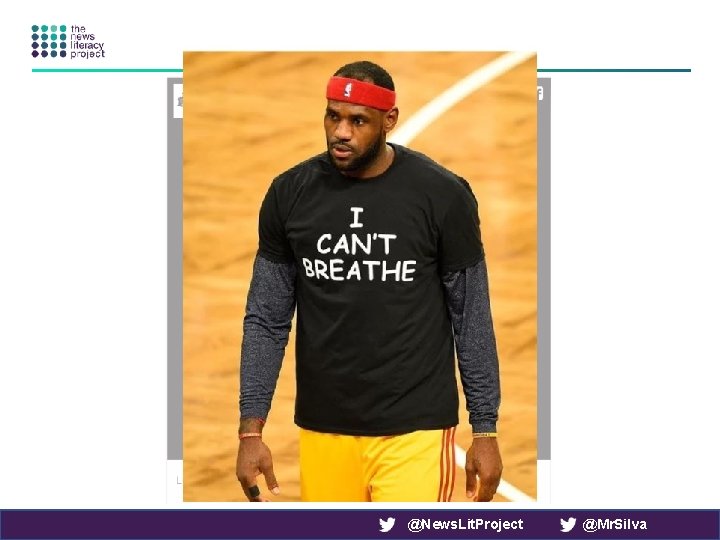
SHEG Study “Moveon. org Tweet” 44 Undergraduate students at 3 universities: • Less than 1/3 explained role of political agendas for tweet content • More than half failed to click link • Few explained how professional poll could affect credibility @News. Lit. Project @Mr. Silva
@News. Lit. Project @Mr. Silva
@News. Lit. Project @Mr. Silva
@News. Lit. Project @Mr. Silva
@News. Lit. Project @Mr. Silva
@News. Lit. Project @Mr. Silva
@News. Lit. Project @Mr. Silva
@News. Lit. Project @Mr. Silva
@News. Lit. Project @Mr. Silva
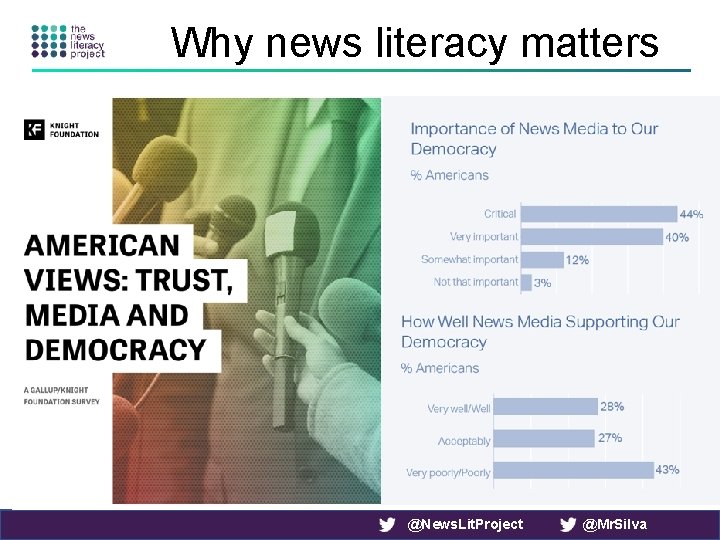
Why news literacy matters @News. Lit. Project @Mr. Silva
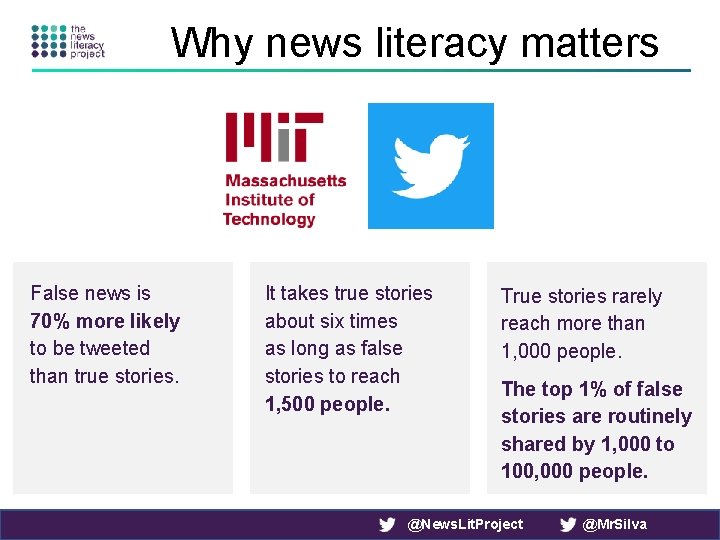
Why news literacy matters False news is 70% more likely to be tweeted than true stories. It takes true stories about six times as long as false stories to reach 1, 500 people. True stories rarely reach more than 1, 000 people. The top 1% of false stories are routinely shared by 1, 000 to 100, 000 people. @News. Lit. Project @Mr. Silva
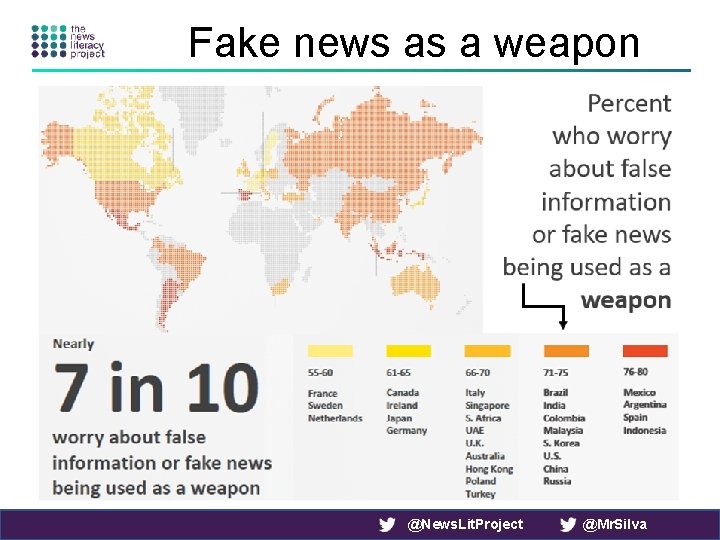
Fake news as a weapon @News. Lit. Project @Mr. Silva
Why news literacy matters “Falsehood flies, and truth comes limping after it” Jonathon Swift, The Examiner No. XIV, 1710 @News. Lit. Project @Mr. Silva
Key Takeaways 1. Students are facing the largest and most complex information landscape in human history. 2. Not preparing students for the realities of the 21 st century information landscape is not an option. 3. We need to begin teaching it at younger ages. @News. Lit. Project @Mr. Silva
How to know what to believe http: //newslit. org @News. Lit. Project @Mr. Silva