
FORMWORK Prof Awad S Hanna Formwork C Forms

- Slides: 27
FORMWORK Prof Awad S. Hanna
Formwork C Forms are molds to receive concrete in its’ plastic form. C Formwork is temporary structure, as such, it is not normally shown on the drawings. Prof Awad S. Hanna
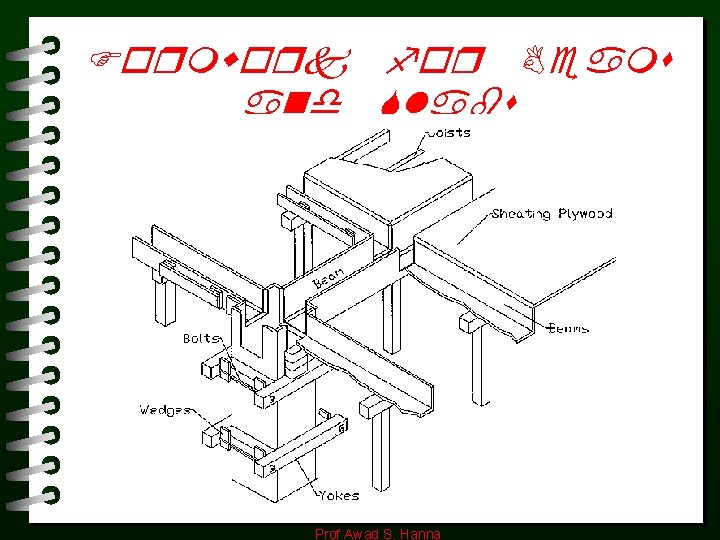
Formwork for Beams and Slabs Prof Awad S. Hanna
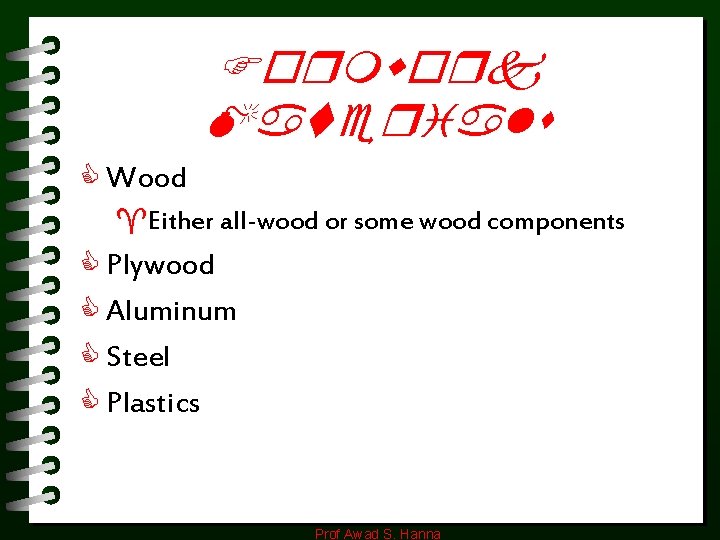
Formwork Materials C Wood ^Either all-wood or some wood components C Plywood C Aluminum C Steel C Plastics Prof Awad S. Hanna
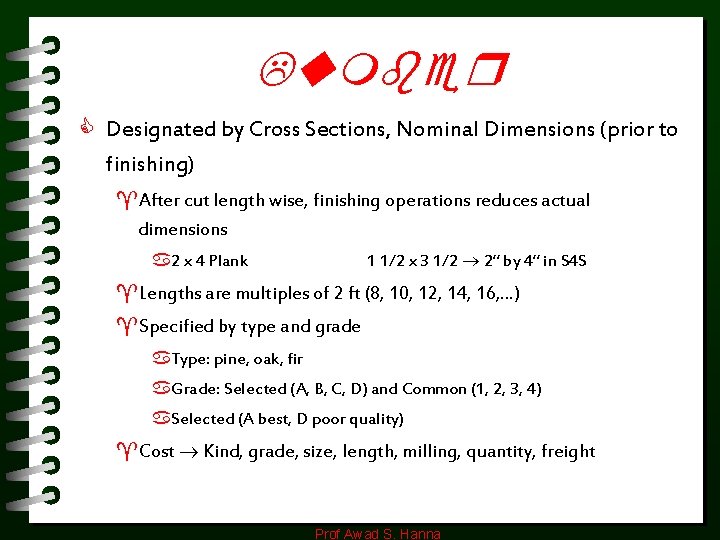
Lumber C Designated by Cross Sections, Nominal Dimensions (prior to finishing) ^After cut length wise, finishing operations reduces actual dimensions 1 1/2 x 3 1/2 2” by 4” in S 4 S a 2 x 4 Plank ^Lengths are multiples of 2 ft (8, 10, 12, 14, 16, …) ^Specified by type and grade a. Type: pine, oak, fir a. Grade: Selected (A, B, C, D) and Common (1, 2, 3, 4) a. Selected (A best, D poor quality) ^Cost Kind, grade, size, length, milling, quantity, freight Prof Awad S. Hanna
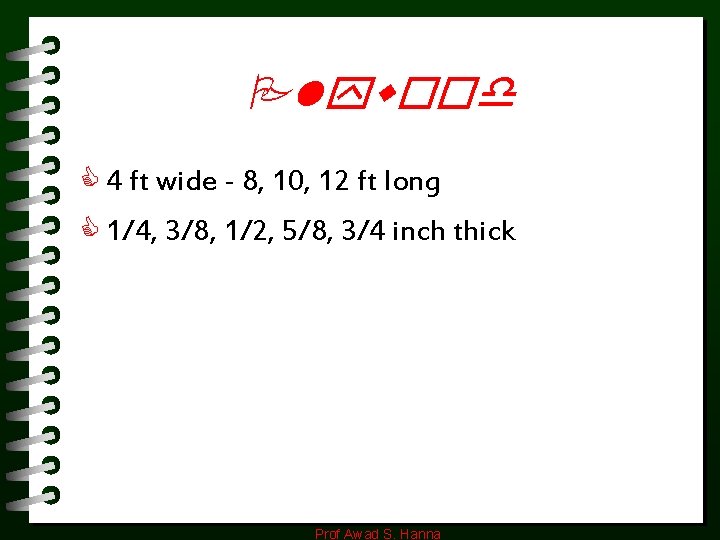
Plywood C 4 ft wide - 8, 10, 12 ft long C 1/4, 3/8, 1/2, 5/8, 3/4 inch thick Prof Awad S. Hanna
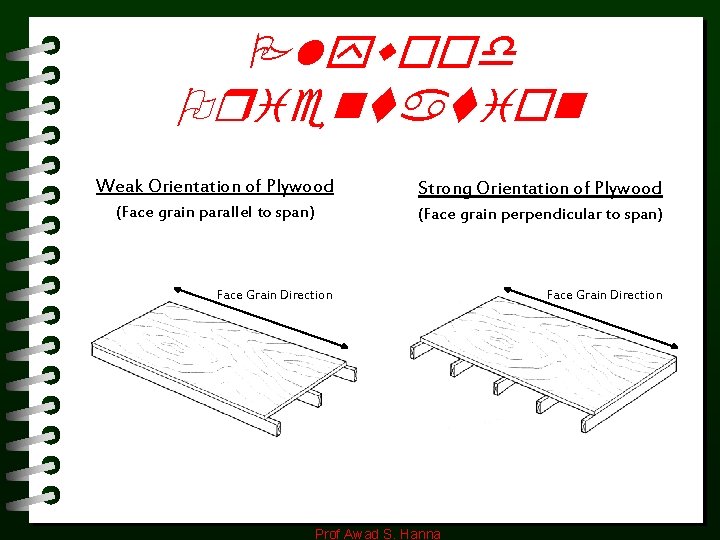
Plywood Orientation Weak Orientation of Plywood Strong Orientation of Plywood (Face grain parallel to span) (Face grain perpendicular to span) Face Grain Direction Prof Awad S. Hanna Face Grain Direction
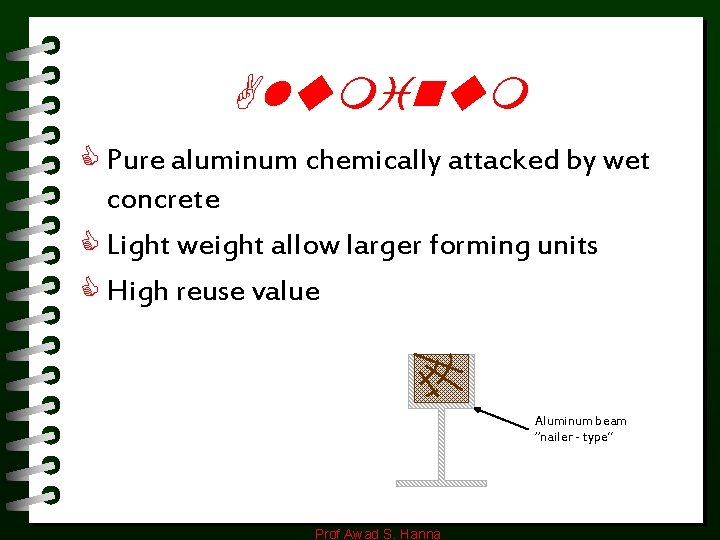
Aluminum C Pure aluminum chemically attacked by wet concrete C Light weight allow larger forming units C High reuse value Aluminum beam “nailer - type” Prof Awad S. Hanna
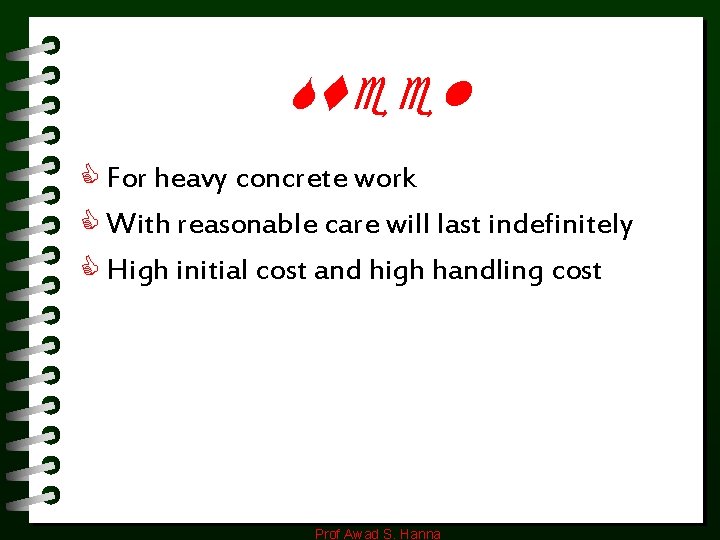
Steel C For heavy concrete work C With reasonable care will last indefinitely C High initial cost and high handling cost Prof Awad S. Hanna
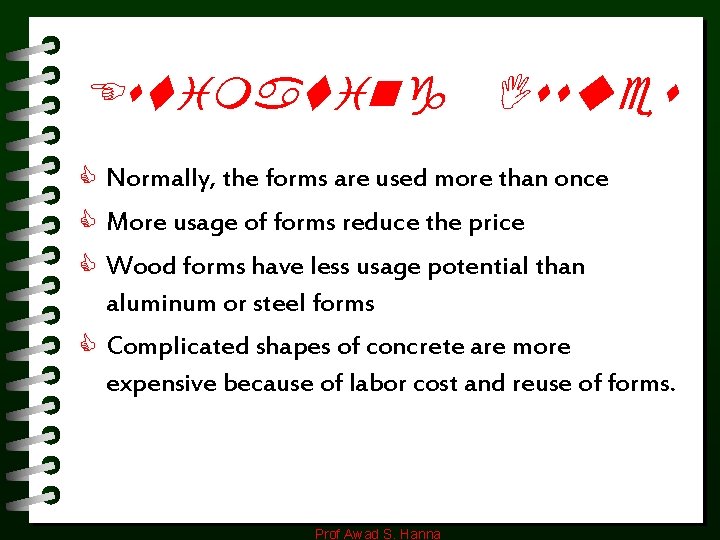
Estimating Issues C Normally, the forms are used more than once C More usage of forms reduce the price C Wood forms have less usage potential than aluminum or steel forms C Complicated shapes of concrete are more expensive because of labor cost and reuse of forms. Prof Awad S. Hanna
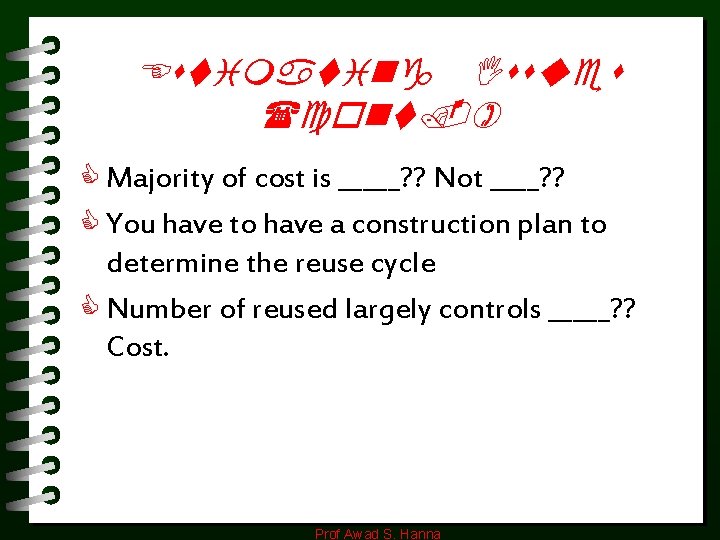
Estimating Issues (cont. ) C Majority of cost is _____? ? Not ____? ? C You have to have a construction plan to determine the reuse cycle C Number of reused largely controls _____? ? Cost. Prof Awad S. Hanna
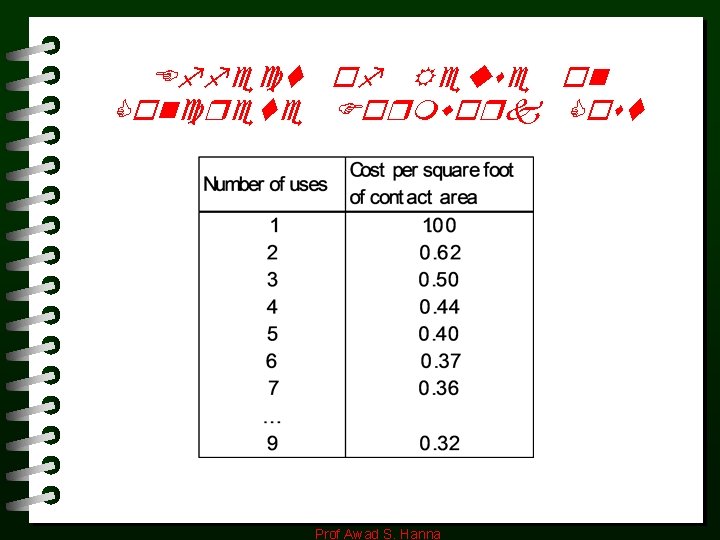
Effect of Reuse on Concrete Formwork Cost Prof Awad S. Hanna
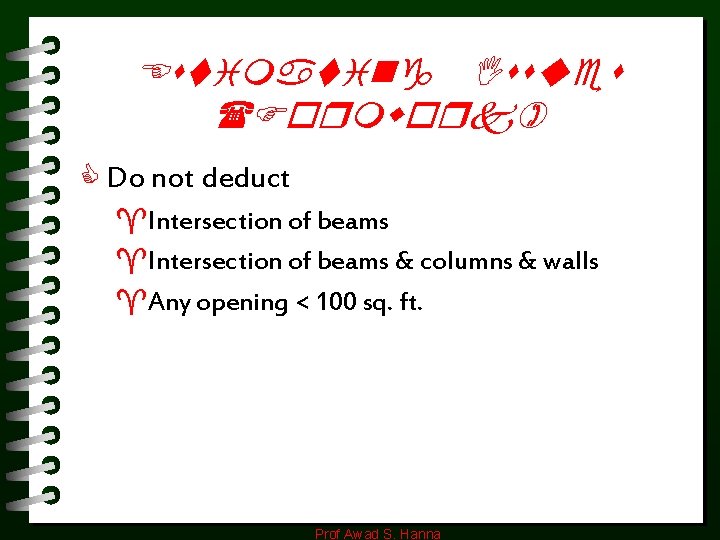
Estimating Issues (Formwork) C Do not deduct ^Intersection of beams & columns & walls ^Any opening < 100 sq. ft. Prof Awad S. Hanna
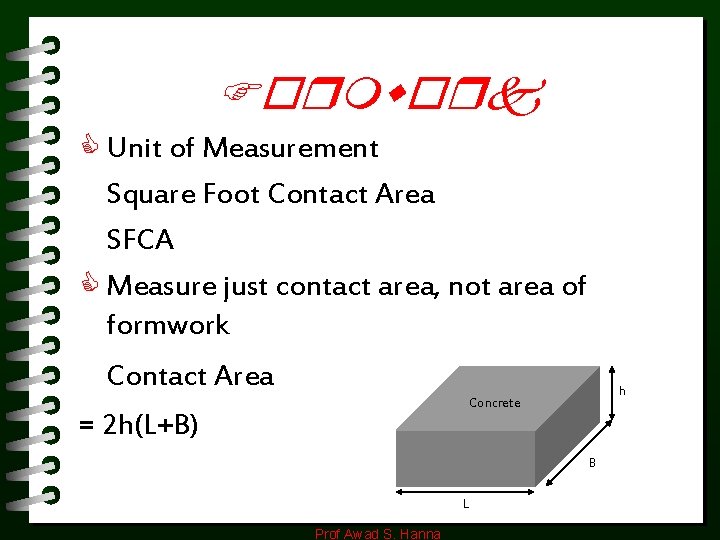
Formwork C Unit of Measurement Square Foot Contact Area SFCA C Measure just contact area, not area of formwork Contact Area h Concrete = 2 h(L+B) B L Prof Awad S. Hanna
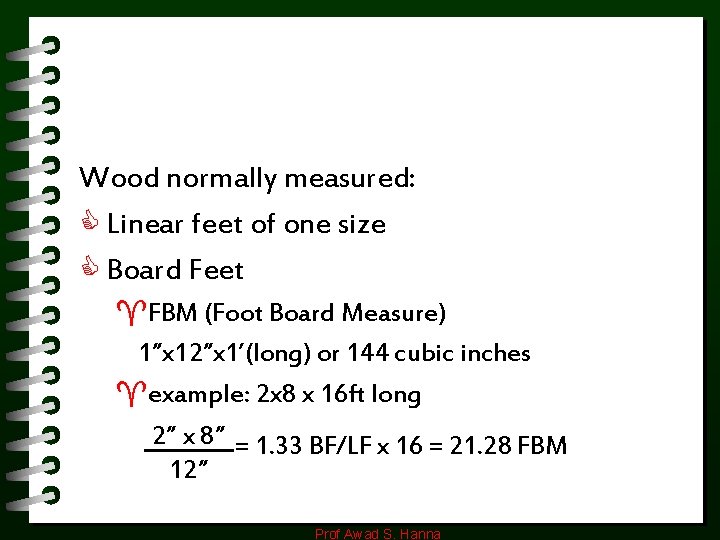
Wood normally measured: C Linear feet of one size C Board Feet ^FBM (Foot Board Measure) 1”x 12”x 1’(long) or 144 cubic inches ^example: 2 x 8 x 16 ft long 2” x 8” = 1. 33 BF/LF x 16 = 21. 28 FBM 12” Prof Awad S. Hanna
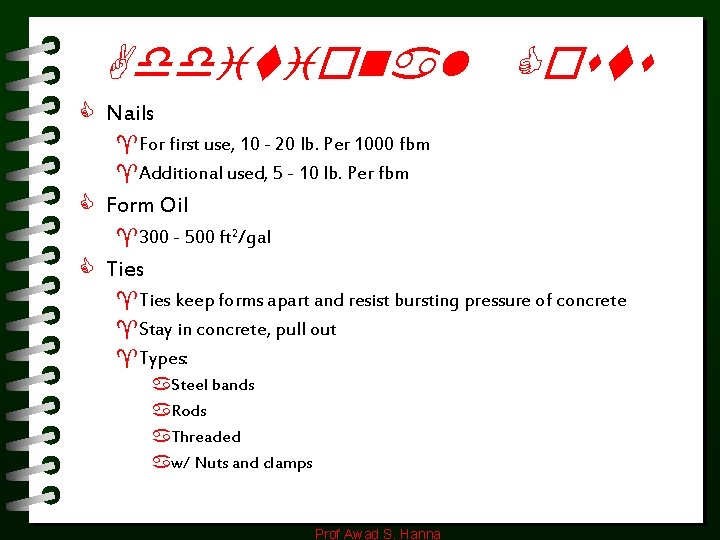
Additional Costs C Nails ^For first use, 10 - 20 lb. Per 1000 fbm ^Additional used, 5 - 10 lb. Per fbm C Form Oil ^300 - 500 ft 2/gal C Ties ^Ties keep forms apart and resist bursting pressure of concrete ^Stay in concrete, pull out ^Types: a. Steel bands a. Rods a. Threaded aw/ Nuts and clamps Prof Awad S. Hanna
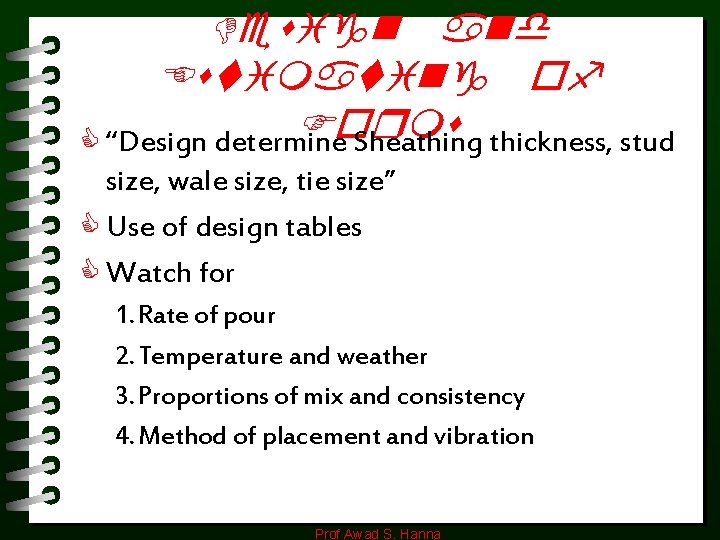
Design and Estimating of Forms C “Design determine Sheathing thickness, stud size, wale size, tie size” C Use of design tables C Watch for 1. Rate of pour 2. Temperature and weather 3. Proportions of mix and consistency 4. Method of placement and vibration Prof Awad S. Hanna
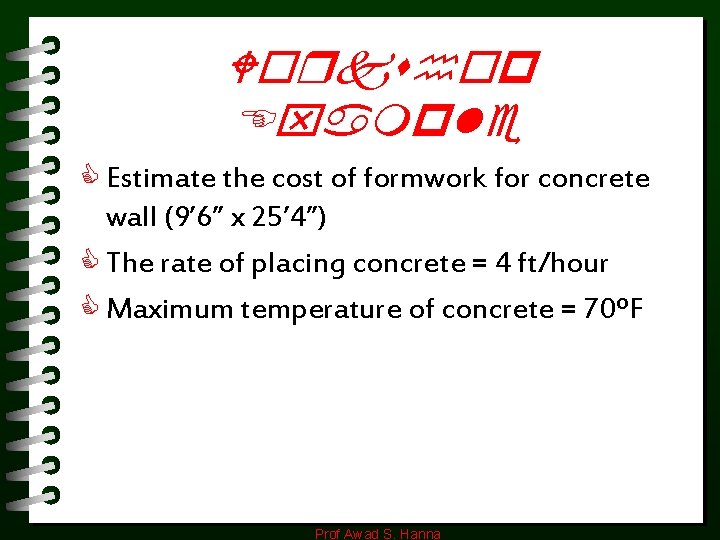
Workshop Example C Estimate the cost of formwork for concrete wall (9’ 6” x 25’ 4”) C The rate of placing concrete = 4 ft/hour C Maximum temperature of concrete = 70ºF Prof Awad S. Hanna
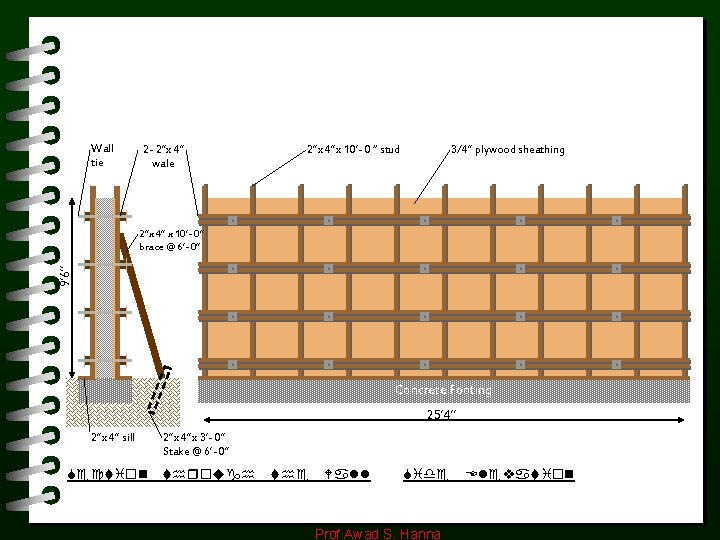
Wall tie 2 - 2”x 4” wale 2”x 4”x 10’- 0 “ stud 3/4” plywood sheathing 9’ 6” 2”x 4” x 10’- 0” brace @ 6’- 0” Concrete Footing 25’ 4” 2”x 4” sill Section 2”x 4”x 3’- 0” Stake @ 6’- 0” through the Wall Side Prof Awad S. Hanna Elevation
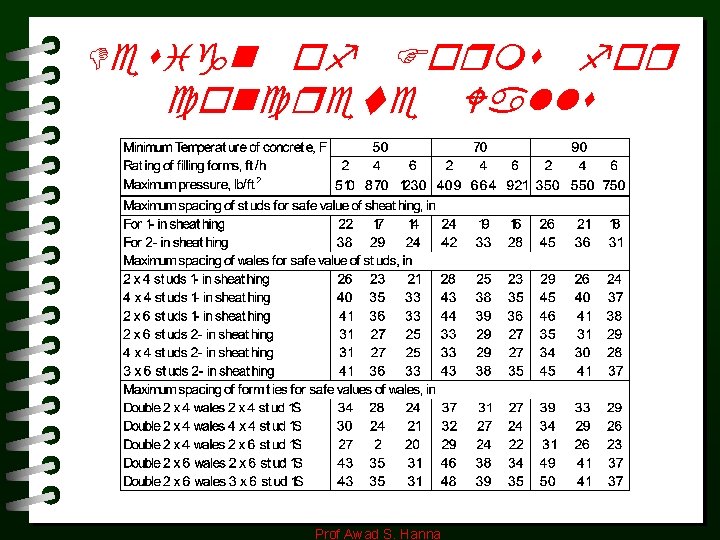
Design of Forms for concrete Walls Prof Awad S. Hanna
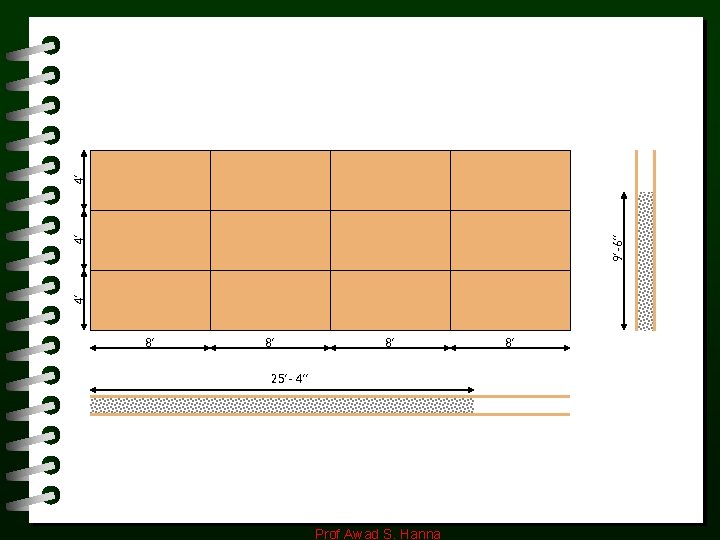
4’ 9’-6’’ 4’ 4’ 8’ 8’ 8’ 25’- 4” Prof Awad S. Hanna 8’
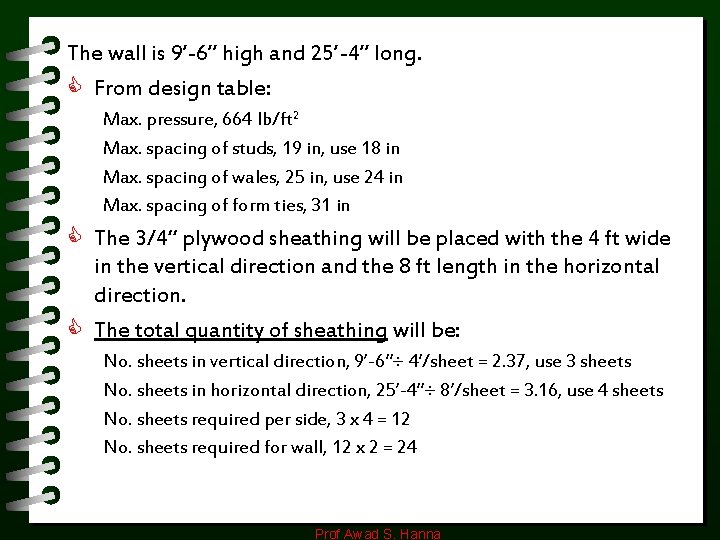
The wall is 9’-6” high and 25’-4” long. C From design table: Max. pressure, 664 lb/ft 2 Max. spacing of studs, 19 in, use 18 in Max. spacing of wales, 25 in, use 24 in Max. spacing of form ties, 31 in C The 3/4“ plywood sheathing will be placed with the 4 ft wide in the vertical direction and the 8 ft length in the horizontal direction. C The total quantity of sheathing will be: No. sheets in vertical direction, 9’-6” 4‘/sheet = 2. 37, use 3 sheets No. sheets in horizontal direction, 25’-4” 8’/sheet = 3. 16, use 4 sheets No. sheets required per side, 3 x 4 = 12 No. sheets required for wall, 12 x 2 = 24 Prof Awad S. Hanna
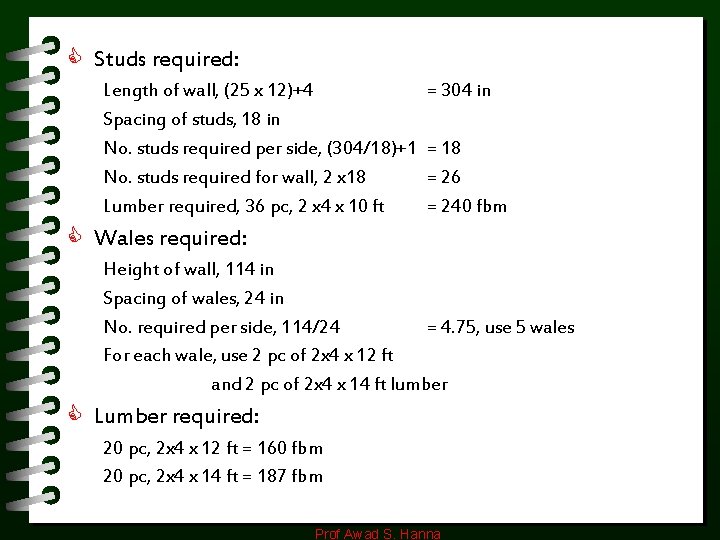
C Studs required: Length of wall, (25 x 12)+4 Spacing of studs, 18 in No. studs required per side, (304/18)+1 No. studs required for wall, 2 x 18 Lumber required, 36 pc, 2 x 4 x 10 ft = 304 in = 18 = 26 = 240 fbm C Wales required: Height of wall, 114 in Spacing of wales, 24 in No. required per side, 114/24 = 4. 75, use 5 wales For each wale, use 2 pc of 2 x 4 x 12 ft and 2 pc of 2 x 4 x 14 ft lumber C Lumber required: 20 pc, 2 x 4 x 12 ft = 160 fbm 20 pc, 2 x 4 x 14 ft = 187 fbm Prof Awad S. Hanna
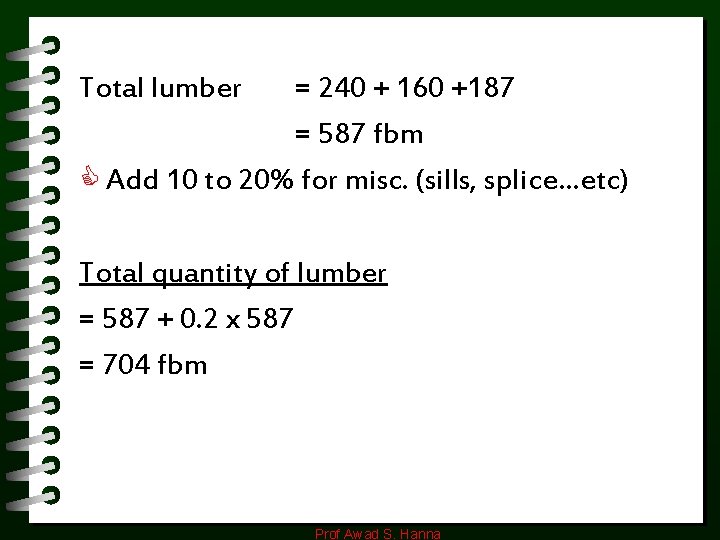
Total lumber = 240 + 160 +187 = 587 fbm C Add 10 to 20% for misc. (sills, splice…etc) Total quantity of lumber = 587 + 0. 2 x 587 = 704 fbm Prof Awad S. Hanna
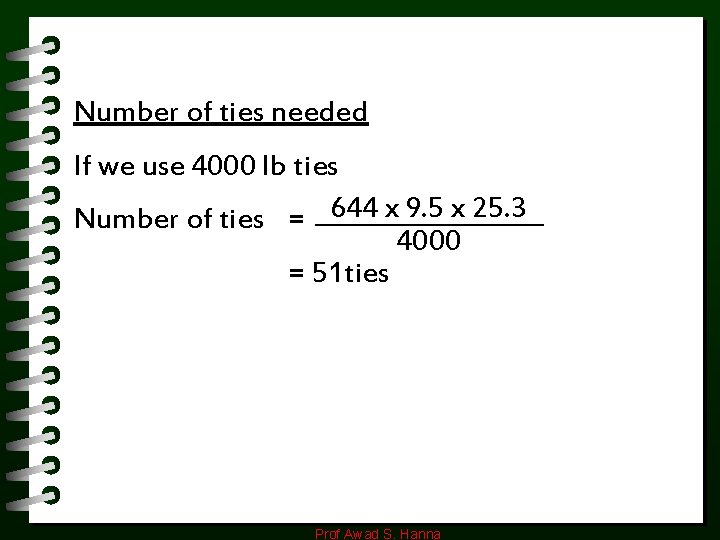
Number of ties needed If we use 4000 lb ties Number of ties = 644 x 9. 5 x 25. 3 4000 = 51 ties Prof Awad S. Hanna
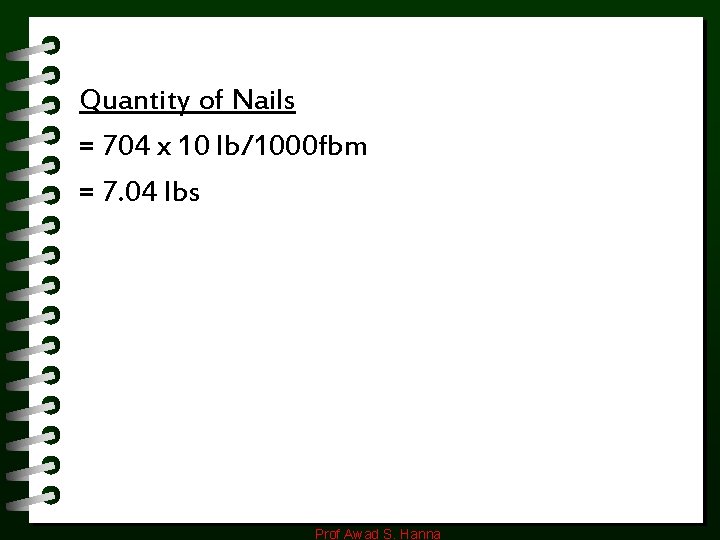
Quantity of Nails = 704 x 10 lb/1000 fbm = 7. 04 lbs Prof Awad S. Hanna
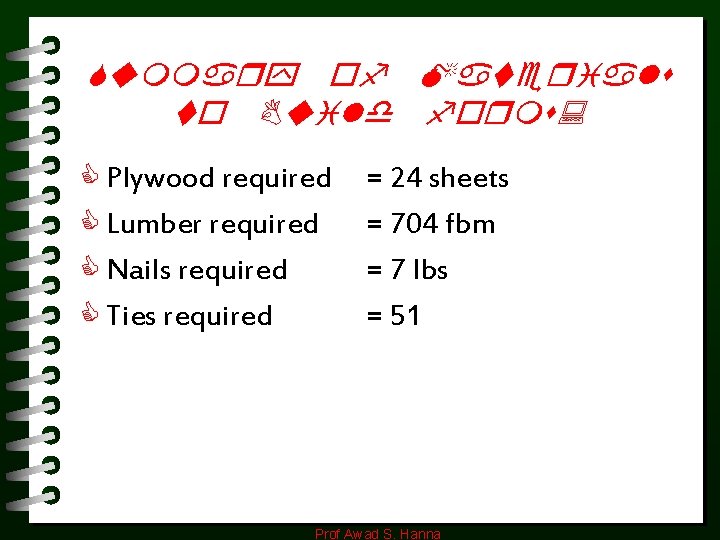
Summary of Materials to Build forms: C Plywood required C Lumber required C Nails required C Ties required = 24 sheets = 704 fbm = 7 lbs = 51 Prof Awad S. Hanna