
Formulation Variables in Water Based Dispersion and Ink
Formulation Variables in Water Based Dispersion and Ink Manufacture NAPIM Manufacturing Symposium – November 7, 2001 Flexo Tech, Inc. Lisa Hahn
Formula Ingredients and Variables l Pigment form (presscake vs. dry) l Degree of solubilization of resin l Order of addition l Staging of water addition l Letdown procedure l p. H drift
Pigment Form (presscake vs. dry) l Though presscake is touted as a more easily dispersed form of pigment, the amount of water it brings into the formula may reduce viscosity (and therefore shear forces in milling) such that ultimate dispersion is not easily attained.
Degree of Solubilization of Resin l Resin at various levels of solubilization can affect the dispersion quality by modifying how and at what rate the resin migrates to, and adsorbs at, the pigment surface.
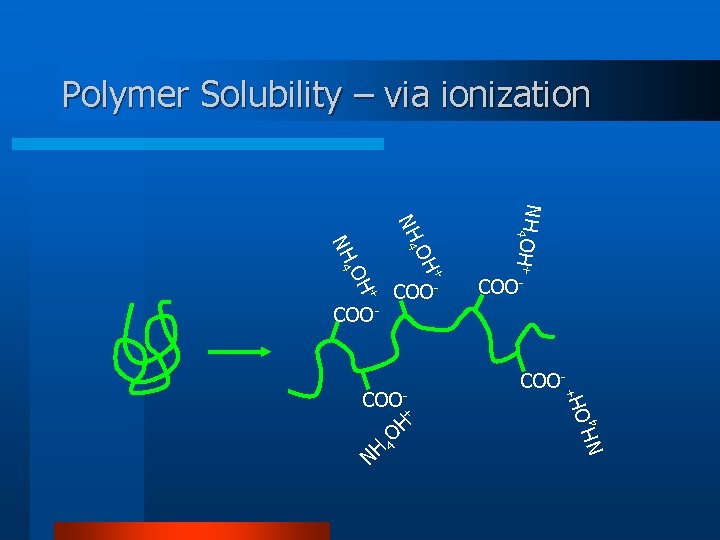
Polymer Solubility – via ionization COO- H H 4 O + COO- N NH 4 O H+ COO- NH 4 OH + + OH NH 4 COO-
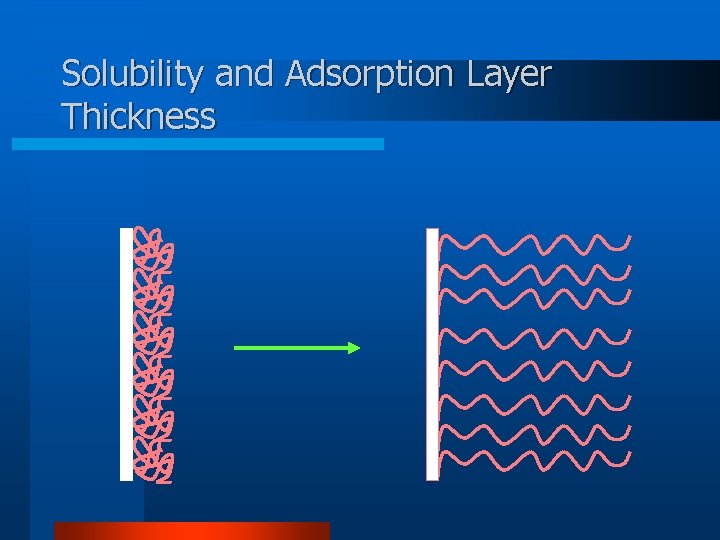
Solubility and Adsorption Layer Thickness
Order of Addition l Due to the dynamic interactions between formula components, the order in which they are allowed to interact can dramatically affect the dispersion quality. l Combine and mix liquid ingredients well before adding dry pigment
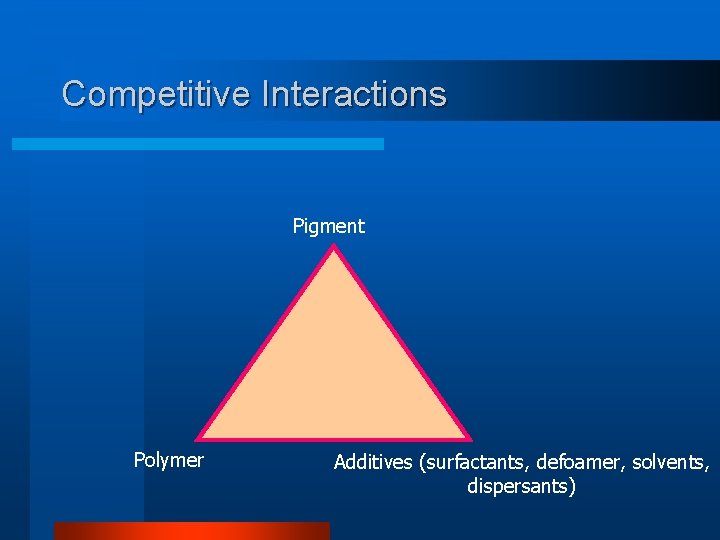
Competitive Interactions Pigment Polymer Additives (surfactants, defoamer, solvents, dispersants)
Staging of Water Addition l In many cases, better dispersion quality can be obtained by holding back some of the formula water in the beginning and adding it after milling.
Letdown Procedure l Adding letdown components as a finished vehicle will often produce a finished ink of different quality than adding them sequentially.
p. H Drift l The p. H of the dispersion just after milling will often be ~ 0. 5 a point lower than it will upon cooling/aging.
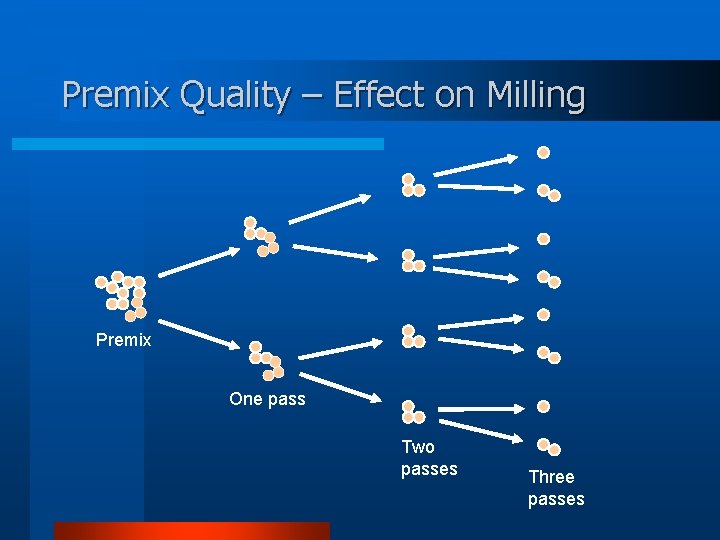
Premix Quality – Effect on Milling Premix One pass Two passes Three passes

Conclusion: l Formulation variables work in tandem with processing variables to create a quality product
- Slides: 13