
Formulation of the Research Methods A B C
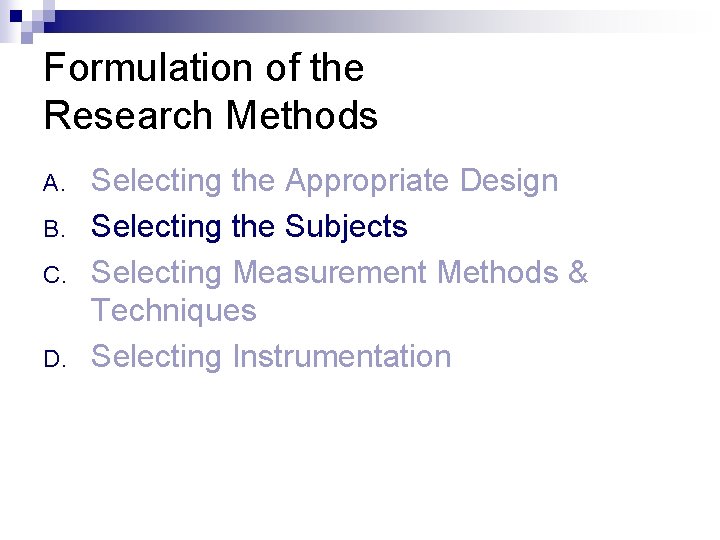
Formulation of the Research Methods A. B. C. D. Selecting the Appropriate Design Selecting the Subjects Selecting Measurement Methods & Techniques Selecting Instrumentation
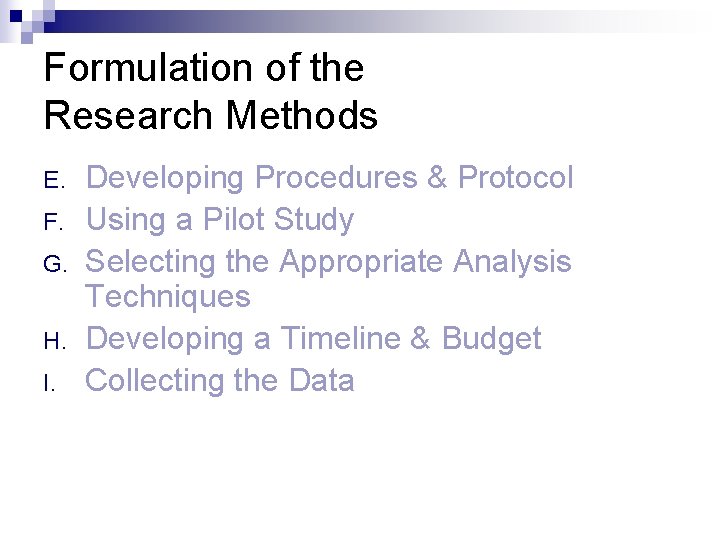
Formulation of the Research Methods E. F. G. H. I. Developing Procedures & Protocol Using a Pilot Study Selecting the Appropriate Analysis Techniques Developing a Timeline & Budget Collecting the Data

Sampling Procedures
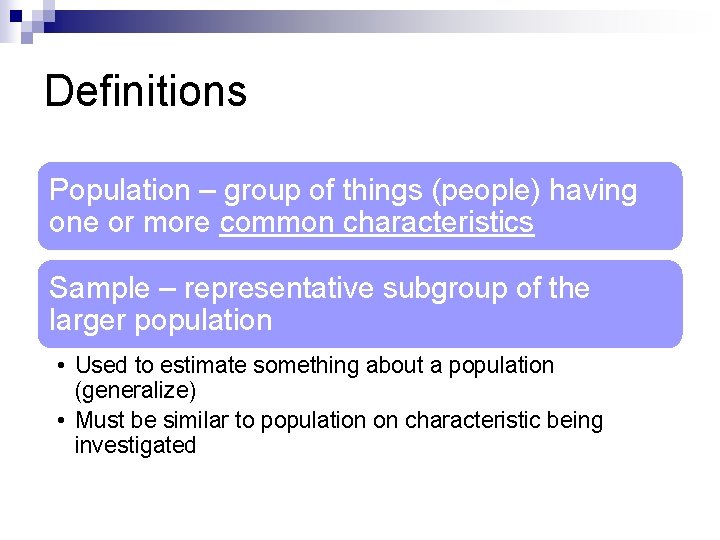
Definitions Population – group of things (people) having one or more common characteristics Sample – representative subgroup of the larger population • Used to estimate something about a population (generalize) • Must be similar to population on characteristic being investigated

Representative
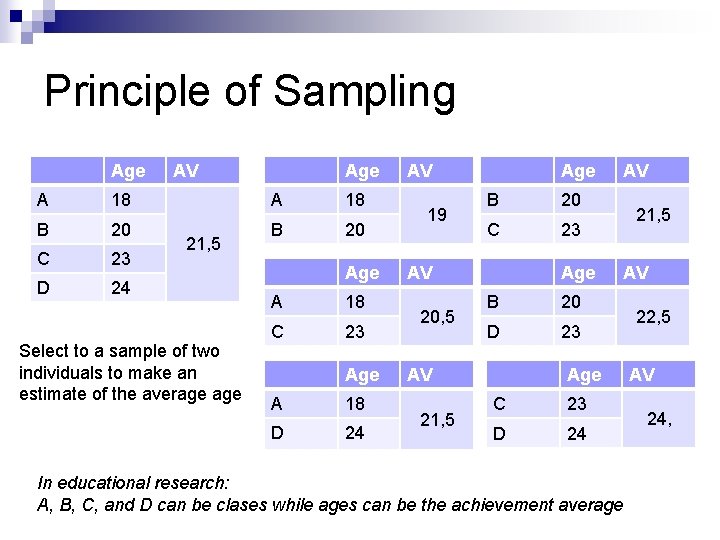
Principle of Sampling Age AV Age A 18 B 20 C 23 D 24 21, 5 Select to a sample of two individuals to make an estimate of the average Age A 18 C 23 Age A 18 D 24 AV 19 Age B 20 C 23 AV 20, 5 Age B 20 D 23 AV 21, 5 Age C 23 D 24 In educational research: A, B, C, and D can be clases while ages can be the achievement average AV 21, 5 AV 22, 5 AV 24,
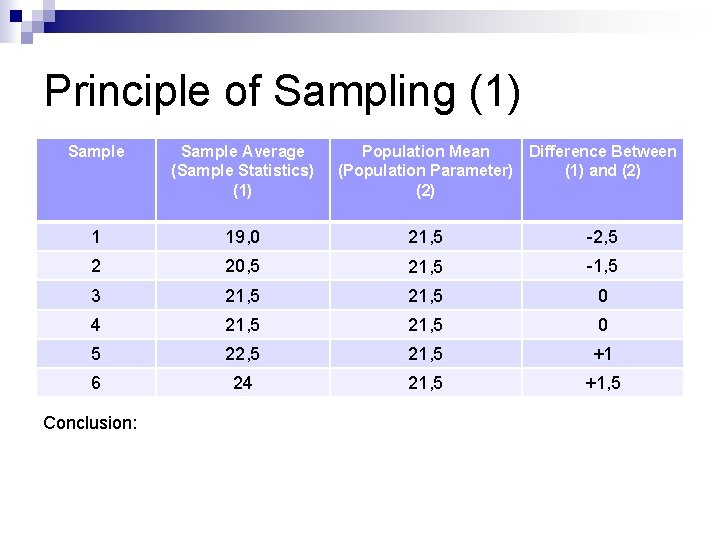
Principle of Sampling (1) Sample Average (Sample Statistics) (1) 1 19, 0 21, 5 -2, 5 2 20, 5 21, 5 -1, 5 3 21, 5 0 4 21, 5 0 5 22, 5 21, 5 +1 6 24 21, 5 +1, 5 Conclusion: Population Mean Difference Between (Population Parameter) (1) and (2)
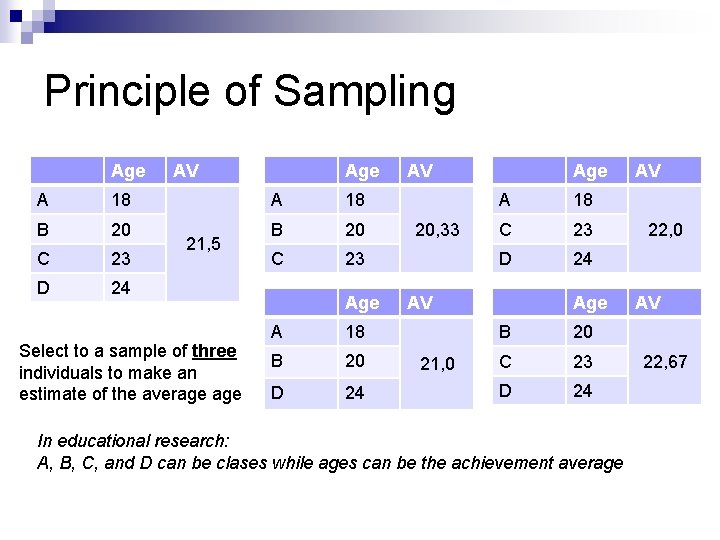
Principle of Sampling Age AV Age A 18 B 20 C 23 D 24 21, 5 Select to a sample of three individuals to make an estimate of the average Age A 18 B 20 D 24 AV 20, 33 Age A 18 C 23 D 24 AV 21, 0 Age B 20 C 23 D 24 In educational research: A, B, C, and D can be clases while ages can be the achievement average AV 22, 0 AV 22, 67
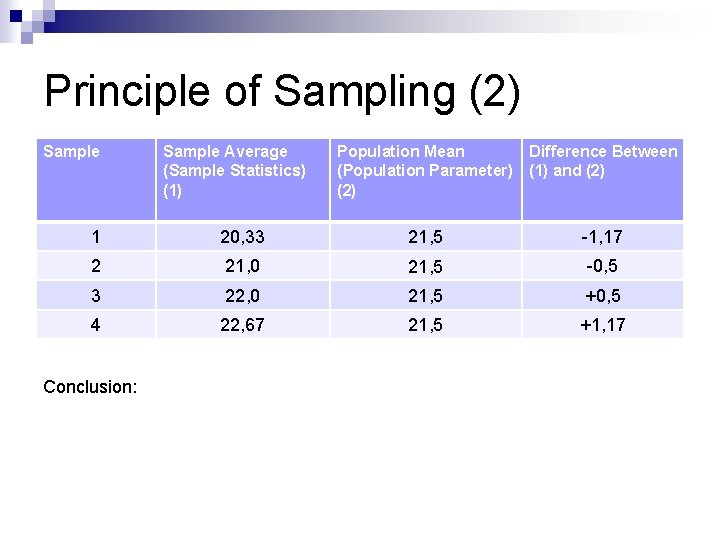
Principle of Sampling (2) Sample Average (Sample Statistics) (1) Population Mean (Population Parameter) (2) Difference Between (1) and (2) 1 20, 33 21, 5 -1, 17 2 21, 0 21, 5 -0, 5 3 22, 0 21, 5 +0, 5 4 22, 67 21, 5 +1, 17 Conclusion:
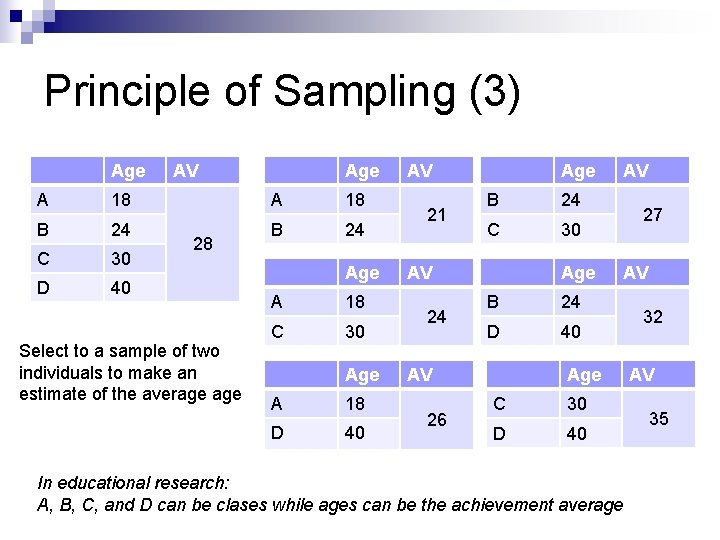
Principle of Sampling (3) Age AV Age A 18 B 24 C 30 D 40 28 Select to a sample of two individuals to make an estimate of the average Age A 18 C 30 Age A 18 D 40 AV 21 Age B 24 C 30 AV 24 Age B 24 D 40 AV 26 Age C 30 D 40 In educational research: A, B, C, and D can be clases while ages can be the achievement average AV 27 AV 32 AV 35
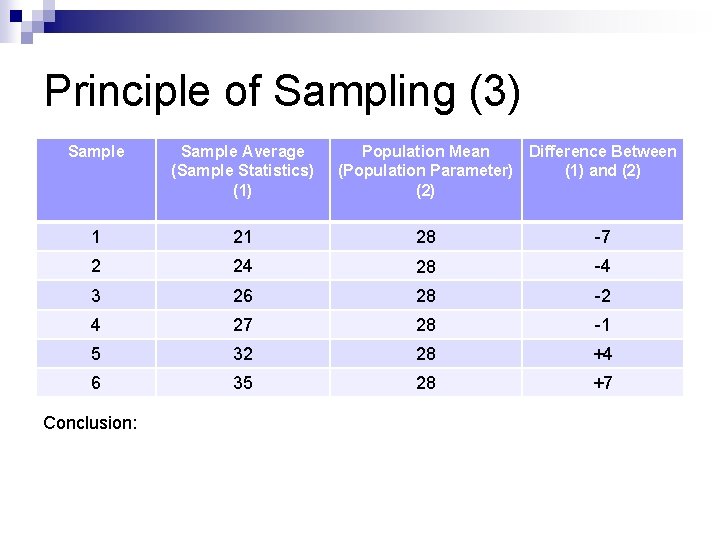
Principle of Sampling (3) Sample Average (Sample Statistics) (1) 1 21 28 -7 2 24 28 -4 3 26 28 -2 4 27 28 -1 5 32 28 +4 6 35 28 +7 Conclusion: Population Mean Difference Between (Population Parameter) (1) and (2)

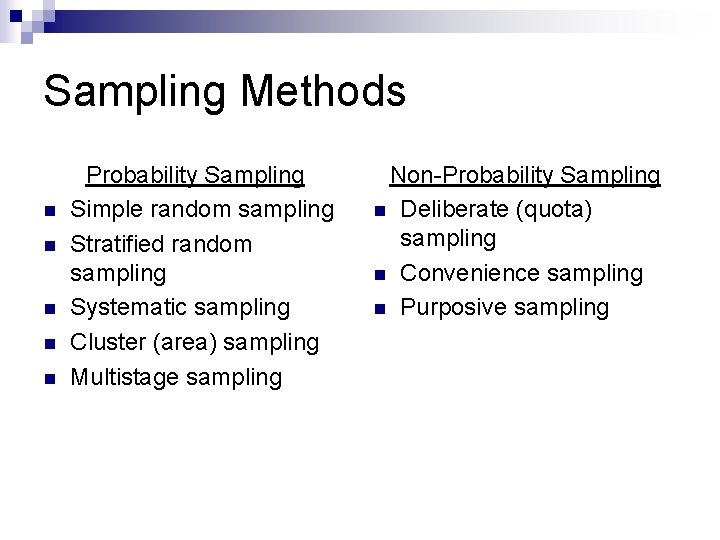
Sampling Methods n n n Probability Sampling Simple random sampling Stratified random sampling Systematic sampling Cluster (area) sampling Multistage sampling Non-Probability Sampling n Deliberate (quota) sampling n Convenience sampling n Purposive sampling
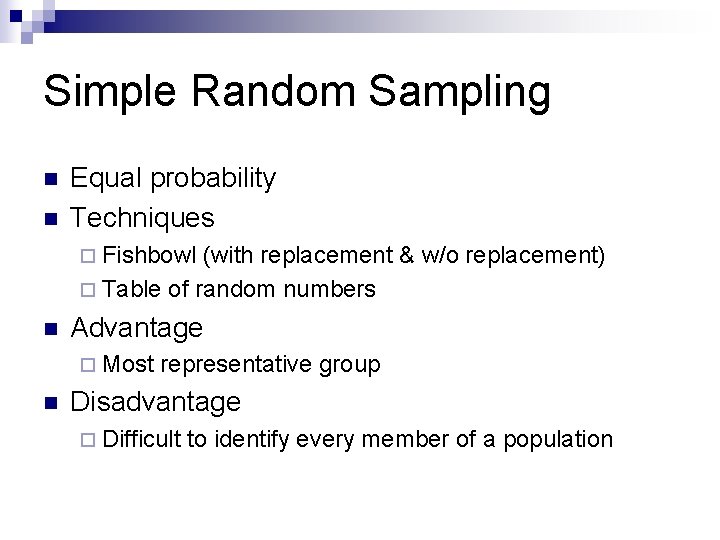
Simple Random Sampling n n Equal probability Techniques ¨ Fishbowl (with replacement & w/o replacement) ¨ Table of random numbers n Advantage ¨ Most n representative group Disadvantage ¨ Difficult to identify every member of a population
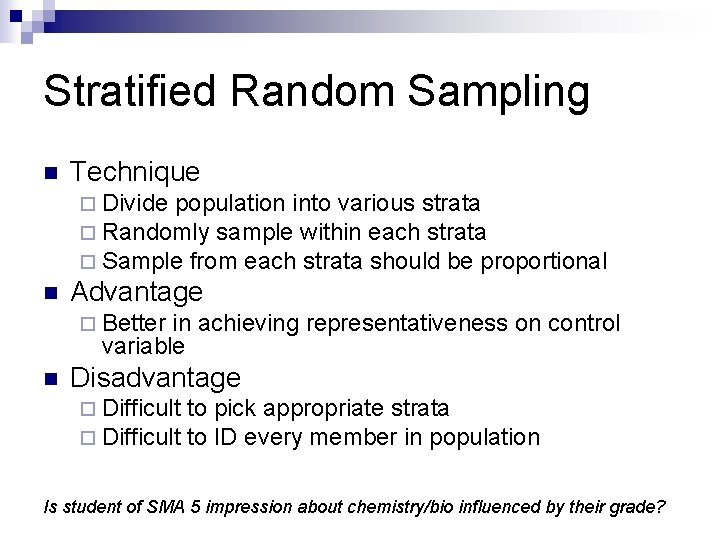
Stratified Random Sampling n Technique ¨ Divide population into various strata ¨ Randomly sample within each strata ¨ Sample from each strata should be proportional n Advantage ¨ Better in achieving representativeness on control variable n Disadvantage ¨ Difficult to pick appropriate strata to ID every member in population Is student of SMA 5 impression about chemistry/bio influenced by their grade?
Systematic Sampling n Technique ¨ n Advantage ¨ n Use “system” to select sample (e. g. , every 5 th item in alphabetized list, every 10 th name in phone book) Quick, efficient, saves time and energy Disadvantage Not entirely bias free; each item does not have equal chance to be selected ¨ System for selecting subjects may introduce systematic error ¨ Cannot generalize beyond pop actually sampled ¨
Cluster (Area) Sampling n Randomly select groups (cluster) – all members of groups are subjects n Appropriate when ¨ you can’t obtain a list of the members of the population ¨ have little knowledge of pop characteristics ¨ Pop is scattered over large geographic area
Cluster (Area) Sampling n Advantage ¨ More practical, less costly Conclusions should be stated in terms of cluster (sample unit – school) n Sample size is # of clusters n
Multistage Sampling n Stage 1 ¨ randomly n sample clusters (schools) Stage 2 ¨ randomly selected sample individuals from the schools
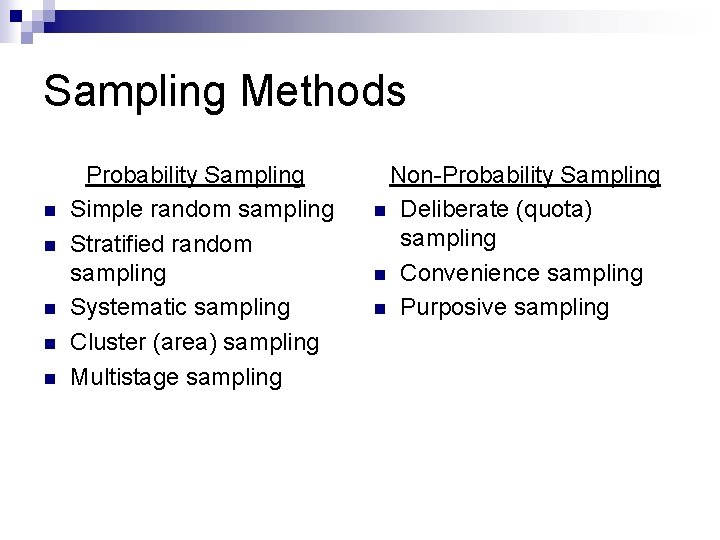
Sampling Methods n n n Probability Sampling Simple random sampling Stratified random sampling Systematic sampling Cluster (area) sampling Multistage sampling Non-Probability Sampling n Deliberate (quota) sampling n Convenience sampling n Purposive sampling
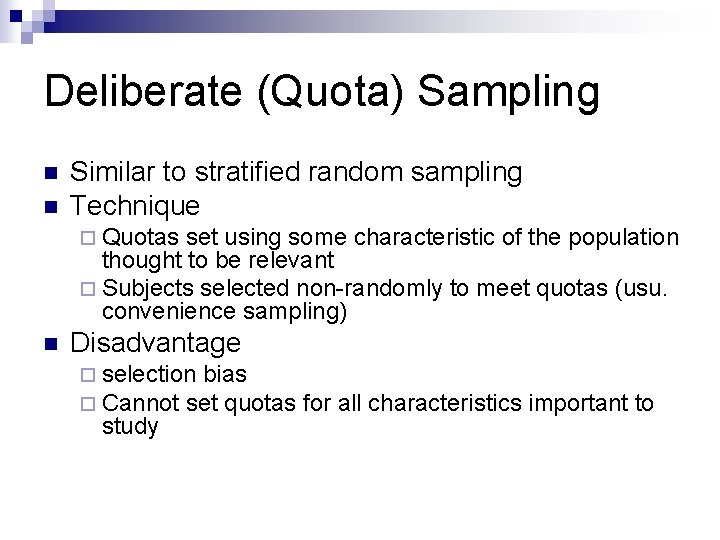
Deliberate (Quota) Sampling n n Similar to stratified random sampling Technique ¨ Quotas set using some characteristic of the population thought to be relevant ¨ Subjects selected non-randomly to meet quotas (usu. convenience sampling) n Disadvantage ¨ selection bias ¨ Cannot set quotas study for all characteristics important to
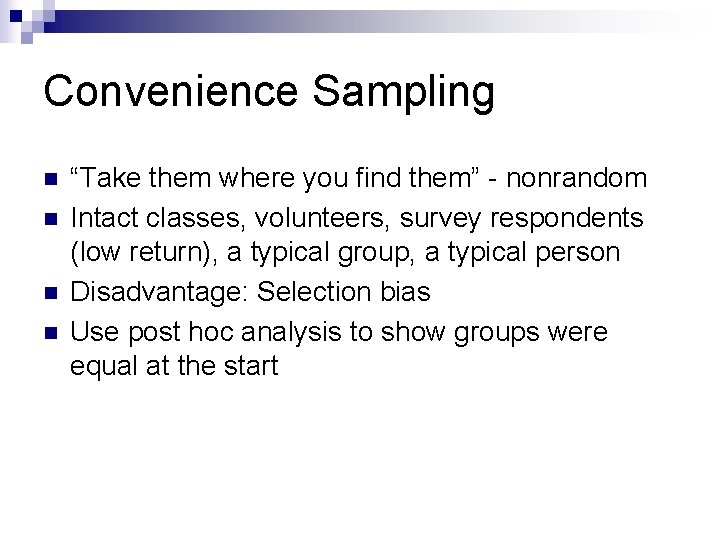
Convenience Sampling n n “Take them where you find them” - nonrandom Intact classes, volunteers, survey respondents (low return), a typical group, a typical person Disadvantage: Selection bias Use post hoc analysis to show groups were equal at the start
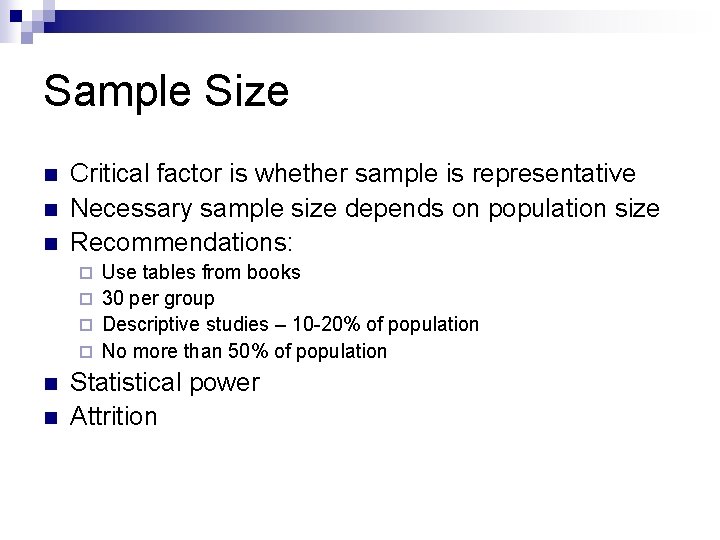
Sample Size n n n Critical factor is whether sample is representative Necessary sample size depends on population size Recommendations: Use tables from books ¨ 30 per group ¨ Descriptive studies – 10 -20% of population ¨ No more than 50% of population ¨ n n Statistical power Attrition
Other Sampling Considerations n n n Random assignment Sampling of treatments (experimental research) Use post hoc analysis to show groups were equal at the start Since random sampling is often impossible, sample must be selected on some theoretical basis Be careful with generalizations
When Selecting Subjects … n n Are subjects with special characteristics necessary for your research? (age, gender, trained/untrained, expert/novice, size, etc. ) Can you obtain the necessary permission and cooperation from the subjects? Can you find enough subjects? Interaction among selection of subjects, treatments, and measures is essential for experimental studies.
Reporting Subjects n n n State how many subjects were selected Describe how the subjects were selected Discuss whether any subjects were lost during the study and why Explain why the subjects were selected Describe subject characteristics that are pertinent to study – be very specific Identify procedures taken to protect the subjects
- Slides: 26