
Formulating the research design Based on Ch 5
Formulating the research design Based on Ch 5
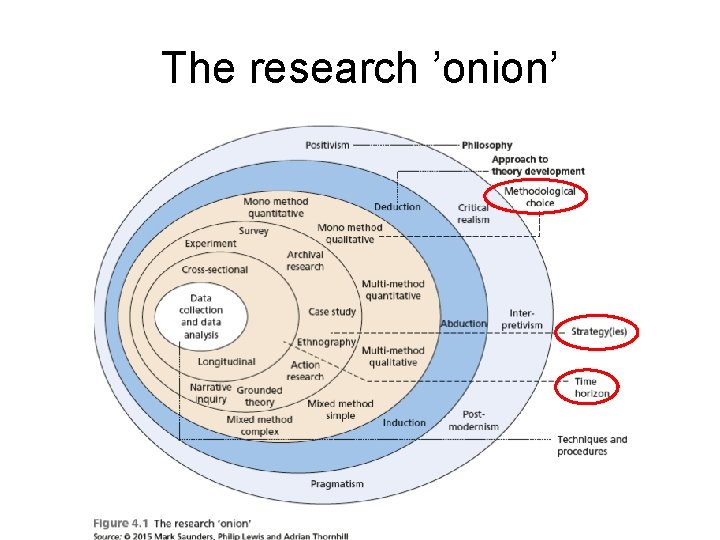
The research ’onion’
The research design • The way you turn your research questions (RQs) into a research project. – Objectives (derived from the RQs) – Sources of data – Data collection plan – Data analysis plan – Constraint management – Ethical considerations
Research design • Plan + Structure + Strategy of • investigation to • obtain answers to research questions or problems. • How the full research is to be completed? (operationalizing the variables, selecting the sample, data collection etc. )
Functions of research design • Conceptualise an operational plan to undertake the various procedures and tasks • Ensure that the procedures will obtain valid, objective and accurate answers to teh research question.
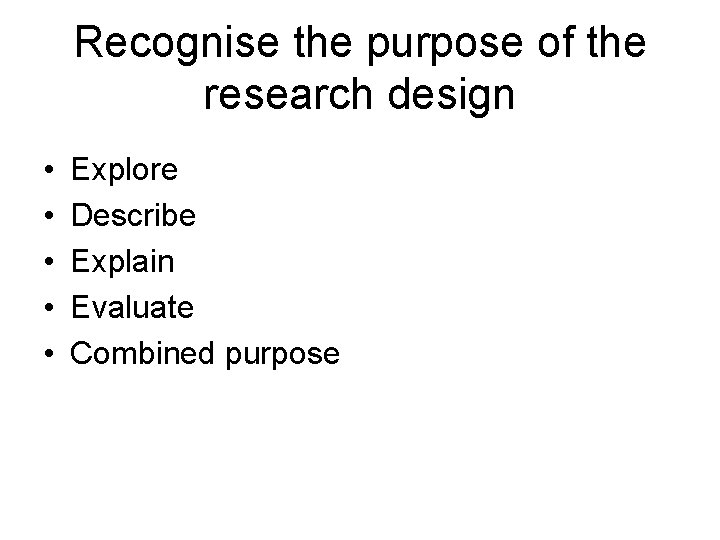
Elements of designing a research • Methodological choice: – Mono or multiple method – quantitative, qualitative or mixed methods • Recognising the purpose of design – Exploratory (what is happening, gaining insight) – Descriptive (accurate profile of sg) – Explanatory (causality) – Evaluate (how well sg works) – Combined
Elements of designing a research • Choosing a research strategy: – Experiment – Survey – Archival and documentary research – Case study (!) – Action research (emergent and iterative; solutions to real problems; participative&collaborative; mixed knowledge) – Grounded theory (reality is socially constructed; developing explanations to social interactions; inductive/abductive)
Elements of designing a research • Choosing a time horizon: – Cross sectional – Longitudinal • Establishing the ethics of the research • Establishing the quality of the research – Reliability – Validity • Researcher’s role: external, internal
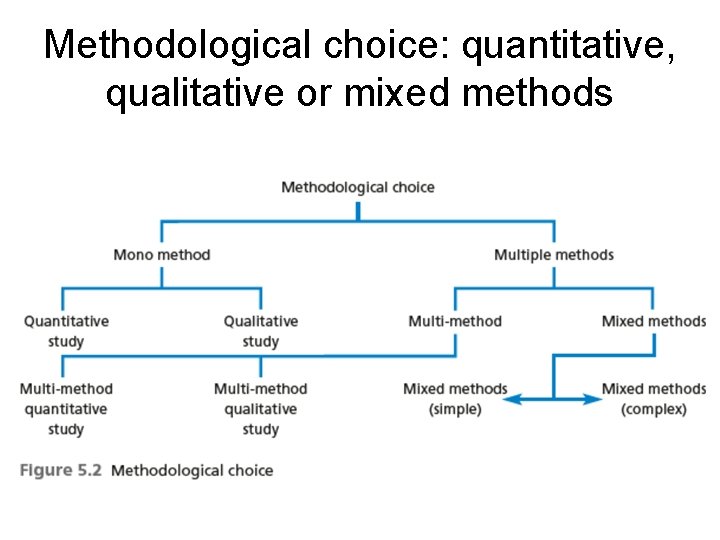
Methodological choice: quantitative, qualitative or mixed methods
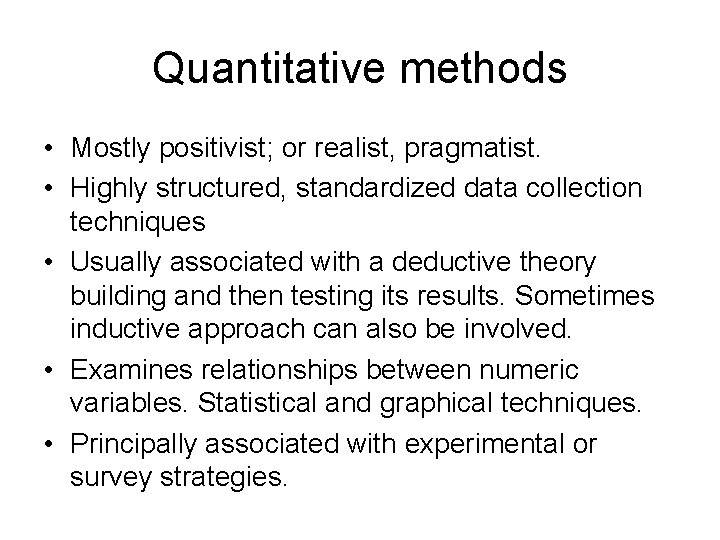
Quantitative methods • Mostly positivist; or realist, pragmatist. • Highly structured, standardized data collection techniques • Usually associated with a deductive theory building and then testing its results. Sometimes inductive approach can also be involved. • Examines relationships between numeric variables. Statistical and graphical techniques. • Principally associated with experimental or survey strategies.
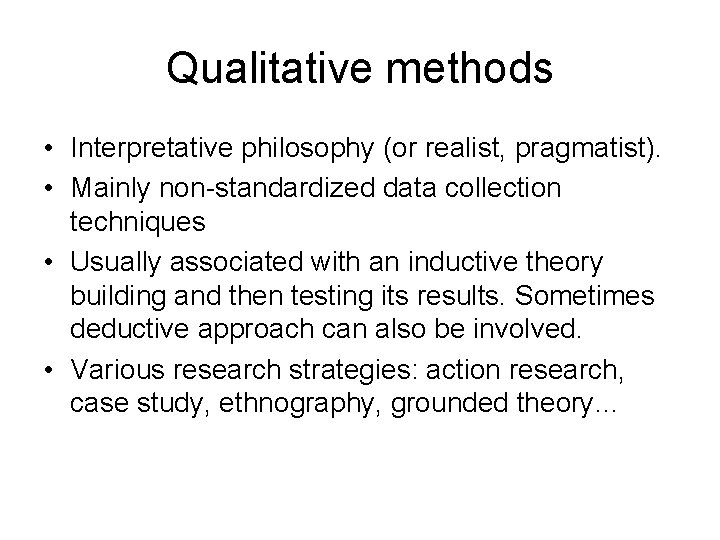
Qualitative methods • Interpretative philosophy (or realist, pragmatist). • Mainly non-standardized data collection techniques • Usually associated with an inductive theory building and then testing its results. Sometimes deductive approach can also be involved. • Various research strategies: action research, case study, ethnography, grounded theory…
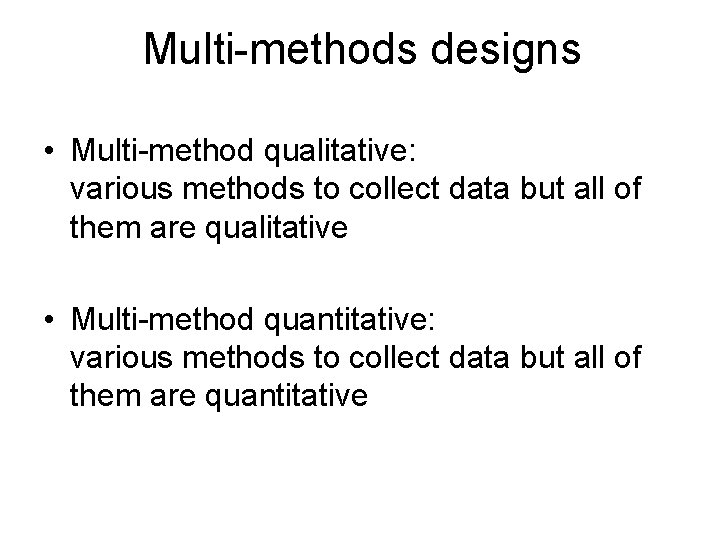
Multi-methods designs • Multi-method qualitative: various methods to collect data but all of them are qualitative • Multi-method quantitative: various methods to collect data but all of them are quantitative
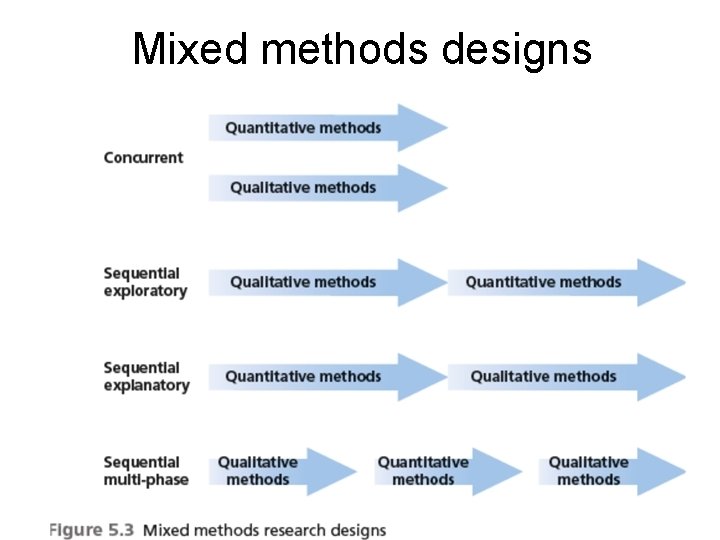
Mixed methods designs
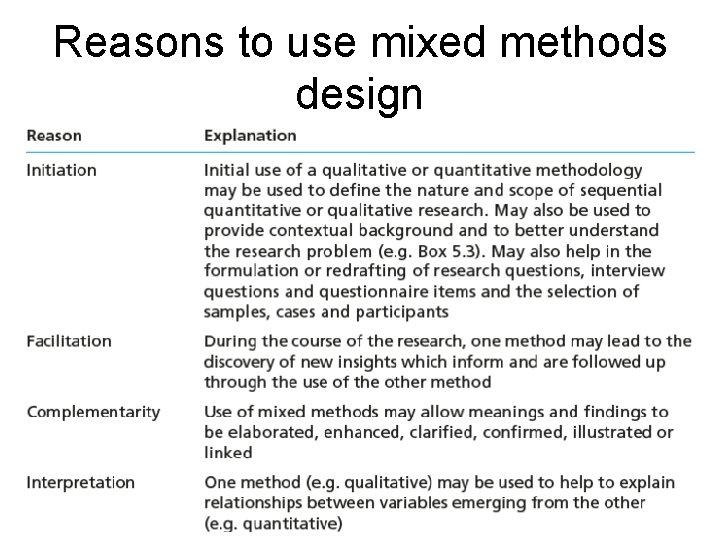
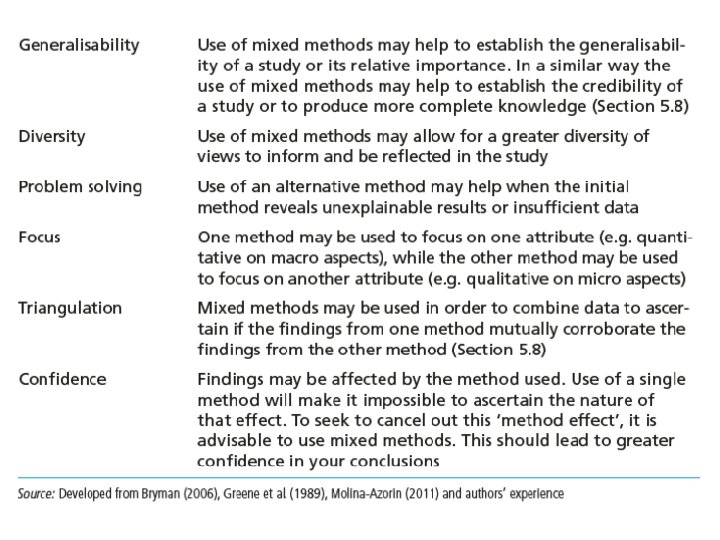
Reasons to use mixed methods design
Choosing a research strategy • Research strategy: a plan of how a researcher will go about answering its research question. • It is the methodological link between philosophy and data collection and analysis.
Recognise the purpose of the research design • • • Explore Describe Explain Evaluate Combined purpose
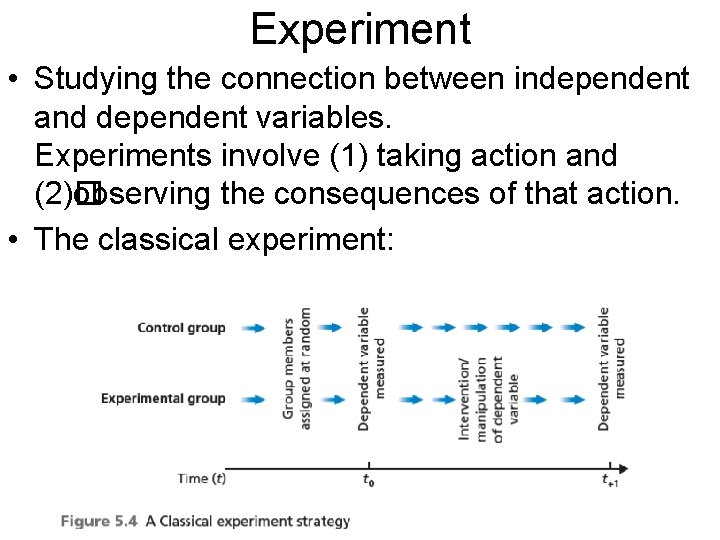
Experiment • Studying the connection between independent and dependent variables. Experiments involve (1) taking action and (2)� observing the consequences of that action. • The classical experiment:
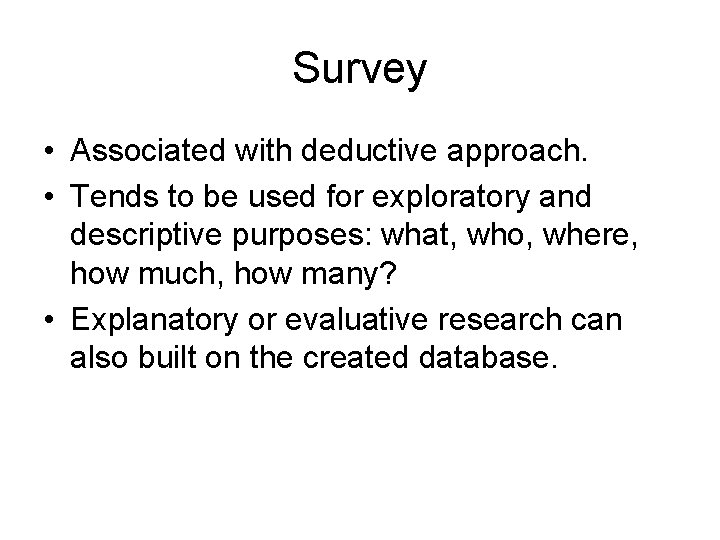
Survey • Associated with deductive approach. • Tends to be used for exploratory and descriptive purposes: what, who, where, how much, how many? • Explanatory or evaluative research can also built on the created database.
Archival or documentary research • A study of recorded human communication:
Case study • The in-depth examination of • a single instance of some (social) phenomenon.
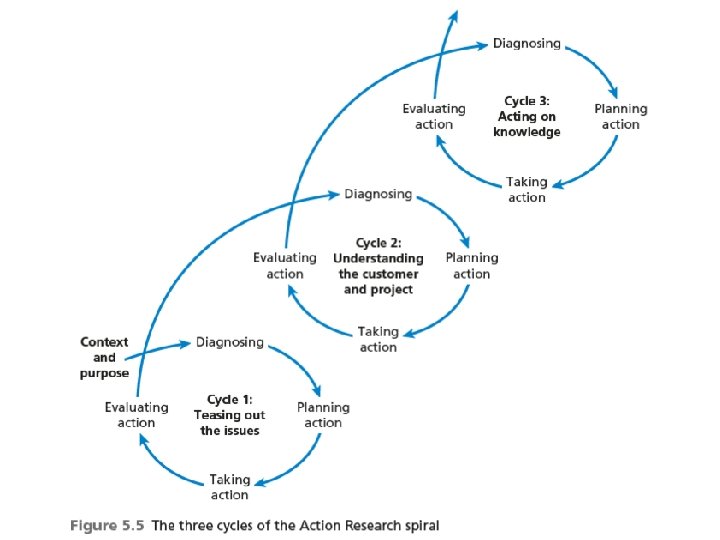
Action research • An emergent and iterative process of inquiry • that is designed to develop solutions to real problems • through a participative and collaborative approach.
Grounded theory • An inductive approach to the study of social life that attempts to generate a theory from the constant comparing of unfolding observations. This is very different from hypothesis testing, in which theory is used to generate hypotheses to be tested through observations. • Grounded Theory Method (GTM): An inductive approach to research, in which theories are generated solely from an examination of data rather than being derived deductively.
Choosing a time horizont • Cross-sectional • Longitudinal
Quality of the research design • Validity • Reliability
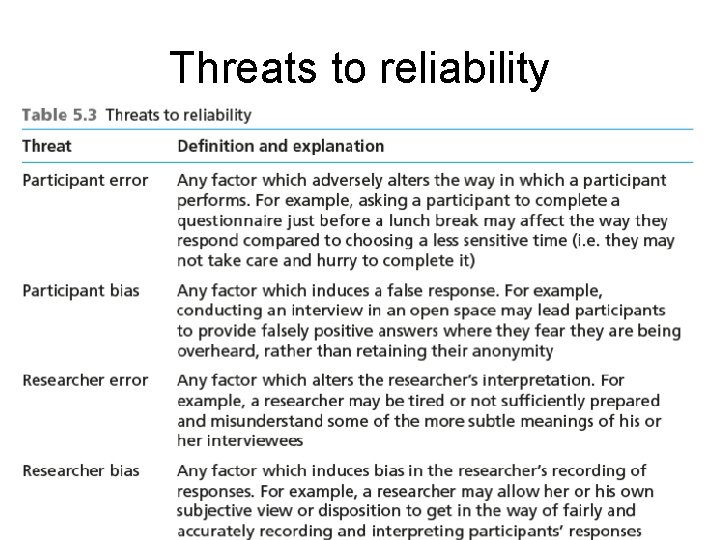
Threats to reliability
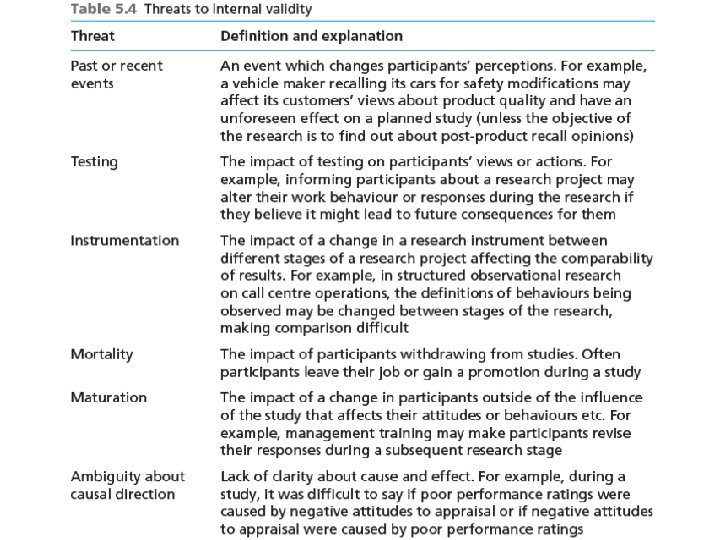
Threats to validity • Internal validity: causal relationship • External validity: generalizability
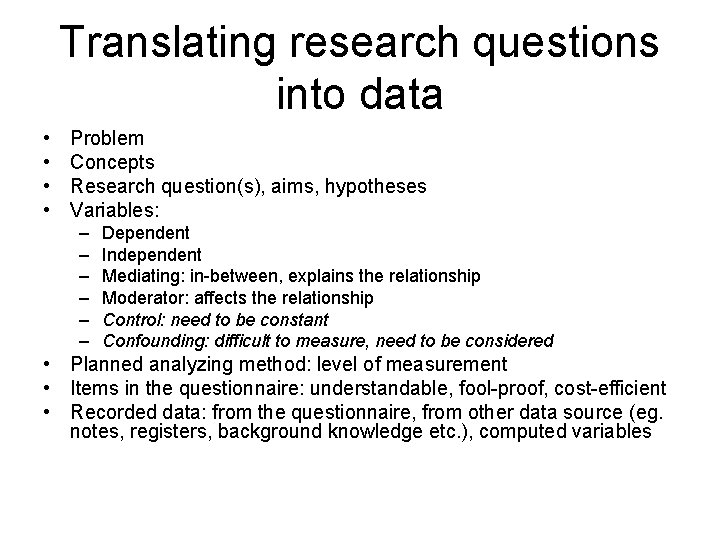
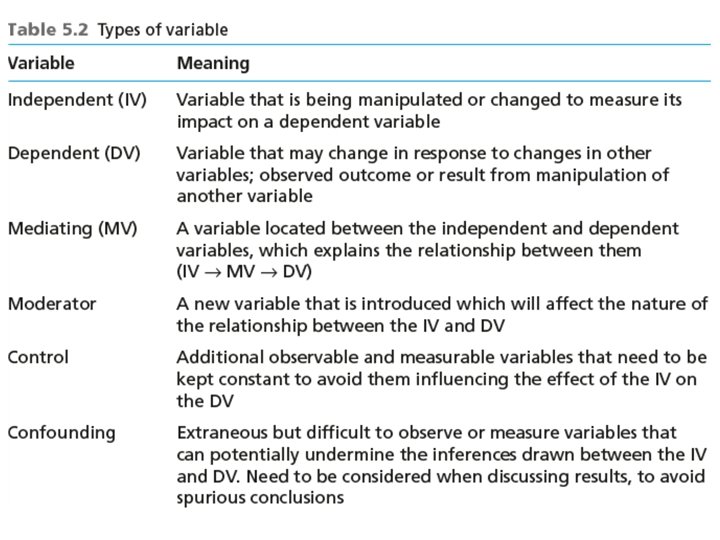
Translating research questions into data • • Problem Concepts Research question(s), aims, hypotheses Variables: – – – Dependent Independent Mediating: in-between, explains the relationship Moderator: affects the relationship Control: need to be constant Confounding: difficult to measure, need to be considered • Planned analyzing method: level of measurement • Items in the questionnaire: understandable, fool-proof, cost-efficient • Recorded data: from the questionnaire, from other data source (eg. notes, registers, background knowledge etc. ), computed variables
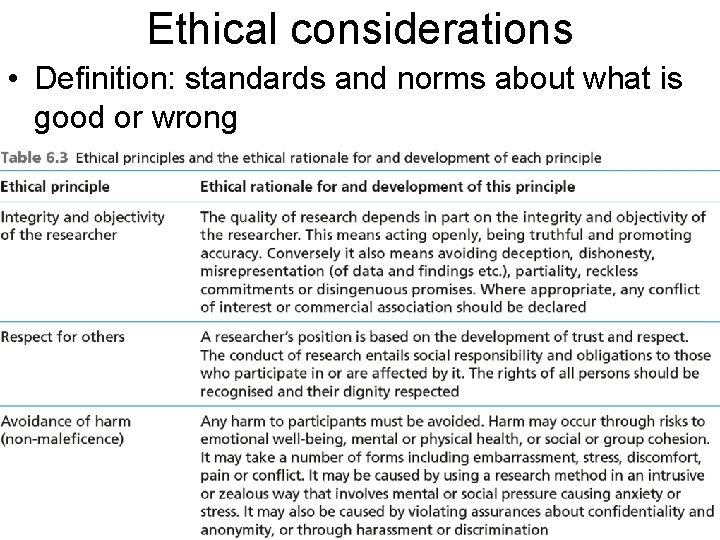
Ethical considerations • Definition: standards and norms about what is good or wrong
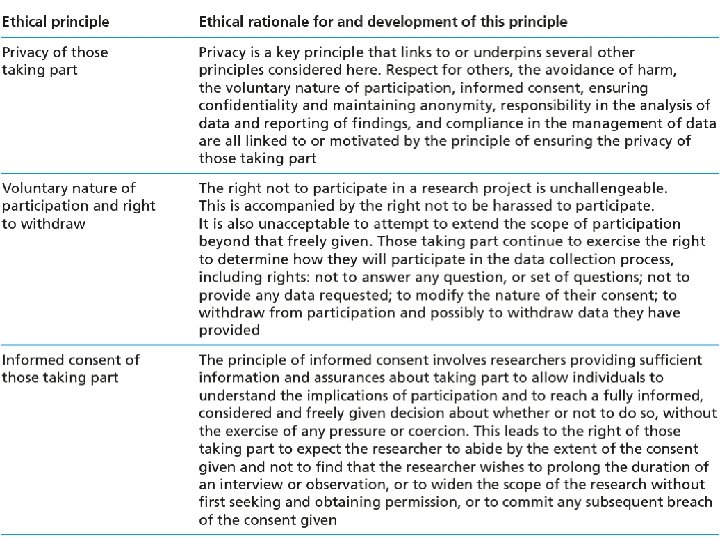
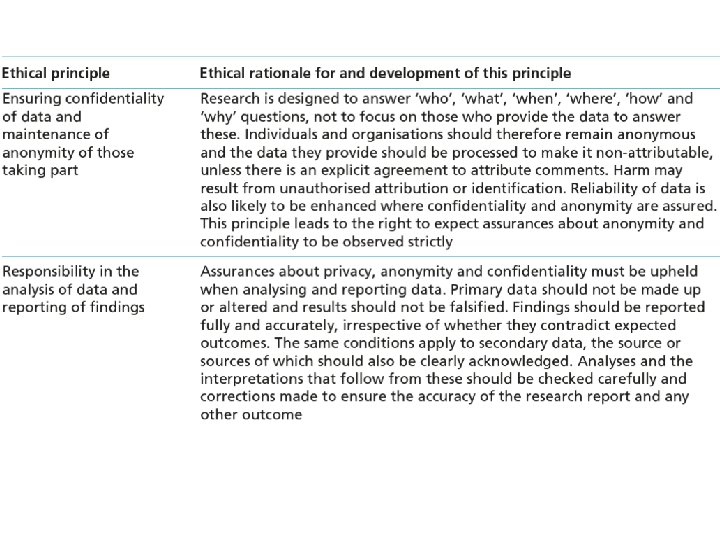
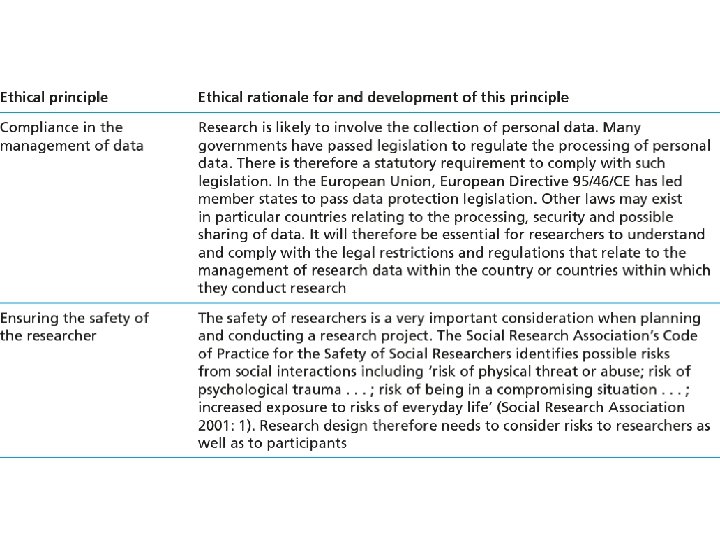

Aids to the researchers • Ethical guidelines • Ethical codes • Research ethics comittees
- Slides: 36