
Formulating HighPerformance Waterborne Epoxy Coatings M J Watkins
Formulating High-Performance Waterborne Epoxy Coatings M. J. Watkins, D. J. Weinmann, J. D. Elmore Presented at a meeting of the Thermoset Resin Formulators Association Hyatt Regency Montréal September 11 -12, 2006
Mythbusters Myth #1 “Waterborne epoxy coatings can never match the performance of solvent based systems” Myth #2 “I know how to formulate other waterborne systems, So I can use all my current tricks and additives to formulate waterborne epoxies”
“Devil is in the Details” (and the details are in the paper) This presentation will 1. Define achievable high performance 2. Outline general formulation techniques Please see paper for specific recommendations
Topics • Waterborne epoxy types • Type 5 waterborne epoxy performance • Stoichiometry effects • Pot life issues • Components (cosolvents, pigments, additives, etc. ) • Dispersing pigments • Pigment selection
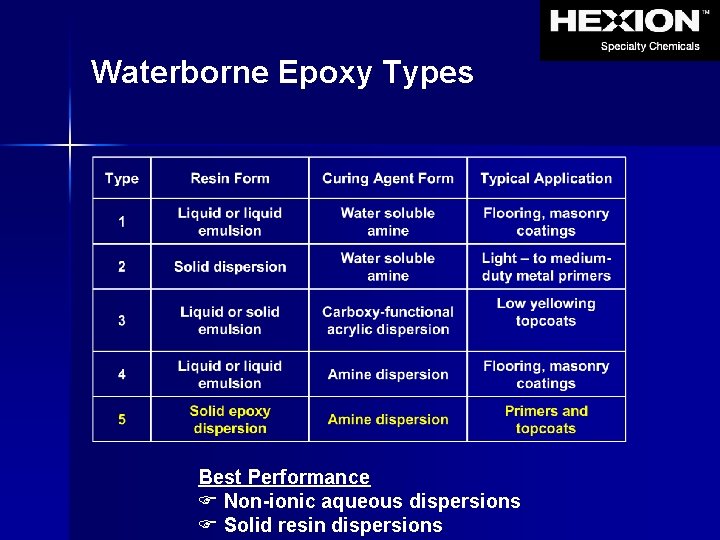
Waterborne Epoxy Types Best Performance F Non-ionic aqueous dispersions F Solid resin dispersions

Type 5 Epoxy Resin Dispersion Name: Description: EEW, g/eq, solids: Viscosity, c. P*: Solids, % weight: Lb. /Gal: VOC Cosolvent: * Brookfield, #5 spindle, 20 rpm, 25 °C. EPI-REZ 6520 -WH-53 Modified 1001 -type 550 < 3000 53. 0 9. 0 PM (<4%)
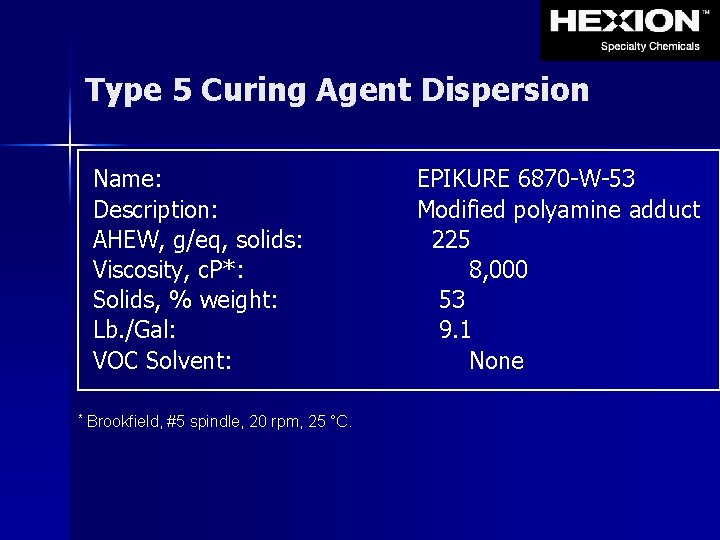
Type 5 Curing Agent Dispersion Name: Description: AHEW, g/eq, solids: Viscosity, c. P*: Solids, % weight: Lb. /Gal: VOC Solvent: * Brookfield, #5 spindle, 20 rpm, 25 °C. EPIKURE 6870 -W-53 Modified polyamine adduct 225 8, 000 53 9. 1 None
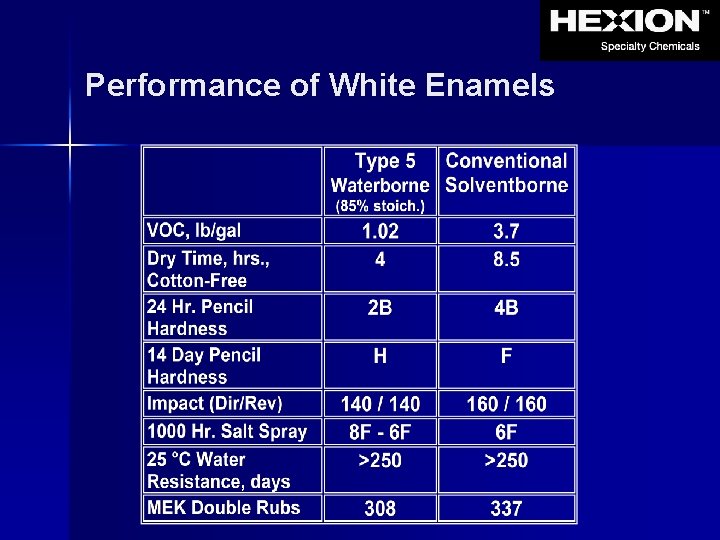
Performance of White Enamels
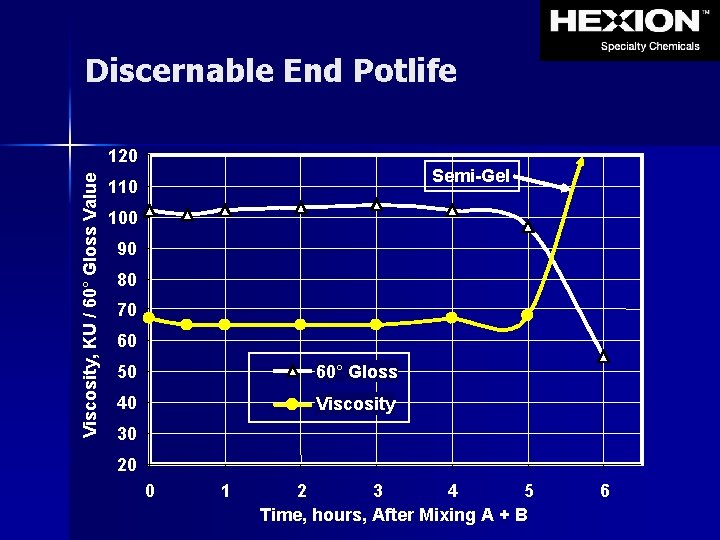
Discernable End Potlife Viscosity, KU / 60° Gloss Value 120 Semi-Gel 110 100 90 80 70 60 50 60° Gloss 40 Viscosity 30 20 0 1 2 3 4 5 Time, hours, After Mixing A + B 6
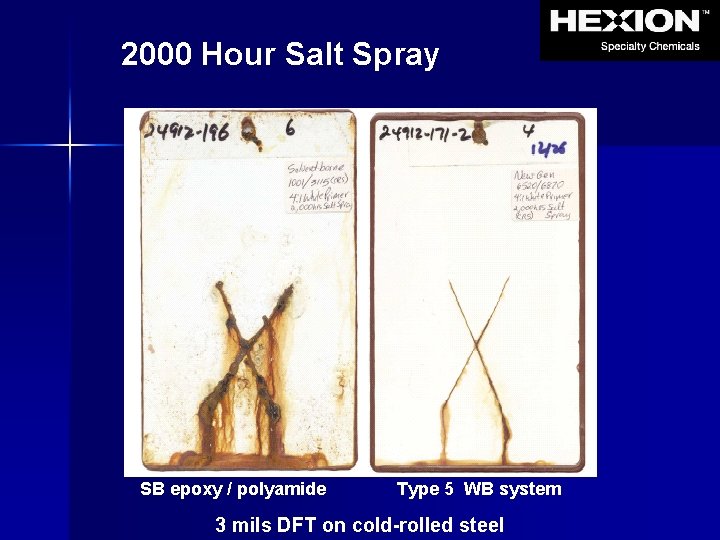
2000 Hour Salt Spray SB epoxy / polyamide Type 5 WB system 3 mils DFT on cold-rolled steel
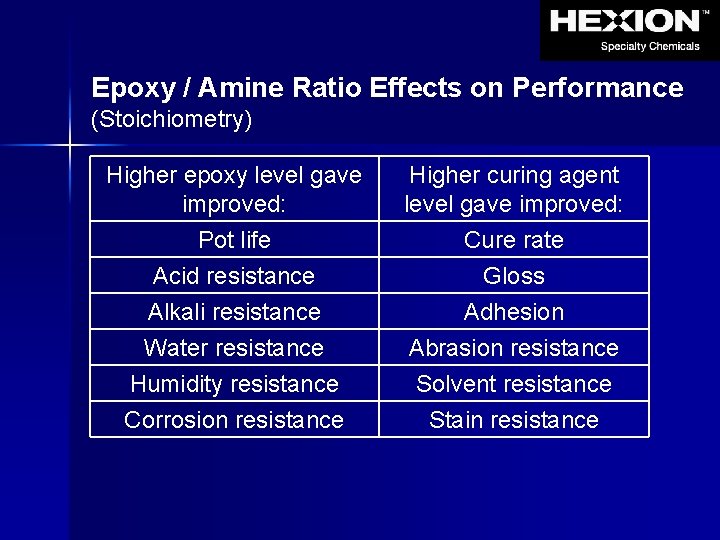
Epoxy / Amine Ratio Effects on Performance (Stoichiometry) Higher epoxy level gave improved: Higher curing agent level gave improved: Pot life Acid resistance Alkali resistance Water resistance Humidity resistance Corrosion resistance Cure rate Gloss Adhesion Abrasion resistance Solvent resistance Stain resistance
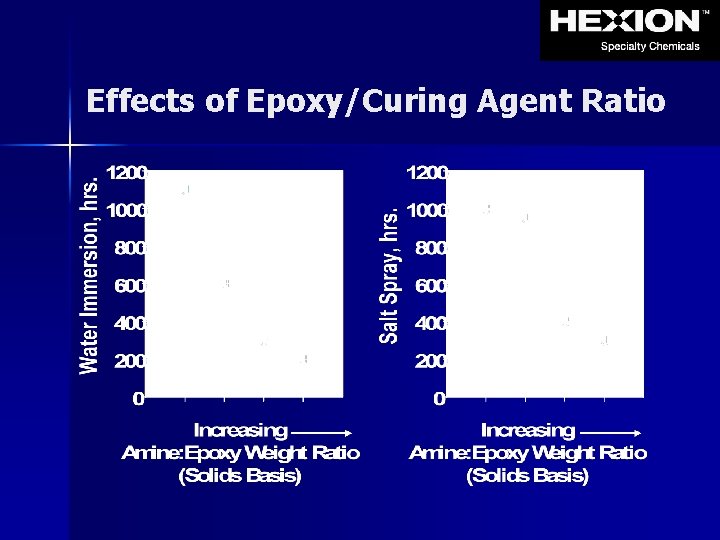
Effects of Epoxy/Curing Agent Ratio
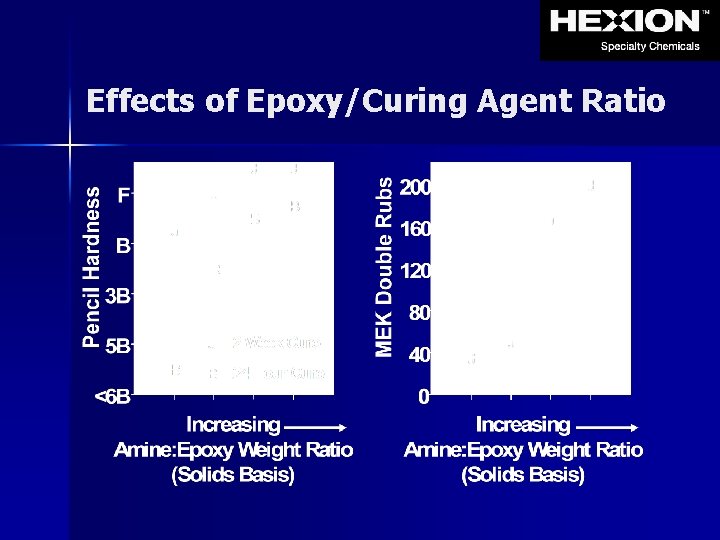
Effects of Epoxy/Curing Agent Ratio
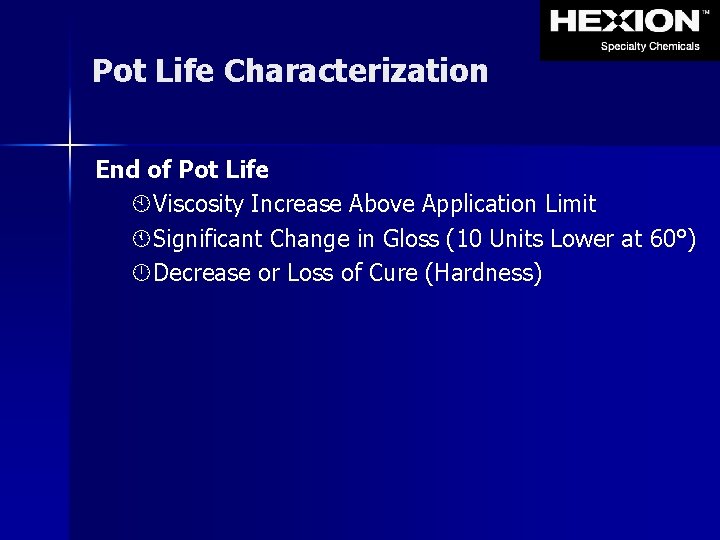
Pot Life Characterization End of Pot Life ÀViscosity Increase Above Application Limit ÁSignificant Change in Gloss (10 Units Lower at 60°) Decrease or Loss of Cure (Hardness)
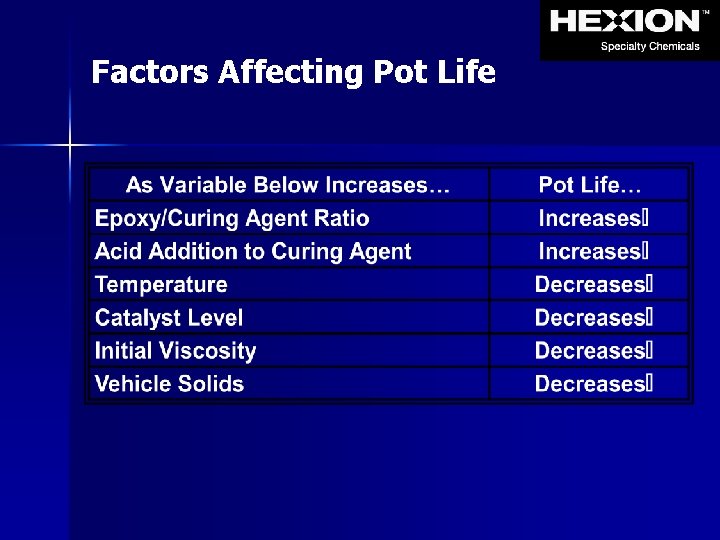
Factors Affecting Pot Life

Cosolvents Functions • Coalescing aids • Freeze-thaw stabilizers • Leveling agents • Pigment wetters • Foam control Performance Effects • Dry time • Gloss • Hardness development • Final film properties
Cosolvents • Glycol ethers are most versatile - Ethylene glycol ethers are suitable - Propylene glycol ethers are preferred for non-HAP status • Diacetone alcohol can be useful • Partition between water and resin phases - Slow and dynamic process
Cosolvents Others – see paper for details • Alcohols • Aromatics • Ketones • Glycol ether acetates
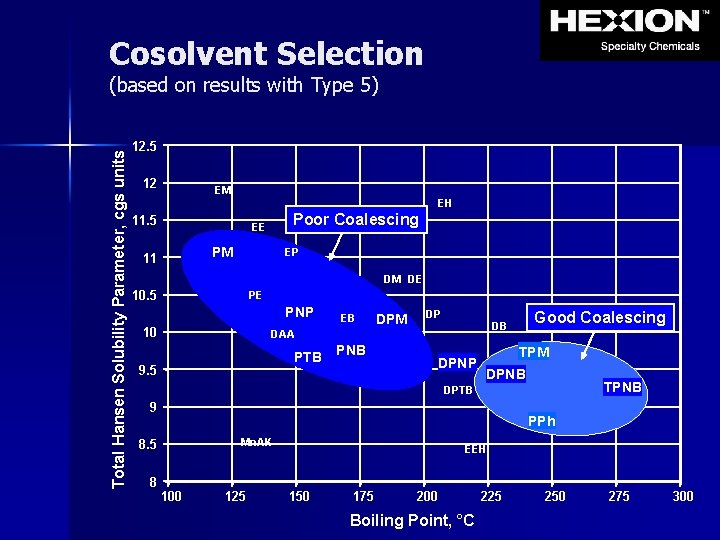
Cosolvent Selection Total Hansen Solubility Parameter, cgs units (based on results with Type 5) 12. 5 12 EM EH 11. 5 Poor Coalescing EE PM 11 EP DM DE 10. 5 PE PNP 10 EB DPM DP DAA PTB 9. 5 PNB Good Coalescing DB DPNP TPM DPNB TPNB DPTB 9 PPh Mn. AK 8. 5 8 100 125 EEH 150 175 200 Boiling Point, °C 225 250 275 300
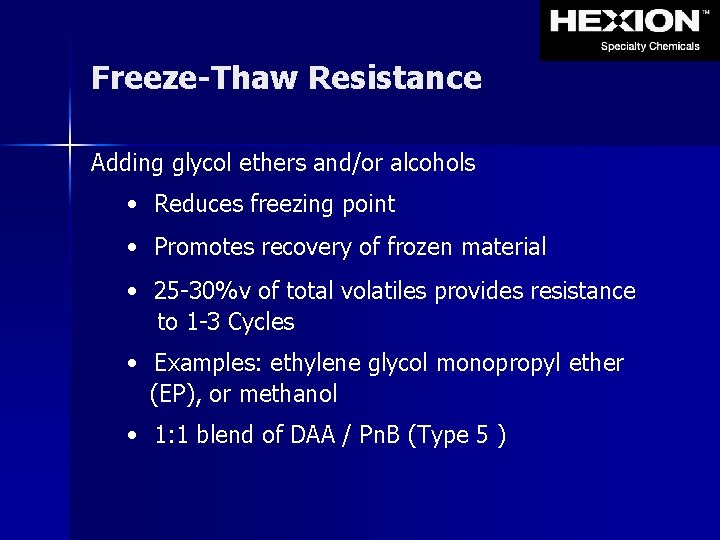
Freeze-Thaw Resistance Adding glycol ethers and/or alcohols • Reduces freezing point • Promotes recovery of frozen material • 25 -30%v of total volatiles provides resistance to 1 -3 Cycles • Examples: ethylene glycol monopropyl ether (EP), or methanol • 1: 1 blend of DAA / Pn. B (Type 5 )
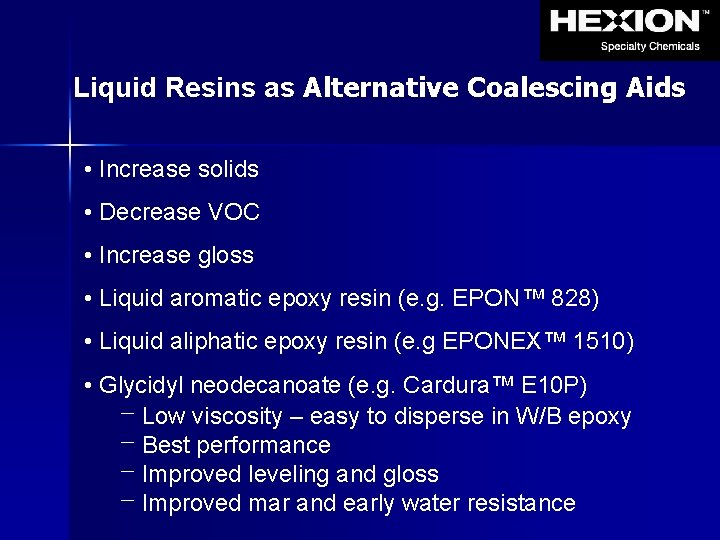
Liquid Resins as Alternative Coalescing Aids • Increase solids • Decrease VOC • Increase gloss • Liquid aromatic epoxy resin (e. g. EPON™ 828) • Liquid aliphatic epoxy resin (e. g EPONEX™ 1510) • Glycidyl neodecanoate (e. g. Cardura™ E 10 P) - Low viscosity – easy to disperse in W/B epoxy - Best performance - Improved leveling and gloss - Improved mar and early water resistance
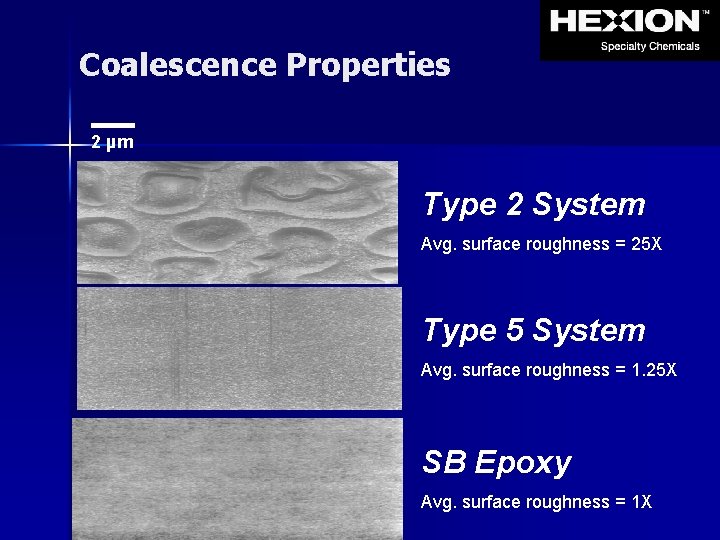
Coalescence Properties 2 µm Type 2 System Avg. surface roughness = 25 X Type 5 System Avg. surface roughness = 1. 25 X SB Epoxy Avg. surface roughness = 1 X
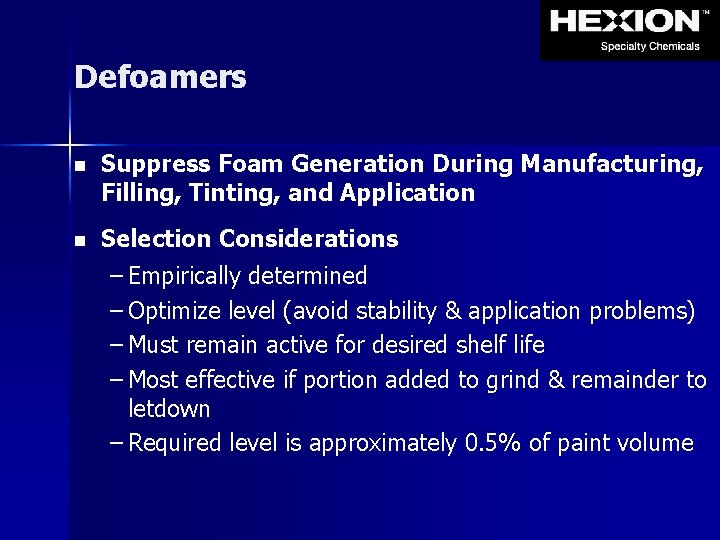
Defoamers n Suppress Foam Generation During Manufacturing, Filling, Tinting, and Application n Selection Considerations – Empirically determined – Optimize level (avoid stability & application problems) – Must remain active for desired shelf life – Most effective if portion added to grind & remainder to letdown – Required level is approximately 0. 5% of paint volume
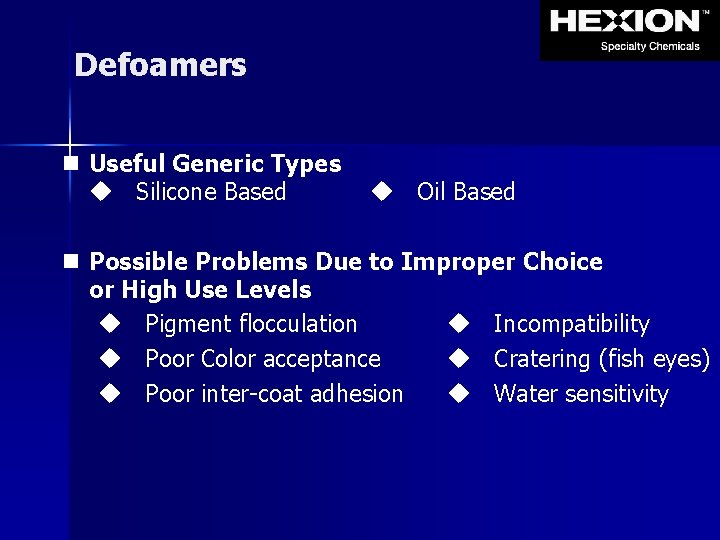
Defoamers n Useful Generic Types Silicone Based Oil Based n Possible Problems Due to Improper Choice or High Use Levels Pigment flocculation Incompatibility Poor Color acceptance Cratering (fish eyes) Poor inter-coat adhesion Water sensitivity
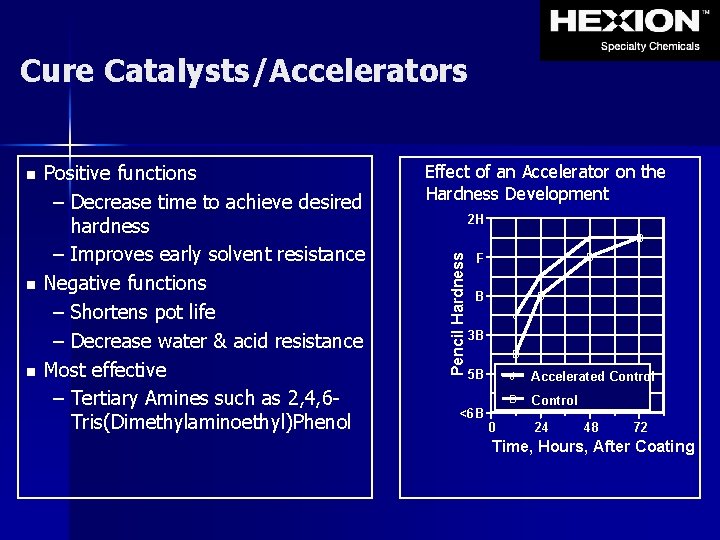
Cure Catalysts/Accelerators n n Positive functions – Decrease time to achieve desired hardness – Improves early solvent resistance Negative functions – Shortens pot life – Decrease water & acid resistance Most effective – Tertiary Amines such as 2, 4, 6 Tris(Dimethylaminoethyl)Phenol Effect of an Accelerator on the Hardness Development 2 H J Pencil Hardness n F J B B J 3 B B 5 B <6 B 0 J Accelerated Control B Control 24 48 72 Time, Hours, After Coating
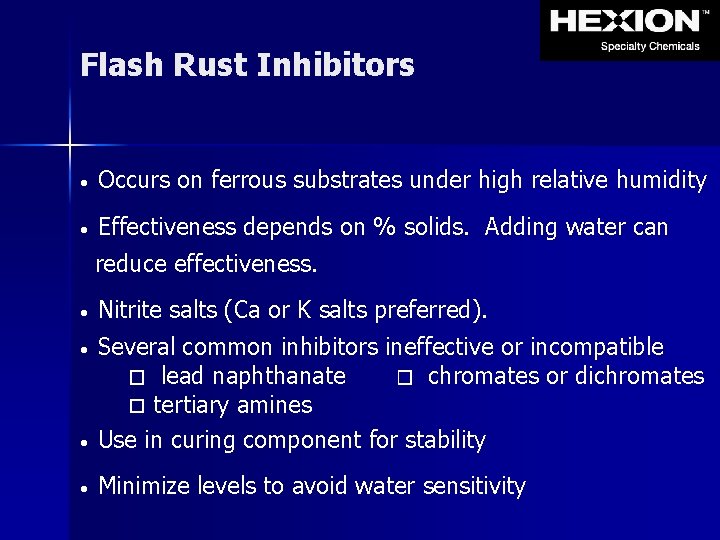
Flash Rust Inhibitors • Occurs on ferrous substrates under high relative humidity • Effectiveness depends on % solids. Adding water can reduce effectiveness. • • Nitrite salts (Ca or K salts preferred). Several common inhibitors ineffective or incompatible � lead naphthanate � chromates or dichromates � tertiary amines Use in curing component for stability • Minimize levels to avoid water sensitivity •
Adhesion Promoters n Benefits – Improved substrate wetting and adhesion n Especially galvanized steel, cold rolled steel, and aluminum n Less effective on blasted or phosphated steel – Faster cure & hardness development – Incorporate in epoxy during pigment grind – Improved corrosion resistance n Chemical Structure is Important – Use Epoxy-functional, triethoxy- or diethoxymethyl- silanes for best shelf stability. – Aminosilanes contribute to yellowing – Methoxysilanes hydrolyze and give poor adhesion
Mar and Slip Agents n May Improve Abrasion Resistance and Early Water Resistance n Useful Types – Polydimethylsiloxanes – Wax Dispersions – Micronized Polyethylene Dispersions – Silicones
Fungicides and Mildewcides • Generally not required for waterborne epoxy systems • Can cause instability
Viscosity • Do not over-dilute the curing agent. Can hard settle • Do not add cosolvent to curing agent. Can destabilize • For stability, component viscosity >65 KU at 25°C • DO NOT use latex viscosity control agents - Often neurtalized with NH 3 or amines - React with epoxy - Viscosity build, gel or coagulation & pigment kick-out
Thixotropes / Thickeners Used for component stability and sag resistance • Modified hydroxyethyl cellulosics • Modified clays • HEUR thickeners for component stability and grind viscosity
Dispersing Pigments • Disperse pigments, modifying resins, & additives directly into the epoxy resin dispersion • Water-only pigment dispersions may use too much surfactant & give poor performance • Dispersing pigments in W/B curing agent may lead to poor stability • Can disperse pigments in low viscosity polyamide. Then let down with W/B curing agent
Pigments Dispersants • Use in grind for epoxy resin dispersion stability • Useful Dispersant Types − Non-ionics, e. g. poly(ethylene oxide) types best − Neutralized acid-functional acrylics – risky − Avoid ionic dispersants (cause gel and kick-out) • Primary Uses − Pre-wetting pigments when grinding in epoxy − Stabilize dispersion during storage
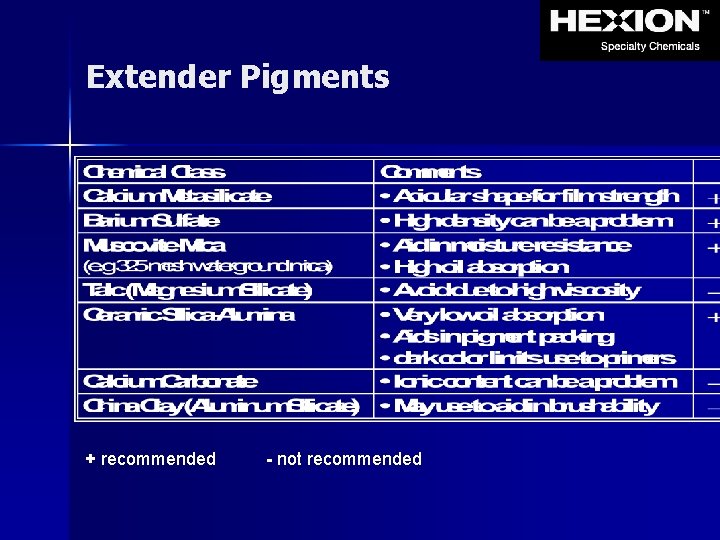
Pigment Selection Guidelines n n n Low Oil and Water Absorption Low Soluble Salt Content Low Ionic Character Extender Pigments – Variety of Shapes and Sizes Anti-Corrosive Pigments – Acceptable Water Solubility – p. H >6
Extender Pigments + recommended - not recommended
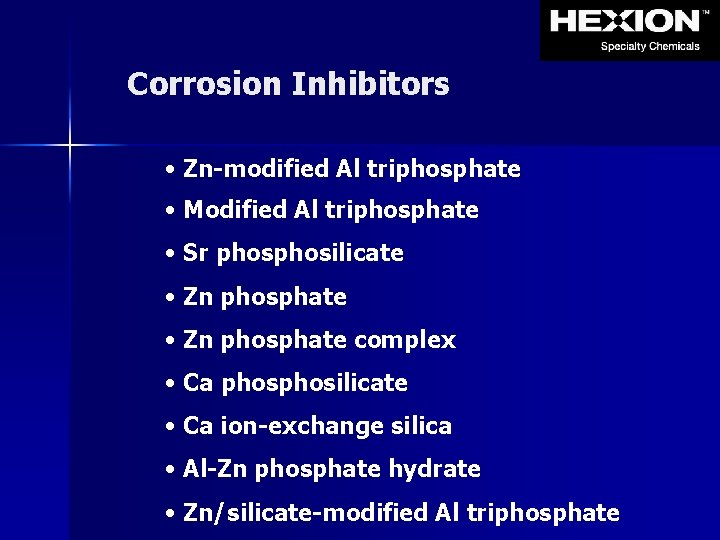
Corrosion Inhibitors • Zn-modified Al triphosphate • Modified Al triphosphate • Sr phosilicate • Zn phosphate complex • Ca phosilicate • Ca ion-exchange silica • Al-Zn phosphate hydrate • Zn/silicate-modified Al triphosphate
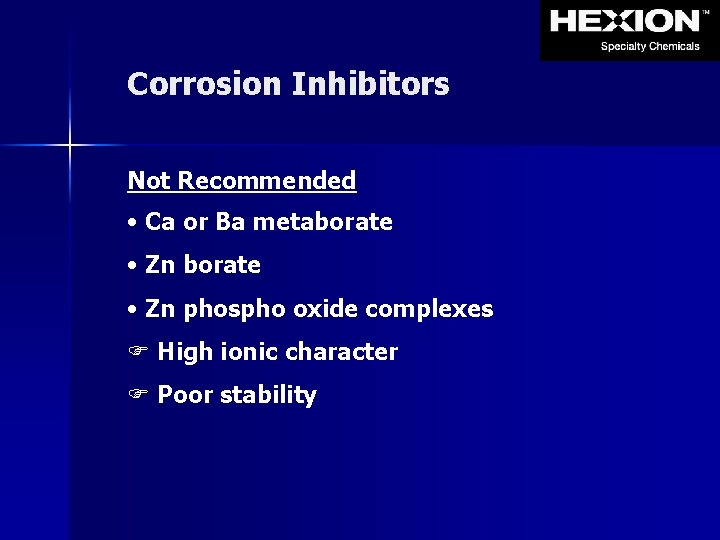
Corrosion Inhibitors Not Recommended • Ca or Ba metaborate • Zn phospho oxide complexes F High ionic character F Poor stability
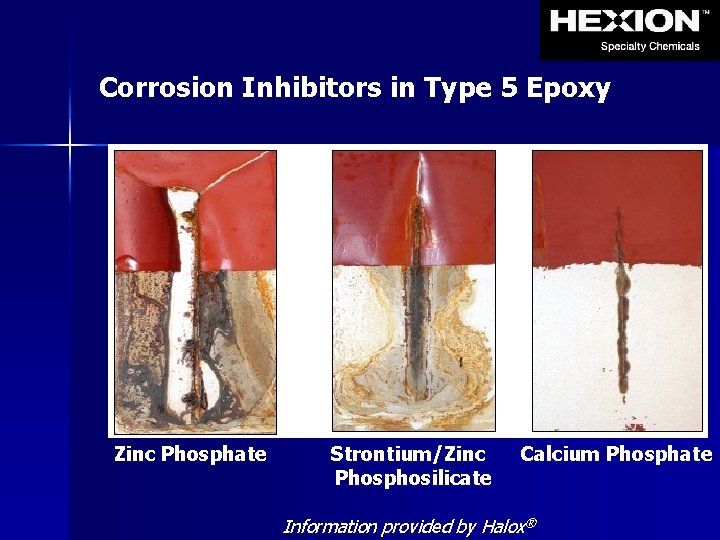
Corrosion Inhibitors in Type 5 Epoxy Zinc Phosphate Strontium/Zinc Phosphosilicate Calcium Phosphate Information provided by Halox®
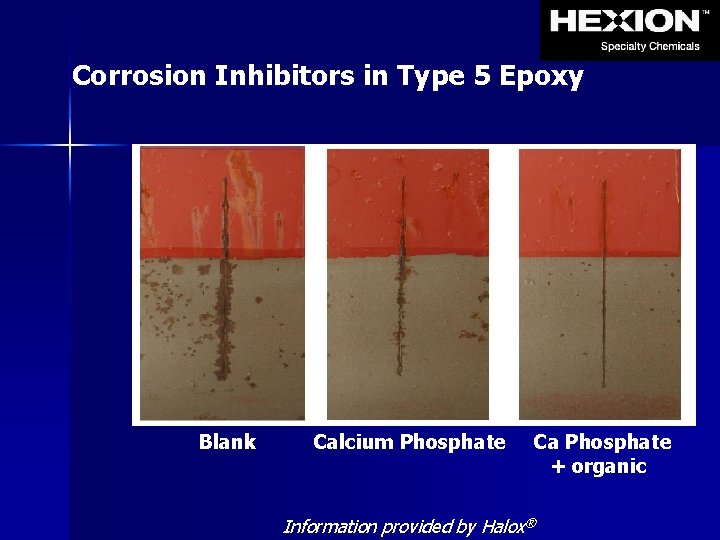
Corrosion Inhibitors in Type 5 Epoxy Blank Calcium Phosphate Ca Phosphate + organic Information provided by Halox®
Conclusions Realities – Not Myths F High-performance waterborne epoxy coatings can be formulated which match or exceed solvent based coatings at attractively low VOC F In order to achieve high performance, components and formulating techniques specific to waterborne epoxy must be used
What is HEXION? Thermoset Resins June, 2005
- Slides: 41