
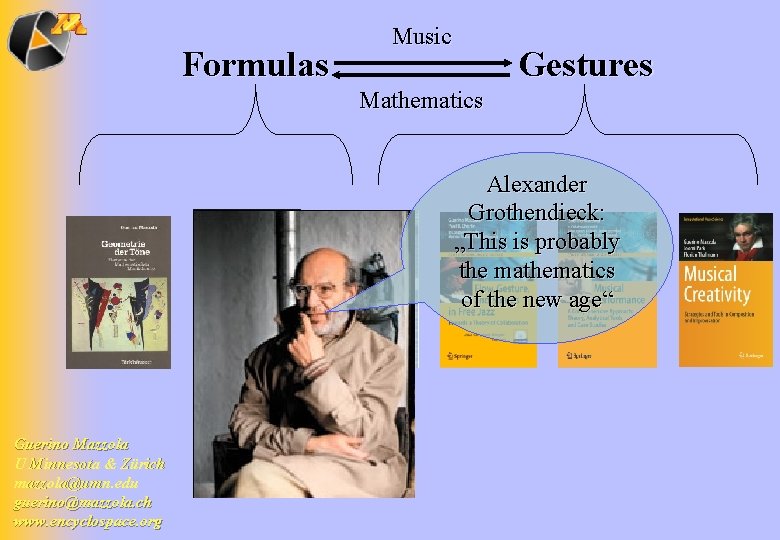
Formulas Music Gestures Mathematics Alexander Grothendieck This is
![How can we „gestify“ formulas? Category [f] of factorizations of morphism f in C:](https://slidetodoc.com/presentation_image/17012d8a8b0c2a0015440d7919f59e3f/image-48.jpg "How can we „gestify“ formulas? Category [f] of factorizations of morphism f in C:")
![Gestures ? • spatial digraph f = @[f] : c ~> c(0), c(1) A](https://slidetodoc.com/presentation_image/17012d8a8b0c2a0015440d7919f59e3f/image-50.jpg "Gestures ? • spatial digraph f = @[f] : c ~> c(0), c(1) A")
- Slides: 55
Formulas Music Gestures Mathematics Alexander Grothendieck: „This is probably the mathematics of the new age“ Guerino Mazzola U Minnesota & Zürich mazzola@umn. edu guerino@mazzola. ch www. encyclospace. org
Yoneda‘s Lemma in Music: Reinventing Points Nobuo Yoneda (1930 -1996)
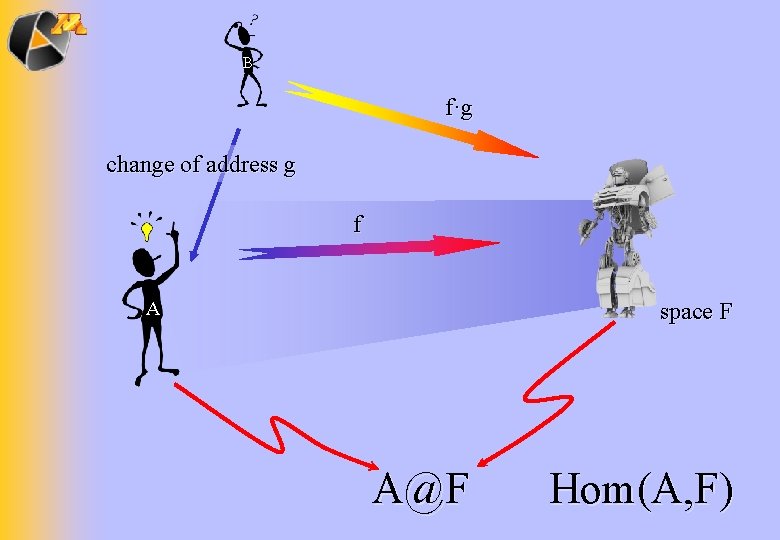
B f·g change of address g f A space F A@F Hom(A, F)
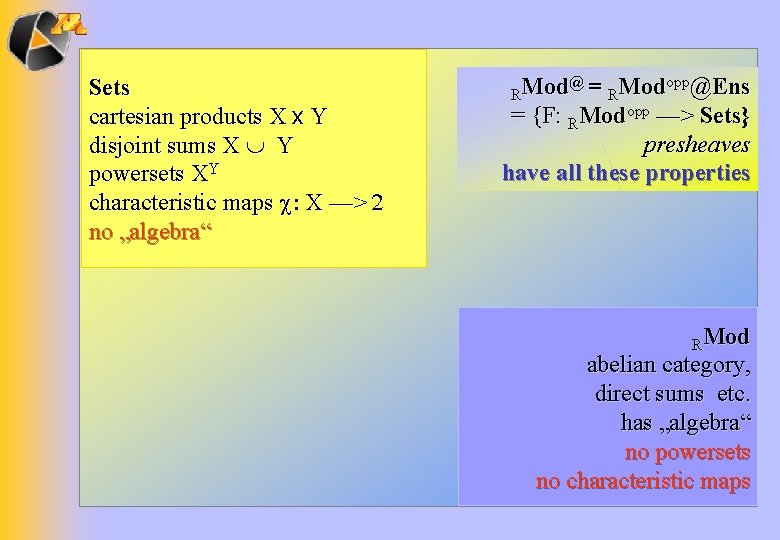
Sets cartesian products X x Y disjoint sums X È Y powersets XY characteristic maps c: X —> 2 no „algebra“ @ = Modopp@Ens Mod R R = {F: RModopp —> Sets} presheaves have all these properties RMod abelian category, direct sums etc. has „algebra“ no powersets no characteristic maps
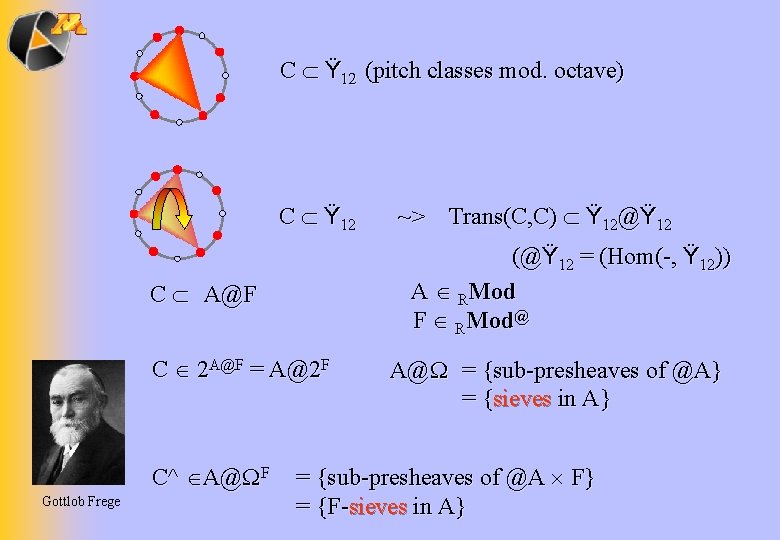
C Ÿ 12 (pitch classes mod. octave) C Ÿ 12 ~> Trans(C, C) Ÿ 12@Ÿ 12 A@F A@M C ŸM 12 C 2 A@F = A@2 F Gottlob Frege (@Ÿ 12 = (Hom(-, Ÿ 12)) A RMod F RMod@ 2 = {sub-presheaves of @A} A@ W W = {sieves in A} C^ A@WF = {sub-presheaves of @A F} = {F-sieves in A}
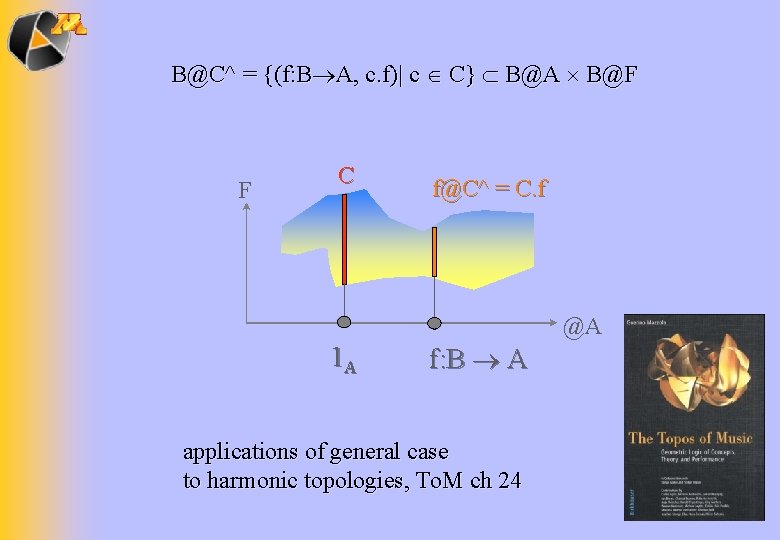
B@C^ = {(f: B A, c. f)| c C} B@A B@F F C f@C^ = C. f @A 1 A f: B A applications of general case to harmonic topologies, To. M ch 24
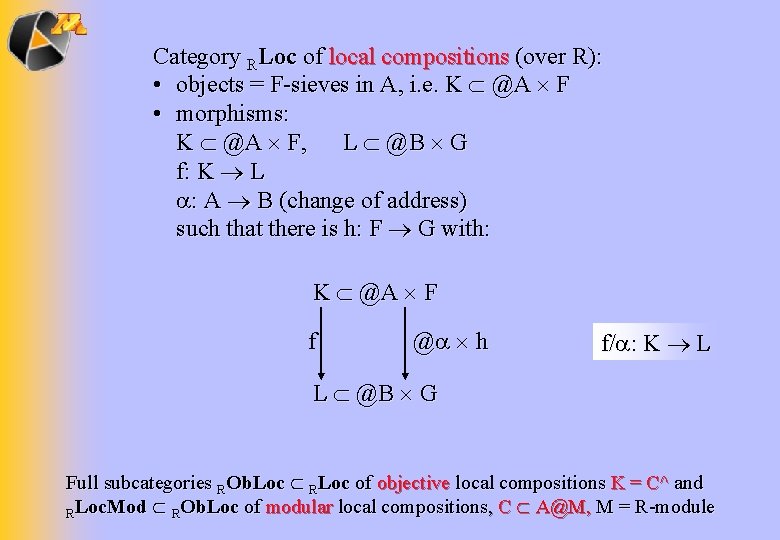
Category RLoc of local compositions (over R): • objects = F-sieves in A, i. e. K @A F • morphisms: K @A F, L @B G f: K L : A B (change of address) such that there is h: F G with: K @A F f @ h f/ : K L L @B G Full subcategories ROb. Loc RLoc of objective local compositions K = C^ and RLoc. Mod ROb. Loc of modular local compositions, C A@M, M = R-module
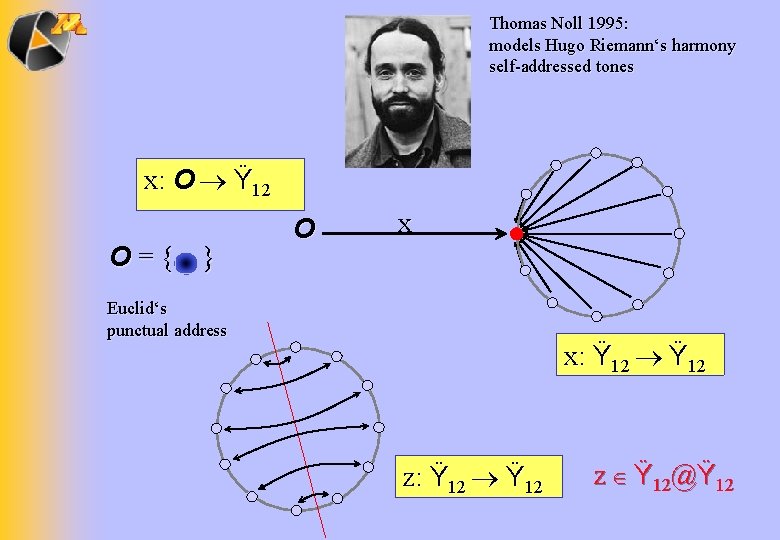
Thomas Noll 1995: models Hugo Riemann‘s harmony self-addressed tones x: O Ÿ 12 O = { } O x Euclid‘s punctual address x: Ÿ 12 z Ÿ 12@Ÿ 12
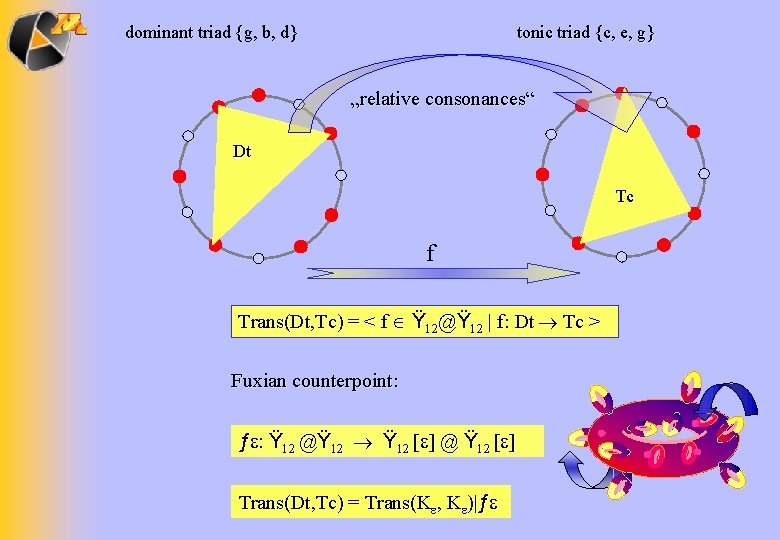
dominant triad {g, b, d} tonic triad {c, e, g} „relative consonances“ Dt Tc f Trans(Dt, Tc) = < f Ÿ 12@Ÿ 12 | f: Dt Tc > Fuxian counterpoint: ƒe: Ÿ 12 @Ÿ 12 [e] @ Ÿ 12 [e] Trans(Dt, Tc) = Trans(Ke, Ke)|ƒe
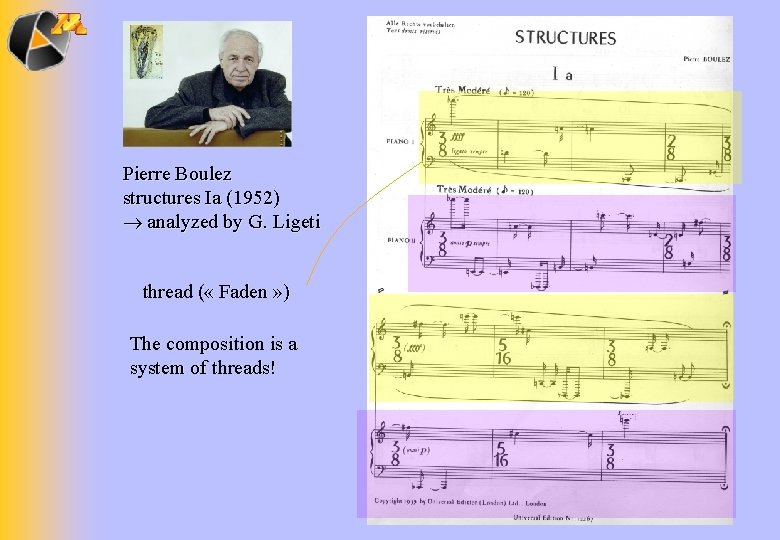
Pierre Boulez structures Ia (1952) analyzed by G. Ligeti thread ( « Faden » ) The composition is a system of threads!
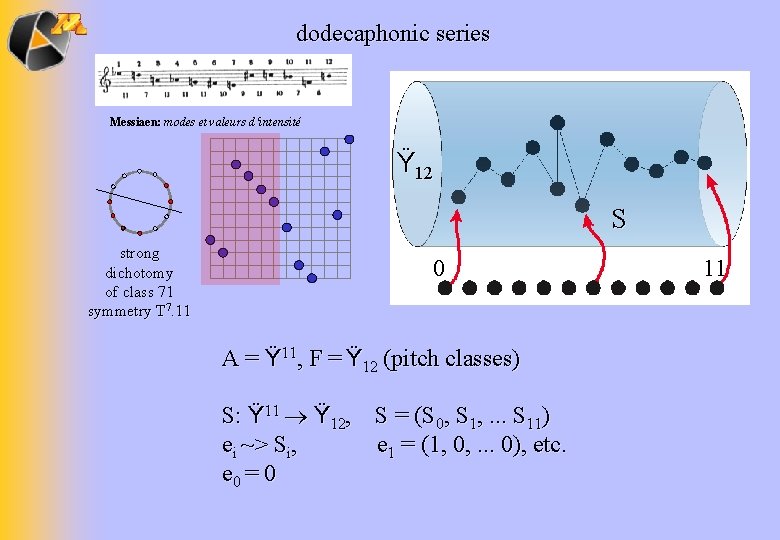
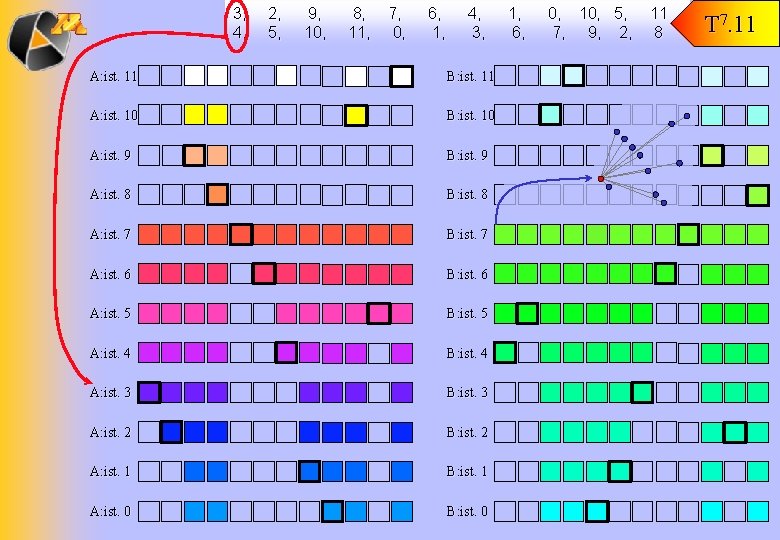
dodecaphonic series Messiaen: modes et valeurs d‘intensité Ÿ 12 S strong dichotomy of class 71 symmetry T 7. 11 0 A = Ÿ 11, F = Ÿ 12 (pitch classes) S: Ÿ 11 Ÿ 12, S = (S 0, S 1, . . . S 11) ei ~> Si, e 1 = (1, 0, . . . 0), etc. e 0 = 0 11
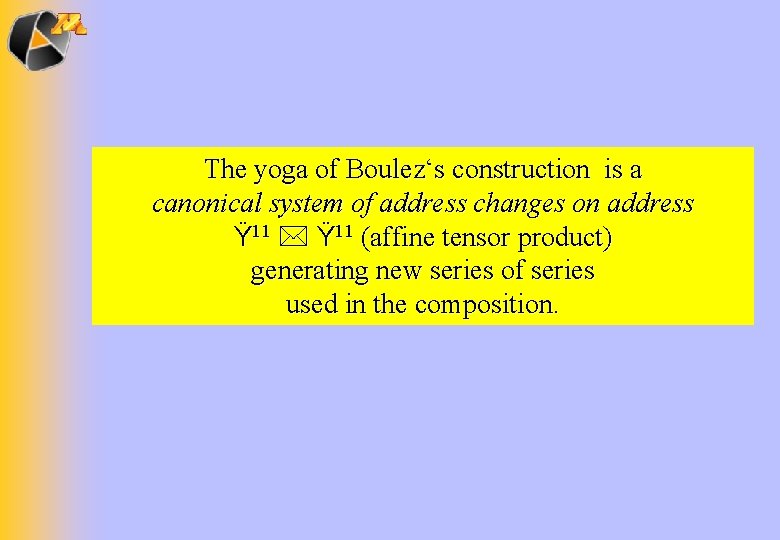
The yoga of Boulez‘s construction is a canonical system of address changes on address Ÿ 11 (affine tensor product) generating new series of series used in the composition.
3, 4, 2, 5, 9, 10, 8, 11, 7, 0, 6, 1, 4, 3, A: ist. 11 B: ist. 11 A: ist. 10 B: ist. 10 A: ist. 9 B: ist. 9 A: ist. 8 B: ist. 8 A: ist. 7 B: ist. 7 A: ist. 6 B: ist. 6 A: ist. 5 B: ist. 5 A: ist. 4 B: ist. 4 A: ist. 3 B: ist. 3 A: ist. 2 B: ist. 2 A: ist. 1 B: ist. 1 A: ist. 0 B: ist. 0 1, 6, 0, 10, 5, 7, 9, 2, 11 8 T 7. 11
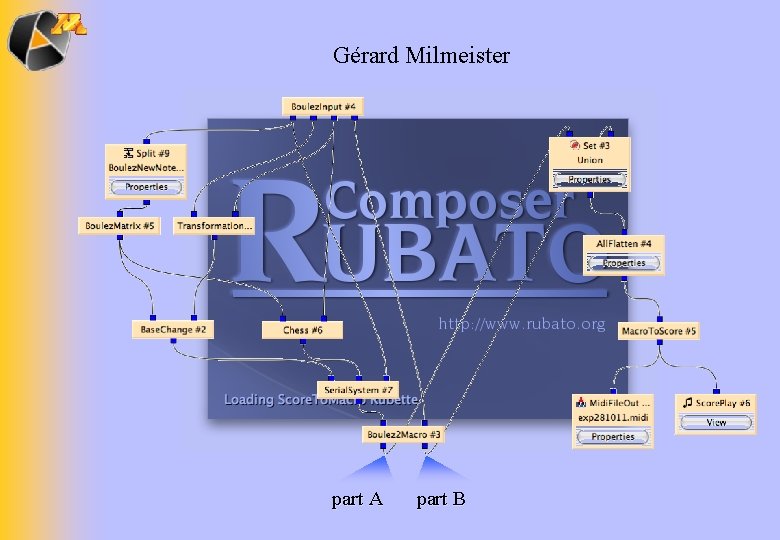
Gérard Milmeister part A part B
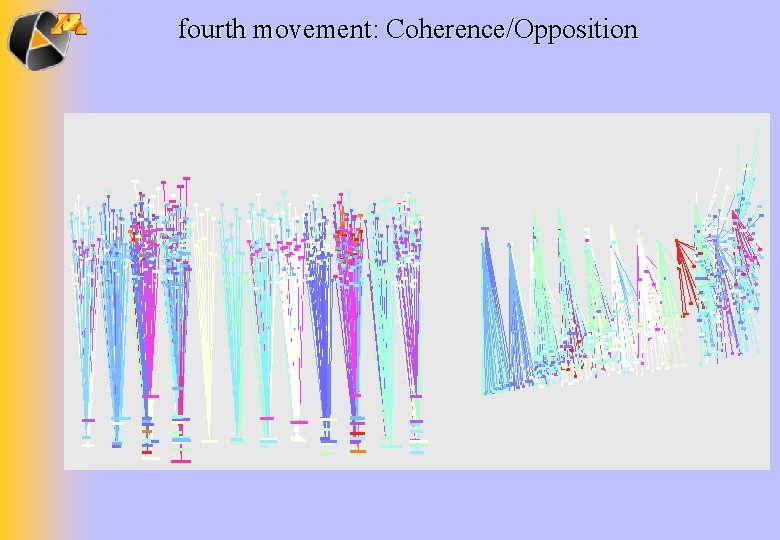
fourth movement: Coherence/Opposition
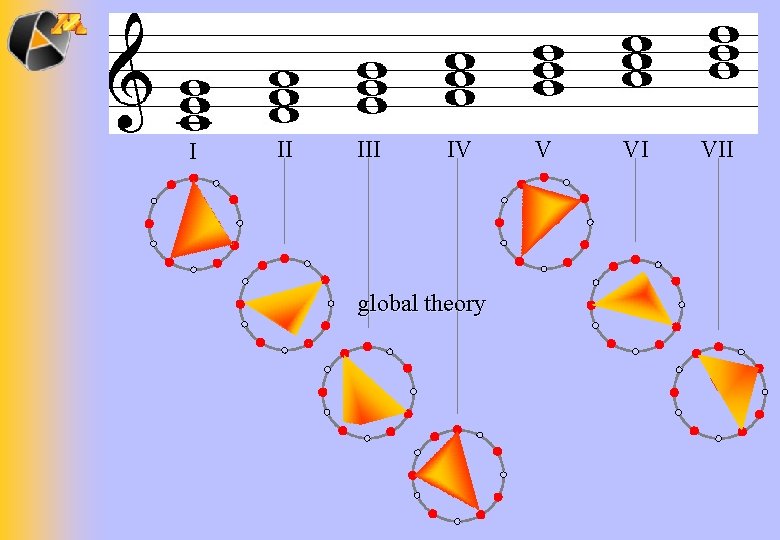
I II IV global theory V VI VII
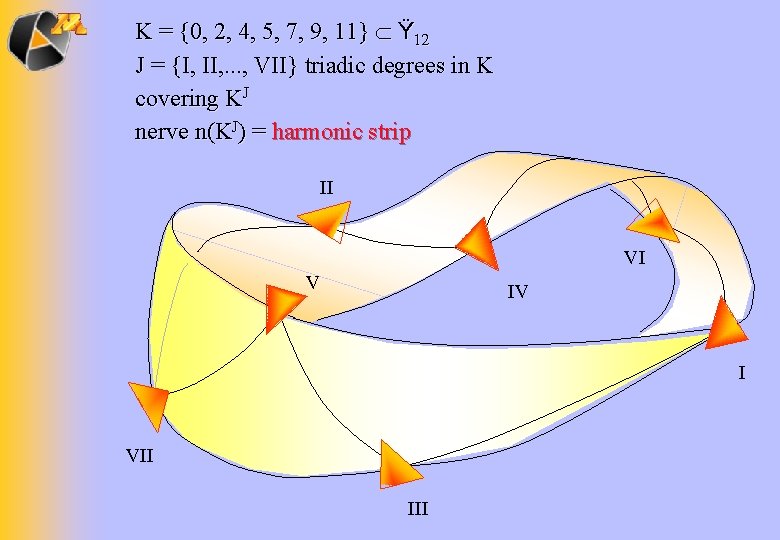
K = {0, 2, 4, 5, 7, 9, 11} Ÿ 12 J = {I, II, . . . , VII} triadic degrees in K covering KJ nerve n(KJ) = harmonic strip II VI V IV I VII III
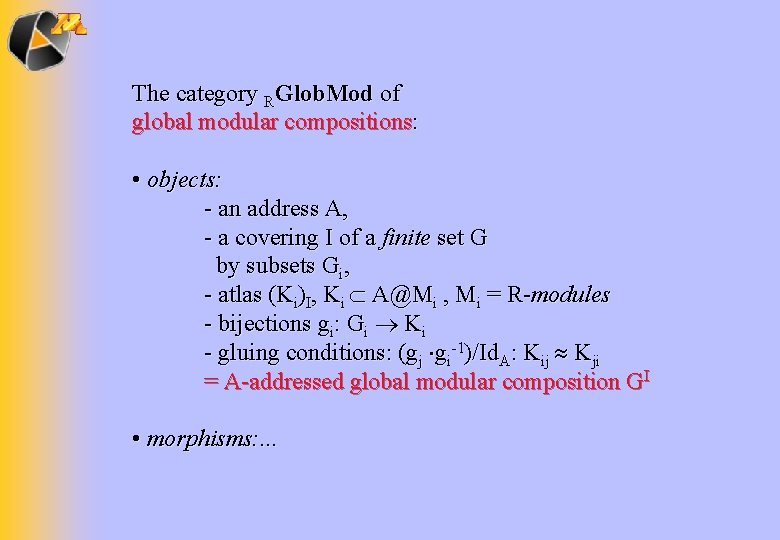
The category RGlob. Mod of global modular compositions: • objects: - an address A, - a covering I of a finite set G by subsets Gi, - atlas (Ki)I, Ki A@Mi , Mi = R-modules - bijections gi: Gi Ki - gluing conditions: (gj gi-1)/Id. A: Kij Kji = A-addressed global modular composition GI • morphisms: . . .
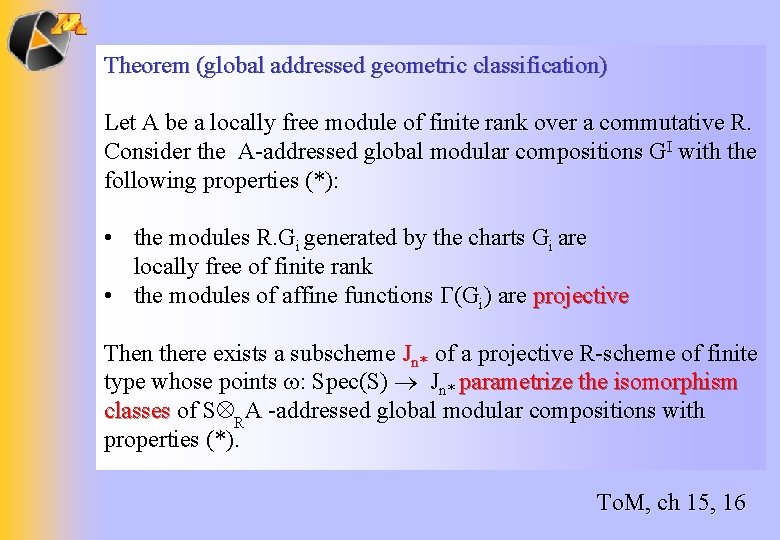
Theorem (global addressed geometric classification) Let A be a locally free module of finite rank over a commutative R. Consider the A-addressed global modular compositions GI with the following properties (*): • the modules R. Gi generated by the charts Gi are locally free of finite rank • the modules of affine functions (Gi) are projective Then there exists a subscheme Jn* of a projective R-scheme of finite type whose points w: Spec(S) Jn* parametrize the isomorphism classes of S RA -addressed global modular compositions with properties (*). To. M, ch 15, 16
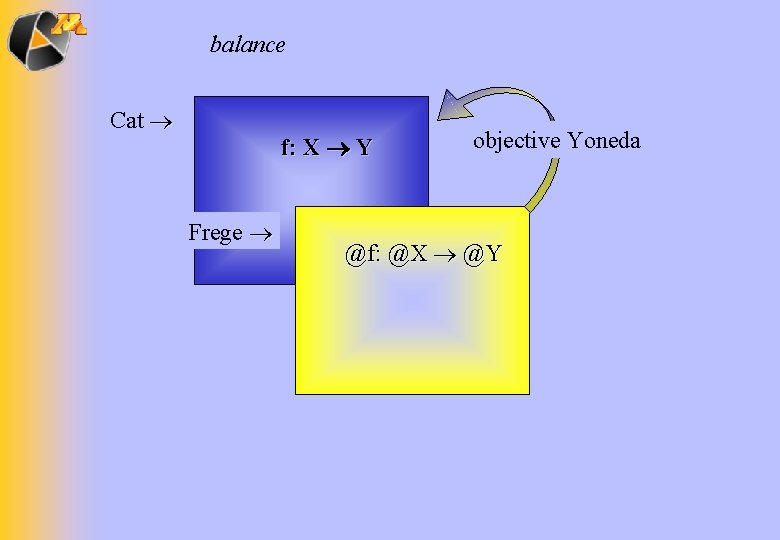
balance Cat f: X Y Frege objective Yoneda @f: @X @Y
3 resolution A 6 1 4 5 i (Gi) res ( i) Edgar Varèse res 2 GI 4 6 3 A@R (G i ) Gi 1 2 5
3 6 1 4 N = (Gi) res ( i) 2 5 i N = (Gi Gj) res ( i j) pr( / ) (N ) = N A@R N A@limnerf(A )(F )
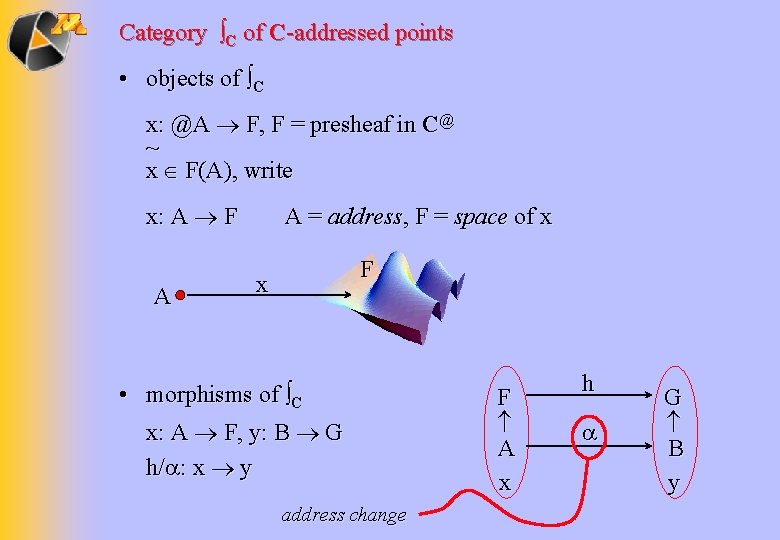
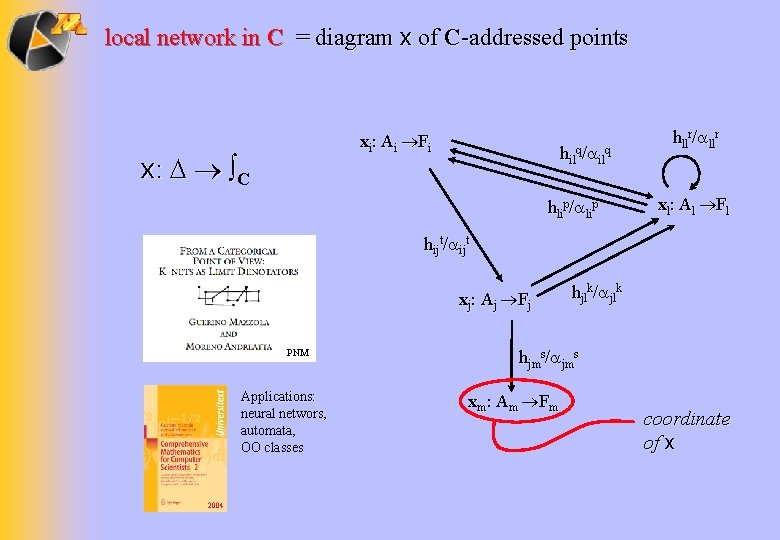
Category ∫C of C-addressed points • objects of ∫C x: @A F, F = presheaf in C@ ~ x F(A), write x: A F A = address, F = space of x • morphisms of ∫C x: A F, y: B G h/ : x y address change F A x h G x A F B y
local network in C = diagram x of C-addressed points xi: Ai Fi x: ∫C hilq/ ilq hlip/ lip hllr/ llr xl: Al Fl hijt/ ijt xj: Aj Fj PNM Applications: neural networs, automata, OO classes 2004 hjlk/ jlk hjms/ jms xm: Am Fm coordinate of x
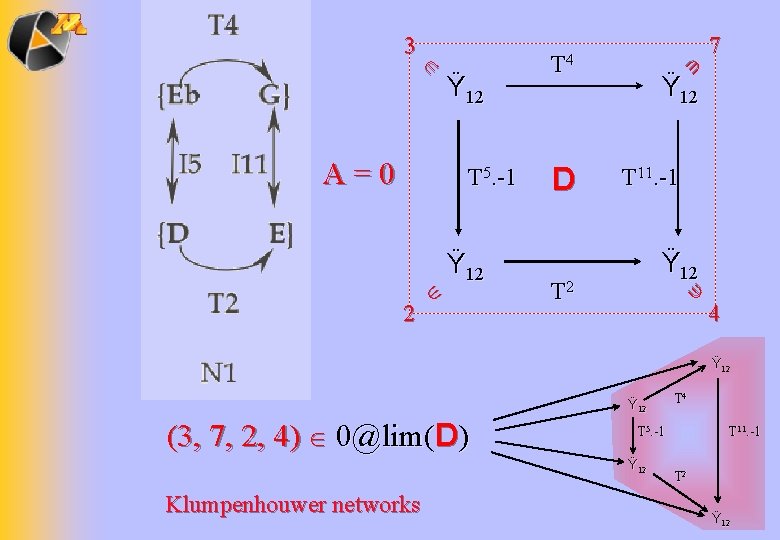
T 5. -1 2 Ÿ 12 D 7 Ÿ 12 T 11. -1 Ÿ 12 T 2 A = 0 Ÿ 12 T 4 3 4 Ÿ 12 (3, 7, 2, 4) 0@lim(D) T 5. -1 Ÿ 12 Klumpenhouwer networks T 4 T 11. -1 T 2 Ÿ 12
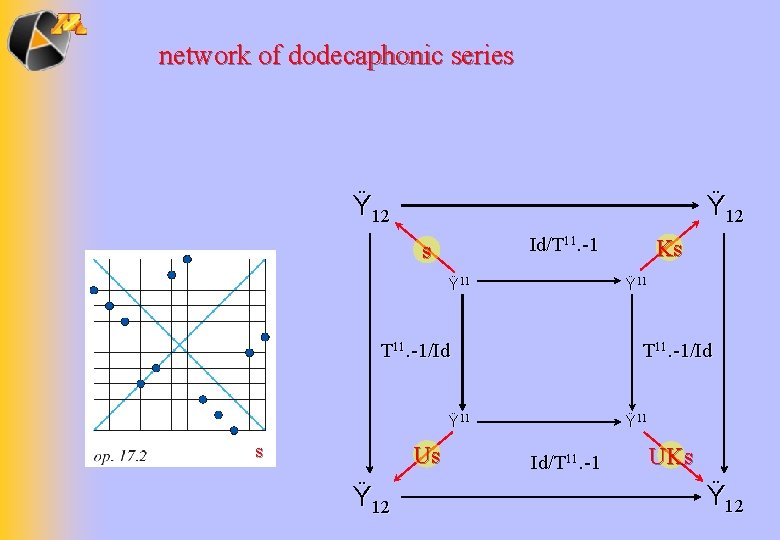
network of dodecaphonic series Ÿ 12 Id/T 11. -1 s Ÿ 11 T 11. -1/Id Ÿ 11 s Us Ÿ 12 Ks Ÿ 11 Id/T 11. -1 UKs Ÿ 12
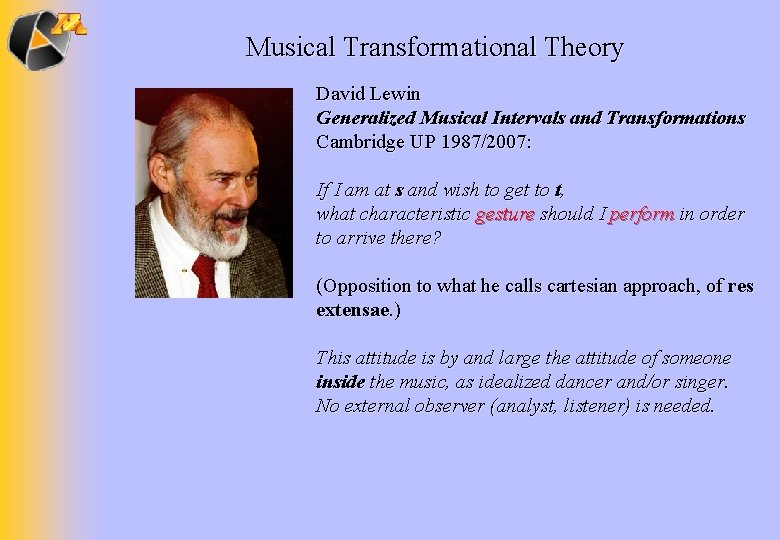
Musical Transformational Theory David Lewin Generalized Musical Intervals and Transformations Cambridge UP 1987/2007: If I am at s and wish to get to t, what characteristic gesture should I perform in order to arrive there? (Opposition to what he calls cartesian approach, of res extensae. ) This attitude is by and large the attitude of someone inside the music, as idealized dancer and/or singer. No external observer (analyst, listener) is needed.
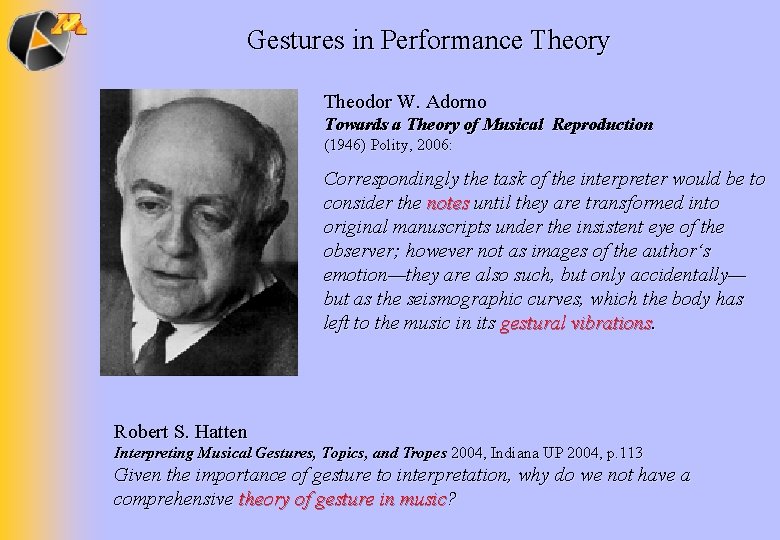
Gestures in Performance Theory Theodor W. Adorno Towards a Theory of Musical Reproduction (1946) Polity, 2006: Correspondingly the task of the interpreter would be to consider the notes until they are transformed into original manuscripts under the insistent eye of the observer; however not as images of the author‘s emotion—they are also such, but only accidentally— but as the seismographic curves, which the body has left to the music in its gestural vibrations. Robert S. Hatten Interpreting Musical Gestures, Topics, and Tropes 2004, Indiana UP 2004, p. 113 Given the importance of gesture to interpretation, why do we not have a comprehensive theory of gesture in music?
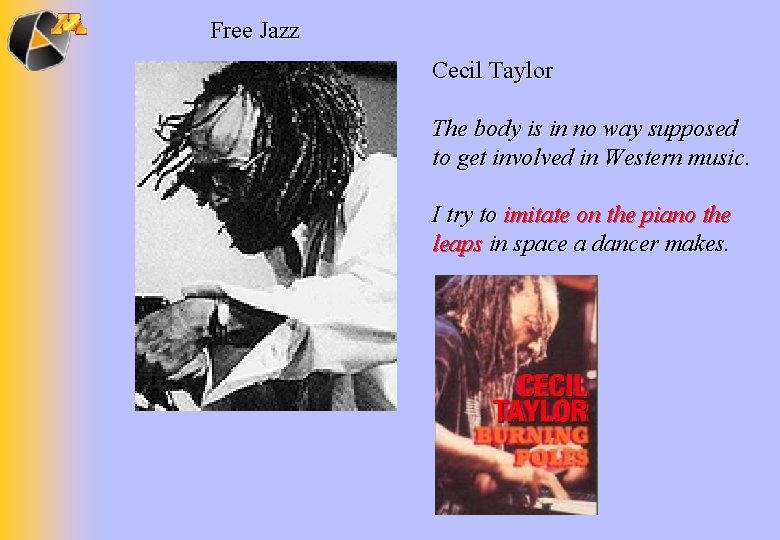
Free Jazz Cecil Taylor The body is in no way supposed to get involved in Western music I try to imitate on the piano the leaps in space a dancer makes.
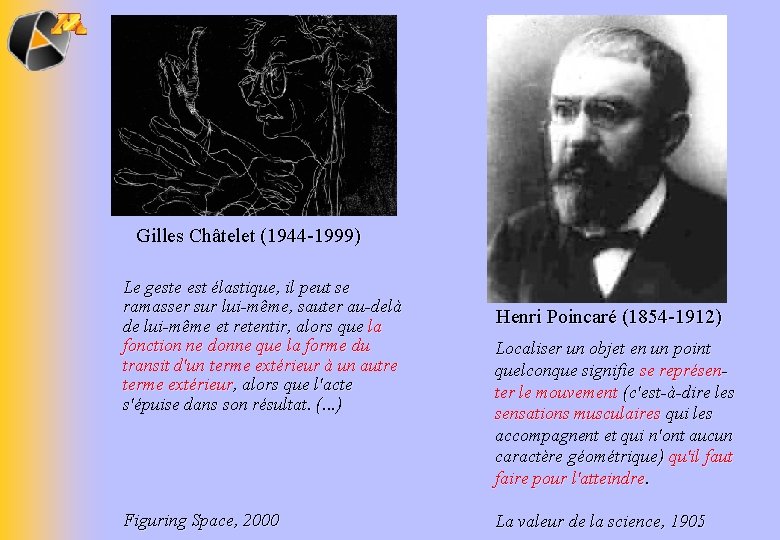
Gilles Châtelet (1944 -1999) Le geste est élastique, il peut se ramasser sur lui-même, sauter au-delà de lui-même et retentir, alors que la fonction ne donne que la forme du transit d'un terme extérieur à un autre terme extérieur, alors que l'acte s'épuise dans son résultat. (. . . ) Figuring Space, 2000 Henri Poincaré (1854 -1912) Localiser un objet en un point quelconque signifie se représenter le mouvement (c'est-à-dire les sensations musculaires qui les accompagnent et qui n'ont aucun caractère géométrique) qu'il faut faire pour l'atteindre. La valeur de la science, 1905
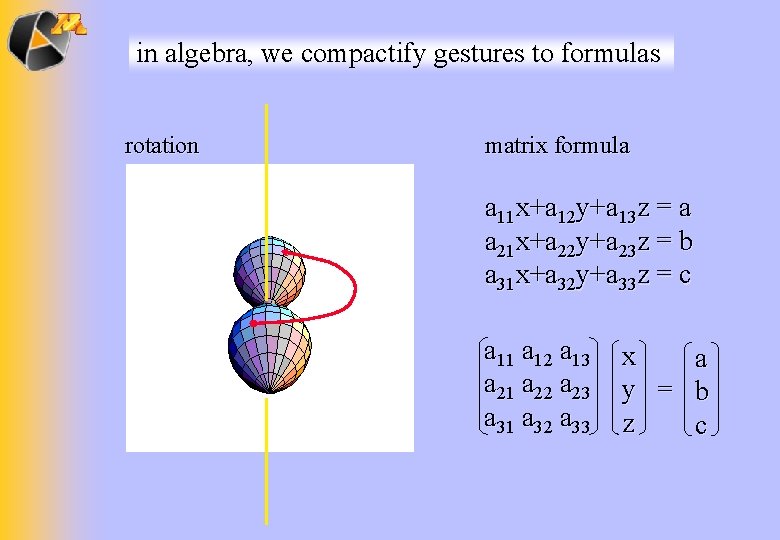
in algebra, we compactify gestures to formulas rotation matrix formula a 11 x+a 12 y+a 13 z = a a 21 x+a 22 y+a 23 z = b a 31 x+a 32 y+a 33 z = c a 11 a 12 a 13 a 21 a 22 a 23 a 31 a 32 a 33 x a y = b z c
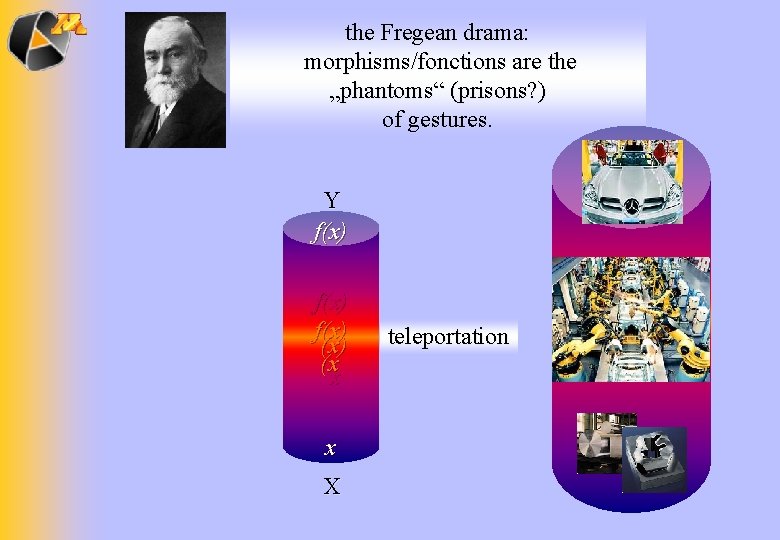
the Fregean drama: morphisms/fonctions are the „phantoms“ (prisons? ) of gestures. Y f(x) (x x x X teleportation
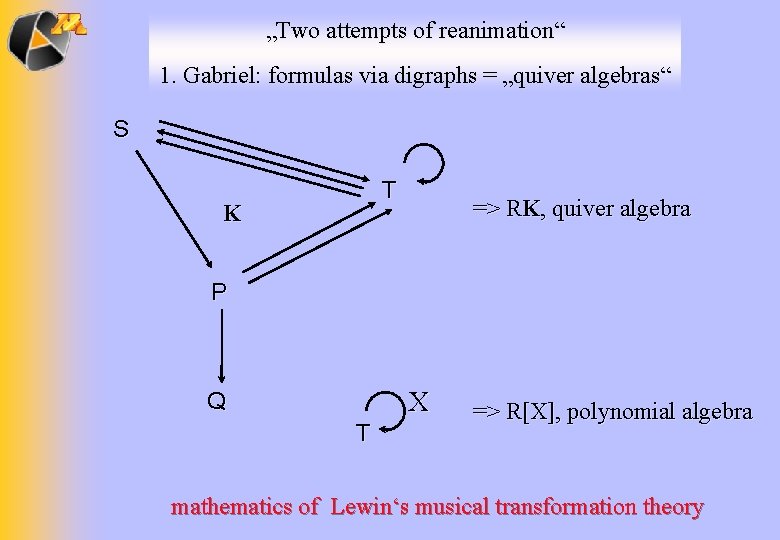
„Two attempts of reanimation“ 1. Gabriel: formulas via digraphs = „quiver algebras“ S T K => RK, quiver algebra P X Q T => R[X], polynomial algebra mathematics of Lewin‘s musical transformation theory
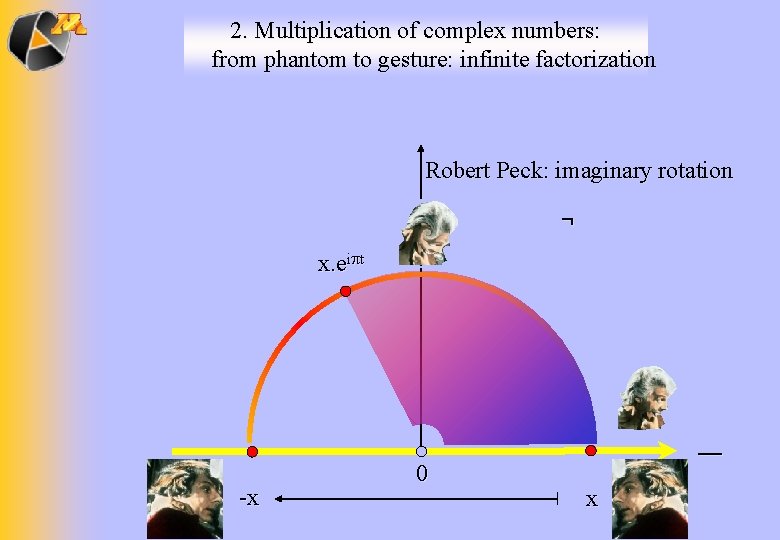
2. Multiplication of complex numbers: from phantom to gesture: infinite factorization Robert Peck: imaginary rotation ¬ x. ei t -x 0 — x
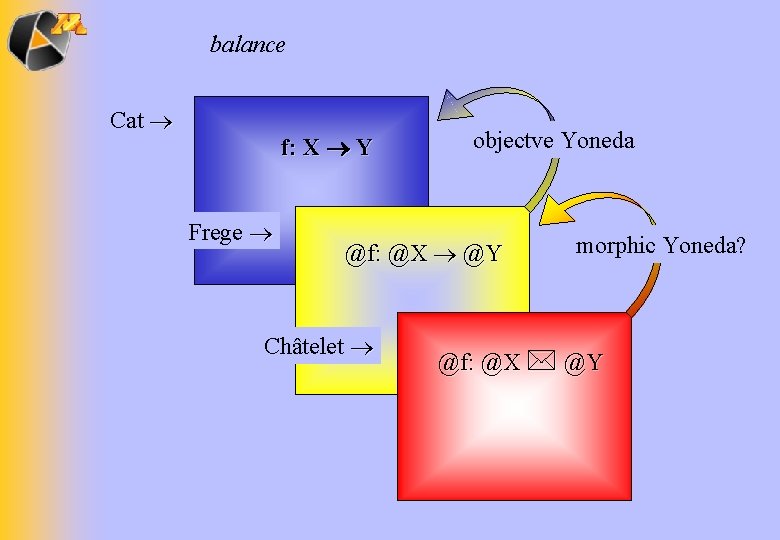
balance Cat f: X Y Frege objectve Yoneda @f: @X @Y Châtelet morphic Yoneda? @f: @X @Y
Journal of Mathematics and Music 2007, 2009 Taylor & Francis MCM Proceedings 2011 Springer
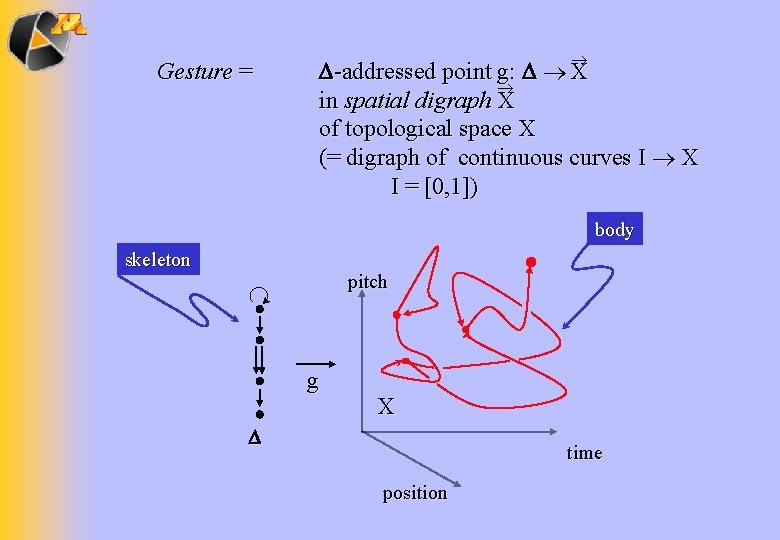
Gesture = -addressed point g: X in spatial digraph X of topological space X (= digraph of continuous curves I X I = [0, 1]) body skeleton pitch g X time position
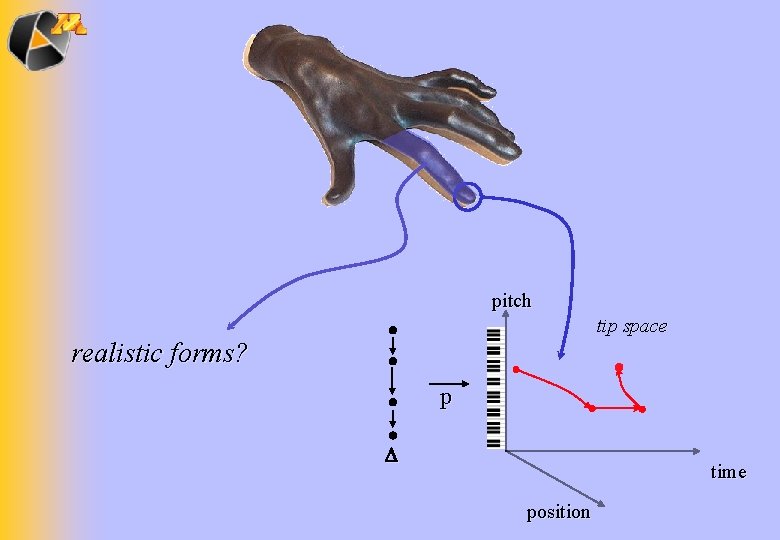
pitch tip space realistic forms? p time position
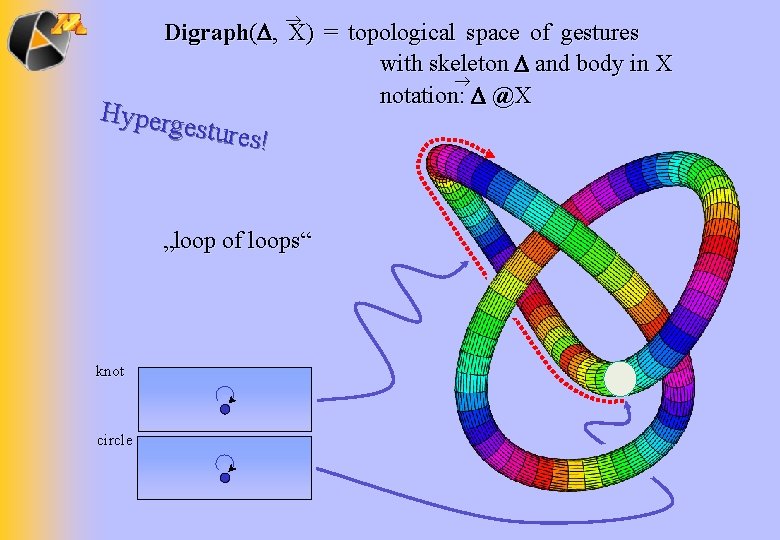
Digraph( , X) = topological space of gestures with skeleton and body in X notation: @X Hyperg estures! „loop of loops“ knot circle
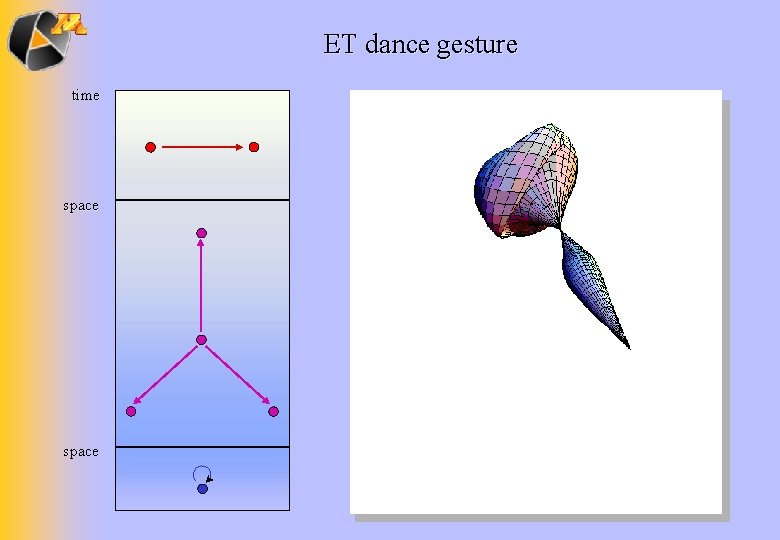
ET dance gesture time space
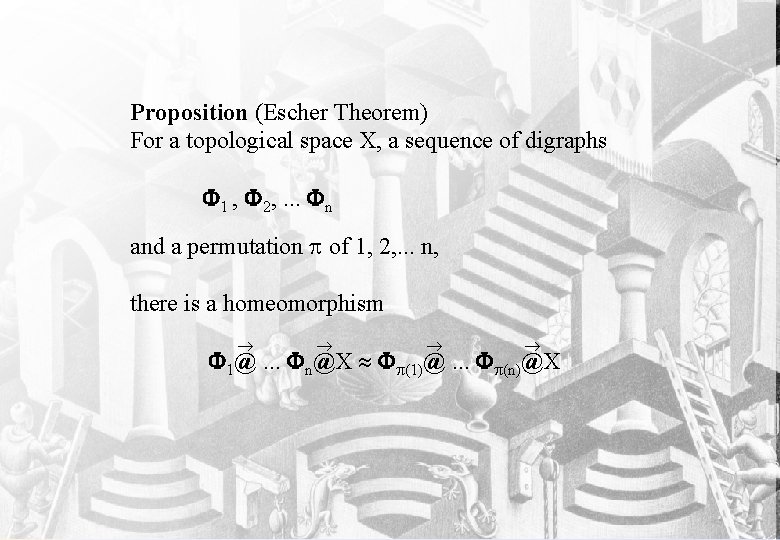
Proposition (Escher Theorem) For a topological space X, a sequence of digraphs 1 , 2, . . . n and a permutation of 1, 2, . . . n, there is a homeomorphism 1@. . . n@X (1)@. . . (n)@X
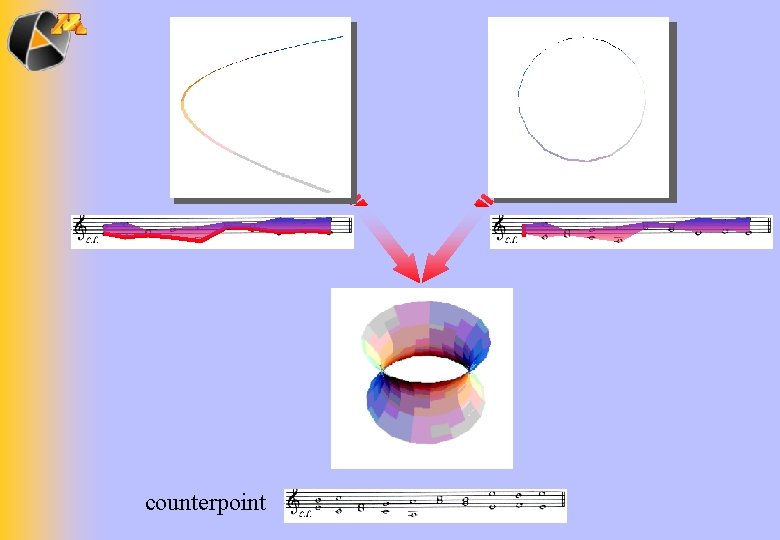
counterpoint
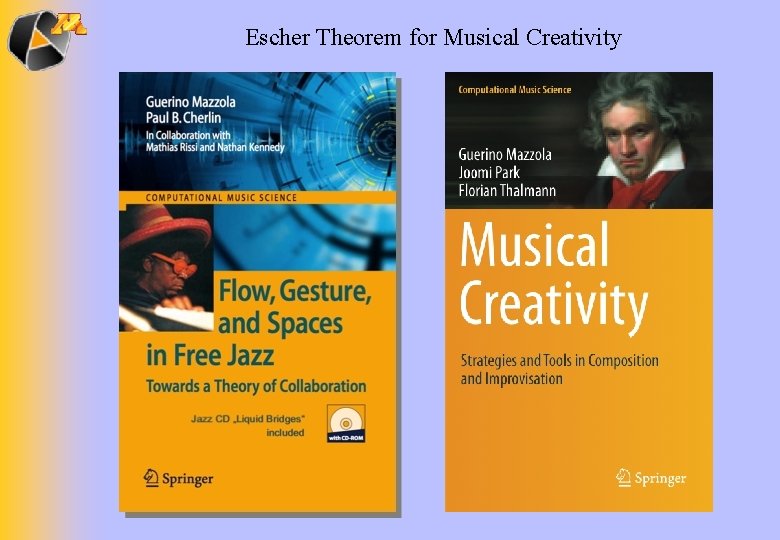
Escher Theorem for Musical Creativity
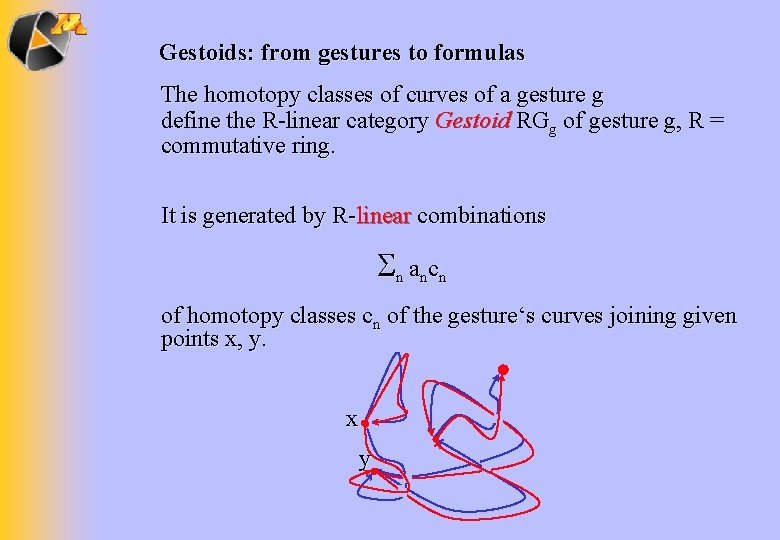
Gestoids: from gestures to formulas The homotopy classes of curves of a gesture g define the R-linear category Gestoid RGg of gesture g, R = commutative ring. It is generated by R-linear combinations n ancn of homotopy classes cn of the gesture‘s curves joining given points x, y. x y
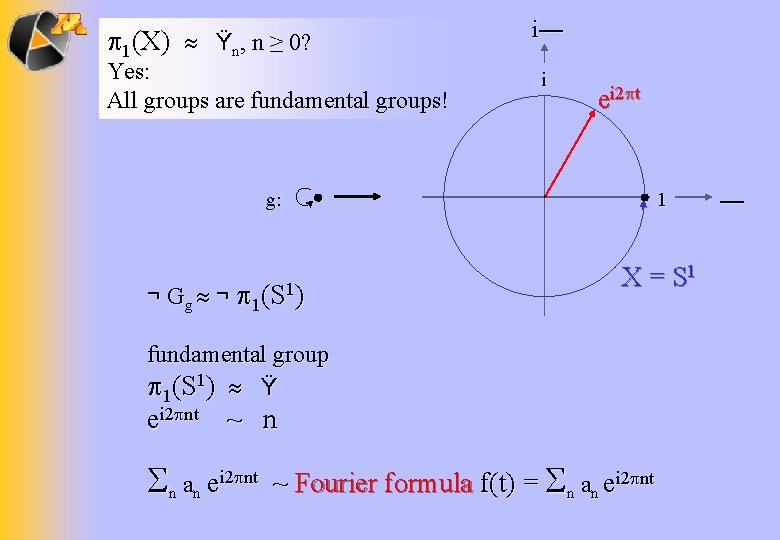
1(X) Ÿn, n ≥ 0? Yes: All groups are fundamental groups! g: ¬ Gg ¬ 1(S 1) i— i ei 2 t 1 X = S 1 fundamental group 1(S 1) Ÿ ei 2 nt ~ n i 2 nt ~ a e Fourier formula f(t) = a e n n —
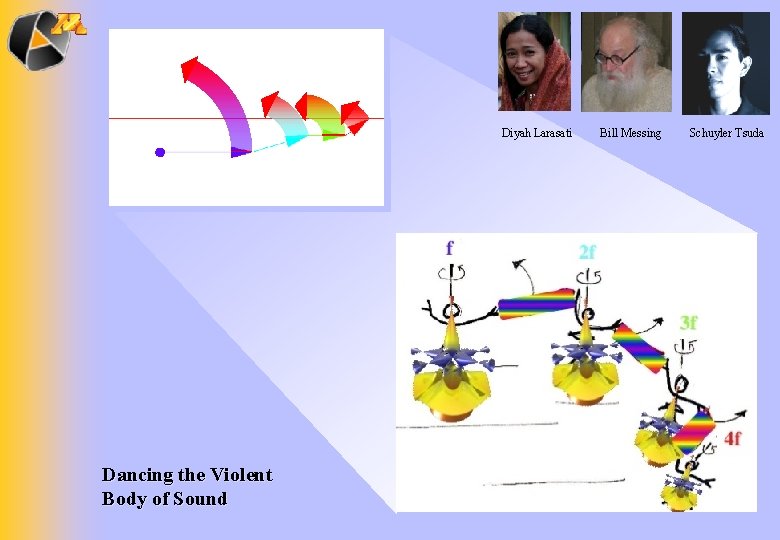
Diyah Larasati Dancing the Violent Body of Sound Bill Messing Schuyler Tsuda
How can we „gestify“ formulas? Category [f] of factorizations of morphism f in C: objects morphisms X u f W v a g v Y Z W b Y If C is topological, then [f] is canonically a topological category
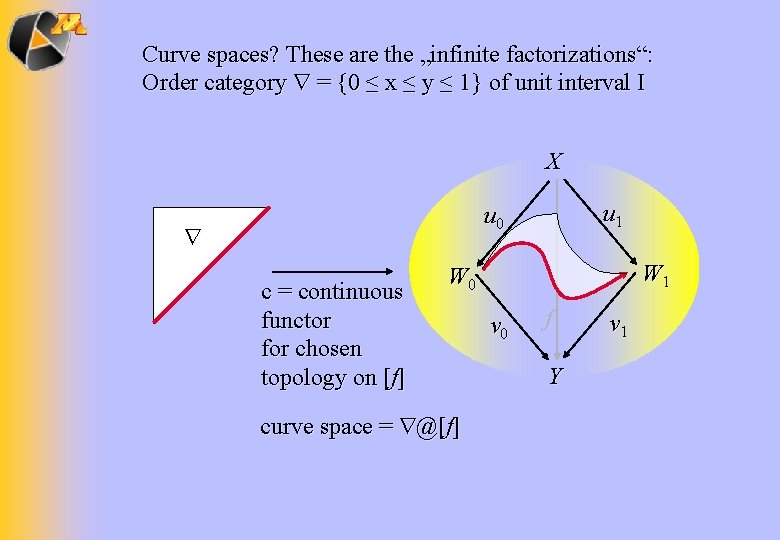
Curve spaces? These are the „infinite factorizations“: Order category = {0 ≤ x ≤ y ≤ 1} of unit interval I X u 1 u 0 c = continuous functor for chosen topology on [f] W 1 W 0 curve space = @[f] v 0 f Y v 1
Gestures ? • spatial digraph f = @[f] : c ~> c(0), c(1) A -gesture in f is a -addressed point g: f X g f Y Gest[f] = Digraph / f X Y = Gest[f] ∏ X@Y Y Z X Y X Z
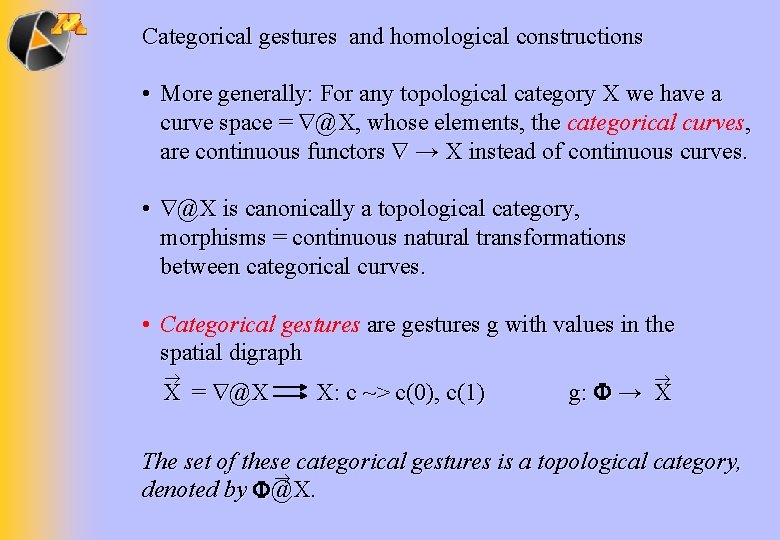
Categorical gestures and homological constructions • More generally: For any topological category X we have a curve space = @X, whose elements, the categorical curves, @X, whose elements, the are continuous functors → X instead of continuous curves. • @X is canonically a topological category, morphisms = continuous natural transformations between categorical curves. • Categorical gestures are gestures g with values in the spatial digraph X = @X X: c ~> c(0), c(1) g: → X The set of these categorical gestures is a topological category, denoted by @X.
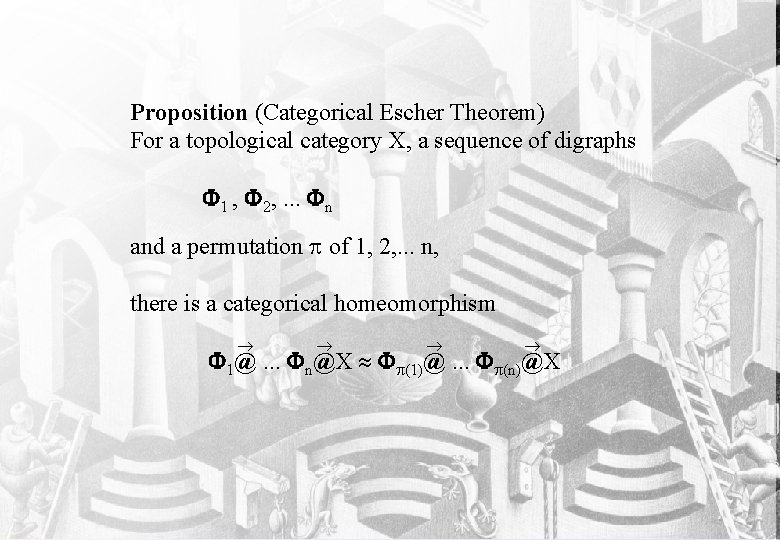
Proposition (Categorical Escher Theorem) For a topological category X, a sequence of digraphs 1 , 2, . . . n and a permutation of 1, 2, . . . n, there is a categorical homeomorphism 1@. . . n@X (1)@. . . (n)@X
Two homological constructions for categorical gestures: 1. Extension modules. In loc. cit. we have shown that gestures in factorization categories [f] in RMod can be used to define the classical extension modules Extn(W, Z) for R-modules W, Z. loc. cit.
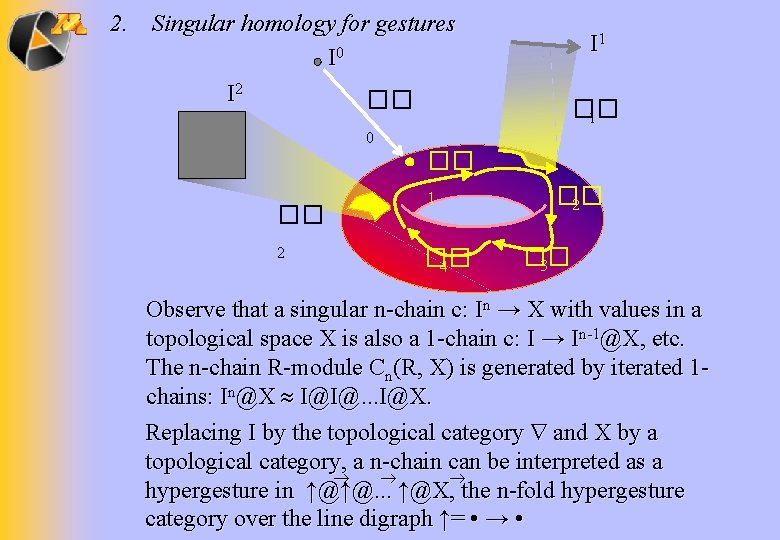
2. Singular homology for gestures I 0 I 2 �� 0 �� 1 �� 2 �� 4 I 1 �� 2 �� 3 Observe that a singular n-chain c: In → X with values in a topological space X is also a 1 -chain c: I → In-1@X, etc. The n-chain R-module Cn(R, X) is generated by iterated 1 chains: In@X I@I@. . . I@X. Replacing I by the topological category and X by a topological category, a n-chain can be interpreted as a hypergesture in ↑@↑@. . . ↑@X, the n-fold hypergesture category over the line digraph ↑= • → •
Using the Escher Theorem, we have boundary homomorphisms ∂n: Cn(X. *) → Cn-1(X. *) for any sequence * of digraphs, generalizing ↑↑. . . ↑, and ∂2 = 0, whence homology modules Hn = Ker(∂n)/Im(∂n+1).