
Formula SAE Flow Testing Device Team members Keith
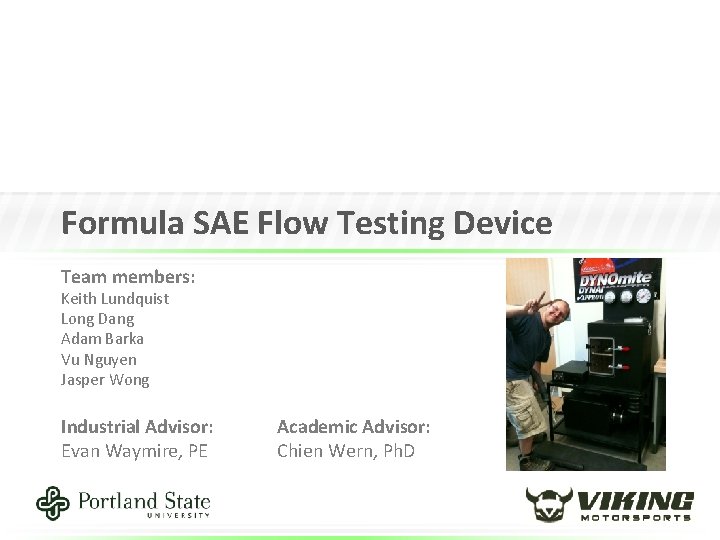
Formula SAE Flow Testing Device Team members: Keith Lundquist Long Dang Adam Barka Vu Nguyen Jasper Wong Industrial Advisor: Evan Waymire, PE Academic Advisor: Chien Wern, Ph. D
Outline 1. Introduction Background – Need – Mission Statement 2. 3. 4. 5. 6. 7. Design Requirements Top Level Design Analysis Final Design and Prototype Verification Conclusion
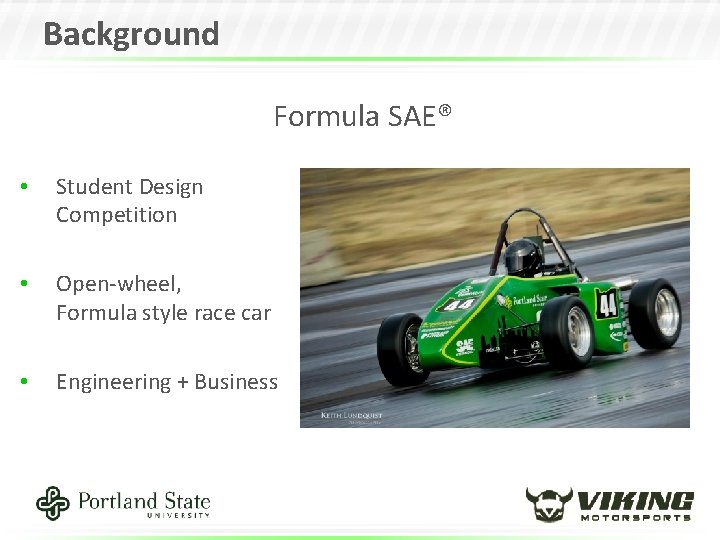
Background Formula SAE® • Student Design Competition • Open-wheel, Formula style race car • Engineering + Business
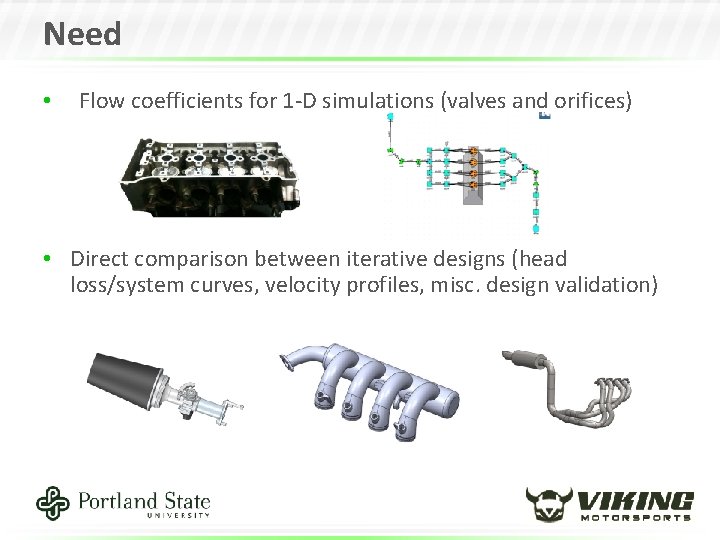
Need • Flow coefficients for 1 -D simulations (valves and orifices) • Direct comparison between iterative designs (head loss/system curves, velocity profiles, misc. design validation)
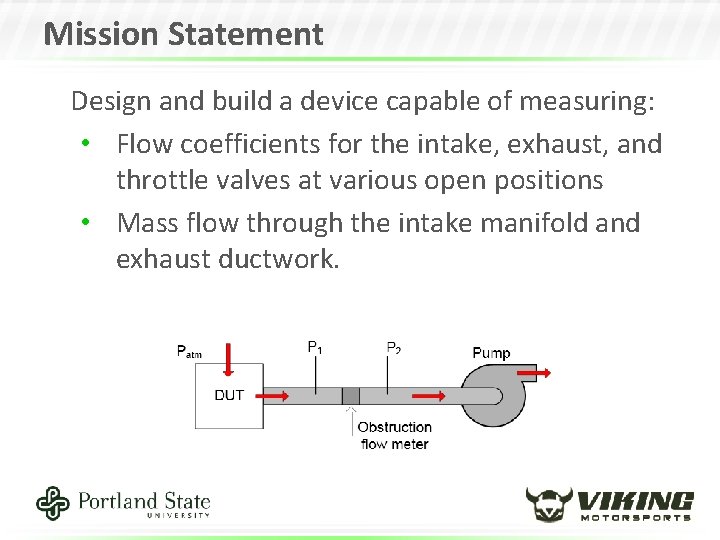
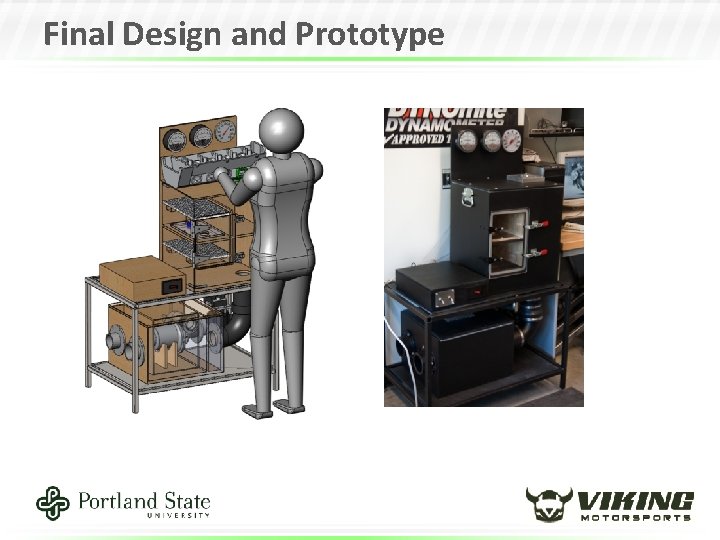
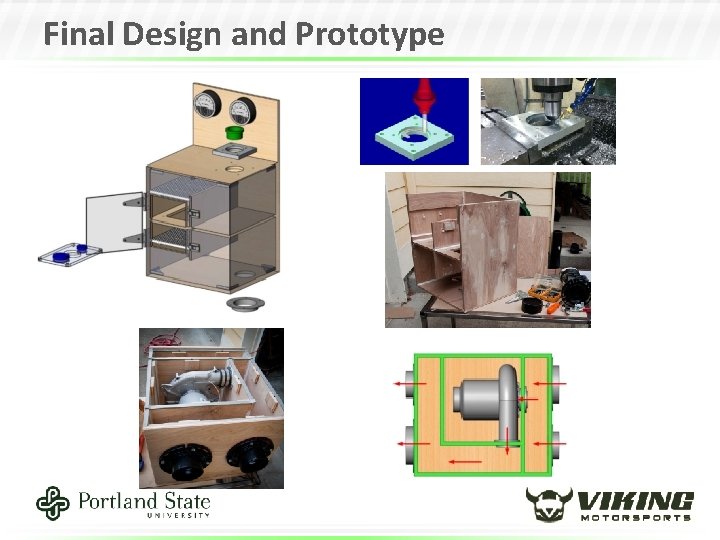
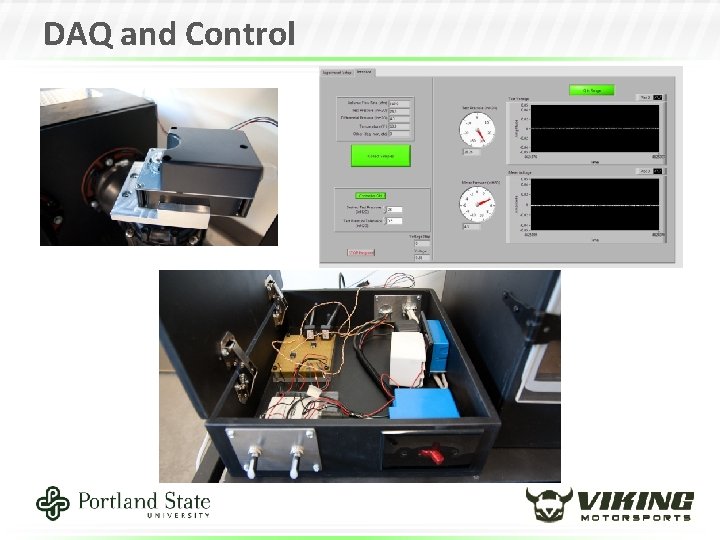
Mission Statement Design and build a device capable of measuring: • Flow coefficients for the intake, exhaust, and throttle valves at various open positions • Mass flow through the intake manifold and exhaust ductwork.
Design Requirements • Capacity 160 cfm @ 28 in. H 2 O • Repeatability +/- 5% • Manufacturability In-house • Cost $1, 500 • Noise level < 95 d. B • Easy to use, maintain, and upgrade
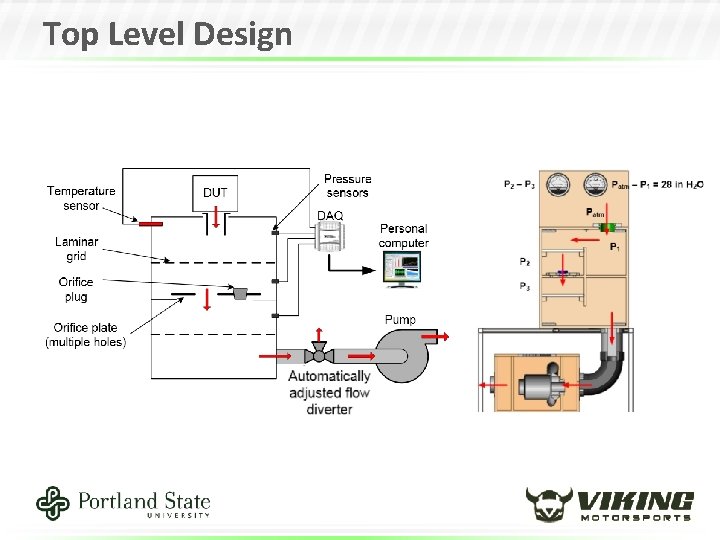
Top Level Design
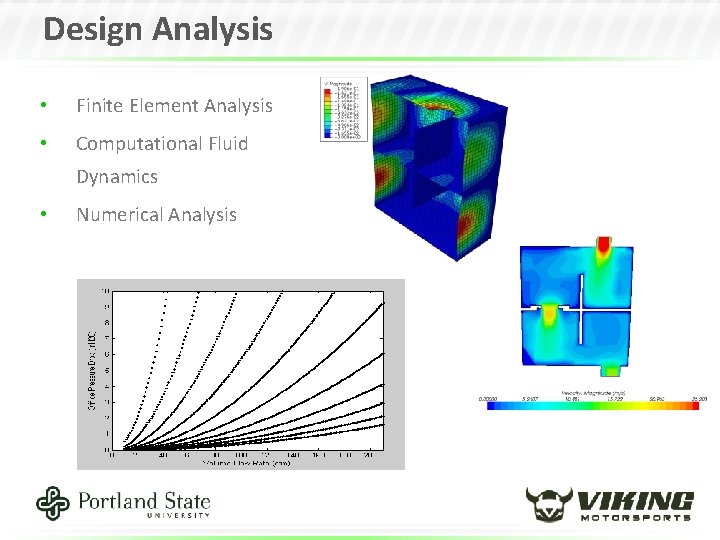
Design Analysis • Finite Element Analysis • Computational Fluid Dynamics • Numerical Analysis
Final Design and Prototype
Final Design and Prototype
DAQ and Control
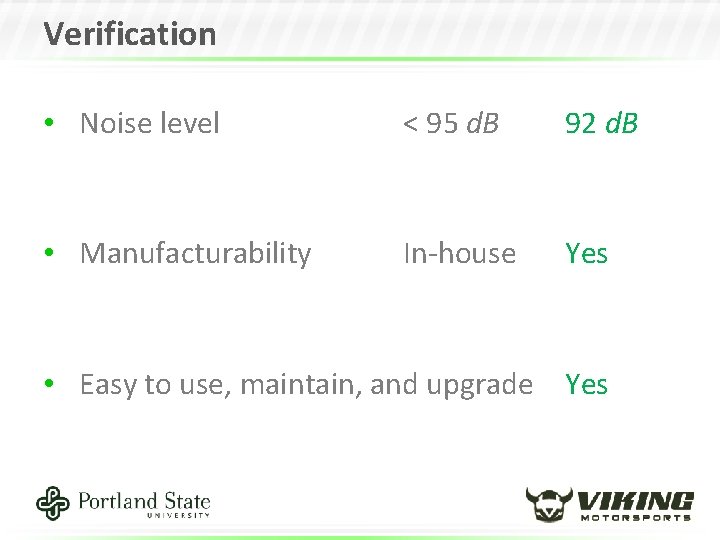
Verification • Noise level < 95 d. B 92 d. B • Manufacturability In-house Yes • Easy to use, maintain, and upgrade Yes
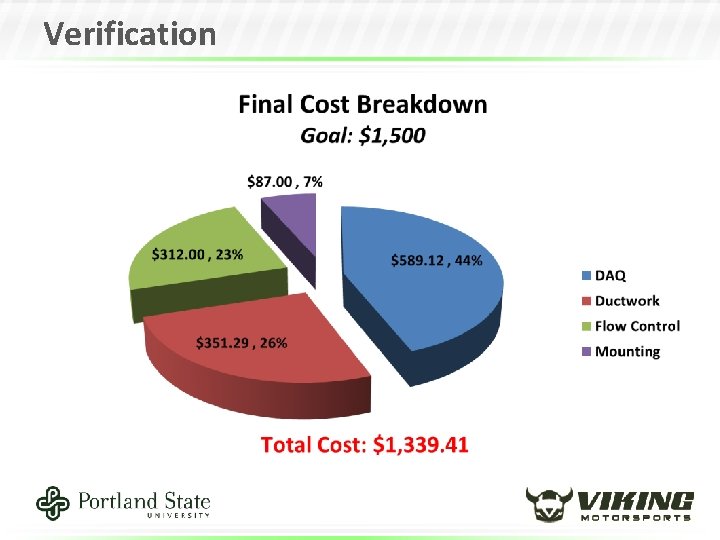
Verification
Verification • Volume flow rate capacity 81 cfm @ 28 in. H 2 O • Air box losses much higher than analysis predicts • Possibility of leakage Ø Easy to modify/upgrade (modular design) • Repeatability has not been verified Ø Calibration equipment in transit
Conclusion ü A complete prototype flow testing device has been designed and manufactured. ü Further testing will be completed by VMS and Capstone team members. ü Lessons learned • • Engineering design process Design for manufacturing Teamwork Time and budget constraints
Questions?
- Slides: 16