
FORMS OF GOVERNMENT WHAT IS A GOVERNMENT Make
- Slides: 38
FORMS OF GOVERNMENT
WHAT IS A GOVERNMENT? � Make and enforce decisions that affect conduct within the group � The governing body of a nation, state, or community. � The system by which a nation, state, or community is governed
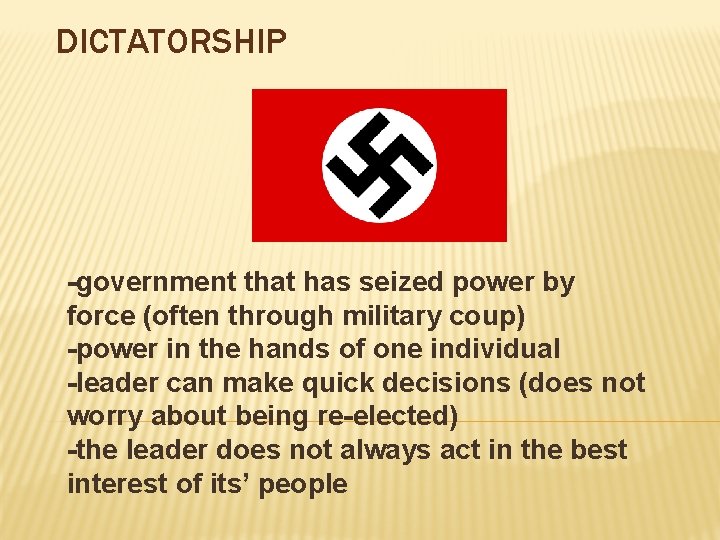
DICTATORSHIP -government that has seized power by force (often through military coup) -power in the hands of one individual -leader can make quick decisions (does not worry about being re-elected) -the leader does not always act in the best interest of its’ people
DRAWBACKS Limited individual rights � Usually dependent on support of military � No debate or discussion � Dependent on single individual � No free press; no opposition parties � People’s opinions are ignored � Any laws can be created � Ideas are limited to one person �
BENEFITS Organized and controlled � Efficient (sometimes ruthlessly so) � No public protests, riots � United (people may be loyal since there is no competition) �
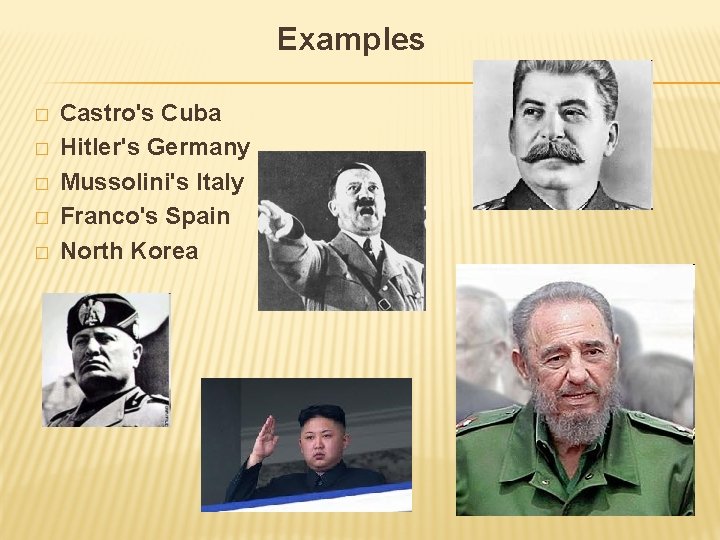
Examples � � � Castro's Cuba Hitler's Germany Mussolini's Italy Franco's Spain North Korea
MONARCHY -government by a single ruler (king/queen, emperor) � -inherited power � -decision-making is mostly by the ruler rather than the people � -no protection for the people for corrupt rulers �
Note: There are 2 types of monarchies: � Constitutional Monarchy: The ruler is the head of state but his/her power is symbolic. The parliament/prime minister makes/administers decisions for the country. (Canada) � Traditional Monarchy: The ruler is the head of state and makes all the decisions for his/her state.
DRAWBACKS No criteria (other than birth) for ruling � Expensive (pomp and ceremony) � Removed from everyday experiences � Lack of choice for people � Not representative of all society/community �
BENEFITS Stable � Controlled � Traditional � Unifying �
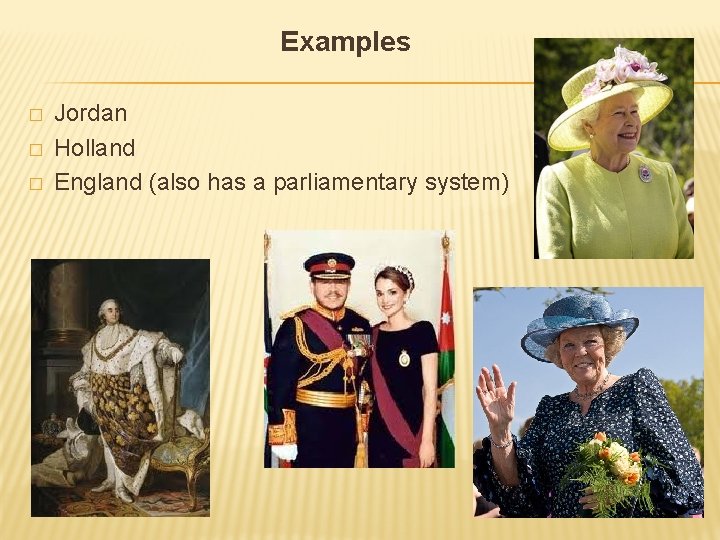
Examples � � � Jordan Holland England (also has a parliamentary system)
OLIGARCHY Government by few persons � These people could be distinguished by royalty, wealth, family ties, education, corporate, or military control �
DRAWBACKS Limited access to power � Limited rights for people � Questionable transition of power � Needs of the lower classes are often ignored � � Similar to dictatorship
BENEFITS Stable � Organized � Controlled � decision-making can be quick � in theory, intelligent people � all members work together �
EXAMPLES Military juntas (government led by military leaders) � Family compact (Upper Canada pre-1837) � Chateau Clique (Lower Canada pre-1837) �
ARISTOCRACY � A government in which power is vested in a minority consisting of those believed to be best qualified (privileged upper class)
DRAWBACKS Restricted criteria for rule (most often birth in a particular social group) � Rule by a limited small group � � Limited individual rights
BENEFITS Organized � Controlled � Efficient �
Examples Pre - 1215 England � Pre - 1870 Germany �
REPRESENTATIVE DEMOCRACY “Government of the people, by the people, for the people” (Abraham Lincoln) � -decision-making is by elected representatives �
DRAWBACKS Takes more time to make decisions � More costly � Elected Representatives may not support/like the prime minister �
BENEFITS Protects individual rights � Input from many sources into government decisions � People are the government � Peoples voices are heard � Elected representatives understand they need to be re-elected � � Diverse representatives
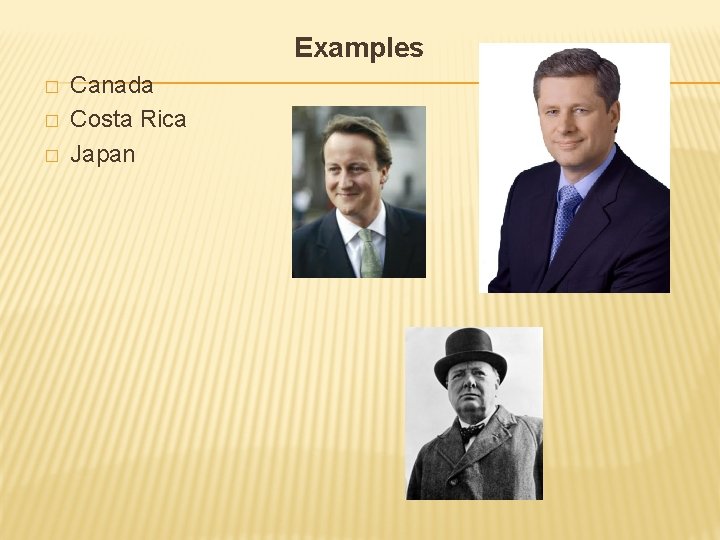
Examples � � � Canada Costa Rica Japan
THEOCRACY Government by God � government by religious leaders � religious laws may replace modern laws �
DRAWBACKS Can lead to conflict � Minorities are ignored � Extremism: not in accordance with religious doctrine �
BENEFITS Similar ideas � Traditions are upheld � Leader is usually adored �
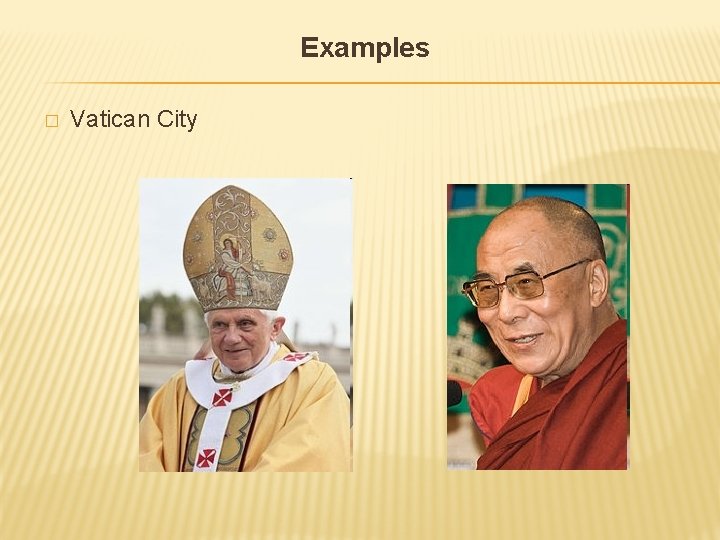
Examples � Vatican City
ANARCHY � absence of any political authority (government) � political disorder and confusion
DRAWBACKS � Standard of living drops Political disorder � lawless �
BENEFITS � people do not have to disagree or dislike the government (they are on their own)
EXAMPLES French Revolution 1789– 1799 � Somalia since 1991 �
COMMUNISM government owns everything and is shared equally � state plans and controls economy � distribution of all goods is controlled by the government � in theory, everyone is equal (classless society) �
DRAWBACKS possibility of corruption � no individuality �
BENEFITS equal � similar ideals � all resources/property are shared equally �
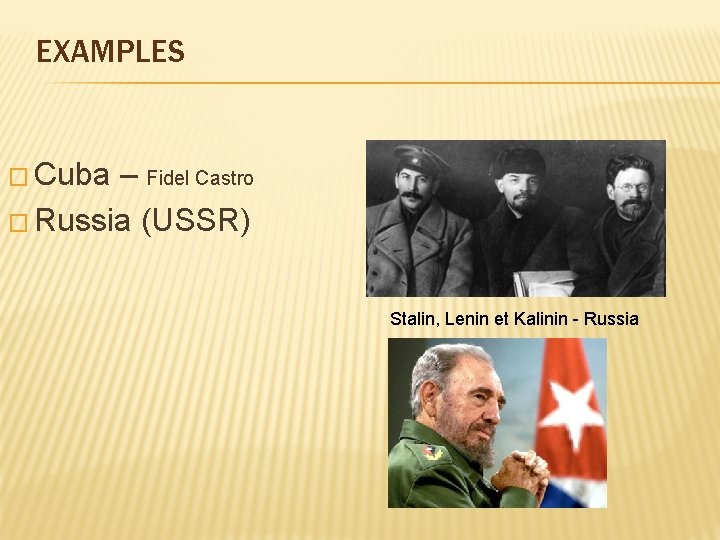
EXAMPLES � Cuba – Fidel Castro � Russia (USSR) Stalin, Lenin et Kalinin - Russia
COMMUNIST SMURFS? ? � http: //www. youtube. com/watch? v=Qra 0 hl. O 6 h. Zk&feature=related
NOTE: � A country can exist under more than one category. Canada is both an example of a monarchy (technically a constitutional monarchy) as well as a democracy.
� Ex of Communism: You have two cows. The government takes both and gives you some milk. � Example of Democracy: Everyone has two cows. Each vote and what the majority decides, you must take.