
Forms of Energy Light Energy Heat Energy Draw
- Slides: 33
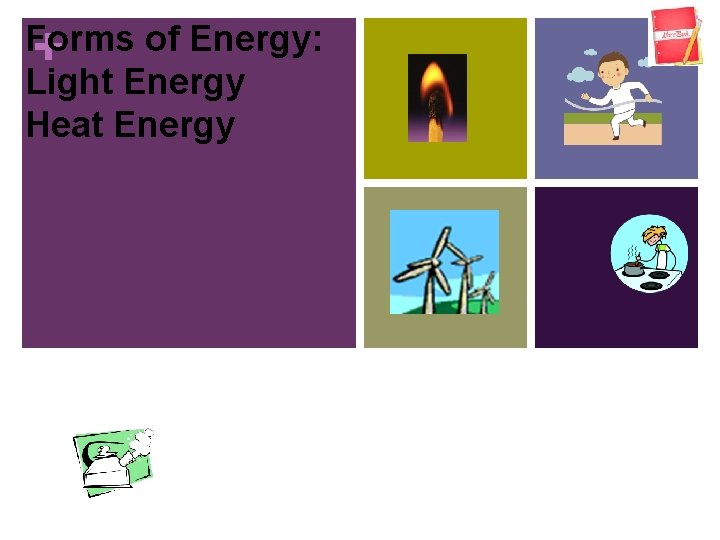
Forms of Energy: + Light Energy Heat Energy
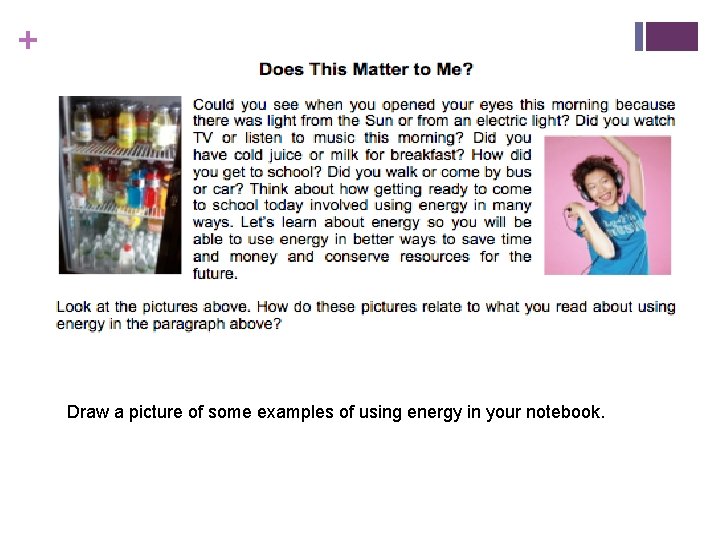
+ Draw a picture of some examples of using energy in your notebook.
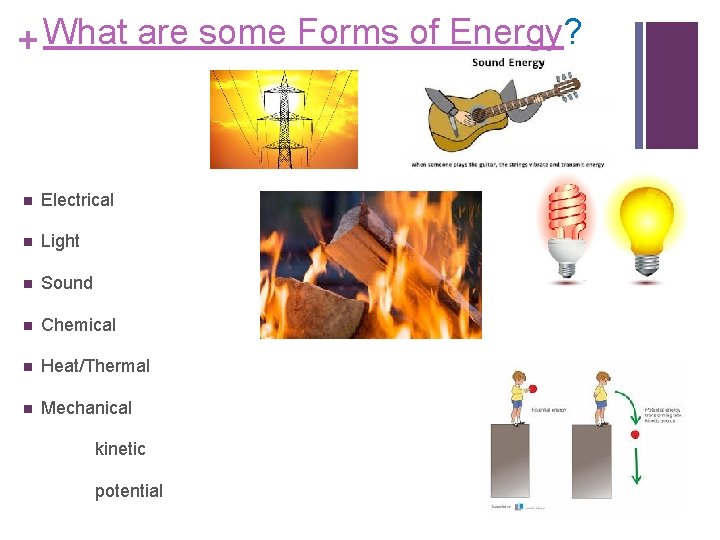
+ What are some Forms of Energy? n Electrical n Light n Sound n Chemical n Heat/Thermal n Mechanical kinetic potential
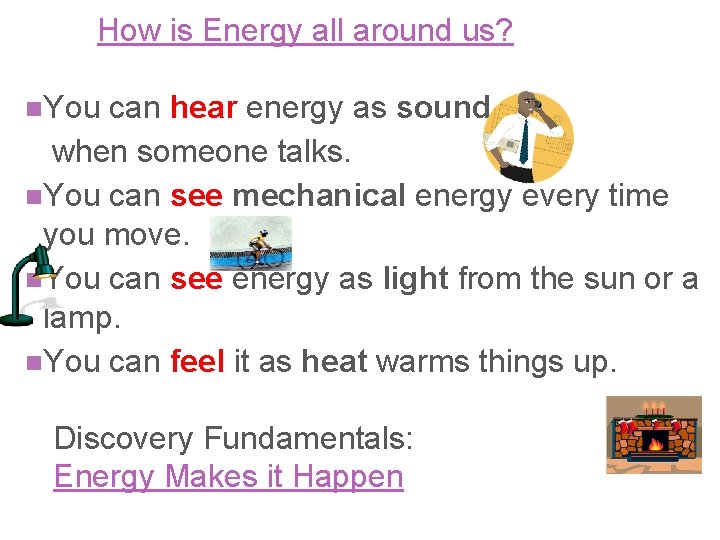
How is Energy all around us? n. You can hear energy as sound when someone talks. n. You can see mechanical energy every time you move. n. You can see energy as light from the sun or a lamp. n. You can feel it as heat warms things up. Discovery Fundamentals: Energy Makes it Happen
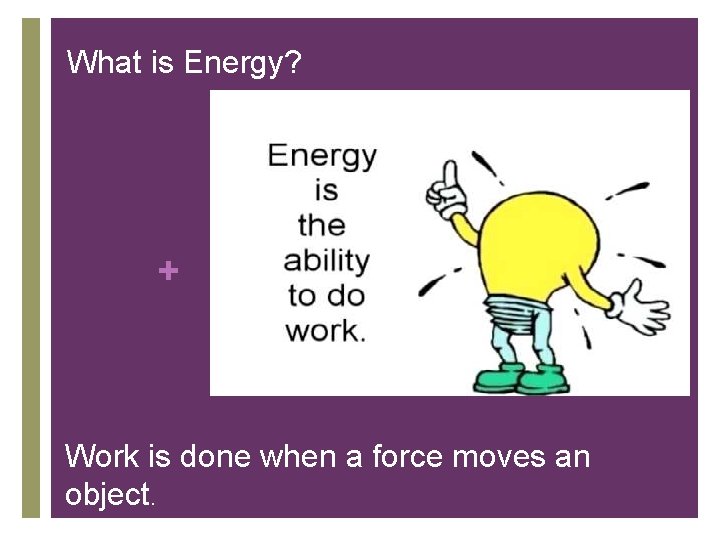
What is Energy? + Work is done when a force moves an object.
+ n. Energy : n. Has the ability to cause motion n. Example: electrical energy is needed to start car engine n. Can cause changes in matter n. Example: plants use the energy in sunlight for food.
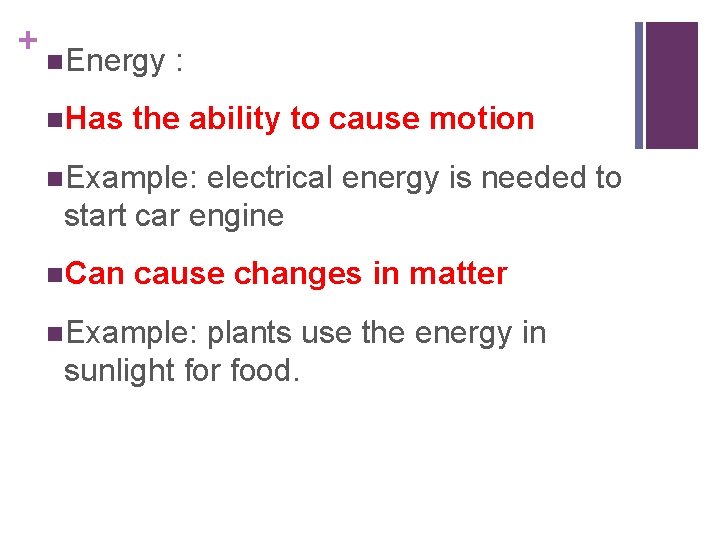
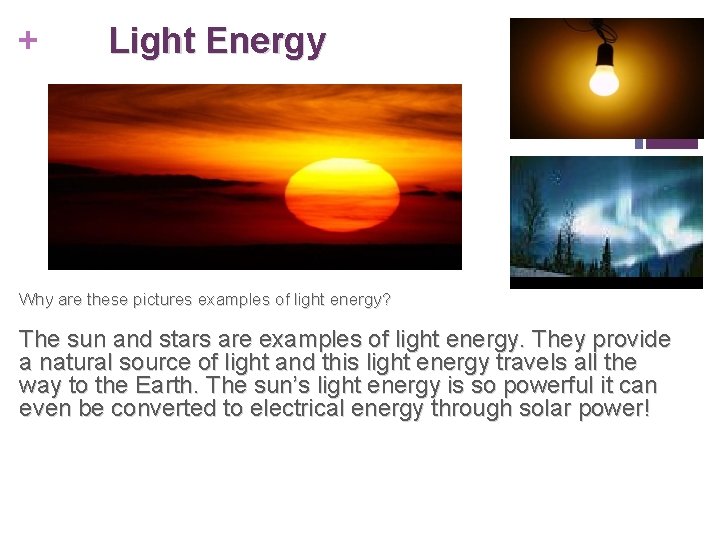
+ Light Energy Why are these pictures examples of light energy? The sun and stars are examples of light energy. They provide a natural source of light and this light energy travels all the way to the Earth. The sun’s light energy is so powerful it can even be converted to electrical energy through solar power!
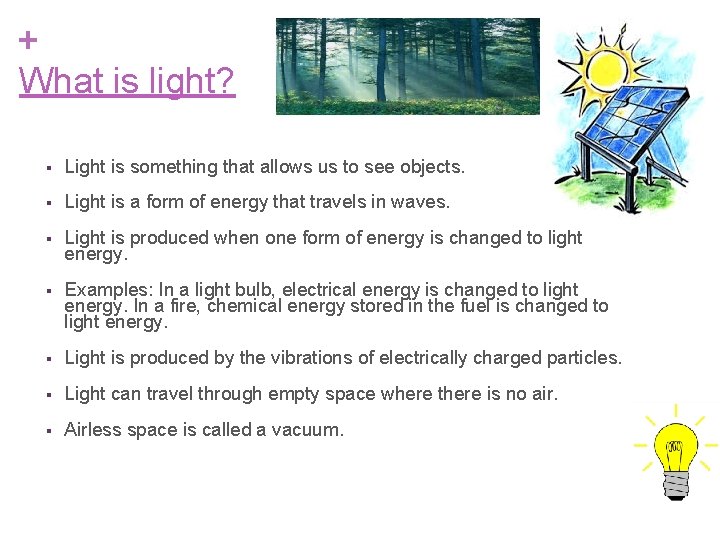
+ What is light? § Light is something that allows us to see objects. § Light is a form of energy that travels in waves. § Light is produced when one form of energy is changed to light energy. § Examples: In a light bulb, electrical energy is changed to light energy. In a fire, chemical energy stored in the fuel is changed to light energy. § Light is produced by the vibrations of electrically charged particles. § Light can travel through empty space where there is no air. § Airless space is called a vacuum.
+ How does light travel? n Light travels in a straight line until it strikes an object or travels from one material to another. n The light we see is part of the electromagnetic spectrum. n The waves have different lengths (some are long while others are short). n We cannot see very long or very short waves. n The only waves we can see are the ones between the very long or very short waves. n Visible light includes all the colors we can see in a rainbow: n Red, orange, yellow, green, blue, indigo, violet
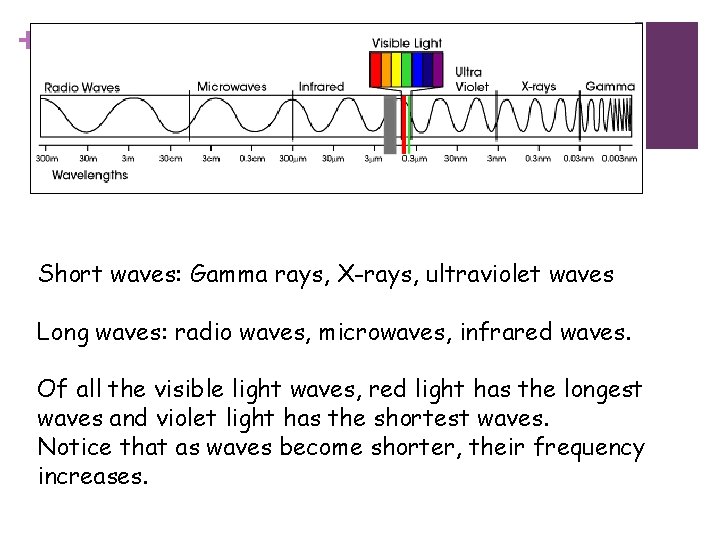
+ Short waves: Gamma rays, X-rays, ultraviolet waves Long waves: radio waves, microwaves, infrared waves. Of all the visible light waves, red light has the longest waves and violet light has the shortest waves. Notice that as waves become shorter, their frequency increases.
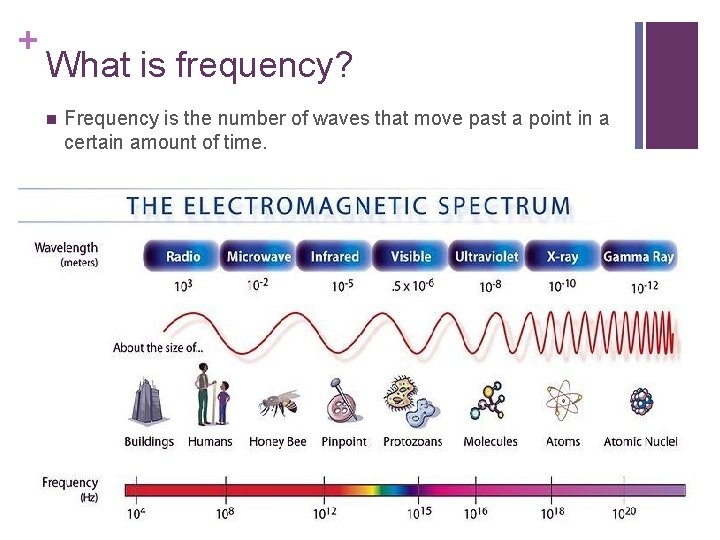
+ What is frequency? n Frequency is the number of waves that move past a point in a certain amount of time.
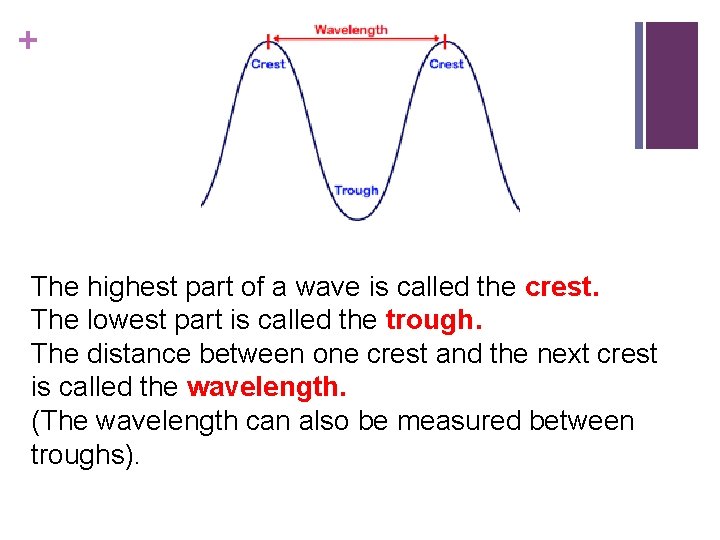
+ The highest part of a wave is called the crest. The lowest part is called the trough. The distance between one crest and the next crest is called the wavelength. (The wavelength can also be measured between troughs).
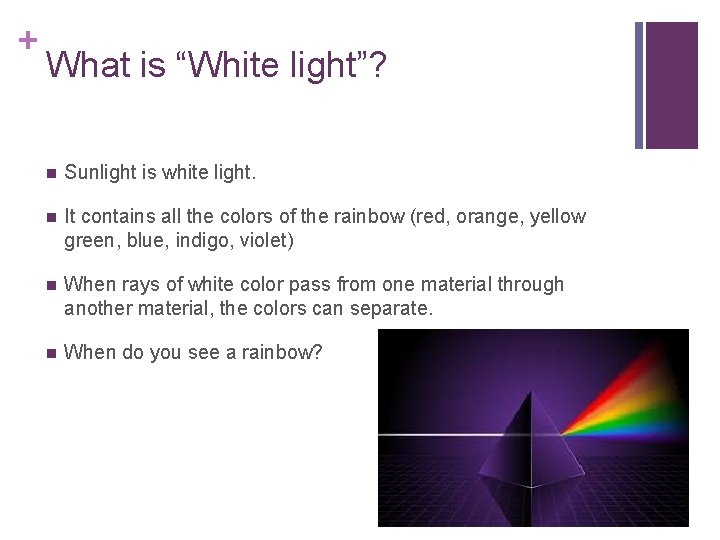
+ What is “White light”? n Sunlight is white light. n It contains all the colors of the rainbow (red, orange, yellow green, blue, indigo, violet) n When rays of white color pass from one material through another material, the colors can separate. n When do you see a rainbow?
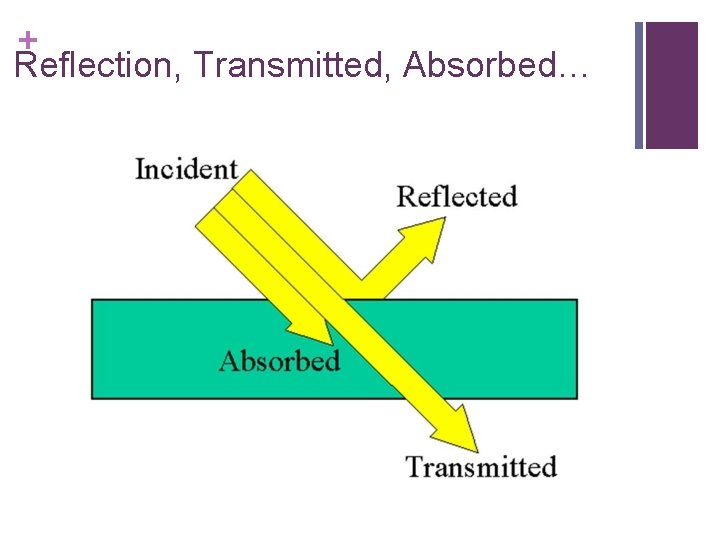
+ Reflection, Transmitted, Absorbed…
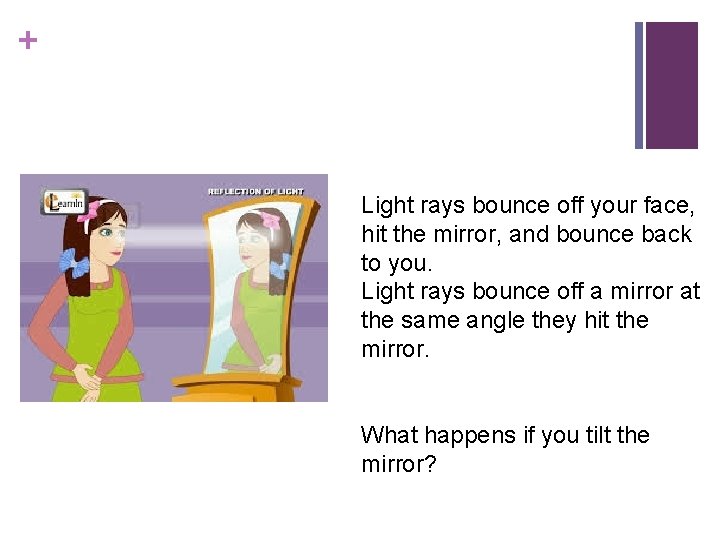
+ Light rays bounce off your face, hit the mirror, and bounce back to you. Light rays bounce off a mirror at the same angle they hit the mirror. What happens if you tilt the mirror?
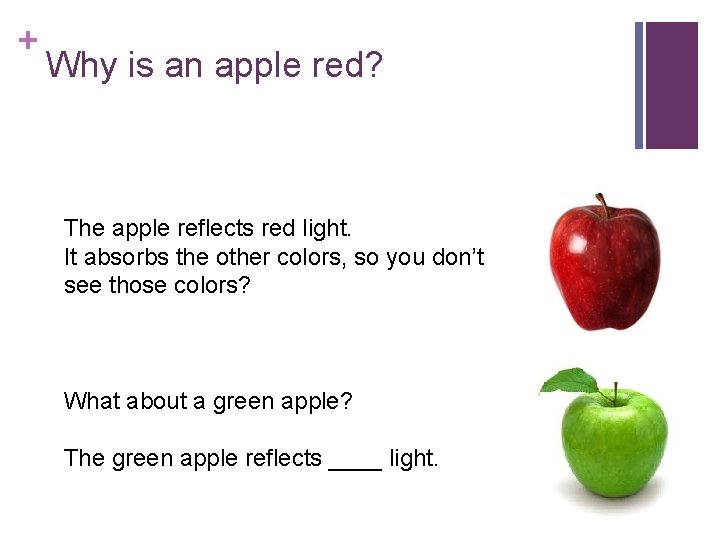
+ Why is an apple red? The apple reflects red light. It absorbs the other colors, so you don’t see those colors? What about a green apple? The green apple reflects ____ light.
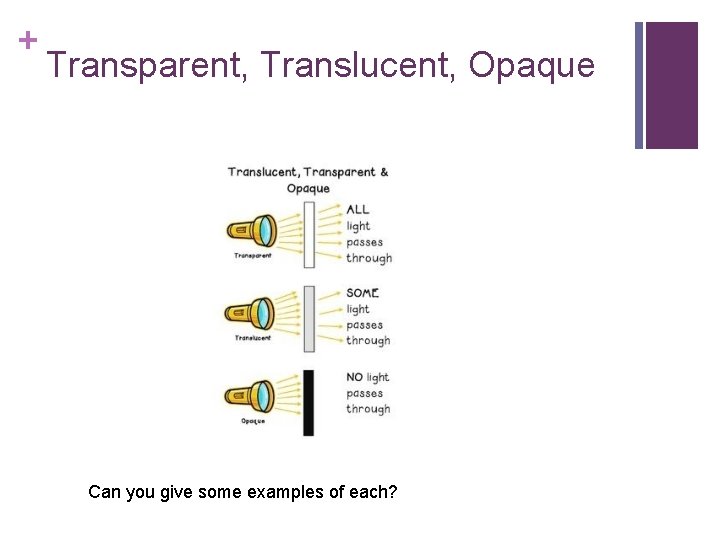
+ Transparent, Translucent, Opaque Can you give some examples of each?
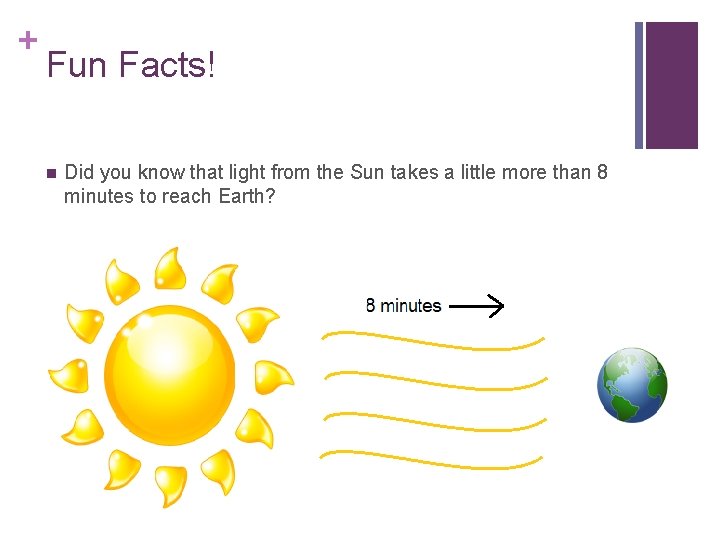
+ Fun Facts! n Did you know that light from the Sun takes a little more than 8 minutes to reach Earth?
+ What are Properties of Light? n Light travels in a straight path. n Light doesn’t travel through all objects (Opaque) n Light can be absorbed and changed to heat. n Light bounces off or is reflected from some kinds of opaque objects. n Some objects let all light pass through them are known as: transparent n Some objects let some light pass through them are known as: translucent
+ Properties of Light Continued Angles of Reflection
+ Bending Light Lab Write down responses on your note page. n Problem: What does light do when it travels from one medium or state of matter (air) through another medium (water)? n Hypothesis: n Test and Observe: Follow steps from the lab sheet. See PSELL Student Book p. 92 -93. n Conclusion:
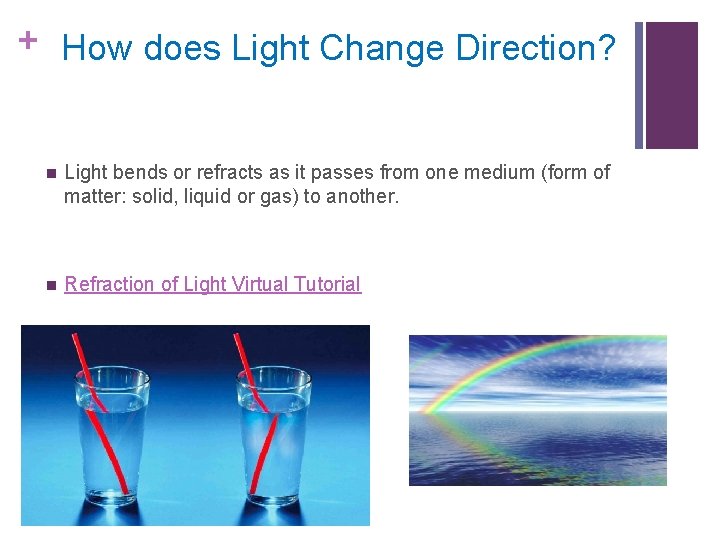
+ How does Light Change Direction? n Light bends or refracts as it passes from one medium (form of matter: solid, liquid or gas) to another. n Refraction of Light Virtual Tutorial
+ Heat Energy n Do you remember? : 1. Everything on Earth and in space is made of _____ and ________ 2. These tiny particles are in constant ______. 3. What are three states of matter? 4. The particles in a gas move _______ and farther apart than the particles in a _____. 5. The particles in a ____ don’t move very far or very fast. That is why they hold their ____.
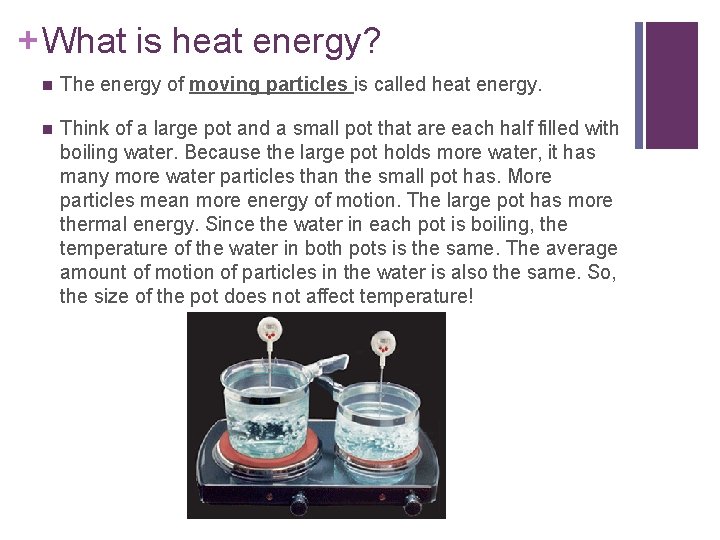
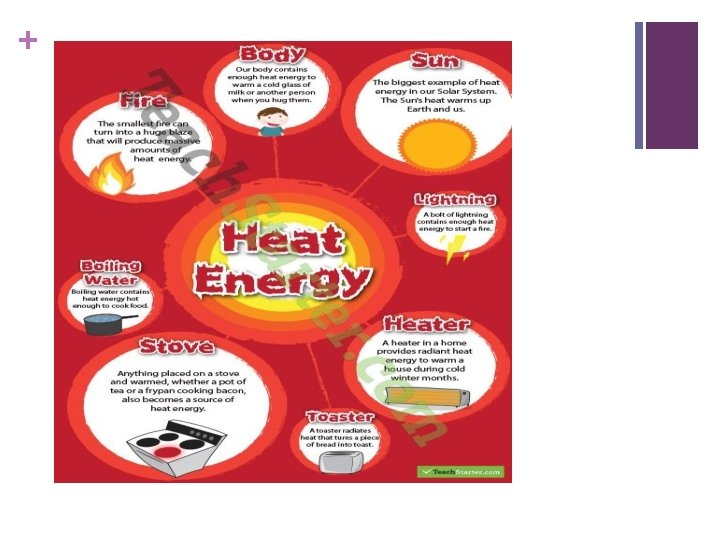
+ What is heat energy? n The energy of moving particles is called heat energy. n Think of a large pot and a small pot that are each half filled with boiling water. Because the large pot holds more water, it has many more water particles than the small pot has. More particles mean more energy of motion. The large pot has more thermal energy. Since the water in each pot is boiling, the temperature of the water in both pots is the same. The average amount of motion of particles in the water is also the same. So, the size of the pot does not affect temperature!
+ Sources of Heat! n Heat energy can be produced in different ways. All of these ways change another form of energy into heat energy. n Burning objects: burning changes the chemical energy stored in gas or fire to heat energy. n Rubbing objects: causes friction and then heat energy Ex: rubbing your hands. The energy of motion to start a fire by spinning a stick and starting campfire n Chemical reactions: some materials give off heat when they are mixed together. Ex: hot pack n Electrical energy: toaster oven, lamp, etc.
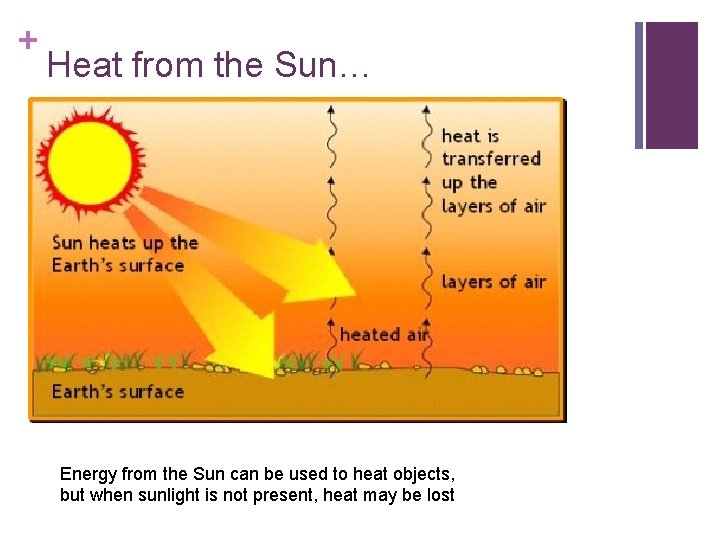
+ Heat from the Sun… Energy from the Sun can be used to heat objects, but when sunlight is not present, heat may be lost
+ Transfer of Heat Energy: n Heat energy can move from one object to another object n Example : from a hot pot to your hand, or moves from a warm room to a cool room. n Heat energy always moves from a warmer object or area to a cooler object or area. n So think about this: you hold a piece of ice on your hand. n Does the ice make your hand cold, or does your warm hand melt the ice? n If you open the door to a cold winter day, does the cold air come in, or the warm air goes out?
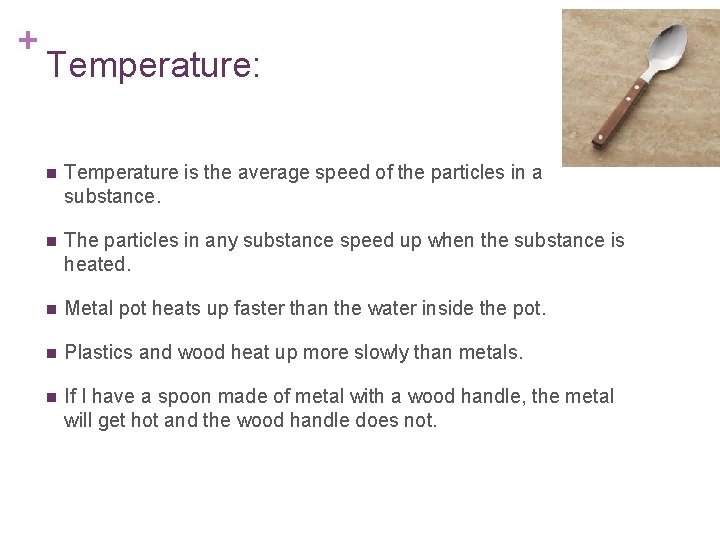
+ Temperature: n Temperature is the average speed of the particles in a substance. n The particles in any substance speed up when the substance is heated. n Metal pot heats up faster than the water inside the pot. n Plastics and wood heat up more slowly than metals. n If I have a spoon made of metal with a wood handle, the metal will get hot and the wood handle does not.
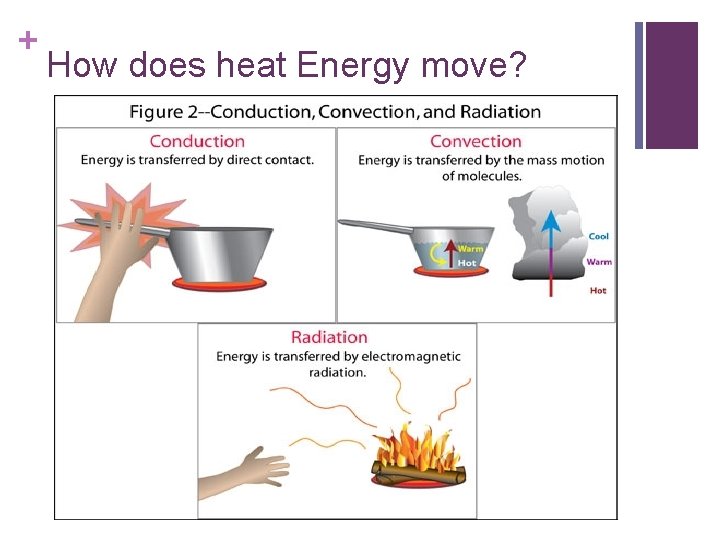
+ How does heat Energy move?
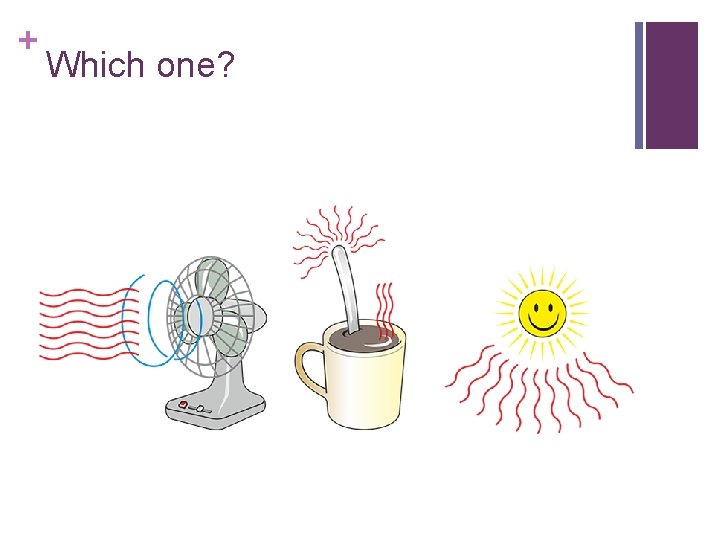
+ Which one?
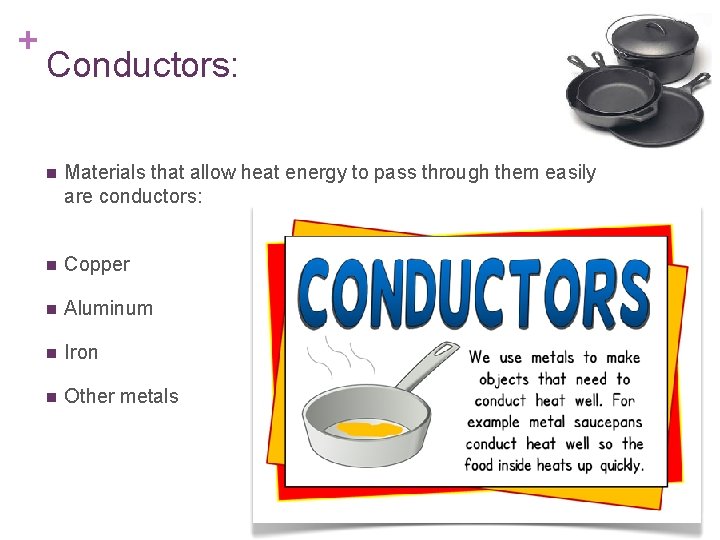
+ Conductors: n Materials that allow heat energy to pass through them easily are conductors: n Copper n Aluminum n Iron n Other metals
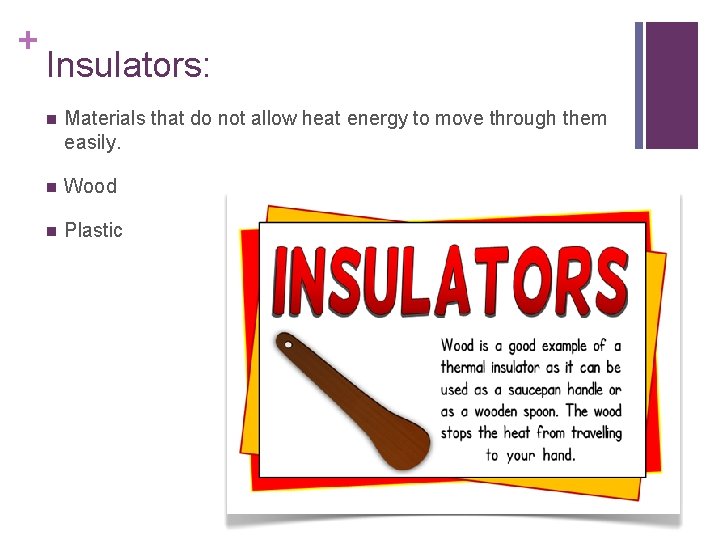
+ Insulators: n Materials that do not allow heat energy to move through them easily. n Wood n Plastic