
Forms of contamination By Juliet Perry and Sydney
Forms of contamination By: Juliet Perry, and Sydney Kelly
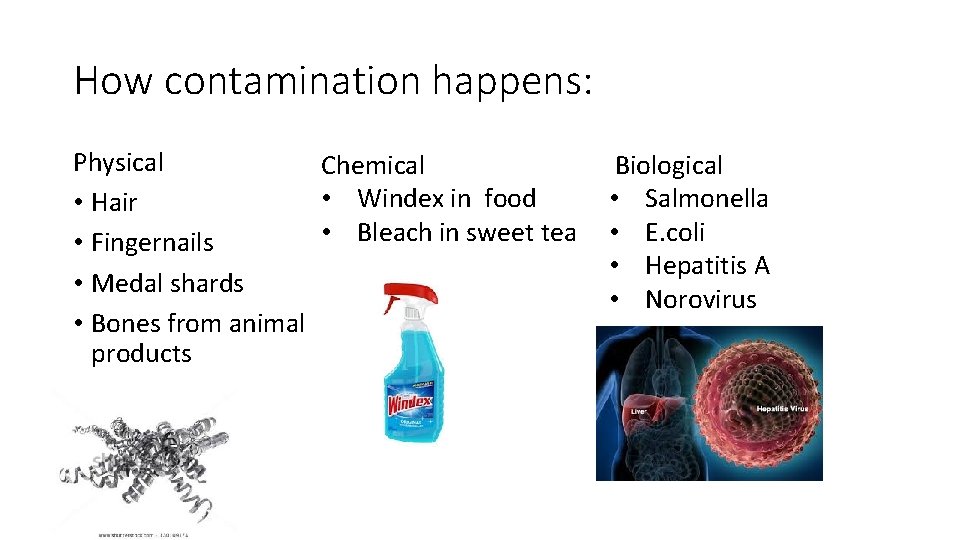
How contamination happens: Physical Chemical • Windex in food • Hair • Bleach in sweet tea • Fingernails • Medal shards • Bones from animal products Biological • Salmonella • E. coli • Hepatitis A • Norovirus
Symptoms of Foodborne Illness • Diarrhea • Vomiting • Fever • Nausea • Abdominal Cramps
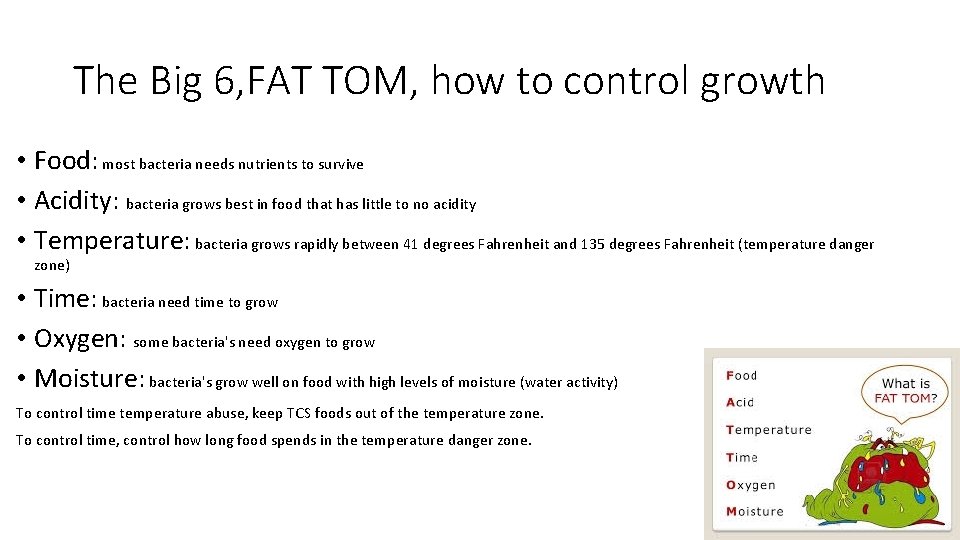
The Big 6, FAT TOM, how to control growth • Food: most bacteria needs nutrients to survive • Acidity: bacteria grows best in food that has little to no acidity • Temperature: bacteria grows rapidly between 41 degrees Fahrenheit and 135 degrees Fahrenheit (temperature danger zone) • Time: bacteria need time to grow • Oxygen: some bacteria's need oxygen to grow • Moisture: bacteria's grow well on food with high levels of moisture (water activity) To control time temperature abuse, keep TCS foods out of the temperature zone. To control time, control how long food spends in the temperature danger zone.
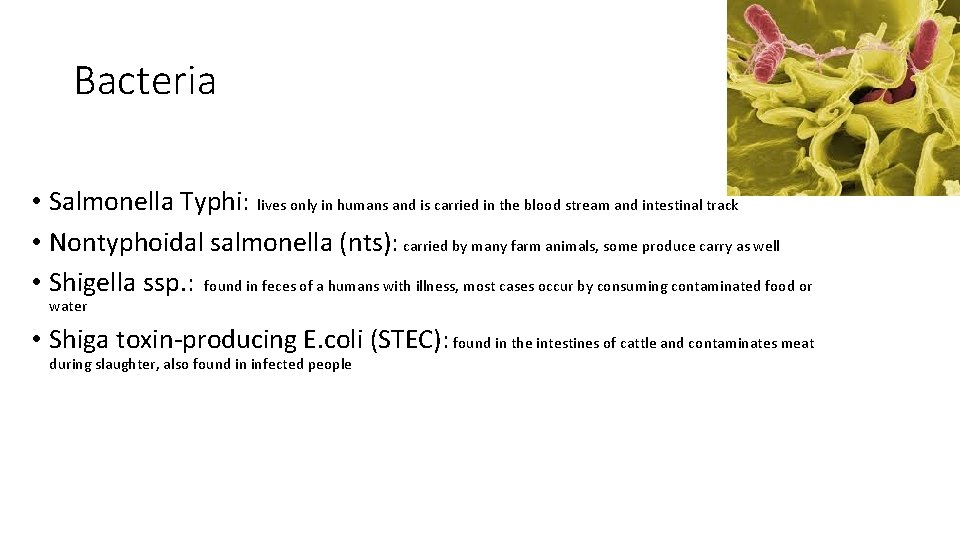
Bacteria • Salmonella Typhi: lives only in humans and is carried in the blood stream and intestinal track • Nontyphoidal salmonella (nts): carried by many farm animals, some produce carry as well • Shigella ssp. : found in feces of a humans with illness, most cases occur by consuming contaminated food or water • Shiga toxin-producing E. coli (STEC): found in the intestines of cattle and contaminates meat during slaughter, also found in infected people
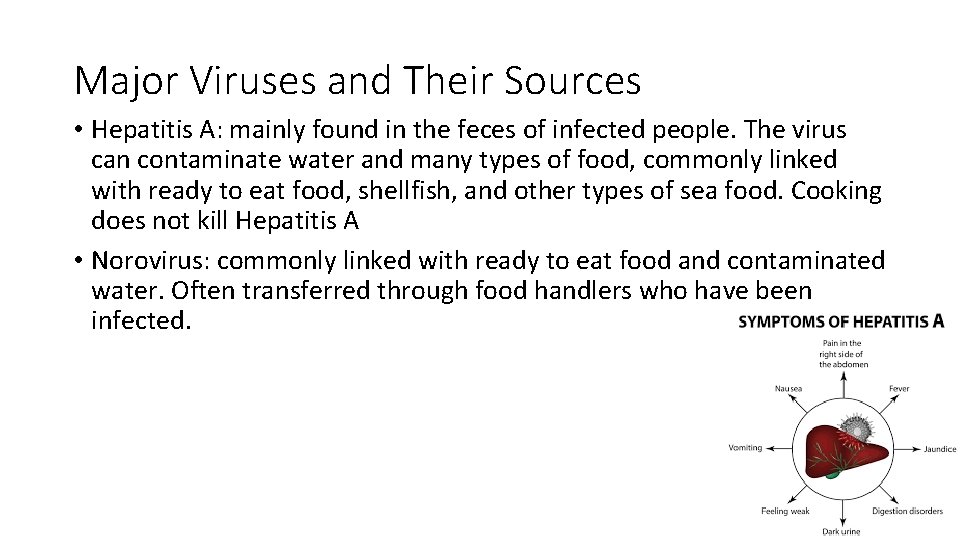
Major Viruses and Their Sources • Hepatitis A: mainly found in the feces of infected people. The virus can contaminate water and many types of food, commonly linked with ready to eat food, shellfish, and other types of sea food. Cooking does not kill Hepatitis A • Norovirus: commonly linked with ready to eat food and contaminated water. Often transferred through food handlers who have been infected.
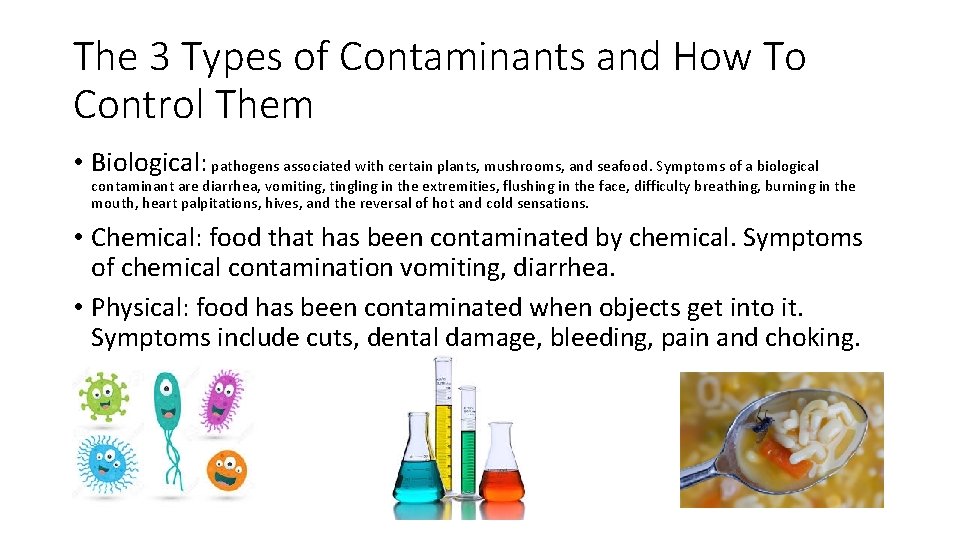
The 3 Types of Contaminants and How To Control Them • Biological: pathogens associated with certain plants, mushrooms, and seafood. Symptoms of a biological contaminant are diarrhea, vomiting, tingling in the extremities, flushing in the face, difficulty breathing, burning in the mouth, heart palpitations, hives, and the reversal of hot and cold sensations. • Chemical: food that has been contaminated by chemical. Symptoms of chemical contamination vomiting, diarrhea. • Physical: food has been contaminated when objects get into it. Symptoms include cuts, dental damage, bleeding, pain and choking.
- Slides: 7