
Formative Assessment Debbie Owens Kathy Strunk AMSP University
Formative Assessment Debbie Owens Kathy Strunk AMSP University of Kentucky AMSP University of Tennessee 1
Traffic Light • Read the Formative Assessment Target Goals posted on the easel sheets throughout the room. • Place a green dot on the left side of the easel sheet for any goals that you feel you have already mastered. • Place a yellow dot on the left side of the easel sheet for any goals that you know something about but have not yet mastered. • Place a red dot on the left side of the easel sheet for any goals that you have either never heard of or that you know virtually nothing about. 2
Session Target Goals Participants will: • articulate the differences between formative & summative assessment • recognize the impact of effective formative assessment • describe and provide examples of how to effectively use the five keys to quality assessment • use three guiding questions to ensure that students are informed and involved in the assessment process 3

Why assess students? • To gather evidence of student learning • To inform instruction • To motivate students and increase student achievement 4
Brainstorm Formative Assessment Strategies • ____________________ • ____________________ • __________ 5
How do we assess students? Formative Assessment Summative Assessment 6
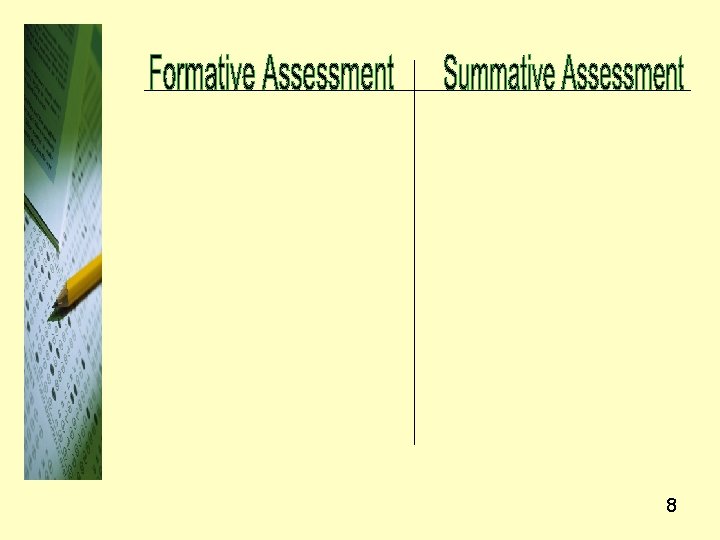
Card Sort • Use the large label cards to create the headings for two columns - one for “Formative Assessment” and one for “Summative Assessment” • Sort the cards and place each one under the most appropriate heading in your chart 7
8
Assessment for Learning Assessment of Learning 9
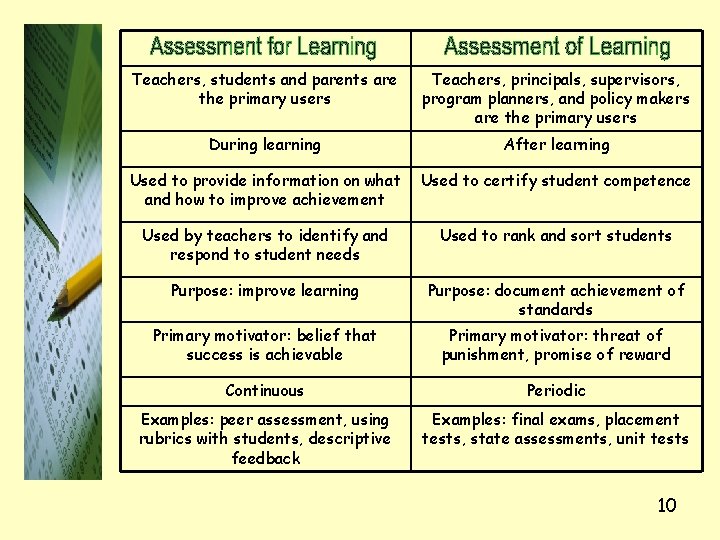
Teachers, students and parents are the primary users Teachers, principals, supervisors, program planners, and policy makers are the primary users During learning After learning Used to provide information on what and how to improve achievement Used to certify student competence Used by teachers to identify and respond to student needs Used to rank and sort students Purpose: improve learning Purpose: document achievement of standards Primary motivator: belief that success is achievable Primary motivator: threat of punishment, promise of reward Continuous Periodic Examples: peer assessment, using rubrics with students, descriptive feedback Examples: final exams, placement tests, state assessments, unit tests 10
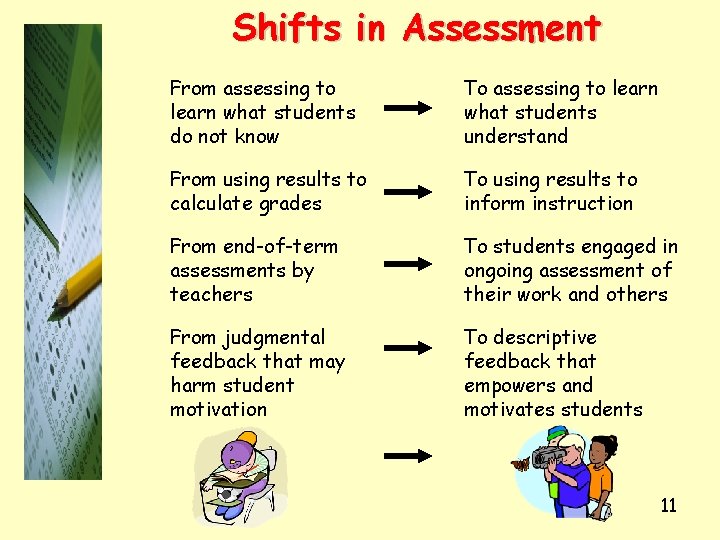
Shifts in Assessment From assessing to learn what students do not know To assessing to learn what students understand From using results to calculate grades To using results to inform instruction From end-of-term assessments by teachers To students engaged in ongoing assessment of their work and others From judgmental feedback that may harm student motivation To descriptive feedback that empowers and motivates students 11
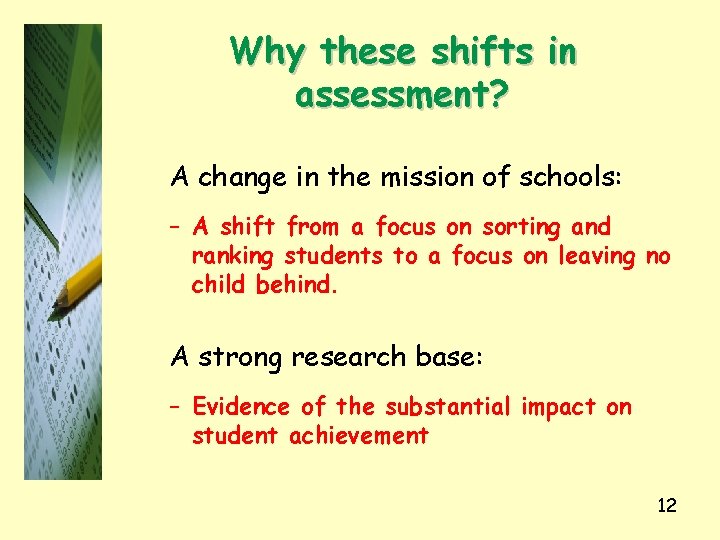
Why these shifts in assessment? A change in the mission of schools: – A shift from a focus on sorting and ranking students to a focus on leaving no child behind. A strong research base: – Evidence of the substantial impact on student achievement 12

The 5 Keys to Quality Assessment Identify the Purpose Clarify the Targets Use a Sound Design Provide Effective Feedback Involve Students 13
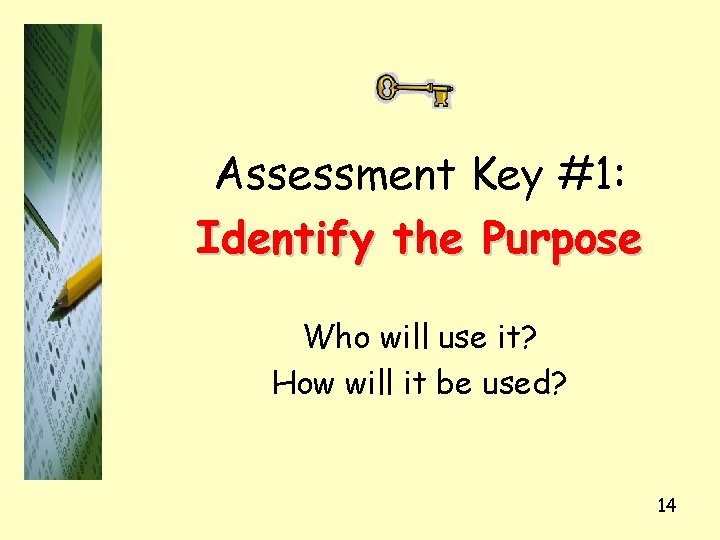
Assessment Key #1: Identify the Purpose Who will use it? How will it be used? 14
Assessment Key #2: Clarify the Targets Deconstruct the standards. Are they clear to the students? 15
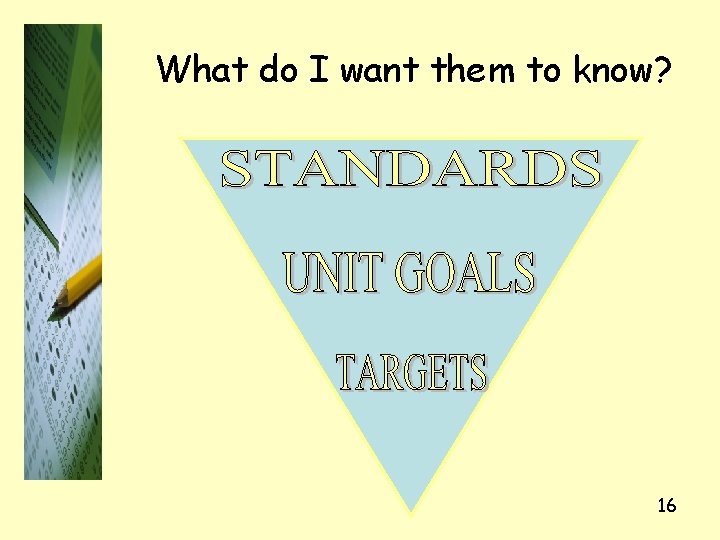
What do I want them to know? 16
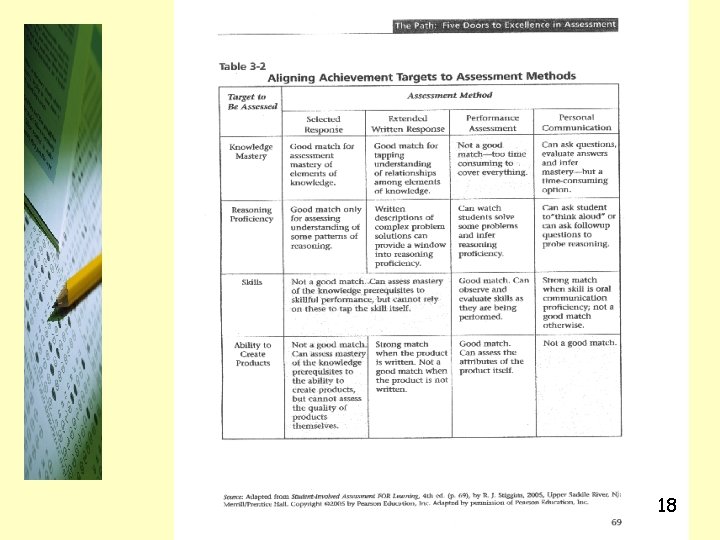
Assessment Key #3: Use Sound Design Method? Sample? Quality? Bias? 17
18
Assessment Key #4: Provide Effective Feedback The best feedback is: Descriptive Specific Relevant Timely Empowering 19
Assessment Key #5: Involve Students Peer Assessment Self Assessment Goal Setting 20
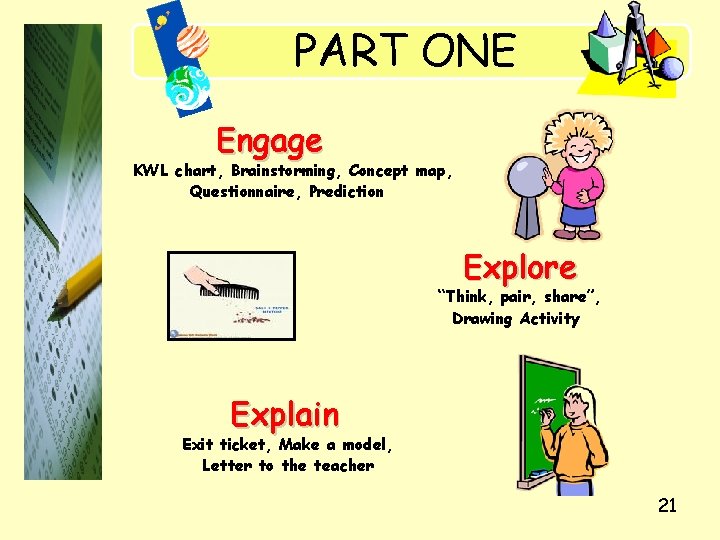
PART ONE Engage KWL chart, Brainstorming, Concept map, Questionnaire, Prediction Explore “Think, pair, share”, Drawing Activity Explain Exit ticket, Make a model, Letter to the teacher 21
Magnet Activity • Work in groups of 4 • Three people are students and will complete the activity. • One person (the teacher) is responsible for assessing student learning. 22
Magnet Activity Instructions • Agree on the purpose and the targets - record them on an easel sheet. • Set up the materials as shown. • Take a minute to plan your actions. • Determine the relationship between the number of weights and the number of magnets. • Record assessment feedback on easel sheet. 23
Teachers • What do your students know? • How did you find out what they know? • What’s your evidence? 24
Students • What did you learn? • How do you know? • What feedback would you like from the teacher? 25
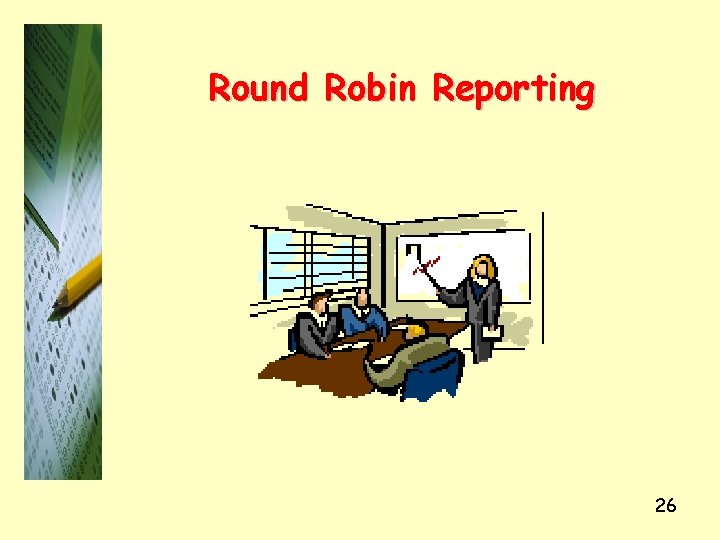
Round Robin Reporting 26

27
Demonstration 28

The Formative Assessment Framework 29
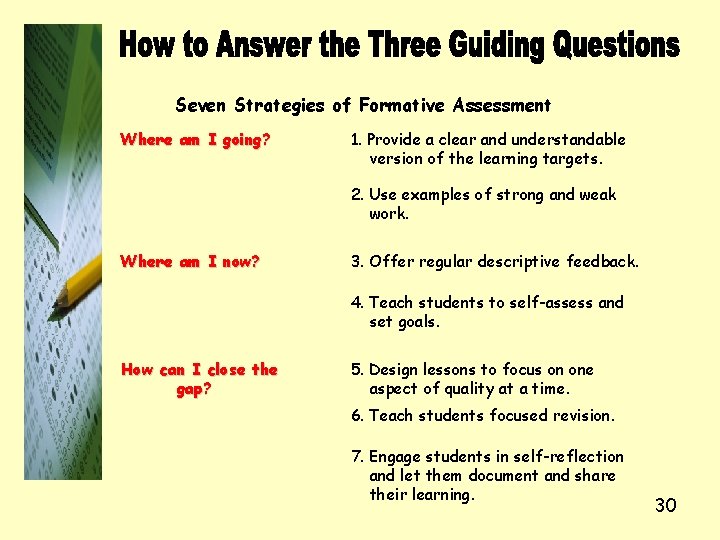
Seven Strategies of Formative Assessment Where am I going? 1. Provide a clear and understandable version of the learning targets. 2. Use examples of strong and weak work. Where am I now? 3. Offer regular descriptive feedback. 4. Teach students to self-assess and set goals. How can I close the gap? 5. Design lessons to focus on one aspect of quality at a time. 6. Teach students focused revision. 7. Engage students in self-reflection and let them document and share their learning. 30
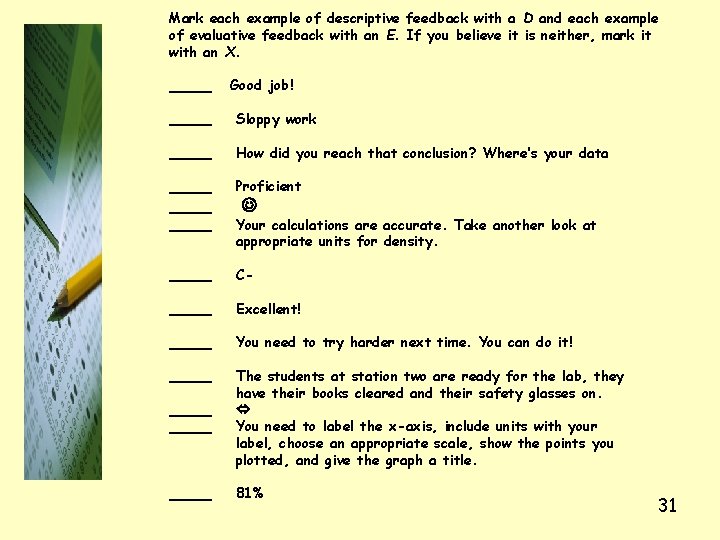
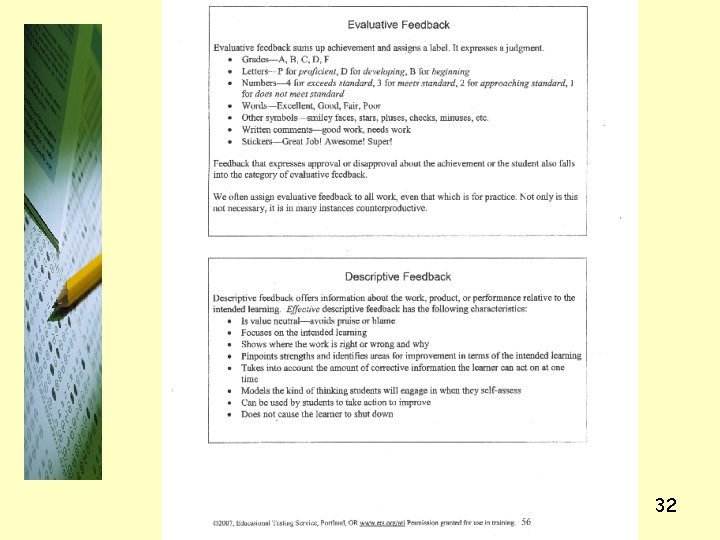
Mark each example of descriptive feedback with a D and each example of evaluative feedback with an E. If you believe it is neither, mark it with an X. Good job! Sloppy work How did you reach that conclusion? Where’s your data Proficient Your calculations are accurate. Take another look at appropriate units for density. CExcellent! You need to try harder next time. You can do it! The students at station two are ready for the lab, they have their books cleared and their safety glasses on. You need to label the x-axis, include units with your label, choose an appropriate scale, show the points you plotted, and give the graph a title. 81% 31
32
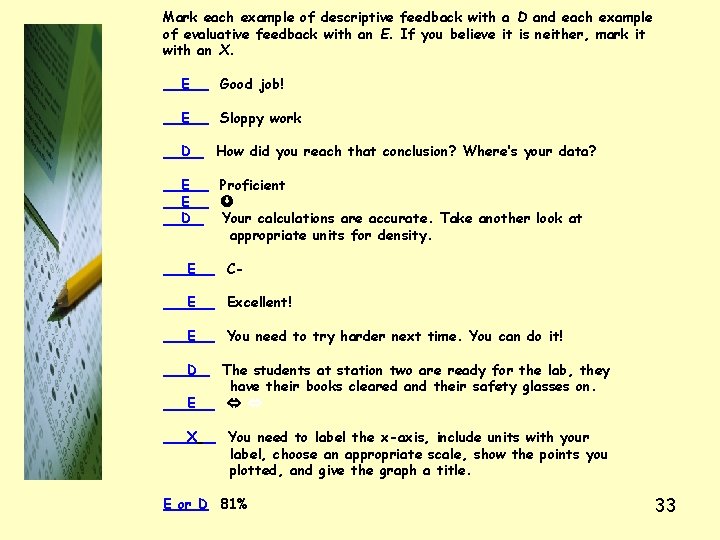
Mark each example of descriptive feedback with a D and each example of evaluative feedback with an E. If you believe it is neither, mark it with an X. E Good job! E Sloppy work D E E D How did you reach that conclusion? Where’s your data? Proficient Your calculations are accurate. Take another look at appropriate units for density. E C- E Excellent! E You need to try harder next time. You can do it! D E X The students at station two are ready for the lab, they have their books cleared and their safety glasses on. You need to label the x-axis, include units with your label, choose an appropriate scale, show the points you plotted, and give the graph a title. E or D 81% 33
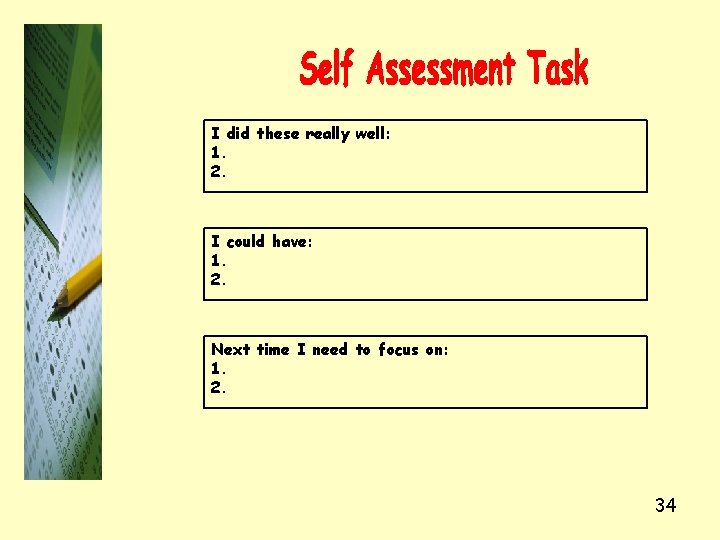
I did these really well: 1. 2. I could have: 1. 2. Next time I need to focus on: 1. 2. 34
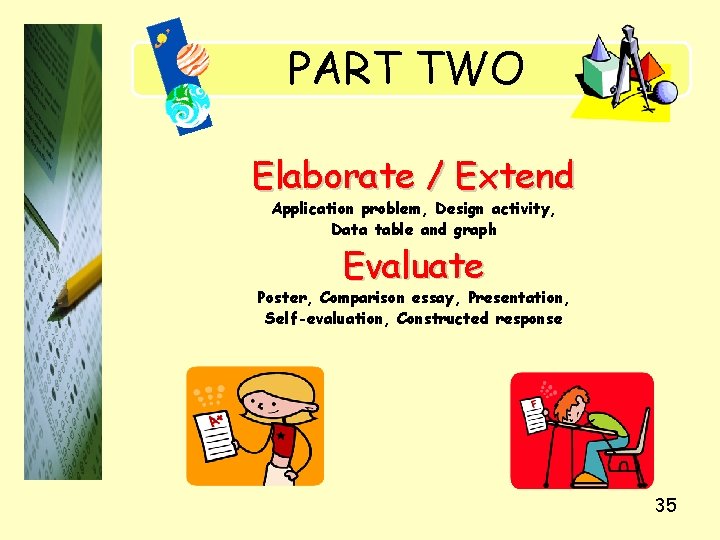
PART TWO Elaborate / Extend Application problem, Design activity, Data table and graph Evaluate Poster, Comparison essay, Presentation, Self-evaluation, Constructed response 35
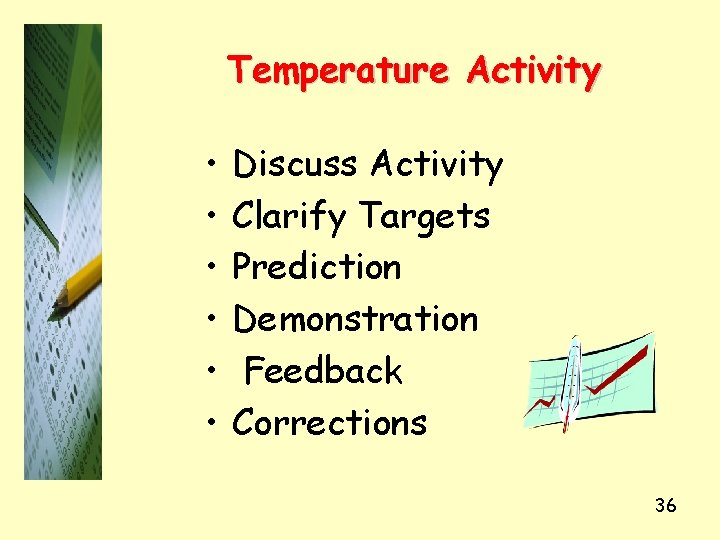
Temperature Activity • • • Discuss Activity Clarify Targets Prediction Demonstration Feedback Corrections 36
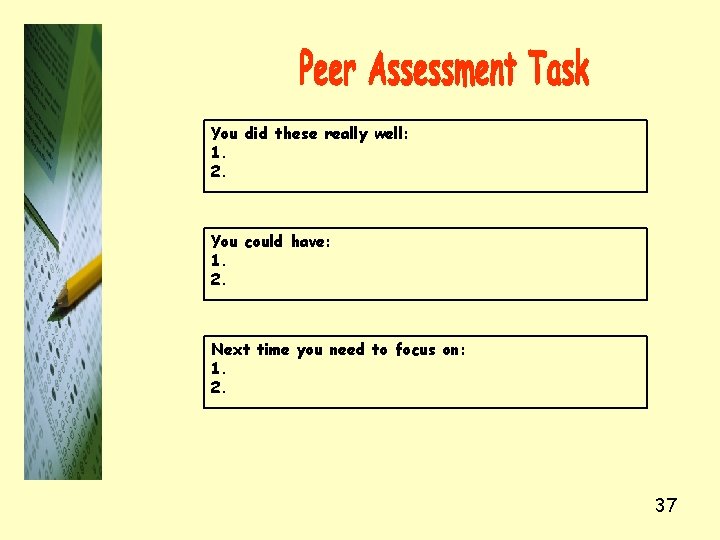
You did these really well: 1. 2. You could have: 1. 2. Next time you need to focus on: 1. 2. 37
Think/Pair/Share • How effective were you at giving feedback? • What could you do differently to make it more effective? 38
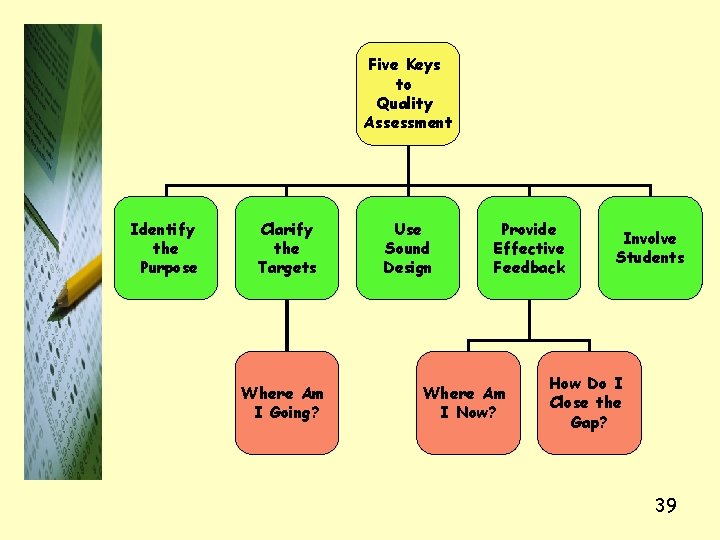
Five Keys to Quality Assessment Identify the Purpose Clarify the Targets Where Am I Going? Use Sound Design Provide Effective Feedback Where Am I Now? Involve Students How Do I Close the Gap? 39
40
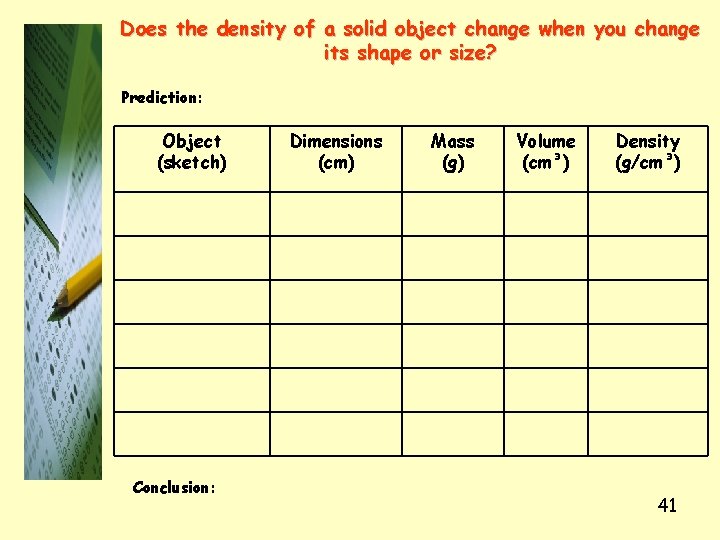
Does the density of a solid object change when you change its shape or size? Prediction: Object (sketch) Conclusion: Dimensions (cm) Mass (g) Volume (cm³) Density (g/cm³) 41
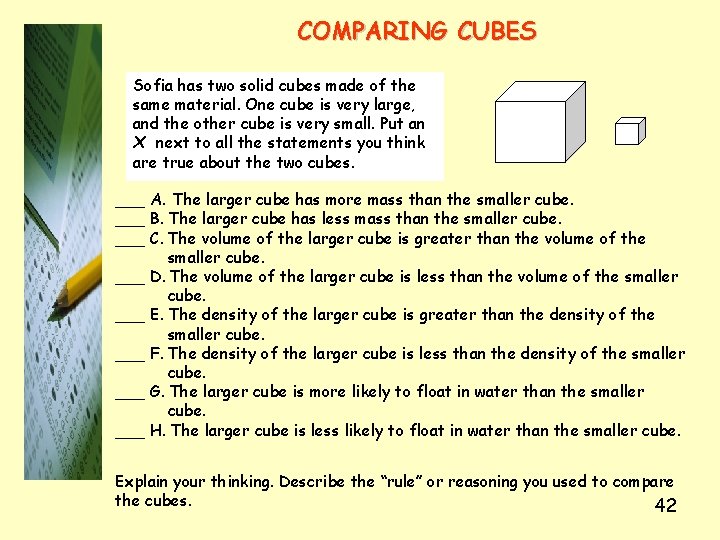
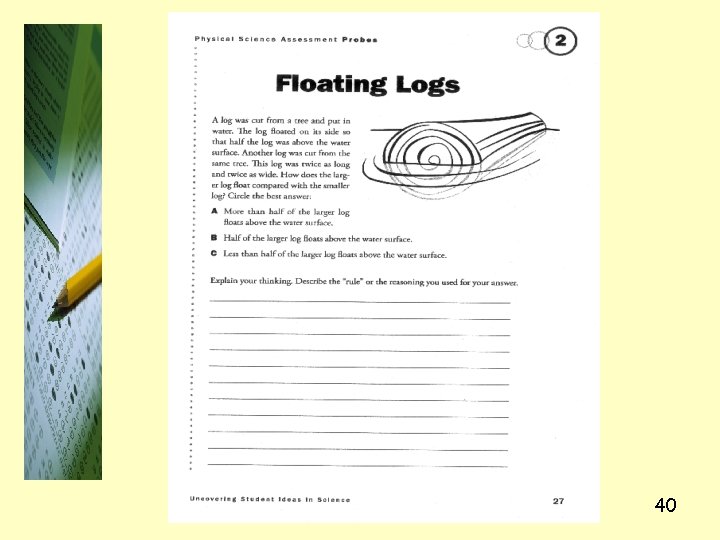
COMPARING CUBES Sofia has two solid cubes made of the same material. One cube is very large, and the other cube is very small. Put an X next to all the statements you think are true about the two cubes. ___ A. The larger cube has more mass than the smaller cube. ___ B. The larger cube has less mass than the smaller cube. ___ C. The volume of the larger cube is greater than the volume of the smaller cube. ___ D. The volume of the larger cube is less than the volume of the smaller cube. ___ E. The density of the larger cube is greater than the density of the smaller cube. ___ F. The density of the larger cube is less than the density of the smaller cube. ___ G. The larger cube is more likely to float in water than the smaller cube. ___ H. The larger cube is less likely to float in water than the smaller cube. Explain your thinking. Describe the “rule” or reasoning you used to compare the cubes. 42
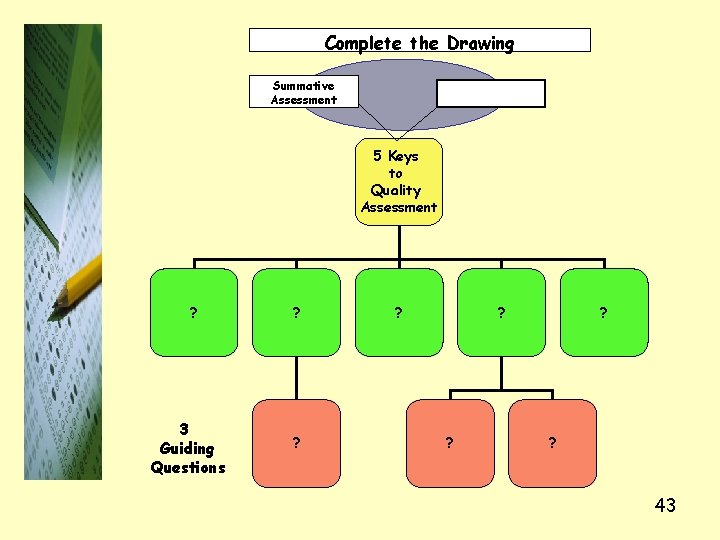
Complete the Drawing Summative Assessment 5 Keys to Quality Assessment ? 3 Guiding Questions ? ? 43
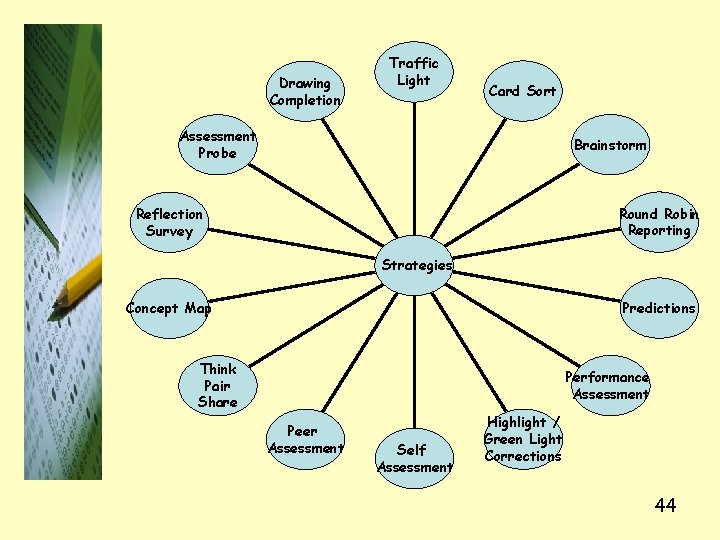
Drawing Completion Traffic Light Card Sort Assessment Probe Brainstorm Round Robin Reporting Reflection Survey Strategies Predictions Concept Map Think Pair Share Performance Assessment Peer Assessment Self Assessment Highlight / Green Light Corrections 44
? ? ? to ask before assessing • Why am I assessing? • What do I want my students to know? • How will I find out if they know it? • How will I communicate the results of my assessment? • Who should be involved? 45
In Other Words … • Clarify your purpose. • Define your target goals. • Design your plan - what tool(s) will I use to determine if students have met the goals? • Provide feedback to encourage learning (Do No Harm!) • Involve students in their own assessment. 46
SELF-EVALUATION • Follow the directions on the handout “Determining Where I am Now” • Record your Ratings for #1 -9 on the separate answer sheet • Wait for directions from a facilitator Sample Student Surveys are included in your notebook 47
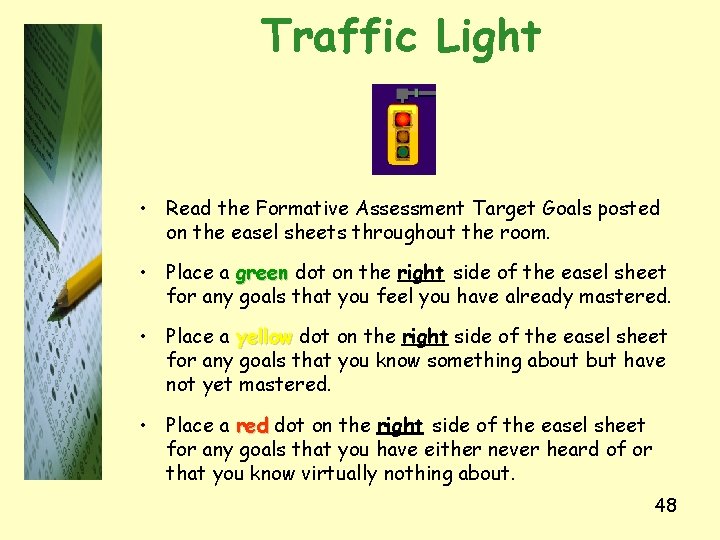
Traffic Light • Read the Formative Assessment Target Goals posted on the easel sheets throughout the room. • Place a green dot on the right side of the easel sheet for any goals that you feel you have already mastered. • Place a yellow dot on the right side of the easel sheet for any goals that you know something about but have not yet mastered. • Place a red dot on the right side of the easel sheet for any goals that you have either never heard of or that you know virtually nothing about. 48
- Slides: 48