
Formation of Volcanic Explosions Includes Fragmentation of magma

- Slides: 11
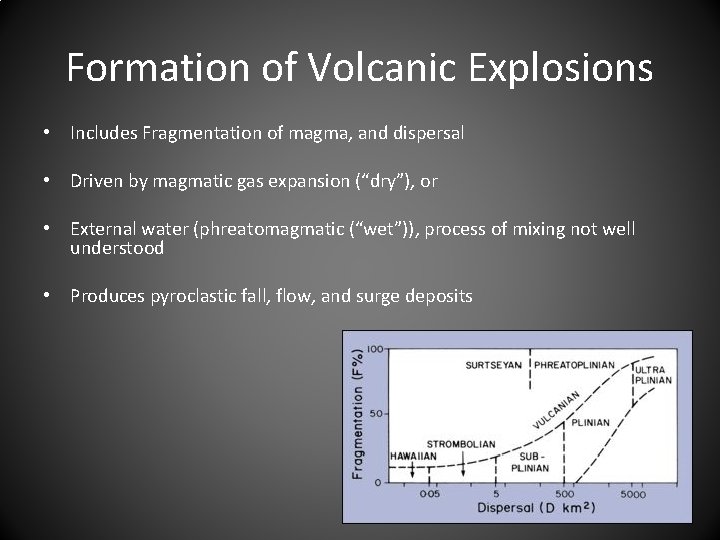
Formation of Volcanic Explosions • Includes Fragmentation of magma, and dispersal • Driven by magmatic gas expansion (“dry”), or • External water (phreatomagmatic (“wet”)), process of mixing not well understood • Produces pyroclastic fall, flow, and surge deposits
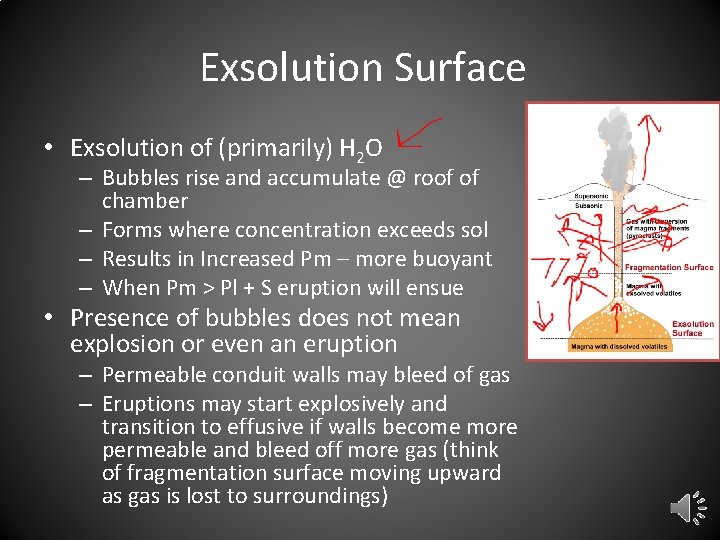
Exsolution Surface • Exsolution of (primarily) H 2 O – Bubbles rise and accumulate @ roof of chamber – Forms where concentration exceeds sol – Results in Increased Pm – more buoyant – When Pm > Pl + S eruption will ensue • Presence of bubbles does not mean explosion or even an eruption – Permeable conduit walls may bleed of gas – Eruptions may start explosively and transition to effusive if walls become more permeable and bleed off more gas (think of fragmentation surface moving upward as gas is lost to surroundings)
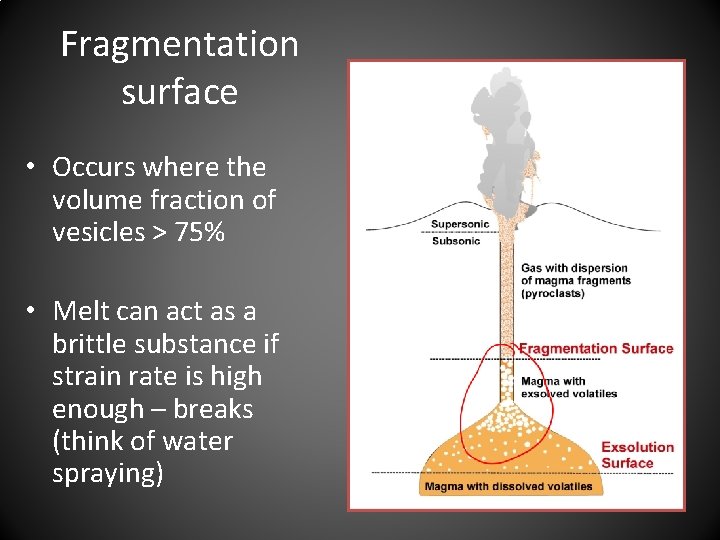
Fragmentation surface • Occurs where the volume fraction of vesicles > 75% • Melt can act as a brittle substance if strain rate is high enough – breaks (think of water spraying)
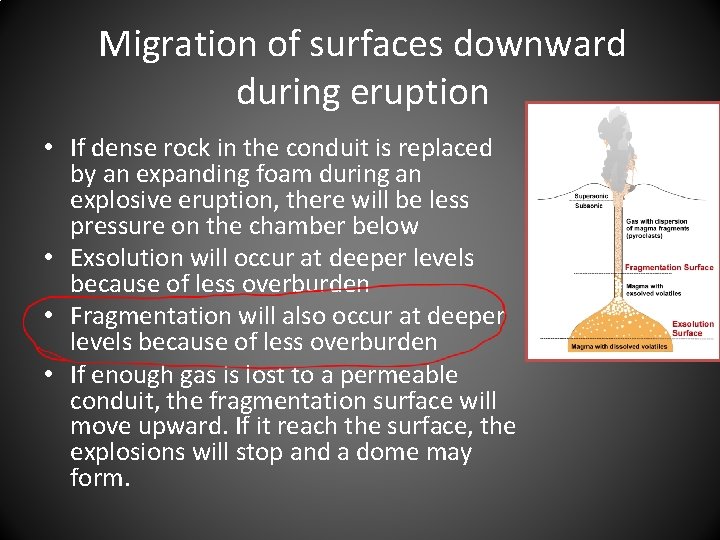
Migration of surfaces downward during eruption • If dense rock in the conduit is replaced by an expanding foam during an explosive eruption, there will be less pressure on the chamber below • Exsolution will occur at deeper levels because of less overburden • Fragmentation will also occur at deeper levels because of less overburden • If enough gas is lost to a permeable conduit, the fragmentation surface will move upward. If it reach the surface, the explosions will stop and a dome may form.
How do we know volatiles are lost during ascent? • Evidence – Seismicity – Eruption degassed magma • Can bring samples to lab, heat to melting and see what volatiles are driven off – Syn-ascent breakdown of hydrous phases • Look at how hornblende (hydrous) breaks down as it becomes unstable during ascent.
Transport mechanisms for pyroclastic fall, flow and surges • Vertical columns – Pyroclastic fall – Initial upward momentum driven by gas expansion – Convective motion once well above vent – Deposition via wind-driven plume • Laterally moving systems – Pyroclastic flows and surges – Dominant trajectory of motion is downhill – Surge and flow deposits (gravity-driven currents)
Pyroclastic Fall Deposits • • • Drape landscape – mantle the topography Wind driven pattern of deposition Well-sorted Mm-sized to 1000’s meters bed thicknesses High temps rare on impact – Cooling in transport – Exception: welding in basaltic fall deposits from Hawaiian eruptions (material only travels a few hundred meters and doesn’t have time to lose enough heat – spatter cones
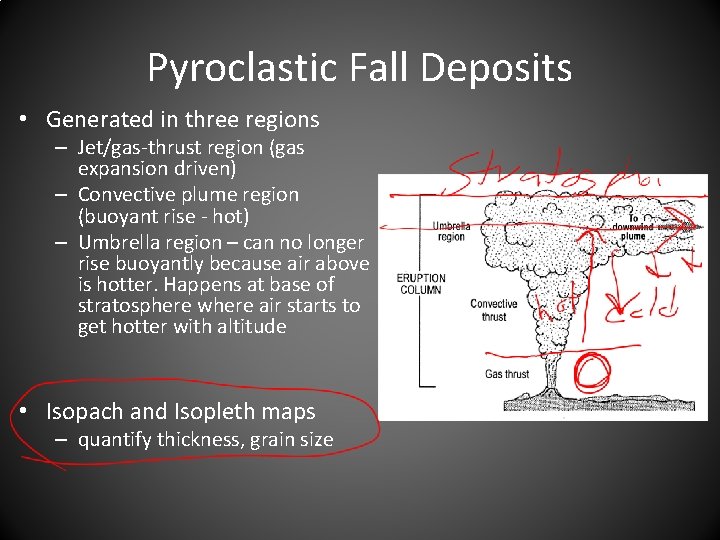
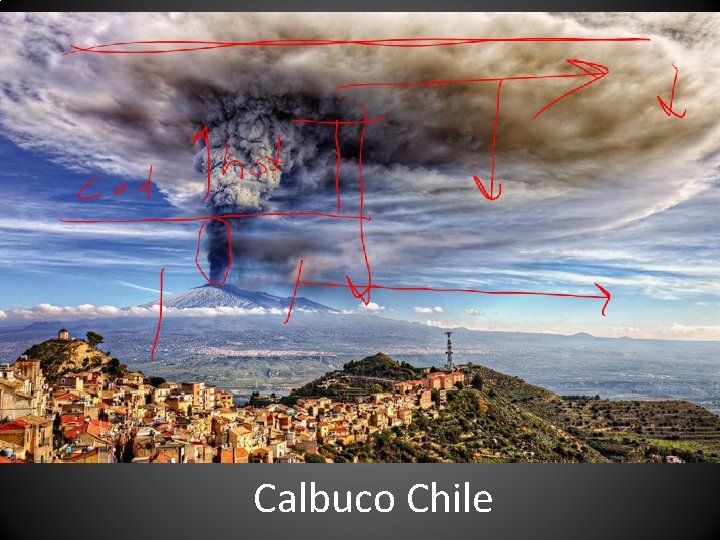
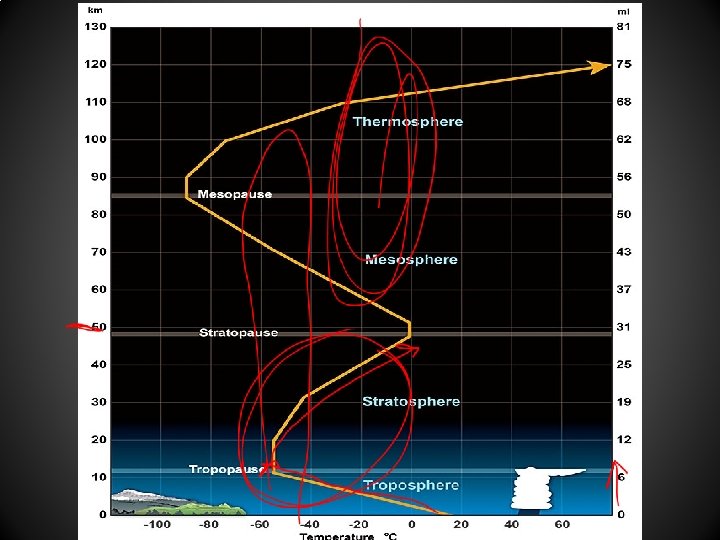
Pyroclastic Fall Deposits • Generated in three regions – Jet/gas-thrust region (gas expansion driven) – Convective plume region (buoyant rise - hot) – Umbrella region – can no longer rise buoyantly because air above is hotter. Happens at base of stratosphere where air starts to get hotter with altitude • Isopach and Isopleth maps – quantify thickness, grain size
Calbuco Chile
Isopachs and Isopleths depth maps, and map of max clast