
Formation of Stratospheric Ozone UVC radiation breaks the
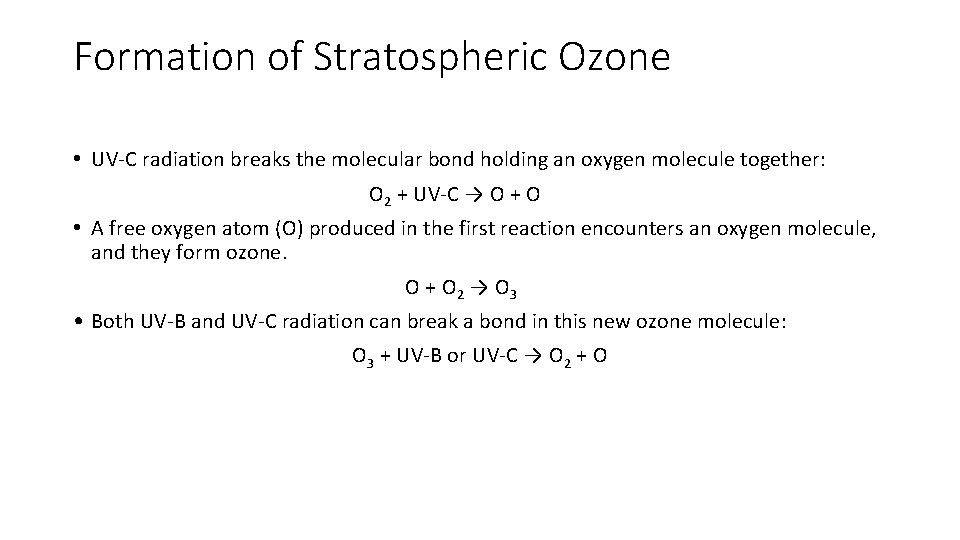
Formation of Stratospheric Ozone • UV-C radiation breaks the molecular bond holding an oxygen molecule together: O 2 + UV-C → O + O • A free oxygen atom (O) produced in the first reaction encounters an oxygen molecule, and they form ozone. O + O 2 → O 3 • Both UV-B and UV-C radiation can break a bond in this new ozone molecule: O 3 + UV-B or UV-C → O 2 + O
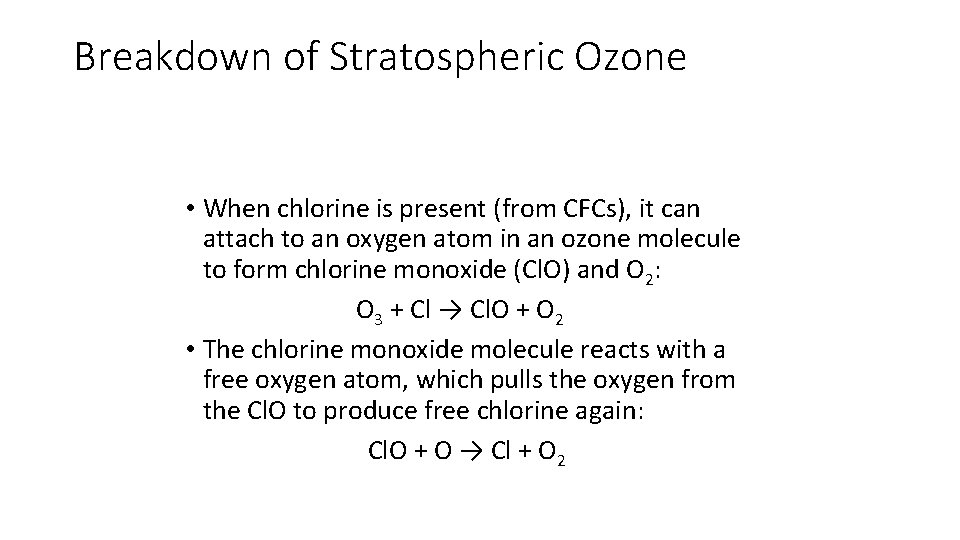
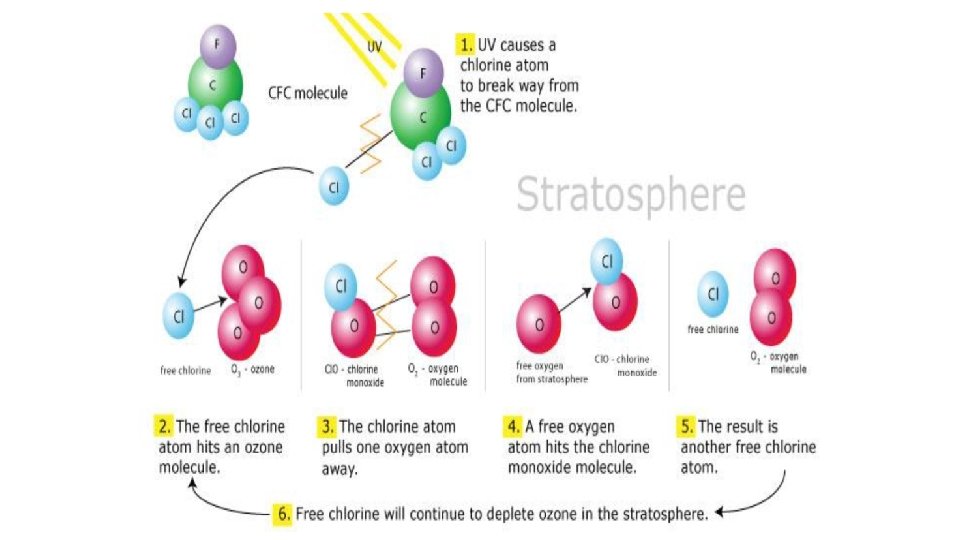
Breakdown of Stratospheric Ozone • When chlorine is present (from CFCs), it can attach to an oxygen atom in an ozone molecule to form chlorine monoxide (Cl. O) and O 2: O 3 + Cl → Cl. O + O 2 • The chlorine monoxide molecule reacts with a free oxygen atom, which pulls the oxygen from the Cl. O to produce free chlorine again: Cl. O + O → Cl + O 2
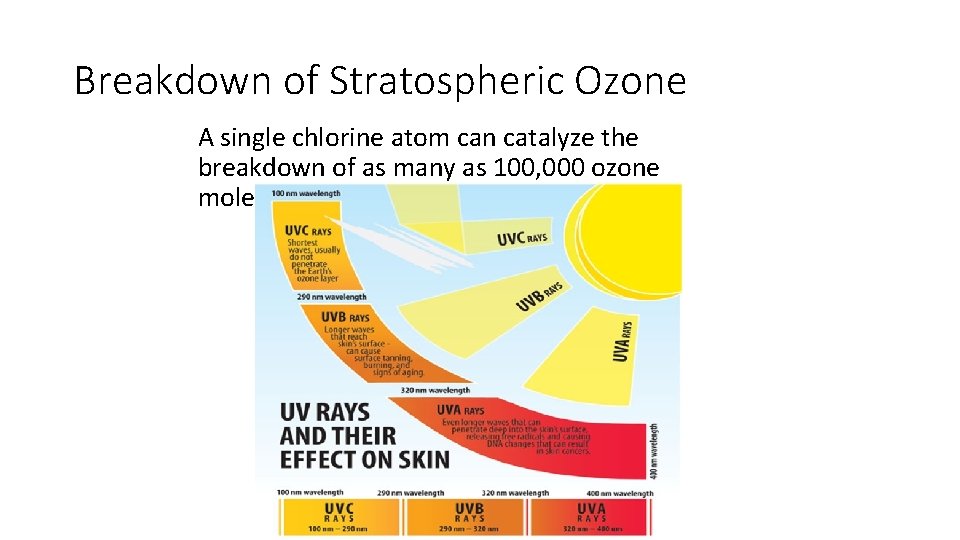
Breakdown of Stratospheric Ozone A single chlorine atom can catalyze the breakdown of as many as 100, 000 ozone molecules

Depletion of the Ozone Layer Figure 49. 1 Data from https: //data. mfe. govt. nz/table/89463 -annual-ozoneconcentrations 19792016/data/ Stratospheric ozone concentration. This data for one area of Switzerland shows a generally decreasing trend from 1970 to 2016.
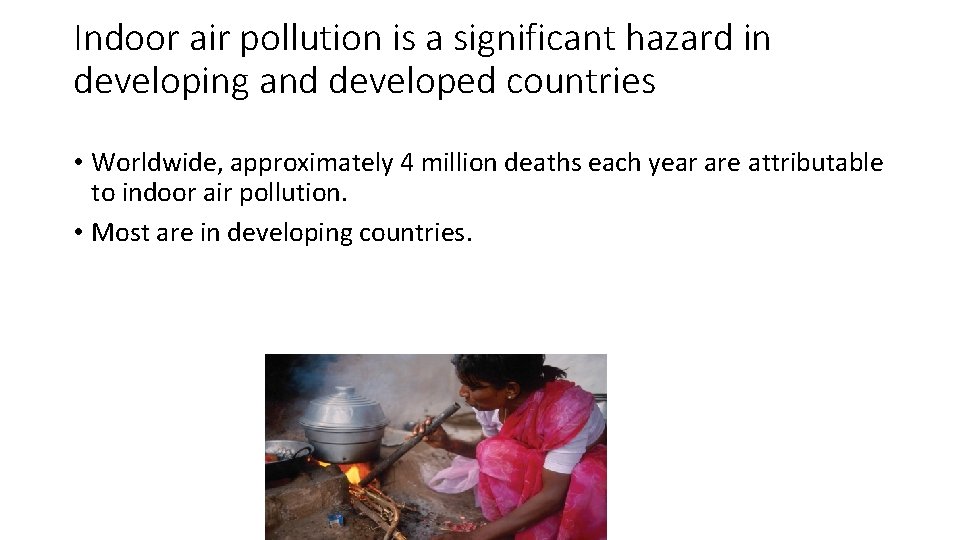
Indoor air pollution is a significant hazard in developing and developed countries • Worldwide, approximately 4 million deaths each year are attributable to indoor air pollution. • Most are in developing countries.

Indoor Air Pollution in Developed Countries Some sources of indoor air pollution in the developed world. Top 4 indoor air pollutants 1. Tobacco smoke 2. Formaldehyde 3. Radon 4. Very small PM Figure 50. 2 Others: Carbon monoxide Asbestos VOCs Mold, mildew Pb particles
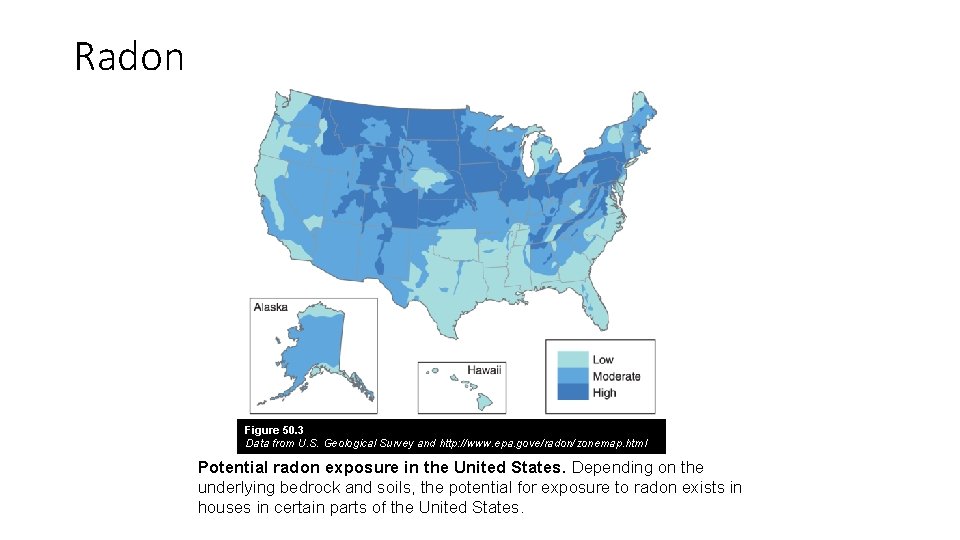
Radon Figure 50. 3 Data from U. S. Geological Survey and http: //www. epa. gove/radon/zonemap. html Potential radon exposure in the United States. Depending on the underlying bedrock and soils, the potential for exposure to radon exists in houses in certain parts of the United States.
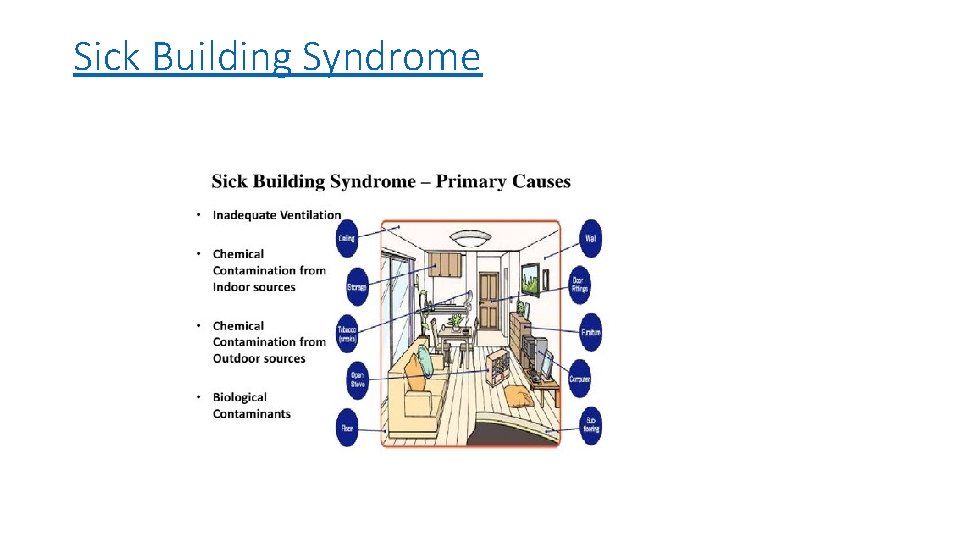
Sick Building Syndrome
- Slides: 9