
Formation of our Moon The Giant Impact Hypothesis
- Slides: 12
Formation of our Moon: The Giant Impact Hypothesis Michelle Kirchoff Southwest Research Institute Center for Lunar Origin and Evolution
Southwest Research Institute in Boulder http: //www. boulder. swri. edu
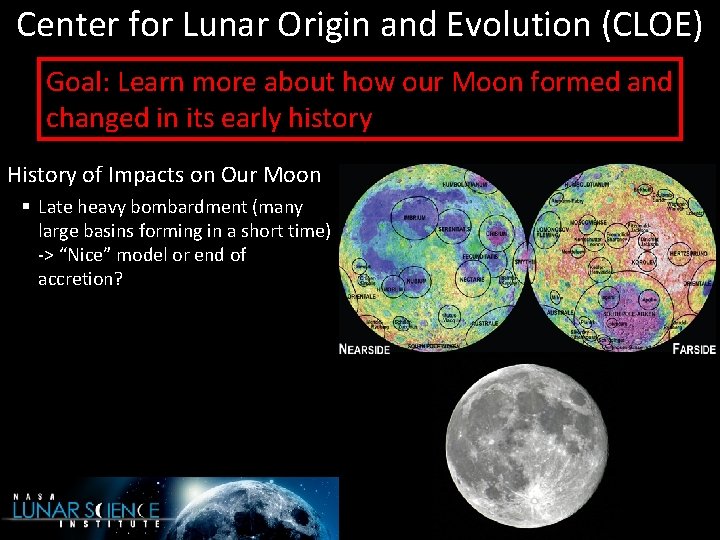
Center for Lunar Origin and Evolution (CLOE) Goal: Learn more about how our Moon formed and changed in its early history History of Impacts on Our Moon § Late heavy bombardment (many large basins forming in a short time) -> “Nice” model or end of accretion?
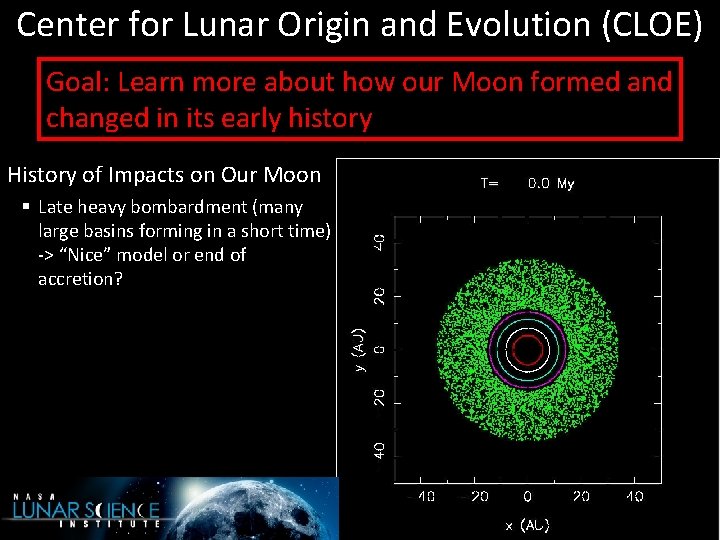
Center for Lunar Origin and Evolution (CLOE) Goal: Learn more about how our Moon formed and changed in its early history History of Impacts on Our Moon § Late heavy bombardment (many large basins forming in a short time) -> “Nice” model or end of accretion?
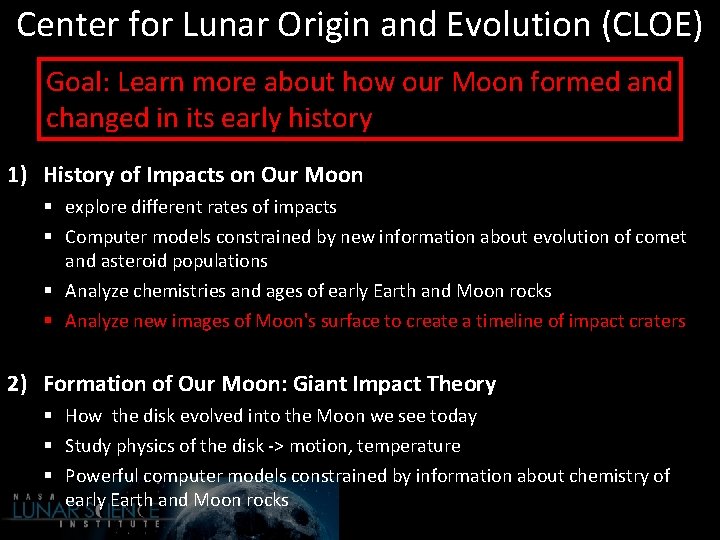
Center for Lunar Origin and Evolution (CLOE) Goal: Learn more about how our Moon formed and changed in its early history 1) History of Impacts on Our Moon § explore different rates of impacts § Computer models constrained by new information about evolution of comet and asteroid populations § Analyze chemistries and ages of early Earth and Moon rocks § Analyze new images of Moon's surface to create a timeline of impact craters 2) Formation of Our Moon: Giant Impact Theory § How the disk evolved into the Moon we see today § Study physics of the disk -> motion, temperature § Powerful computer models constrained by information about chemistry of early Earth and Moon rocks
http: //cloe. boulder. swri. edu/
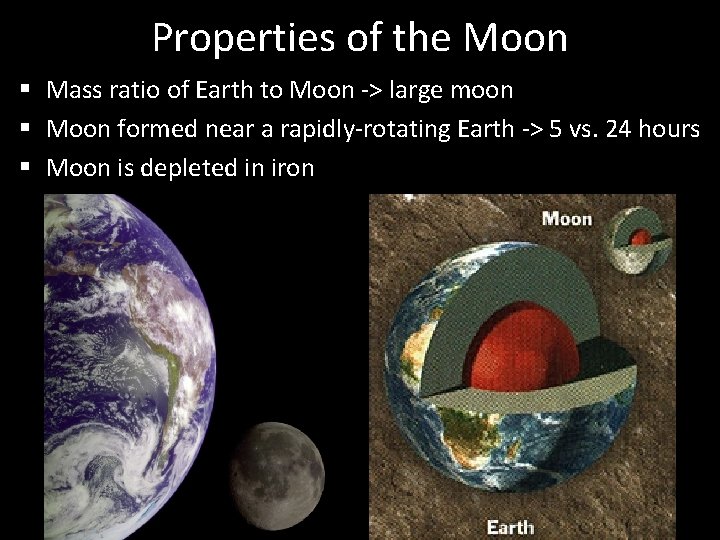
Properties of the Moon § Mass ratio of Earth to Moon -> large moon § Moon formed near a rapidly-rotating Earth -> 5 vs. 24 hours § Moon is depleted in iron
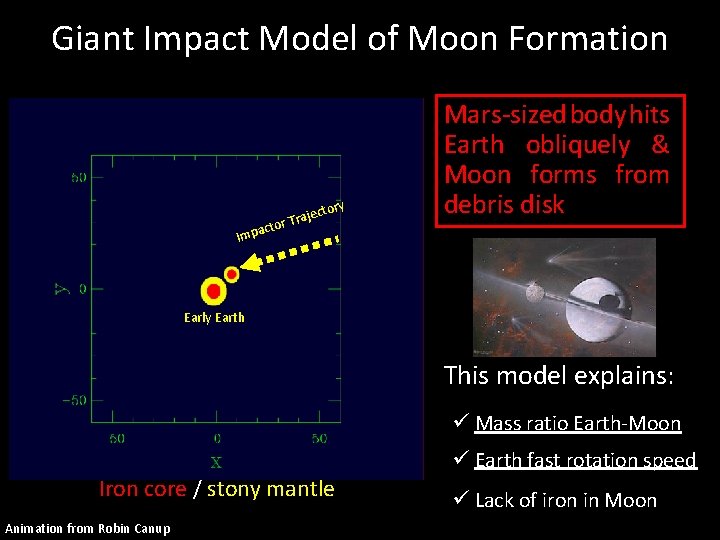
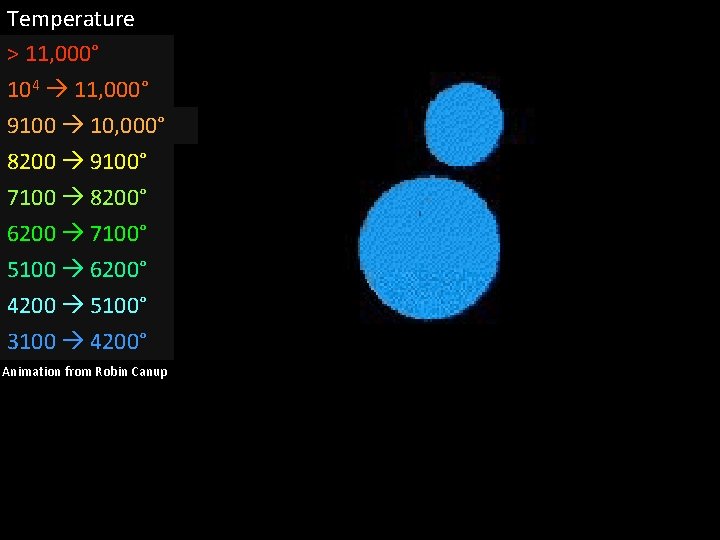
Giant Impact Model of Moon Formation ory aject r T r o pact Mars-sized body hits Earth obliquely & Moon forms from debris disk Im Early Earth This model explains: ü Mass ratio Earth-Moon Iron core / stony mantle Animation from Robin Canup ü Earth fast rotation speed ü Lack of iron in Moon
Temperature > 11, 000° 104 11, 000° 9100 10, 000° 8200 9100° 7100 8200° 6200 7100° 5100 6200° 4200 5100° 3100 4200° Animation from Robin Canup
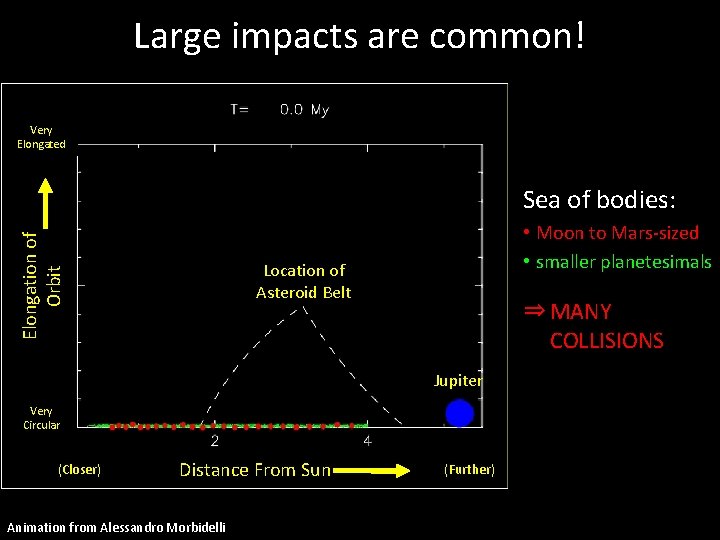
Large impacts are common! Very Elongated Elongation of Orbit Sea of bodies: • Moon to Mars-sized • smaller planetesimals Location of Asteroid Belt ⇒ MANY COLLISIONS Jupiter Very Circular (Closer) Distance From Sun Animation from Alessandro Morbidelli (Further)
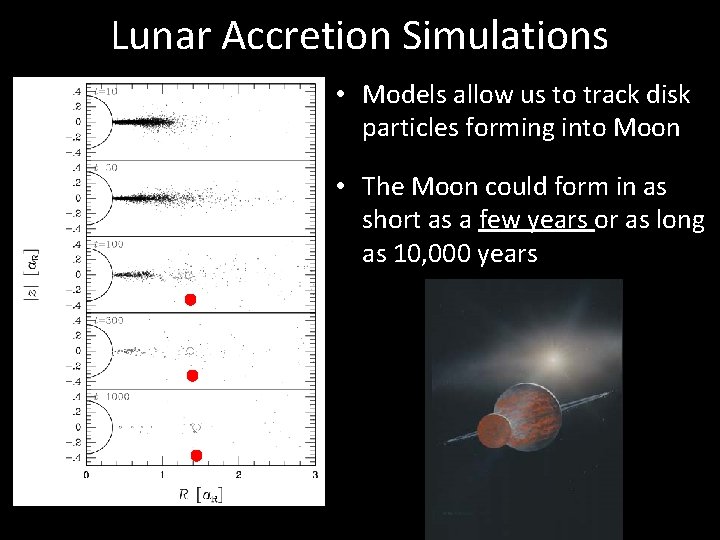
Lunar Accretion Simulations • Models allow us to track disk particles forming into Moon • The Moon could form in as short as a few years or as long as 10, 000 years
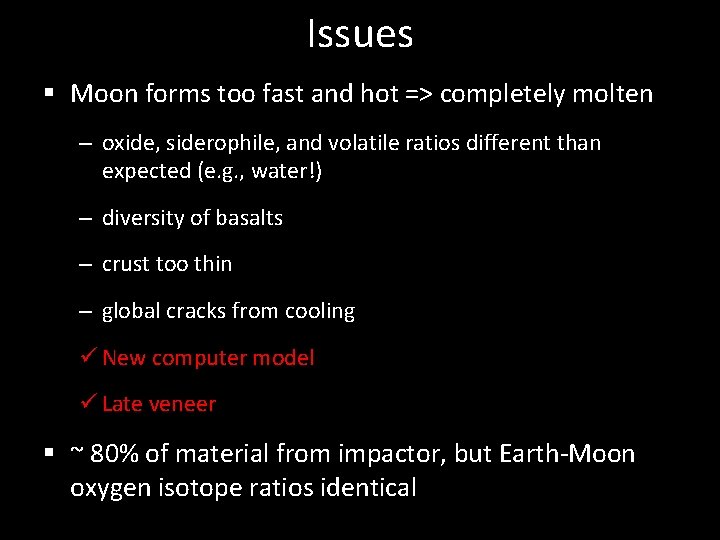
Issues § Moon forms too fast and hot => completely molten – oxide, siderophile, and volatile ratios different than expected (e. g. , water!) – diversity of basalts – crust too thin – global cracks from cooling ü New computer model ü Late veneer § ~ 80% of material from impactor, but Earth-Moon oxygen isotope ratios identical