
Formation of Igneous Rocks 8 th Grade Earth


- Slides: 15
Formation of Igneous Rocks 8 th Grade Earth and Space Science Class Notes
Tuesday, 12/4 Warm – Up • What are the 3 types of magma? How are they classified? • Write down the HW. Learning Goal – Describe how igneous rocks form. Agenda • Warm-Up Question/Review HW • Update Table of Contents • Check Section 5. 1 Vocabulary • Class notes/discussion on the Formation of Igneous Rocks • Work on Ch. 5 Review Packet and Section 5. 2 Vocabulary Homework – Section 5. 2 Vocabulary due on Friday, 12/7 Chapter 5 Review Worksheets due on Friday, 12/7 Greek and Latin Roots Quiz #1 on Friday, 12/7 Chapter 5 Quiz (25 pts. ) on Monday, 12/10
Igneous Rock Formation • All igneous rocks form from magma. • The type of igneous rock that forms depends on the chemical composition of the magma. • Magma – slushy mix of molten rock, dissolved gases, and mineral crystals. • Lava – magma that flows out onto the Earth’s surface – Chemical composition may be different from magma because gases escape into the atmosphere
All About Magma • The common elements in magma are the same that are common in the Earth’s crust. – O, Si, Al, Fe, Mg, Ca, K, Na • There are three main types of magma and they are classified based on their silica content. – Rewind what is silica?
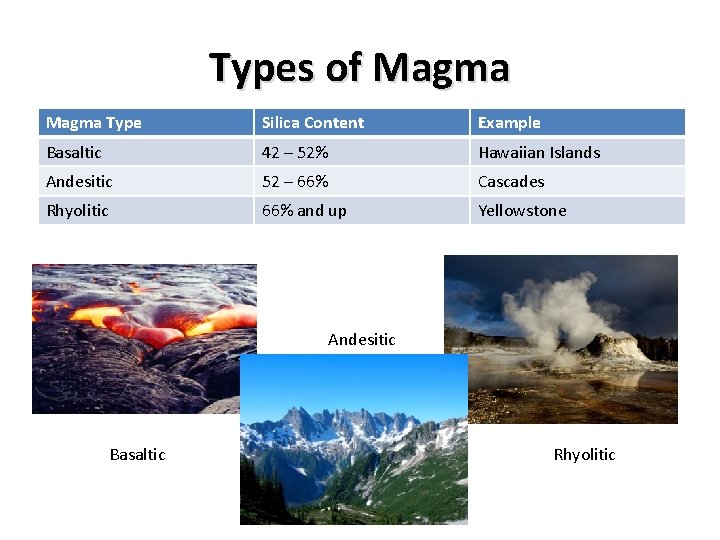
Types of Magma Type Silica Content Example Basaltic 42 – 52% Hawaiian Islands Andesitic 52 – 66% Cascades Rhyolitic 66% and up Yellowstone Andesitic Basaltic Rhyolitic
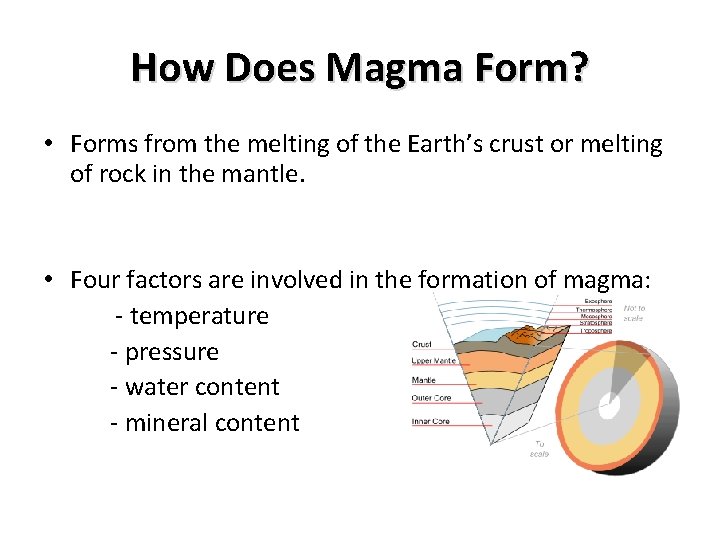
How Does Magma Form? • Forms from the melting of the Earth’s crust or melting of rock in the mantle. • Four factors are involved in the formation of magma: - temperature - pressure - water content - mineral content
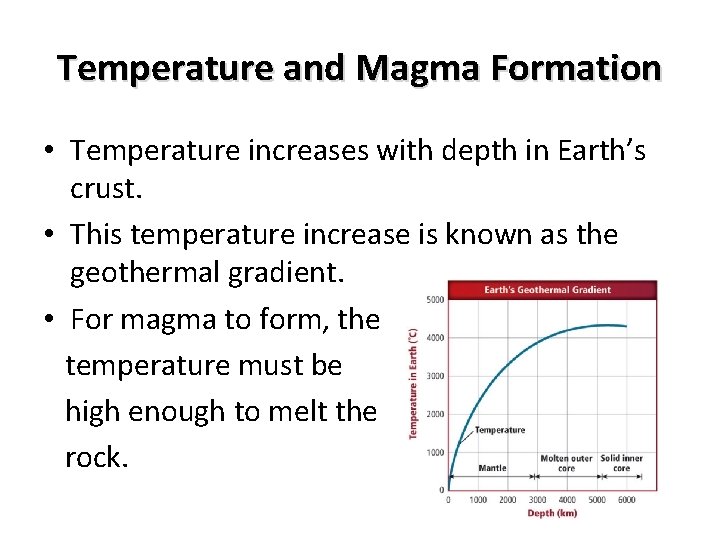
Temperature and Magma Formation • Temperature increases with depth in Earth’s crust. • This temperature increase is known as the geothermal gradient. • For magma to form, the temperature must be high enough to melt the rock.
Pressure and Magma Formation • Pressure also increases with depth as a result of the weight of overlying rock. • The increased pressure on a rock will increase the rock’s melting point and require higher temperatures to melt.
Water Content and Magma Formation • Rocks and minerals often contain small amounts of water, which changes the melting point of the rocks. • As water content increases, the melting point decreases so rock will melt at a lower temperature.
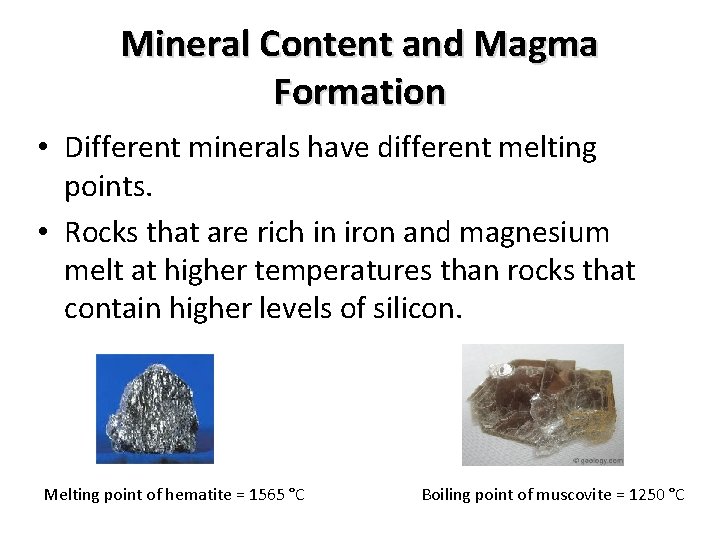
Mineral Content and Magma Formation • Different minerals have different melting points. • Rocks that are rich in iron and magnesium melt at higher temperatures than rocks that contain higher levels of silicon. Melting point of hematite = 1565 °C Boiling point of muscovite = 1250 °C
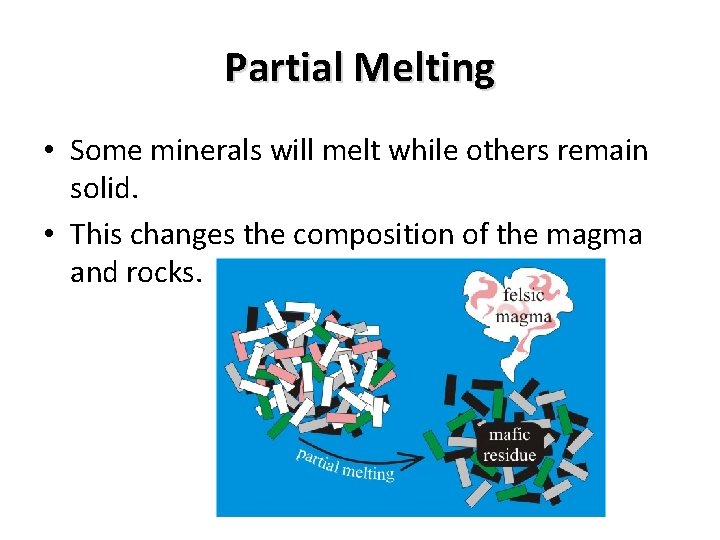
Partial Melting • Some minerals will melt while others remain solid. • This changes the composition of the magma and rocks.
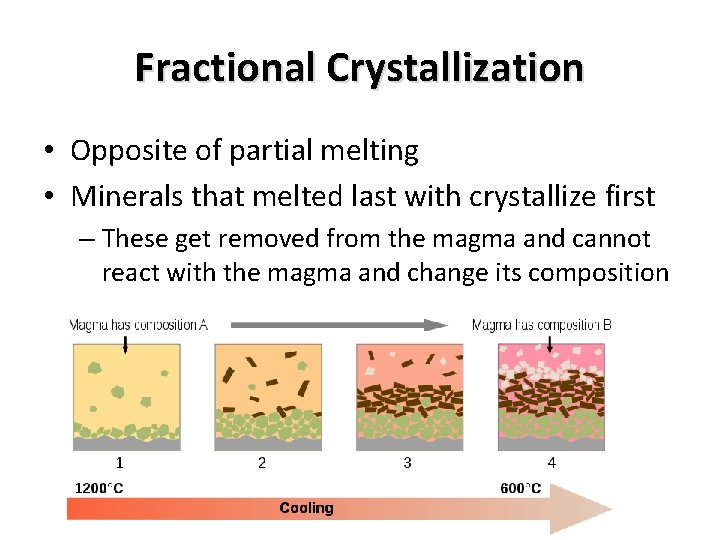
Fractional Crystallization • Opposite of partial melting • Minerals that melted last with crystallize first – These get removed from the magma and cannot react with the magma and change its composition
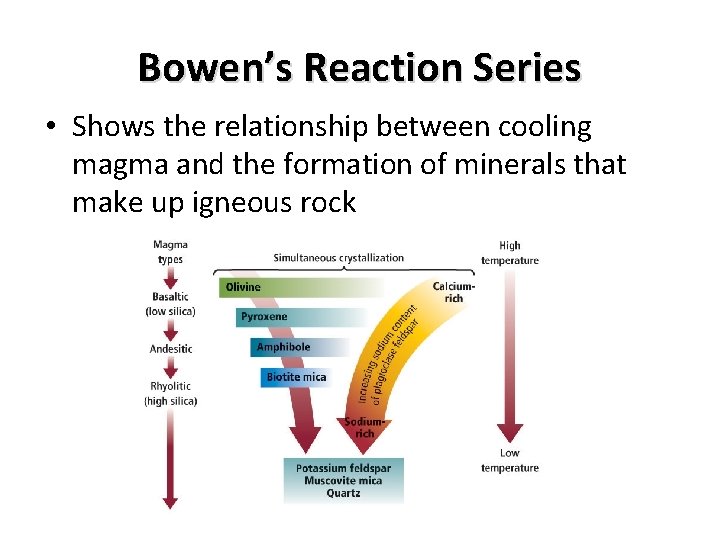
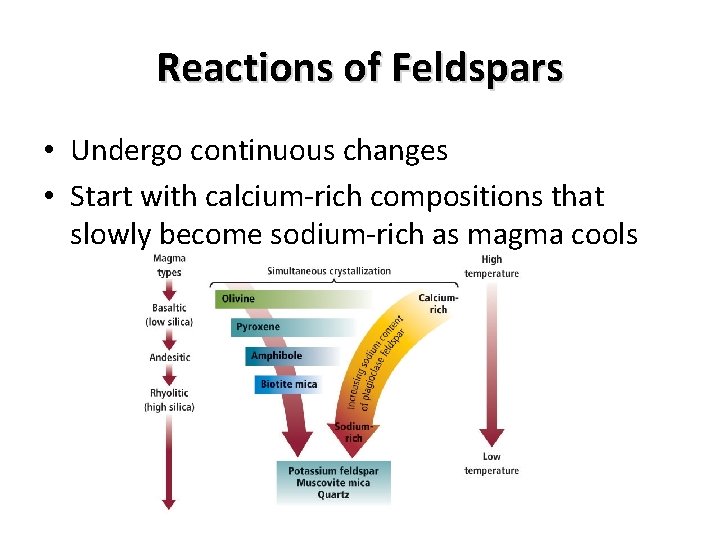
Bowen’s Reaction Series • Shows the relationship between cooling magma and the formation of minerals that make up igneous rock
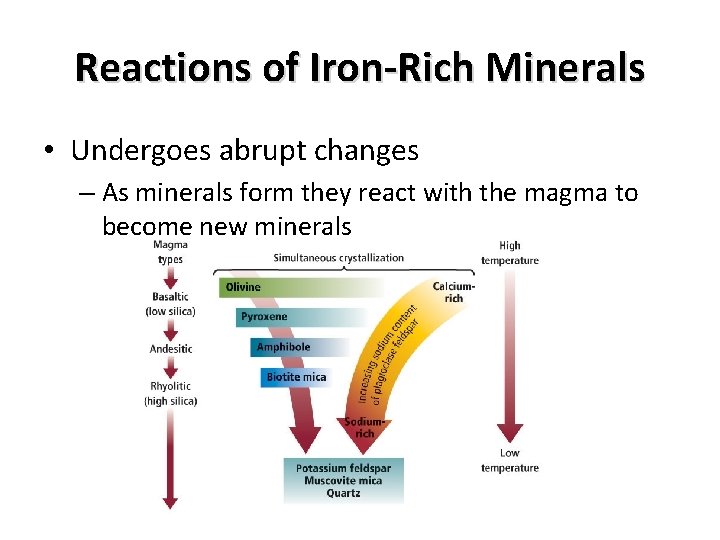
Reactions of Iron-Rich Minerals • Undergoes abrupt changes – As minerals form they react with the magma to become new minerals
Reactions of Feldspars • Undergo continuous changes • Start with calcium-rich compositions that slowly become sodium-rich as magma cools