
Formation of Government Political Science Unit 1 Government
- Slides: 42
Formation of Government Political Science Unit 1
Government • Do we need government? • Yes, no, or maybe • Why do we need government? • How much government do we need?
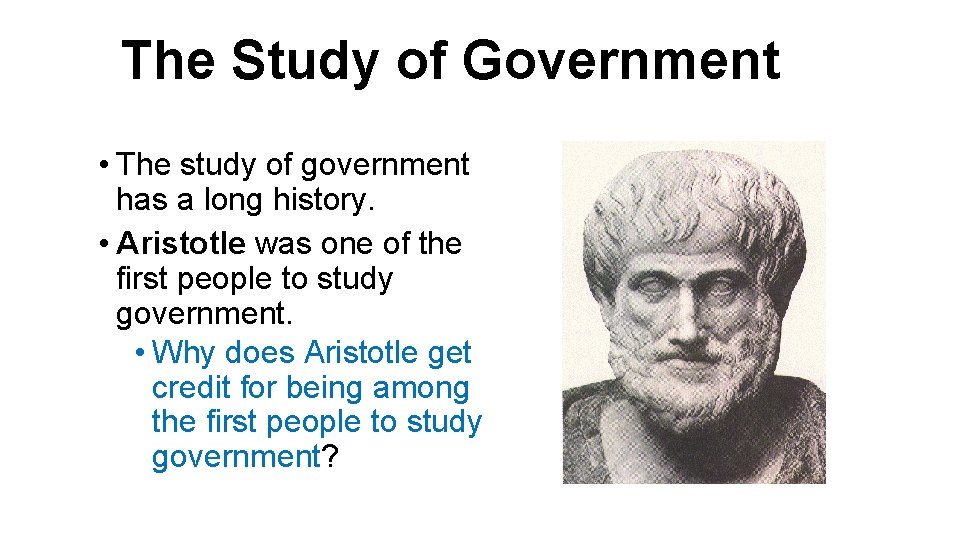
The Study of Government • The study of government has a long history. • Aristotle was one of the first people to study government. • Why does Aristotle get credit for being among the first people to study government?
State, Country, Nation, or Nation State? • State, Country, Nation, and Nation-State are often used interchangeably to refer to political entities. But, is this appropriate? Can they be used interchangeably? • State – A (1)political community that occupies a (2)defined or definite territory and has an (3)organized government. • Country – Has the same meaning as State. • Nation – A group of people who are united by any cultural characteristic. • A nation can be a country or state, but it does not have to be a country or state. • Examples – Palestine or French-speaking Canadians
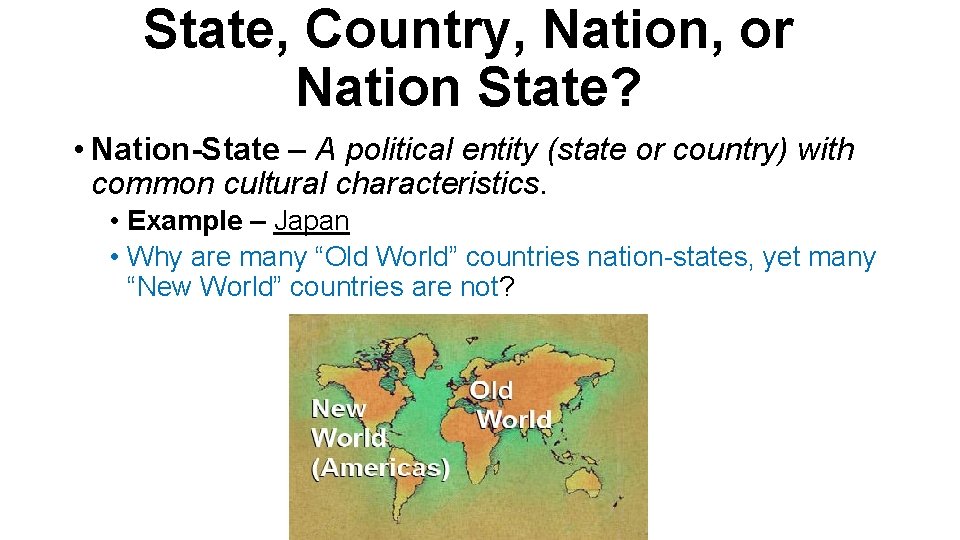
State, Country, Nation, or Nation State? • Nation-State – A political entity (state or country) with common cultural characteristics. • Example – Japan • Why are many “Old World” countries nation-states, yet many “New World” countries are not?
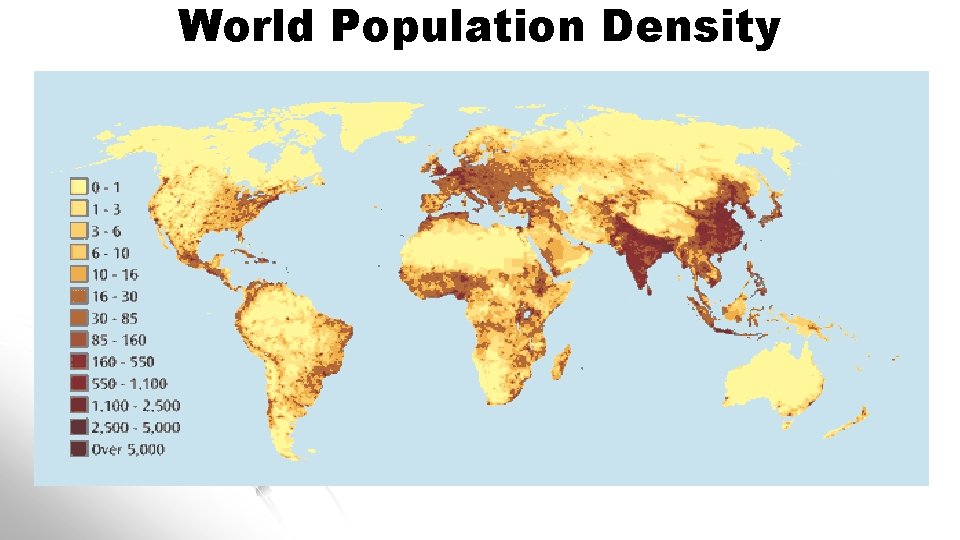
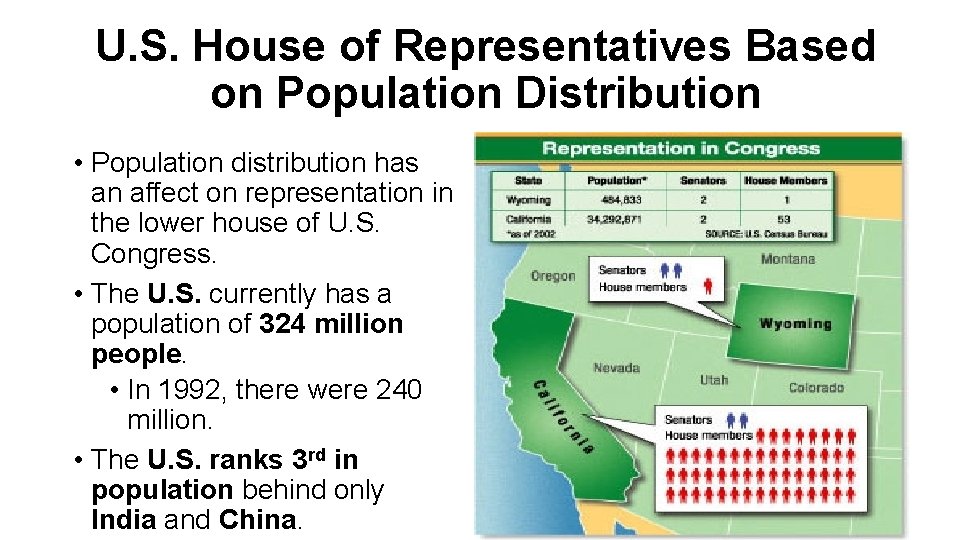
4 Essential Features of a State 1. Population • There must be a permanent settlement of people to be classified as a state or country. • How might population impact a state or country? Why does a government care about a population and population related issues? • Examples to consider – Jobs, Safety and Services, Health and Well-being, Representation in Government, etc.
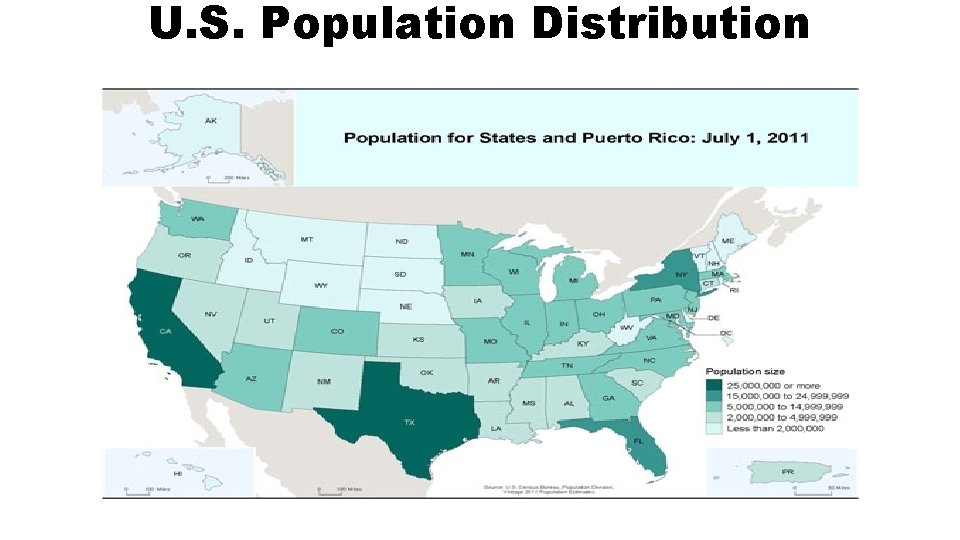
U. S. Population Distribution
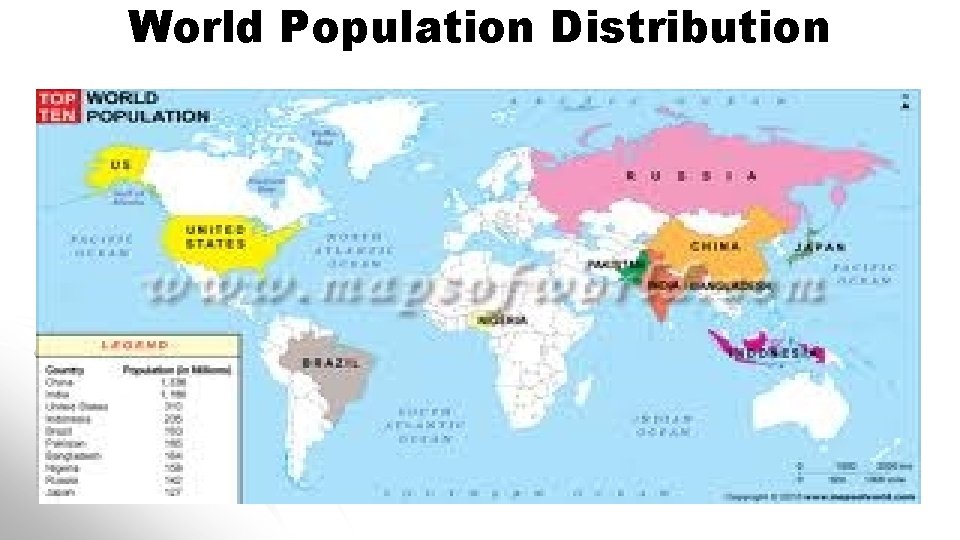
World Population Distribution
World Population Density
U. S. House of Representatives Based on Population Distribution • Population distribution has an affect on representation in the lower house of U. S. Congress. • The U. S. currently has a population of 324 million people. • In 1992, there were 240 million. • The U. S. ranks 3 rd in population behind only India and China.
4 Essential Features of a State 2. Territory • States or countries must have established boundaries. • These borders are often sources of conflict. • Why are territorial borders often sources of conflict? • Examples – (1)Neighboring states or countries, (2)neighboring citizens within a community, (3)Northern and Southern border of Kentucky, etc.
4 Essential Features of a State 3. Sovereignty (Implied in the Definition of a State or Country) • Political Independence • The State or Country has Supreme power and authority over itself. • In theory, a state or country does not interfere in the affairs of another state or country. • UNITED NATIONS has changed this somewhat. • What is UNITED NATIONS? • Is it okay for a state or country to interfere in the affairs of another state? Why or Why not? • Example – Should Canada tell the United States what it can or cannot do? • Should a state or country be a member of United Nations? Why or Why not?
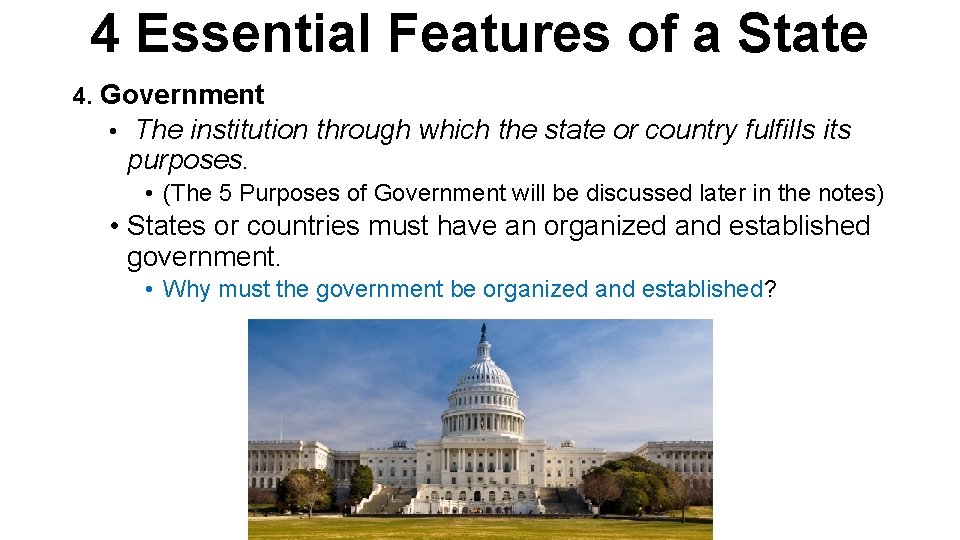
4 Essential Features of a State 4. Government • The institution through which the state or country fulfills its purposes. • (The 5 Purposes of Government will be discussed later in the notes) • States or countries must have an organized and established government. • Why must the government be organized and established?
4 Theories on the Origin of Government 1. Evolution Theory • The theory that governments evolved out of family units. • The head of the family or families became the authority figure. • Extended families organized for greater stability. • Examples – Parent and Child relationship, Clans, etc.
4 Theories on the Origin of Government 2. Force Theory • A large number of people were brought under the authority of one or more strongmen by force. • The power of someone else was forced upon the people. • Most common theory. • Why have most governments throughout history been formed according to the force theory? • Examples – Those who were the biggest, strongest, had better weapons, had more people for larger armies, etc.
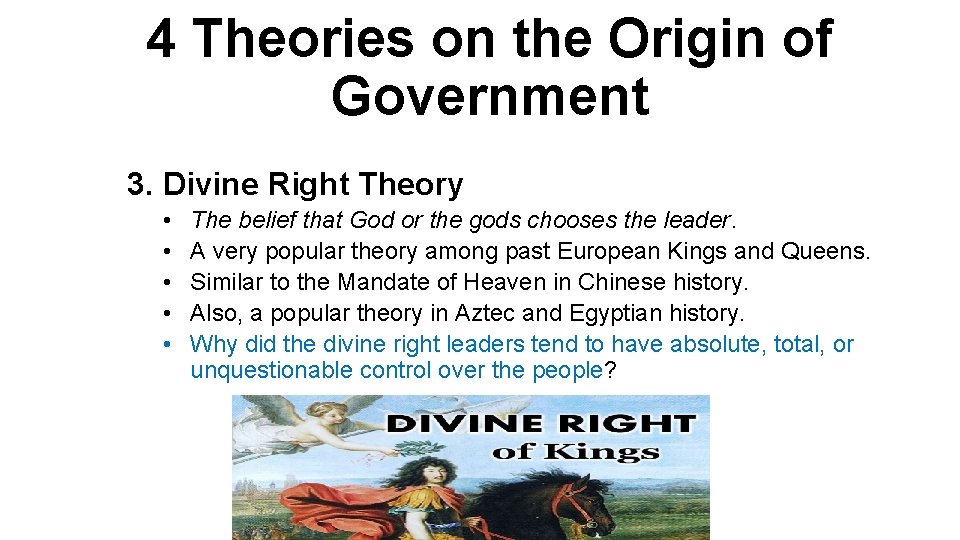
4 Theories on the Origin of Government 3. Divine Right Theory • • • The belief that God or the gods chooses the leader. A very popular theory among past European Kings and Queens. Similar to the Mandate of Heaven in Chinese history. Also, a popular theory in Aztec and Egyptian history. Why did the divine right leaders tend to have absolute, total, or unquestionable control over the people?
4 Theories on the Origin of Government 4. Social Contract Theory • The people voluntarily enter into a contract or an agreement with the government. • People surrender their power and in turn, the government provides for the people what they cannot provide for themselves. • Examples – Safety and security, opportunity, etc. (The 5 Purposes of Government will be discussed later in the notes) • Consensus – the people reach an agreement • Why do the people need to reach a consensus in a democracy (social contract)? • Enlightenment Period writers John Locke and Thomas Hobbes promoted the Social Contract form of government. • John Locke believed in and wrote about democracy and “life, liberty, and property”. • Many of his beliefs were incorporated into the Declaration of Independence. • The American colonies and founding fathers were inspired by his philosophies. • He believed people could break the contract if the government failed the people.
5 Purposes of Government 1. Maintain Social Order • Humans have proven to be unable to live together without conflict. • Laws are established and enforced to promote peace. • A (judicial) court system helps resolve conflict. • The U. S. court system is designed to protect us and our freedom. I • In criminal court, we are assumed innocent until proven guilty. • How does media complicate the assumption that a person is innocent until proven guilty?
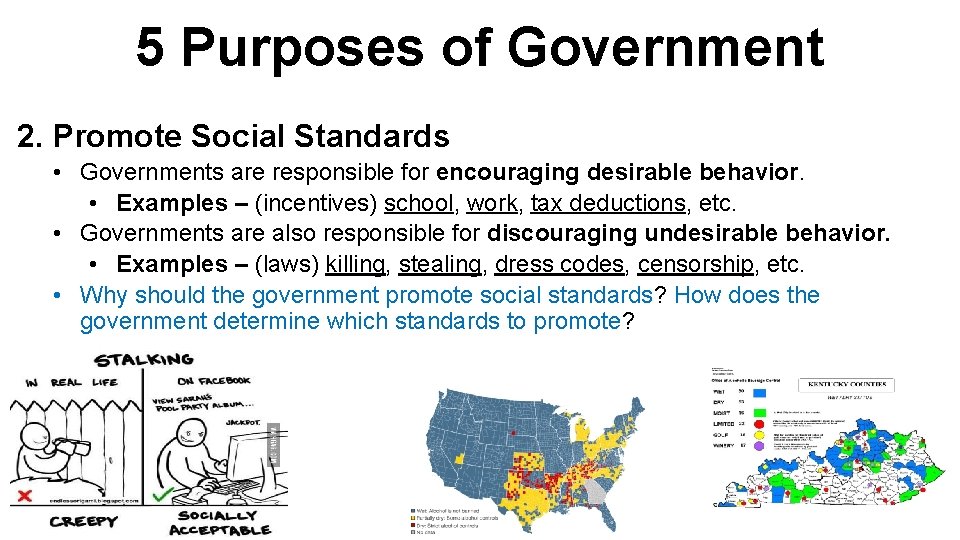
5 Purposes of Government 2. Promote Social Standards • Governments are responsible for encouraging desirable behavior. • Examples – (incentives) school, work, tax deductions, etc. • Governments are also responsible for discouraging undesirable behavior. • Examples – (laws) killing, stealing, dress codes, censorship, etc. • Why should the government promote social standards? How does the government determine which standards to promote?
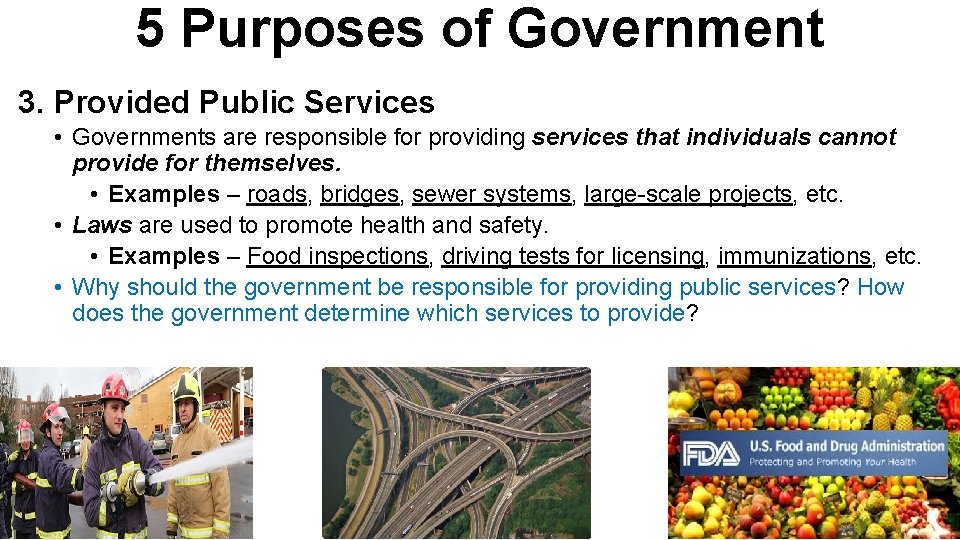
5 Purposes of Government 3. Provided Public Services • Governments are responsible for providing services that individuals cannot provide for themselves. • Examples – roads, bridges, sewer systems, large-scale projects, etc. • Laws are used to promote health and safety. • Examples – Food inspections, driving tests for licensing, immunizations, etc. • Why should the government be responsible for providing public services? How does the government determine which services to provide?
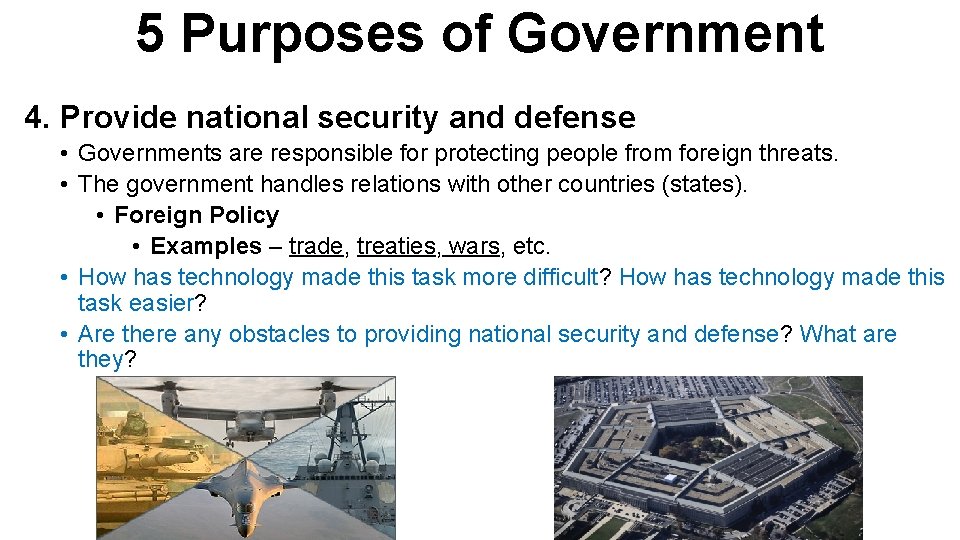
5 Purposes of Government 4. Provide national security and defense • Governments are responsible for protecting people from foreign threats. • The government handles relations with other countries (states). • Foreign Policy • Examples – trade, treaties, wars, etc. • How has technology made this task more difficult? How has technology made this task easier? • Are there any obstacles to providing national security and defense? What are they?
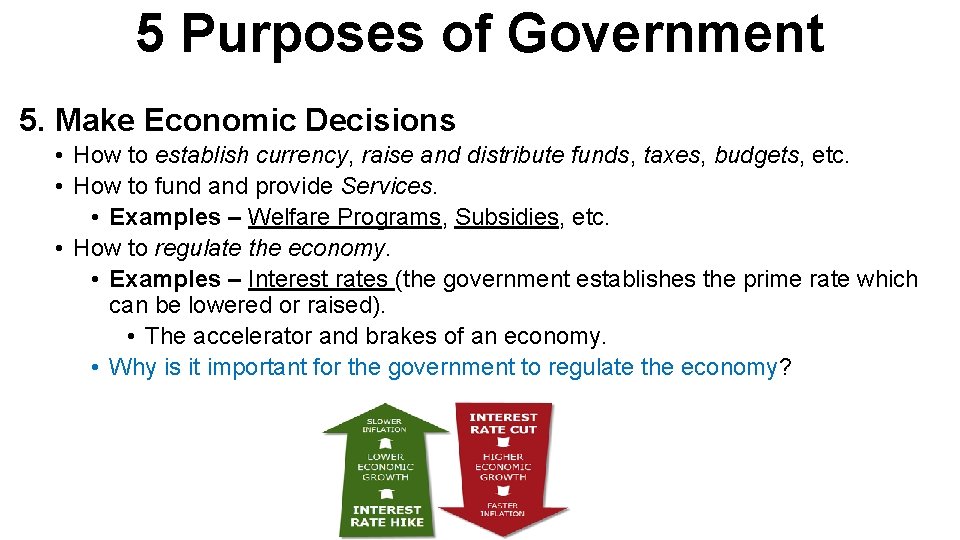
5 Purposes of Government 5. Make Economic Decisions • How to establish currency, raise and distribute funds, taxes, budgets, etc. • How to fund and provide Services. • Examples – Welfare Programs, Subsidies, etc. • How to regulate the economy. • Examples – Interest rates (the government establishes the prime rate which can be lowered or raised). • The accelerator and brakes of an economy. • Why is it important for the government to regulate the economy?
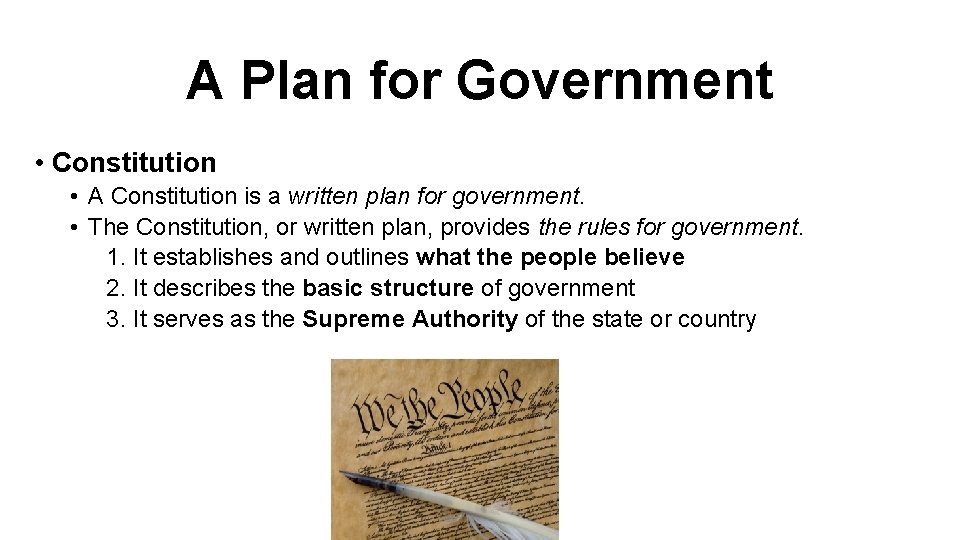
A Plan for Government • Constitution • A Constitution is a written plan for government. • The Constitution, or written plan, provides the rules for government. 1. It establishes and outlines what the people believe 2. It describes the basic structure of government 3. It serves as the Supreme Authority of the state or country
Classification of Government • Government can be classified in multiple ways based upon 3 categories: 1. Where the power is located 2. Who has the power 3. The relationship between executive (leader) and legislative (law-making) power
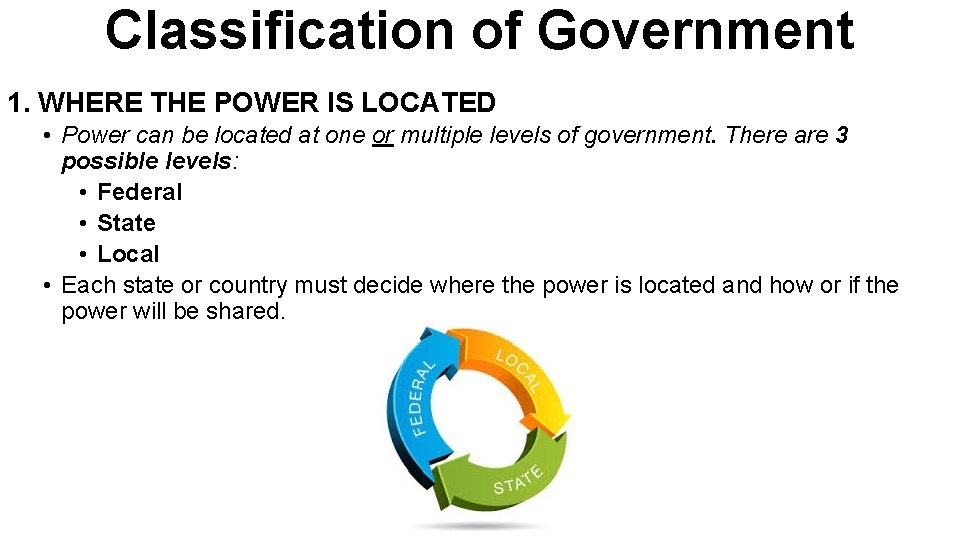
Classification of Government 1. WHERE THE POWER IS LOCATED • Power can be located at one or multiple levels of government. There are 3 possible levels: • Federal • State • Local • Each state or country must decide where the power is located and how or if the power will be shared.
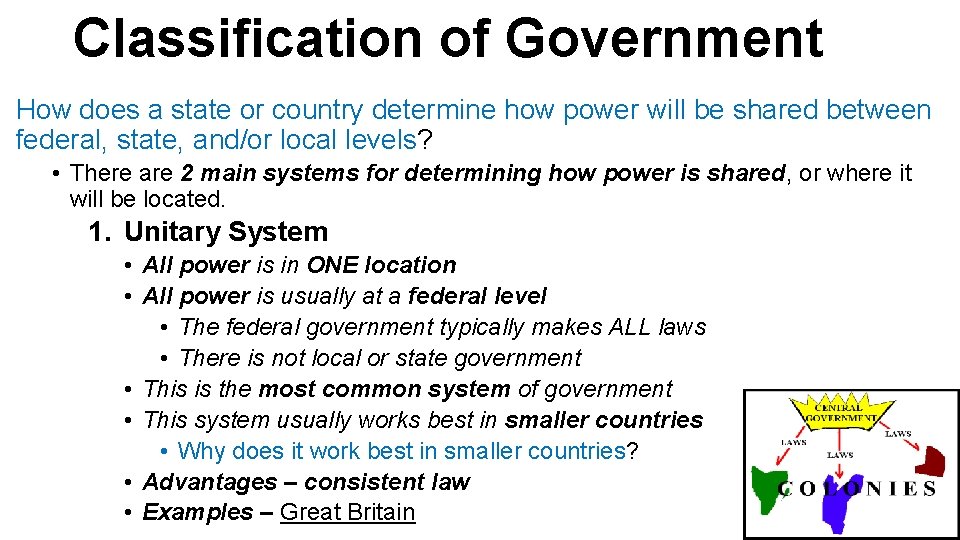
Classification of Government How does a state or country determine how power will be shared between federal, state, and/or local levels? • There are 2 main systems for determining how power is shared, or where it will be located. 1. Unitary System • All power is in ONE location • All power is usually at a federal level • The federal government typically makes ALL laws • There is not local or state government • This is the most common system of government • This system usually works best in smaller countries • Why does it work best in smaller countries? • Advantages – consistent law • Examples – Great Britain
Classification of Government 2. Federal System • Power is shared by two or more levels of government, or is located at two or more locations. • The United States is classified as a Federal System (Federalism) because it has power at all three levels. • Each level has its own power or responsibility. Sometimes that power can overlap. • Federal government = federal issues • State government = state issues • Local government = local issues • Disadvantages – inconsistent law • Examples – United States, Canada, Germany • Do you believe a unitary system or a federal system is the better system? Why?
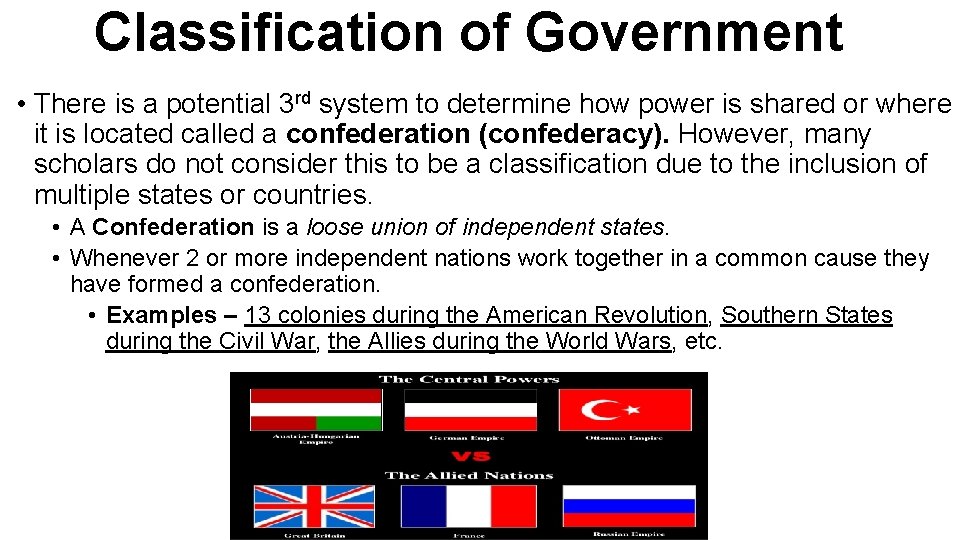
Classification of Government • There is a potential 3 rd system to determine how power is shared or where it is located called a confederation (confederacy). However, many scholars do not consider this to be a classification due to the inclusion of multiple states or countries. • A Confederation is a loose union of independent states. • Whenever 2 or more independent nations work together in a common cause they have formed a confederation. • Examples – 13 colonies during the American Revolution, Southern States during the Civil War, the Allies during the World Wars, etc.
Classification of Government 2. WHO HAS THE POWER • 3 Types of Government • Autocracy – rule by one • Oligarchy – rule by a few • Democracy – rule by many or the people
Classification of Government • AUTOCRACY • • Rule by one Oldest form of government Most common form of government There are 2 main types of autocracies • Monarchy • Dictatorship
Classification of Government • Monarchy • • Rule by one Leader inherits the power Royalty – King or Queen There are 2 types of monarchies: • Absolute Monarchy • Constitutional Monarchy
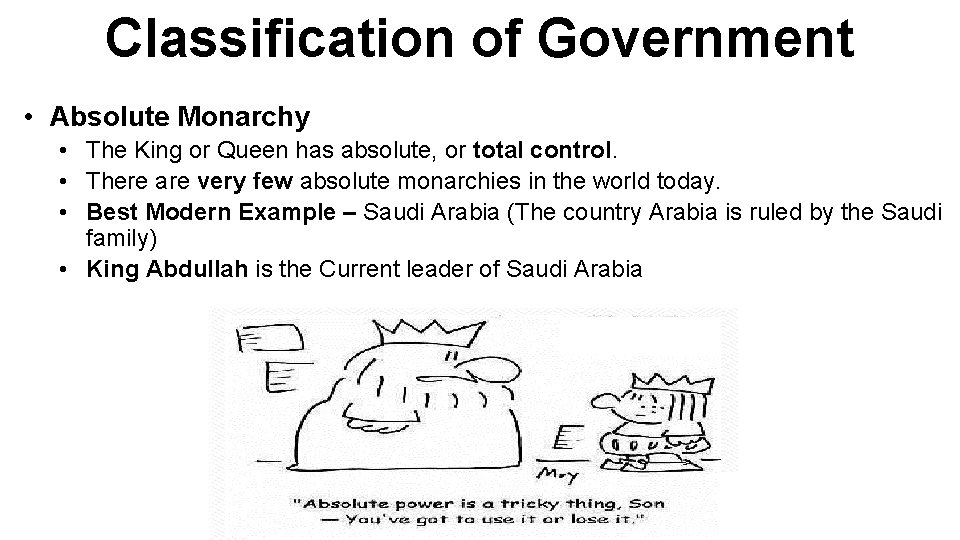
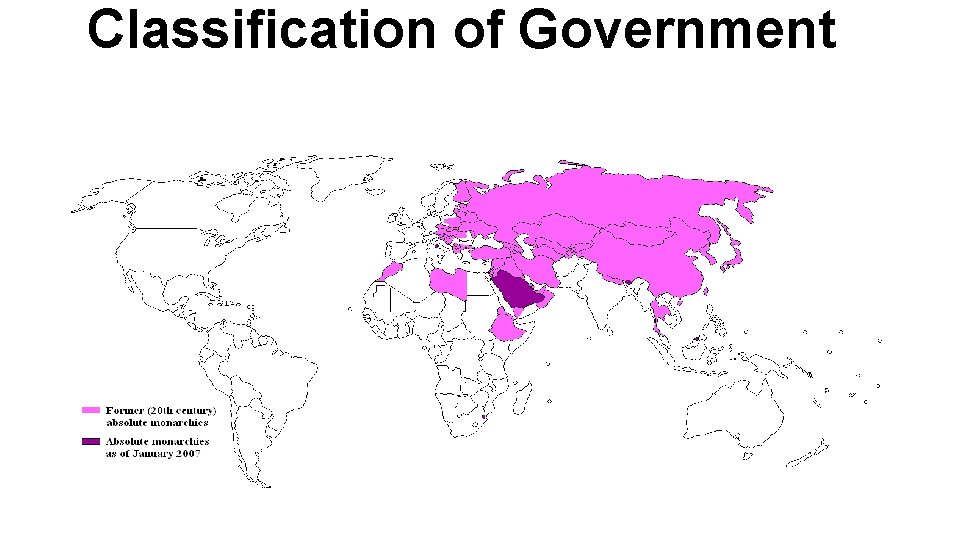
Classification of Government • Absolute Monarchy • The King or Queen has absolute, or total control. • There are very few absolute monarchies in the world today. • Best Modern Example – Saudi Arabia (The country Arabia is ruled by the Saudi family) • King Abdullah is the Current leader of Saudi Arabia
Classification of Government
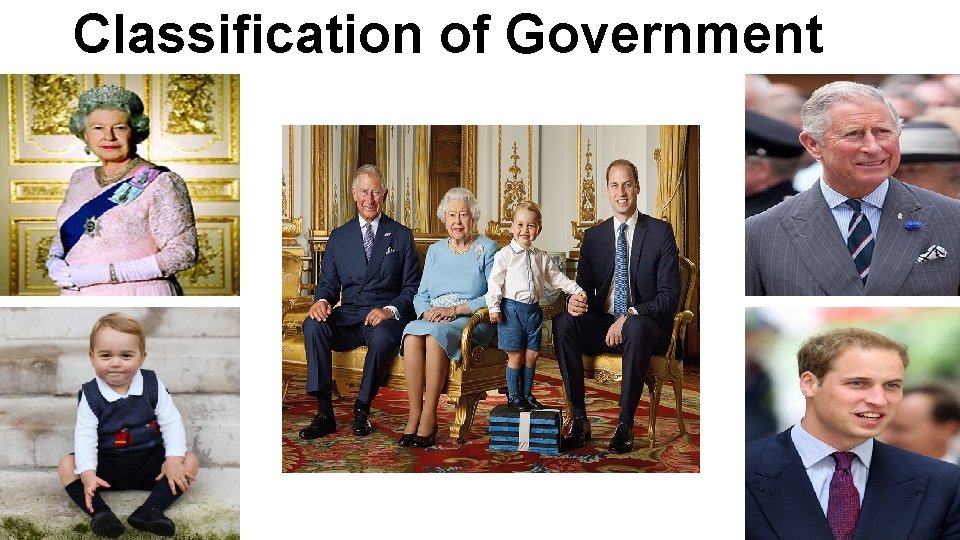
Classification of Government • Constitutional Monarchy • The Constitution is a higher authority than the King or Queen. The King or Queen are bound by the Constitution. • The King or Queen may share power with a legislative body (Parliament) or have no power at all being a figurehead only. • Examples – Great Britain • Queen Elizabeth and Parliament • The Queen is the figurehead, but Parliament has legislative and executive power. • Born Princess Elizabeth Mountbatten of Windsor in 1926 • Daughter of King George VI • Became Queen in 1952, coronation ceremony was in 1953 • Children: Prince Charles 1948, Princess Anne, Prince Andrew, and Prince Edward • Grandsons: Prince William 1982, Prince Harry 1984 • Great Grandson: Baby George 2013
Classification of Government
Classification of Government • Dictatorship • The leader acquires power, often through use of the military. • The most common form of autocracy. • 3 Key Characteristics: 1. They rule by force. 2. They eliminate political opposition. 3. They restrict, or limit the rights of the people. • Why do dictators tend to have these characteristics? Is it possible to have a good and positive dictator as a leader? Why or Why not?
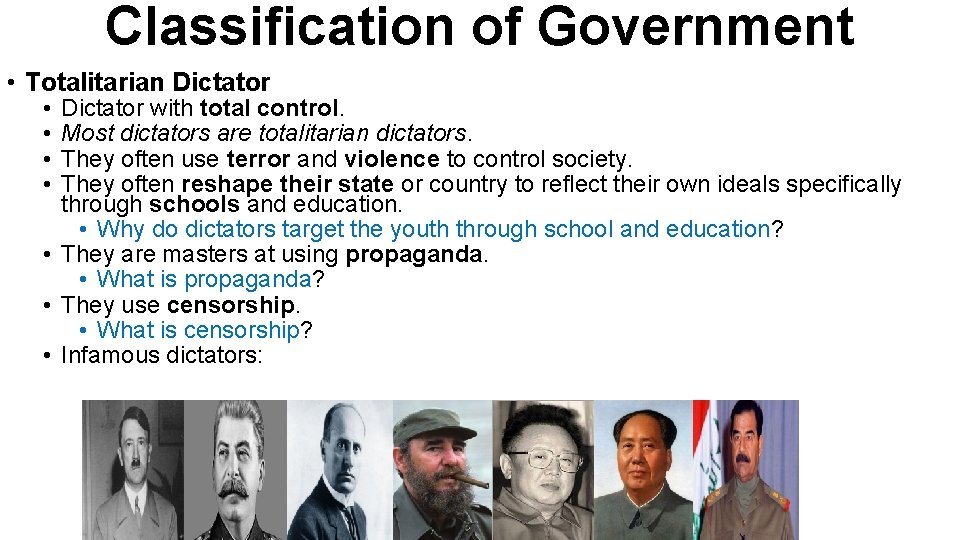
Classification of Government • Totalitarian Dictator • • Dictator with total control. Most dictators are totalitarian dictators. They often use terror and violence to control society. They often reshape their state or country to reflect their own ideals specifically through schools and education. • Why do dictators target the youth through school and education? • They are masters at using propaganda. • What is propaganda? • They use censorship. • What is censorship? • Infamous dictators:
Classification of Government • OLIGARCHY • Rule by a few, or a small group • Examples: • Junta – military government • One specific group of people in control of everything • Usually turns into a dictatorship (converts to an autocracy) • Example – Japan during WWII • Theocracy – religious based government • One religion in control of everything • (Could also be a dictatorship or monarchy…. remember, there are multiple ways to classify or group) • Example – Iran • One Party System • One political party controls all of government. • Example – Communist China
Classification of Government • DEMOCRACY • Rule by the people, or rule by many • There are 2 Types of Democracies: • Direct Democracy • Representative Democracy (Republic)
Classification of Government • Direct Democracy • All citizens vote on all issues and laws directly. • Representative Democracy (Republic) • The people elect representatives to represent them in government and vote on all issues and laws on their behalf. • Why did the founding fathers of the U. S. choose a representative democracy? • Could the United States convert to a direct democracy instead of a representative democracy? Why or Why not? • Which type of democracy do you believe is better? Why?
Classification of Government • 4 Characteristics of Democracy 1. Individual Liberty – The rights and freedom of individuals is valued and protected. 2. Majority Rule with Minority Rights – Decisions are based on the wishes of the majority of the people, but the minority of people do no lose their rights in the process. • The minority of people are still protected by the Constitution. 3. Free Elections – The obvious is voting is free of charge, but it also means that the people are free to choose their candidate of choice on election day. (There are some barriers that will be discussed in detail in a later unit) 4. Competing Political Parties – Multiple political parties compete with one another and help create balance in government. • Democrats and Republicans are the 2 dominant political parties in the U. S. , but there are others also (Political Parties will be discussed in detail in a later unit)
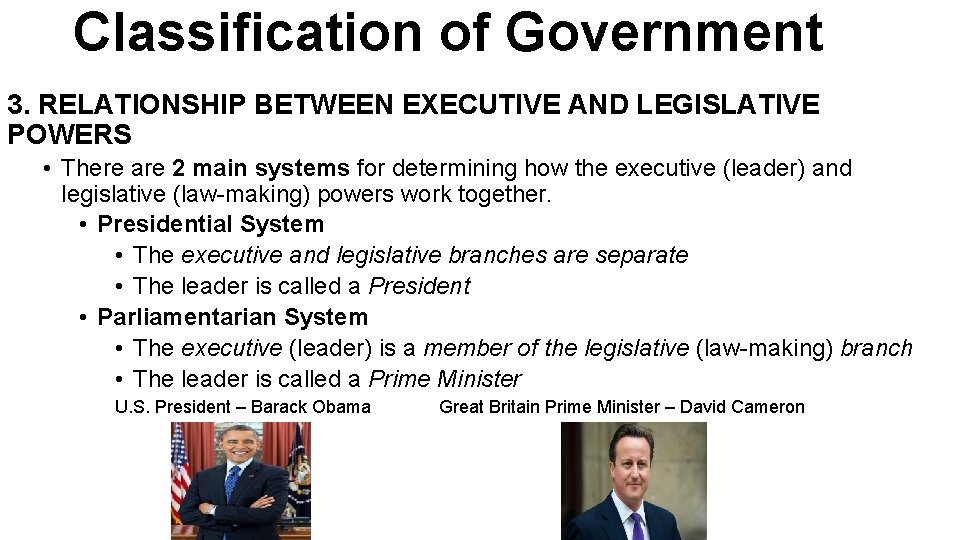
Classification of Government 3. RELATIONSHIP BETWEEN EXECUTIVE AND LEGISLATIVE POWERS • There are 2 main systems for determining how the executive (leader) and legislative (law-making) powers work together. • Presidential System • The executive and legislative branches are separate • The leader is called a President • Parliamentarian System • The executive (leader) is a member of the legislative (law-making) branch • The leader is called a Prime Minister U. S. President – Barack Obama Great Britain Prime Minister – David Cameron