
Formal and Informal language Recognising the differences In
- Slides: 5
Formal and Informal language Recognising the differences
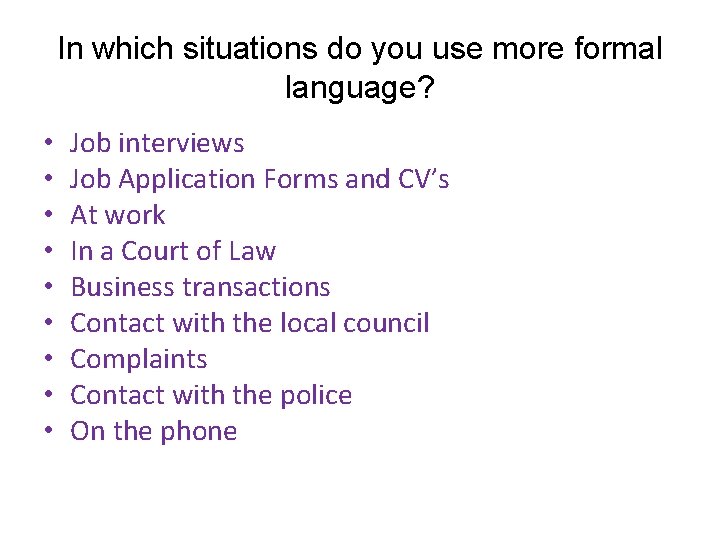
In which situations do you use more formal language? • • • Job interviews Job Application Forms and CV’s At work In a Court of Law Business transactions Contact with the local council Complaints Contact with the police On the phone
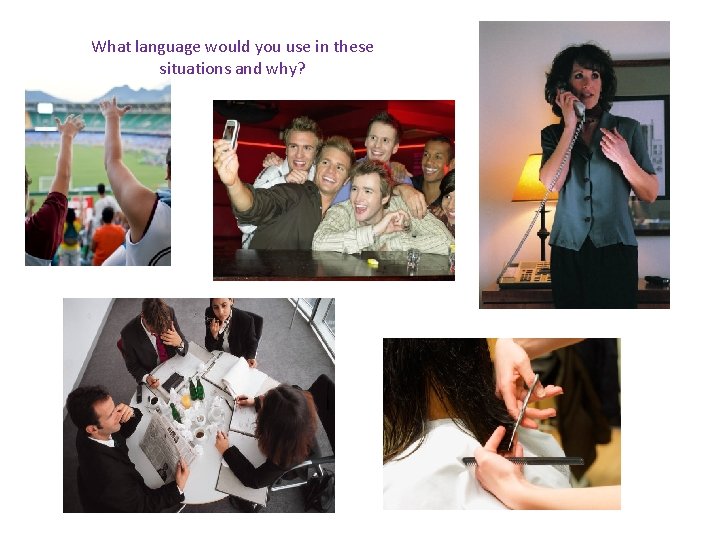
What language would you use in these situations and why? •
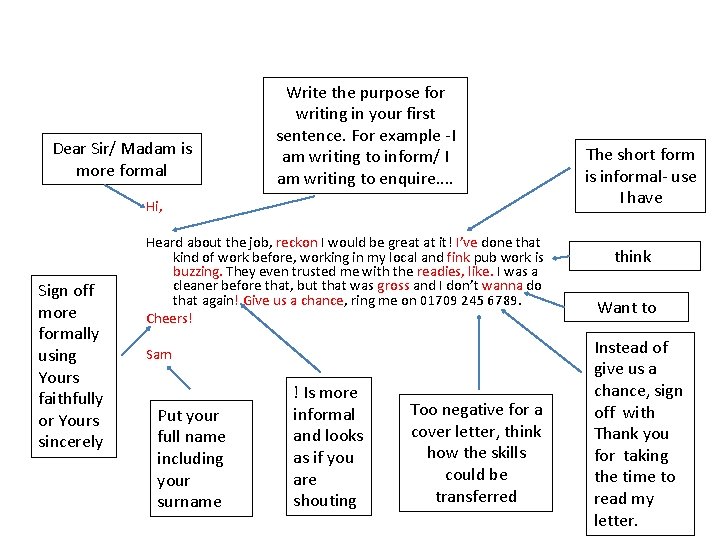
Dear Sir/ Madam is more formal Sign off more formally using Yours faithfully or Yours sincerely Write the purpose for writing in your first sentence. For example -I am writing to inform/ I am writing to enquire. . Hi, Heard about the job, reckon I would be great at it! I’ve done that kind of work before, working in my local and fink pub work is buzzing. They even trusted me with the readies, like. I was a cleaner before that, but that was gross and I don’t wanna do that again! Give us a chance, ring me on 01709 245 6789. Cheers! Sam Put your full name including your surname ! Is more informal and looks as if you are shouting Too negative for a cover letter, think how the skills could be transferred The short form is informal- use I have think Want to Instead of give us a chance, sign off with Thank you for taking the time to read my letter.
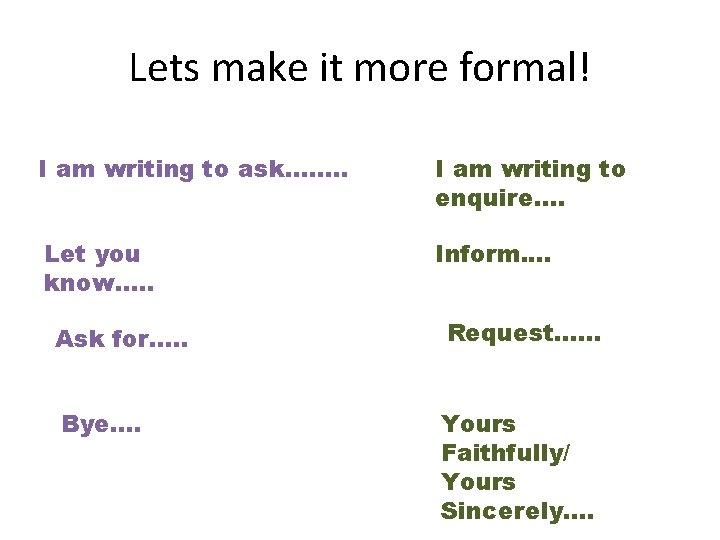
Lets make it more formal! I am writing to ask. . . . I am writing to enquire. . Let you know. . . Inform. . Ask for. . . Request. . . Bye. . Yours Faithfully/ Yours Sincerely. .