
Formal and Informal Language OLI To identify features
- Slides: 8
Formal and Informal Language OLI: To identify features of formal and informal language and use them in the correct context.
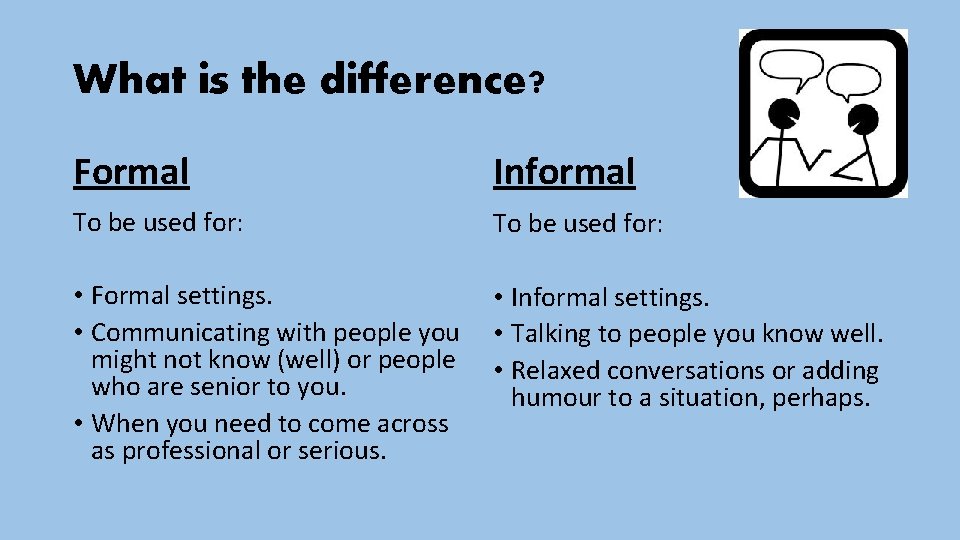
What is the difference? Formal Informal To be used for: • Formal settings. • Communicating with people you might not know (well) or people who are senior to you. • When you need to come across as professional or serious. • Informal settings. • Talking to people you know well. • Relaxed conversations or adding humour to a situation, perhaps.
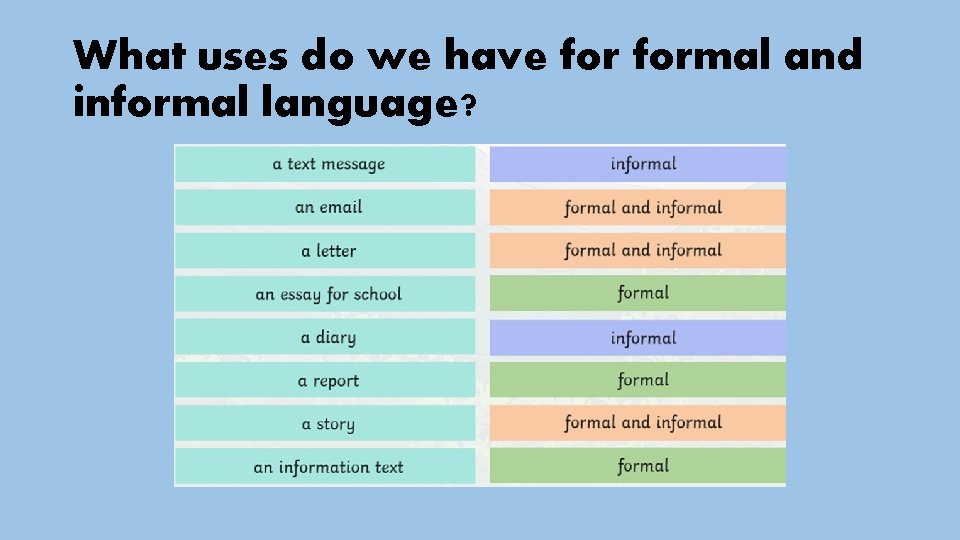
What uses do we have formal and informal language?
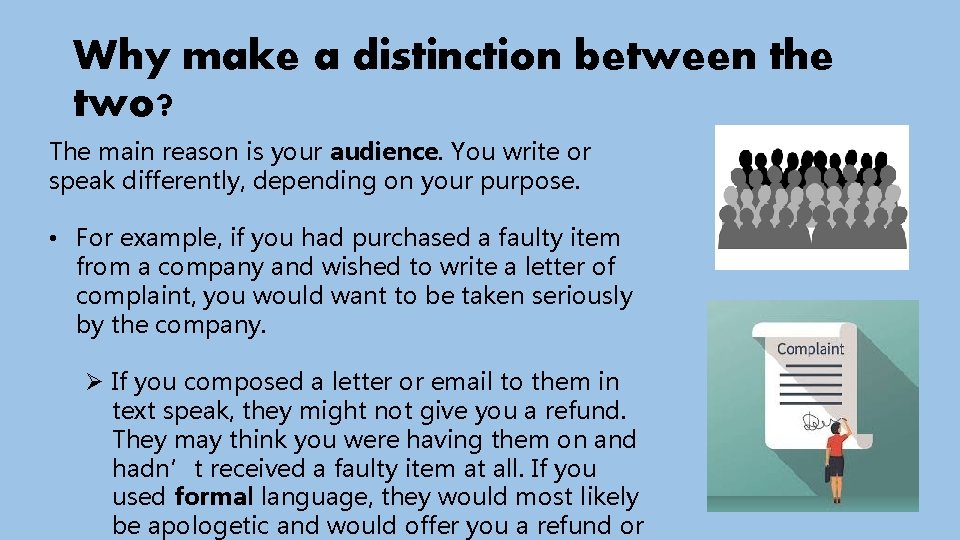
Why make a distinction between the two? The main reason is your audience. You write or speak differently, depending on your purpose. • For example, if you had purchased a faulty item from a company and wished to write a letter of complaint, you would want to be taken seriously by the company. Ø If you composed a letter or email to them in text speak, they might not give you a refund. They may think you were having them on and hadn’t received a faulty item at all. If you used formal language, they would most likely be apologetic and would offer you a refund or
Why make a distinction between the two? • Similarly, if you were asking your friend if they wanted to hang out, it’s unlikely that you would write them a detailed, paragraphed, addressed letter: “I was simply writing to enquire as to whether you may like to partake in an activity together. Perhaps one day this weekend might suit? I await your response with great anticipation. Kind regards, Sally” • You’d probably send them an informal text saying: “Hey, do you wanna do something on
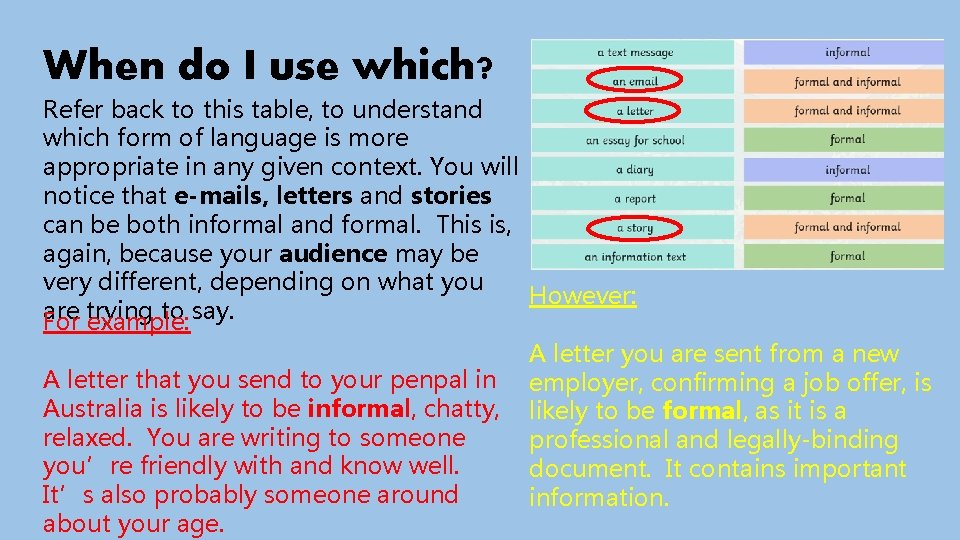
When do I use which? Refer back to this table, to understand which form of language is more appropriate in any given context. You will notice that e-mails, letters and stories can be both informal and formal. This is, again, because your audience may be very different, depending on what you However: are trying to say. For example: A letter that you send to your penpal in Australia is likely to be informal, chatty, relaxed. You are writing to someone you’re friendly with and know well. It’s also probably someone around about your age. A letter you are sent from a new employer, confirming a job offer, is likely to be formal, as it is a professional and legally-binding document. It contains important information.
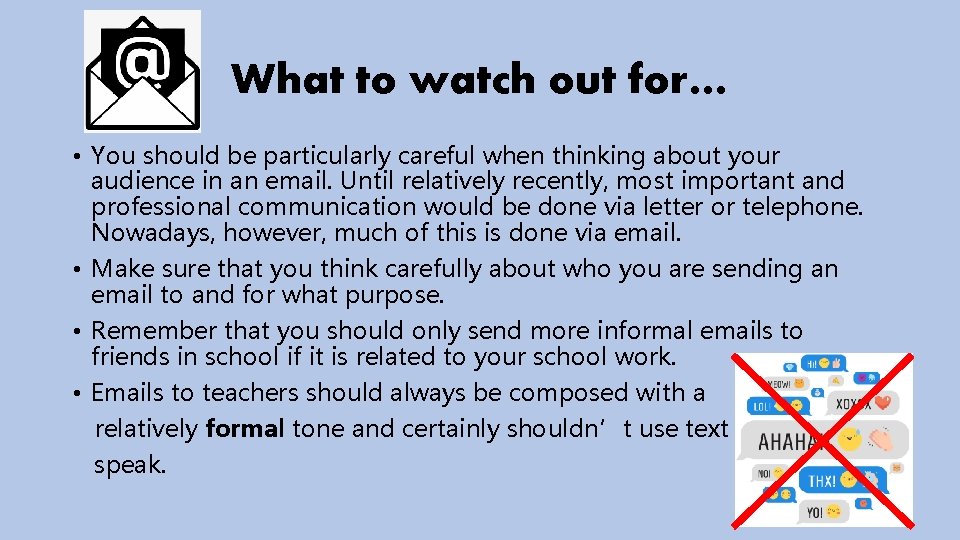
What to watch out for… • You should be particularly careful when thinking about your audience in an email. Until relatively recently, most important and professional communication would be done via letter or telephone. Nowadays, however, much of this is done via email. • Make sure that you think carefully about who you are sending an email to and for what purpose. • Remember that you should only send more informal emails to friends in school if it is related to your school work. • Emails to teachers should always be composed with a relatively formal tone and certainly shouldn’t use text speak.
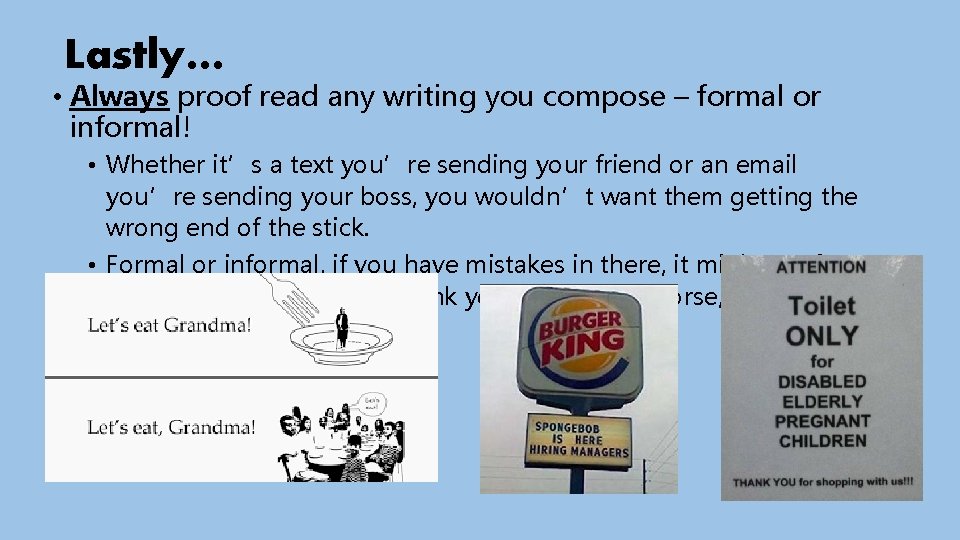
Lastly… • Always proof read any writing you compose – formal or informal! • Whether it’s a text you’re sending your friend or an email you’re sending your boss, you wouldn’t want them getting the wrong end of the stick. • Formal or informal, if you have mistakes in there, it might confuse the recipient, make them think you’re lazy or, worse, even offend them!